
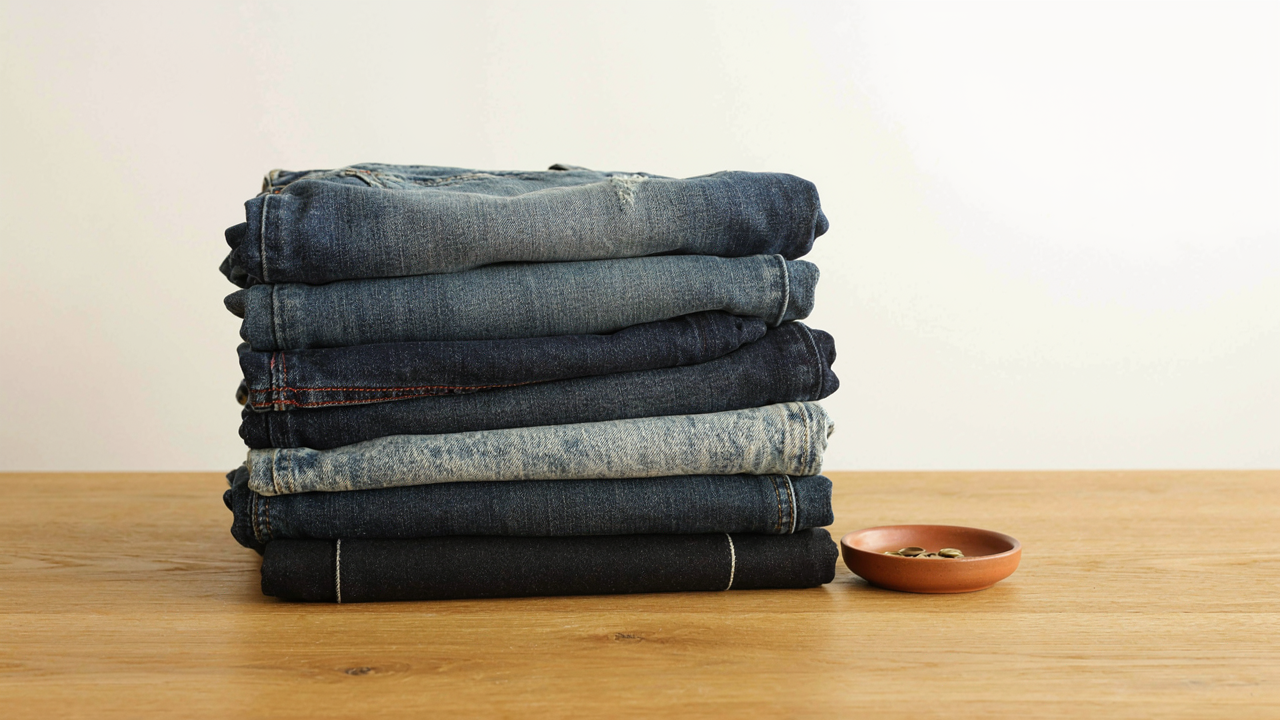
The “Thrift Flip” Lie: Why Most DIY Jeans Fail To Impress

The Gap Between Intent And Execution
You’re afraid the flip won’t look intentional, so you play it safe. That’s the real problem. Most thrift flips fail because they treat jeans like a blank canvas when they’re actually a constraint. The fabric, weight, and seam placement already dictate what works. You can’t ignore the material’s logic and expect results that read as anything other than amateur.
The mechanism is simple: bad flips apply changes that fight the jean’s inherent structure instead of working within it. A 90s baggy pair has a specific rise, inseam taper, and fabric weight. Chopping them into cropped style without accounting for how the remaining length interacts with the leg opening creates visual noise. The garment looks edited, not designed. That distinction costs you credibility.
Intention Over Impulse

Design strategy borrowed from architecture tells us this: constraints create better outcomes than blank spaces. The jean’s existing proportions are your constraint. Work with them, not around them. Most flips fail because people chase viral aesthetics instead of understanding what their specific jean’s geometry allows.
A Levi’s 501 from the 80s has different proportions than a 90s Gap wide-leg. The fabric weight differs. The seam placement differs. Applying the same crop or flare transformation to both produces two different results. Your first move isn’t to grab scissors. Your first move is to map the jean’s existing proportions, identify where the break point lands on your body, and then decide what alteration actually serves that jean’s DNA. The flip only works when you respect what you’re starting with.

Deconstructing Status: What Makes A Thrift Flip Truly Desirable?
The Deliberate Mismatch
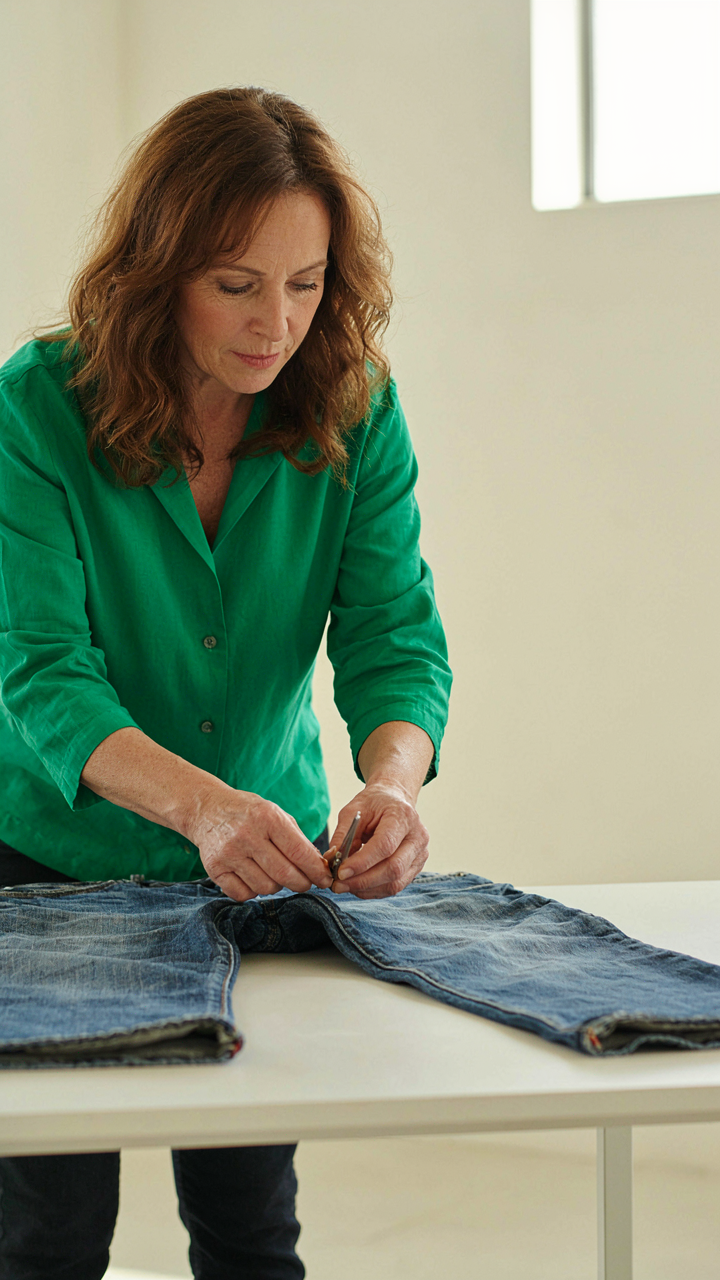
You want people to know you didn’t buy what everyone else bought. That’s the real reason you’re here. The mechanism is simple: originality signals wealth and taste when it looks intentional rather than accidental. A thrift flip works because it proves you made a choice. Mass-market jeans prove you didn’t. The gap between those two things is where status lives in this market.
Intentionality shows through design moves that contradict each other on purpose. Cropping vintage Levi’s 501s creates tension against their original silhouette. Adding raw selvedge hems to baggy 90s Wranglers signals knowledge most people don’t have. These aren’t random modifications. They’re educated decisions that only readers of design recognize. That recognition is the actual product you’re selling.
The Unrepeatable Garment
Scarcity in economics means limited supply drives perceived value. Your thrift flip jeans operate on the same principle, except you’re the only one controlling the supply. You find one specific pair from one specific thrift store, modify it in one specific way, and that version ceases to exist anywhere else. Mass production can’t replicate what you just created because it can’t replicate the source material.
The thrift flip only holds value if you don’t repeat the exact same modification endlessly. Making five identical cropped flares from five different vintage pairs destroys the scarcity signal. Making one cropped flare, one tapered baggy, and one deconstructed wide-leg preserves it. Your inconsistency is your leverage. Document the one-off nature explicitly. The person buying or engaging with your work needs to know they’re looking at something that won’t exist in this form again.
The Curator’s Eye: Selecting The Right Raw Material For Dream Clothes

What Actually Makes Denim Worth Flipping
You want to believe thrift finds are lottery tickets. They’re not. You’re afraid you’ll waste time on dead weight. The real mechanism is simple: denim quality lives in fiber composition and construction, not brand name or era. Most people skip this and buy jeans based on aesthetics alone, then waste hours trying to salvage material that won’t hold a flip. Start with the fiber content tag. Look for 100 percent cotton or high cotton blends. Polyester-heavy jeans don’t respond well to cropping, tapering, or aggressive seaming because the material fights you during alteration.
Construction reveals everything else. Feel the inseam where two pieces of denim meet. If it’s a single-stitch or chain-stitch, you have older or higher-quality denim that won’t unravel when you cut and resew. Double-stitched seams in cheap denim will hold, but the fabric itself often lacks density. Check the weight by holding the jeans flat. Heavier denim (14 ounces and up) flips better because it maintains shape after cropping and looks intentional rather than accidental. Light denim shows every mistake you make.
Where To Find Inventory Worth Your Time
Sourcing strategy isn’t about hitting every thrift store. It’s about understanding supply chains. Specific locations yield predictable inventory. Thrift stores in college towns and urban areas move inventory fast, so you’re competing with other flippers. Rural and suburban Goodwill locations hold slower-moving stock longer, which means deeper selection and less competition. Wealthy neighborhoods produce better jeans because people donate higher-quality pieces they’ve outgrown. Estate sales and buy-the-pound vintage events are inefficient unless you’re there at opening. The real move is building relationships with individual store employees who flag inventory before it hits the floor.
Price per pound events exist but reward speed over selectivity. You’ll find gems buried in volume, but you’ll also waste money on unsalvageable material. Instead, visit the same three to five stores on the same day each week. You’ll learn what arrives when. Weekend visits are crowded. Weekday afternoons are quiet. Scout on Thursday or Friday, buy on Monday when restocking happens. This creates a system, not a gamble.
The Reinvention Protocol: Transforming Baggy Into Bespoke

Precision Tailoring For A Custom Fit
You want this to work because baggy jeans from the thrift store cost four dollars and a tailored pair costs two hundred. That’s the real math. The mechanism is simple: tailoring is applied geometry. You measure the inseam, the rise, the thigh opening, and the leg taper as discrete variables, then adjust each independently. Most people skip this because they think tailoring means “make it smaller.” It doesn’t. It means mapping the jean’s current dimensions against your actual body, then closing the gap with surgical precision.
The inseam is where amateurs fail. Thrifted baggy jeans often have a 32 or 34 inch inseam on a jean that was originally designed with four inches of stacking. When you taper the leg, you lose length. A tailor who understands denim chains the alterations: they taper first, then hem. They preserve the original hem’s weight and curve if it exists. If the original hem is destroyed, they replicate the stitch pattern and topstitching thread color. The leg opening matters more than people admit. A 22 inch opening tapered to 16 inches reads completely different than a 16 inch opening that was always there.
Distinct Features: Pockets Patches Pleats
Adding features isn’t decoration. It’s structural. You’re not customizing a jean, you’re retrofitting it with functionality or visual anchors that signal intentionality. Pocket placement changes how the jean hangs and where your hand naturally rests. Move a back pocket three inches higher and the entire silhouette tightens. That’s not styling. That’s geometry changing perception. The common advice says “add patches for personality.” Wrong. Patches serve as either repair reinforcement or intentional wear markers. A patch placed where a jean naturally shears during heavy use reads authentic. Slapped randomly, it reads contrived and kills resale value.
Pleats near the knee or in the thigh offer functional depth when the jean is sitting. They expand the leg opening without making it oversized when worn. This is why vintage Lee and Wrangler jeans from the 1970s worked so well for labor and movement. You’re not adding them for retro points. You’re adding them because they solve a real problem: a tapered leg that looks dead when sitting. Pleats require a tailor who understands how fabric moves and how much give you need. Two inverted pleats from the thigh seam outward give you four inches of usable expansion. Mark exactly where the pleat folds land when you sit down, then have them sewn on those points, not guessed ones.
Flared & Cropped: Mastering The Art Of Intentional Distortion
How To Rebuild Structural Integrity
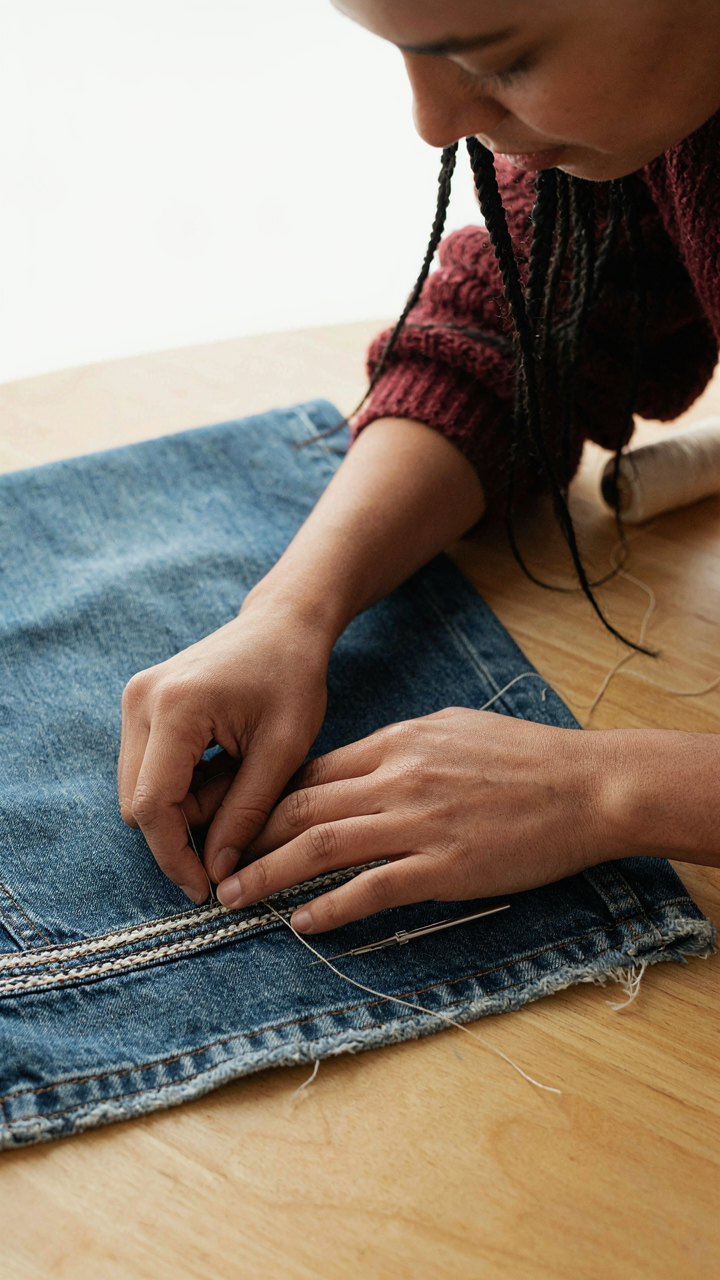
You want to look intentional, not like you made a mistake with scissors. That’s the real fear. The mechanism is load distribution. When you remove fabric from a jean leg, you’re redistributing stress points the original design balanced. The inseam now carries tension it wasn’t engineered for. Cropping and flaring work only when you reinforce what you’ve compromised.
Start by understanding where denim fails. The inseam is vulnerable first because it’s a single thread line under pull. When you crop, the hem becomes your new stress point. When you flare, the outer seam experiences lateral force. Reinforce by topstitching the inseam with heavy thread, folding the raw edge inward, or replacing the hem entirely with a chain stitch. This moves the failure point away from where you’ve removed structural material.
Creating Balance Through Reduction
Nobody teaches this right. You can’t just crop and flare without mapping the proportional relationship to the wearer’s frame. Use the same principle tailors call the “three-point balance rule”—neckline, waist, and hem must create visual equilibrium. On jeans, this translates to inseam length relative to how wide you flare the leg opening.
If your inseam sits at the ankle, flare width should stay under four inches per side. Go to mid-calf, you can push six inches per side. This ratio prevents the silhouette from reading as accidental. Measure your flare by the difference between original leg opening and new opening. Calculate backward from the visual weight you want. Then cut incrementally—remove half an inch per fitting session. You stop when the proportions match the intended silhouette, not when you run out of denim.
Beyond Repair: Employing The Kintsugi Principle For Jeans Unique

Wabi Sabi Aesthetics: Embracing Visible Mending
You want permission to call damage intentional. The mechanism is simple: wabi-sabi borrows from Japanese pottery repair philosophy, where broken objects gain value through honest restoration. Apply this to jeans—a rip becomes narrative, not failure. The visible mend transforms a flaw into evidence of use and choice.
Visible mending works on thrift flips because it reframes decay as design. Use contrasting thread on holes near seams or hems. Sashiko stitching, the Japanese hand-stitching technique, creates geometric patterns that cover damage while adding texture. You’re not hiding the problem. You’re stating it plainly and making it structural. This shift from concealment to display is what separates amateur repairs from deliberate aesthetics.
Highlighting Imperfections As Design Elements
Most flip advice treats imperfections as obstacles to overcome. That’s backwards. Fading patterns, worn pocket edges, and fabric thinning are already doing the work—they’re telling you where the jean lived before you touched it. The real move is identifying which imperfections have visual weight and building around them intentionally.
Select damage that reads as intentional rather than accidental. A horizontal fade across the thigh works as a design line. Scattered small holes along the inseam can anchor a cropped silhouette. Bleach or tea staining becomes color blocking if you treat it as such. Document the original state before you cut or alter. This reference prevents you from destroying character while making strategic modifications. The flaw becomes the foundation of the entire piece.
The Fashion Ecosystem Method: Integrating Thrift Flip Into Your Brand

Your Wardrobe As A Living System
You want permission to treat thrift flipping as something bigger than a side hustle. Here’s the real mechanism: ecology teaches us that isolated interventions fail because systems adapt around them. A single flipped pair of flared jeans doesn’t build a brand. A coherent ecosystem of sourcing, styling, and positioning does. You’re not collecting pieces. You’re building a repeatable structure that compounds.
Think of your thrift flip practice as a closed-loop production cycle where input (raw vintage stock), process (the flip work), and output (finished product) reinforce each other. When you treat it as isolated transactions instead of interconnected stages, you leak energy. You source randomly, flip inconsistently, and sell to whoever, which means no positioning advantage. The ecosystem approach reverses this. You source only jeans that fit your brand’s silhouette narrative. You develop signature modifications. Your buyers recognize the style before seeing the tag.
Upcycling Builds Systems, Not Just Products
The common advice says: flip what sells, chase trends, maximize margin on each piece. That’s incomplete. Upcycling only works as a system when each flip teaches you something about your next flip. Every pair you modify generates data. Which rise heights actually sell in your market? Which wash colors command premiums? Which alterations take hours versus minutes? Most flippers treat this as noise. You treat it as your competitive edge.
Document the mechanics of each flip in a simple spreadsheet: source cost, hours invested, sale price, buyer profile. After twenty flips, patterns emerge. You’ll see which jeans categories your audience actually wants, not which you think they want. Then you optimize your sourcing pipeline around those patterns. You stop hunting randomly at thrift stores and start hunting specifically for inventory that matches your proven conversion data. This isn’t theory. This is the protocol that separates sustainable thrift flip brands from one-off sellers.
What To Make With Jeans: The Unconventional DIY Clothes Arsenal

Scraps Into Goods That Sell
You want permission to feel productive instead of wasteful. Here’s the mechanism: denim scraps hold resale value because buyers associate them with intentionality, not leftover material. Thrift flips generate offcuts naturally—waistbands, pockets, inner seams, leg tubes. Instead of discarding them, convert them into finished goods. The economics work because labor on scraps costs nothing if you’re already flipping, but the output commands markup because it reads as design choice, not necessity.
- Denim Patches: Cut geometric shapes from colored or distressed scraps. Sell individually or in themed packs on Etsy. Buyers use them for jacket customization and repair work.
- Coasters And Trivets: Layer and stitch scraps into heat-resistant squares. Use denim’s thickness to absorb moisture. Market them as rustic or industrial home goods at $8-15 per set.
- Headbands And Hair Ties: Fold or roll thin strips into functional accessories. Denim holds shape better than fabric and appeals to skaters and workwear aesthetics without effort.
- Tote Bag Straps And Handles: Braid or twist scrap strips for replacement handles on thrifted bags. Sellers charge $12-25 for custom strap conversions that buyers can’t find elsewhere.
- Coil Trivets And Rope: Tightly roll long strips and stitch them into coasters or decorative rope. The spiral pattern creates visual interest and uses material most flippers throw out.
The friction point most people miss is sorting scraps by weight and color immediately after cutting. Batch similar pieces together. When you hit ten usable pieces of the same tone, you have a product line, not garbage.
Breaking Denim Into Segments That Matter
Most flippers think waste reduction means using every thread. That’s backwards. Strategic waste means cutting away sections that don’t sell and selling what does. Denim responds to segmentation because different cuts appeal to different buyers and price tiers. A full thrift flip might yield leg tubes, a waistband, pockets, and zipper fly. Each segment has independent market value and appeal.
Leg tubes from cropped flips become legwarmers or arm sleeves when hemmed properly. Waistbands transform into belts or dog collars. Zipper flies become pencil cases or small pouches. The discipline is this: before cutting, map which segments have standalone buyers. Pocket bags have a market. Back pockets don’t, so discard them. This forces you to design around demand, not scrap availability, which changes your price and speed.
The “Feedback Loop” Fallacy: Why Your Friends’ Opinions Don’t Matter

The Noise You’re Actually Listening To
You want validation before you commit. That’s the real reason you’re reading this section. The mechanism is simple: your brain uses other people’s reactions as a shortcut to avoid the discomfort of deciding alone. This is borrowed from social proof in psychology. With thrift flip jeans, social proof means you’re altering your design choices based on who’s watching, not based on the garment’s actual potential. The approval you seek becomes the filter through which you edit.
Here’s what gets missed in most style advice: the people giving feedback have no skin in your work. They’re responding to their own insecurities, their own taste, their own fear of standing out. Their opinion is data about them, not about whether your flip works. When someone says a crop is “too short,” they’re often saying “I wouldn’t wear that,” which tells you nothing about market fit or artistic merit. Stop treating feedback as direction. Treat it as information about the feedback-giver.
Building A System, Not A Feeling
You don’t develop authentic style by feeling inspired. You develop it by building constraints that force consistency. Take inventory of every flip you’ve completed. Document what sold, what didn’t, and why you think each outcome happened. Pattern recognition beats intuition every time. Track which silhouette modifications generated interest, which color combinations moved fast, which price points cleared stock. This is data collection, not creative navel-gazing. Your system becomes your compass.
The mechanism that separates people who develop real style from people who chase trends is this: they stop asking permission and start asking measurement. What did customers actually choose? What did they pay? What did they keep versus return? These answers are your north star, not the casual comment from someone scrolling your photos. Build a spreadsheet. Track every flip. Let the data overwrite the noise. That’s how you stop being a reactor and become a decision-maker.
The “Anti Fast Fashion” Manifesto: Your Stance Against Conformity

What You’re Actually Buying When You Thrift Flip
You want permission to feel superior about your choices. That’s the real mechanism at work. Thrift flipping appears virtuous, but the actual lever is this: you’re buying differentiation through perceived scarcity and moral positioning. Economics calls this “positional goods”—items whose value derives from their rarity relative to others, not their inherent function. A thrift flip jean works the same way. You pay five dollars for a pair, spend two hours altering it, and suddenly you own something nobody else has. That’s not ethics. That’s scarcity arbitrage wearing a conscience mask.
The shift happens when you stop pretending environmental impact is your primary driver. It isn’t. You care because thrift flips create a gatekeeping advantage. You know something the mass market doesn’t. You can source vintage Levi’s 501s from the 1990s, understand their original construction, and modify them with surgical precision. Someone wearing mall jeans can’t. That knowledge gap is the real product you’re selling to yourself. Own that, and your flips become honest work instead of moral theater.
The Wardrobe That Doesn’t Expire
Most advice about building a lasting wardrobe is incomplete garbage. It says “invest in basics” and “timeless pieces” without naming what actually makes something timeless. A garment survives decades because its construction tolerates wear and its silhouette doesn’t depend on seasonal trends. Thrift flip jeans achieve this through raw material and intentional constraint. You’re not chasing trends. You’re reverse-engineering jeans from eras when quality control meant something. A 1980s Wrangler or Lee works because the denim weighs more, the seams use triple stitching, and the fit ignores current Instagram consensus.
Build your wardrobe by treating each piece as a decision that needs to survive five years of wear, not five seasons of photos. When you thrift flip, you’re forced into this discipline. You can’t impulse-buy ten pairs. You hunt for specific weights, cuts, and construction markers. You learn fabric. You develop standards that no algorithm feeds to you. The mechanism is constraint creating competence. Limited options force you to understand what you actually need instead of what the algorithm says you want. Buy one pair of flipped jeans per quarter. Wear each until the seams show stress patterns. That’s the protocol.
The Real Obstacle Isn’t Your Skill With A Needle, But Your Courage To Defy The Fashion Algorithm

Most people won’t thrift flip jeans because they’re afraid of looking wrong. The algorithm told them what jeans should look like, and they obeyed. Your competition isn’t other creators. It’s your own hesitation. Stop asking if cropped, flared, or oversized jeans will work. Cut the first pair today. Post it tonight. The market doesn’t reward perfection. It rewards the person willing to move first.