

The Illusion Of Invisible Repair

The Myth Of Seamless Fixes
You want the repair to disappear because you’re afraid people will judge the shirt as damaged goods. Here’s the mechanism: fabric doesn’t work like digital pixels. Once fibers break, you cannot restore them to their original state. You can only patch, reinforce, or weave threads back together. No technique makes a hole vanish completely. The best repairs are visible but intentional. Acceptance of this fact separates people who actually fix their clothes from people who throw them away.
The common advice says to match thread color and use tiny stitches for invisibility. This is incomplete. Even a perfect color match creates a visual boundary because the patch density differs from the original weave. Your eye reads density before it reads color. Industrial garment repair shops don’t hide patches. They make patches look deliberate and controlled instead of accidental and frayed. The goal shifts from invisibility to integrity.
Embrace The Mend As Intentional Design

The Japanese concept of wabi-sabi treats visible repair as an artifact of use, not a failure. Western culture is catching up. A visible mend on a quality shirt signals ownership and maintenance. It tells the truth: you valued the garment enough to save it. Visible repairs also last longer because you can inspect and reinforce them over time. A hidden patch inside the shirt degrades without you knowing it failed again.
The practical shift: stop thinking of repair as restoration and start thinking of it as an upgrade. A darned hole becomes a reinforcement point. A patched seam becomes a design feature. You apply thread in a stitch pattern that looks intentional, not rushed. Cross stitches, ladder stitches, or simple running stitches done cleanly read as deliberate. The repair demonstrates skill, not concealment. This mindset change means you’ll actually finish the job instead of abandoning it halfway.

The Damage Audit: Diagnosing The Decay Vector

What Actually Broke Your Shirt
You want to know if this hole is worth fixing because throwing it away feels wasteful, but you’re not sure the repair will look acceptable. The real question isn’t whether you can fix it—it’s what caused the damage. In textile mechanics, we call this the failure mode. A friction hole behaves differently than a snag. A moth hole differs from a seam split. Each one demands a different repair strategy because each one tells you something different about what the fabric can still handle.
Friction holes emerge from repeated rubbing: underarm wear, pocket edges, belt line pressure. Snag holes come from sharp contact—a hook, a zipper, a fingernail catching weave. Moth damage appears as tiny perforations in scattered clusters. Seam holes split along the line where two fabric sections meet, usually from tension or age. Identifying which one you’re dealing with changes everything about how you approach the fix.
Stress Points And Fabric Endurance
The second step isn’t aesthetic—it’s structural. You need to assess whether the fabric around the hole can support a repair at all. Thin, brittle fabric won’t hold thread. Stretched-out fabric tears further under tension. This comes from material science: a damaged material has reduced load capacity. If the shirt is already wearing thin at the damage site, stitching into it may accelerate failure rather than arrest it.
Run your thumb and index finger around the hole’s perimeter. Feel for brittleness, thinning, or loose weave. Gently stretch the fabric in all directions—it should have resistance, not give way. If the shirt feels papery around the hole or the surrounding fabric pulls too easily, a basic patch or stitch won’t hold long. You’re looking for fabric with enough structural integrity to support repair tension. Test this now or accept that the fix will fail.
The “No Sew” Deception: When To Ignore The Needle

Adhesive Patches: Quick Fix, Hidden Trade Offs
You want the repair done in five minutes because you’d rather not admit the shirt matters enough to actually learn to sew. Here’s what adhesive patches actually do: they bond fabric-to-fabric using heat-activated glue, which is thermodynamics in action—the adhesive softens, flows into fiber gaps, then hardens as it cools. It works on small tears temporarily.
The trade-off is real. Adhesive patches hold for three to five washes before peeling. The glue weakens faster than thread because it degrades under friction, detergent, and heat cycles. The patch also creates a stiff zone that moves differently from the surrounding fabric, causing stress concentration exactly where the original hole existed. For a shirt you wear weekly, this is a band-aid, not a fix.
Fabric Fusing For Minor Tears, Temporary Solutions
Fabric fusing uses heat to melt synthetic fibers together—it’s not actually glue in most cases, it’s polymer reflow. This works better than adhesive patches on cotton blends and synthetic materials because the fibers themselves bond structurally. But don’t mistake this for durability.
Fused repairs fail because the bond zone has lower tensile strength than original fabric. Wash temperatures above 60°C accelerate fiber degradation at the seam. The repair works for one to three months on low-stress garments. For a high-wear zone like an armpit or sleeve, fusing buys you time while you decide whether the shirt is worth hand-stitching. Use a fusible web product rated for your fabric type, follow heat settings exactly, and expect to replace the repair or upgrade to needle and thread.
The Stitch Protocol: Manual Repair As Investment

Three Stitches That Actually Work
You want to believe a shirt can last forever because throwing it away feels wasteful, but the real reason you’re reading this is status: you don’t want to be the person who discards something fixable. That’s the actual mechanism. Now, here’s what works. Hand stitching uses the same tension principle as load-bearing structures in engineering: distribute force across multiple anchor points so no single thread snaps under stress. The running stitch, whip stitch, and darning stitch each serve different hole geometries and fabric weights. Pick the wrong one and you’re wasting time.
- Running Stitch: Fastest baseline repair for small tears. Thread passes in and out perpendicular to the hole, creating a simple line of stitches. Works best on stable fabrics like cotton or cotton blends with tears under half an inch.
- Whip Stitch: Seals edges without closing the hole from underneath. Wrap thread around the hole’s perimeter, pulling edges together incrementally. Use this when the tear has frayed edges or when you need the fabric to lay flat after repair.
- Darning Stitch: The only real solution for larger holes or worn patches. Creates a woven grid by layering perpendicular thread passes. More time investment, but the repair actually distributes stress instead of concentrating it at one weak point.
- Ladder Stitch: Hidden seam technique for side-by-side tears. Thread travels inside the fabric fold, pulling edges together invisibly. Ideal for clean, straight rips where you want zero visible repair.
- Cross Stitch: Reinforcement overlay for holes in high-stress areas like armpits. Thread crosses over itself in an X pattern, creating redundancy. Not primarily for closing holes, but for preventing them from reopening after initial repair.
Stitch length determines durability. Spaces longer than three millimeters between anchor points create weak zones the hole can expand through. Spaces under two millimeters waste thread and time with diminishing returns. The two-to-three millimeter range is the actual sweet spot where tension holds without overkill.
Match Thread To Fabric Weight And Task
The common advice here is wrong: matching thread color to your shirt matters far less than matching thread weight to the fabric you’re pulling together. A lightweight polyester thread on heavy denim won’t hold. A thick cotton thread on thin jersey will bunch and create visible dimples. The mechanism is simple friction. Heavier thread grips better through the weave, but only if the weave can accept it without distortion.
Cotton thread works on cotton fabric because the fibers bond chemically as you pull them tight. Polyester works on synthetics for the same reason. If your shirt is a blend, use the thread that matches the primary fiber. Nylon thread is stronger but can slip through loose weaves, so reserve it for reinforcement passes only. Once you’ve chosen the right weight, you’re no longer fighting the fabric. The repair becomes mechanical instead of desperate.
The Biomimicry Of Fabric: Repairing Like Nature

How Cells Rebuild: The Darning Method
You want to believe the hole isn’t permanent because permanence feels like failure. Here’s the mechanism: darning works because it replicates how tissue regenerates. In biology, cells don’t patch holes from the outside. They weave new fibers through the damaged area, creating structural continuity. Fabric operates on the same principle. A needle and thread become the new cells rebuilding the weave pattern.
Darning requires matching thread weight and color, then weaving perpendicular passes through the hole in alternating directions. You’re not covering the damage. You’re reconstructing the interlocking fiber structure that made the shirt functional before the hole existed. This is why random stitching fails. You need directional intent, the same way tissue repair follows the grain of existing fibers.
Layering Strength: Engineering Redundancy
Fibrous reinforcement isn’t about adding bulk. It’s about distributing stress across multiple material layers so no single point carries the full load. Engineering calls this load distribution. Apply it to torn fabric by placing a backing patch behind the hole before darning over it. The patch absorbs stress the top threads alone cannot handle.
The patch acts as a secondary structure, identical to how bone reinforces itself with layers of different density. Use a fabric that matches the shirt’s weight. Stitch the patch on with a running stitch around its perimeter, creating an anchored base. Then darn across both the patch and original fabric. This single action extends the repair’s lifespan from months to years because you’ve engineered redundancy into failure points.
Visible Mending: The Statement Of Intent
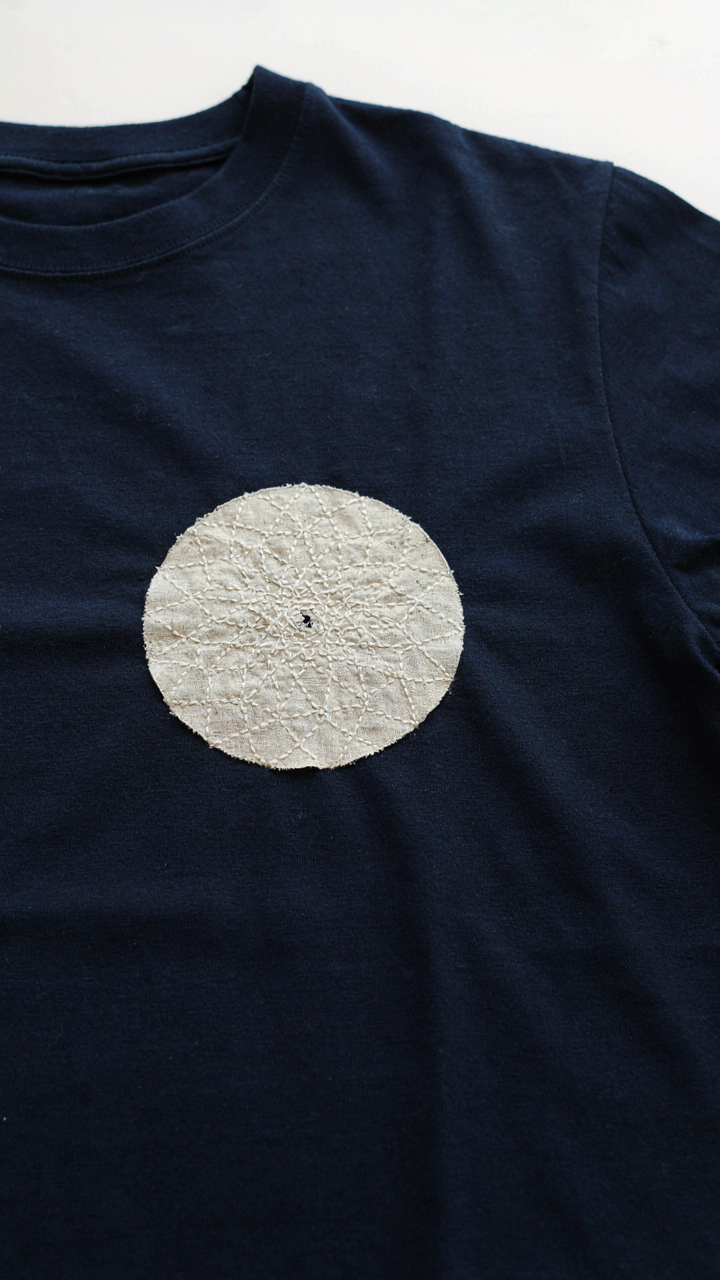
Artful Patching Turns Damage Into Design
You want permission to keep wearing the shirt without looking like you couldn’t afford to replace it. Here’s the real mechanism: visible mending uses contrast and intentionality to flip the narrative from “broken” to “deliberate.” Sashiko and embroidery work because they announce the repair. You’re not hiding the flaw. You’re framing it as a choice. Japanese sashiko uses running stitches in geometric patterns to reinforce fabric while creating visual rhythm. Embroidery covers the hole with thread work that becomes decoration. Both require no special equipment beyond needle, thread, and time. The repair becomes the focal point instead of something to conceal.
The execution is straightforward. Select thread in a contrasting color to the shirt fabric. Use sashiko with parallel lines running perpendicular to the grain, spacing stitches consistently every quarter inch. For embroidery, sketch a simple pattern around or over the hole, then stitch it with backstitch or split stitch for control. The stitches need to be tight enough to stabilize the area but decorative enough to read as intentional design work. Your shirt now carries proof of use instead of proof of negligence.
When Flaws Become Your Signature
Visible mending transforms a t shirt from standardized product into a unique object with history attached. Psychology calls this the endowment effect applied to clothing. You value something more when it bears evidence of your interaction with it. A patched shirt signals you’ve worn something long enough to damage it, then chose to keep it rather than discard it. That’s the opposite of the consumption pattern most brands depend on. The patch becomes a marker of your actual relationship to the object, not a manufactured story.
This works because it’s true. The hole happened. The repair happened. Everything visible is factual rather than marketed. Start by accepting the damage as permanent. Choose a mending method that complements your existing wardrobe colors. Stitch it clean. Wear the shirt. The patch gains meaning through repeated use. After six months or a year, it’s no longer a repair. It’s the version of that shirt you own.
Beyond The Patch: Preventing Future Fabric Failure
How Washing Breaks Down Cotton
You want to believe your shirt just wore out naturally. The reality is harsher: you accelerated its death every time you washed it. Washing is mechanical degradation. Think of it like abrasion in materials engineering: every cycle subjects fibers to friction, heat stress, and chemical exposure that compounds over time.
Hot water opens fiber structures. Agitation from the machine separates fibers at their weakest points. Detergent breaks down the natural oils that hold cotton together. Most people wash at temperatures far hotter than necessary, then wonder why their shirts thin out after a year. Cold water and a gentle cycle extend fabric life measurably. Reduce wash frequency by wearing items twice before cleaning them.
Storage That Stops Silent Damage
Moisture and friction are your shirt’s two main enemies in storage. Cramming shirts into tight spaces creates constant pressure points where fibers bend, stress, and eventually separate. Humidity invites mold and mildew, which eat through cellulose. The common advice to just hang everything misses the mechanism: hanging works only if you have proper spacing and airflow.
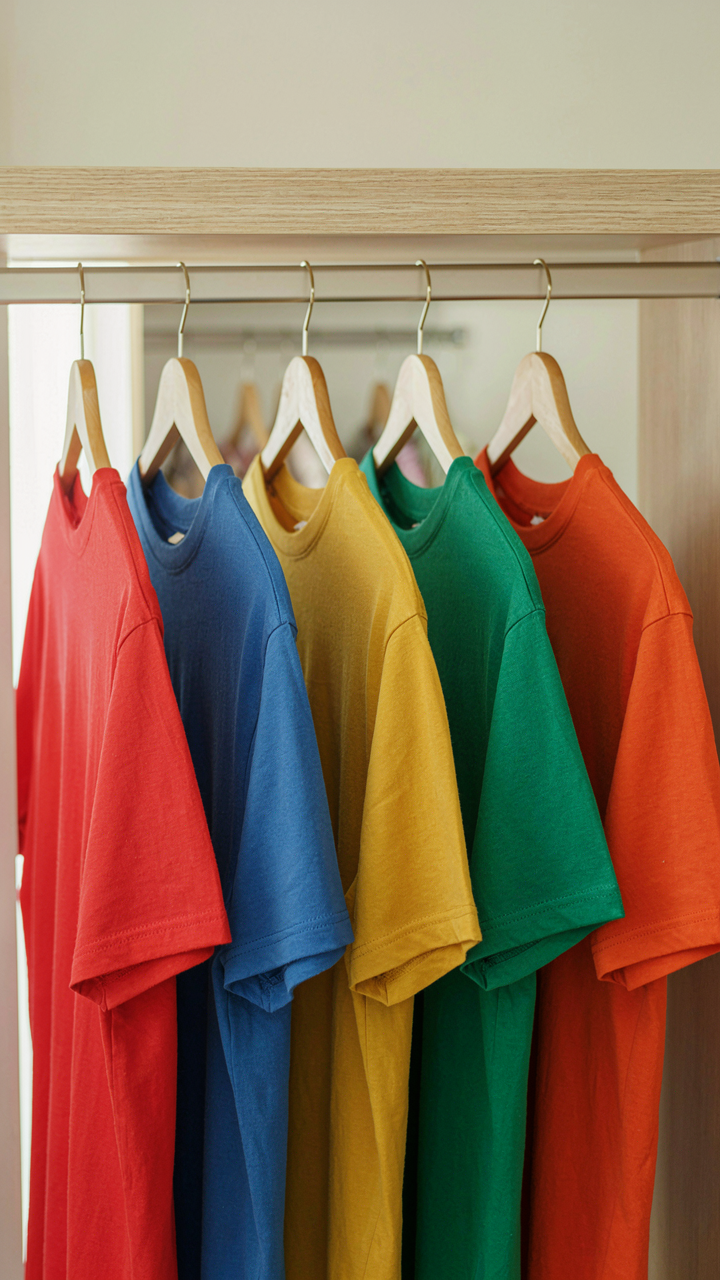
Fold heavy knits and stack them loosely on shelves with breathing room between layers. Hang t-shirts on wooden hangers spaced at least two inches apart to prevent compression. Keep storage areas between 40-50 percent humidity and away from direct sunlight. Check folded items every few months and refold along different lines to prevent permanent crease weakening. Store only clean, completely dry garments to block microbial growth at its source.
The Economic Fallacy Of Disposable Fashion

Cost Per Wear: Mend Versus Replace Analysis
You want to believe replacement is cheaper so you don’t have to sit with a needle for thirty minutes. Here’s the mechanism: economics calls this “cost per wear,” and it’s the only number that matters when deciding between mending and buying new. A fifteen-dollar t-shirt worn fifty times costs thirty cents per wear. Repair it once for two dollars in thread and labor, and you extend that shirt to one hundred wears. Now it costs fifteen cents per wear.
Most people calculate wrong because they see the repair cost upfront and the replacement cost as “just buying something I need anyway.” That’s accounting fiction. You don’t need two identical shirts. You need one shirt that doesn’t have a hole. The replacement option forces you to absorb the full fifteen-dollar cost again, compressed into the moment of purchase, which makes it feel cheaper than it is. Mending spreads the cost across additional wears, making the per-wear economics invisible and therefore seemingly expensive.
Long Term Value Of A Repaired Garment
A repaired garment compounds in value the way people think about investments but almost never think about clothing. Repair extends utility without degradation if done correctly. A t-shirt that’s been mended once and cared for still performs identically to an unmended one. It wears the same, breathes the same, holds its shape the same. What changes is the timeline. Instead of rotating to disposal at month four, it stays in active rotation at month eight, then month twelve.
The real mechanism here is replacement cycle disruption. Fashion systems depend on frequent purchase cycles to function. When you repair, you interrupt that cycle and compress years of value into garments you already own. One mended shirt eliminates the need for one future purchase. Over a decade, someone who repairs three shirts per year prevents thirty unnecessary transactions. That’s thirty dollars minimum in direct savings, plus the time saved shopping, plus the freed mental load of managing fewer decisions. Mending breaks the system by making garments stay useful longer than the industry expects.
The Real Obstacle Isn’t The Hole; It’s Your Aversion To Deliberate, Visible Mending

You don’t throw out shirts because of holes. You throw them out because admitting you fixed one feels cheap. That’s the real problem. Stop treating repairs like failures. Pick up a needle today, patch that hole, and wear the damn shirt. Your clothes will last longer, your wallet stays fatter, and you’ll stop being a slave to fast fashion. Mending isn’t a skill your grandmother had. It’s a rebellion your wallet is begging for.