

The Unseen Layer: Why Most Maternity Outfits Fail The Lens Test
Fabric Weight Kills The Frame
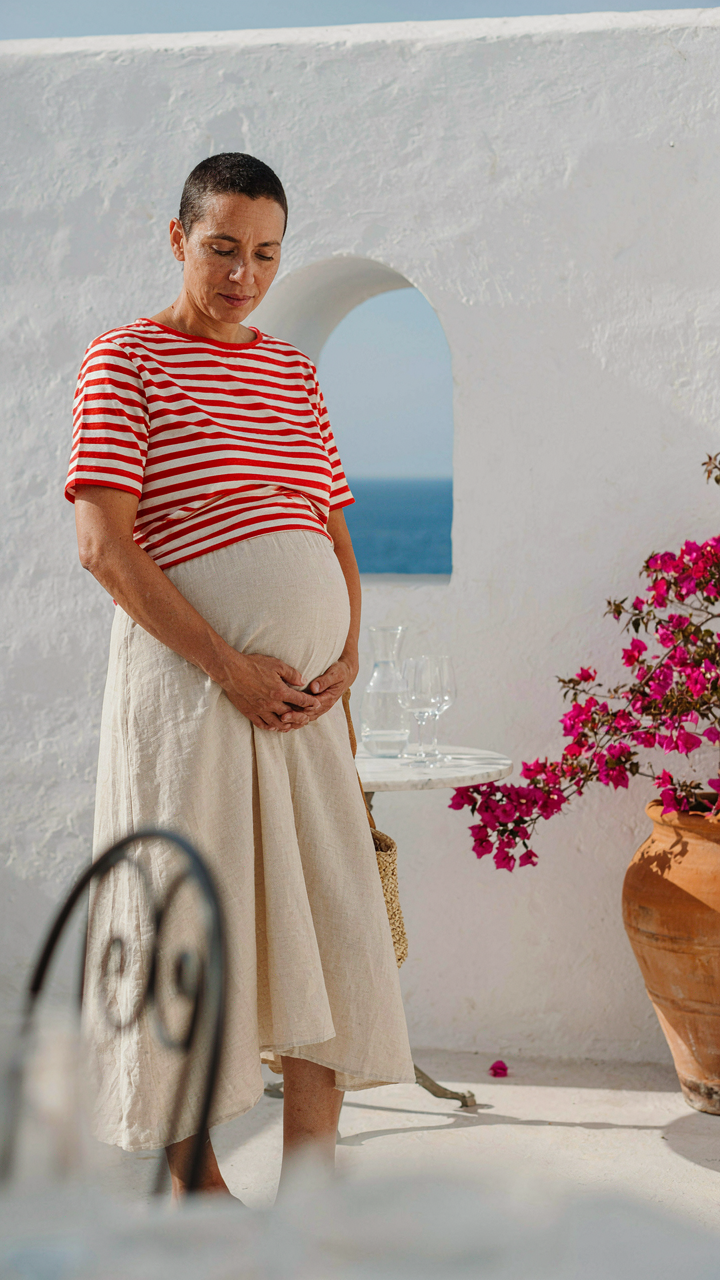
You want the camera to see your shape, not your insecurity about showing it. Most maternity outfit advice defaults to loose, heavy fabrics under the false assumption that bulk conceals. It does the opposite. Thick cotton, heavy jersey, and dense blends absorb light and flatten dimension. The camera records what light reflects. Dead fabric creates dead images.
Lightweight, structured materials work because they hold form without requiring volume. Linen, cotton blends with stretch, and technical fabrics drape around contours instead of away from them. A fitted maternity dress in a breathable weave photographs with actual depth. The fabric moves with posture, not against it. Weight matters more than opacity.
Posture Drives Outfit Architecture

Think in terms of physics: gravity and tension. Your outfit isn’t a static object draped on your body. It’s a system responding to how you hold yourself. Poor posture bunches fabric at the waist, creates unflattering folds at the belly, and collapses the visual line from shoulder to knee. Good posture creates tension that pulls fabric taut and reveals silhouette.
Most maternity outfits fail because photographers and stylists ignore this mechanism. They pick clothes then hope the pose fixes the problem. Reverse it. Start with the posture required for the outfit to work, then select pieces that respond to that specific positioning. A wrap dress works only if your shoulders stay back. A high-waisted piece requires your ribcage lifted. The outfit doesn’t create the look. Your frame does.

The Proportionality Principle: Dressing For The New Center Of Mass

Balance In Visual Weight Distribution
You want to look like yourself, not swallowed by fabric or reduced to a belly. That’s the actual fear here, masked as a styling question. Borrowed from physics: in a system where mass distribution shifts, equilibrium requires counterbalance. Pregnancy moves your visual center forward. Clothes that ignore this make you look lopsided in photos. The fix isn’t hiding the belly. It’s redistributing visual weight so the frame feels intentional, not reactive.
Dark, structured fabrics on top anchor the upper body. Lighter or patterned materials below create visual lift without contradiction. The principle works because the eye reads a composition as balanced when no single element dominates. Maternity-specific cuts already account for belly volume, but pairing them with strategic color blocking multiplies the effect. Your silhouette reads as deliberately composed instead of accidentally expanded.
Lines That Build, Not Obscure
Everyone says wear horizontal stripes to look wider. Ignore that. Vertical seams, empire waists, and diagonal necklines create visual structure that photographs actually require. Horizontal lines flatten dimension in still images. What you need is direction. Seams running down the center of the torso create a pathway the camera follows. This sculpts the form rather than hiding it, which is why maternity shoots with structured necklines and angled construction outperform the oversized-tee approach every time.
The cut itself does the work, not the volume. A scoop neck with side ruching creates definition without constraint. A draped wrap dress uses fabric movement to suggest shape. These aren’t tricks. They’re construction methods that make the camera see structure instead of mass. When you choose an outfit, trace the seams with your finger. If lines lead the eye toward the belly intentionally instead of around it, the photographer captures presence instead of evasion.
The “Non Maternity” Maternity Wardrobe: Strategic Sourcing
Work With What Already Exists
You’re hunting for maternity photoshoot outfits because you don’t want to look pregnant—you want to look intentional. Military strategy calls this “adaptation,” and it applies here directly: you already own pieces that photograph better than anything labeled “maternity.” The mechanism is simple. Maternity lines exist to solve a problem you don’t actually have during a photoshoot. You’re not moving for eight hours. You’re posing. That changes everything about what works.
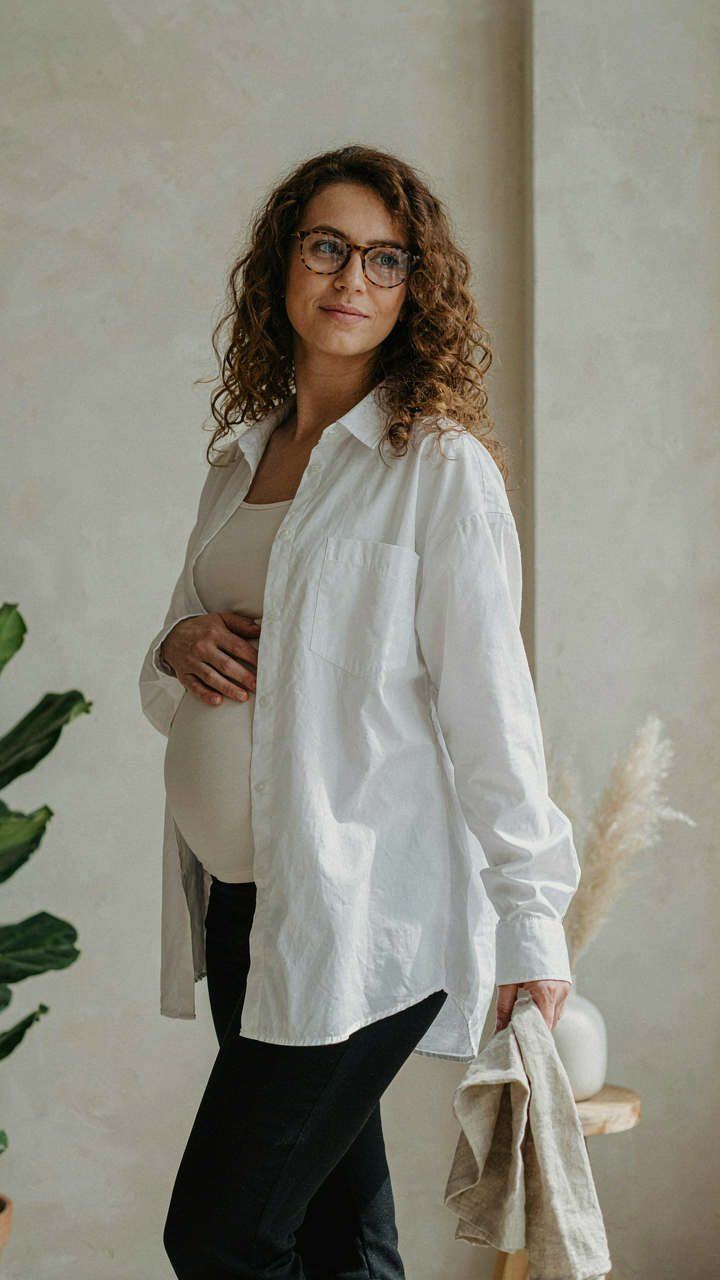
Standard advice says buy maternity-specific pieces. Wrong. Most maternity clothing prioritizes function over visual hierarchy, which means it obscures your shape rather than framing it. Your existing wardrobe—oversized button-ups, flowing dresses, structured blazers you own—already does the real work: creating silhouette through fabric choice and cut, not through elastic panels and ruching. The photoshoot outfit isn’t about fitting your body. It’s about controlling how the camera reads your body’s proportions.
Retailers That Stock Flattering Options
Start with vintage and thrift retailers, where oversized construction was intentional design rather than accommodation. Pieces from the 1970s and 1980s offer volume without maternity branding, with fabrics that hold shape on camera. Linen naturally drapes in ways jersey cannot. High-end contemporary retailers like Mango and COS carry minimal silhouettes in neutral tones that photograph as intentional, not pregnant. Department stores like Nordstrom stock transitional pieces designed for layering—slip dresses, long cardigans, structured coats—that work better in photos than maternity-specific alternatives.
- Vintage and thrift stores: Oversized cuts from past decades photograph better than modern maternity lines. Fabric weight matters more than current trends for camera presence.
- Contemporary minimalist brands: COS and Mango offer neutral, structured pieces that don’t signal pregnancy through design. Clean lines read as intentional styling choices.
- Department store layering options: Nordstrom and similar retailers stock slip dresses, long cardigans, and structured blazers that create silhouette without maternity construction.
- Men’s oversized tailoring: Thrift men’s blazers and button-ups offer volume and weight that maternity pieces lack. Photographer sees garment construction, not body accommodation.
- Linen and natural fiber retailers: Eileen Fisher and similar lines prioritize drape and structure. Natural fabrics hold their shape under lighting better than synthetic blends.
The tactical move: audit your closet first. Pull pieces that photograph well in non-pregnancy contexts. Then source gaps at retailers selling intentional oversizing, not accommodation. You’re not buying a maternity wardrobe. You’re buying photogenic clothing that happens to fit your current body.
Beyond The Gown: The Power Of Intentional Undergarments

The Anchor Layer Under Everything
You want the photos to look effortless, which means you’re willing to spend money on invisible infrastructure to make that happen. That’s the real motive here. The mechanism is simple: what sits under the maternity gown determines whether your silhouette reads as intentional or accidental. Think of undergarments like load-bearing walls in architecture. They don’t appear in the final image, but they determine whether the entire structure holds or collapses. A maternity support band worn under your gown compresses the lower abdomen just enough to create definition between your bump and the rest of your body. This separation is what photographers actually need to create dimension on camera.
Most maternity clients skip this step entirely or wear whatever they grabbed from a drawer. Wrong. A properly fitted maternity bra in the right size prevents spillover and keeps your chest positioned forward instead of sagging into the bump. Pair this with a seamless high-waisted support band designed for pregnancy, not generic Spanx. The support band should sit below your bump, not across it. This creates a visual anchor point that gives the photographer something to frame around. The outfit itself becomes readable as design rather than looking like you’re just wearing fabric.
Where Most People Fail
Everyone defaults to assuming nude or black undergarments work universally. They don’t. The color of your undergarments matters because thin maternity gowns and fitted dresses show visible panty lines or color shifts if you’re not precise. Sheer or semi-sheer fabrics expose whatever sits underneath, so matching your undergarment color to your skin tone becomes tactical, not optional. Many maternity photoshoot outfits use layered, lightweight materials that create silhouettes through texture rather than density. This means an ill-fitting bra or visible band creates shadow lines the camera picks up.
The real error most people make is confusing support with compression. Compression garments squeeze everything flat, which contradicts the entire point of a maternity shoot, which is celebrating the pregnant silhouette. Maternity undergarments support and define without flattening. A compression shapewear worn under maternity photos makes you look like you’re hiding something rather than owning it. Instead, choose undergarments designed specifically for pregnancy that offer gentle shaping through structured panels and supportive fabrics. Ensure your bra is fitted within two weeks of your shoot since breast size shifts throughout pregnancy. Have the photographer do a test shot fully clothed so you can see undergarment visibility before committing to final images.
The Environmental Context: Outdoor Maternity Photos & Light

How Fabric Behaves Under Natural Light
You want to look good in the photos because you’re aware this moment won’t come again, but most advice on “fabric choice” misses the actual mechanism. Borrow from optics: fabric has translucency, and natural light either exposes or conceals it depending on fabric weight and weave density. Thin cotton and lightweight silk become see-through when backlit by sun. Thick knits and structured materials hold their shape and color because they block light rather than transmit it.
Direct sunlight on matte fabrics creates definition in wrinkles and texture. Glossy fabrics bounce light and flatten the image. Chiffon and gauze diffuse light, softening edges but risking a washed-out silhouette in harsh afternoon sun. Shoot in golden hour or overcast conditions if you choose lighter, more translucent materials. Test the fabric in your home’s natural light before the session. Hold it against a window. If you see your hand through it, the camera will too.
Color Alignment With Actual Backgrounds
Forget the generic “neutrals are safe” pitch. That’s incomplete advice for people avoiding decisions. What matters is contrast ratio and saturation matching. A muted sage green works against forest because both operate in the same saturation range. A bright white maternity dress against green trees creates visual conflict because the saturation levels clash, pulling the viewer’s eye to the boundary instead of the form.
Desaturated earth tones, dusty jewel tones, and warm grays sync with natural environments because they reflect the color temperature already present in outdoor light. If shooting near water, cool tones read better. Near trees and grass, warm neutrals and muted greens work. The photographer controls this by choosing location first, then outfit second. Ask your photographer about the exact location, time of day, and existing light conditions three days before the shoot. Match your color palette to those specifics, not to generic rules.
The Narrative Alignment Protocol: Outfit To Announcement

What Your Clothes Are Actually Saying
You want the photoshoot outfit to validate the pregnancy before anyone else does. That’s the real driver here. The outfit functions as a messenger in pregnancy announcement photography. Think of it like semiotics—the study of signs and symbols—where your clothes become the sign itself, not decoration around it. The outfit either communicates intentionality or accident. A deliberate choice signals control over the narrative. A generic maternity dress signals you didn’t think about it.
The announcement photoshoot demands outfit coherence with your actual life. Wear what you’d wear on a regular Tuesday if you wanted people to believe the moment. If you’re corporate, that means tailored pieces. If you’re casual, that means clean denim and intention. The outfit shouldn’t perform pregnancy. It should perform you, visibly pregnant. This distinction separates photos people believe from photos that feel staged.
Consistency Across The Frame
Don’t coordinate outfits across multiple people in the shot unless you’re actually going for a family announcement series. Most maternity announcement photoshoots fail because partners wear mismatched energy. If your partner shows up in gym clothes and you’re in a structured blazer, the photo splits into two different stories. Alignment means everyone in frame operates at the same level of intentionality.
Consistency also means color strategy. Neutral base colors—black, white, cream, navy—let the bump and faces dominate the visual frame. Patterns pull attention sideways and fragment the focus. The outfit hierarchy should be: body shape first, then face, then details. Everything else is noise. Stick to single-color or monochromatic combinations. Confirm the photographer understands this before the shoot so they frame accordingly.
Dynamic Posing, Static Style: Outfits For Movement
Fabrics That Flow Without Compromise
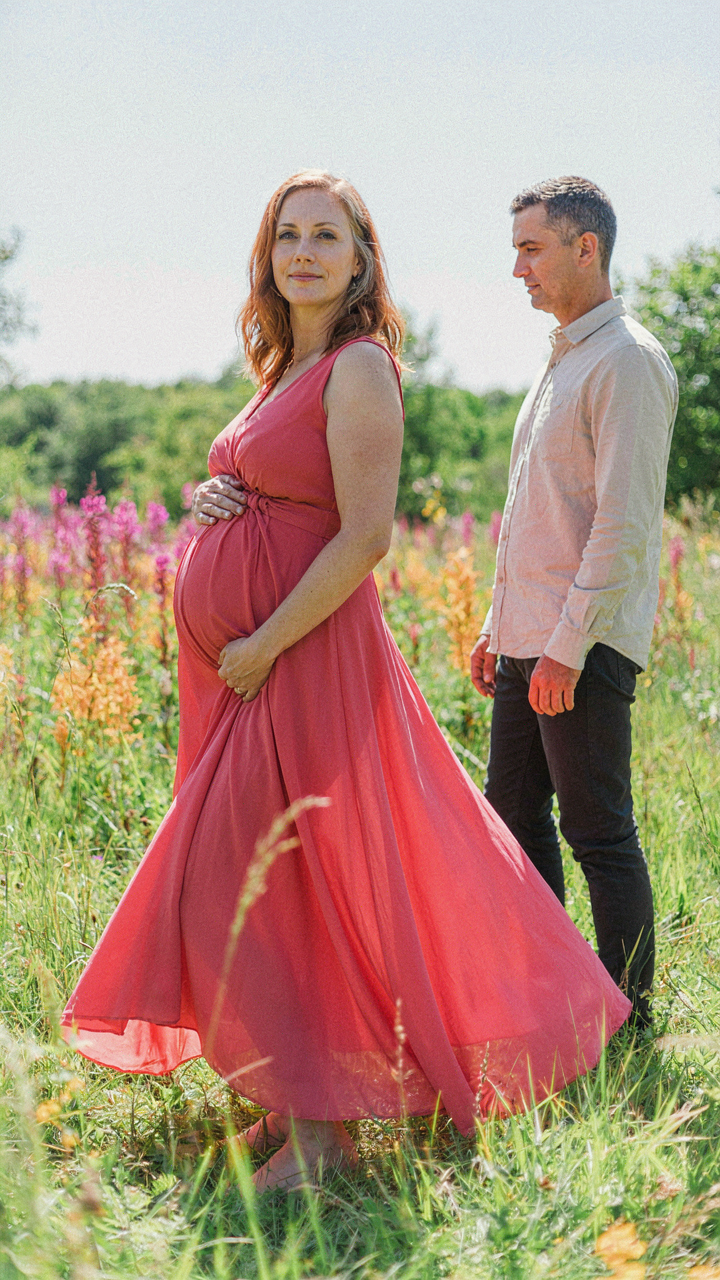
You want to look effortless in motion because stillness reads as stiffness in photographs, and stiffness kills the entire narrative you paid for. Fabric choice is your first line of defense. Natural fibers like cotton jersey, linen blends, and silk move with your body instead of fighting it during pose transitions. Synthetic stretch materials work too, but they trap heat and restrict airflow during longer shoots. The mechanism is simple: gravity plus momentum plus fabric weight equals how your silhouette reads across multiple frames. Heavy cotton or rigid polyester bunches and folds unpredictably. Lighter materials with directional hang create consistent lines.
Drape matters more than pattern here. A maxi dress in fluid rayon moves differently than the same cut in structured cotton sateen. The fabric needs enough body to hold shape between poses but enough give to accommodate your changing belly position as you shift from one side to the other. Test movement in your outfit before the shoot. Walk, sit, stand on one leg, reach overhead. Watch how the fabric responds. If it clings, binds, or puckers during basic movements, it will betray you on camera.
Couples Wear Complementary Tension, Not Matching
Coordinated outfits for couples sessions fail because they broadcast insecurity, not intimacy. The real dynamic that photographs well is controlled contrast. One partner grounds the frame while the other moves through it. Wearing identical colors or cuts removes the visual hierarchy that makes movement readable. Instead, choose a shared palette with different silhouettes. He wears structured fabric and a simpler line. She wears flow and layering. When he reaches toward her during a pose, the stillness of his frame makes her motion visible. When she leans into him, the softness of her fabric emphasizes his stability.
The technical term from dance composition is positive and negative space. Apply it here: one outfit occupies visual weight, one creates breathing room. If both partners wear loose fabrics, the frame becomes amorphous and poses lose clarity. If both wear fitted pieces, the couple reads as separate objects rather than a connected unit. Coordinate on neutrals or earth tones to keep focus on positioning, not costume. The photographer will direct you both into poses that emphasize the woman’s changing form while the partner’s stance provides visual anchor. That anchor only works if his clothing doesn’t compete for attention.
Minimalist Impact, Maximum Effect: Simple Maternity Poses And Outfits
Subtract To Sharpen Focus
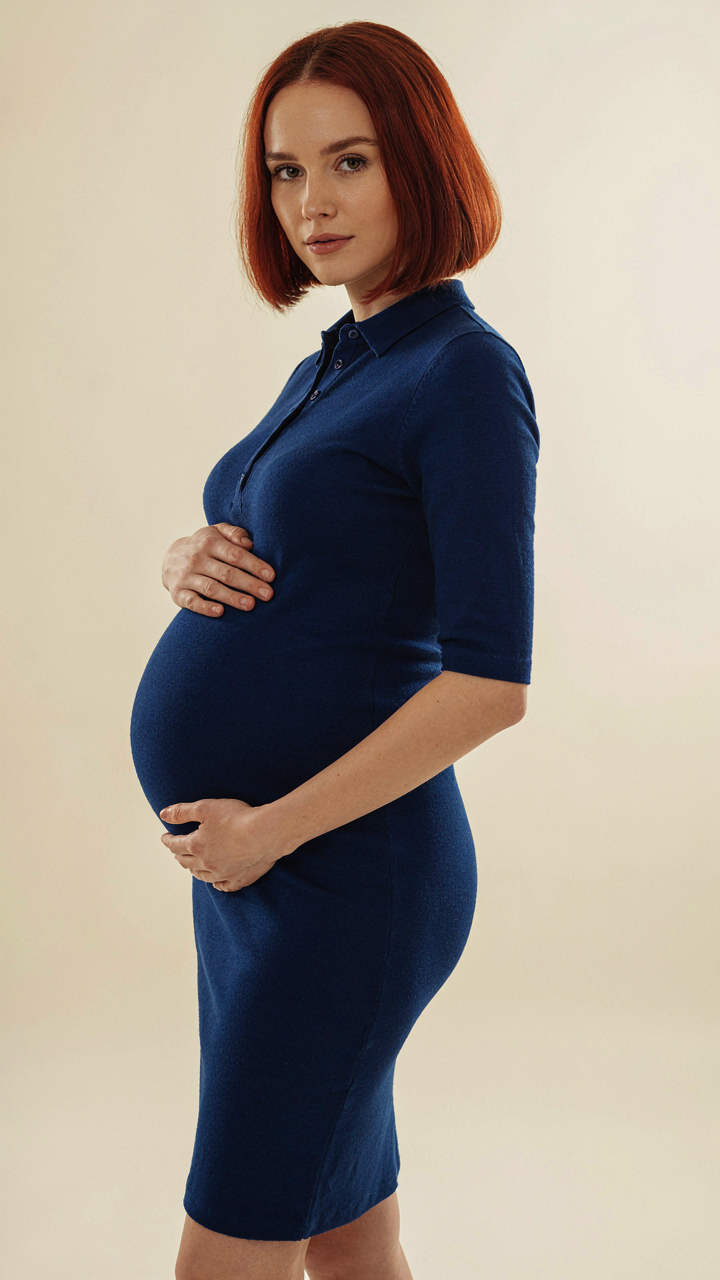
You want to look “put together” without the effort showing, which really means you’re afraid the camera will expose that effort as fake. Here’s the mechanism: subtracting elements forces the viewer’s eye to the one thing left standing. In design, this is called negative space. Apply it to maternity outfits by removing competing colors, patterns, and layers. What remains gets scrutinized, so it must earn its place.
Most pregnant women layer defensively—adding cardigans, scarves, and accessories to hide the belly or feel “normal.” This backfires. Each addition fragments attention and dates the photo within five years. Instead, choose one focal point per shoot: the belly silhouette, the fabric drape, or the face. Build backward from there.
- Solid Colors Over Patterns: Neutrals and jewel tones photograph without distraction. Patterns compete with your face and body shape for attention. Plain fabrics read clearly in still images.
- Fitted Silhouettes Without Bulk: Stretchy, body-mapped fabrics show the pregnancy without adding tent-like volume. Avoid oversized cuts that flatten your shape to nothing.
- Bare Shoulders Or Arms: Exposed skin draws the eye inward and creates visual contrast against covered areas. This amplifies the sense of vulnerability that makes maternity photos work.
- Minimal Jewelry: One statement piece or none at all. Bracelets and rings distract hands. Necklaces compete with the neckline and collarbone.
- No Busy Footwear: Heels or sandals barely register in most framing. Barefoot or simple flats keep feet neutral and prevent visual clutter below the frame.
The photographer’s job is easier when your outfit has architecture, not decoration. This also means you’re comfortable moving and posing naturally. Constraint creates freedom when you strip away the noise.
Enduring Style Over Seasonal Trends
Trends die fast because they’re designed to. Maternity photos stay on walls and in albums for decades. What looks current now becomes “so 2024” within three years, and you’ll resent the images because the outfit screams a specific moment instead of capturing a timeless one.
The reason this matters: pregnancy is already time-bound. Adding trendy elements double-dates the photos to both the pregnancy and the fashion moment. Timeless pieces anchor the image to the experience itself, not the era’s costume. Solid wrap dresses, plain linen shifts, simple tank maxi dresses, and neutral wrap tops outlast any seasonal aesthetic.
Trends in maternity photography rotate around sleeve styles, necklines, and hemlines. Bell sleeves were heavy five years ago. Cutout details had a run. Cold-shoulder tops peaked. These come and go because they’re visual novelties, not structural solutions to photographing a pregnant body. When you choose a silhouette based on how it photographs—not how it trends—the image remains relevant to itself, not the calendar.
Invest in one or two high-quality neutral pieces that fit now and photograph well. Cotton, linen, and jersey knit age better than trendy synthetics. The fabric quality shows in photos. Cheap material photographs cheap. This is non-negotiable if the image will live publicly or in print for years.
The Real Obstacle Isn’t Finding The Perfect Outfit; It’s Confronting Your Own Aesthetic Insecurity

You already know what you want to wear. The real problem is you don’t trust yourself enough to wear it. Every maternity photoshoot outfit idea you scroll through is a mirror showing you what you think you should become instead of what you already are. Stop collecting inspiration and start collecting evidence of your own taste. Pick one outfit today that scares you slightly, then book the shoot before your brain talks you out of it. Your pregnant body doesn’t need permission to take up space.