

The “Less Is More” Fallacy: It’s About Intent, Not Quantity
Minimalism As A Design Principle, Not A Restriction
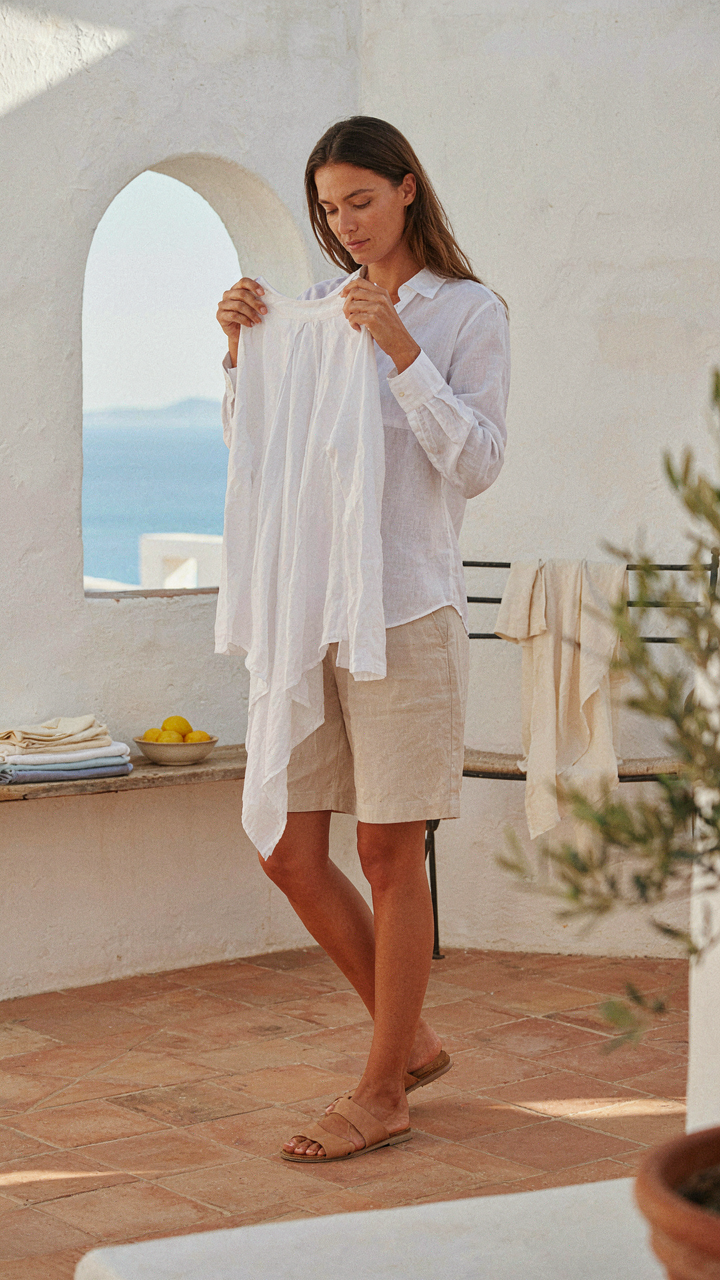
You want permission to own fewer clothes without feeling like you’re sacrificing. The real mechanism is this: minimalism in European summer dressing isn’t about deprivation. It’s about constraint forcing intentionality. Design principles borrowed from architecture teach us about negative space—the empty areas that define the form itself. In summer outfits, negative space is skin exposure, breathing room between fabrics, and strategic silence in color. These aren’t gaps. They’re structural.
The common advice says “wear less.” That’s lazy. What actually works is wearing fewer pieces that each do more work. A linen shirt becomes an outer layer, a beach cover, a light jacket replacement. Linen’s historical role in Mediterranean and North African climates proves this—it survived centuries because the fiber itself solves heat, not because minimalism was trendy. You’re not restricting yourself. You’re designing with constraint as the tool.
Deconstructing The True Cost Of Excess Layers

Every extra layer costs you thermally. This is physics. Cotton retains moisture against skin. Polyester traps heat. Each additional piece compounds the problem in heat above 28 degrees Celsius. Europeans mastered summer heat long before air conditioning, and they did it by eliminating, not accumulating. A tourist wearing a tank top under a linen overshirt under a lightweight cardigan is paying a temperature debt they’ll feel by afternoon.
The real cost hides in your behavior. More pieces mean more decisions before leaving. More laundry cycles. More suitcase space if traveling. More maintenance during the season. Mediterranean summer dressing strips this away. Wear a fitted linen shirt in white or natural. Wear one pair of neutral shorts or lightweight trousers. Wear one cover-up if needed. Before adding a fourth item to your rotation, ask: does this replace something or add to the heat load?

The “European Girl Style” Illusion: Beyond The Instagram Filter

What Actually Looks Good On You
You want permission to believe that copying an outfit from a travel influencer’s feed will make you feel put-together. It won’t. The real mechanism is this: European summer style isn’t about owning the right pieces—it’s about understanding the constraint that makes people edit ruthlessly. Europeans live in small spaces with limited closet room. That scarcity forces intentionality. You can’t afford to buy pieces that don’t work together, so you buy pieces that do.
The gap between “European Girl Summer” and actual elegance is the gap between consumption and curation. Most advice tells you to buy a linen shirt, buy neutral linen shorts, add gold jewelry. That’s the Instagram checklist. The actual mechanism is restraint: knowing what not to buy. A person in Paris owns fewer pieces, wears them more often, and replaces them slowly. She doesn’t chase seasonal trends because storage space and money are both finite. You replicate that outcome by setting a hard limit on how many items you can add per season, then making each one work with at least five existing pieces.
Pieces That Still Work In Five Years
The common advice is backwards here. Everyone says “invest in classics”—a phrase so hollow it means nothing. Here’s what actually matters: European summer pieces are built from materials that age visibly but well, cut to proportions that don’t lock you into a trend cycle, and designed for a climate that demands function before fashion. Linen, cotton, and untreated leather are not timeless because Instagram says so. They’re timeless because they physically don’t degrade into unwearable garbage inside two years.
A well-cut linen shirt from 1995 still reads as deliberate today. Fast-fashion construction from 2023 reads as dated now. The mechanism isn’t mystical taste—it’s material science and garment construction. Thinner seams fail. Synthetic blends pill and hold body odor. Real linen softens. Real cotton breathes consistently. Build your European summer foundation by buying pieces you’d wear identically in year one and year five, then test that theory by not retiring them.
The Material Science Of Comfort: Your Second Skin

Natural Fibers Beat Synthetic Every Time
You want to look like you belong in Europe, not like you’re sweating through a polyester costume. The mechanism is simple: natural fibers wick moisture and regulate temperature because their molecular structure allows vapor to escape. Synthetics trap heat and sweat against your skin, creating a microclimate that defeats the entire point of dressing for summer. This isn’t preference. This is physics.
- Linen: Absorbs up to 20% of its weight in moisture without feeling wet. Fibers are hollow, allowing air circulation through the fabric itself, making it ideal for Mediterranean climates.
- Cotton: Breathes consistently and handles sweat effectively, though it dries slower than linen. Quality matters here—high thread count cotton stays cooler than cheap blends.
- Silk: Regulates temperature through protein fiber structure that responds to body heat. Expensive but performs in both heat and unexpected cool evenings, common across European summer.
- Hemp: Stronger than cotton and more breathable, though less common in fashion. Gains traction in premium European brands for durability and thermal management.
- Ramie: Faster-drying than linen with similar breathability. Less popular but found in high-end Italian and French summer collections for technical performance.
The real cost isn’t the price tag. It’s wearing synthetic blends that cost less upfront but force you to change clothes mid-day or shower twice. Natural fibers tolerate eight to ten hours of actual heat without degrading your appearance or your body’s temperature regulation. Buy once, wear all summer.
Air Movement Through Weave Architecture
European tailors understand weave density the way engineers understand load capacity. Loose weaves create channels for air to move through fabric rather than around it. Tight weaves trap heat. The gap between these two states determines whether you’re comfortable at 35 degrees Celsius or miserable.
Linen’s crosshatch pattern naturally creates this airflow. Cotton poplin works similarly but requires looser weave to match linen’s performance. Italian summer shirts use thread counts around 80 to 120, not the 400-count bedsheet density that suffocates you. The weave structure also affects how fabric moves on your body. When air flows through the material rather than stagnating against your skin, evaporative cooling actually functions. That’s not comfort. That’s operational efficiency. Choose fabrics where you can see light through them when you hold them up.
The “Outfit For Women Summer” Protocol: Strategic Silhouette Selection

Loose Fits And Air Circulation As Design Imperatives
You want to look intentional while staying cool, which means you’re actually afraid loose clothing reads as sloppy. It doesn’t. The mechanism is thermodynamics: fabric distance from skin creates an air gap that prevents sweat from adhering to your body and traps convection currents. Linen shirts, wide-leg trousers, and A-line dresses exploit this principle. Mediterranean summer dressing evolved around this fact, not aesthetics. Fitted clothing locks heat against your skin. Loose construction lets air move through the garment chamber and dissipate temperature before it builds.
The silhouette matters more than the fabric weight. Cotton poplin fits loose but still breathes. Linen in a tight cut defeats the purpose. Designers in hot climates learned this centuries ago: volume is the tool, not the material alone. A loose kaftan moves air better than a fitted silk dress. The cut creates the conditions for cooling. Choose garments that hang away from your body at the torso and thighs, the heat zones.
Avoiding Constriction For True Freedom Of Movement
Everyone says “wear what feels comfortable,” which is useless advice because comfort is subjective and lazy. The real principle is kinetic efficiency: constriction costs energy. Your body works harder to move when elastic bands, tight armholes, or cinched waists restrict you. In European summer heat, wasted energy converts directly to sweat production. Loose sleeves, high arm holes, and natural waistlines reduce muscular friction. This isn’t about feeling good. It’s about your body burning fewer calories, which means lower core temperature and less thermal output.
Test this by walking ten minutes in fitted shorts versus loose linen shorts in sun. The fitted version forces your muscles to work against resistance. The loose version lets your limbs move through their full range with minimal opposition. European summer pieces historically featured drawstring waists, dropped shoulders, and sleeve openings you can fit your hand through. These details weren’t decorative. They were load reduction systems. Select garments where seams sit at your natural joints, not across muscle groups.
The Dainty White Top Anomaly: Why It Works (Sometimes)
White Reflects, But Context Matters
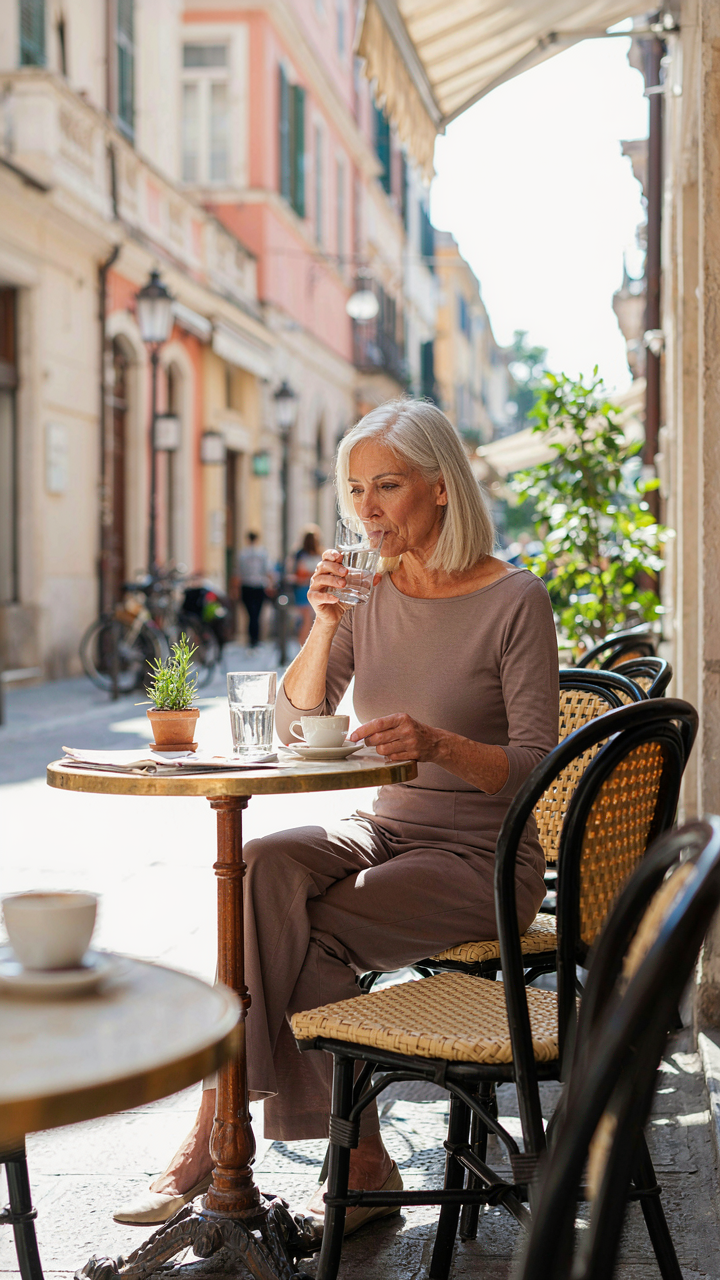
You want the white top to work because it looks effortless and expensive. The real mechanism is physics: white fabric reflects more solar radiation than dark colors, which absorb it. But this only matters if the fabric itself doesn’t trap heat underneath. A dense white cotton tee reflects surface radiation while still conducting warmth into your body. The reflection benefit collapses the moment humidity rises above 60 percent.
The gap between theory and practice is where most people fail. Light color alone doesn’t cool you down—air circulation does. White linen, however, works differently. Its loose weave allows airflow while the fiber’s hollow structure moves moisture away from skin. This is why Mediterranean cultures adopted white linen centuries before anyone measured solar reflectivity. The material makes the color work, not the reverse.
Structure Over Surface
Smooth, thin white fabric is worthless in actual heat. Lace and textured weaves create air pockets that break up the boundary layer of hot air clinging to your skin. A white silk camisole fails; a white linen shirt with visible texture performs. The texture doesn’t just look intentional—it functions as a micro-ventilation system.
Pick white tops with open weaves, cutouts, or structured lace overlays if you live or travel in heat above 28 degrees Celsius. The gaps in the fabric force convection rather than trap dead air. Flat, seamless white is a status signal, not a cooling strategy. If you’re choosing based on appearance alone, you’ve already lost the game to someone wearing the same color in gauze.
The Anti Trend Uniform: Your Summer Style Clothes System

Build A Capsule, Not A Closet
You want to look effortless without thinking about it. That’s the real draw here, not some aesthetic principle. The mechanism is constraint. When you own five pieces that work together, you eliminate decision friction and guarantee you’ll look intentional every time you dress. European summers demand this ruthlessly because heat destroys complexity. Layering fails. Pattern mixing reads as chaos. You need pieces that function alone and together without negotiation.
A capsule for European summer heat contains linens in neutral tones, one quality cotton shirt, two or three lightweight trousers or shorts, a single linen overshirt for layering when temperature drops at night, and one piece in a secondary color that ties to your neutrals. That’s the entire system. Everything pairs with everything else. You repeat outfits without looking poor. You move fast. Most people bloat their summer wardrobes with one-off pieces they wear twice. You’re building for rotation and reliability instead.
Thermal Layers Work Like Military Doctrine
Physics gives us the framework here. Military strategists talk about layering as a force multiplier, and your skin operates the same way. The boundary layer is the air trapped closest to your body. In summer heat, Europeans use thin fabrics to create micro-boundary layers that allow convection to pull heat away from skin while radiation bounces back outward instead of absorbing into your core. Linen does this better than cotton because its looser weave creates more air channels.
The real mechanism isn’t about wearing more layers. It’s about fabric selection and fit. Tight clothing traps heat against skin. Oversized linen lets air move. A fitted linen shirt over bare skin in 35-degree heat keeps you cooler than a loose cotton t-shirt because the linen structure manages moisture and air flow more efficiently. Europeans figured this out centuries ago when cotton wasn’t available. Thin, loose linen wasn’t aesthetic choice. It was survival engineering. Start with linen as your base, then add a lightweight overshirt when evening temperature drops, and you’ve solved the entire thermal problem without adding bulk.
Outfit For Women Aesthetic: Beyond Surface Level Appeal

Comfort As Performance, Not Compromise
You want to look effortless in summer heat because looking effortless signals you belong there—that you’re not struggling. Here’s the mechanism: comfort is thermodynamic efficiency. When your body regulates temperature without fighting fabric, you move differently. Your posture shifts. Your face doesn’t show strain. The aesthetic isn’t created by the outfit; it’s revealed by the absence of physical compromise. Linen and cotton breathe because their fibers have loose molecular structure. Looser weave equals air circulation. This is physics, not opinion.
European summer style works because it accepts climate instead of performing against it. The Côte d’Azur aesthetic didn’t emerge from fashion magazines—it emerged from people who spent entire days outside and needed clothes that didn’t betray them. A woman in properly fitted linen moves with intention. She doesn’t tug at fabric or shift weight to find relief. That calm presence reads as confidence. Comfort stops being a luxury and becomes the foundation of how you appear to others.
Confidence Built On Repetition, Not Rotation
The common advice is wrong: more outfit variety builds more confidence. False. Confidence comes from knowing exactly how a garment behaves. When you wear the same high-quality cotton slip dress three times weekly through July, you stop thinking about it. You know its weight at 32 degrees Celsius. You know which undergarments disappear beneath it. You know how it moves when you sit. This removes the cognitive load of getting dressed. Your brain has bandwidth for actual presence instead of internal wardrobe audits.
European women often cycle through five to seven core pieces rather than rotating forty. The strategy mirrors how military uniforms work: remove decision friction, preserve mental energy for execution. A neutral palette amplifies this effect. When everything coordinates without thought, you don’t dress; you assemble. Each morning becomes mechanical. This frees your attention for how you actually show up. That’s where real aesthetic power lives—not in novelty, but in the ease that comes from knowing your tools.
The “Outfit Ideas White Pants” Deception: When They Fail You

The Weight Problem Nobody Names
You want white pants to work because they look effortless and expensive. Here’s the mechanism: fabric weight determines how much light passes through it, and most white pants sold at retail are too thin for European summer heat. The physics is simple—lower thread count equals higher transparency, period.
Cotton voile and linen blends under 150 GSM (grams per square meter) become see-through when you sweat or sit down. European summers aren’t just hot; they’re humid, which means your body releases moisture constantly. A thin white pant clings and reveals. Most mall brands cut white pants at 110-130 GSM to keep costs down and feel “breathable,” but they sacrifice opacity entirely.
- Linen blends above 180 GSM: Maintains structure and opacity while staying breathable. Common in Italian and French makers.
- Cotton twill with silk content: Adds density without weight. Resists cling and drapes cleanly against skin.
- Structured cotton-modal blends: Modal fibers reduce transparency while increasing breathability compared to pure cotton.
- Double-faced cotton: Two layers fused together provide built-in opacity. European tailors use this for premium white trousers.
- Linen-cotton at 160+ GSM: The baseline for European summer whites. Anything lighter is a gamble.
Check the fabric weight before buying. If the tag doesn’t list GSM, hold it to direct light indoors. You should not see your hand clearly through it. This single check stops 90 percent of white pant failures before they happen.
Visibility And What Goes Underneath
Your undergarments become a tactical problem the moment white fabric gets thin. Everyone knows this creates embarrassment, but nobody states the actual consequence: visible panty lines or briefs force you to choose between comfort and opacity, and you’ll choose wrong.
Nude-toned seamless briefs work better than most people test, but only if the undertone matches your skin exactly. Mismatches show as shadows. High-waisted white pants need a different brief cut than low-rise versions—the band placement changes what shows. Some Europeans solve this with internal shorts built into premium white trousers, but that costs significantly more. If you’re buying standard pants, accept that seamless briefs in your exact skin tone are not optional, they’re mandatory equipment.
The Post Heat Evolution Beyond Outfits Summer Girl

Buy Pieces That Survive More Than One Season
You’re looking for permission to feel like you’re not wasting money on clothes that won’t matter in six months. That’s the real anxiety here. The mechanism is simple: fast fashion masquerades as budget-friendly until you calculate cost-per-wear. A fifty-euro linen shirt worn thirty times costs less per use than a twenty-euro synthetic piece worn five times before it pills or fades.
European summer heat demands fabrics that tolerate repeated washing and years of sun exposure. Linen, cotton weaves, and quality hemp hold their structure and color. Invest in neutral base pieces in these materials now, and you build a system that adapts across multiple summers without replacement. The tactical move: buy one versatile piece every season instead of five disposable ones.
The Algorithm That Replaces Trend Chasing
Think of outfit selection like a decision tree in computer science: each variable eliminates options until one path remains. Temperature, activity, location, and existing pieces form the nodes. Your personal algorithm removes guesswork and the false urgency to keep buying. Most people treat summer dressing like fashion consumption rather than a systematic response to environmental constraints.
Build your algorithm by logging what you actually wear during heat. Track the pieces that cycle back, the temperatures where they fail, and the situations they suit. After two weeks, patterns emerge. You’ll notice which combinations work, which pieces stay unworn, and which gaps actually need filling. That data replaces inspiration boards and trend lists. Start documenting today in a simple spreadsheet: date, temperature, outfit worn, how long you stayed comfortable, and what failed.
The Real Obstacle Isn’t The Heat; It’s Your Attachment To Irrelevant Complexity

You already own everything you need for a European summer. The problem isn’t your wardrobe. It’s that you’re overthinking fabrics and trends instead of embracing the core principle: simplicity beats heat. Stop accumulating options. Open your closet today and commit to five pieces that work together. That’s your summer uniform. Everything else is noise drowning out your actual life. Simplicity isn’t boring. Simplicity is freedom.