
The Minimalist’s Blueprint: Capsule Outfits With Purpose

Strategic Selection For Maximum Utility
You want this section to tell you that fewer clothes somehow means more freedom. That’s the fantasy. The real mechanism is constraint as clarity. In economics, scarcity forces optimization. A striped shirt outfit works because the stripes impose visual rules: they demand complementary pieces that either harmonize or contrast, never compete. This limits your options until only the functional combinations remain.
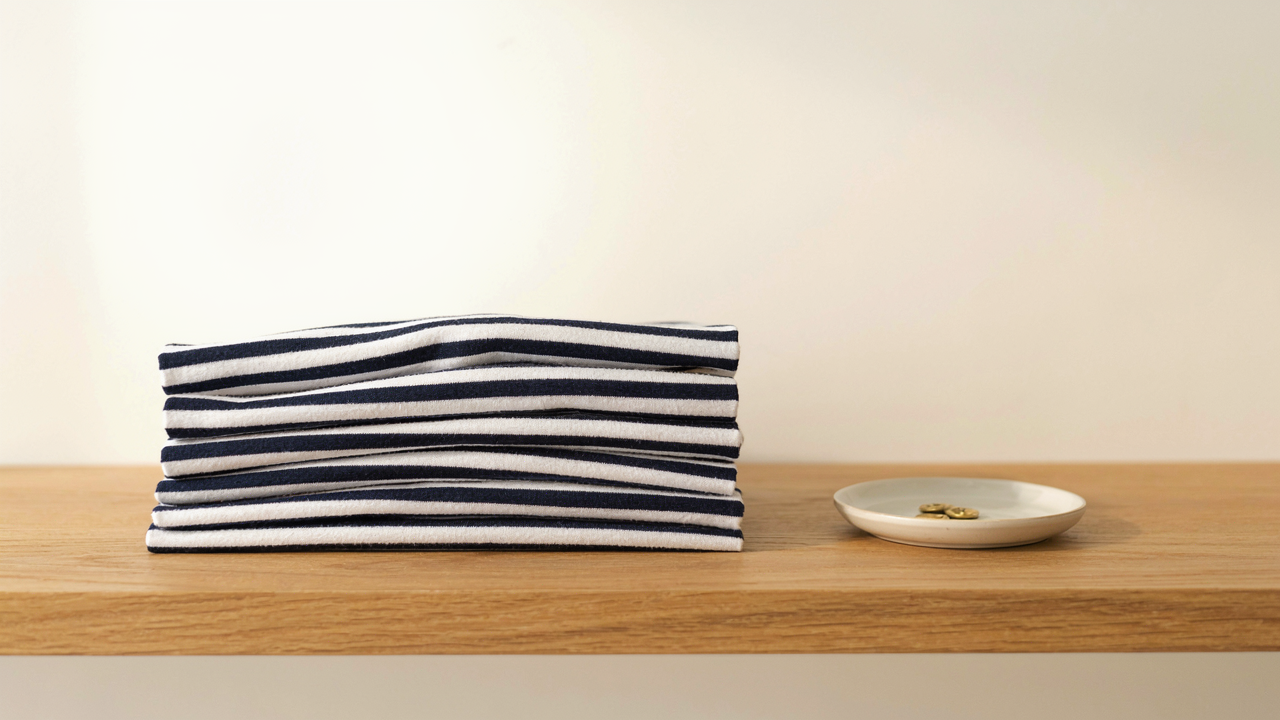
The Breton stripe pattern originated in Brittany as workwear. The white and navy ratio was practical, not aesthetic. That same constraint applies now. Choose one striped shirt as your reference point, then build backward. Navy and white stripes demand neutral bottoms: charcoal, black, cream, or denim. The pattern does the work. Everything else recedes. You stop debating and start dressing.
Avoiding Analysis Paralysis With Core Pieces

Most advice says build a capsule by buying versatile basics first. That’s backwards. You already own enough basics to paralyze you. Start with the striped shirt instead. It forces every other decision. A single Breton stripe becomes the non-negotiable anchor. From there, your choices collapse to maybe four or five valid bottom options. Shoulders relax. The friction drops.
The mechanism is decision fatigue reduction through forced elimination. Once the striped shirt owns the visual weight, secondary pieces lose their burden of proof. A plain white tee under an unbuttoned Breton stripe works. Dark jeans work. A linen blazer works. Sneakers work. Not because these pieces are special, but because the stripes have already solved the style equation. Pick one combination and repeat it until it becomes invisible. That’s when it actually works.

The “Oversized” Fallacy: Mastering Proportionality

How Silhouette Works, Not Vibes
You think oversized reads as confident when it actually reads as uncertain. The real mechanism here borrows from geometry: a garment’s visual weight distributes across your frame based on volume-to-distance ratios. A Breton shirt that drapes too far from your body creates negative space that reads as formless, not intentional. The shirt stops signaling anything about you and starts signaling that you haven’t thought about what you’re wearing.
The oversized trend convinced people that fit doesn’t matter anymore. Wrong. Fit is the only variable that separates someone who owns a striped shirt from someone the striped shirt owns. Oversized works when it’s deliberate: structured fabrics that hold shape, strategic layering that creates defined lines, proportions that still acknowledge your actual body. A Breton worn three sizes too large isn’t fashion. It’s surrender.
Intention Determines The Cut
Oversized Bretons serve specific purposes, and each demands different execution. A genuinely oversized Breton over a fitted base layer reads as curated. The same shirt over formless sweatpants reads as lack of opinion. The mechanism is simple: tighter secondary layers create visual anchoring that makes the loose primary layer feel chosen rather than accidental.
Get specific about what you’re layering under. A slim or tapered fit underneath forces contrast that reads as intentional. The oversized Breton becomes a design tool instead of coverage. Pair it with straight-leg or slightly tapered bottoms, not relaxed silhouettes. This single adjustment turns an outfit from ambiguous into directed. The visual tension between fitted and loose elements is what signals you understood the assignment.
Beyond Blue: How To Style Blue Striped Shirt With Authority

The Contrast Rule That Signals Status
You want people to notice you’re intentional, not accidental. Most outfit advice treats color as decoration. Color theory treats it as contrast, and contrast is what the eye actually registers. The blue striped shirt sits in a mid-range value, meaning it needs opposition to read as deliberate rather than safe. Dark neutrals absorb it. Light neutrals wash it out. The mechanism is simple: contrast creates hierarchy, hierarchy creates authority.
Pair the blue striped shirt with charcoal or navy bottoms to anchor it downward and force attention upward to your face and communication. If you want the shirt to lead the outfit, use cream or stone-colored trousers instead, which push the stripes forward without clashing. The stripe pattern itself becomes visual noise without a solid color to stabilize it. One color principle governs every decision: your background controls whether the foreground reads or disappears.
The Fit Problem Nobody Names
Most advice says “wear what fits.” That’s incomplete because fit operates as a trust signal before anyone evaluates the outfit. A blue striped shirt that drapes or bunches broadcasts indifference faster than any color mistake. The shirt must sit flat against your chest without pulling, taper through the waist without binding, and end at your wrist bone exactly. Sleeve length determines whether stripes enhance or confuse your proportions.
The stripe’s visual weight matters here. Wider stripes demand a sharper fit because they can hide a sloppy silhouette, but they can also bloat you if the shirt swallows your frame. Narrower stripes require precision tailoring or they read as cheap. The solution is always the same: try the shirt on before committing. The stripe pattern magnifies every fitting flaw because your eye tracks the line consistency across your body. If the stripes shift or curve around your midsection, the outfit fails before color or accessories matter at all.
The Long Sleeve Striped Law: Thermal Regulation For Cognitive Edge

Core Temperature Controls Thinking
You want to believe outfit choice doesn’t matter. It does, but not for status reasons you’re imagining. Thermal biology is the mechanism: your core body temperature directly regulates prefrontal cortex efficiency, which controls decision-making and focus. Borrow a term from thermodynamics called “steady state” – the striped shirt outfit achieves this by creating micro-environments your body doesn’t fight against. Long sleeves in particular act as insulation layers that stabilize temperature fluctuation rather than resist it.
The common advice treats stripes as decoration. Wrong. Stripes function as visual information density that your nervous system processes differently than solids. Dark and light alternation forces mild optical engagement without cognitive load, which paradoxically calms the visual cortex. A breton-striped long sleeve shirt over a base layer creates a predictable temperature envelope. Your body stops thermoregulating and starts thinking instead. Wear it in variable indoor environments (office to meetings to outdoors) and you’ll notice focus stretches longer because your system isn’t cycling through micro-adjustments every hour.
Layering Strategy For Environmental Control
Adaptive layering isn’t about looking prepared. It’s about removing the hidden tax of environmental mismatch. When your body temperature drifts outside your optimal cognitive range, your autonomic nervous system hijacks attention to stabilize it – this happens before conscious awareness. A long sleeve striped shirt becomes your control variable. Wear it as the primary layer, add or remove an unstructured overshirt based on room temperature, and you’ve engineered predictability into your physical state.
The mechanism is straightforward: temperature stability enables sustained attention. Most people layer wrong, using heavy outer pieces that trap heat in volatile ways. Instead, the striped shirt stays constant while outer layers adjust in minute increments. This keeps your thermoregulatory load flat. Step into a cold conference room, you add the overshirt. Transition to a warm one, you remove it. The striped pattern remains your visual anchor and your thermal baseline. The system works because you’re not choosing new clothing – you’re executing a protocol based on environmental data, which frees cognitive resources for actual work.
The Button Up Shirt Outfit Women: Unlocking Versatility
How The Button Up Actually Works
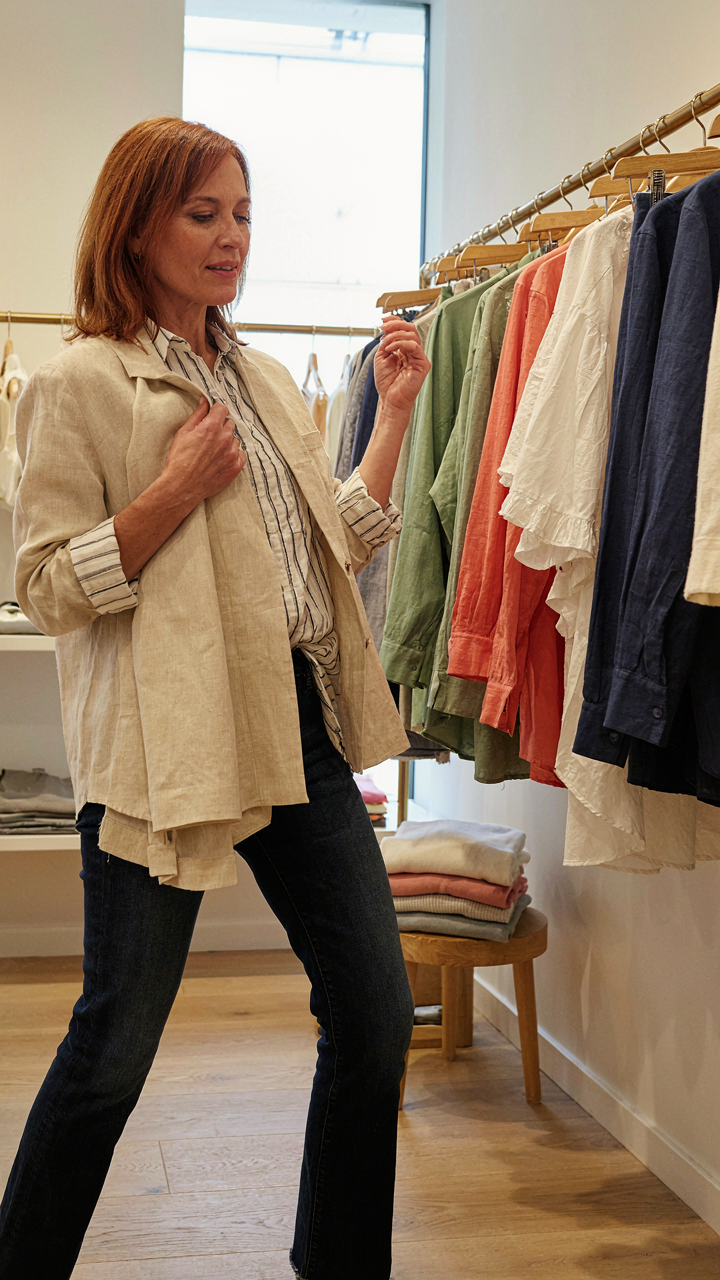
You want versatility because you’re tired of owning ten things that do one job each. Here’s what most people miss: the button-up’s real power isn’t in how many ways you can wear it, it’s in how it functions as a load-bearing frame in the economic sense. Each layer, accessory, or tuck you add or remove changes the outfit’s perceived value without changing the core asset. The Breton striped shirt operates identically. Its horizontal lines act as visual anchors that accept additions without competing for attention.
The button-up strips context clues from your outfit because the structure stays constant. Wear it open over a tank top in summer, closed under a blazer in winter, tied at the waist for casual weight distribution. The garment’s skeleton remains recognizable. The striped shirt works the same way: those lines create predictability, which means you can layer aggressively or minimally without the outfit fragmenting into visual noise. That consistency is what actually creates flexibility.
Formal To Casual Without The Wardrobe Swap
Everyone says “just change your shoes” or “add a cardigan.” That’s incomplete. The real mechanism is anchor point substitution: you’re not removing formality, you’re transferring where formality lives. A striped button-up under a structured blazer gets read as formal because the blazer owns the silhouette. The same shirt layered under an unstructured cardigan reads casual because the cardigan surrenders shape. The stripes stay identical. Context moved, not the piece.
To execute this properly: identify which layer currently carries formality weight in your outfit, then deliberately move that weight to a different layer. Formal version runs the stripes with tailored trousers and a crisp button-up fully fastened. Casual version runs identical striped shirt half-tucked with denim and the blazer replaced with an open overshirt. The shirt does no work in either case—it anchors while context shifts around it. This is why the striped shirt outfit performs across settings without requiring different pieces.
The Blue White Striped Shirt Outfit Protocol: A Study In Contrast

When Navy Demands Neutrals
You want permission to look intentional without trying too hard. The mechanism is simple: high contrast eliminates visual noise. Your eye lands on the stripe pattern first, not on confusion between competing colors. Navy and white stripes paired with neutral bottoms and shoes create a clear focal point. The brain reads this as deliberate. It registers as confidence because there’s nothing fighting for attention.
Pair navy and white Breton stripes with charcoal or black trousers. Add white sneakers or leather shoes. The stripe becomes the statement. Everything else recedes. This works because contrast forces hierarchy. Your outfit stops being a collection of pieces and becomes a composition. The viewer doesn’t ask what you’re wearing. They see the pattern first and trust your judgment.
Tonal Play Within The Same Palette
Most people get this wrong because they assume stripes demand opposition. They don’t. Subtle variations in blue and white tonality create depth without chaos. Light blue stripes on white backgrounds read different than navy on white, even though both sit in the same color family. The difference signals intention and sophistication in a way pure contrast cannot.
Wear a lighter blue stripe shirt with medium blue jeans or a navy blazer. Layer a cream or off-white overshirt. The tones speak to each other without shouting. This approach works in professional settings where pure contrast feels aggressive. It also works in casual contexts where you want coherence instead of drama. The protocol is simple: stay within two to three tones of the same color, let the stripe width and fabric weight do the work.
The Blue Striped Shirt Outfit Women: The Power Of Understated Authority

Confidence Without Performance
You want people to take you seriously without trying too hard. The mechanism is contrast: a blue striped shirt creates visual rhythm that keeps attention moving, which signals you’re organized enough to coordinate patterns. The stripes themselves operate like a psychological anchor, breaking up solid space so observers process coherence before they assess confidence. This is why the blue striped shirt works better than solid colors for authority—it’s doing the work of looking intentional without announcing effort.
The blue striped shirt outfit works because it builds authority through restraint rather than dominance. Navy or royal blue stripes on white demand less interpretation than bold solids. You’re not commanding the room visually; you’re already in control of it. That distinction matters. Wear it with neutral bottoms and minimal jewelry. The shirt carries the statement. Everything else recedes.
Strategic Accents That Anchor Placement
Accessories are placement strategy, not decoration. Think of them as visual anchors that direct where someone’s eye lands first and how long it stays—borrowed from information design, where focal points determine reading order and credibility. A structured watch pulls attention to your wrist and hands where competence shows in gesture. A leather belt at the waist anchors proportions and signals intentionality about fit. These aren’t embellishments; they’re sight lines.
- Structured Watch: Directs eye to hands and wrists, reinforcing purposeful movement and punctuality perception without needing to state it.
- Leather Belt: Anchors the waist, creating a visual break that makes proportions read as deliberate rather than accidental.
- Minimal Gold Jewelry: A single necklace or pair of earrings keeps visual weight centered on face and upper body where authority registers first.
- Neutral Bag: Leather or structured fabric in tan, black, or navy completes the outfit without competing with the shirt’s pattern.
- Classic Shoes: Loafers, flats, or low heels in leather ground the outfit and signal professionalism through material choice alone.
The real move is adding one accent per outfit zone—one at wrist, one at waist, one near the face. More than that and you’ve shifted from strategic to scattered. The blue striped shirt outfit commands attention because it knows where to place it. Anchor each piece deliberately, then stop.
The Striped Shirt As Uniform: A System For Decisive Action
Decision Fatigue Dies When You Stop Choosing
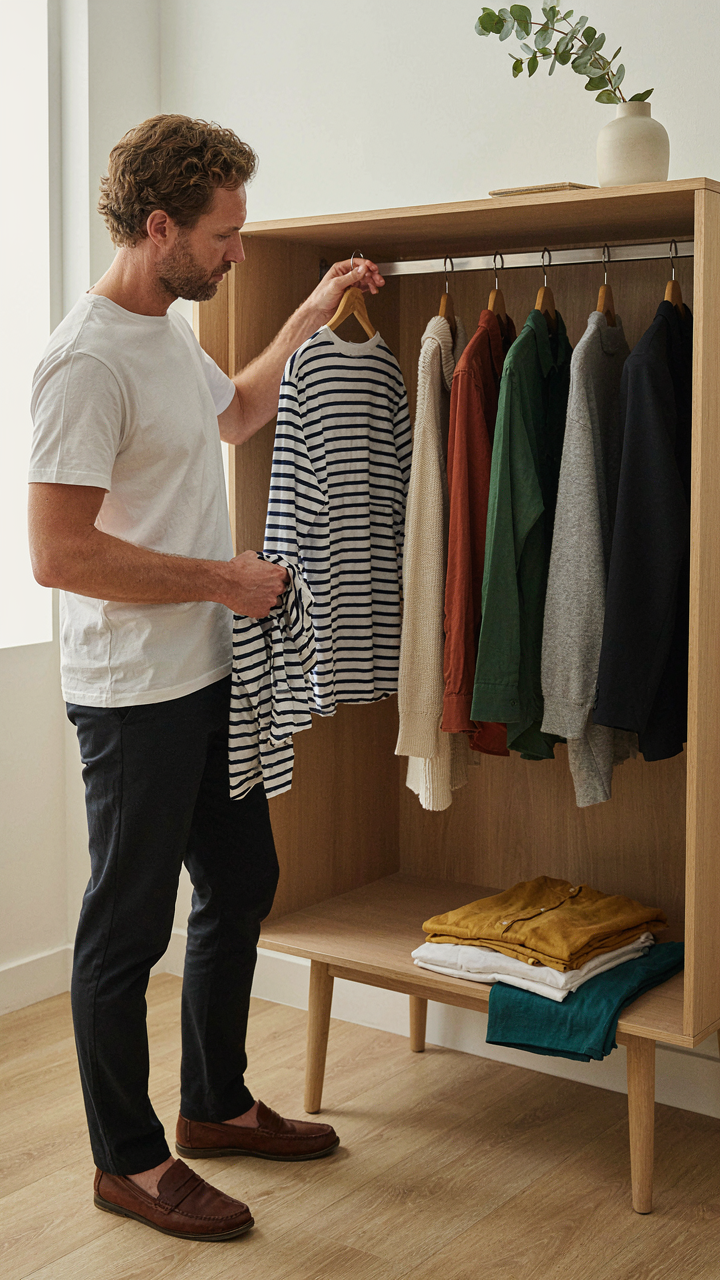
You want this section because you sense that constant choice is eroding your ability to do actual work. The mechanism is simple: every morning decision consumes glucose and willpower. Wear the same outfit type and you redirect that energy toward output. The striped shirt operates like inventory management in supply chain logistics. You stock one reliable item and stop treating your closet like a decision matrix. The Breton stripe—narrow, horizontal, alternating navy and white—became the French workwear standard for exactly this reason. Fishermen didn’t debate their shirts. They grabbed the reliable one.
Most people miss the actual benefit of a uniform. They think it’s about looking put-together. It’s not. It’s about erasing a decision category entirely so your brain handles the things that matter. A striped shirt outfit becomes your default because the pattern works across seasons, body types, and social contexts without requiring recalibration. You’re not building a look every morning. You’re executing a system.
The Personal Uniform Protocol
Building a uniform doesn’t mean buying five identical striped shirts and calling it done. It means selecting one striped shirt formula that works with everything already in your closet, then wearing it until the decision becomes invisible. Start with a single Breton stripe in a weight appropriate to your climate. Pair it consistently with one type of bottom—dark jeans, chinos, or trousers depending on your environment. Add one layer that rotates seasonally. That’s the template.
The protocol is mechanical: choose the striped shirt, choose the bottom, choose the layer, get dressed, move on. No variation. No internal debate. You return to this formula three to four times per week minimum. After two weeks of repetition, the choice stops activating your decision-making system. Your hands reach for the pieces automatically. The striped shirt outfit becomes muscle memory rather than a selection process. This is when the actual efficiency gain kicks in and you stop burning mental resources on what to wear.
The Real Obstacle Isn’t Your Wardrobe; It’s Your Indecision Masquerading As A Search For Perfection

You don’t need another striped shirt outfit idea. You need to stop waiting for the perfect combination and wear what you own. Pick one look from this article and execute it tomorrow. Not next week. Not when you buy something new. The gap between knowing what works and actually dressing like you know what works is where most people die broke and invisible. Your striped shirt outfit becomes real the moment you stop thinking about it and start wearing it.