
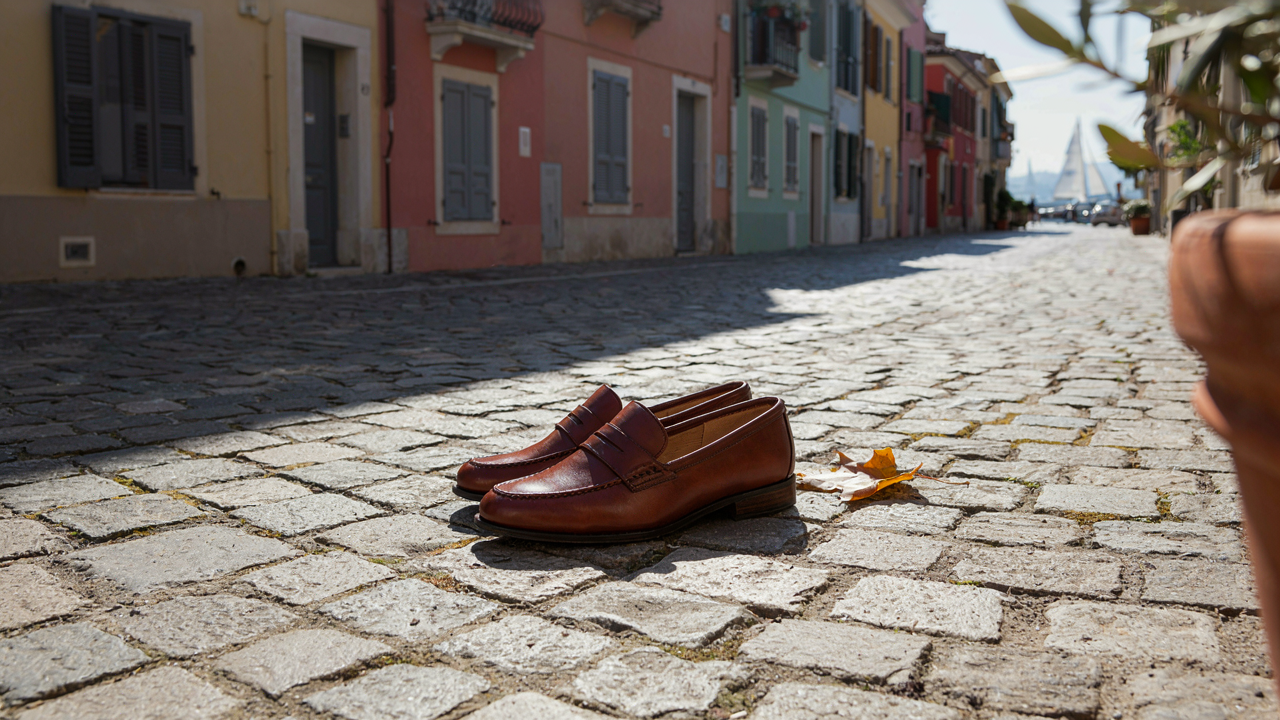
The “Cool Girl Loafer Outfit” Fallacy: It’s Not About The Loafer

The Loafer Is A Neutral Carrier
You want the loafer to do the work for you—to signal sophistication without effort. It won’t. The loafer is a blank slate with a specific silhouette. That’s all it is. The real signal comes from what you pair it with, how you wear it, and what your body language broadcasts while wearing it. Most women skip this and wonder why their loafers look like they borrowed their dad’s shoe.
What actually separates a considered loafer outfit from a confused one applies the principle of signal-to-noise ratio from information theory. Every element either reinforces your message or dilutes it. The loafer itself carries zero cultural weight on its own. A penny loafer in suede with a chaotic graphic tee and oversized blazer reads as a costume. The same loafer with a fitted knit, tucked-in shirt, and tailored trousers reads as intentional. The loafer didn’t change. The signal clarity did.
The Fabric And Fit Hierarchy Actually Matter

Everyone says “loafers go with everything.” This is lazy thinking. They go with specific fits and fabrics because loafers occupy a middle ground between formal and casual. Pair them with oversized, unstructured pieces and you lose the visual logic—the shoe looks like a punch line. The real work happens in silhouette precision and textile weight, not accessory mixing.
A loafer outfit requires one structural anchor beyond the shoe. That anchor is either tailored bottoms (flat-front trousers, pencil skirts, structured midi) or a fitted top that establishes vertical proportion. Pair loafers with fabric weight that matches their substance—linen, cotton blends, wool, suede. Lightweight, loose fabrics read as conflicting signals. The loafer’s structured form demands equal architectural commitment from your other pieces or the entire outfit collapses into visual noise.

The Unseen Architecture Of Casual Loafer Outfits Women

How Ratio Shapes Perception
You’re hoping proportion will fix what you already own. The real mechanism: proportion operates like geometry in fashion. Just as a triangle distributes visual weight differently than a rectangle, how you size your top to your loafer silhouette determines whether an outfit reads expensive or sloppy.
Loafers are inherently structured. They sit on your foot with defined volume. Pair them with oversized everything and you create visual chaos. A fitted or tapered pant leg that hits at your ankle lets the loafer’s clean lines do their job. An oversized blazer works only when your lower half stays compact. The math is simple: structured shoe plus structured lower half equals coherence. Loose silhouettes on top then feel intentional, not accidental.
Texture Contrast Creates Dimension
Most advice tells you to “mix textures,” which means nothing. The actual principle from material science: opposition in surface finish creates visual separation. Loafers are typically leather or suede, both relatively matte or soft to the eye. Put them with raw denim, knit fabrics, or linen and they stand apart as a focal point instead of blending into a monochromatic blur.
Smooth leather loafers against cotton blends read flat. Suede loafers against structured wool or crisp cotton pop. A loafer outfit women actually wear succeeds when textures create contrast, not when they match. Try suede loafers with tailored linen trousers. The suede’s nap plays against the linen’s weave. Your eye lands on the shoe as intentional, not as an afterthought you grabbed from the closet.
The Loafer Skirt Paradox: Defying Expected Pairings

When Formality Breaks Down
You’re worried loafers only work with certain skirt lengths and that wearing them wrong kills your credibility. Here’s the mechanism: loafers carry formal weight, but formality isn’t about the piece—it’s about coherence. When you pair loafers with a skirt that breaks convention, you’re not violating the rule. You’re establishing a new rule through intention. Midi skirts, minis, and asymmetrical hemlines work with loafers because the loafer grounds whatever happens above it. The skirt’s job becomes adding texture or movement, not managing formality alone.
The common advice says loafers demand polished, conservative hemlines. Wrong. Loafers demand intention. A maxi skirt with a slit and loafers reads differently than the same skirt with ballet flats because the shoe shifts the visual weight downward and adds architectural precision. A linen A-line mini with loafers stops being casual dressing—it becomes directional. The formula isn’t about matching formality levels. It’s about using the loafer’s structured silhouette to anchor whatever visual statement the skirt makes, regardless of whether that statement is traditionally formal or not.
Subverting The Expected Through Contrast
Design uses tension as its primary tool for creating visual interest, and loafers outfit women works the same way. Put a structured shoe under a flowing or delicate skirt and you’ve created productive opposition. The loafer says stability. The skirt says movement. Together they communicate control over aesthetics rather than adherence to category. Pair a voluminous midi in soft fabric with a chunky leather loafer and the shoe pulls the entire outfit toward intentionality instead of letting it drift into decorative territory.
Skirts carry gendered expectation—softness, approachability, tradition. Loafers carry no apology. When you combine them directly, you’re naming a specific aesthetic argument: formality that moves, structure that breathes, polish that refuses to perform. A pleated skirt with loafers isn’t trying to be corporate. A slip skirt with loafers isn’t trying to be ladylike. The pairing overrides category and forces viewers to read the outfit as a deliberate choice rather than a default formula. To execute this, identify what the skirt communicates naturally, then choose a loafer weight and finish that contradicts that single quality—not all qualities, just one—and let that tension do the work.
The Alohas Loafers Outfit Protocol: Precision In Pairing
Color Theory Without The Bullshit
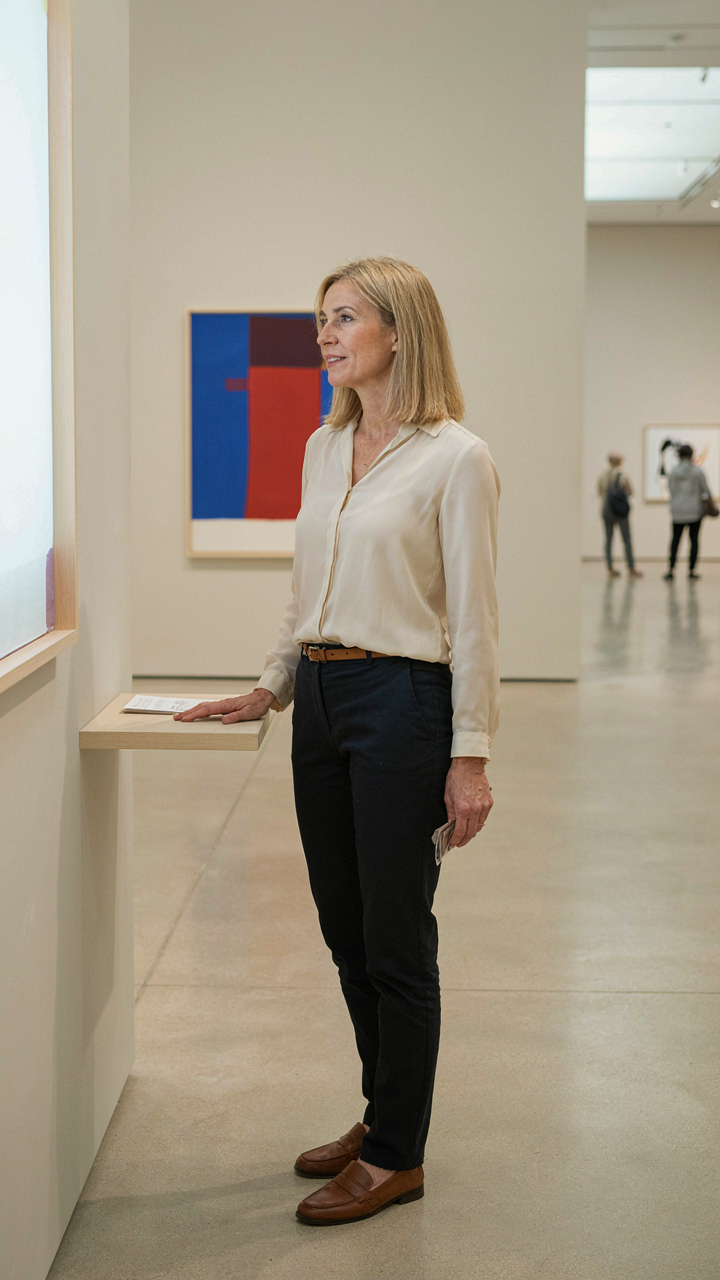
You care about this because you’ve bought outfits that felt “off” and you couldn’t name why. The real mechanism is contrast ratios. In color theory, contrast determines whether elements compete or complement. Loafers operate as your anchor piece, so they control the visual weight of your entire outfit. A cognac loafer against black pants creates high contrast and reads formal. The same loafer with camel or olive reduces contrast and signals ease. Your job is matching the contrast level to your intent, not picking colors that “go together.”
Most advice tells you to match your loafers to your bag or belt. That’s incomplete. What matters is the contrast ratio between your loafers and your bottoms. Dark loafers demand lighter or saturated pants to avoid merging into one mass. Light loafers need enough contrast above them to stay visible. Neutral loafers in tan or burgundy work across more scenarios because they sit in the middle of the contrast spectrum. Pick your loafer shade first, then build contrast upward from there.
Minimal Additions That Actually Land
Accessories amplify intent rather than add decoration. This is basic signal design: fewer elements mean each one carries more weight. A single gold chain necklace with black loafers reads intentional. Add a matching bracelet and you’ve diluted the signal into clutter. The protocol is simple: one statement accessory, everything else neutral. Your loafers already make a visual claim. Respect that claim by keeping secondary pieces quiet.
The mistake is thinking minimal means boring. It means deliberate. A structured leather belt that matches your loafer tone creates vertical continuity. A simple watch adds utility without noise. Socks, when visible, become an accent point. Most outfits fail because women add too many competing elements, each one fighting for attention. Decide what your loafers are saying, then let one accessory amplify that message. Everything else disappears.
Beyond The Generic: Curating Your Loafer Shoes Outfits

Scarcity Over Abundance
You want permission to buy fewer things and feel like you’re winning. The mechanism is economic scarcity: when you restrict supply deliberately, you increase the perceived value of what remains. In loafers outfit construction, this means buying three pairs that work across twelve combinations instead of twelve pairs that work in isolation. Each loafer becomes a system player, not a standalone purchase. Your wardrobe compounds instead of clutters.
The practical move is brutal simplicity. Pick loafers in one neutral leather tone, one suede tone, and one textured material like woven or patent. Build outfits around these anchors rather than chasing trend-specific colorways that expire. A burgundy leather loafer works with autumn palettes once, then dies. A cognac leather loafer works with monochrome, business casual, weekend dressing, and layered styling. Fewer pieces force intentionality.
Investment That Compounds Over Seasons
Most people treat loafers like trend items and wonder why they feel disposable. The real approach is selecting loafers built to age and adapt rather than break down or look dated. Quality construction means a leather upper that softens without tearing, a sole that can be resoled rather than discarded, and a silhouette that doesn’t scream the year it was made. This is how loafers outfit women who actually get years of rotation per pair.
The mechanism is simple: a loafer that costs more upfront but lasts eight years costs less per wear than a pair lasting two years at half the price. Examine the sole attachment method, leather grain, and heel construction before buying. Then build seasonal rotations where the same pair moves from wool trousers in winter to linen shorts in summer. You’re not refreshing your entire wardrobe; you’re maximizing what already exists by changing the context around it.
The Peche Loafers Outfit Strategy: Intentional Edge

Breaking The Quiet Luxury Trap
You want people to notice you without looking like you’re trying. That’s the real motive here. The mechanism is contrast. Loafers signal restraint, but restraint without intention reads as indifference. The outfit needs friction. Pair loafers with something that shouldn’t work but does: an oversized blazer in a bold color, wide-leg trousers with unexpected texture, or a graphic tee under a tailored vest. The loafer grounds the chaos. It’s not about breaking rules randomly. It’s about strategic placement of elements that make people wonder if you know something they don’t.
The common mistake is thinking loafers live in a neutral universe. They don’t. A burgundy leather loafer with a cream knit and black tailored pants doesn’t whisper compliance. It states a choice. Most women treat loafers as the safety option, the thing you wear when you’re unsure. Flip that logic. Use loafers as the anchor that lets you take bigger risks elsewhere in the outfit. The loafer absorbs visual weight. It lets you wear a vintage band tee or an unexpected pattern without looking scattered. That’s your permission structure.
Rebellion Doesn’t Need A Manifesto
Classic silhouettes exist because they work, not because they’re mandatory. Subtle rebellion means respecting the form while ignoring the script people wrote around it. Wear your loafers with cropped pants that actually show ankle, not because it’s trendy but because the proportion breaks the “business casual” expectation most people hold. Wear them with a slip dress and a leather jacket. Wear them with tailored shorts and a tucked-in linen shirt. The silhouette of the loafer stays formal. Your outfit context decides what that formality means.
The power move is this: intentionality beats trends every time. A woman wearing loafers with a midi skirt and a fitted turtleneck isn’t trying to be classic. She’s made three deliberate choices that align. A woman wearing loafers with loose trousers and an unbuttoned shirt isn’t trying to be edgy. She’s made three choices that create tension. Most people mix their signals by accident. You do it on purpose. That’s where the edge lives.
Haruta Loafers Women Outfit: Mastering The Androgynous Allure

Borrowing Masculine Codes For Feminine Strength
You want permission to wear something that reads as powerful without looking like you’re trying too hard. Biology calls this mimicry: an organism borrows traits from a dominant species to survive in competitive space. Haruta loafers function identically. They carry the visual weight of menswear—the structured silhouette, the polished leather, the institutional heritage—but worn on a woman’s body, they signal competence without aggression. The loafer was built for boardrooms. When you wear one, you inherit that context instantly.
The mechanism is simple: loafers bypass the need to prove yourself through femininity. They’re armor that doesn’t announce itself. Most women’s fashion advice says to “balance” masculine pieces with skirts or jewelry. That’s defensive thinking. Instead, commit fully to the codes. Wear them with tailored trousers, a clean button-up, minimal accessories. The outfit works because it doesn’t apologize for occupying space.
Strategic Texture Against Hard Lines
The common mistake is pairing Haruta loafers with equally rigid pieces and calling it “sharp.” That creates tension without payoff. The real move is introducing one soft element—fabric weight, drape, or surface texture—that disrupts the visual hardness without softening the intent.
A silk camisole under a blazer works. Linen trousers work. Even a matte wool knit works. The texture has to catch light differently than the loafer’s polished leather, creating visual separation. This isn’t decoration. It’s contrast that makes the structured pieces read stronger by comparison. Wear your Haruta loafers with a draped linen shirt, high-waisted trousers in a matte weave, and stop. That’s the complete outfit.
The 3 Principles Of Casual Outfits With Loafers That Don’t Bore

Build Around One Deliberate Anchor
You want permission to look effortless without actually being lazy. Here’s the mechanism: apply the rule of three from design—use one statement piece, then two supporting basics. Loafers become your anchor because they signal intentionality while staying neutral. The outfit doesn’t work if everything competes for attention. You need contrast: one thing that demands to be noticed, two things that recede.
Most casual loafer outfits fail because they treat all three pieces equally. A loafer plus jeans plus a t-shirt reads as indecision. Instead, commit to elevation through specificity. Choose one element that breaks the pattern—textured knit, unusual fabric, unexpected color—then let the loafers and one other piece provide ballast. This creates visual hierarchy without requiring a structured silhouette.
- High-contrast denim with neutral loafers and a patterned knit: The jeans act as your statement through color or fit, loafers ground the look, knit adds texture without overwhelming.
- Structured blazer with flat-front trousers and leather loafers: Blazer commands attention, trousers stay minimal, loafers echo the formality without overdoing it.
- Oversized linen shirt with tailored shorts and woven loafers: Shirt volume becomes the focus through drape, shorts keep it proportional, loafers provide visual weight.
- Striped tee with pleated or wide-leg pants and suede loafers: Stripes create movement, pants shape the silhouette, loafers feel substantial through material.
- Cropped sweater with midi skirt and metallic or patent loafers: Sweater-to-skin contrast breaks the neutrality, skirt extends the line, loafers inject a finish detail.
The formula protects you from looking like you grabbed whatever was nearest. You’re making a choice at every level. That choice is what separates a real outfit from clothes that happen to be on your body.
The Strategic Mismatch
Disheveled perfection isn’t about being sloppy. It’s about knowing where to disrupt the expected path. Think of it like tension in composition—you need one element slightly out of place to make the eye stay. When everything matches in polish, nothing registers. When one thing breaks rank intentionally, the whole outfit gains presence.
Loafers demand their opposite. They read as controlled, structured, resolved. Pair them with something that introduces slack—an untucked shirt that’s slightly too long, cuffs that sit imperfectly, fabric that hasn’t been pressed flat. This isn’t carelessness dressed as style. It’s the deliberate choice to soften authority with a single calculated disruption. Tuck in your shirt halfway. Cuff your pants once instead of twice. Wear loafers with socks that peek out slightly. Leave the first button undone on a structured piece. The outfit works because you’ve decided where chaos lives and where order holds.
The Loafers Outfit Blueprint: From Mundane To Magnetic

Start With Constraint, Not Expansion
You want a loafer wardrobe that works without thinking about it every morning. That’s the real fear underneath: wasted time and decision fatigue. The mechanism is constraint. In systems design, constraints force optimization. With loafers, you build backward from a single pair or two, then layer compatible pieces around them. Don’t start by collecting options. Start by choosing one loafer style and one color that matches your existing pieces.
Most people approach this wrong. They buy loafers, then hunt for outfits around them. Instead, audit what you already wear. Identify the three to five colors and silhouettes that dominate your closet. Your loafer choice must sit inside that existing system, not outside it. A brown leather loafer works if brown already appears in your wardrobe. A burgundy one works if you’ve got burgundy sweaters or skirts. This is how you avoid owning dead inventory that sits unused.
Aesthetic Requires Defection, Not Curation
Building a personal loafer aesthetic doesn’t mean collecting inspiration boards. It means identifying which cultural reference point actually belongs to you, then refusing everything else. Most women follow the default moves: pairing loafers with cropped trousers, or with a preppy skirt, or with boyfriend jeans. These aren’t bad. They’re just consensus.
Your aesthetic emerges when you know what you’re defecting from, not what you’re joining. If the preppy loafer moment feels borrowed, don’t force it. Test loafers against your actual daily uniform. Wear them with the silhouettes you reach for without thinking. Oversized blazer and straight-leg pants? Midi slip skirt and a fitted shirt? Cargo trousers and a sweater? Your loafer aesthetic is the one that requires zero negotiation with who you actually are, not who you aspire to become on weekends.
Loafers Outfit: The Art Of The Undone (Yet Undeniable) Look

Deliberate Ease Is Not Accident
You want people to think you didn’t try. That’s the real reason you’re reading this. The mechanism is simple: effort shows as insecurity. Effortlessness signals control. A loafer outfit that reads as “thrown together” actually demands precision in three areas: fit, proportion, and color restraint. Every piece must sit exactly where it should, with no apology or adjustment needed. This isn’t relaxation. It’s calculated.
The common advice is wrong. “Just pair them with anything” kills the effect. A loafer outfit only works when you remove options, not add them. Start with neutral bottoms that hit at the ankle or mid-calf. Avoid volume. Let the loafer do its job as an anchor. The top layer matters more than most realize. Keep it simple enough that the eye lands on the shoe first, not on pattern or texture competing for attention.
Make It Yours By Constraint
Personal style isn’t about adding more. It’s about choosing which rules you break and which you keep. In branding, this is called positioning. A loafer outfit becomes yours when you find the single variable you control: the loafer detail itself, or your specific color palette, or your sole texture choice. Don’t chase trends. Pick one element and own it across different outfits.
Your signature emerges from repetition, not variety. Wear the same leather loafer with five different neutral combinations, and people notice the shoe before the outfit. That’s the goal. When someone sees you in a loafer outfit, they should think “that’s her thing,” not “she’s trying something new today.” Consistency builds recognition faster than novelty ever will.
The Real Obstacle Isn’t The Shoe; It’s Your Fear Of Owning A Definitive Aesthetic

You already know how to style loafers. You’re stalling because committing to a look means committing to yourself. That terrifies most people. Pick one outfit combination today. Wear it three times this week without apologizing for the repetition. You’ll realize the world doesn’t collapse when you stop performing indecision. Your aesthetic isn’t a prison; it’s permission to stop wasting mental energy on what doesn’t matter.