

The “Two Minute” Lie: Why Speed Kills Style

Effortless Chic Isn’t Real
You want to believe you can look pulled together without thinking about it. That’s the real motive here. But effortless chic is a marketing term, not a strategy. The people who look like they threw on whatever actually made three deliberate choices before leaving the house. They just didn’t broadcast the work. Speed creates the illusion of carelessness. Carelessness creates the illusion of confidence. Neither one actually exists in a functional outfit.
The gap between “quick” and “intentional” is where most errands outfits fail. You grab pants that fit, a shirt that’s clean, and shoes that work. That’s not an outfit. That’s a uniform built on avoidance. An errands outfit requires pre-decision: color relationships, proportion balance, and one anchor piece that determines everything else. None of this takes longer than a rushed approach. It just requires you to think before you move.
The Cost Of Indifference

Throwing on whatever trains your eye to ignore visual hierarchy. Your brain normalizes low contrast, mismatched proportions, and unflattering silhouettes. The more you do this, the harder it becomes to recognize when something actually works. You’re not saving time. You’re building a visual debt that compounds every morning you repeat the pattern.
The mechanism is simple: repetition without intention erases your ability to distinguish between functional and forgettable. One intentional errands outfit breaks this cycle. You experience what coordination feels like. Your eye recalibrates. From that point forward, you’re not reaching for clothes randomly. You’re assembling from a reference point you’ve already proven works.

The Uniform Protocol: Your Elevated Athletic Outfits Blueprint

Build Your Core Errand Essentials
You want this to work so you stop thinking about what to wear. That’s the real reason you’re reading this. The mechanism is constraint, borrowed from systems design: limit your inputs to multiply your outputs. Pick five pieces that work together across every errand scenario. One neutral base layer, one structured top, one outerwear piece, one shoe, one accessory. These don’t rotate. They stack. This eliminates decision fatigue before it starts.
Athletic wear dominates errands outfits because it solves a real problem: you need mobility and you need to look intentional. The mistake most people make is treating athletic pieces like gym clothes. They’re not. Elevated athletic pieces use better fabrication, tighter fits, and neutral palettes. A fitted performance tank paired with tailored joggers reads as put-together, not rushed. Your five core pieces should favor neutrals because they layer without conflict and they photograph consistently across different lighting and locations.
Compress Your Decision Architecture
The common advice is to build a capsule wardrobe. That’s lazy thinking. What you actually need is a decision tree that eliminates choices before you make them. Assign each piece a specific function, then stop second-guessing. Base layer handles temperature control. Top layer handles formality level. Outerwear handles weather. Shoes handle terrain. One accessory completes the intention. You pick one from each category, not from thirty options.
This system collapses decision time to seconds. When you walk to your closet, you already know your outfit before you open the door. The mechanism works because you’ve pre-decided what matters: fit, material weight, and color harmony. You don’t evaluate these things in real time. You’ve already done the evaluation work once, then you execute. Grab your base layer, your structured top in a complementary tone, your outerwear if needed, your shoes, and your accessory. That’s your errand outfit.
Beyond Athleisure: The Modern Leggings Outfit Reality

The Opacity Problem That Changes Everything
You want leggings to work for errands because they’re comfortable and you’re worried they look too casual. Here’s the mechanism: opacity dictates social permission. Thin leggings read as activewear because light passes through the fabric, triggering a mental category. Thick leggings (80+ denier minimum) absorb light differently and occupy a neutral zone between athletic and intentional. The shift happens at the fabric level, not the styling level. Pair opaque leggings with a structured top that hits mid-hip and a shoe with a defined silhouette, and the outfit stops apologizing for itself.
The common advice says “just add a blazer” but that’s lazy. A blazer over leggings creates visual conflict because the proportions fight each other. Instead, use a long cardigan or oversized button-up that extends past your hip. The length creates a visual break that separates the leggings from your torso, which reframes them from activewear into legitimate bottom. Grab a pair of leather flats or structured sneakers, not slides. The shoe choice completes the frame. Opaque leggings plus layering that creates proportion equals an outfit that works at the grocery store or a casual lunch.
The Contrast Trick Nobody Mentions
Color blocking in errands outfits operates like value contrast in design: dark against light creates visual separation and sophistication. Pair black or charcoal leggings with a cream, white, or light neutral top. The contrast prevents the outfit from reading as one flat silhouette, which is what creates that “I gave up” feeling. This isn’t about matching trends. This is about creating visual hierarchy so the eye moves intentionally across your body instead of sliding down into a blob of one color.
The second layer acts as the anchor point. If your leggings are black, your cardigan or jacket should be a different value entirely. Tan, cream, or a muted color that isn’t dark. Shoes follow the leggings in value. This creates a three-point visual structure: top, middle, bottom. Each zone reads distinctly. Your brain processes this as intentionality. Add a simple belt if your cardigan is oversized to reinforce the middle zone. The mechanism is simple: contrast prevents collapse.
The Black Leggings Outfit 2026: A Masterclass In Versatility
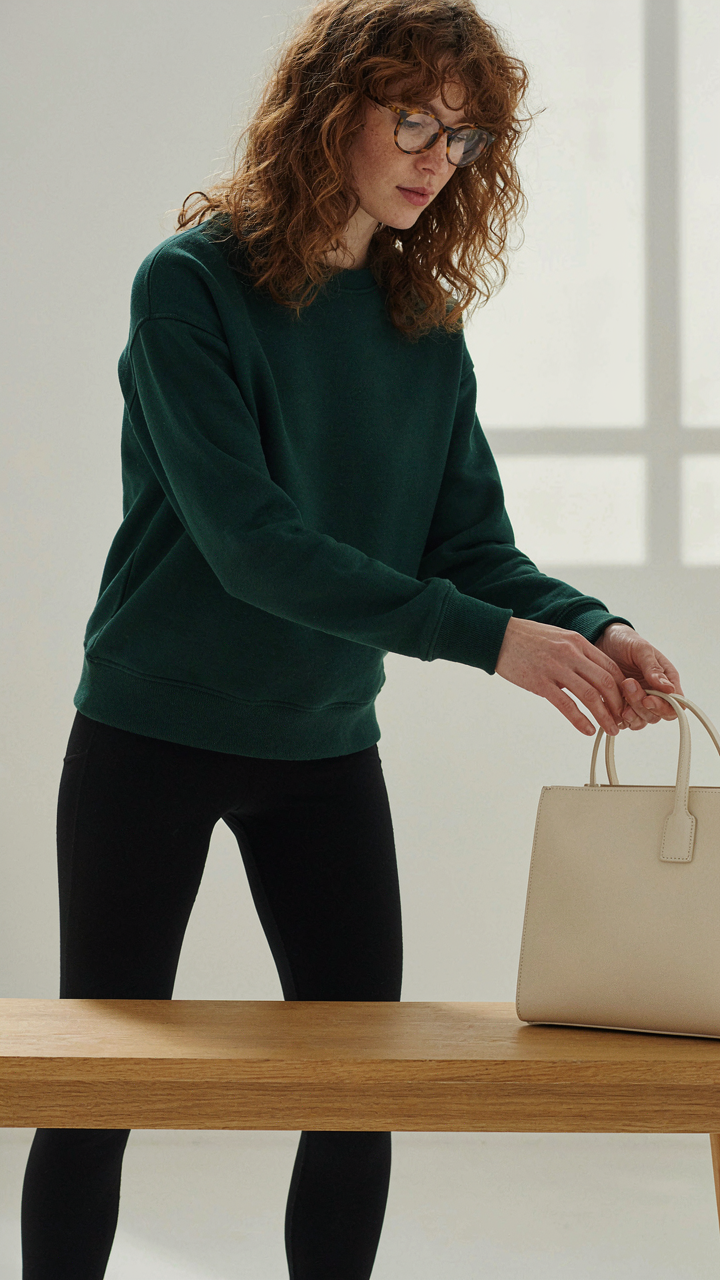
Timeless Pieces That Anchor Everything
You want black leggings to feel intentional, not like you gave up. The real mechanism here mirrors principles from fashion design’s concept of modularity: one base element creates maximum output through strategic pairing. Black leggings work because they’re invisible—they don’t compete for attention, which means every top and layer reads clearly instead of fighting for visual weight.
The standard advice says “just add a blazer.” That’s incomplete. What actually matters is choosing tops with defined structure. A fitted crew neck sweater, a button-up shirt, or a tucked tee creates contrast against the leggings’ stretch. Oversized pieces over leggings read sloppy because both elements lack definition. Pair your leggings with something that has a clear silhouette, and the outfit functions as a coherent unit instead of two separate problems.
Strategic Layering For Different Errands
Bank run, grocery run, coffee shop—each demands a different visual weight, but people dress the same way to all three. Layer your top layer based on the errand’s social visibility. A cardigan works for quick stops where you’re in and out. A structured jacket works for places where you’ll interact with staff or be stationary. A simple tee works for pure transaction errands where you’re barely noticed.
The accessory load changes too. Bank or doctor’s office: minimal jewelry, structured bag, subtle shoes. Casual errands: you can layer in a belt, add a scarf, swap the bag for something textured. The mechanism is simple: more formal environments require visual economy, while casual ones allow more component variation. Test this by removing one accessory and asking if the outfit still functions. If it doesn’t, you’ve added noise instead of strategy.
Fall Soccer Game Outfit & Other Seasonal Traps

Build For Transition, Not The Moment
You’re worried people will judge you for dressing wrong for the season. Here’s the mechanism: you’re treating weather as a fixed state instead of a variable. Seasons don’t shift overnight. Temperature ranges overlap for weeks. A fall soccer game runs 90 minutes across temperature swings of 15 degrees. Build pieces that stack and peel, not outfits locked to a single forecast. Layering isn’t fashion advice—it’s applied physics. Fabric density, airflow, and insulation create a system where you adjust in real time instead of guessing before you leave.
The standard play is picking a “fall outfit” from Pinterest. That locks you into one thickness level for an entire season. Instead, start with a base weight that handles the season’s coldest outlier, then add pieces that subtract. A lightweight sweater over a fitted tee works September through November. Swap the sweater for a jacket in October. The tee stays. You’re not rebuilding the outfit weekly. You’re modulating one system. This takes planning before season change, not scrambling when temperature drops.
Why Seasonal Playbooks Miss The Point
Most seasonal advice treats weather like a marketing category instead of an operational constraint. It tells you what to wear in fall without naming why those pieces work in overlapping conditions. That’s useless. A fleece-lined jacket made sense in 2015. It doesn’t work now if your schedule pulls you between heated car, outdoor field, and indoor coffee shop every 30 minutes.
The real problem: seasonal guides assume static conditions. They don’t account for microclimate shifts within a single errand run. A soccer game requires sun protection early, wind blocking mid-match, and temperature drop after. Your outfit must handle all three without adding bulk or forcing you to carry a backup jacket. Test your layering system before relying on it. Wear the base and mid-layer together for one week of errands, then add the outer layer. You’ll catch fit problems and temperature miscalculations before they matter.
The Mom Athleisure Paradox: Function Over Fluff

Clothes That Survive Actual Use
You want to look put together without signaling you tried. That’s the real motive here, and it matters because it reveals the actual constraint: durability beats appearance every time. Treat fabric selection like material science. Natural fibers and performance blends outlast trends because they handle friction, washing cycles, and repeated wear without degrading. Cotton-polyester blends and technical fabrics don’t pill easily, don’t fade after six washes, and don’t require the obsessive maintenance that pure cotton demands.
Buy pieces designed for repetition, not for the photo. Flat-seam construction holds longer than standard seams. Reinforced hems and stitching at stress points prevent unraveling. Dark colors and muted tones hide stains better than pastels, which means you actually wear them more often without feeling self-conscious. The math is simple: a $40 shirt you wear 80 times costs 50 cents per wear. A $100 trendy piece you wear 10 times costs 10 dollars per wear.
Strategic Dressing Beats Arbitrary Style Rules
The common advice calls this “mom style” like it’s a limitation. It’s not. It’s a filter that removes noise from your closet. Economy of motion in dressing saves decision fatigue, which saves mental energy for things that matter. Choose pieces that work across contexts without modification. A quality neutral base layer transitions from the grocery store to a school pickup to a casual dinner without requiring a wardrobe change.
Repetition is the mechanism. Wear the same five pieces 70 percent of the time. This isn’t boring. It’s compression. You stop spending cognitive resources on coordination and start building a recognizable personal standard that people notice more than constant variety. Build your errands uniform around what you already own and what actually fits your body right now, not the body you had last year or plan to have next year.
Winter Warmth, Not Winter Weariness: Cute Winter Athleisure Outfits

Layering For Heat Retention, Not Bulk
You care about this because you’re tired of looking like a marshmallow while running errands. Here’s the mechanism: thermal mass in clothing works like physics, not magic. Dense, fitted base layers trap air close to skin. Insulating mid-layers add warmth without volume. The outer shell blocks wind. You stack these three zones intentionally, not randomly. Most people fail here because they grab one thick coat instead of three thin, strategic pieces that compress together.
A fitted merino wool or synthetic base layer under a slim fleece vest under a cropped puffer creates the same warmth as a bulky parka—but you stay visually lean. The base layer does the work. The vest adds insulation without adding width. The puffer seals everything. Wear matching neutrals in these layers so they read as one silhouette from outside. This cuts errands time because you’re not adjusting oversized fabric while walking or reaching for items at the store.
Minimal Gear That Works Twice As Hard
Skip the advice about “finding your winter style.” Winter athleisure outfits work because they compress functionality into fewer pieces. One quality down or synthetic puffer in black or camel replaces five seasonal jackets. One pair of heavyweight leggings or fitted joggers replaces rotation across thin tights and pants. One pair of insulated, low-profile sneakers replaces boots plus shoes. You’re not building a capsule. You’re eliminating decisions before you walk out the door.
The mechanism is substitution, not addition. A puffer cropped at hip-length layers over everything without adding visual mass. Wool blend socks rated for cold climates eliminate the need for bulky boots on mild winter days. A packable neck gaiter takes zero space in a bag but adapts to temperature shifts mid-errand. When you own fewer pieces that serve multiple conditions, you stop wasting two minutes deciding what to wear and another five adjusting it once you’re outside.
Style Leggings 2026: The Investment Mindset

Cost Per Wear Beats Purchase Price
You want permission to spend more without feeling guilty. Here’s the real mechanism: economics calls this “unit cost analysis,” and it applies directly to errands outfits. A $120 legging worn twice weekly for two years costs $0.46 per wear. A $35 legging worn monthly for six months costs $2.33 per wear. The cheaper item destroys your budget through frequency replacement, not sticker price.
Most people reverse this math entirely. They fixate on the upfront number and ignore the replacement cycle. A quality legging in neutral fabric (typically a spandex-nylon blend) resists pilling and shape-loss through 50-100 washes. Cheap versions fail around 10-15 washes. The math compounds fast when you track actual wear.
- High-waist fit leggings: Maintain shape through repeated compression and washing better than mid-rise versions. Elastic recovery determines longevity, not brand name.
- Opaque fabrics over sheer: Require fewer washing cycles because visibility durability extends usable life significantly.
- Neutral colorways over trends: Black and charcoal maintain visual appeal across seasons, avoiding the replacement urge driven by outdated hues.
- Flat-seam construction: Reduces chafing failure points that force early retirement compared to standard sewn seams.
- Thickness range 250-300 GSM: Balances opacity and durability without excess weight or restriction during casual errands.
Track your actual wear patterns before buying. One legging worn five times weekly outpaces three leggings worn sporadically. The investment isn’t the piece—it’s selecting the item you’ll reach for repeatedly.
The Trap Of Replacing Trends
Everyone tells you to “update your wardrobe seasonally.” That’s advice designed to make you broke. Trendy leggings—flared hems, cutouts, color-blocking—hit saturation within 12-18 months. You then feel pressure to replace them because they register as “outdated,” not because they stopped functioning. This is the diminishing returns curve in action.
The mechanism is psychological, not practical. A black legging performs the same function in 2024 and 2026. The marketing pressure to refresh creates artificial replacement cycles. Your errands outfit doesn’t need seasonal updates—it needs consistent utility. Once you own a reliable base layer, stop shopping. The second purchase rarely improves your actual life; it mostly confirms you made a poor first choice or surrendered to social pressure.
Fall Athleisure Outfits 2026: Beyond The Catalog Copy

What Marketing Won’t Tell You About Seasonal Layering
You want to feel put-together without thinking, and you’re willing to believe that fall athleisure solves this. It doesn’t, because the real problem is you’re choosing pieces that don’t stack functionally. Borrow from systems thinking: in engineering, modularity means each component serves multiple functions simultaneously. Your fall athleisure needs the same constraint. A piece either works across temperature ranges, pairs with two distinct base layers, and looks intentional when partially visible, or it’s dead weight taking up closet space.
Most fall athleisure advice treats layering as stacking random items. That’s backwards. Start with what actually transitions temperature: fitted long sleeves under unstructured pieces, not the other way around. Oversized sweaters over snug shirts create proportion contrast that reads intentional. Cardigans worn open over structured tanks give you three outfits from two pieces. The mechanism isn’t complexity—it’s constraint. Fewer pieces that interlock functionally beat more pieces that exist independently.
The Capsule That Doesn’t Pretend Fall Is Linear
Transitional weather doesn’t follow seasons; it follows pressure systems. You need pieces that work at fifty degrees and sixty-five degrees without looking wrong at either point. This means ditching the common “one sweater per outfit” model. Build instead around two neutral base layers, one unstructured layer, and one piece that does real temperature work.
Cotton-blend long sleeves in white and gray handle September and early November without looking seasonal. Layer them under a structured linen shirt or an unstructured knit vest. Add one quilted vest or a technical jacket that packs small. That vest carries you through temperature swings without forcing you to change outfits mid-errand. The protocol: grab base layer, add structured piece, then add temperature layer only if needed. You’ve got one outfit that works across a twenty-degree range without rewearing the same thing twice in one week.
The Real Obstacle Isn’t Your Wardrobe; It’s Your Inability To Define Your Personal Operating System

You don’t need more outfit ideas. You need a decision-making framework you actually use. Most people waste mental energy on trivial choices because they never defined what they stand for. Pick three core pieces you genuinely like wearing. Commit to them for thirty days. Stop pretending the outfit matters more than the person inside it. Your errands outfit becomes automatic the moment you stop treating it like a decision.