

The Myth Of Mom Uniforms: Why “Easy” Is A Lie

Rejecting The Stretch Pant Trap
You want permission to stop trying. That’s the real draw of the “mom uniform” narrative. The mechanism is simple: activewear brands spent decades marketing stretch fabrics as effort-free, which reframed comfort as surrender. Leggings aren’t easier to move in because they’re stretchy. They’re easier to move in because they eliminate the friction between your body and the fabric itself. But comfort and ease aren’t the same. One feels good. One actually functions. Most moms default to stretch because it requires zero decisions, not because it solves anything.
The problem with this logic: you end up looking like you gave up, which forces you to overcompensate elsewhere. You pile on structured jackets or oversized sweaters to create definition that the base layer destroyed. You’ve created more work, not less. Real ease means the outfit works for your body and your life without requiring constant adjustment or mental load. Stretch pants demand you accept the trade-off of visual flatness in exchange for comfort. That’s not a deal. That’s a surrender dressed up as practicality.
Deliberate Choices Over Default Patterns

Economics calls it “revealed preference” – you demonstrate what you actually value through your choices, not your words. Apply that to casual mom outfits: if you pick the same three pieces every rotation, you’re revealing that you haven’t actually decided what easy means for you. You’re just avoiding the decision. Real ease comes from knowing exactly what you reach for and why. That requires one deliberate process upfront, then zero friction after.
This means understanding your actual movement patterns. Do you sit most of the day or move constantly? Do you need pockets or not? Do you transition between environments? Once you answer these questions, you stop treating “easy” as a universal solution and build a system that works for your specific life. Your casual mom outfit doesn’t need to match anyone else’s. It needs to match your actual demands. The mechanism is constraint-based design: limit your choices to pieces that work for your constraints, then never second-guess again.

The Minimalist Momentum Method: Curating Adaptable Pieces
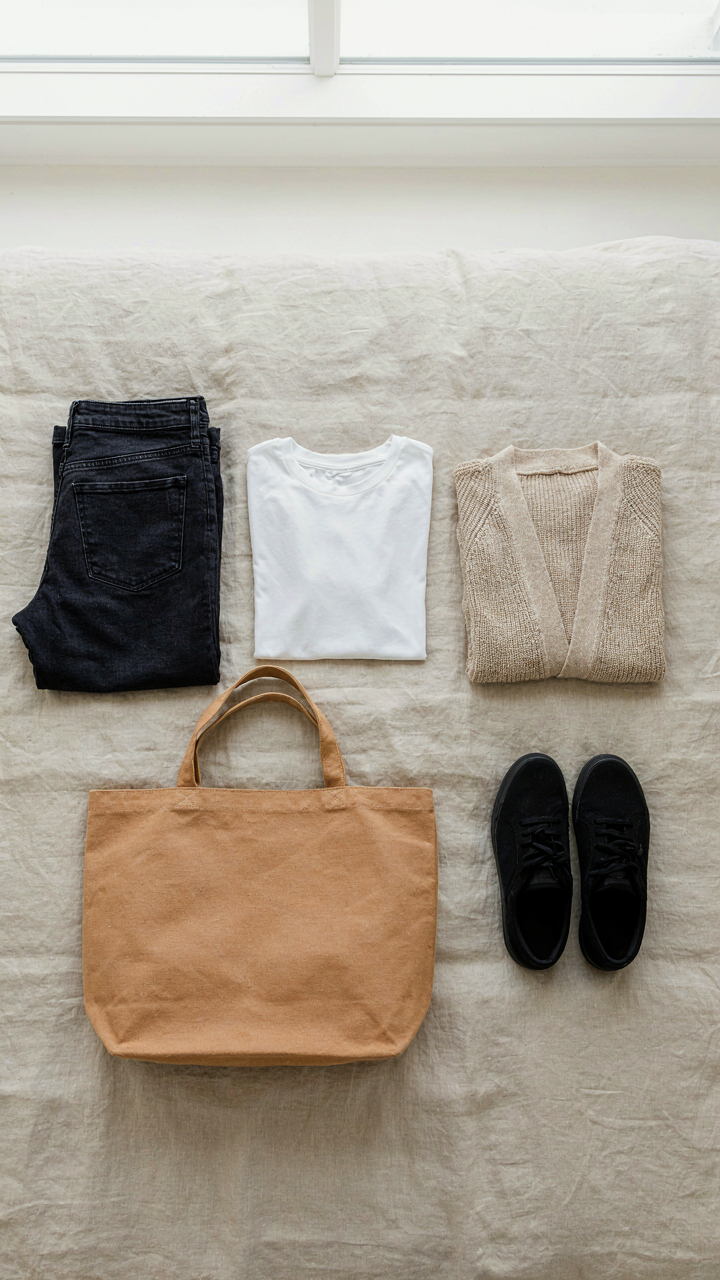
Build Around Five Anchor Pieces
You want permission to stop shopping and still look intentional. That’s the real ask here. The mechanism is simple: a mom outfit lives or dies based on how many other outfits each piece can build. Buy pieces that work with everything else you own, not pieces that demand specific pairings. This is inventory stacking, borrowed from supply chain logic. You’re reducing SKUs and maximizing output.
- Dark wash straight leg jeans: The baseline neutral that pairs with 90 percent of tops and works across seasons. Avoids the trend cycle of slim or wide cuts.
- White crew neck tee: Functions as base layer, standalone piece, or layering foundation. Works untucked or half-tucked without looking styled.
- Neutral cardigan or blazer: Adds coverage and formality without changing the core outfit. Cotton or linen versions work year-round.
- Black or beige slip-on sneakers: Eliminates decision fatigue on footwear. Slides on fast and reads casual across all contexts.
- Lightweight pullover or sweatshirt: Bridges seasons and handles temperature shifts without bulk. Neutral color keeps pairing options open.
These five pieces form the skeleton. Every other item you add should earn its space by working with at least three of these anchors. This approach kills the false choice between “put together” and “practical.” You get both because you’re not chasing trends or building outfits from scratch each morning.
Fabric Choices That Don’t Fight Movement
Most advice on mom clothes ignores what actually happens during a day: picking up, bending, sitting in car seats, moving between temperature zones. Cotton jersey and linen blends handle this. They stretch slightly with body movement, don’t cling when you sweat, and recover their shape without ironing. Synthetic blends often do the opposite—they trap heat, cling to damp skin, and read as cheap after a few washes.
Performance fabrics designed for activewear have moved into everyday clothes for a reason. Fabrics with elastane content (2-4 percent) allow full range of motion without looking sporty. Linen wrinkles but breathes; cotton holds shape but can feel heavy; blends of both give you the trade-off that works. Check fiber content on tags. If it’s 100 percent cotton with no stretch, it won’t move with you—it’ll restrict you.
Beyond Activewear: Elevated Casual Mom Style Deconstructed

The Architecture Of Looking Intentional
You want permission to stop dressing like you’re apologizing for existing. That’s the real ask here. The mechanism at work is borrowed from architecture: load-bearing walls. In clothing, structure creates the illusion of effort without requiring it. A fitted waistband, a defined shoulder seam, a collar that actually sits—these aren’t decoration. They’re the bones that hold the whole outfit upright and signal that someone made a choice, not just grabbed what was dry.
Most advice tells you to layer and add accessories. That’s backwards. Start by choosing pieces with actual structure built into the garment itself. A cotton shirt with a proper collar costs the same as an oversized one but reads completely different. The seams matter. The cut matters. When structure exists in the base layer, you can wear simpler everything else and still look composed. This is why a well-cut pair of straight-leg or slightly tapered jeans does more for a casual mom outfit than any styling trick.
When Active Wear Stops Working For You
The real problem with active-inspired pieces isn’t that they’re comfortable—it’s that comfort becomes invisible after a certain point, and invisibility reads as indifference. A jogger pant or oversized hoodie works when you’re moving between car and kids’ activities. It fails when you want to be seen as someone who has control over her choices. The upgrade isn’t about abandoning comfort. It’s about choosing pieces that compress the visual information differently.
Swap the jogger for a pant with a real waistband and a slight taper at the ankle. Swap the oversized hoodie for a fitted mock neck or a structured zip-up with defined armholes. You move exactly the same. You breathe the same. But the outfit now communicates intentionality instead of resignation. The mechanism is specificity: the more tailored the fit, the more agency the wearer appears to have exercised. Make the swap when you’re going somewhere you want to be noticed as a person, not just a parent.
The “Invisible Force” Principle: Design For Unrestricted Movement

How Fabric Weight And Drape Solve The Real Problem
You want to look put-together without feeling trapped. That’s the actual problem nobody names. The mechanism is simple: fabric weight determines how a garment moves with your body instead of against it. Physics governs drape. A heavy cotton or linen doesn’t cling or bunch. It falls. Lightweight synthetics often grip your skin or bunch at joints. Weight creates space between fabric and body, which is what freedom actually feels like.
The difference matters in real scenarios. Bending to pick up a kid, reaching across a table, sitting in a car seat for hours. Structured fabrics stay in place because gravity works for you, not against you. Medium-weight cotton blends, linen, and quality rayon all move predictably. They don’t require constant adjustment. The garment does its job and stays invisible. Choose fabric first. Everything else follows.
Silhouette Shapes That Enable Rather Than Restrict
The common advice is “wear loose clothes.” That’s incomplete. Loose doesn’t mean functional. A baggy sweatshirt lets you move, but it also hides your frame and reads as not trying. The real mechanism is negative space distribution. Strategic looseness in high-movement zones combined with controlled fit elsewhere creates both freedom and intentionality.
A-line cuts, princess seams, and dropped armholes place ease exactly where your body needs it. Armholes that sit low eliminate shoulder binding during reaches. A-line skirts provide hip room without looking formless at the waist. High-rise pants distribute looseness downward, preventing pulling across the belly when you sit. Silhouette precision beats general looseness every time. When you design for specific movement patterns, the outfit becomes an asset instead of an obstacle.
The 2026 Millennial Fashion Blueprint: Ageless Adaptability

What Actually Changes In Fashion Cycles
You want to know what trends matter because you’re afraid of looking dated, but that’s not the real problem. The real mechanism is this: fashion operates on a predictability cycle. Every 20 to 30 years, silhouettes and proportions swing back because new generations reject their parents’ aesthetic defaults. Millennials wore skinny jeans for nearly two decades. The pendulum shifted toward relaxed fits around 2018 and won’t reverse for another decade minimum. Mom outfits follow the same physics. What stays constant isn’t the trend, it’s the underlying need: mobility, durability, and the ability to look intentional while moving through chaos.
The 2026 casual mom outfit won’t reinvent fabric or function. It refines what already works. Neutral color bases persist because they’re practical, not because they’re fashionable. Layering remains essential because it solves real problems: temperature regulation, hiding stains, adjusting formality on demand. The shift happening now is away from athleisure’s stretch-fabric dominance and back toward structured cotton blends and linen. This isn’t trend chasing. It’s material science catching up to comfort demands. Your outfit in 2026 will look less like activewear and more like intentional basics that happen to move with you.
Building For Ten Years, Not Ten Months
Stop treating your casual mom wardrobe like seasonal inventory. Most advice says rotate basics, but that misses the actual mechanism: you need pieces that gain character through use, not fade into irrelevance. Investment pieces for mom outfits aren’t luxury items. They’re well-constructed midrange pieces in timeless cuts that remain functional across multiple life phases. A quality linen blend shirt costs twenty to forty dollars more than fast fashion but outlasts five cheap alternatives. The payoff isn’t status. It’s reducing decision fatigue and replacement frequency.
Longevity in casual mom outfits comes from three factors: fiber content, seam construction, and cut neutrality. Natural fibers like cotton and linen soften with washing instead of degrading. Double-stitched seams in high-stress areas last through hundreds of washes. Cuts that don’t follow extreme proportions work across body changes, weight fluctuations, and style evolution. Your strategy isn’t picking trendy pieces. It’s selecting basics in neutral shades that become the foundation you build around for the next decade. When you stop replacing clothes every season, you actually save money and mental bandwidth simultaneously.
Autumn Jeans Outfits Casual: Mastering The Straight Jean

Why Straight Jeans Work For Movement
You want to look put-together without looking like you tried, which means you’re actually terrified of appearing sloppy the moment you bend down to pick something up. The mechanism here is simple: straight jeans don’t cling or bunch. They move with your body instead of against it. The straight silhouette sits at the hip or waist and drops vertically to the ankle with minimal taper. This cut gives you a clean line while keeping fabric away from your legs, so you can squat, sit, carry a toddler, or chase a dog without the denim fighting back.
The reason straight jeans dominate casual mom outfits has nothing to do with trend cycles. They’re practical because they pair with almost everything in your closet and they don’t require the constant adjustment that skinny or bootcut styles demand. A white tee, an oversized button-up, a sweater, a leather jacket, a cardigan, a blazer—straight jeans accept all of it. The fabric hits the top of your foot cleanly, which means you can wear flats, sneakers, loafers, or low heels without the hem dragging or creating bulk at your ankle. You’re not managing your clothes; your clothes are managing the situation.
The Non Negotiables For Fit
Most advice about jean fit focuses on the waist and inseam. That’s incomplete. The real mechanics of a wearable straight jean live in three places: waistband tension, thigh room, and inseam length. Your waistband should stay in place when you sit down and bend forward, not ride up or dig in. You need enough thigh room to move without tugging but not so much that fabric pools around your knees. The inseam should hit the top of your shoe with minimal break or stacking at the hem.
Check fit by sitting in a chair and reaching across your body. If the waistband digs into your ribs or the thigh pulls tight, the jean doesn’t work regardless of how it looks standing up. The rise matters too: a higher rise keeps you stable during movement and doesn’t require constant pulling up. Try on multiple brands because straight jean cuts vary wildly between manufacturers. A size 28 at one brand may have completely different thigh or rise measurements at another. Fit first, then worry about wash or color.
The 90s Mom Outfit Inspo: Retrofit For Modern Utility

What Actually Worked Back Then
You want permission to wear something that feels effortless without looking like you’ve given up. That’s the real pitch here. The 90s mom outfit works because it solved a genuine problem: moving through a day with a kid while staying functional. Borrowed from industrial design, the concept of “form follows function” applies directly—the silhouette itself enables movement rather than constraining it. High-waisted jeans, oversized blazers, and flat shoes weren’t trendy choices first; they were solutions to needing range of motion and durability.
The 90s mom outfit stripped away the 80s excess without swinging into the hyper-fitted territory that dominated later decades. Wide leg cuts gave you walking room. Structured fabrics held their shape through a day of bending, lifting, and sitting on floors. Neutral color palettes meant fewer laundry emergencies and easier mixing. These pieces weren’t designed to impress—they were designed to work. That’s exactly what makes them functional for modern casual mom outfits.
The Mistake Everyone Makes With Nostalgia
Most people try to recreate 90s aesthetics by copying the decade’s most visible cultural references: baby tees, visible thong straps, ultra-low rise. That’s the wrong extraction. Those elements were novelty items, not the backbone of what actually worked. The real utility came from the non-trend pieces—the staples that sat underneath the fashion noise. Oversized neutral sweaters, flat-front trousers, minimal jewelry, white sneakers. These items read as “intentional” today without screaming “I’m wearing a costume.”
The dated mistakes happen when you lean into fabrication or silhouette extremes from that era. Shiny fabrics, cargo pockets as statement details, visible logos, or that specific shade of beige that photographs poorly. Instead, grab the structural elements that transcend: loose fits, natural fibers like cotton and linen blends, minimal hardware, and proportions that allow your body to move without restriction. Test any piece by raising your arms overhead and walking up stairs—if you’re thinking about the fit, it’s too tight.
The Business Casual Outfits For Women Summer Jeans Edit

When Denim Becomes The Anchor
You want permission to look put-together without trying, which means you need a piece that does the work for you. Dark wash jeans became the workhorse of semi-formal dressing because they blur the line between casual and intentional. The mechanism is simple: darker fabric reads as more formal than lighter fabric. Pair structured denim with a linen blazer or oversized button-up in neutral tones. The jeans carry the casualness, the top carries the polish. This contrast is what registers as “effortless” to an observer.
The fit matters more than the trend. A straight-leg or minimal taper in dark indigo works across seasons and body types. Avoid extreme distressing or fading on summer versions, as it dilutes the semi-formal signal. Cuff the hem slightly if the inseam sits too long, or wear them with structured flats or loafers. The goal is proportion and intent, not decoration. When denim fits without pulling and sits at your natural waist, it anchors an outfit that works for school pickup, coffee meetings, or grocery runs without code-switching.
Heat Without Compromise
The typical advice here is backwards: people think “summer casual mom outfits” means lighter colors and thinner fabrics everywhere. That kills the structure you need for actual movement and durability. Summer denim should be breathable but dense enough to hold its shape. Cotton-linen blends or lightweight cotton twills breathe better than pure denim while maintaining the same visual weight. Pair them with sleeveless shells, short-sleeve tees in cotton, or linen camp collars to manage temperature without abandoning the outfit architecture.
Seasonal adaptation is about reducing layers strategically, not abandoning them. Swap the blazer for a linen shirt you can roll up at the sleeves. Choose lightweight fabrics that stack without bulk. White or cream linen moves heat away from your body while keeping the outfit intentional. The denim stays dark and structured as your baseline. This approach lets you move through your day without constant adjustments, which is the actual difference between casual mom outfits that work and ones that create friction.
The Accessory Amplifier: Minimal Effort, Maximum Impact

One Piece That Carries The Load
You want permission to look intentional without actually trying. That’s the real ask here. The mechanism is delegation: one statement piece does the work of five mediocre ones. In design, this is called the focal point—the single element that anchors visual weight and makes everything else recede into coherence. A structured bag, a distinct belt, or a quality watch transforms a plain tee and jeans from invisible to deliberate. The piece doesn’t need to be expensive. It needs to be visibly different from the baseline.
Moms often layer accessories hoping quantity masks indifference. It backfires. A canvas tote with actual shape, a leather belt with visible hardware, or a pair of intentional sneakers (not generic athletic shoes) does more work alone than a handful of thin bangles and unclear jewelry. The statement piece gives your eye something to land on. Everything else becomes support. This shift from abundance to precision is why the outfit reads as chosen, not assembled.
Subtraction As The Real Power Move
Everyone preaches minimalism without explaining why it works. The paradox isn’t that less looks like more. The paradox is that each piece you remove forces the remaining items to do heavier lifting, which makes them visible. Wearing three accessories instead of eight doesn’t look cleaner because you’ve stripped away clutter—it looks intentional because each remaining piece now has to justify its presence. Remove it, and the outfit collapses. That’s the test.
A single gold necklace with intention beats a layered neck full of mixed metals. A structured crossbody with one keychain attachment beats a bag covered in charms and pins. The constraint forces design. When you have limited slots to fill, you stop reaching for filler. You choose pieces that have geometry, texture, or material quality that reads from three feet away. The mom outfit that moves well doesn’t move well because the clothes are loose. It moves well because nothing is fighting for attention, and your body isn’t weighted down by decision fatigue masquerading as style.
The Effortless Style Outfits Mindset: Beyond The Garment

Confidence As The Real Uniform
You want this section to convince you that confidence matters so you can stop blaming your closet for how you feel. Here’s the mechanism: confidence isn’t some internal state you find. It’s a behavioral loop. You wear clothes that move with your body instead of against it, your nervous system relaxes, you stand differently, people respond differently to that posture, and that response reinforces the behavior. The outfit doesn’t create confidence. Movement does. When a mom wears pieces that don’t restrict her—no tight waistbands, no sleeves that cut into shoulders, no hemlines that tug—her physicality changes. She bends, reaches, sits, stands without micro-compensations her body was making all day.
This is why generic confidence advice fails. It tells you to “believe in yourself” while you’re wearing jeans that cut off your circulation. The real work happens first in the fabric and fit. Once your body moves freely, your mind follows. Choose clothes that don’t create friction between intention and action. Your confidence isn’t an accessory. Your freedom of movement is.
The Image You Reinforce Daily
Intentional doesn’t mean obsessive or overthought—it means you’ve made one decision about how you want to show up, then you remove decisions that contradict it. Most moms fail at this because they try to be three people: the professional, the put-together one, the casual one. You can’t be all three. Pick one image and stop fighting it. If you’re the mom who moves fast and doesn’t apologize for it, build outfits around that. If you’re the mom who prioritizes presence over presentation, dress accordingly. The consistency does the work, not the individual pieces.
The mechanism is simple: repetition builds identity, identity shapes behavior, behavior produces results people recognize. When people see you in the same type of outfit repeatedly—always in comfortable layers, always in pieces you can move in, always practical—they stop trying to categorize you as something else. You become predictable in the best way. They trust what they see because it’s consistent. That trust becomes your actual style, not something you’re performing. Stop changing your image based on circumstance. One image, worn intentionally, compresses decades of fashion stress into a system that works.
Your Greatest Obstacle Isn’t Finding Comfortable Clothes, But Rather Believing Effortless Elegance Is Beyond Your Grasp

The real problem isn’t your closet. It’s the voice telling you that looking put together means sacrificing movement or comfort. That’s a lie designed to sell you complexity. Today, pick one piece you already own that makes you feel capable, not constrained. Build around it. Wear it tomorrow. The shift from “mom clothes” to clothes that work for your life starts the moment you stop apologizing for wanting both comfort and style.