

The “Effortless Edge” Protocol: Beyond Basic Leather Jacket Outfits
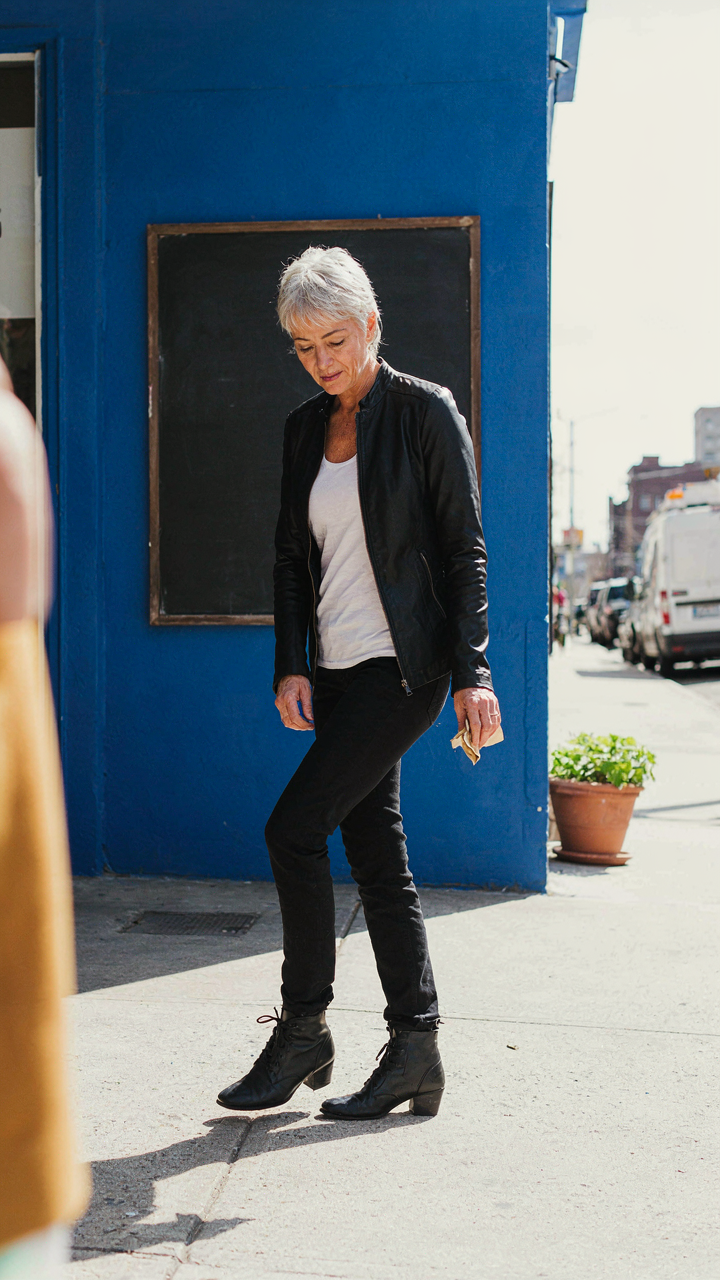
Subtract Until The Jacket Speaks
You want people to notice you without looking like you tried. That’s the real ask here. The mechanism is contrast scarcity. In visual design, when everything competes for attention, nothing wins. A leather jacket is already a statement object. Everything else should recede.
Pair your jacket with neutral basics: white tee, black jeans, simple boots. The leather becomes the focal point because nothing else demands energy. Avoid patterns, logos, or secondary textures that fragment the eye. One strong element per outfit is the rule. This isn’t minimalism as aesthetic choice. It’s minimalism as strategy to maximize impact.
Density Over Bulk

Layering isn’t about adding more items. It’s about adding density without volume. Think in terms of material weight distribution, borrowed from engineering load theory. You’re creating visual weight in specific zones, not spreading it evenly.
A fitted leather jacket over a structured knit creates density at the torso. Add a silk slip underneath if you layer. Silk compresses visually while cotton balloons. Choose materials that stack tight. Boots with substantial soles ground the silhouette. A belt cinches the jacket at the waist. The outfit feels intentional because every layer serves compression, not just coverage.

Decoding Womens Leather Jacket Outfit Archetypes
Rugged Sophistication
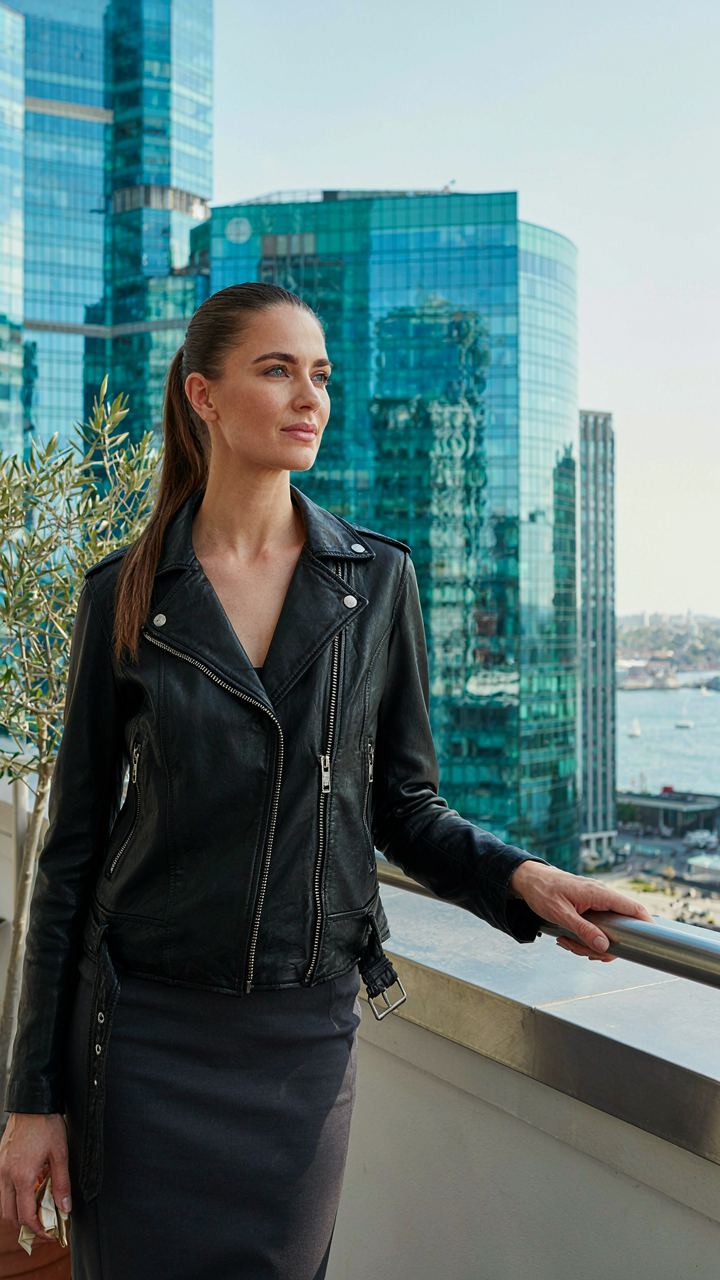
You want permission to look hard without actually being hard. The biker jacket solves this by borrowing from motorcycle culture’s risk hierarchy: the jacket signals you’ve chosen danger, even if you haven’t. Real bikers wore leather for abrasion protection. Women wear it to compress multiple status signals into one garment. The classic cut stays tight through the shoulders and tapers at the waist, built on a structure that originated from 1930s motorcycle gear but evolved through 1950s film into pure aesthetic code.
The mechanism is material plus silhouette plus context collapse. A black or brown leather jacket worn over tailored trousers or a midi skirt flips the equation: you’re not softening the jacket, you’re hardening the outfit. Pair it with clean white sneakers or pointed flats, never clunky boots that double down on one note. The jacket works because it contradicts everything else you wear, and contradiction is what reads as confidence.
Urban Utility Redefined
Bomber jackets aren’t bikers pretending to be sophisticated. They’re the opposite problem: utility wear that became fashion through sheer repetition and film placement. The bomber cut sits looser, hits at the hip, and carries history from flight jackets into street culture without the rebellion baggage. Everyone claims they understand the silhouette. Most people wear it wrong by pairing it with other oversized pieces, creating visual noise instead of intention.
Wear the bomber cropped or fitted through the body to avoid looking like you’re borrowing someone’s jacket. Layer it over structured dresses or fitted pants to create clear lines. The bomber’s strength isn’t in looking tough, it’s in looking mobile and economical. Finish with minimal jewelry and shoes that ground the outfit rather than compete with it. This is the jacket you reach for when you need to move through the day without performing.
Jacket Outfit Women: The Art Of Subversion

Contrasting Textures Build Visual Tension
You want permission to break the rules without looking like you’re trying. That’s the real ask here. Texture contrast in design borrows from the principle of tension in physics: opposing forces create stability, not chaos. A leather jacket worn with silk or linen doesn’t clash because the materials oppose each other. They arrest the eye because they refuse to agree.
Leather is dense, matte, structured. Pairing it with fluid or sheer fabrics forces each material to define what it isn’t. A smooth silk camisole under a rigid leather jacket makes both pieces read stronger than they would alone. Denim under leather reads as redundant because both materials speak the same visual language. The contrast has to be real to work.
Unexpected Color Pairings Break Pattern Recognition
The standard advice says pair black leather with neutrals and call it done. That’s boring and wrong. Your brain stops processing what it predicts, so monochromatic leather outfits don’t register as intentional choices. They read as default.
A caramel leather jacket with deep plum or forest green trousers signals someone made a decision. The pairing breaks the pattern your eye expects, so it holds attention. Warm leather tones pair against cool jewel tones. Navy leather pairs against warm terracotta or rust. The mechanism is simple: saturation and temperature opposition force the outfit to read as cohesive strategy, not accident. Build outfits by starting with the leather jacket’s undertone, then choose bottoms that sit opposite on the color wheel.
Brown Leather Jacket Outfit: Breaking The Black Monoculture

Earthy Tones Unexpected Versatility
You want brown leather because black feels safe, but safe is invisible. Here’s the mechanism: color theory operates on contrast and temperature zones. Brown leather creates warm undertones that black cannot match, which means your skin reads differently under it. The jacket stops competing with your face and starts amplifying it.
Brown leather pairs with colors black rejects outright. Rust, olive, cream, and terracotta sit in the same temperature band, so they amplify instead of clash. You can wear these tones in bottoms and layers without the outfit fragmenting into separate pieces. The cohesion happens automatically because warm pigments stack logically together.
Warm Accents And Complementary Palettes
Common advice tells you to pair brown with neutrals and call it done. That’s incomplete. The real move is treating brown leather as a temperature anchor, not a color box. Pull in metals like brass and copper instead of silver, which cold and visual contradiction to warm leather.
Textures matter more than most realize when working with brown. Suede tops, linen pants, or knit sweaters in cream and tan layers build depth without adding competing colors. The brown jacket ties everything to one thermal zone. Start by choosing your metal first, then your base layer color, then your accent piece. This sequence prevents the scattered feeling that kills brown leather outfits.
Brown Leather Jacket Outfit Women: From Day To Night

The Casual Elevation Strategy
You want permission to look intentional without trying. That’s the real ask here. The mechanism at work is contrast—the brown leather jacket forces your casual pieces to stop being invisible. Pair it with a white or cream tee and dark denim. The jacket does the work. Everything else recedes into support. This isn’t about matching; it’s about letting one statement piece anchor the rest.
Brown leather has a warmth that black lacks. It reads as approachable instead of armor. Throw it over a fitted tee, add straight-leg or tapered jeans, and you’ve created proportion without overthinking it. Footwear matters: white sneakers or minimal loafers keep the weight down. A brown leather jacket outfit women choose at this level isn’t trying to impress anyone. It’s functional confidence.
The Evening Transition Formula
Most advice here is backwards—people think you add formality by piling on dressier pieces. Wrong. You subtract casualness by changing only what matters. A brown leather jacket works over a slip dress or a knee-length skirt because the jacket’s structure does the heavy lifting. Pair it with a satin slip dress in black or jewel tones. The leather provides the edge; the dress provides the reason you’re dressed up.
Skirts work differently. A midi skirt in neutral tones paired with a brown leather jacket reads as intentional without costume energy. Switch your footwear to a heeled boot or pointed flat. The outfit transforms because you changed one variable, not everything. This is what brown leather outfit women actually do when they need to move between contexts—they keep the jacket and swap the base layer. It’s efficient dressing.
Women’s Leather Jacket Outfit: The Asymmetry Principle
How Elements Actually Interact
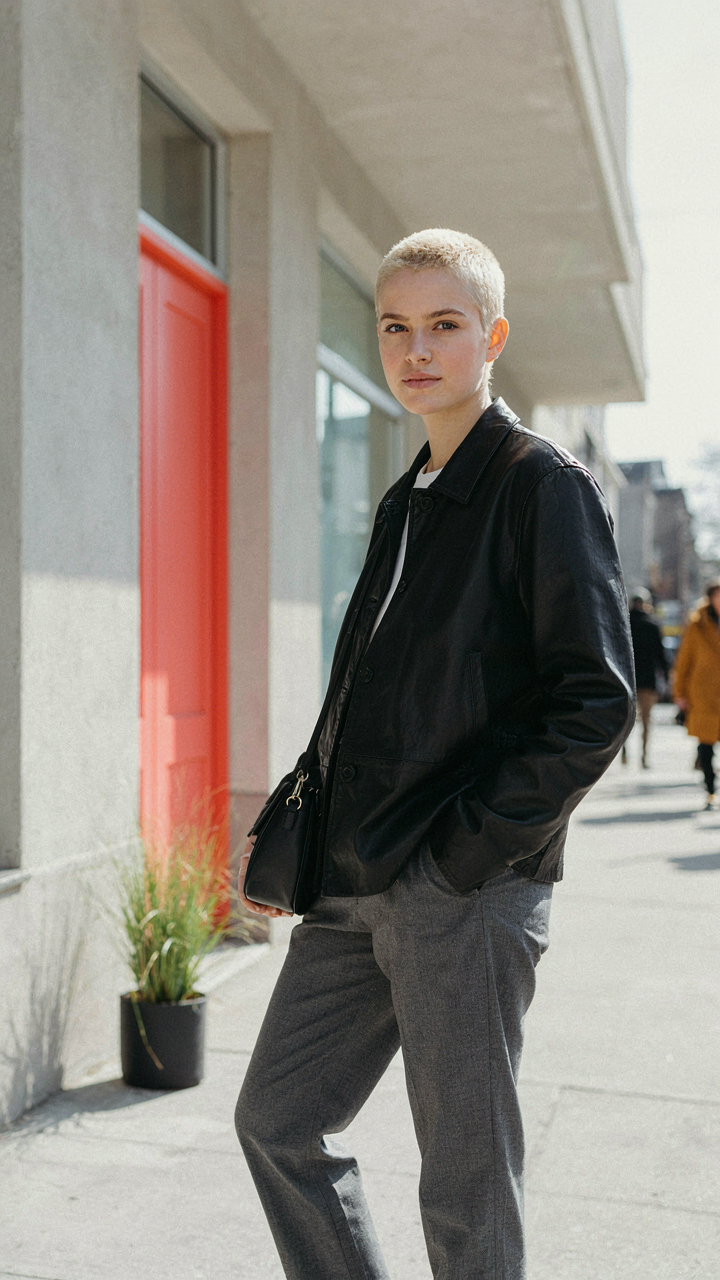
You want asymmetry to look intentional, not like you forgot to finish getting dressed. Visual balance doesn’t mean matching sides. It means your eye stops moving when it lands on the outfit, which happens when weight distributes across the frame rather than clustering in one zone.
A leather jacket already dominates the upper body. The mechanism most people miss: you’re not balancing the jacket itself. You’re balancing the visual mass it creates against everything below. A cropped jacket with high-waisted jeans pulls focus upward and inward. A longer jacket demands something at the hip or leg to anchor the eye downward. Drop a belt, cuff the jeans, add a boot with texture, or layer an oversized tee underneath. The leather isn’t the centerpiece anymore once you give the viewer another stopping point.
Controlled Chaos Through Tension
Physics uses the term tension to describe forces pulling in opposing directions, and that’s exactly what makes an asymmetrical leather jacket outfit work instead of just look messy. Controlled chaos means deliberate mismatches that create visual interest without confusion.
Pair a structured leather jacket with slouchy trousers. Wear a fitted tee under an oversized jacket. Mix a sleek black jacket with distressed denim. The rule nobody states plainly: tension dissolves when you mismatch at least two elements deliberately. One neat item, one relaxed item, one textured item. This isn’t random styling. It’s a three-point system that prevents the eye from landing nowhere. The jacket enforces structure, so the other pieces can break it without the outfit falling apart.
Cropped Black Leather Jacket Outfit: Strategic Proportions

High Waisted Pairings Win The Frame
You want this outfit to make you look taller and leaner, not stumpy. That’s the real math here. In graphic design, negative space creates visual hierarchy and draws the eye to what matters. Your cropped jacket creates that principle in three dimensions: it exposes your waist and demands high-rise bottoms to anchor the proportions. This isn’t decoration. It’s optical geometry.
A cropped leather jacket shortens your torso visually by definition. High-waisted jeans, trousers, or skirts reclaim that space by raising the visual waistline and elongating your legs downward. The gap between jacket hem and pants waistband should be minimal or nonexistent. Anything else breaks the line and kills the effect.
Layering Underneath Controls Visual Mass
Most advice about layering under a cropped leather jacket stays surface level. Wear a tank top, they say. Wear a long-sleeve tee. Wrong. The real mechanism is this: layering controls where your eye stops and starts. A fitted base layer under the jacket keeps the silhouette clean. An oversized or textured layer underneath adds visual weight strategically—either at the chest for balance or extended past the jacket to anchor the outfit downward.
A cropped jacket demands intention with what lives beneath it. Sheer layering lets the base show through, maintaining the sleek silhouette. Textured or voluminous layers underneath the cropped hem—like an oversized sweater or tunic—shift the visual weight lower and counterbalance the exposed midriff. Test both. Pick based on what your frame needs, not what Instagram shows you.
Leather Jacket Outfits Women: The Unspoken Language Of Accessories

Hardware As Statement: Buckles, Zippers
You’re reading this because you suspect accessories matter but worry you’ll get it wrong and look try-hard. Here’s the mechanism: hardware functions like typography in design. It’s the visual weight that either anchors or destabilizes an outfit. A leather jacket’s hardware is not decoration. It’s structural language that signals intentionality or carelessness to anyone looking.
Zippers, buckles, and D-rings on a leather jacket carry functional history from workwear and military gear. They’re not randomly placed. A jacket with exposed hardware that matches—silver to silver, gold to gold, matte to matte—reads as coherent. Mismatched metals or ornate hardware fighting against understated clothing creates visual noise. The real play is matching your hardware finish to your other metals: watch, rings, belt buckles. One finish dominates the outfit. Everything else disappears.
Minimalist Jewelry Impact
The mistake most women make is treating a leather jacket as permission to add more. It’s the opposite. A leather jacket already commands spatial presence through texture, weight, and cut. Adding delicate chains, stacked rings, or layered necklaces competes with that presence instead of amplifying it. You lose both the jacket and the jewelry in the visual clutter.
One substantial piece—a thick silver ring, a single pendant, a chain bracelet in one metal—creates hierarchy. Your eye lands on one point of intentional contrast. The leather jacket becomes the foundation, not the competition. This isn’t minimalism for aesthetic reasons. It’s the optical principle of contrast: remove noise, increase signal. Wear one strong accessory, let the jacket do the work, and your outfit reads as decisive instead of assembled.
Casual Style Outfits: Elevating The Everyday
Sneakers And Boots: Footwear Philosophy
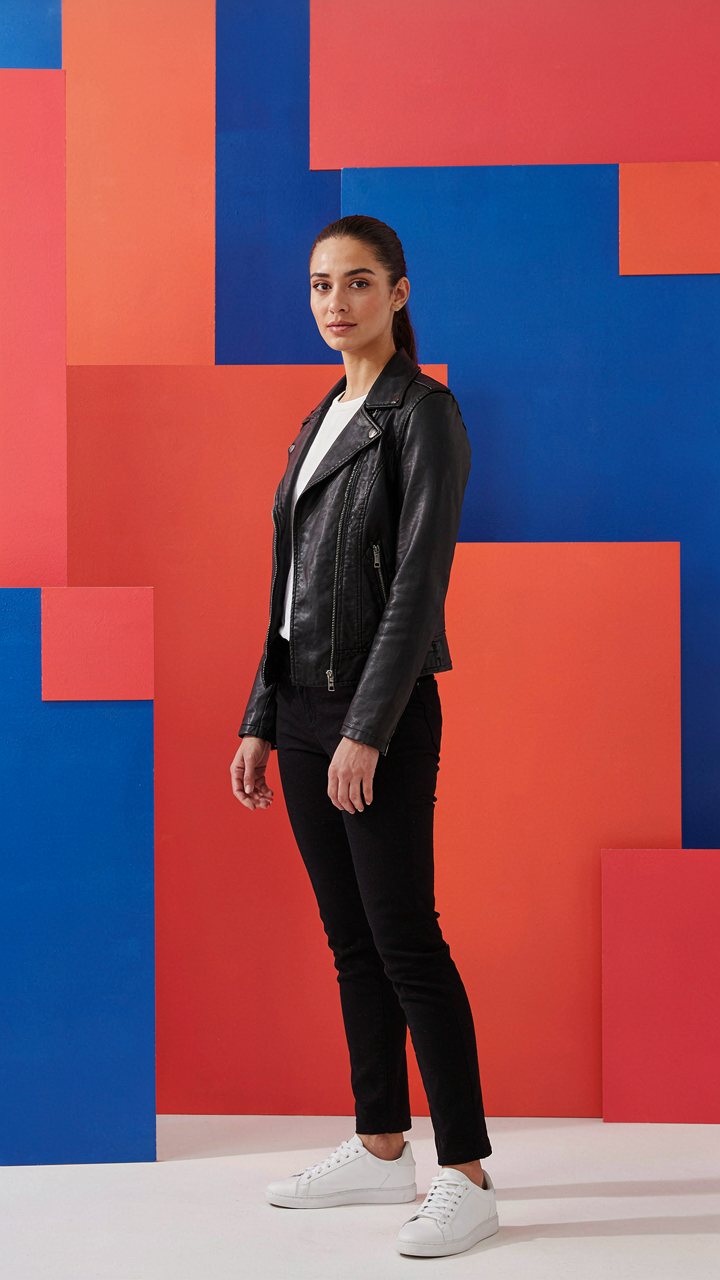
You want permission to wear a leather jacket without looking like you’re trying too hard. The real mechanism is contrast: footwear either completes the tension or ruins it. In fashion economics, this is called “dissonance management” – you’re deliberately creating visual friction that reads as intentional rather than accidental.
- White leather sneakers: Ground the jacket with clean lines. The simplicity signals control, not compromise. Pairs with everything from jeans to tailored trousers.
- Black combat boots: Built for structure. The rigid silhouette mirrors the jacket’s architecture. Creates a cohesive top-to-bottom weight that avoids looking disjointed.
- Chelsea boots: Brown or black leather grounds a jacket without repeating it. The ankle-hugging cut keeps legs visually clean, preventing bulk.
- Minimal sneakers: Flat, low-profile designs in neutral tones. These don’t compete for attention – they anchor the outfit by stepping back.
- Moto boots: Match the jacket’s utility DNA. Both pieces acknowledge the same design language, creating coherence through repetition rather than contrast.
Footwear choice determines whether casual reads as “threw this together” or “this was deliberate.” The moment you pick a shoe, you’ve answered the question your outfit was asking. Your entire look either confirms that answer or contradicts it.
The Power Of A Well Fitting Tee
Most advice says “just wear a basic tee.” That’s incomplete. What matters is how the tee sits against your body under the jacket, not how it looks alone. A loose tee creates shapeless volume under structured leather – it collapses your silhouette. A fitted tee creates definition that the jacket then frames and emphasizes.
The fit determines visual hierarchy. Your eye should see leather first, then the tee as supporting structure, never as competing bulk. Cotton weight matters too – lightweight cotton drapes cleanly under the jacket without creating additional volume at the torso. Pick a tee that fits your actual shoulders and chest, not one size larger for comfort. Wear it, layer the jacket, then move. If the tee bunches or shifts, it’s wrong. If it stays exactly where you placed it, it’s the foundation your outfit needs.
Beyond The Trend: Investing In Longevity
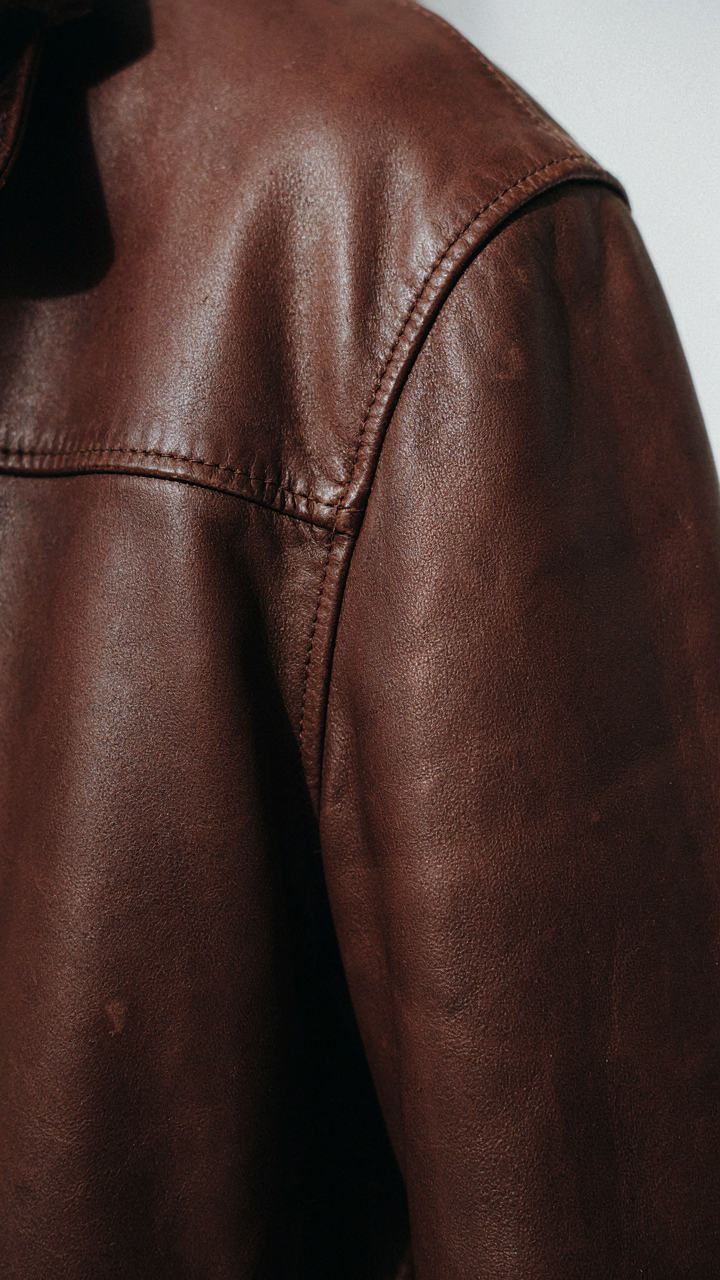
The Real Leather Grade Matters
You’re not reading this section because you care about sustainability or ethics. You’re here because you don’t want to waste money on something that falls apart in two seasons. That’s the real mechanism: leather durability is determined by hide grade, and most retailers don’t disclose it because they’re selling mid-tier leather at premium prices. Full-grain leather contains the entire hide surface with all its natural markings intact. Top-grain leather has the surface sanded smooth, removing imperfections but also removing the densest part of the hide. The difference isn’t cosmetic—full-grain resists cracking, develops character from wear, and lasts decades. Anything labeled “genuine leather” or “bonded leather” is fragmented hide glued together and will delaminate within years.
Check the tannage method on the label or ask the retailer directly. Chrome tanning is cheap and speeds production but creates leather that stiffens unpredictably and fades unevenly. Vegetable tanning takes months and costs more upfront, but produces leather that ages consistently and develops a patina that actually improves appearance. Run your thumb across the surface—full-grain leather feels substantial and slightly textured, not plastic-smooth or uniformly buffed. Buy from brands that list tannage and hide grade in their product descriptions, not just “premium quality.”
Maintenance That Prevents Replacement
The standard advice on leather care is incomplete: condition every six months, treat stains immediately, store in a cool place. That’s maintenance theater. The real protocol addresses what actually ruins jackets—salt damage, heat cycling, and neglected creases that become permanent cracks. Salt from winter roads or sweat attacks leather’s protein structure. Rinse with distilled water and mild soap the moment you notice white residue, not weeks later. Heat cycling from car interiors and heated homes causes leather to contract and expand unevenly, opening micro-fractures. Store your jacket away from direct heat and sunlight, not in an uninsulated garage or above a radiator.
Condition with appropriate products based on your tannage—vegetable-tanned leather needs less frequent conditioning and responds well to mink oil or neatsfoot oil, while chrome-tanned leather benefits from silicone-free conditioners that penetrate without creating a waxy barrier. Crease prevention matters more than stain removal because leather creases rarely fully disappear. Hang your jacket on a thick, shaped hanger that supports the shoulders, not a wire hanger that creates sharp stress points. When you condition, work the product into creases and folds with your fingers to keep leather supple in high-movement areas.
The Real Obstacle Isn’t Your Wardrobe; It’s Your Willingness To Genuinely Own Your Presence

Most women own a leather jacket and never wear it. They buy the thing, hang it in the closet, and convince themselves they’ll “find the right outfit.” That’s not a wardrobe problem. That’s a confidence problem wearing different clothes. A leather jacket doesn’t make you bold. It just reveals whether you already are. Put the jacket on tomorrow. Wear it to one place you normally wouldn’t. Stop waiting for permission. Confidence isn’t something you find in an outfit. It’s something you prove by wearing one.