
The False Spring Outfits Deception: Why Trends Fail You
What Actually Stays Vs What Disappears
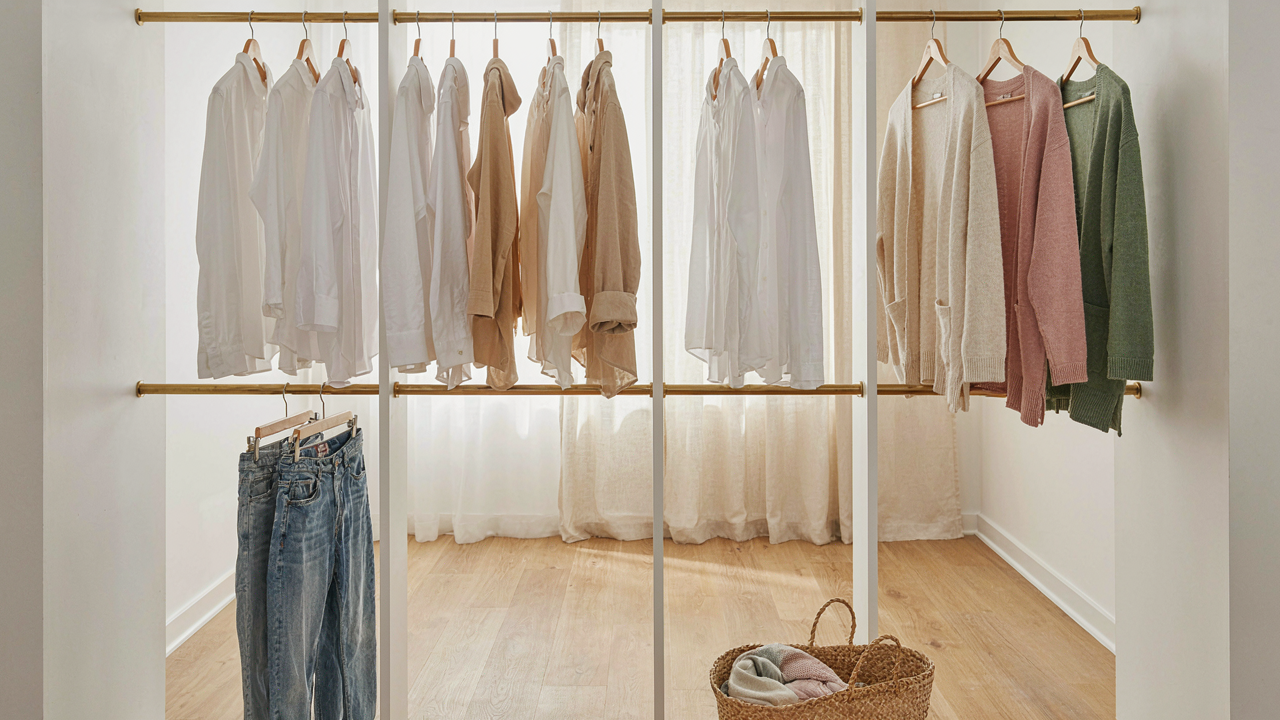
You care about this because you’re afraid of looking outdated. The real mechanism: fashion media conflates velocity with importance. A trend gains coverage, you assume it matters, then it vanishes within a season. Meanwhile, the pieces that actually work across multiple springs stay invisible because they’re not new. Trends are novelty. Style is repetition that works.
The difference sits in utility and fabric behavior across temperature swings. A linen shirt works in early spring and mid-spring because linen’s weight adapts to layering. A oversized leather jacket from 2019 still functions in 2024 because the silhouette doesn’t depend on seasonal narrative. Observe what fashion editors wore three springs ago versus what they promote now. Most of what they promoted is gone. Most of what they actually wore remains.
The Real Cost Of Chasing Every New Thing

Everyone says trends are expensive. That’s incomplete. The actual cost is decision fatigue and wardrobe fragmentation. Each new trend requires you to learn its rules, shop for it, and integrate it. You build a collection of pieces designed for single moments instead of a system. Trends make you a curator of moments instead of a builder of outfits.
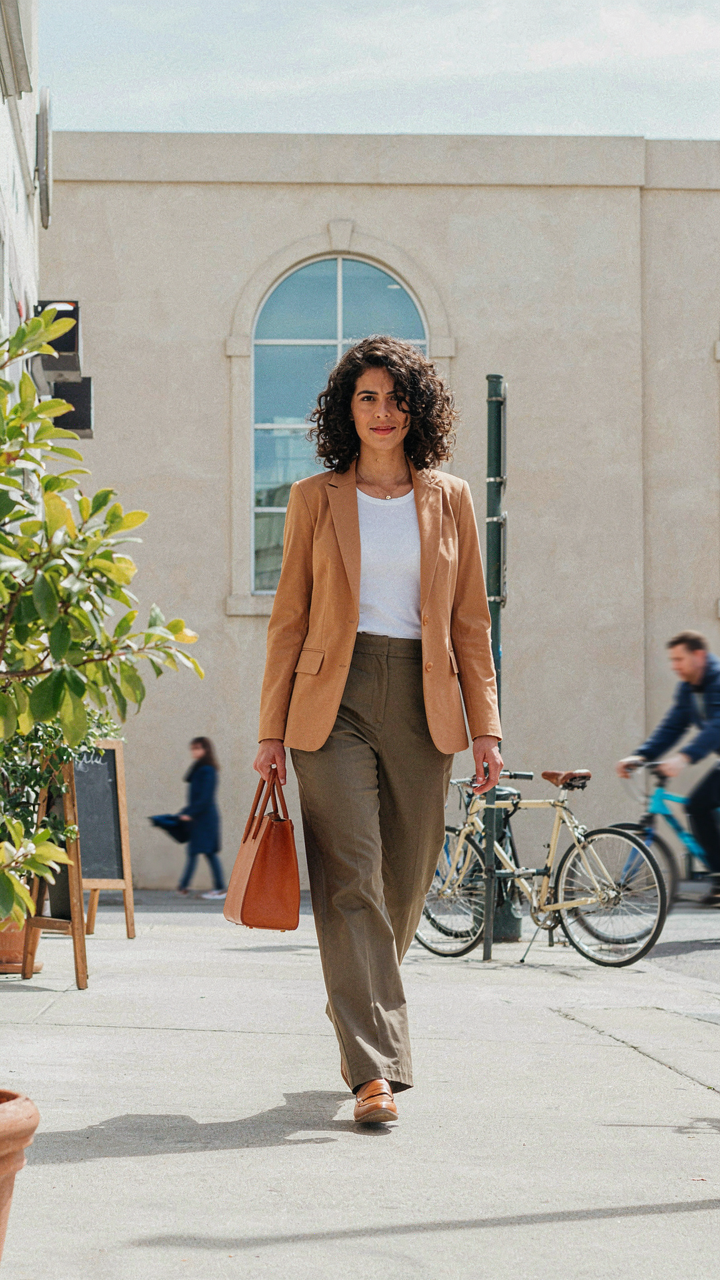
The math is simple: a piece that works two seasons costs half as much per wear as a piece that works one season. When you chase trends, your cost per wear climbs because adoption periods shorten. A camel blazer worn for five springs costs substantially less than five different trend pieces worn once each. Stop buying the trend. Buy the pieces that let you build differently within the same framework.

The Layering Protocol: Your Transitional Weather Blueprint
Base, Mid, Outer: The Thermal Regulation System
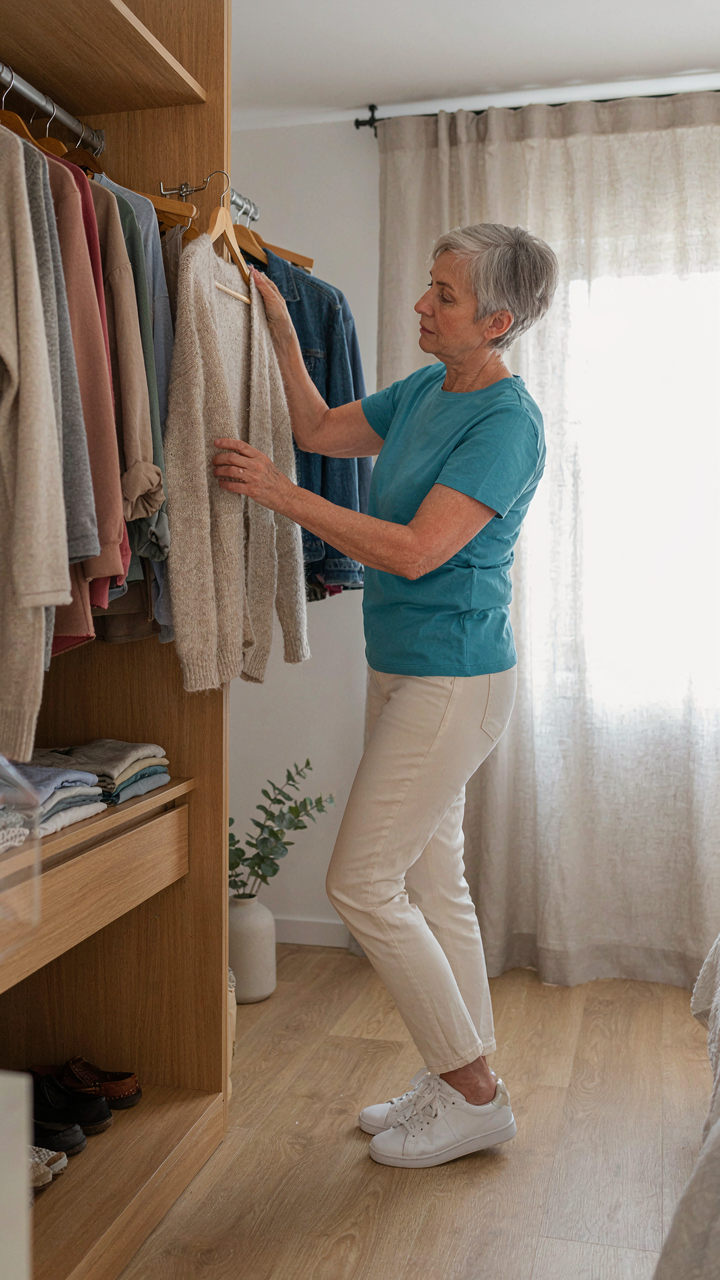
You’re reading this because you’re tired of guessing whether you’ll overheat or freeze. The mechanism is simple: layering works like thermal resistance in physics. Each layer traps air and manages moisture differently. You build outward from skin contact, then add insulation, then deploy a weather barrier. This isn’t fashion advice—it’s physics you wear.
- Base Layer (closest to skin): Moisture-wicking cotton or cotton-blend tee. Pulls sweat away so you don’t chill when temperature drops or you move indoors to air conditioning.
- Mid Layer (insulation): Lightweight knit cardigan, linen shirt, or merino wool sweater. Traps dead air space for warmth without bulk. Removable when the day warms up.
- Outer Layer (weather control): Denim jacket, linen blazer, or lightweight windbreaker. Blocks wind and light rain. Sits over everything else, easiest to shed first.
- Transition Piece: Oversized button-up shirt worn open over a tee. Functions as both mid and outer layer depending on how you wear it and what you tie around your waist.
- The Swap Option: Sleeveless vest or gilet over your base. Lets you regulate core temperature without losing arm mobility. Packs small in a bag.
The goal isn’t looking perfectly coordinated. The goal is solving the problem without thinking about it by noon. Wear the base, add the mid layer first, then decide on outer based on morning temperature and your commute method. If you’re inside most of the day, leave the outer in your bag.
Fabric Intelligence: Wool Vs. Cotton Vs. Synthetics
Everyone says choose natural fabrics. That’s incomplete guidance. The real question is what each fabric does with moisture and temperature swing. Cotton absorbs sweat and holds it, making you cold when you stop moving. Merino wool breathes, regulates temperature across a wider range, and doesn’t hold odor. Synthetics wick fast but trap heat in unpredictable ways.
Wool performs better in true in-between weather because it maintains insulation value even damp, a property cotton lacks. Linen is breathable but wrinkles heavily and offers minimal insulation. For spring transition specifically, merge cotton and wool: a merino blend tee under a wool cardigan lets you manage both warmth and moisture without overheating indoors. Test your own response by wearing the same base layer for three days in similar conditions. Your sweat pattern reveals what you actually need.
The Capsule Wardrobe Calculus: Maximizing Versatility
The Math Behind Five Core Pieces
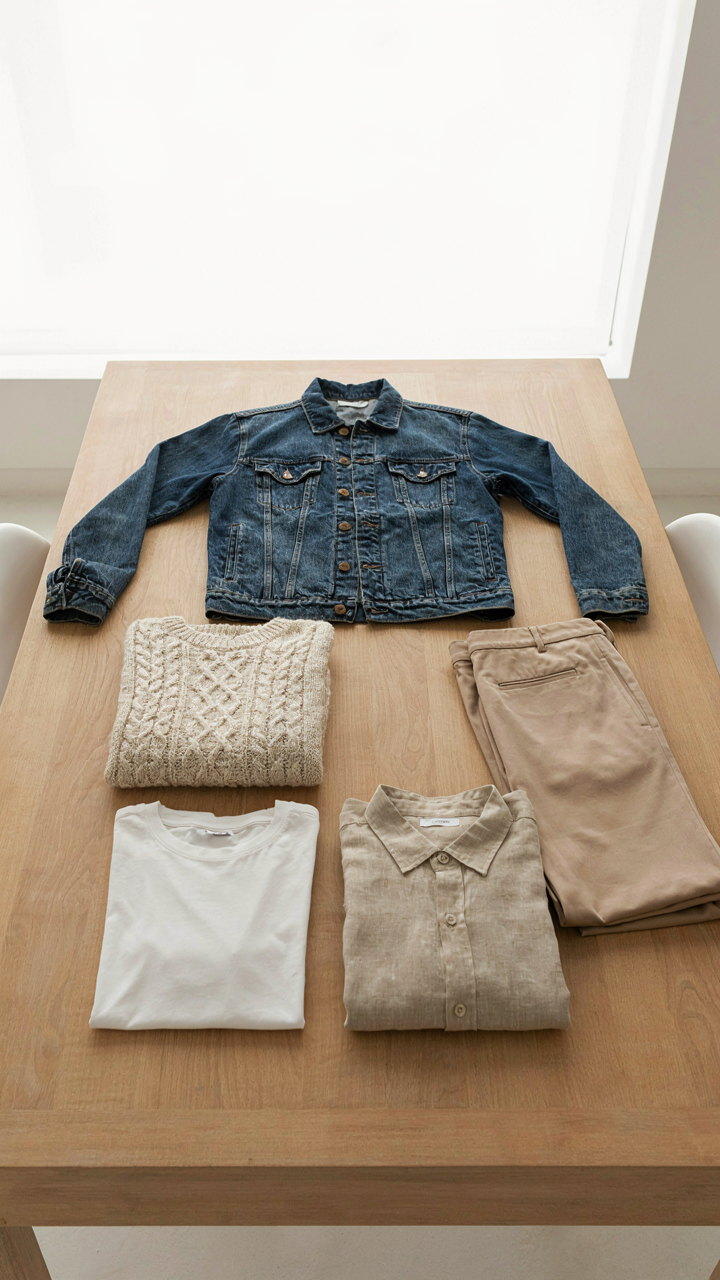
You want to feel like you have options without actually owning a closet full of clothes you never touch. That’s the real fear underneath this—decision fatigue and wasted money. The mechanism is combinatorics. With five core pieces, you generate fifteen distinct outfits. With seven, you hit forty-two. The jump from random accumulation to deliberate selection isn’t about minimalism; it’s about leverage. Each piece must function across temperature swings and social contexts without looking like you tried.
Spring’s in-between weather demands pieces that work solo and layered. A lightweight knit, neutral trousers, a structured jacket, a basic tee, and one transition layer handle nearly every scenario from March through May. You’re not building a “look”—you’re building a system. The pieces themselves stay invisible. People notice the outfit, not that you wore the same white tee three times that week.
Pieces That Pull Their Weight
Most advice says “invest in quality.” That’s incomplete. The real filter is cost-per-wear over six months. A linen blazer worn twice monthly outperforms a trend piece worn once. Cotton blend trousers with structure—not stretchy, not stiff—transition from casual to business casual based on what you layer over them. A lightweight cardigan in a neutral tone works autumn into spring and spring into summer. These aren’t splurges; they’re tools with measurable output.
The calculus: start with items priced at one-tenth your monthly clothing budget or less. A solid cotton tee costs five to fifteen dollars and absorbs use. A structured neutral cardigan costs thirty to sixty dollars and earns its keep across twelve weeks of daily rotation. A linen or linen-blend blazer costs eighty to one-fifty and extends every casual outfit into professional territory without looking forced. Buy once, wear constantly, replace when fibers deteriorate—not when trends shift.
Beyond The Basic Jean: Crop Jeans Outfit Spring Edition
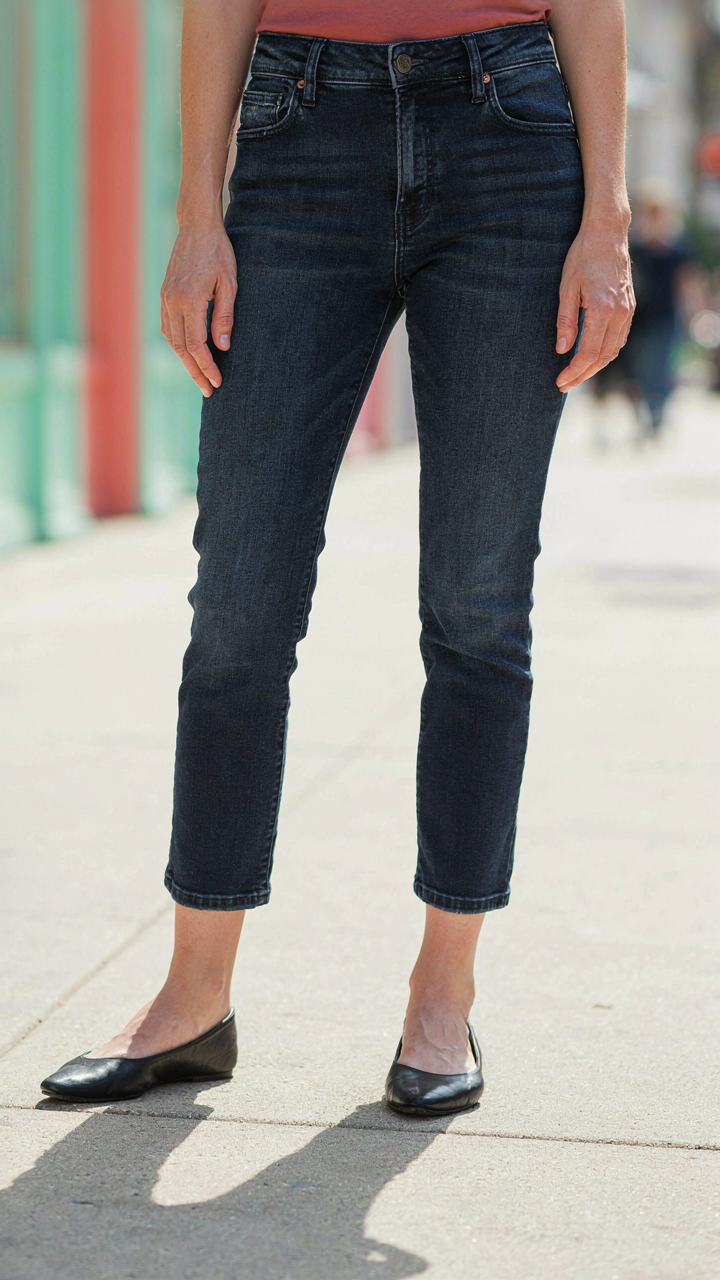
Why Crop Length Matters For Temperature Shifts
You want crop jeans because you’re afraid mid-calf exposure looks immature, but the real mechanism is thermal regulation through fabric cutoff. Think of denim like a heat conductor. A full-length jean traps warmth along your entire leg. A crop jean creates an air gap at the ankle, allowing heat to escape without removing a layer entirely. In between weather demands this precision. You’re not choosing a crop for style first, you’re choosing it because it solves the problem of being too warm in a full pant but too cold in shorts.
The inseam length determines whether a crop functions or fails in spring flux. A true crop hits between ankle and mid-calf, creating that strategic air exposure. The fabric weight matters equally. A 12 to 14-ounce denim crop works spring conditions better than heavier 16-ounce options because it doesn’t retain heat during midday warmth swings. When layering underneath feels too bulky and removing layers feels wrong, a crop jean becomes your temperature control dial. Choose inseams between 26 and 28 inches if you’re 5’4″ to 5’8″ to hit this window accurately.
Pairing Crops With Ground Anchors
The common mistake is treating crop jeans like regular jeans with bare ankles. They’re not. Crop length demands footwear that grounds the proportion, or your leg line breaks awkwardly and the outfit reads incomplete. Low-profile shoes, especially white or cream leather sneakers, create a unified visual line from knee to foot. The ankle stays visible and breathable while the shoe mass anchors the look downward. Bare ankle in a crop jean needs weight below it, not emptiness.
Loafers or ballet flats serve the same function when you want a dressier spring outfit. These shoes create closure without bulk. Avoid ankle boots with crop jeans, the overlap creates visual confusion and kills the temperature benefit you gain from the exposed ankle. Pointed-toe flats elongate the leg while maintaining proportion. The rule: if your shoe has minimal height and sits close to the ankle, a crop jean works. If your shoe extends up the ankle or adds volume at the top of the foot, the proportion collapses and the entire outfit fails before it starts.
Footwear As Foundation: Spring Outfits With Sambas And Beyond

The Sneaker As Climate Insurance
You’re looking for permission to wear the same shoe twice without feeling like you’re failing at fashion. Here’s the mechanism: a neutral sneaker works across temperature swings because it doesn’t demand coordination with a seasonal palette. Sambas, specifically, function as a temperature buffer. They pair equally with heavy knits in 55-degree mornings and linen in 68-degree afternoons without logic breaking. The shoe stays constant while the rest of your outfit absorbs the fluctuation.
The Samba’s design—low profile, leather construction, minimal visual weight—keeps it from competing with layering. You wear it with a sweater, peel the sweater off at lunch, and the sneaker doesn’t suddenly look wrong with short sleeves. This is why Sambas dominate spring more than chunky sneakers. Chunky sneakers anchor an outfit to a specific temperature zone. Minimal sneakers float across conditions. Rotate one pair three to four times per week, and you’ve eliminated 60 percent of spring morning outfit decisions.
Open Toes, Booties, And The Rotation Protocol
The common advice says wear flats when it’s warm and booties when it’s cool. That’s incomplete. What matters is footwear transition speed—how fast you can swap shoes without disrupting the core outfit. Booties work on 50-60 degree days with any silhouette because they’re interchangeable with sneakers. A flat or open-toe sandal signals committed warmth and doesn’t work backward into cooler days.
Build a three-shoe spring rotation: one minimal sneaker for variable days, one bootie for layered outfits and cooler mornings, and one open-toe flat or sandal for locked-warm days when the forecast hits 70+. Wear the bootie twice, the sneaker three times, the sandal once before the temperature trend shifts. This isn’t aesthetic variety. This is operational efficiency. You build outfits around shoes that match the actual temperature band, not the calendar date.
Accessory Amplification: The Chic Spring Crochet Bag For Everyday

Why Crochet Bags Actually Work
You want the crochet bag because it signals you’ve thought about your outfit without looking like you tried too hard. Here’s what actually happens: crochet creates structure through negative space. The open weave means airflow, weight distribution across threads instead of solid fabric, and visual texture that reads as intentional. In spring’s temperature chaos, this matters mechanically. A dense canvas tote traps heat. A crochet bag breathes while holding the same weight. You get functionality disguised as aesthetic choice, which is the entire point of casual dressing.
The crochet technique itself dates to the 1800s, but commercial adoption remained niche until recent years. What changed wasn’t the craft. It was production scaling and color availability. Spring crochet bags now come in neutrals, pastels, and earth tones that work with actual clothing, not just Instagram feeds. The bag works because it solves a real problem: you need something to carry items, it can’t be heavy in mild weather, and it can’t dominate your silhouette. Crochet checks all three boxes without compromise.
The Visual Weight Game
Nobody talks about this directly, but most spring outfit failures happen because the accessories weigh down the ensemble visually. Think of it like load bearing in architecture. A solid leather shoulder bag creates visual mass. Crochet distributes that mass differently because your eye sees gaps and air, not density. The bag occupies space but feels lighter in the composition. This is why crochet bags pair with fitted jeans and basic tees where heavier bags would destroy proportion. A crochet bag won’t overwhelm a delicate spring outfit because the weave itself eliminates visual heaviness.
The statement isn’t about the bag being trendy. It’s about crochet giving you permission to carry something functional without it becoming the focal point. Pair a neutral crochet bag with a monochrome base layer and suddenly your outfit has breathing room. The bag recedes. Your proportions stay clean. Your accessories complement instead of compete. To test this in practice, choose a crochet bag in the same color family as your top or bottom layer, then observe how the outfit lands versus a structured bag in contrasting color. The difference is immediate and measurable.
The Bio Rhythmic Wardrobe: Syncing Style With Your Environment

Your Clothes Are An Adaptive System
You want to feel put-together without overthinking every day, which means you’re actually looking for permission to stop treating spring like a puzzle. Here’s the mechanism: biology calls this homeostasis, the organism’s ability to maintain stability despite changing conditions. Your wardrobe does the exact same thing. It doesn’t fight temperature swings, it absorbs them through layering choices and fabric selection that shift with the day’s actual demands, not your mood.
Most advice treats spring as a fixed aesthetic problem. Wrong. Spring is a variable environment, and your outfit is the organism responding to it. Layering isn’t decoration, it’s thermoregulation. A linen overshirt, a fitted tee, and cropped trousers aren’t separate pieces, they’re a system that contracts or expands based on morning cold versus afternoon warmth. The clothes adapt so you don’t have to change. This is how you build a casual spring wardrobe that actually functions across the temperature chaos of the season.
Learn From What Actually Happens
Temperature feedback loops teach you patterns nobody notices in real time. Track your daily choices for two weeks, not to obsess but to see which combinations you actually reach for when the morning reads 55 degrees versus 65 degrees. You’ll find your body prefers certain weights and configurations that your brain hasn’t named yet. A cardigan over a tank hits different than the same tank under a jacket. Weight distribution, fabric drape, sleeve coverage, all of it registers as comfort or friction before you consciously know why.
The concrete protocol: photograph your outfit each morning and note the temperature and how you felt by 3pm. You’re not hunting for perfection, you’re identifying your personal temperature response curve. After two weeks, you have a map. You know exactly what fabric weight works at 58 degrees, what sleeve length keeps you comfortable through a ten-degree rise, where your layering system actually fails. This data replaces guessing. Your spring wardrobe becomes predictive instead of reactive.
Color Theory For The Committed: Mastering Spring Palettes
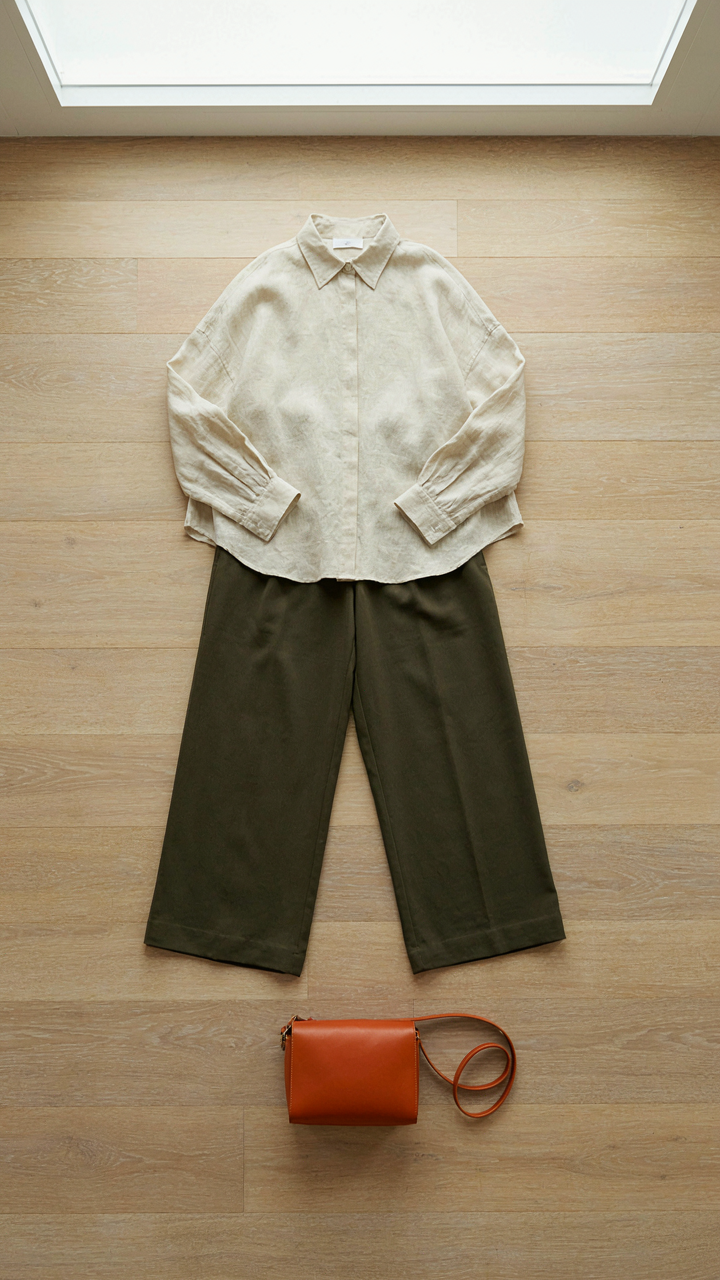
Color Blocking That Actually Works
You want color blocking to make you look intentional instead of like you got dressed in the dark. Here’s the mechanism: your eye processes contrast before it processes individual pieces. In graphic design, negative space is the absence that makes presence visible. In your outfit, the contrast between colors is the negative space that makes each piece register as deliberate. Two colors that sit too close on the spectrum cancel each other out. Two colors with real separation force your brain to read them as a strategy.
The practical rule is the 60-30-10 split from interior design. Sixty percent of your outfit in one color (usually a neutral like cream or soft gray), thirty percent in a secondary color (sage green, rust, warm tan), ten percent in an accent. Spring outfits benefit from this because the season offers natural color separation without looking harsh. A cream base layer, olive overshirt, and burnt orange crossbody bag read as intentional, not random.
Neutrals Build The Load Bearing Wall
Everyone says “neutrals are versatile,” which is true but useless. Here’s what actually matters: neutrals function as the infrastructure that lets you swap one variable without rebuilding the entire outfit. Cream, oatmeal, soft gray, and warm white are load-bearing. They absorb seasonal color without competing for attention. Spring means lighter, desaturated versions of neutral tones work better than heavy charcoal or pure black.
The tactical move is treating your neutral base as non-negotiable infrastructure, then rotating colors on top. A cream sweater or linen shirt worn three different ways with different layering pieces and bottoms compounds its utility. This is how committed dressers build spring wardrobes without buying constantly. One neutral piece becomes five outfits through strategic pairing, not through seasonal shopping cycles. Start with cream as your primary neutral, then add one warm gray piece and one soft white for rotation capacity.
The Mindset Shift: From Consumer To Curator

Identify Your Signature Style Elements
You want permission to buy less and feel more confident doing it. The real mechanism is constraint breeds clarity. When you define what actually works on your body and life, you stop treating every trend as a potential fix. Spring outfits fail when women chase seasonal novelty instead of building on what already functions. Your signature elements are the repeatable components that make you look intentional rather than assembled. A neutral base layer, a specific denim fit, a jacket silhouette, a shoe type, a color range you return to. These aren’t restrictions. They’re your operating system.
Document what you reach for repeatedly across seasons. Look back three months at photos where you felt present, not self-conscious about your clothes. Note the pieces that appeared. A cream linen shirt. White sneakers. Olive trousers. A structured tote. These aren’t accidents. They solve real problems on your body. Build your spring rotation around these anchors, then add new pieces that complement them rather than compete with them.
Discard What Doesn’t Serve Your Aesthetic
The common advice is to keep everything and be “flexible.” This is wrong. Inventory bloat kills decision-making and wastes time every morning. Soft editing is the tactical move here. Remove anything that requires a specific circumstance you don’t actually live in, anything that fights your body type, and anything that doesn’t coordinate with at least three other pieces already in your closet. Most women keep spring clothes that feel obligatory rather than functional. A breezy floral blouse that makes you feel exposed. Shorts you bought because everyone else wore them. Sandals in a shade that clashes with your skin tone.
This isn’t about minimalism as ideology. It’s about friction reduction. When every piece in your spring wardrobe works with every other piece, you eliminate decision fatigue and actually wear what you own. Discard by category if needed. Pull every light jacket, every neutral bottom, every layering piece. Keep only what you’ve worn in the past eighteen months or can see yourself wearing in the next six weeks. The rest doesn’t belong in your space.
The Real Obstacle Isn’t The Weather; It’s Your Inability To Define Your Personal Style Algorithm

You don’t have a spring outfit problem. You have a decision-making problem. Every piece you own either aligns with who you actually are or it doesn’t. Stop collecting random items and start building a system. Open your closet today and identify the three colors that make you feel unstoppable. Then buy nothing that doesn’t complement them. The women who look effortlessly put together aren’t lucky. They’ve simply decided who they are and dressed accordingly.