
Beyond Basic: The Anti Effort Mindset For Dinner Outfits Date Night

Why Style Advice Fails You
You want to look like you didn’t try. That’s the real goal here, not the outfit itself. Most style advice tells you to “just be yourself” or “wear what makes you comfortable,” which is worthless because it ignores the actual mechanism: you need intentional constraint, not freedom. Constraint forces decisions. Freedom paralyzes you into either overthinking or defaulting to safe garbage.
The gap between looking effortless and looking like you gave up is precision. You pick one variable to control and let everything else serve it. A fitted black shirt with structured trousers works because the fit does the heavy lifting. The shirt isn’t special. The fit is. This is constraint operating as a filter, not a limitation.
Intention Disguised As Accident

Generic advice says confidence is doing whatever you want. That’s wrong. Confidence is knowing why you chose what you wore, even if nobody asks. This isn’t about perfectionism. It’s about removing the friction between thought and action so you actually get ready instead of cycling through options for forty minutes.
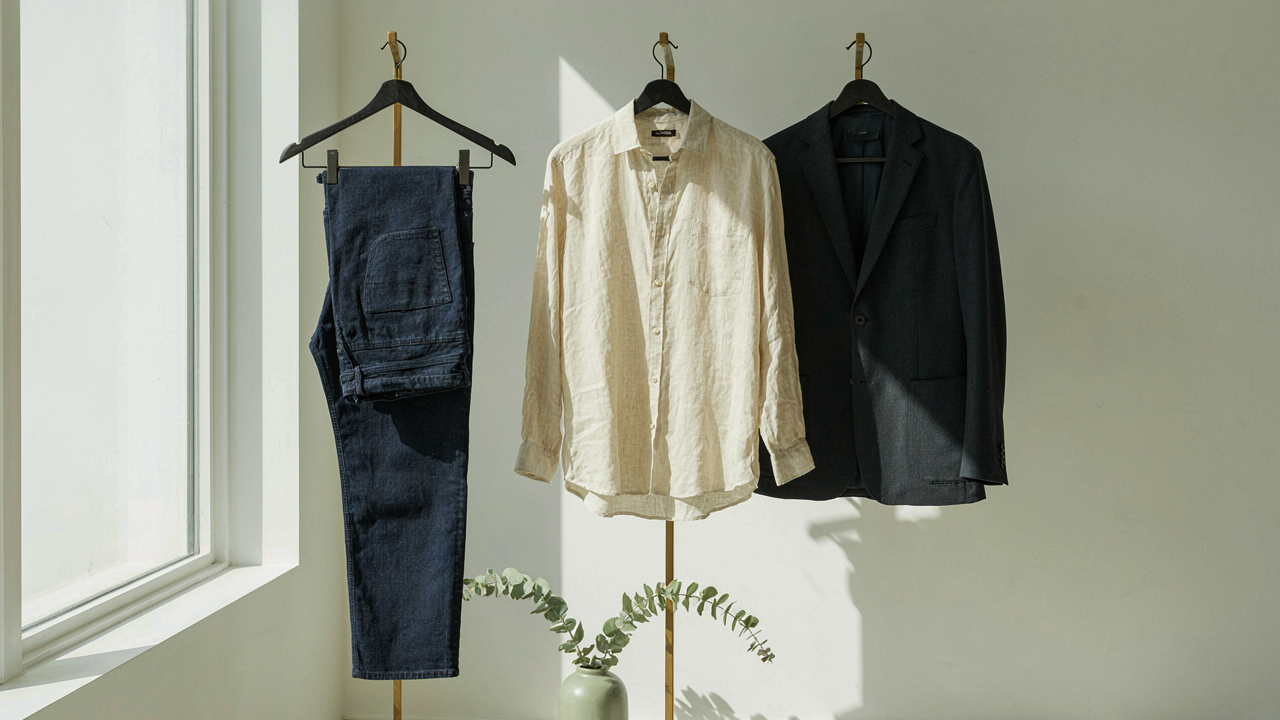
Start with one anchor piece. That’s the item that sets the tone: fitted dark jeans, a linen button-up, a structured blazer. Everything else calibrates to that single choice. You’re not building an outfit. You’re building a decision tree where each piece has one job. That job is to reinforce the anchor and nothing else. Make that your protocol before you get dressed.

The Subtlety Protocol: Signaling Value, Not Vanity

Brands That Whisper Instead Of Scream
You care about this because you’re terrified of looking like you’re trying. The mechanism is simple: overt branding broadcasts insecurity. A logo plastered across your chest announces you need external validation. Understated luxury works the opposite way. It assumes the wearer doesn’t need permission to matter. Quality fabrics, clean construction, and restraint communicate competence. A solid linen shirt beats a designer polo every time on a date because it signals you chose the outfit for yourself, not for approval.
The difference between whisper and scream isn’t about price point. A twenty-dollar plain cotton tee can outperform a two-hundred-dollar branded piece if the fit is precise and the fabric weight suggests intention. Seaming should be clean. Hems should sit right. The garment shouldn’t announce its maker. When someone notices what you’re wearing because of how it fits your body or how the color complements your skin, not because they recognize a label, the outfit has done its job.
How Quality Reads At First Glance
Perception of quality operates like signal detection in engineering. Your date processes visual data in under one second to determine “this person has standards.” That signal comes from three mechanisms: fabric drape, color saturation, and how edges finish. Natural fibers like cotton, linen, and merino wool hang differently than synthetics. The fabric moves with your body rather than against it. This reads instantly as quality because your nervous system recognizes the difference between rigid and fluid movement.
Color saturation matters because it reveals processing investment. A shirt dyed with precision holds its hue evenly. Cheap dye jobs fade inconsistently or look flat. The seams, cuffs, and collar edges should show no loose threads or wavering stitching. These aren’t nice-to-haves. They’re the actual language your date’s brain uses to assess whether you operate with precision in other areas of life. Attention to these three elements compresses perceived value into a single glance, and that glance shapes everything after it.
The Minimalist’s Arsenal: Curating Your 21 Outfits

Build Around Core Anchors
You want this section because you’re afraid you’ll waste money on clothes that don’t work together. The mechanism is simple: most people buy pieces in isolation, then spend energy playing mix-and-match every date night. A capsule wardrobe inverts this. You start with three to four anchor pieces that work with almost everything, then add around them. Think like a systems engineer would—constraint breeds efficiency. You’re not collecting outfits; you’re building a combinatorial system where most permutations work.
The number 21 comes from a basic calculation: seven base combinations multiplied by three variables (top, bottom, or shoe swap). You don’t need 21 different outfits. You need seven solid combinations where you can swap one element and generate 14 more legitimate options. This cuts decision fatigue at the source. Most people own 40 pieces and wear 10. You’ll own fewer and actually wear all of them.
Choose Pieces That Stack Across Contexts
People say to invest in timeless pieces, then recommend whatever trend was popular five years ago. That’s lazy. Actual versatility means a piece works for a casual dinner, works for drinks after work, works for a weekend activity that turns into dinner. Fabric choice drives this more than style does. Cotton blends, wool, and quality linen maintain structure through wear and don’t signal trend-dependence. A dark crew neck sweater outlasts 80 percent of branded basics because it resists visual obsolescence.
Fit stability matters more than current proportions. An oversized shirt will look dated when slim silhouettes return. A shirt with regular proportions—not exaggerated—works across a five-year window. Neutral colors aren’t boring; they’re ammunition. Navy, black, cream, grey, and olive perform double duty as background or statement pieces depending on styling. When you own fewer things, each piece justifies higher cost and higher quality. Buy the version that lasts, not the version that impresses initially.
The Physics Of Attraction: Leverage In Fashion

Constraint Creates Amplification
You’re reading this because you suspect effort shows and kills attraction. That suspicion is correct. Physics calls this leverage: a small force applied at the right point moves something massive. In casual date night outfits, your constraint is the limited real estate of your body. You don’t get to fill every inch with visual noise. So you concentrate impact instead.
Most advice says “let your personality show through.” That’s avoidance dressed as wisdom. What actually works is forcing yourself to choose one element that does the heavy lifting while everything else recedes. A fitted shirt with one strong collar treatment beats a closet of half-ideas. The broadfork works by spreading force across multiple prongs in narrow space. Your outfit works the same way: narrow your focal points, distribute visual weight precisely, and the constraint becomes your advantage.
One Anchor, Everything Else Quiet
Stop dressing in layers of statement pieces. Each adds noise instead of signal. One strategic element—a texture, a fit detail, a color choice—should command the visual attention. The rest functions as support, not competition. This isn’t minimalism for its own sake. This is signal-to-noise ratio.
A well-fitted dark denim with one interesting detail at the top (collar shape, fabric weight, sleeve roll) beats matching patterns top to bottom. Your eye needs a place to land. Give it one. Build backwards from that single anchor. Everything you add after the anchor must justify its presence by either strengthening what you’ve chosen or creating intentional negative space around it.
The Unspoken Language: Fashion Girl Outfits And Body Language

What Your Outfit Says Before You Speak
You want your outfit to do the social work for you so you don’t have to. Here’s the mechanism: your clothes transmit a signal about your internal state before your mouth opens. Neuroscience calls this embodied cognition—your body’s position and presentation literally shape how your brain processes confidence. Wear something tight or restrictive, and your nervous system reads that as constraint. Wear something that lets you move freely, and your posture opens up.
The casual date night outfit that works isn’t the one that looks best in a mirror. It’s the one that makes you move like you already belong there. When fabric drapes instead of clings, when you can gesture without thinking about exposure, when your shoes let you walk normally—your body relaxes. Your date reads relaxation as comfort, and comfort reads as confidence. This isn’t psychology. This is physics applied to fabric and human movement.
The Actual Confidence Play
Everyone says wear what makes you feel confident. That’s incomplete advice masquerading as wisdom. Real confidence isn’t a feeling you manufacture—it’s a byproduct of removing friction. Your outfit either creates obstacles or it doesn’t. A casual date night outfit that forces constant adjustment, that requires you to think about how you’re sitting or standing, splits your attention. You’re managing the outfit instead of managing the conversation.
The leverage point is constraint removal. Choose pieces that fit your actual body without gaps or pulling. Wear shoes you’ve walked in before, not ones breaking in for the first time. Pick a neckline that doesn’t require repositioning every five minutes. These aren’t small details—they’re the difference between your nervous system staying calm and activating a low-level stress response that sabotages your presence. When nothing needs fixing, you’re free to actually listen.
The Sade Girl Style: Dark Elegance For The Modern Woman

Where Restraint Reads As Confidence
You want people to perceive you as someone with taste and control. The mechanism is contrast: dark palettes and fitted cuts remove visual noise, which makes everything you wear signal intention instead of decoration. This isn’t about being moody or trying hard. It’s about the math of attention. When most people wear color and pattern, you wear black and structure. The eye lands on you because you’ve eliminated the variables that dilute presence.
Sade Girl aesthetics borrow from film noir cinematography, where darkness amplifies rather than obscures. Directors used shadow to direct focus. Your outfit does the same. A fitted black turtleneck and tailored trousers command the room not because they’re flashy, but because they force people to read your posture, your movement, your face. Everything else becomes secondary. This is why the style works on dates: it removes friction between you and how you want to be perceived.
Build With Monochrome, Then Add Weight
Most casual date night advice tells you to “add a pop of color.” That’s backwards. Start with one color family, then vary the weight of fabric and the fit of silhouettes to create depth without chaos.
- Black fitted blazer over cream knitwear: The contrast lives in texture and proportion, not hue. The structured jacket against soft knit creates visual interest without breaking the palette.
- Charcoal trousers with a black long-sleeve top: Pair them with pointed boots in black leather. The monochrome field makes fabric weight do the work—matte against matte with subtle sheen variations.
- Deep burgundy slip dress with a dark grey cardigan: Still technically monochromatic in temperature. Burgundy and grey live in the same warm-to-cool family, so they feel cohesive rather than fragmented.
- Black wide-leg trousers with a fitted black turtleneck and a long wool coat in charcoal: Layering within the same palette creates dimension through silhouette alone—oversized outer layer, fitted base, creates architectural interest.
- Navy turtleneck tucked into black tailored pants with a black leather belt: The navy provides subtle variation that prevents flatness. The belt adds a structural line that breaks the column of color and anchors the fit.
The real leverage isn’t in finding the “right” dark colors. It’s in understanding that strong silhouettes—fitted where it counts, loose where it breathes—do the heavy lifting. Once you lock the monochromatic foundation, every piece you layer becomes readable. No visual clutter. Your date reads you, not your outfit.
The 30 Years Outfit: Ageless Style For The Discerning

Ignore The Trend Cycle Entirely
You’re reading this because you’re afraid of looking dated or desperate. Here’s the mechanism: trends die because they’re designed to. The fashion industry needs you to rebuy. What doesn’t die is proportion, fit, and material quality. A well-cut blazer from 2015 works today because the cut was never wrong. The mistake most people make is treating casual date night outfits like they need seasonal updates. They don’t. You need pieces that function across five years without apology, which means abandoning the idea that newness equals correctness.
The real filter isn’t trend awareness. It’s restraint. Pick neutral colors that hold their value: charcoal, navy, cream, olive, black. Avoid anything that screams a specific year. Avoid logos meant to date you. A simple linen shirt doesn’t feel dated in 2024 because it felt fresh in 2019. It was just good fabric and proportion then, and it still is now. This is durability applied to style, not sustainability marketing.
Build Your Core, Not Your Closet
Borrowed from architecture: load-bearing walls hold the structure. Your outfit core does the same. Three base pieces carry everything else. A fitted dark jean. A neutral button-up or knit. A blazer or overshirt that fits your shoulders correctly. These three pieces aren’t trendy because they’re functional. They work because they’re proportionally neutral and made from durable fibers like cotton, wool, or linen. Everything else you add is decoration, not foundation.
The trap is owning thirty casual outfits instead of five that actually work. Each piece must earn its spot by pairing with at least four other items in your closet. If a shirt only works with one pair of pants, it’s wasting your space and your decision-making energy. Test this: lay out your core three pieces. Try five different shoes, five different tops, five different accessories. If you can’t build distinct looks from one core, your core is wrong. Rebuild it before adding anything else.
Heels Outfit Ideas: The Strategic Lift

Know When To Elevate, When To Ground
You want the lift because you think it signals effort. It doesn’t. Signals work like leverage in physics: the smaller the fulcrum, the more mechanical advantage you gain. A heel is your fulcrum. The real mechanism is contrast. Heels work because they create visual tension against casual pieces, not because they’re inherently dressier.
The mistake people make is treating heels as a uniform upgrade. They’re not. A stiletto with sweatpants reads as confused. A kitten heel with tailored trousers reads as redundant. Ground your heels into casual fabrics and cuts: denim, t-shirts, oversized blazers, cargo pants. The heel signals intention. The casual pieces keep you honest.
- Denim and kitten heels: Low heel with jeans negates the formality trap. The heel lifts the line of your leg without making the outfit feel performative. Works because it’s specific, not elevated.
- Oversized button-up and pointed flats: Skip heels entirely when your top does the work. A relaxed shirt untucked creates volume. Flat shoes ground it. Heels would compete.
- Cargo pants and minimal mules: Structured fabric absorbs the casualness of a mule. The heel becomes an accent, not the statement. Proportions matter more than formality.
- White tee and slingback heel: Simple silhouette demands footwear that doesn’t apologize. A slingback (not a pump) adds refinement without costume energy. The formula works because nothing fights.
- Maxi skirt and flat sandal: Length already creates verticality. Adding height becomes noise. A flat anchors the proportion and keeps the vibe grounded. Heels would feel theatrical.
The rule: use heels to break up heaviness or add line definition, not to dress an outfit up. If your top is already doing visual work, your shoes should disappear into support. If your bottom is loose or shapeless, a heel can sharpen the leg. This is tactical, not aspirational.
Heel Choice Shapes The Entire Proportion
Heel style doesn’t sit separate from your outfit. It’s the final variable that either resolves the math or breaks it. A stiletto has a narrow base and demands clean lines above it. A block heel has mass and works with volume. A kitten heel has no attitude. A mule signals ease. Each one answers a different question your outfit poses.
The common advice says pick the heel you’re comfortable in and call it a day. That’s lazy. Comfort matters, but so does visual architecture. A thick heel on a petite frame can swallow proportion. A thin heel with heavy fabrics creates visual mismatch. Match heel weight to fabric weight and to the visual complexity of what you’re wearing. A detailed patterned dress needs a simple shoe. A plain outfit can handle a more distinctive heel. The heel either completes the composition or it fights it.
The Chic Girl Outfits Paradox: True Comfort As Power

Fit And Fabric Win Over Trends
You’re worried people will think you didn’t try. That’s the real thing. The mechanism is simple: your brain reads fit before it reads trend. A well-fitted piece in natural fabric creates visual coherence your nervous system registers as intentional, while a trendy item that fights your body reads as costume regardless of brand. Cotton, linen, and quality blends drape consistently. They move with you instead of against you. Synthetic blends cling unpredictably and telegraph effort.
Most dating advice tells you to “pick pieces you love.” That’s incomplete. You need pieces that fit your actual body in its current state. This means trying on before buying, checking sleeve length against your arm, and sitting down in pants before committing. A slight oversized linen shirt over fitted dark jeans beats a perfectly on-trend piece that pulls across your shoulders or gaps at the waist. Fit is the first signal of control.
Presence Comes From Movement, Not Stillness
Think of clothing as biomechanics. Your outfit either restricts or enables how you naturally move, and your date picks up on restriction immediately. A dress that requires constant adjustment, shoes that demand careful steps, or a top that pulls when you reach forward all broadcast anxiety through your body language. You become focused on managing fabric instead of managing the conversation.
Wear what lets you forget you’re wearing it. This is why tailored basics dominate casual date outfits. A clean t-shirt, fitted jeans, and a neutral overshirt let your shoulders stay relaxed and your hands stay available. You can lean forward, gesture without thinking, cross your legs without planning. The outfit becomes invisible and you become visible. That’s the entire point.
The Real Obstacle Isn’t Your Wardrobe; It’s Your Fear Of Conscious Strategic Intent

You already own clothes that work. You just won’t commit to them because commitment feels like you’re trying too hard. But here’s the truth: not deciding IS deciding. Pick three casual date night outfits today and stop rethinking them. Wear the same combinations until they feel automatic. Effortlessness doesn’t come from endless options. It comes from ruthless repetition.