

The Identity Fallacy: Why You Don’t “Find” Your Style

Stop Searching Outside Yourself
You want someone to hand you a formula because admitting you already know what you like—and choosing it anyway—feels like a risk. The real mechanism: style isn’t discovered in mood boards or trend reports. It emerges from the gap between what you actually prefer and what you think you should prefer. That gap is where most people get stuck. They’re not looking for style. They’re looking for permission to stop performing for an invisible audience. Close that gap first, and style follows automatically.
Your authentic choices already exist. You’ve made thousands of them in private—the music you play alone, the clothes that feel right against your skin, the spaces where you relax. These aren’t random. They’re data. The problem isn’t that you lack style. It’s that you’ve learned to override it in public. Finding your style means reversing that habit, not inventing something new from scratch. Start by noticing what you gravitate toward when no one’s watching.
Dismantle The Borrowed Rules

Everyone inherits a rulebook they never signed. Dress for your body type. Match your season. Keep it minimal. Invest in basics. These rules came from somewhere—fashion magazines needed to sell advertising, Instagram accounts needed engagement, status hierarchies needed gatekeepers. None of them describe you. Most style advice is incomplete because it erases the mechanism: social conditioning works backward. We don’t choose what we like. We’re taught what to value, then we choose things that signal we know the rules.
The work here is ruthless auditing. Which preferences are actually yours, and which are inherited? You can’t answer this by thinking alone. Watch yourself choosing. Notice when you hesitate or add a qualifier like “but I probably shouldn’t.” That hesitation is the signal. It marks a conflict between your preference and an internalized expectation. Identify one choice in each life category—clothing, home, media, work—where you’re performing for rules instead of yourself, then deliberately break it. Document what happens.

The Self Audit Protocol: Unearthing Your True Aesthetic

Values As Visual Language
You want this section to feel like permission. Permission to stop guessing, to stop copying, to finally know what you actually like. The real mechanism is this: your values aren’t abstract. They translate into material choices, color preferences, and silhouettes the same way a military strategy translates into battlefield positioning. What you choose to wear is reconnaissance. It reveals what you genuinely prioritize before your brain catches up to defend it.
Start by naming three non-negotiable values: autonomy, efficiency, tradition, rebellion, precision, comfort, whatever rings true. Then hunt for the visual manifestation in your environment right now. If you value minimalism, you won’t own decorative clutter. If you value self-expression, your spaces will show friction and personality. Your aesthetic isn’t separate from your values. It’s the physical proof they exist.
Patterns Hidden In Plain Sight
Everyone tells you to look at your closet. That advice is incomplete. You need to analyze it for what you actually reach for versus what sits untouched. The items you wear repeatedly signal comfort and alignment. The items collecting dust signal obligation, aspiration, or someone else’s taste bleeding into yours.
Pull out five outfits you’ve worn in the last two weeks. Note the colors, materials, silhouettes, and fit across all five. Recurring elements are your baseline aesthetic. If every outfit has structure, your body prefers defined shapes. If every outfit has one oversized piece, you need breathing room in your clothes. Your true aesthetic isn’t what you think looks good. It’s what your body and routine have already chosen for you.
Beyond The How To Find Your Personal Style Quiz: Data Driven Choices

Track What You Actually Wear
You want permission to stop guessing. That’s the real motive here. Most style advice treats preference like a fixed trait you discover through introspection, but preference is a signal you measure through behavior. Borrow the concept of “frequency analysis” from data science: log what you reach for repeatedly, not what you think you should like. Wear tracking works because your body votes before your ego does.
Set a baseline period of two weeks. Document every outfit you choose without intervention. Note the items, the context, and how you felt in them. Don’t curate. Don’t perform. Just record. The pattern emerges fast: certain fabrics, cuts, color combinations, or silhouettes recur because they solve a real problem for your body, your life, or your nervous system. This data becomes your personal style foundation, not a Pinterest board.
Remove The Friction Points
The common advice says “curate ruthlessly,” which is correct but vague. What matters is identifying which pieces create active discomfort or cognitive dissonance, then eliminating them immediately. A shirt that rides up, pants that require constant adjustment, or a color that makes you second-guess yourself isn’t an asset. It’s friction that taxes your decision-making daily.
Go through your closet and flag items that cause one of three responses: physical discomfort, identity misalignment, or mental friction during selection. Pull them out. Donate or discard them. Your remaining pieces form a smaller, higher-signal wardrobe where every choice reinforces your actual identity instead of fighting it. This subtraction phase is where most people find their style emerges, not through addition.
The “How To Get Better Style” Evolution: Iteration, Not Revelation

Style Compounds Through Selection Pressure
You want a shortcut because you think style is something you either have or don’t. It’s not. Evolutionary biology teaches us that organisms don’t transform through sudden mutations. They adapt through repeated selection: small variations survive or die based on fitness. Your style works the same way. Each choice you make gets feedback from reality. You keep what works, discard what doesn’t, then repeat. The mechanism is selection pressure, not inspiration.
Most people wait for clarity before they act. They research, consume content, build mood boards. None of that creates a style. You build style by making choices, observing results, and making better choices next time. Start with basic wardrobe items or design decisions. Wear them. Notice what happens. Did people respond differently? Did you feel more confident moving? That’s data. Evolution happens through friction with the environment, not in your head.
Small Changes, Measurable Feedback
Forget making a “style transformation.” That’s marketing language for people selling courses. Real style change happens through micro-experiments. You alter one variable at a time: the fit of your shirt, the color palette, the material of your shoes. One change per week, minimum two weeks per variable. This isn’t arbitrary. You need enough time to notice social feedback and internal shifts, and you need isolation to know what actually caused the difference.
Document what you change and what happens. Not feelings. Results. Did conversations shift? Did you stand differently? Did you reach for that piece again or avoid it? After three months of micro-iterations, patterns emerge. You’ll see which variables consistently produce the outcomes you want. That’s your style foundation. It’s built on data from your actual life, not trend forecasts or generic advice. Keep only the changes that compound.
The Uniform Principle: Optimize For Decision Fatigue

Build A Signature Look
You’re hoping a uniform solves the status problem: that looking intentional signals competence. Here’s what actually matters: your brain burns through finite decision capital every single day, and clothing shouldn’t be where you waste it. The mechanism is constraint-based optimization. In economics, binding constraints force efficiency. Your constraint is the number of items you rotate. Fewer pieces force coherence.
Pick three to five base colors that work together. Stick to them. Build outfits by combining the same foundational items—same jeans, same shirts, same jacket—in different sequences. This isn’t minimalism for its own sake. It’s ruthless elimination of the trivial decision. You get dressed in under three minutes because there’s nothing to choose between.
Invest In Pieces That Outlast Seasons
Most advice says “buy quality,” which means nothing. Quality where? On what? Here’s the real filter: buy pieces designed to work across multiple years and seasons, not built for a single trend cycle. Denim, cotton basics, neutral outerwear, leather belts, structured shoes. These materials age visibly but hold function. A well-cut blazer from ten years ago still works. A fashion blazer from last season doesn’t.
Check the fiber content first. Natural fibers—cotton, linen, wool, leather—actually improve with wear. Synthetics degrade. This isn’t about spending more; it’s about spending once on pieces that compound in utility. Buy one excellent white shirt instead of five mediocre ones. Wear it until the fabric shows character. That consistency trains your eye and tightens your aesthetic while reducing the total number of decisions you make monthly.
Finding Your Style Through Constraint: The Anti Consumption Ethos
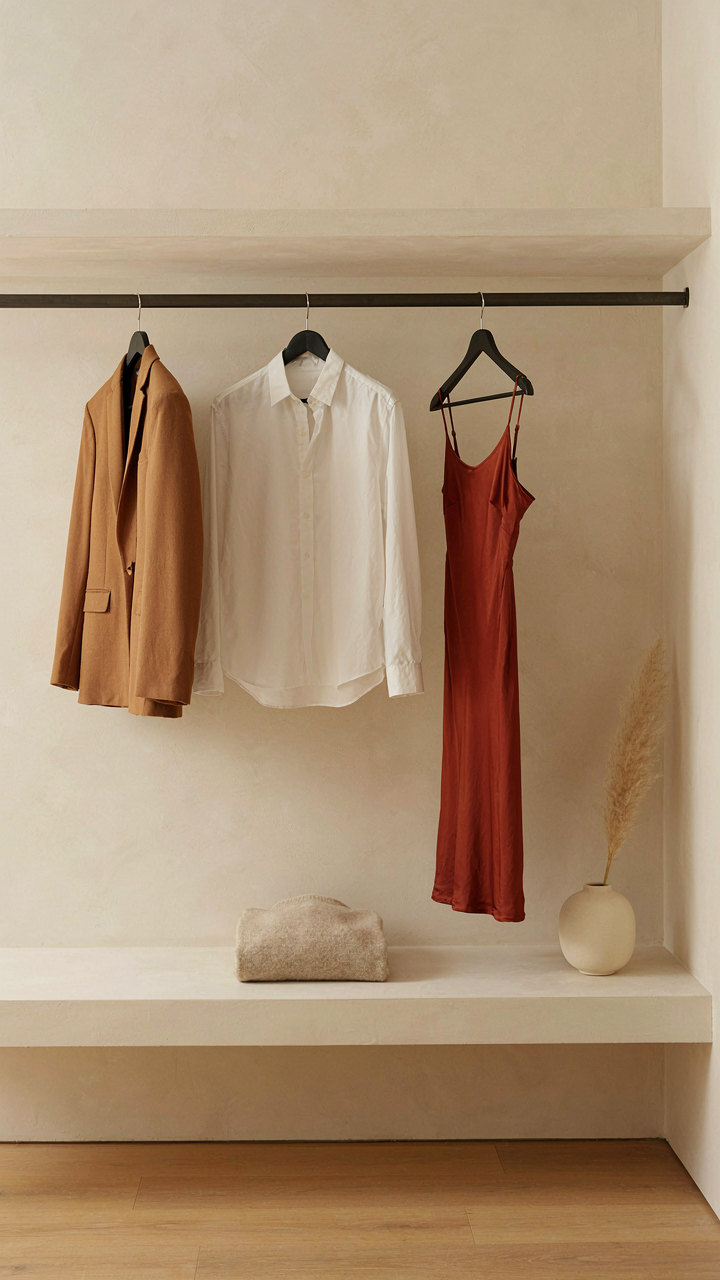
Set A Ceiling, Not A Floor
You want permission to buy more stuff and call it personal style. Here’s the mechanism: constraint forces prioritization. In economics, scarcity drives value allocation. When resources are unlimited, decision-making atrophies. You pick randomly. When resources are capped, every addition must justify its existence against what you already own. This is how style emerges from noise.
Define what you will not buy before you buy anything else. Set a hard limit on new pieces per quarter or year. Establish non-negotiable criteria: Does this replace something? Does it work with at least three existing items? Will you wear or use this in two years? The ceiling works because it makes rejection automatic, not emotional.
Strip Away Everything But Signal
Minimalism isn’t aesthetic purity. It’s cognitive bandwidth recovery. When your closet or workspace contains only items that earn their place, you stop spending mental energy on decisions. Your actual style becomes visible because the noise is gone. Constraint reveals preference.
Start by removing items that don’t align with how you actually spend time or want to be perceived. Not items you might use someday. Not things you paid too much for. Keep only what functions or communicates something true about you. What remains is your style foundation. Build from that baseline only.
How To Change My Style Outfits: The Persona Project

Design A Distinct Uniform For Each Role
You want permission to look different depending on context because you’re afraid inconsistency signals weakness or confusion. The mechanism is this: a uniform isn’t about looking the same. It’s about reducing decision friction while amplifying intentionality in the contexts where it matters most.
A uniform works because it constrains variables. You pick silhouettes, a color palette, and a fit standard for each role you inhabit. Professional you wears one template. Social you wears another. The constraint forces coherence without demanding originality every morning. This is military strategy applied to wardrobe: deploy resources where they generate the most tactical advantage.
Align Each Persona With Specific Aesthetic Principles
Most people skip this step and wonder why their outfits still feel scattered. You need explicit design rules, not vibes. Assign each persona a dominant principle: minimalism for professional presence, contrast for creative authority, proportion-based dressing for approachability. The principle becomes your decision filter. Every piece either serves the principle or gets cut.
Write these principles down. Make them testable. “This outfit reads as professional” is vague. “This outfit uses monochromatic color, structured shoulders, and zero pattern” is actionable. Your brain uses a rubric, not intuition, to assemble each persona’s wardrobe. You build outfits faster and they read more coherent because you’re following a system, not hunting for feelings.
The Power Of “No”: Curating Your Personal Style Guide

Eliminate Conflicting Style Signals
You want people to see you as coherent because incoherence signals either indecision or desperation. The real mechanism is called signal-to-noise ratio, borrowed from information theory. Your style is a transmission. Every aesthetic choice broadcasts something. Conflicting signals jam the broadcast and force your audience to work harder to understand you, so they stop trying.
Most people accumulate style influences without examining them. A streetwear aesthetic clashes with formal minimalism. Vintage references compete with futuristic elements. Maximalist color palettes war with neutral restraint. You don’t resolve this by blending everything. You kill the losers. Pick which worldview your style actually represents, then audit your wardrobe, space, or visual content for pieces that contradict it. Be specific about what stays and what goes. Don’t keep pieces “just in case.” Case closed means clarity won.
Establish Your Non Negotiable Rules
Style rules aren’t restrictions. They’re the framework that makes decisions automatic and frees you from the paralysis of infinite choice. Create two to four rules that define your boundaries. Maybe it’s “no logos,” or “only natural fabrics,” or “limited color palette of five shades maximum.” The rule must be specific enough to eliminate a decision, not vague enough to hide behind.
Write these rules down. Put them somewhere you reference when shopping, creating content, or designing a space. Test them against your existing collection. Do your current pieces follow the rules or break them? Fix the gaps by removing what violates the standard or adding what fills the holes. The rule only works if you actually enforce it. Enforcement is the entire point.
How To Customize Yourself: Beyond Clothing, Into Presence

The Visible Signal System
You want people to read you correctly without speaking. That’s the real agenda here, and it works. Style isn’t confined to fabric and fit. The principles that make an outfit cohesive apply directly to grooming, posture, and how you communicate. Think of it like a brand identity system in graphic design: each element reinforces the others. Your haircut either supports or contradicts your clothing. Your posture either confirms or undermines your message. Inconsistency reads as confusion or inauthenticity. Consistency reads as intention.
Grooming and posture function as your visual amplifiers. A clean, maintained appearance paired with upright shoulders projects competence. Slouching with expensive clothing cancels both out. Your communication style—the pace of your speech, the words you choose, how you listen—must align with your aesthetic. Someone dressed minimalist shouldn’t talk in rambling digressions. Someone maximalist should match energy with volume. The mechanism is simple: alignment across all visible channels creates believability. Misalignment creates noise.
Building The Integrated Personal Brand
Most people treat style as decoration layered onto themselves. Wrong. Your personal brand is the integrated output of decisions you repeat. It’s not about finding a “look” and locking it in forever. It’s about establishing a system where your choices reinforce each other consistently. A brand works because it’s predictable. People recognize you not just by appearance but by the coherence of how you move through the world. Your aesthetic choices, speech patterns, and how you spend time on details all signal the same message about who you are and what you value.
The practical step is this: audit your current presence across three channels. Document your visual choices for one week—what you wear, how you groom, your physical posture in different settings. Record your communication patterns—how formal or casual you sound, whether you listen more than you speak, how quickly you respond. Identify gaps between what you claim to value and what these channels actually signal. Then design one integrated system that consolidates all three. Don’t chase trends. Make deliberate trades and commit to them for three months before adjusting.
The Future Proof Wardrobe: Finding Personal Style In Longevity

Buy Once, Decide Never
You’re afraid you’ll waste money on something that won’t matter in six months. That fear is accurate, which is why the mechanism here is borrowed from inventory economics: turnover rate. Lower turnover means lower total cost of ownership. A fifty dollar shirt you wear twice a month for five years costs less per wear than a twenty dollar shirt you discard after two seasons. The math protects you from status anxiety disguised as budget consciousness.
Timeless pieces work because they solve a permanent problem, not a temporary one. A white oxford cloth button down addresses the need for professional casual dressing. It did this in 1950. It does this now. It will do this in 2035. When you buy pieces solving permanent problems, you stop confusing “what’s in style” with “what works.” Your wardrobe compounds in value instead of depreciating the moment you hang it up.
Maintenance Is The Hidden Multiplier
Most people think maintenance means washing clothes. It doesn’t. Maintenance means understanding fiber behavior and applying it systematically. Natural fibers like wool, linen, and cotton have predictable degradation patterns you can interrupt. Wool pills because the fiber is short and weak fibers surface with friction. You remove pills with a sweater stone. Linen wrinkles because the cellulose structure lacks elasticity. You accept the wrinkle or steam it out. These aren’t problems. They’re protocols.
A rotation system matters more than any single cleaning method. Wear a piece three days, rest it four days. This lets fibers recover their shape and reduces wear concentration on stress points like collars and cuffs. A garment rotated properly lasts two to three times longer than one worn consecutively. Set a calendar reminder to inspect each piece once per month for loose seams or missing buttons. Fix small damage before it becomes structural failure.
The Real Obstacle To Style Isn’t Lack Of Options, But Fear Of Self-expression

You already know what you like. You’ve always known. The five steps don’t matter if you keep hiding behind “I’m still figuring it out.” That’s not discovery. That’s procrastination dressed up as self-improvement. Pick one thing you actually wear or create today that makes you uncomfortable. Not because it’s wrong, but because it’s honest. The people worth knowing will recognize themselves in your weirdness.