
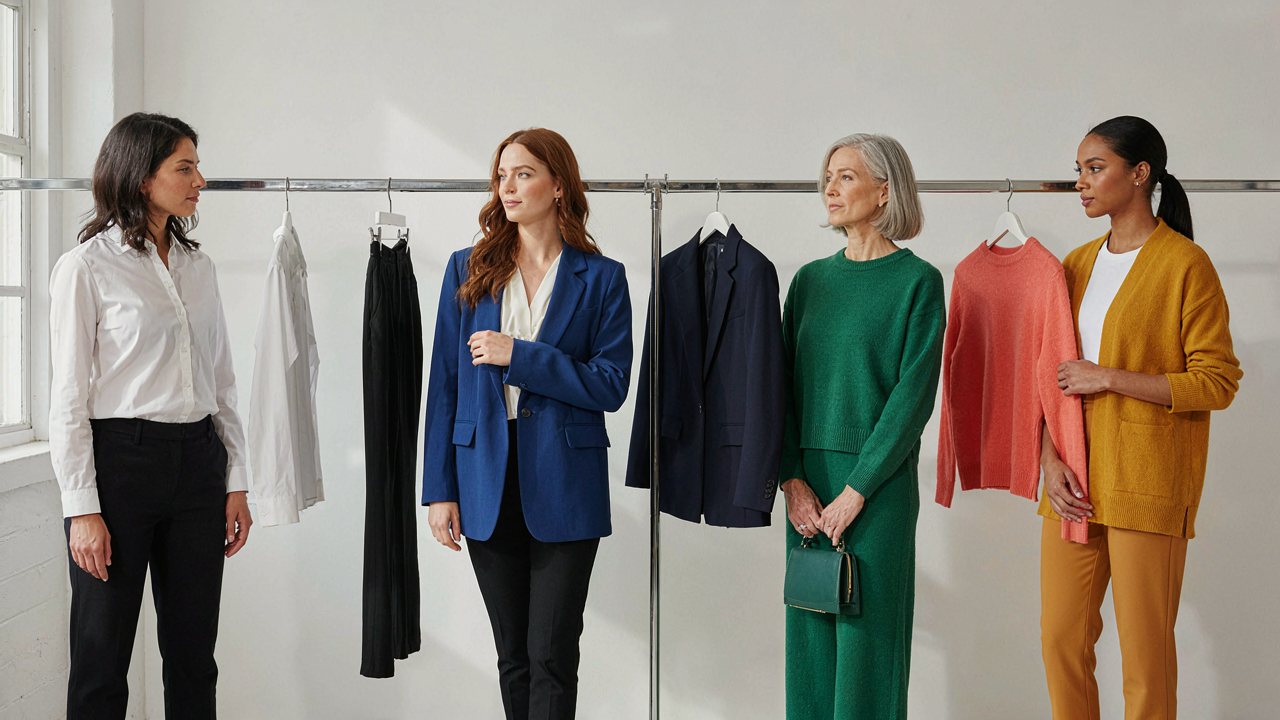
The Wardrobe Decryption: Unearthing Hidden Gems
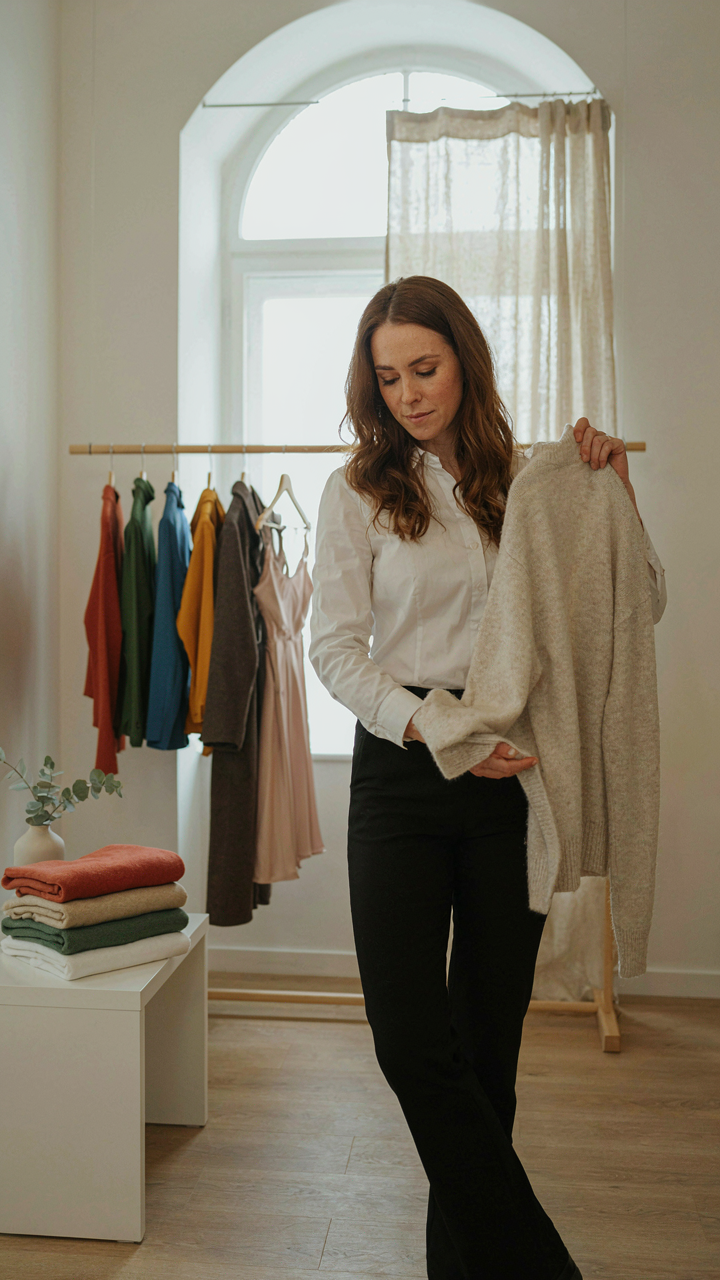
What You Already Own That Works
You’re hoping someone will tell you that you don’t need to buy anything new, because buying nothing feels like winning. Here’s the mechanism: most women own pieces that already read as intentional and expensive, but they’ve been buried under recency bias and decision fatigue. You see the new item in your head before you see what’s actually hanging in front of you.
Start by cataloging basics in neutral tones: white button-ups, black trousers, navy blazers, cream sweaters. These aren’t inspiration—they’re foundation. Pull each piece out individually and hold it in natural light. Check the fabric weight, seam quality, and fit through the shoulder. Pieces that feel substantial and drape cleanly have already done the heavy lifting. You’re not discovering hidden gems; you’re recognizing that expensive doesn’t always mean new.
Combining Pieces Into New Configurations

Outfit stacking borrows from inventory management in retail: rotation increases perceived value without adding stock. The same black blazer worn over a white tee reads completely different when layered over a slip dress, or thrown open over a structured dress. Most women own five to eight silhouettes that could work as base layers or toppers but never test the combinations.
Create three simple outfits using only pieces you own right now, changing only the layering order or the bottom half. Document each with a phone photo. This forces pattern recognition—you’ll spot which pieces actually anchor an outfit versus which ones just exist in your closet. After this exercise, you’ll know exactly which single item would unlock three more outfit combinations, which means your next purchase counts twice.

The “Less Is More” Protocol: Curating A Capsule

Minimalist Core Pieces For Versatility
You’re afraid you’ll look poor if you own fewer clothes. The mechanism is different: you’ll look undecided if you own too many. Minimalism in fashion borrows from systems design. A “constraint” is the removal of unnecessary variables. In wardrobes, fewer pieces force intentional combinations, which reads as coherence instead of confusion. Most people own clothes that don’t work together. You’re solving that by design, not accident.
Build around neutral anchors: white button-up, navy blazer, black trousers, cream sweater, dark jeans. These pieces cost less than you think when purchased separately and year-round. Each one combines with everything else. No dead inventory. No “nothing to wear” mornings. The math is simple: ten pieces that combine create forty outfits. Twenty random pieces create nothing.
The Eighty Twenty Rule For Wardrobe Building
The Pareto principle states that eighty percent of results come from twenty percent of effort. Apply this directly: eighty percent of your outfits come from twenty percent of your wardrobe. Most women ignore this. They fill closets with aspirational pieces they wear once. You’re identifying the pieces that actually work first.
Wear what you own for two weeks straight. Track the items you reach for. Those are your twenty percent. Repeat and rebuild around them. Add one new piece only when you need it to solve a specific gap. This removes guesswork and waste. You spend less money on things that actually exist in your rotation instead of things that sit behind hangers.
Fabric Intelligence: When Satin Says “Expensive”
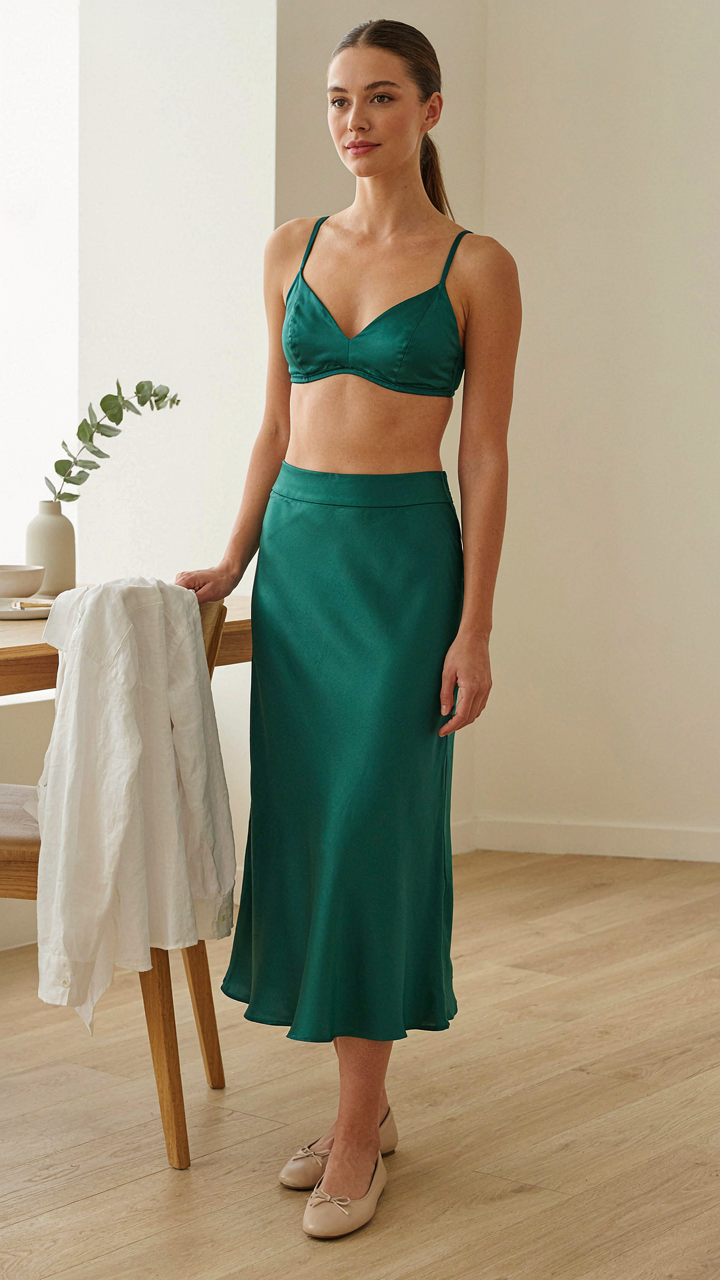
The Two Piece That Commands Attention
You want people to assume you spent money you didn’t. That’s the real reason you’re reading this. Satin works because it triggers a physics principle called light diffraction. Unlike cotton or polyester blends, satin fibers scatter light unevenly across their surface, creating depth perception. Your brain reads that as intentionality and investment. A satin two piece—bra top and high waist bottoms—multiplies this effect because the fabric moves differently on different body sections.
The drape separates satin from cheap imitations. Real satin (silk or quality polyester blend) holds its shape while moving fluidly. It doesn’t cling or wrinkle aggressively. When you bend or sit, it recovers. The weight matters here. Lighter satin collapses and bunches. Heavier satin, typically 16 momme or higher, maintains structure. Buy a two piece in jewel tones (emerald, sapphire, burgundy) rather than pastels. Dark colors hide seams and construction shortcuts better than light ones do.
Wedding Ready In One Outfit
Skip the advice that satin skirts need oversized blazers or layering to look formal. That’s wrong. A satin skirt reads as event appropriate on its own because the fabric itself signals occasion. The mechanism is simple: satin appears rare in everyday wear, so your brain categorizes it as ceremonial. A knee length or midi satin skirt in black, navy, or champagne works for weddings when paired with a simple fitted top or silk camisole. The skirt does the heavy lifting.
The fit determines whether you look intentional or costume adjacent. High waist satin skirts elongate the leg and read more expensive than low rise versions. Avoid gathered or pleated satin—those details add visual noise and scream budget brand. Look for skirts with a clean waistband and minimal seaming. Pair it with neutral shoes (ballet flats, simple heels) and minimal jewelry. This formula works because the satin itself is the statement. You’re not competing for attention with pattern or excessive details.
Accessory Alchemy: Elevating With Precision

The Brown Bag Strategy
You want people to notice you’re intentional, not that you’re trying hard. A brown shoulder bag does this because it signals restraint. The mechanism is simple: brown doesn’t compete with your outfit. It anchors it. Unlike black, which flattens, or bright colors, which demand attention, brown acts like a neutral that actually has warmth and depth.
Brown works across seasons and color palettes because it sits between warm and cool. Pair it with navy, gray, or cream and it disappears into the background while your silhouette stays sharp. Pair it with olive or rust and it creates a tonal story that reads as deliberate. The bag becomes invisible infrastructure, not decoration. That’s the entire point.
Less Metal, More Presence
Jewelry is economics applied to your neck and wrists. Budget means scarcity. Scarcity creates value. The mistake everyone makes is thinking minimal jewelry means boring jewelry. It means one piece does all the work, so it has to be chosen with precision, not taste.
- Gold chain or simple pendant: Worn solo on bare skin creates a focal point without visual clutter. Works in professional and casual settings because it reads as intentional restraint.
- Single stud earrings: Asymmetrical or matched pairs worn alone. Two studs read as finished. Four read as costume. Placement matters more than material.
- Structured ring on one hand: A simple band or modest stone. Breaks up flesh tone and adds geometry. Avoid stacking unless each piece has distinct weight.
- Minimal bracelet in one metal: A single bangle or thin chain. Worn alone on the wrist that moves. Repetition of metals dilutes impact.
- No necklace plus small earrings: The inverse move. Leave the neck bare and let small studs handle presence. Opens up the face entirely.
One metal per outfit. One statement per zone. When you remove everything except what serves a purpose, what remains becomes noticeable. That’s not minimalism for its own sake. That’s leverage.
Occasion Mastery: Non Dress Wedding Outfits Decoded

Satin Tops For Formal Events
You’re looking at this section because you’re afraid a pantsuit or separates won’t register as formal enough. Here’s the mechanism: fabric signals formality before cut does. Satin reflects light and demands structured tailoring, which your brain reads as intentional and elevated. Cheap satin wrinkles and clings. Quality satin holds shape and moves with weight, not against it. The weave density matters more than the price tag.
A satin blouse paired with tailored trousers or a pencil skirt triggers formal recognition in any room. Jewel tones in satin—emerald, sapphire, burgundy—work harder than blacks and whites because saturation reads as luxury. The key is fit: satin exposes everything, so oversizing kills the effect. Tailor the shoulders and sides. Tuck it in completely. Let the fabric do the work by conforming to your actual shape, not hiding it.
Blending Comfort And Class In Semi Dressy Outfits
The generic advice says to “balance dressy and casual pieces.” That’s backwards. You don’t balance by mixing down from dressy. You build up from comfort by upgrading materials and removing visual clutter. A well fitted ponte blazer over a simple tee reads semi dressy because the blazer carries all the formality burden. Your body stays comfortable, your outfit reads intentional.
Elevated fabrics do the heavy lifting here. Cotton blend trousers with a smooth drape cost the same as cheap jeans but signal preparation. A quality cream or camel knit worn alone reads polished because the fiber quality is visible. Skip patterns, logos, and layering tricks. One strong piece plus basics creates the semi dressy effect. The protocol: choose one structured item, keep everything else neutral and fitted, and ensure all fabrics have visible weight and sheen.
The Strategic Hunt: Thrifting For Gold, Not Junk

Quality Over Quantity Spotting Gems
You want thrifting to feel effortless because you’re afraid of wasting time digging through garbage. Here’s the mechanism: most people treat thrift stores like discount bins. They don’t. Thrift stores are inventory liquidation centers where expensive items land at steep markdowns due to donation volume, not quality collapse. The difference between junk and gems isn’t luck—it’s inspection protocol. You scan for fiber content, construction method, and wear pattern, not brand name or era.
Natural fibers signal durability. Look for wool, silk, linen, and cotton blends in structured pieces like blazers, trousers, and dresses. Synthetic blends age poorly and cheapen fast. Check seams for tight stitching, not loose or puckered threading. Examine hems and cuffs for reinforcement. Inspect armpits and waistbands for stretched fabric or staining. Worn areas reveal how the garment held up under actual use. A blazer with pristine seams but faded sleeves tells you it spent years in rotation—that’s the piece to buy.
Professional Tailoring Creates The Illusion Of Expensive
Tailoring isn’t a luxury—it’s the gap between budget pieces and designer pricing. Take economics: fit is the primary variable that determines perceived value. A 50-dollar thrifted blazer that doesn’t taper at the waist reads cheap. The same blazer taken in at the sides reads intentional. Most budget shoppers skip this step entirely and walk around looking like they borrowed their clothes.
Find a tailor who charges 30 to 60 dollars per alteration, not boutique rates that erase your savings. Prioritize hem work on trousers and dresses—this single adjustment shifts the entire silhouette. Taper sleeves on blazers and shirts if they’re too loose. Have waistbands cinched if garments bunch at the sides. Shoulder seams stay untouched unless you know what you’re doing. Get three quotes before committing. A tailored thrifted piece beats an off-the-rack budget brand every time because fit is what people actually see.
The “Elegant Edge” Method: Borrowing From Architecture

Structure And Form Create Visual Authority
You want people to perceive you as intentional without spending money on labels. Here’s the mechanism: architecture teaches us that structure is what makes a space feel expensive or cheap, not decoration. Your outfit works the same way. Clean lines, defined silhouettes, and proportion control signal control. Most fashion advice skips this entirely and jumps straight to “add a blazer.” That’s lazy.
The real work happens in how pieces relate to your body’s dimensions. A structured neckline, a defined waist, straight edges on sleeves, or a sharp hemline all function like load-bearing walls in a building. They create visual stability. You don’t need designer fabrics to achieve this. A basic cotton shirt with a crisp collar, proper seaming, and a fitted cut outperforms an expensive oversized sweater every time. Structure is what your eye actually registers as refined.
Balance Proportions Like Visual Weight Distribution
The Golden Ratio isn’t mystical. It’s a mathematical observation that appears in nature and classical design because our brains recognize it as harmonious. In architectural terms, it’s called proportion. Apply it directly to outfit composition: if your top takes up visual space, your bottom should recede. If you wear a voluminous skirt, your upper half compresses.
Proportional balance means no two pieces fight for attention simultaneously. A fitted blazer pairs with straight-leg trousers, not pleated wide-legs. A simple tee works under a structured coat, not a textured cardigan. The rule isn’t complicated. One statement piece per outfit, everything else acts as structure. This is why expensive looks cheap on some people and cheap looks expensive on others. The second person understood proportion. Now examine each outfit you own and identify which piece dominates. Build everything else around constraint, not addition.
Beyond Trends: Investing In Timelessness
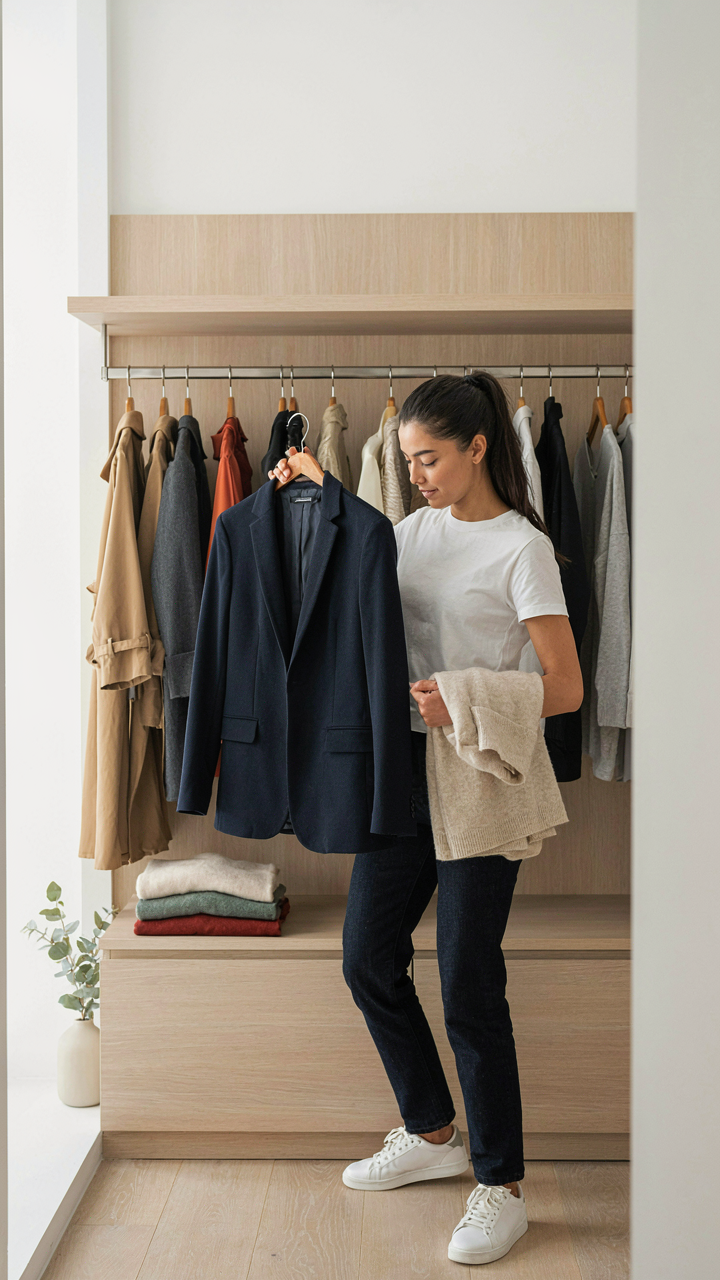
The Silhouettes That Refuse To Die
You’re reading this because you’re tired of replacing your wardrobe every season and looking broke doing it. The mechanism is simple: fashion cycles, but geometry doesn’t. A well-cut blazer, a straight-leg trouser, a white button-up, and a midi skirt work because they’re neutral containers for your body, not because they’re “in.” They flatten or skim without clinging or ballooning. These shapes have survived decades of trend cycles because they solve a visual problem, not because they’re trendy.
The trick everyone misses is that classics aren’t boring by accident. They’re boring because they work. A Chanel jacket from 1954 looks right today not because fashion is circular but because the proportions are proportions. When you buy pieces built on these proportions, you’re buying architecture, not opinion. The white shirt, the trench coat, the navy blazer, the straight jean. These aren’t suggestions. They’re tools that compound in value because they pair with everything you’ll own next year.
Fabric Choice Determines Lifespan
Think like an engineer: material science determines durability. Cotton blends wear longer than pure cotton because the blend resists pilling and maintains structure through repeated washing. Wool holds its shape through temperature and humidity changes that destroy synthetics. Linen wrinkles by design but strengthens with age and washing. The fabric determines how many seasons the piece survives, which determines cost-per-wear, which determines whether the investment was actually cheap or actually expensive.
High-quality basics require one rule: check fiber content before price. A forty-dollar cotton-viscose blend t-shirt fails faster than a thirty-dollar cotton-linen piece. Polyester linings in structured pieces like blazers outlast cheap acetate. You’re not paying for the label. You’re paying for the thread count, the weight per square meter, and the weave structure. Buy heavy enough to hold its shape. Buy natural fibers with staying power. Wash cold and line dry to extend the life of every piece you own.
The Real Obstacle Isn’t Your Budget; It’s Your Addiction To External Validation

You already own the pieces. You just don’t trust yourself to wear them. The gap between a classy outfit and a mediocre one isn’t money—it’s conviction. Women with style aren’t richer. They stopped asking permission from strangers. Today, pick one piece you own but never wear because you’re afraid someone will judge it. Wear it. The approval you’re chasing was never real anyway.