
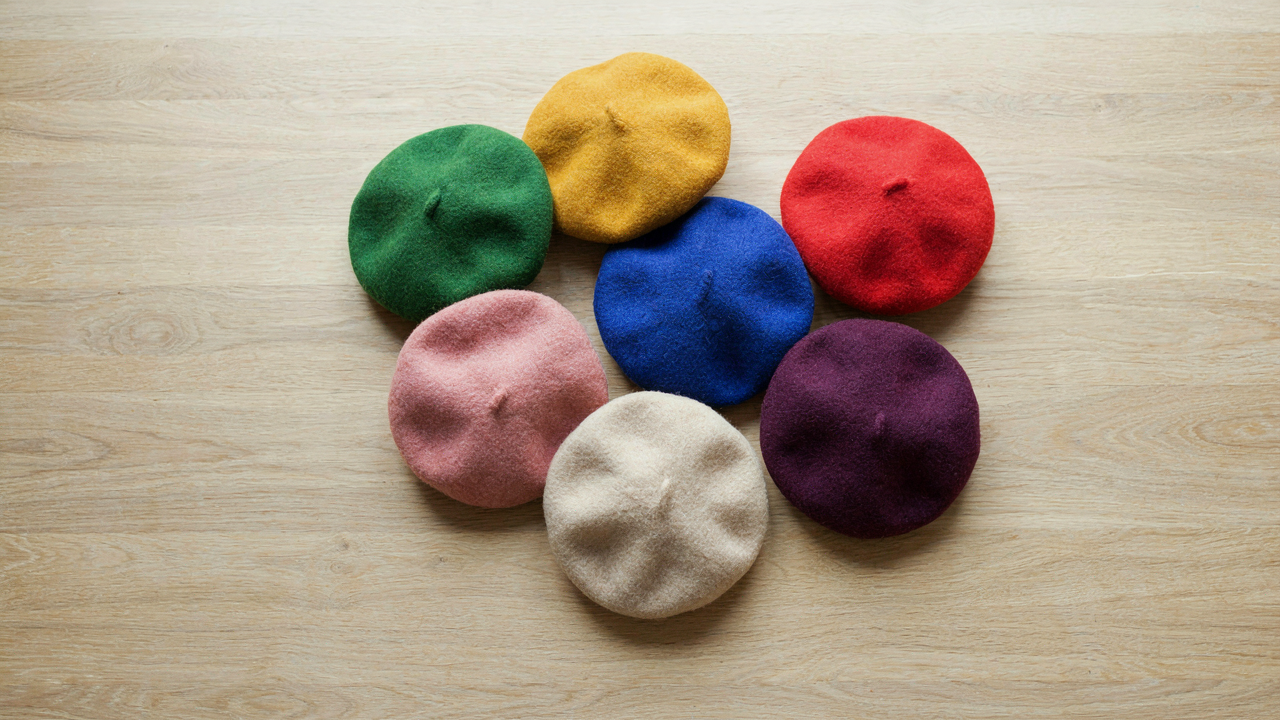
The Beret Fallacy: Why Most Beret Outfits Fail

Where The Beret Actually Fails You
You want the beret to solve a status problem, but it won’t. That’s the real mechanism at work. The beret itself isn’t the issue. The issue is treating it as a costume piece instead of understanding how it functions within proportion and fabric hierarchy.
Most people add a beret to an outfit that was already complete without it. This creates visual noise instead of intention. The beret demands a specific relationship to scale, weight, and silhouette. When those elements clash, the beret reads as decoration rather than integration. You’ve seen this everywhere: beret on top of an oversized sweater, jeans, and sneakers. It doesn’t work because nothing underneath earned the styling choice.
The Distinction Between Borrowed Confidence And Actual Fit

Think of outfit assembly like engineering load distribution. The beret is a high-density visual element that concentrates attention at the top third of your frame. In engineering terms, this is a point load. Your clothing system must distribute that weight proportionally or everything collapses.
When your silhouette is already bulky at the shoulders or your jacket collar competes with the beret’s shape, you’ve created two competing focal points. The beret doesn’t elevate the outfit—it fragments it. A genuine beret outfit requires tighter, more considered proportions below the neck. This means fitted shoulders, defined waist, or structured layers that create negative space. Without these anchors, the beret becomes costume theater.

Beret As Signal: Decoding Your Personal Brand
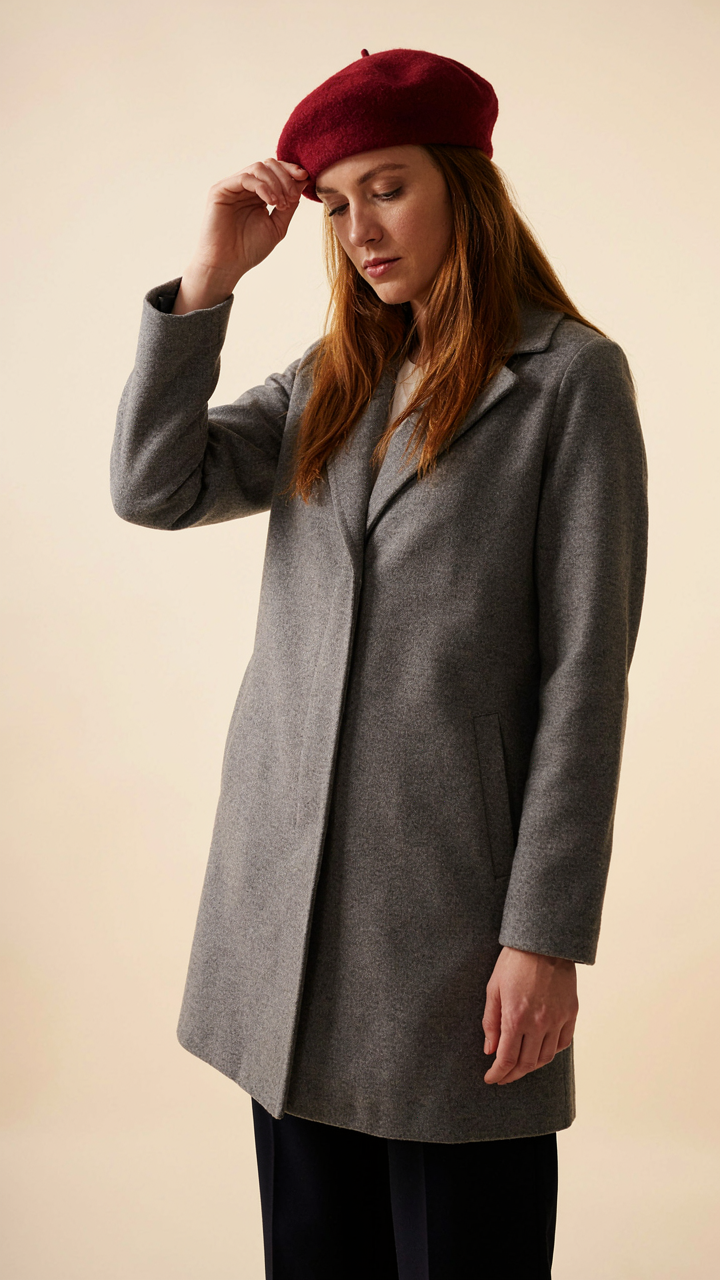
Style Selection Shapes Perception
You’re reading this because you sense a beret carries meaning you don’t want to get wrong. Here’s the mechanism: your beret style functions like a frequency in communication theory—it broadcasts to a specific audience, and the wrong frequency gets filtered out or misread entirely. The beret itself isn’t neutral. Its shape, angle, and how you wear it sends data before you open your mouth.
The French beret worn flat and centered reads differently than a beret pulled to one side or tilted forward. Flat and centered signals tradition, formality, or artistic credibility. Pulled to the side suggests attitude or creative rebellion. Tilted forward reads younger, less intentional. The audience you’re targeting determines which frequency works. There’s no universal “correct” angle—only correct for your specific message.
Material Signals Belong To Economics
Material composition operates under a visibility principle borrowed from economics: cheaper materials broadcast differently than expensive ones, and the observer knows it instantly. Wool and felt berets have carried legitimate value for decades. Acrylic and synthetic blends read as budget alternatives—not because they’re inferior performers, but because they cost less and everyone recognizes the difference. A wool beret worn in fall signals investment and durability. A synthetic beret signals expedience.
Texture matters with the same weight. Loosely woven wool reads casual and lived-in. Tightly knit or felted construction reads refined and deliberate. Velvet or crushed textures read luxury or artistic affectation depending on color. Winter demands materials that hold structure in cold and damp—merino wool and quality felt earn their price here. Cheap synthetics lose shape in wet conditions and mat down. Your material choice determines whether your beret communicates care or compromise.
The Cognitive Load Of Effortless Beret Outfits
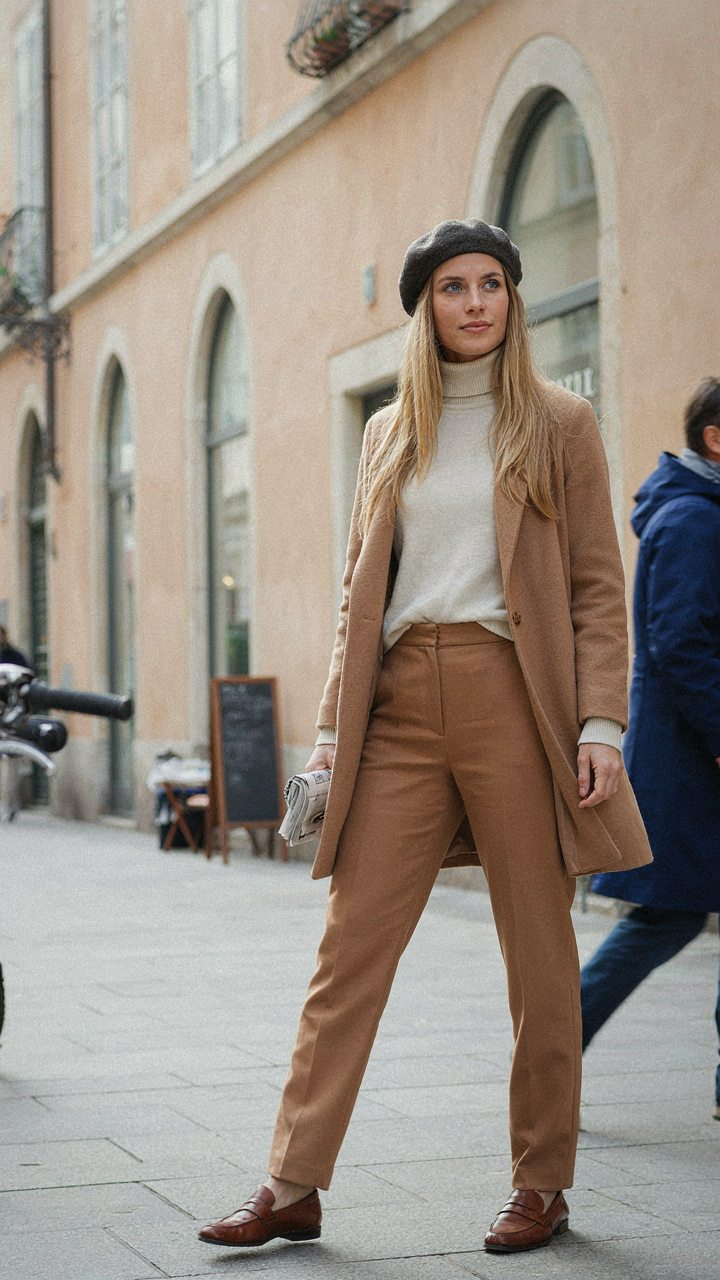
The Iceberg Principle Of Subtle Elegance
You want people to think you didn’t try. That’s the real fear underneath this section, and it’s legitimate because effort shows, and showing effort kills status. The iceberg principle from design states that the visible surface accounts for maybe 20 percent of the total structure, with 80 percent submerged and invisible. A beret outfit works the same way: the visible elements (the beret, the coat, the stance) are merely the waterline. The actual work happens in the decisions nobody sees: the fabric weight you chose, the proportions you locked in, the reason your collar sits that exact way.
Most people reverse this. They obsess over the visible piece—finding the “perfect” beret—and ignore the foundation. The mechanism is inverted. The beret becomes a prop on top of chaotic proportions instead of the final detail on a structured outfit. Start by building the invisible 80 percent first: the fit of your base layers, the relationship between your shoulder width and jacket cut, the line from collarbone to hem. The beret then slots into an already-coherent system instead of trying to save a fractured one. When the foundation is right, the beret doesn’t rescue the outfit. It completes it.
Minimizing Visible Effort For Maximum Perceived Impact
The common advice here is backwards: people tell you to “keep it simple” or “let the beret be the statement piece.” That’s lazy thinking that produces lazy outfits. The real move is the opposite. You minimize effort by being precise about what you’re doing, not by removing intention from the equation. Precision reduces friction. When every element has a clear job, you don’t second-guess. You don’t add extra layers wondering if you need them. You don’t swap pieces three times before leaving.
The protocol is mechanical: identify the three anchor pieces (beret, outerwear, base layer), nail their proportions to your frame, then treat everything else as support. A charcoal beret over a cream wool sweater and camel coat doesn’t broadcast effort because those three pieces already align in scale and color temperature. You changed nothing after that decision. You didn’t think. The outfit built itself once the anchors locked in. This is how visible effortlessness actually functions: through prior precision, not through carelessness disguised as restraint.
Beret Outfits: The Trench Coat Outfit & Other Power Pairings

How Layers Actually Work In Fall
You want people to assume you have your life together without trying. That’s the real reason this matters. Layering isn’t about stacking clothes randomly—it’s about contrast and proportion. In architecture, negative space makes a structure legible. Your beret outfit works the same way. A fitted base under a structured trench with a beret on top creates visual rhythm. The eye knows where to land. Fall’s temperature swings let you add and subtract pieces, which means you control how bulky or sharp the silhouette reads.
The mechanism is simple: tight, medium, structured. A slim turtleneck, a trench that nips at the waist, and a beret that sits clean on the head. This sequence prevents the shapeless blob effect that kills most fall outfits. Your proportions stay visible even when you’re wearing three layers. The beret specifically anchors the top third, keeping the whole composition from floating upward.
Core Combinations That Actually Work
A beret with a trench coat is mechanical—it works because the proportions align and the formality matches. Most style advice skips the real pairings that elevate instantly because they require understanding why something works, not just looking at a picture. The beret’s compact crown balances a structured coat’s volume. The coat’s length creates a formal frame that a casual beret punctures in exactly the right way.
- Trench with tucked sweater and tailored pants: The beret sits neutral here, letting the horizontal lines of the sweater and vertical lines of the coat dominate. Add pointed-toe loafers to complete the grid.
- Oversized blazer with a fitted base layer: A beret prevents the blazer from swallowing your frame. It creates an anchor point that makes the proportions readable instead of chaotic.
- Wool coat with elevated basics: Dark trousers, white shirt, wool coat. The beret stops this from reading as corporate. It signals intention and breaks the template people expect.
- Leather jacket and dark denim: A beret softens the edge here without erasing it. It adds formality to the casualness and creates a specific aesthetic instead of generic rocker.
- Midi skirt with heavy knit and boots: The beret echoes the structure of the knit and creates vertical emphasis with the skirt. This pairing reads intentional because every piece has equal visual weight.
The leverage point is repetition of proportion and formality across your three main pieces. When your coat, base layer, and beret all communicate the same structural idea—whether that’s tailored, relaxed, or hybrid—the outfit coheres instead of competing for attention. Test each combination by asking: does the beret’s volume match the coat’s structure, or does one dominate?
Beyond Trends: Cultivating Timeless Beret Elegance

The Economics Of Wearing The Same Thing Twice
You want permission to stop shopping. That’s what this section is really about. Here’s the mechanism: fashion operates on planned obsolescence, but your beret outfit operates on compounding returns. The more you wear a piece, the lower its cost per wear becomes. A quality beret worn fifty times costs pennies per appearance. A trend piece worn twice costs more than a car payment.
The math is simple but psychologically hard to accept. Brands profit when you feel obligated to refresh. Your profit comes from repetition and mastery of combinations. A wool beret in charcoal or camel aged two years looks sharper than a new synthetic one. Investment means buying materials that gain character over time, not items that deteriorate before the next season.
Your Beret, Not The Algorithm’s
Stop copying. The common advice here is wrong. Aesthetic development isn’t about collecting inspiration boards and blending them together. It’s about constraint and subtraction, not addition. Your beret outfit becomes distinctive only when you remove options, not expand them.
Start by identifying what actually works on your frame and lifestyle. A beret’s angle, how it sits on your head, the ratio of hat to face—these are not universal. Spend one month wearing the same beret daily in different pairings. Notice which combinations you reach for, which feel like friction. That’s data. Most people never build this data because they’re too busy scrolling. Your aesthetic emerges from wearing, not from thinking about wearing.
The Beret Protocol: A 3 Step System For Winter Style

Start With Fiber, Not Aesthetics
You want the beret to signal taste without admitting you’re thinking about signaling. Here’s the mechanism: in textile engineering, fiber composition determines thermal performance and how fabric interacts with moisture and air. Wool isn’t just warmer—it regulates temperature by managing vapor while resisting compression. Felt berets made from 100% wool or wool-blend hold shape in humidity and cold better than cotton or synthetic alternatives. Acrylic and polyester berets flatten and lose structure by January.
Winter demands a beret that survives repeated wear and weather without degrading. Merino wool blends work because they compress less than standard wool and dry faster if exposed to sleet. Cashmere or angora blends add insulation but require more maintenance and don’t justify the cost for seasonal wear. Felt construction—the process of matting fibers together—creates a denser surface that resists pilling and blocks wind more effectively than knit. Choose your beret’s fiber first, style second.
Layer Depth Into Your Palette
The mistake most people make is matching the beret to one outfit instead of anchoring it across a winter wardrobe. Winter color theory works backward from summer: you’re not building contrast against brightness. You’re creating visual weight through saturation. A charcoal or navy beret functions as a neutral anchor because it absorbs light rather than reflecting it, which makes heavier fabrics and muted tones below it read as intentional instead of depressing.
Burgundy, forest green, and camel berets work because they sit at high saturation but low brightness—they don’t compete with skin tone or lighter layers underneath. Black berets demand careful pairing: they work best with monochromatic outfits or when worn with high-contrast elements like cream or white. Neutral berets pair with nearly everything but require more deliberate outfit construction to avoid looking accidental. Test your beret against at least three existing winter pieces before buying.
Beret Hat Outfit: Mastering The Visual Hierarchy
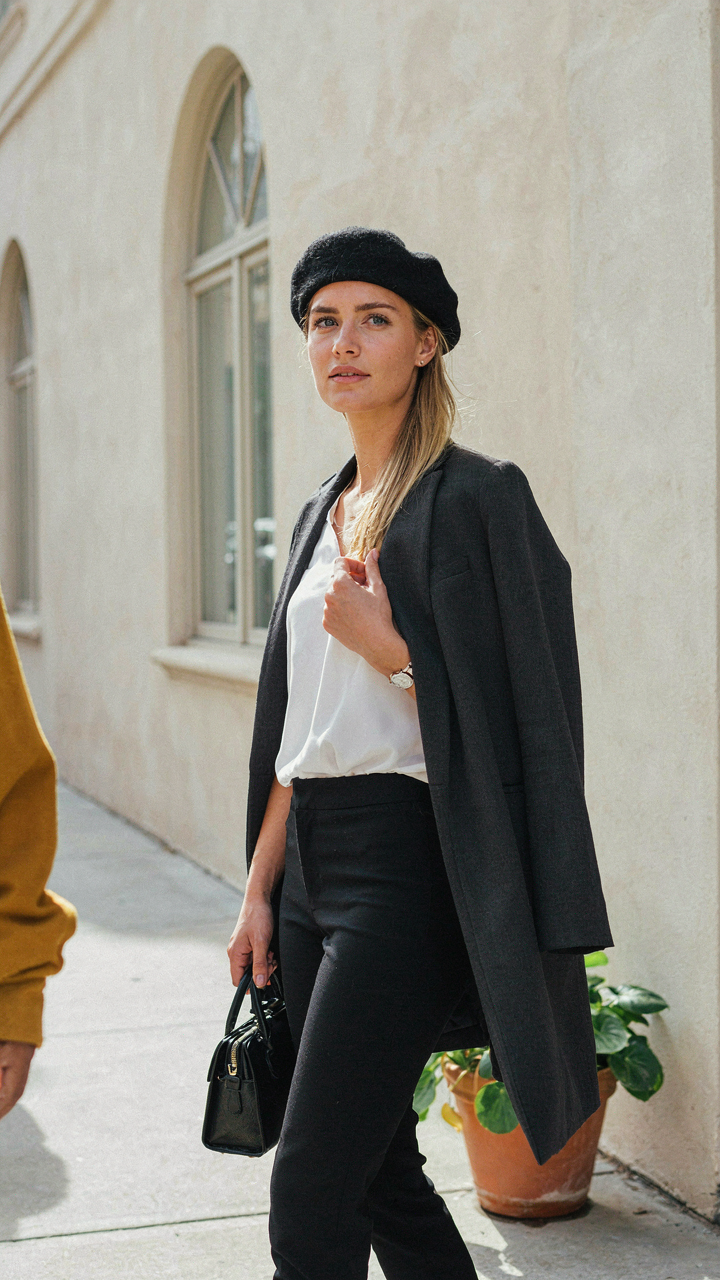
When Your Head Commands The Room
You want the beret to signal taste without screaming for attention. That’s the real mechanism here. Think of it like graphic design’s figure-ground relationship: your head is the figure, everything else grounds it. A beret demands you treat it as the primary visual anchor, which means the rest of your outfit must recede intentionally. Oversizing or over-decorating below the beret kills the effect instantly. The beret’s compact crown forces this hierarchy naturally if you respect it.
The proportions rule is rigid. Pair a beret with fitted or tapered silhouettes below—slim pants, tucked shirts, structured coats. Loose, voluminous clothing creates visual chaos when topped with a beret’s defined shape. Your body becomes an afterthought instead of a cohesive form. The beret works because it’s a statement about restraint, not abundance. Everything else must follow that same economy of line.
Placement Breaks The Monotony
Strategic accessory placement isn’t about adding more pieces. It’s about creating visual breaks that prevent the beret outfit from feeling costume-like or incomplete. Most advice says “keep it simple,” which is useless because it doesn’t explain what breaks monotony and what creates clutter. The mechanism is contrast in material and finish. Pair the beret with one accent piece that differs in texture or weight from your base layers.
A structured leather belt, metal watch, or knit scarf works because they introduce visual weight without competing with the beret. The beret stays the focal point because these accessories occupy different zones—waist, wrist, neck—each claiming its own space. Avoid stacking multiple statement pieces at once. One deliberate placement redirects the eye downward, which actually reinforces the beret’s importance by creating rhythm rather than fighting for dominance. That single accent prevents the outfit from feeling hollow.
Beret Fall Outfit: The Art Of Intentional Imperfection

Asymmetry Over Visual Stillness
You want permission to look effortless because you’re tired of fighting your own image. Here’s the mechanism: symmetry reads as formal and controlled. Asymmetry signals confidence and intent. A beret tilted slightly forward to one side, paired with an uneven hem or an off-center tuck, creates visual tension that holds attention where rigid balance fails. This isn’t accident. It’s calibrated choice.
The beret’s shape makes this work better than other hats. Its crown sits naturally off-vertical. Pair it with an oversized sweater draped lower on one shoulder, or layer an open cardigan so it hangs uneven across your torso. The contrast between the beret’s structure and the garment’s soft chaos produces motion. Your eye moves through the outfit instead of stopping at a single point. This directional pull is what makes the look read as intentional rather than sloppy.
Controlled Rule Breaking That Signals Sophistication
The common advice says match your proportions and follow fit guidelines. Wrong framework. Fashion operates on semiotics, not geometry. The real rule is: you can break any guideline if you break it with precision. A beret worn slightly crooked works only when everything else is exact. Your hem hits true. Your layers align in measurable intervals. Your boots have no scuff marks. One violation, with perfection surrounding it, communicates mastery.
- Crooked Tilt With Centered Proportions: Wear the beret slightly off-plumb while keeping torso width and leg length balanced. The single dissonance reads as control, not confusion.
- Oversized Top, Fitted Bottom: Beret sits neutral while upper silhouette breaks inward proportion rules. Cropped trousers or fitted boots anchor the look and prevent drift into carelessness.
- Asymmetric Layers, Aligned Base: Cardigan or shirt worn open on one side only works when your base tee and pants sit flush and perpendicular. Contrast needs a grid.
- Beret Forward With Structured Outerwear: A beret pushed toward your brow pairs with a rigid wool coat. The hat’s looseness and the coat’s strictness create readable tension instead of chaos.
- Mismatch Textures, Uniform Color: Corduroy jacket with silk scarf and wool beret all in one neutral tone. Breaking texture rules within a unified palette reads as intention.
The mechanism: establish one clear rule in your outfit, then break one specific rule around it. This combination signals you understand the rules well enough to bend them. When you break multiple rules at once, you look lost. When you follow all rules, you look afraid. Break one thing, perfectly, and you solve both problems.
Beret Outfits: The Unspoken Language Of Authority

How Specific Styles Project Confidence
You want people to read you before you speak. A beret isn’t decoration—it’s a signal that you’ve made a deliberate choice about how you present yourself, and that matters more than you admit. The mechanism is simple: specificity kills doubt. When you pair a beret with intention instead of accident, observers perceive control.
The French beret paired with a structured wool coat and dark jeans reads differently than the same beret with oversized knitwear. One implies precision. The other implies casualness. The cut of your beret matters too. A beret worn flat against the head projects formality and discipline. A beret with slight lift and tilt projects artistic confidence. Wear it like you chose that position, not like it landed there by chance.
Commanding Attention Through Subtle Sophistication
Most advice says “dress neutral so your beret stands out.” That’s incomplete. The real mechanism borrows from contrast theory in visual design: authority emerges from controlled tension, not from isolation. Your beret commands attention when everything else around it demonstrates restraint and intentionality.
A charcoal beret with a cream turtleneck, tailored trousers, and minimal jewelry creates tension because nothing shouts—everything whispers. The beret becomes the focal point not by screaming but by existing in a field of quietness. The outfit works because you’ve removed every competing signal. Layer thoughtfully. Choose fabrics with weight. Let the beret be the only element allowed to suggest personality. This is how you move through a room without raising your voice.
The Real Obstacle Isn’t The Beret; It’s Your Fear Of Owning A Unique Narrative

Most people won’t wear a beret because they’re terrified of standing out. They’ve confused blending in with safety. But a beret outfit doesn’t make you weird—it makes you intentional. The shift happens when you stop asking “what if people judge me” and start asking “what if I actually like this?” Buy one beret today. Wear it tomorrow. Watch how fast your self-image changes when you stop waiting for permission to be interesting.