
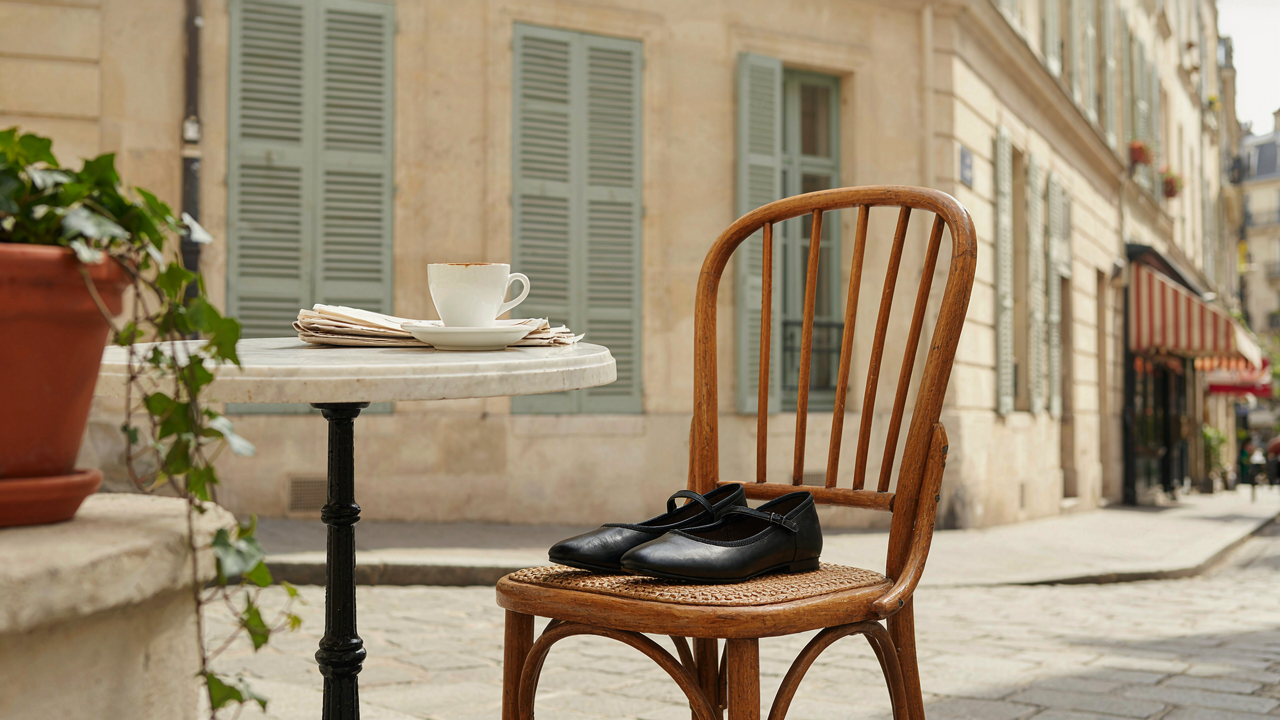
The Unspoken Rules Of French Footwear (Ballet Flats Outfit Inspo)

One Pair Does The Work Of Ten
You want a ballet flat outfit because you’re tired of looking like you tried. That’s the real tension. The mechanism: French dressing operates on scarcity, not abundance. You own fewer pieces. Each piece absorbs more wear, demands higher quality, forces intentionality. A ten-dollar flat disintegrates in six weeks. A hundred-dollar flat lasts two years and looks better at month eighteen than month one. The math is ruthless.
The common advice says “invest in basics.” Wrong framing. It’s not investment rhetoric you need. It’s replacement economics. When you stop buying disposable shoes, you stop the cycle of searching for outfit solutions. One quality ballet flat in black leather becomes the anchor. It pairs with everything because it’s built to. No decision fatigue. No “but which shoe” paralysis. The flat isn’t versatile because it’s boring. It’s versatile because the construction doesn’t fight your clothes.
The Uniform Principle In Motion

Fashion borrows from military strategy, and ballet flats demonstrate the principle of a reliable baseline. Your outfit system needs one item you never question. The flat serves this role. It removes one variable from every morning. You wear it with tailored trousers and it reads controlled. You wear it with a slip dress and it reads intentional. You wear it with denim and it reads effortless. The shoe doesn’t change. Your intention does.
Rotation happens within the outfit, never the shoe. This is why French women own one or two quality flats in neutral tones rather than a drawer full of colors. The flat disappears from your thinking. It becomes infrastructure, not a decision point. When you stop treating shoes as statement pieces and start treating them as systems, your entire wardrobe tightens. You build around reliability instead of novelty.

Beyond Parisian Postcards: Authentic Ballet Flats Outfit Combinations

Color Contrast That Reads
You want people to notice you wore the right thing without you mentioning it. The mechanism is contrast ratio: your eye reads difference first, not harmony. Most advice says match your flats to your outfit. That’s backwards. Ballet flats disappear when you blend them. They command attention when you break expectation.
Pair burgundy flats with cream or off-white trousers. Pair black flats with camel or tan outerwear. Pair navy flats with warm grey. The contrast works because your brain registers the shift between foot and leg before it processes “outfit.” This isn’t aesthetic sensitivity. It’s visual hierarchy. The flats become intentional, not an afterthought. Test this by placing a burgundy flat next to navy trousers versus cream trousers. You’ll see the difference immediately.
Structure Demands Precision
Ballet flats with tailored pieces isn’t a pairing strategy, it’s a constraint that forces discipline. Borrowed from architecture, load-bearing applies here: structured garments create compression around the body, and ballet flats must answer that tension with clean lines or they fail. Sloppy oversized silhouettes swallow flats. Tailored silhouettes make flats the logical endpoint.
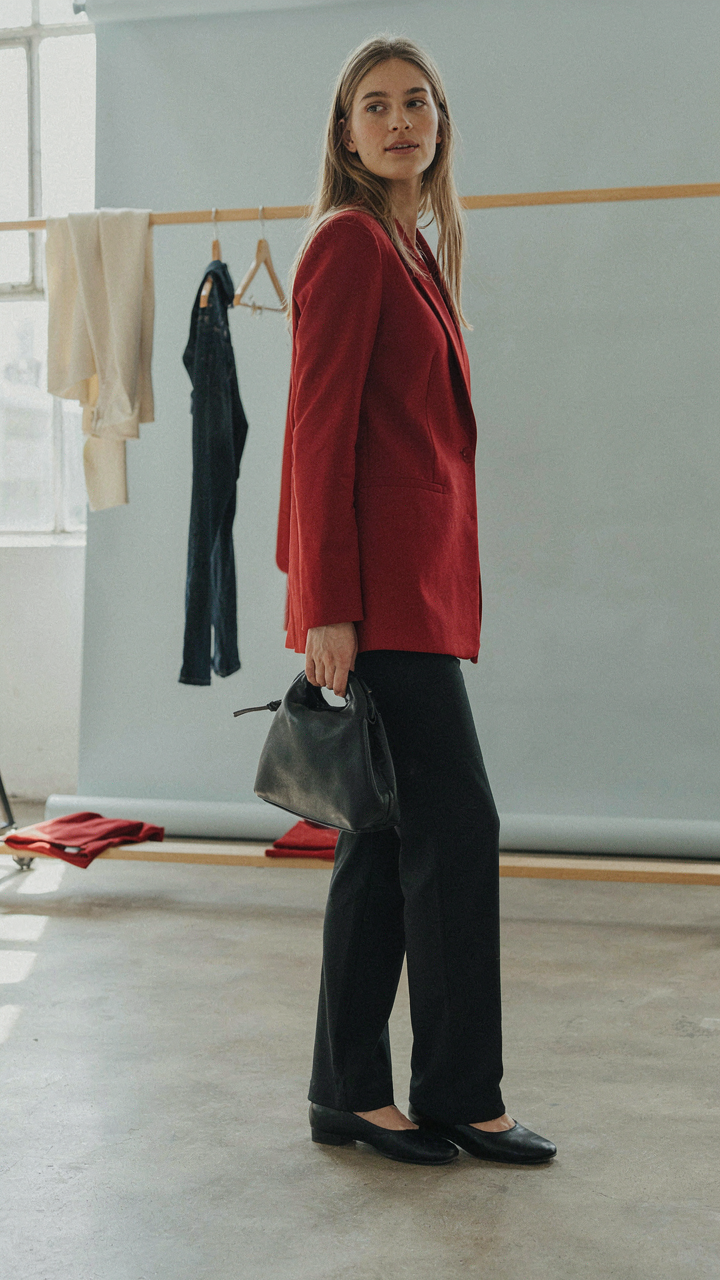
Wear ballet flats with a crisp white button-down tucked into high-waisted trousers or a structured A-line skirt. The flats ground the geometry. Wear them with a fitted blazer and straight-leg pants. The proportional clarity makes the flat necessary, not decorative. Avoid pairing flats with loose, flowing fabrics or dropped waistlines unless you’re specifically working against formality. The flats need architectural counterparts to register as intentional design choices rather than convenience.
The Minimalist Wardrobe Algorithm: Pairing Ballet Shoes With Jeans

Jean Cuts That Elevate Ballet Flats
You want jeans to do the work so you don’t have to think about it. The real mechanism is proportion. Ballet flats sit close to the ankle and have almost no visual weight, so they demand jeans that create vertical line rather than break it. Skinny jeans and tapered cuts work because they don’t pool fabric over the shoe, which would bury the flat’s clean silhouette.
Straight-leg jeans from the knee down remain the functional baseline for this pairing. They sit flush against the leg without clinging, and they land just at or slightly above the shoe line. Cropped or anklet-length cuts work too, but only if they’re intentional, not accidental. The worst move is oversized or relaxed-fit denim that swallows the foot entirely. You lose the visual relationship between leg and flat, and the outfit reads as unfinished rather than deliberate.
Top Pairings For A Balanced Silhouette
The common advice here is wrong: tight tops don’t balance flat shoes. The mechanism is visual weight distribution, borrowed from composition in painting. Where you place density on the body determines whether ballet flats read as intentional or like an afterthought. A tucked or fitted top anchors the upper half so the lower half stays quiet. Oversized tops need different handling.
- Fitted Turtleneck or Crew Neck: Creates a defined shoulder line that balances the minimal ankle presence of flats. The clean neckline echoes the flat’s simplicity.
- Tucked Button-Up Shirt: A partial tuck or full tuck establishes proportion and prevents the outfit from reading shapeless. Works in cotton, linen, or structured blends.
- Fitted Sweater or Knit: A close-fitting top in wool or cotton creates intentional silhouette without bulk. Pairs particularly well with cropped or regular-length denim.
- Oversized Top With Defined Waist: Pair only if you add a belt or let the proportion stay high and loose rather than drooping at midpoint. The ballet flat needs visual clarity above to work.
- Structured Blazer: A fitted or semi-fitted blazer instantly legitimizes the flat’s minimalist aesthetic and reads as deliberate styling, not default.
The pairing works because it reverses expectation. Ballet flats are reductive by design, so your top must provide the structural reference point that makes the outfit read as curated. Wear the outfit once and audit it in a full-length mirror before leaving. If the eye travels evenly from shoulder to ankle without getting stuck, the balance is correct.
The Effortless Equation: How To Avoid Looking Like A Caricature (Ballet Flats Outfit)

Restraint Over Recognition
You’re worried people will mistake you for someone trying too hard to look French, which means you’re already halfway to looking like a costume. The mechanism is simple: accessories work like signal-to-noise ratio in engineering. Too many pieces compete for attention and cancel each other out. One intentional accessory amplifies the entire outfit. Two creates tension. Three announces desperation.
A single silk scarf, a structured leather bag, or a gold layered chain does the work. Everything else should disappear into the background. The French aesthetic isn’t about visible luxury or quantity. It’s about what you chose to keep visible and what you deliberately left out. This is why restraint reads as confidence and why cluttered reads as insecurity.
Texture Signals Quality Better Than Labels
Fabric quality communicates before anyone reads a brand tag. Linen wrinkles in specific ways that cotton cannot replicate. Silk catches light differently than polyester. Wool breathes differently than acrylic. When you pair ballet flats with a linen shirt or a wool blazer, the outfit gains dimension through actual material behavior, not through color combinations or trend cycles.
The error most people make is assuming texture variety means using five different fabrics in one outfit. That’s visual noise. Real texture strategy means using two or three high-quality materials that interact with each other. Cotton with silk. Linen with leather. Wool with cotton. The flats themselves should have genuine leather soles and uppers, not synthetic construction. This single detail changes how the entire outfit reads because your feet anchor the whole look.
Seasonal Adaptations: Year Round Ballet Flats Styling
When Temperature Shifts, Your Flats Stay
You’re worried that ballet flats won’t work past summer, that you’ll look exposed or unprepared in colder months. The mechanism is simple: fabric weight and layering context are what control whether flats read as seasonally appropriate, not the shoe itself. Ballet flats transition between seasons because the outfit around them changes, not because the shoe does.
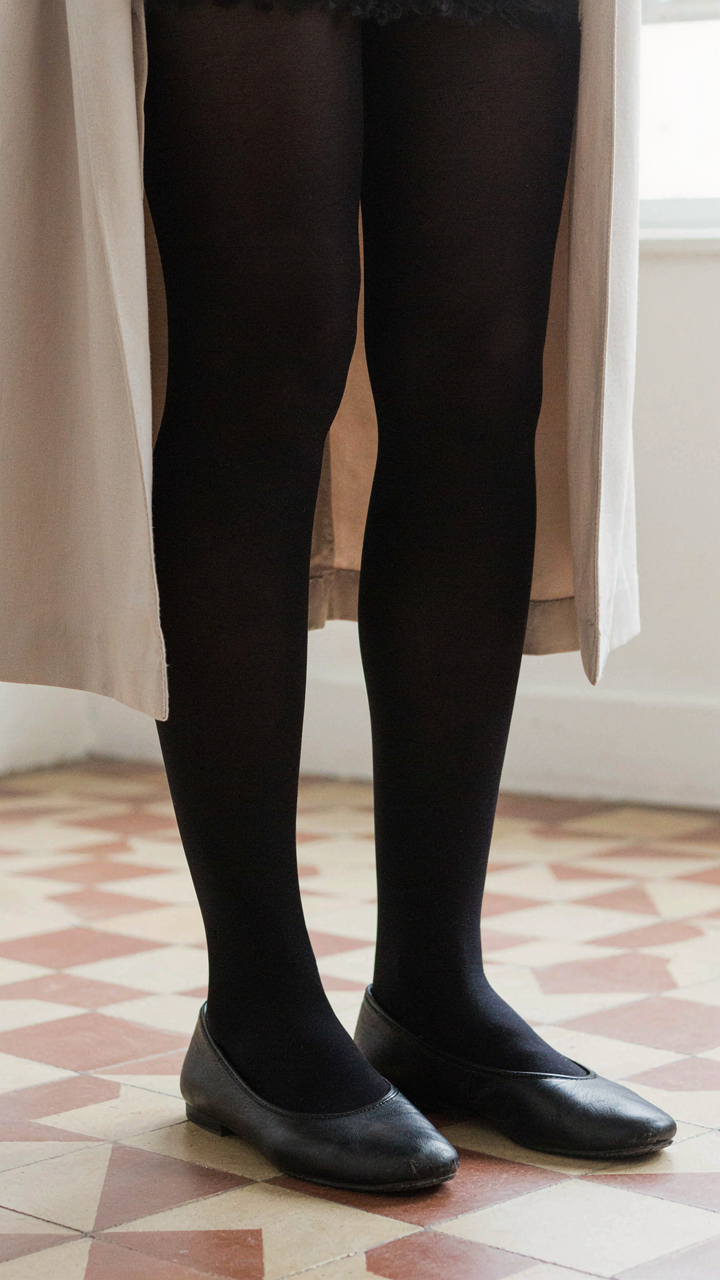
Suede and leather flats work in autumn and winter without modification. In spring and summer, canvas or mesh versions handle heat without looking wrong. The real shift happens above the ankle. Winter requires opaque tights or socks that ground the flats visually and provide insulation. Summer demands bare legs or sheer hosiery. This is clothing physics: mass and opacity determine perceived season, and flats amplify that effect because they expose the lower leg. Your shoe stays constant while everything else adapts.
Building Layers Without The Bulk
Most advice tells you to “just add sweaters,” which misses how layering actually works with a low-profile shoe. Think in terms of visual weight distribution, borrowed from structural engineering. A ballet flat has zero visual mass at the base, so upper-body bulk must stay controlled or the proportions collapse into imbalance.
In fall and winter, use fitted knit layers that taper toward your waist rather than oversized pieces. Cardigans buttoned at the chest, slim turtlenecks, and structured blazers work because they don’t fight the flat’s minimalist silhouette. In spring and summer, a single lightweight layer like a linen shirt or sleeveless vest keeps the look cohesive without adding heat. The protocol: choose one fitted layer per season, match it to the flats’ visual weight, and let the tights or socks handle the rest of the thermal work.
The Burgundy Shoe Outfit Fallacy: When To Break From Tradition

Why Neutral Matching Kills Your Look
You want permission to match your burgundy flats to burgundy tones elsewhere because it feels safe. That’s not strategy, that’s fear dressed as refinement. In fashion design, this is called value matching—treating outfit construction like a paint-by-numbers exercise where similar tones live together. The mechanism is simple: your eye stops moving. Matching burgundy flats to a burgundy sweater creates visual stasis. No tension. No reason to look twice.
The French aesthetic actually rejects this logic. French dressing relies on controlled contrast within a narrow palette, not tonal monotony. Burgundy flats work harder when paired against cream, white, or soft gray. These combinations don’t clash because they operate on different visual weights. The shoe anchors the outfit precisely because it breaks the expectation of what should happen next. Matching tones accomplish the opposite—they announce boredom before you finish getting dressed.
Contrast As A Design Principle
Contrast operates like tension in structural engineering—it creates load-bearing capability where flatness alone produces collapse. When your burgundy flats sit against a cream or ivory base layer, they don’t fight the outfit. They complete it. The shoe becomes intentional rather than inevitable. This isn’t about brightness levels; it’s about visual hierarchy. Your eye travels to the feet first because the flats command attention through opposition, not repetition.
Burgundy flats paired with navy, charcoal, or black work equally well through a different mechanism: depth. Dark tones recede slightly, allowing the burgundy to register as the focal point without screaming. Pair them with camel or warm beige for sophistication that reads effortlessly. The protocol is straightforward: select your flats first, then build the rest of the outfit in colors that exist at least two steps away on the color wheel. That gap is where your outfit gains dimension.
The “Laufey Concert Clothes” Conundrum: Dressing For The Occasion

What The Dress Code Actually Signals
You’re worried people will think you don’t belong there. That’s the real problem. Dress codes exist because context determines what signals competence versus what signals you missed the memo. Ballet flats operate like a linguistic register in communication theory. Switch the register wrong and the message fragments, even if every individual element is technically correct. A ballet flat at a black-tie gala isn’t wrong because of the shoe itself. It’s wrong because it speaks a different social dialect than the event requires.
Most guides treat dress codes as rigid checklists. They’re not. Dress codes describe the energy level and formality temperature of a space. Casual means permission to deprioritize presentation. Business casual means you’re visible and that visibility matters. Black-tie means the event has defined what matters, and deviation reads as either ignorance or defiance. Ballet flats fit cleanly into casual and business casual territories because they telegraph approachability and ease, not ceremony.
Formal Settings Demand A Second Shoe
This is where people get confused. Ballet flats do not work at formal events, and pretending otherwise wastes your effort. Formal dress codes black-tie, white-tie, black-tie optional require shoes with clear visual weight and presence. Ballet flats flatten the silhouette in the wrong direction. They read as underdressed, not understated. The mechanism is optical dominance. A formal dress needs anchor points that ground the composition. A heel creates that anchor. A ballet flat dissolves into the hem.
For formal events, you need closed-toe heels, strappy heels, or structured evening shoes. Ballet flats belong in business casual, smart casual, and creative professional spaces where approachability signals competence, not carelessness. If you’re attending a cocktail event labeled as cocktail attire, ballet flats work if the room skews creative or if you pair them with tailored pieces that telegraph intentionality. The test is simple. Does your outfit read as chosen or as defaulted to? Ballet flats raise that question in formal settings. In casual contexts, they answer it decisively.
The “Appropriate Outfit” Protocol: Beyond Basic Good Manners
Constraint Beats Infinite Choice
You want permission to wear ballet flats everywhere because unlimited options paralyze you. The military calls this economy of force: deploy resources only where they create measurable effect. Your outfit works the same way. Ballet flats demand constraint. They’re not loud. They don’t announce themselves. So everything else must earn its place by doing one job exceptionally.
Stop treating ballet flats as a neutral base that lets you add more. That’s backwards. Ballet flats are subtractive. They remove volume, remove visual weight, remove noise from the lower half. This means your top, your outerwear, your accessories must contract to match. The constraint is not a limitation. It’s the mechanism that makes the look work.
One Element Wins The Room
Physics uses “center of gravity” to describe the point where all mass balances. Your outfit needs one too. Ballet flats cannot be that point. They’re too quiet. So identify what is. Maybe it’s a structured blazer. Maybe it’s a statement coat. Maybe it’s a silk scarf or a leather bag. One element gets 60 percent of the visual attention. Everything else—including the flats—recedes.
The mistake most people make is building outfits where three things compete for focus. A patterned top plus a textured coat plus statement shoes plus bold jewelry equals noise, not style. Ballet flats force clarity because they refuse to fight. Pick your center of gravity first. Design the entire outfit backward from that single choice. The flats simply fill the base without distraction.
The Bootcut Jeans And Flats Heresy: Challenging Proportional Dogma

When Proportion Rules Actually Fail You
You’re worried breaking the rules will make you look short or frumpy. The real mechanism at play here is borrowed from visual hierarchy in design: contrast creates focal points. Your eye moves toward disruption, not toward balance. Bootcut jeans with ballet flats create deliberate visual friction that stops the bottom half from disappearing into a vague blob. This breaks the “elongate your legs” dogma that fashion media sells because it applies to nobody’s actual body.
The proportional advice assumes your frame needs vertical extension at all costs. It doesn’t. If you’re petite, bootcut with flats actually grounds you instead of stretching you thin. If you’re taller, the same pairing creates architectural interest instead of the bland line that a flat-to-hem ratio produces. The dogma fails because it treats all bodies as problems needing the same solution. Stop adjusting your outfit to a rule designed by people who’ve never seen you.
Creating Stops Instead Of Lines
Visual breaks work through contrast, and contrast needs a clear boundary between two opposing elements. Bootcut jeans hitting at your ankle create that boundary. Your ballet flat then sits flush against that edge instead of disappearing under it. The eye registers this as intentional composition, not accident. When a calf shows between denim and shoe, you’ve created an actual design moment. The common advice to hide this gap with socks or cropped pants is lazy. Expose it and own it.
The mechanism operates on specificity of placement, not on vague styling principles. Your flats must hit the exact point where the jeans break. This requires knowing your own proportions well enough to buy bootcut that sits two inches above your natural ankle. Wear the flats without socks. The skin exposure acts as punctuation that tells your outfit it was built with intention, not assembled from leftover pieces.
The Simple Evening Outfit Deception: Less Is More, But More Deliberate

Elevate Basics Without Looking Obvious
You want permission to wear simple clothes to formal settings without people noticing you took a shortcut. The mechanism is constraint. In architecture, constraints force innovation. With ballet flats and basics at night, you remove one variable (footwear drama) to control every other one with precision. A silk camisole in cream, tailored trousers, and a structured blazer worn open reads intentional because each piece has a job. The flats anchor the outfit in restraint, which signals confidence rather than budget limits. Fabric quality becomes the actual tell. Linen, silk, cotton blends with weight—these read expensive in silence.
Cheap fabric paired with “minimal” styling looks like accident, not choice. The flats only work here if the rest of the outfit has construction you can see. A blazer with a structured shoulder. Trousers with a clean pleat or dart. A camisole that doesn’t bunch at the armpit. Ballet flats don’t elevate basics. They expose them. Pair flats with pieces that were built to stand alone, not pieces that need shoes to complete them.
Refinement Through Calculated Subtraction
Most advice says add a statement piece to evening outfits with flats. This misses the point entirely. Refinement is not addition. It is deletion done right. You remove color range, remove pattern mixing, remove texture chaos. A monochromatic palette in evening wear reads sophisticated because it forces the eye toward fit and proportion instead of hunting for visual interest. Black trousers, black turtleneck, black flats, one gold ring. That works because nothing competes for attention.
The protocol: pick one neutral base color for 80 percent of the outfit. Add exactly one material shift, nothing more. Silk against cotton. Leather against knit. Then stop. Ballet flats in suede or nappa leather signal finish because they reflect light differently than canvas. The refinement isn’t in the shoe. It is in the discipline of knowing when the outfit is complete.
The Real Obstacle Isn’t Your Wardrobe; It’s Your Inability To Ruthlessly Edit And Define Your Own Aesthetic
You don’t need more ballet flats outfit ideas. You need the spine to delete ninety percent of what you own and commit to one visual identity. Most people confuse consumption with style. They scroll, save, buy, and wonder why nothing clicks together. Stop collecting outfits. Start collecting constraints. Pick three colors that feel true to you, not true to Pinterest. Wear them obsessively for thirty days. Watch how the world responds when you stop apologizing for your choices through variety. Conviction reads louder than complexity.