

The Illusion Of Effortless Coastal Grandmother Outfits

Why Effortless Costs Real Money
You want to believe coastal grandmother style just happens, that wealthy older women wake up looking put-together without trying. That’s the sell. The mechanism underneath is simple: the appearance of ease requires the elimination of friction points, and friction costs money. A woman wearing a linen shirt that fits her shoulders correctly paid for tailoring or bought from a brand that does it already. Her hair looks intentionally undone because she pays for cuts that work with texture, not against it. Effortlessness is a financial position disguised as a personality trait.
The mistake most people make is assuming they can replicate the look without replicating the conditions. You can’t. Coastal grandmother style emerged from a specific economic tier where women had access to quality basics, regular maintenance, and the mental space to think about proportion. The “un-done” aesthetic you see requires precision on the backend. A woman isn’t saving time by dressing this way. She’s spending it on different things—tailors, colorists, fabric quality—and hiding that labor from view.
The Invisible Scaffolding Behind Casual

Deconstructing the look reveals a system borrowed from industrial design called constraint-based engineering, where you remove unnecessary elements while reinforcing load-bearing ones. Coastal grandmother style applies this ruthlessly. The beige linen blazer works because every other variable is locked down. The fit is deliberate. The fabric weight supports wear patterns. The shoes are broken in but maintained. The accessories follow a strict proportion rule. Nothing here is actually random.
The curated “un-done” aesthetic people admire operates through repetition disguised as spontaneity. A woman wears the same cashmere sweater three times a week but rotates it through different bottoms, creating the illusion of a larger wardrobe. Her hair looks windswept because she uses a specific leave-in product, not because she styled it that way. Her wrinkles and age spots remain visible not because she ignores skincare but because she chose a dermatologist and sunscreen regimen that work for her skin over decades. Start by anchoring three neutral pieces in your life, then build every outfit around them.

Beyond Beige: The True Color Palette Of Timeless Outfits

When Neutrals Actually Mean Something
You want beige because you’re afraid of looking wrong. The real mechanism is this: coastal grandmother style doesn’t reject color, it rejects loudness. The palette uses muted earth tones and desaturated hues that read as neutral but carry actual depth. Think olive, warm taupe, weathered cream, and stone gray. These aren’t safe defaults. They’re colors with undertones that anchor to geography and time spent outdoors.
The difference between generic beige and coastal grandmother beige is saturation and undertone. A true coastal piece uses hues that appear faded because they’ve absorbed salt air and sun exposure over years. Linen naturally shifts this way. Cotton does too. The color isn’t trending because it’s fashionable. It’s the actual result of fabric aging in a coastal climate. When you choose these tones intentionally from the start, you’re not imitating trend. You’re starting with the end result already baked in.
Deploying Color Without Breaking The Frame
Color in this aesthetic works like accent lighting in architecture. One strategic element draws the eye without overwhelming the structure. A rust-toned linen shirt. A vintage indigo sweater. A muted sage cardigan worn as a statement piece over a cream base. The mechanism is contrast within constraint: you introduce one deeper or more saturated hue against a foundation of muted tones, and the eye settles on that single point of interest.
The common advice says add pops of color. That’s lazy. The real rule is add one considered color choice per outfit, and make sure it has a reason to exist. Wear it because you found it at a vintage market five years ago, not because a trend told you to. The color should feel earned, not imposed. This is why coastal grandmother pieces often feature naturally colored linen, undyed wool, or vintage finds with faded depth. You’re building restraint into your wardrobe so color, when it appears, means something.
The Unspoken Rules Of Coastal Grandmother Fashion

Fabric Weight Signals Intent
You care about this because you sense that fabric choice separates people who understand luxury from people who buy it. Here’s the mechanism: coastal grandmother style borrows from economics—specifically supply and demand signaling. Natural fibers with high thread count and substantial weight cost more because they require discipline to source and process. Linen, cotton, and wool don’t cheapen with washing when they’re quality. They develop character. Synthetic blends do the opposite—they pill, flatten, and announce themselves as temporary. The coastal grandmother silhouette depends on fabric that moves with restraint, not fabric that clings or flutters like it’s trying too hard.
Weight in fabric creates the illusion of ease. A heavy linen shirt doesn’t need tailoring tricks to hang correctly because gravity works for you, not against you. Thin cotton or polyester blends require aggressive fitting, ironing, or Botox-level intervention to look intentional. When your fabric does half the work, you look like you weren’t trying. This is the actual status signal—appearing effortless costs more upfront because you buy better materials once, not replacements every season. The protocol: buy fabrics that feel substantial when you pinch them. If it feels papery or slippery between your fingers, it will look papery in six months.
Fit As Refusal
Fit doesn’t communicate style—it communicates standards. Most fashion advice treats fit as an afterthought: “just get it tailored.” Wrong. The coastal grandmother aesthetic doesn’t tolerate loose fabric bunching at waistbands or sleeves that drown your wrists. Fit here means the garment touches your body without clinging to it, follows your actual proportions without forcing them into a fantasy size, and stops where it’s supposed to stop. A sleeve hits mid-wrist, not the knuckle. A waistband sits at your actual waist, not two inches below searching for hip bones that stopped being a landmark at forty. Oversized isn’t relaxed—it’s surrender.
The refusal embedded in coastal grandmother fit is refusal to perform youth or aspiration. You wear your size without apology or compensatory volume elsewhere. A dress that fits properly at the shoulder requires no strategic layering, no narrative about “just threw this on.” Proper fit means the garment does its job and gets out of the way. When you buy something, try it on with your normal posture and movement. If you’re adjusting it, tugging it, or standing differently to make it work, don’t buy it. Buy the next size up or find another piece. Fit is non-negotiable because fit is the difference between wearing clothes and clothes wearing you.
The Coastal Grandmother Capsule Wardrobe Protocol

The 80/20 Rule For Actual Efficiency
You want a wardrobe that feels effortless because you’re terrified of looking like you’re trying too hard. Economics teaches resource allocation: the Pareto Principle states that 80 percent of results come from 20 percent of inputs. In coastal grandmother style, this means 20 percent of your pieces generate 80 percent of your outfits. Stop collecting. Start identifying which items actually work across multiple contexts without looking forced or mismatched.
The mechanism is ruthless elimination. You need cream linen pants that work with both the striped shirt and the neutral sweater. You need a structured tote that reads expensive but costs nothing. You need exactly three neutral sweaters in different weights, not eight. This isn’t minimalism as an aesthetic choice. It’s mathematical efficiency disguised as restraint. The moment you own pieces that don’t compound with existing items, you’ve broken the protocol and created decision paralysis instead of solving it.
Core Pieces That Cut Decision Time
The common advice says build around basics. Wrong. Basics are forgettable and invisible. You actually need utility pieces that work as both foundation and statement. Coastal grandmother style lives in the gap between boring and conspicuous, so your core pieces must do double duty: they anchor outfits while carrying enough presence to feel intentional.
Start with six non-negotiable items: cream or white wide-leg linen trousers, a neutral crew neck sweater, a striped long-sleeve shirt, a linen button-up in natural fiber, a structured blazer, and a simple knit cardigan in a warm neutral. Everything else builds from these six. When you reach for an outfit at seven in the morning, you’re not choosing. You’re combining proven elements. This reduces mental load to approximately three decisions: blazer or cardigan, sandals or flats, bag or no bag. Speed of execution matters more than perceived depth of wardrobe.
Coastal Grandmother Winter Outfits: Defying Seasonal Limitations

The Overlap Principle
You’re worried winter will make you look bulky and destroy the aesthetic you’ve built. Here’s the mechanism: coastal grandmother style doesn’t rely on exposure of skin or body definition. It relies on proportion and restraint. Think of layering through the lens of graphic design, where negative space matters more than the elements themselves. Winter doesn’t break the code. It just compresses the visible layers. Your silhouette stays the same; the components stack differently.
The real mistake people make is adding volume instead of adding depth. A chunky knit under a blazer reads as confused. A fitted base layer, a structured sweater, and a linen overshirt reads as intentional. Coastal grandmother style survives winter because the formula doesn’t depend on sleeveless linen dresses. It depends on restraint, which actually gets easier to execute when you’re forced to cover more skin.
Anchor Pieces For Cold Months
Winter requires four non-negotiable pieces that do the work of both warmth and silhouette control.
- Cream or oatmeal wool sweater: A crew neck or V-neck that fits close at the shoulder and torso. Merino or cashmere blends hold shape better than acrylic. This is your base layer that reads as intentional, not as filler.
- Linen blazer in natural tones: Yes, linen works in winter. It wrinkles, which is correct. Layer it over knits for structure and definition. Choose unpadded shoulders to avoid silhouette distortion.
- Camel or tan wool coat: A single-breasted cut hits at the knee or mid-thigh. This piece carries the entire winter outfit. Wool gabardine or boiled wool holds its shape without looking stiff.
- Neutral trousers in heavier fabric: Wool twill or linen-blend trousers in cream, tan, or gray. The weight keeps them from clinging. Flat front or minimal pleats maintain the clean line.
- Structured leather accessories: A leather belt, leather loafers, or a structured leather bag in cognac or chocolate. Leather bridges the gap between seasons and prevents soft-fabric fatigue.
Winter outfits collapse when you layer without anchoring pieces that hold structure. Each piece above serves double duty: it generates warmth and maintains the visual integrity that makes coastal grandmother style work. The coat carries everything. The sweater creates the base. The trousers hold the line. Swap any of these for something soft or shapeless, and the whole composition fails.
Accessorizing For Impact, Not Accumulation
One Piece That Carries The Weight
You want people to notice you without seeing you trying. That’s the real transaction happening here, and accessories are where most people blow it by treating them like a checklist. In economics, this is called opportunity cost: every accessory you add is a choice not to let something else breathe. Coastal grandmother style works because it applies this ruthlessly. One statement piece per outfit doesn’t mean bare wrists and naked ears. It means you identify the single object that does the work and let everything else recede.
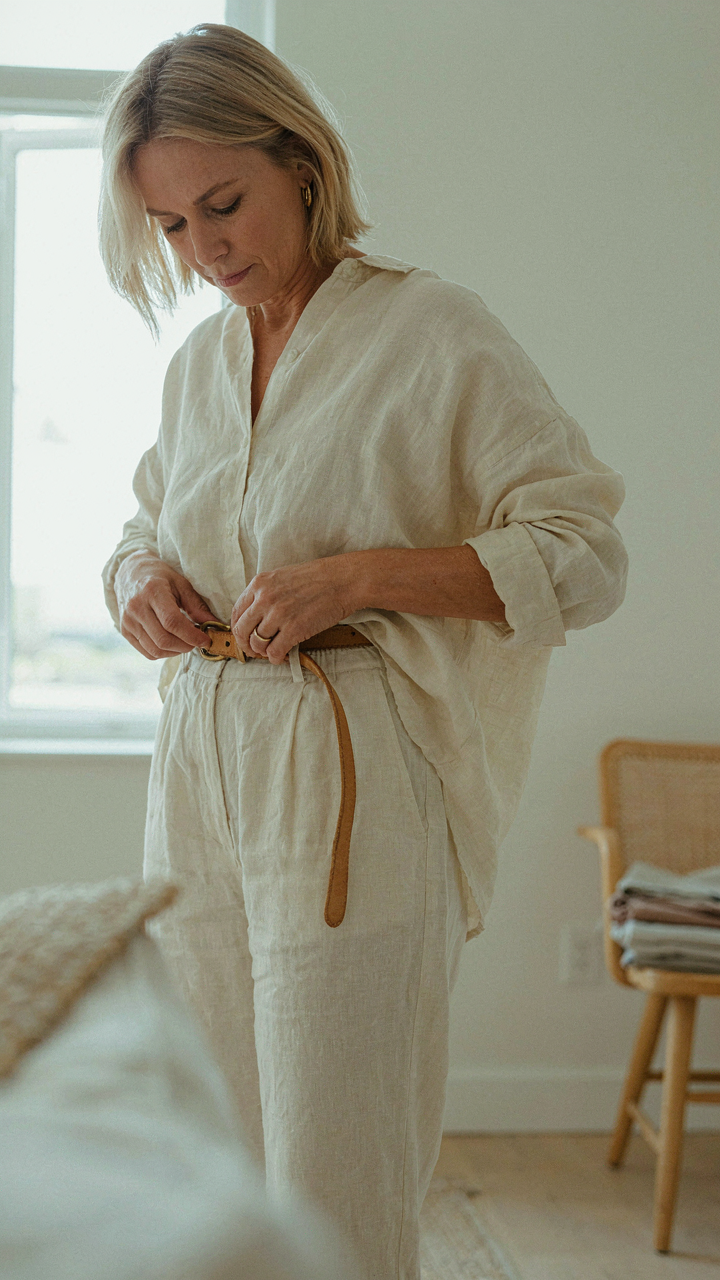
A vintage linen belt in natural leather, a pair of gold hoops that catch light correctly, or a structured bag with visible hardware becomes the focal point because nothing competes with it. The rest of your accessories disappear into the background by design. This is not minimalism pretending to be sophistication. This is mechanics: if all elements scream for attention, none of them register. The coastal grandmother knows that restraint is louder.
Materials That Age Instead Of Decline
The advice to prioritize quality is everywhere and almost entirely useless without the specifics. Quality means something different depending on what you’re buying. What matters here is material longevity: pieces that develop patina instead of degradation over time. Natural linen, leather, wood, brass, and gold plate perform differently than synthetics or base metals, which degrade predictably and visibly.
Leather develops a lived-in texture that reads as intentional. Brass oxidizes and darkens, becoming warmer. Gold plate, applied properly over brass or copper, lasts years through normal wear. A linen bag or canvas crossbody doesn’t shed synthetic fibers or pill under friction. You’re buying objects that look better after two summers than they do new. Start with bags, belts, and jewelry in these materials first. Everything else follows the same hierarchy.
Grandma Clothes Evolution: From Functional To Iconic
Where The Aesthetic Actually Started
You want to know why grandma style matters now because it signals taste without trying. That’s the real mechanism at work. The look originated from necessity, not intention. Women born in the 1920s and 1930s wore what their economic position and available materials dictated. Linen, cotton, and wool dominated because synthetics didn’t exist yet. Quality lasted decades by default, not by design choice.
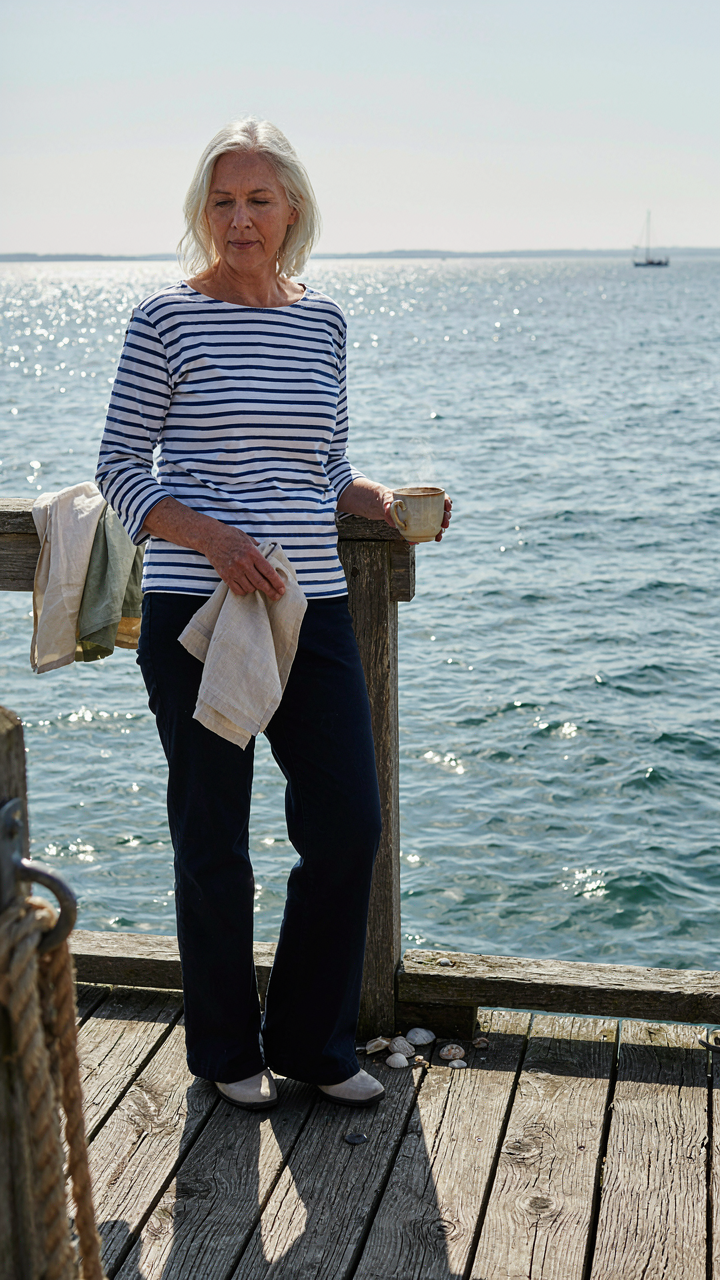
The coastal grandmother aesthetic traces backward through actual garment construction and fiber economics. What we now call “timeless” was simply what survived multiple washings and wore well enough to keep wearing. The nautical elements came from coastal communities where women actually lived near water, not from a mood board. Neutral palettes emerged because dye costs money and fading was inevitable. The style was built on constraint, not curation.
When Generations Borrow Without Attribution
Most style advice ignores that generational aesthetics work like cultural arbitrage. Younger generations spot what older generations kept because it worked, then reverse-engineer why. Gen X and millennial women watched their grandmothers keep wearing the same linen shirts and simple trousers for thirty years. They noticed these pieces didn’t date themselves. They never broke down. They looked better as they aged, not worse.
Coastal grandmother style accelerated when Instagram made visible what was previously invisible. The aesthetic wasn’t invented in 2020. It was already there in closets, ignored, until someone documented it and framed it as intentional. Now the mechanism works in reverse. Young women actively seek these pieces because they’ve been shown the correlation between age, quality, and restraint. The style wins because it maps directly onto what actually lasts, not what feels trendy this season.
Cultivating The Coastal Grandmother Aesthetic Outfits: A Mindset Shift

Quality Over Quantity Wins
You want permission to stop shopping. That’s the real reason this section matters. The coastal grandmother aesthetic works because it’s built on economics, not trends. In economics, scarcity creates value. When you own fewer pieces, each one compounds in utility and meaning. You wear them more. They age better. They become part of your identity instead of clutter.
The mechanism is simple: stop acquiring and start rotating. Buy one linen shirt instead of five. Buy the right neutral trousers instead of disposable ones. This isn’t minimalism cosplay. It’s the fastest path to a functional wardrobe that actually works. The coastal grandmother style demands this because the look depends on repetition and worn-in authenticity, not novelty.
The Confidence That Comes From Knowing
Coastal grandmother style looks effortless because the person wearing it isn’t performing. This is the single highest leverage move: stop dressing to prove something and start dressing because you know what works. The look emerges from clarity, not insecurity. You wear the same neutral palette. You repeat silhouettes. You don’t apologize for it.
The mechanism that actually defines this aesthetic is ownership of choice. You’ve made decisions about your body, your lifestyle, your values, and your clothes reflect that. The confidence reads louder than any garment. When you stop seeking external validation through variety, the outfit starts working at a different level entirely. Wear what you’ve chosen. Wear it again next week.
The Only Thing Holding Back Your Style Isn’t Your Wardrobe; It’s Your Addiction To External Validation

You’ve been waiting for permission to dress like a coastal grandmother. Stop. Nobody cares what you wear except you, and that’s the entire point. Pick one outfit from this article today and wear it without editing yourself for others. The moment you stop performing for invisible judges, your style stops being a costume and becomes an identity. That shift is everything.