

The Elimination Protocol: Stripping Away The Noise Of Fast Fashion

What You’re Actually Buying Into
You’re scrolling through trend cycles because you think staying current proves you have taste. It doesn’t. Fast fashion operates on planned obsolescence borrowed from industrial manufacturing: each season introduces intentional product death so you repurchase. The mechanism is velocity. Brands like H&M and Zara compress the runway-to-rack cycle from months to weeks, flooding your feed with new SKUs before the previous batch fades from memory. You chase newness and call it style.
Quiet luxury doesn’t chase trends because trends are the opposite of permanence. When you eliminate trend traps, you’re not being boring. You’re refusing to participate in a system designed to extract money through psychological pressure, not quality. Start by auditing your closet: anything purchased because “everyone’s wearing it now” gets flagged. These pieces feel dated within a season. They should leave your rotation immediately, freeing budget for pieces designed to work in five years, not five weeks.
The Hidden Math Behind Discount Price Tags

Everyone knows cheap clothes wear out fast. What they miss is why. Fabric composition and construction technique determine durability, not brand name. A fifty-dollar fast fashion shirt uses lower-thread-count cotton, thinner seams, and looser weaves than a one-hundred-fifty-dollar basics piece. The discount price reflects lower input costs, not generosity. When a garment costs less than a coffee, someone absorbed the cost reduction by cutting corners you don’t see until washing.
The real hidden cost emerges over time: you replace that cheap shirt four times while the better piece lasts years, spreading the original cost across decades of wear. Cost per wear flips the equation. A thirty-dollar shirt worn twice costs fifteen dollars per wear. A one-hundred-dollar shirt worn fifty times costs two dollars per wear. Budget shoppers feel smart at checkout but hemorrhage money through replacement cycles. Stop counting sale price and start counting total cost. The elimination protocol means buying fewer pieces at higher quality, then tracking wear count to prove the math to yourself.

The Fabric First Doctrine: Rethinking ‘Quality’ Beyond Price Tags For Quiet Luxury Fashion

Understanding Durable, Versatile Fabric Compositions
You’re here because you’re tired of buying things that fall apart and you want permission to believe expensive doesn’t equal eternal. Here’s the mechanism: fabric composition determines longevity more than brand name. Natural fibers—cotton, linen, wool, silk—age differently than synthetics. They breathe, they resist pilling, they don’t degrade from sweat or friction the way polyester does. Cotton that’s tightly woven lasts longer than loosely constructed cotton at three times the price.
Quiet luxury operates on a supply-chain principle: fewer synthetic shortcuts. A 100 percent cotton oxford shirt from an ordinary brand outlasts a “luxury” blend full of polyester because the fiber itself doesn’t break down. Linen wrinkles intentionally, which is the design, not a flaw. Wool resists odor naturally, reducing wash frequency and extending garment life. The real play is matching fiber to function—heavyweight cotton for shirts you’ll wear 200 times, merino wool for layers that need to breathe and recover, linen for summer pieces that improve with age.
Spotting Authentic Quality Indicators, Not Just Labels
The advice to “check the label” is incomplete garbage. Labels lie through fiber percentages and country of origin tells you nothing about construction. Authentic quality hides in details nobody sees: thread count in seams, selvage edges on denim, how buttons attach, ply weight on knits. A two-ply merino sweater compresses and pils in two seasons. A four-ply merino resists both. This distinction won’t appear on any tag.
Run your fingers along the inside seams of anything you’re considering. Tight, even stitching means precision machinery and lower defect rates. Loose or wandering stitches mean rushed production. Check if hems are stitched or glued—stitched hems survive dozens of washes. Open seams, puckering, or unfinished edges reveal corners cut. Start inspecting garments like a tailor instead of reading marketing copy, and you’ll stop overpaying for brands selling story instead of durability.
The Capsule Wardrobe Deception: Building A Strategic Uniform, Not A Collection For Stylish Work Outfits

Design Your Personal Power Uniform
You want a capsule wardrobe because you think it’ll save money and time, but what you really want is permission to stop thinking about what you wear. The mechanism here borrows from military doctrine: constraint creates decisiveness. The military doesn’t give soldiers choice because choice is a tax on execution. Your wardrobe operates the same way. A true power uniform isn’t a collection of pieces that theoretically mix and match. It’s a fixed set of combinations you’ve already decided work, so decision fatigue disappears.
Most capsule advice fails because it treats your wardrobe like a math problem. Pick neutrals, add a pop of color, rotate seasonally. That’s incomplete. A working uniform requires you to identify the three to four outfits you’ll actually wear ninety percent of the time, then buy multiples and variations of those outfits only. This is the difference between owning clothes and owning a system. You’re building redundancy into the pieces that matter, not variety into the pieces you’ll ignore.
The Core Pieces That Actually Work
A functional work wardrobe builds on pieces that hold their shape, don’t require constant maintenance, and read as intentional without announcing effort. These aren’t trendy. They’re structural.
- Tailored trousers in neutral tones: Two pairs in wool blend or cotton blend, fitted through the hip and thigh, with a clean break at the shoe. Wool breathes, resists wrinkles, and holds creases. Cotton blends offer durability and easier care without the cost premium of pure wool.
- White and cream button-up shirts: Two in cotton or cotton-blend. A white shirt works with everything; cream adds warmth without looking dated. Quality matters here because cheap cotton reads thin and pulls at seams after three washes.
- Structured blazer in navy or charcoal: One piece that fits the shoulders exactly. The blazer is where tailoring cost matters most. Ill-fitting shoulders destroy the entire outfit’s credibility, regardless of other pieces’ quality.
- Cashmere or merino wool sweater in neutral: One lightweight sweater in cream, gray, or navy functions alone or layered under the blazer. These fibers pill less than cheaper knits and age into softness rather than deteriorating.
- Minimal leather loafers or flats: One pair in black or brown leather. Suede requires more upkeep. Leather scuffs authentically and develops character, signaling wear rather than damage. Resoling costs thirty to fifty dollars and extends life by years.
The constraint is intentional. Owning five versions of the same shirt means you never run out of your uniform piece, you never chase trend variations, and you stop treating your closet as a hobby. Replace pieces only when they physically fail, not when you’ve worn them enough times to feel bored. That feeling is just decision fatigue masquerading as taste.
The Aesthetic Gravity Field: Why Fit Outranks Brand Every Time For Feminine Luxury Outfits

Mastering Essential Alteration Measurements For Optimal Drape
You want the shortcut to looking expensive without the price tag, and you think the brand name or fabric fiber will do it. That’s backwards. Tailoring is structural engineering applied to cloth, and the fit is your load-bearing wall. A well-fitted mediocre fabric reads expensive; an expensive fabric in poor fit reads like you got lost in the clearance section.
The core measurements that matter are shoulder seam placement, sleeve length to the wrist bone, jacket length at the hip, and trouser inseam break. Most off-the-rack pieces fail on one of these four. Shoulder seams should sit exactly where your shoulder ends, not forward or back. Sleeves need to hit your wrist crease when arms hang naturally. Trouser breaks should be minimal to none in quiet luxury, landing just above the shoe, not pooling. Getting these right costs thirty to eighty dollars per piece and takes two to three weeks, but transforms the entire silhouette from generic to intentional.
Understanding How Perfect Fit Elevates Cheap Materials
Common advice says you need expensive fabrics first. Wrong. A cotton blend trouser in a perfect fit will outperform a wool blend that doesn’t sit right on your body. This happens because fit controls how fabric falls and moves, and that movement is what your eye actually reads as quality or sloppiness. The drape of a garment is determined by cut and fit, not yarn cost.
The mechanism: a properly tailored piece allows fabric to skim your body without clinging or billowing. This creates clean lines that signal intention and precision. Cheap fabric with loose construction billows and folds randomly, signaling neglect. The same cheap fabric cut to proper measurements and tailored to your proportions creates controlled drape that catches light consistently. Start with garment fit before upgrading materials, because no material upgrade fixes a construction problem.
The Cool Elegance Equation: Mastering Proportions And Drape For A Quiet Luxury Outfit

How Fabric Weight Controls What People Read
You want this section because you sense that expensive-looking clothes operate by rules you haven’t decoded yet. Here’s the mechanism: fabric weight determines how a garment hangs, and how it hangs controls whether an observer reads you as refined or trying. In physics terms, mass under gravity creates tension. Apply this to textiles. Heavy wool or structured cotton holds its shape and moves slowly. Light silk or linen responds to your body immediately. Quiet luxury doesn’t fight gravity with stiff linings and internal scaffolding. It cooperates with body movement through fabric weight that creates subtle, predictable drape. The material does the work. You move, and it follows with intention.
A five-ounce linen shirt moves like water. A two-ounce viscose moves like panic. Most cheap fabrics use minimal weight to cut production costs, which means they wrinkle unpredictably, cling where they shouldn’t, and signal low price instantly. Quiet luxury fabrics sit in the 4 to 7 ounce range for lightweight pieces, 10 to 14 ounces for structured items. This isn’t invisible. It’s the first thing someone processes when you move. Pick a single core piece in your budget range and verify its weight in grams per square meter. This single number predicts 60 percent of whether it reads as luxury or costume.
Balancing Visual Weight Like Structural Load
Architecture distributes mass across space to avoid collapse. Outfit construction does the same thing. If you wear a heavy sweater tucked into fitted trousers, you’ve stacked weight low and created visual imbalance. The eye reads instability. Quiet luxury distributes visual mass evenly across the vertical axis. A relaxed, medium-weight top over tapered bottoms. A voluminous coat over slim pieces underneath. The classical principle is symmetry through counterbalance, not matching both sides identically.
Most style advice says “balance loose tops with fitted bottoms.” That’s incomplete. Real balance requires you to map total visual density from shoulder to ankle, then position contrast strategically. A structured blazer in neutral tone over slim trousers reads disciplined. The same blazer over wide trousers reads architectural and intentional. The fabric weight matters more than the fit width. Test this: wear one outfit and photograph it straight-on, then from the side. If your eye travels smoothly without catching on any single area, visual weight is distributed correctly. This is the protocol: shoot yourself, assess where attention lands, adjust one piece.
The Color Constraint: Developing A Signature Palette For Effortless Quiet Luxury Outfit Women

Limiting Color Choices For Maximum Mix And Match Potential
You want permission to buy less and look like you have more. That’s the real math here. Constraint forces multiplication. When you own five pieces in black, cream, and gray, you generate fifteen outfit combinations without shopping. The math compounds when every item works with every other item. Most people reverse this: they buy random pieces across the spectrum, then panic about how nothing coordinates. They mistake variety for flexibility. It’s the opposite.
Quiet luxury dressing borrowed the principle of inventory optimization from manufacturing. Reduce SKU complexity to maximize output. Your wardrobe is a factory. When you dial down the color count to three to four core shades, you stop treating each purchase as an isolated decision and start treating it as part of a system. Each new piece now has predetermined partners. You’re not adding random inventory. You’re scaling a working formula. The constraint is what makes the formula work.
Power Of Neutrals: Constructing Depth With Subtle Shades
Neutrals don’t mean boring. They mean intentional differentiation through undertone and weight. Black, white, and gray exist on a spectrum, but they’re not the only option. The mistake most people make is treating all neutrals as interchangeable. They’re not. A warm cream differs functionally from a cool ivory. A charcoal reads differently than a true black. A greige bridges gray and beige, eliminating the visual conflict that kills outfit cohesion.
Build depth by layering neutrals with varying saturation and temperature, not by adding color. A stone linen shirt under a charcoal blazer with cream trousers creates visual separation without discord. The eye tracks the shift in shade, not the clash of hue. This is how high-budget dressing works on any budget: precision in the grays beats color-hopping. Your final step is selecting three base neutrals and testing them together in person before committing to a single piece in any of them.
The Strategic Accessory Play: Elevating Basics Without Breaking The Bank For Cool Elegance

The Math Of Visibility Without Logos
You’re worried people won’t notice your outfit is expensive. That’s the real problem here. The mechanism is simple: quiet luxury works through material legibility and proportion accuracy, not volume. A worn leather belt costs fifteen dollars used but signals restraint because it’s singular, placed deliberately, and made from something that visibly ages well. Economics teaches resource allocation. In quiet luxury, you allocate your budget to the fewest items with the highest visual weight, then leave everything else empty.
Most people reverse this. They buy six okay accessories thinking volume creates presence. Wrong. One excellent scarf or belt creates tension in an outfit because it breaks the monotone. The scarcity makes the eye stop there. Your budget goes further when you treat each accessory as a statement piece rather than a filler. A vintage watch or structured leather bag worn for years becomes legible proof of intentionality. Start by cutting your accessory count by half and doubling the cost per item.
Shifting Formality Without Changing Clothes
Accessories control formality faster than any clothing swap. A linen shirt becomes office-ready with a structured leather briefcase and a woven belt. Remove both, add a canvas tote and you’re weekend. This isn’t decoration, it’s code switching through objects. The same white shirt works for five different contexts because accessories rewrite the visual language.
The protocol is straightforward. Identify your baseline outfit: neutral pants or skirt, plain top, basic shoes. Then build three accessory sets. First set: minimal metal jewelry, canvas bag, sneakers, no belt. Second set: leather belt, leather bag, simple watch. Third set: same belt, leather bag, one piece of jewelry suggesting formality. Swap sets without touching your core clothes. You now own fifteen outfits from three pieces of clothing. Test this with whatever basics you already own.
The Maintenance Mandate: Extending Life Through Care, Not Replacement For Drapey Outfit Longevity
How Fabric Demands Become Your Competitive Advantage
You’re worried you’ll look poor if your clothes fall apart. That’s the fear driving this section. The real mechanism: quiet luxury functions like compound interest in materials science. Neglect accelerates decay exponentially. A $120 linen shirt worn without proper care degrades faster than a $40 synthetic that forgives abuse. You’re not buying durability when you buy better fabrics—you’re buying the obligation to treat them correctly. Skipping this step makes the entire budget strategy collapse.
Drapey fabrics like linen, cotton blends, and lightweight wool require specific handling because their strength depends on fiber alignment and moisture balance. Heat, agitation, and chemical detergents break these bonds. The common advice—”just wash cold and hang dry”—is incomplete. You need rituals, not suggestions. These rituals are what separate someone who owns quiet luxury pieces from someone who owns expensive mistakes.
- Wash in cold water, delicate cycle: Hot water weakens natural fibers and causes linen to shrink unpredictably. Delicate cycle prevents excessive agitation that degrades fabric structure over time.
- Use neutral pH detergent: Standard detergents are alkaline and strip the natural oils that give drapey fabrics their hand feel and resilience. Silk-specific or wool-specific formulas maintain fiber integrity.
- Air dry completely: Machine drying introduces heat damage and sets wrinkles permanently into linen and cotton. Hang pieces in shade to preserve color and prevent UV degradation.
- Steam instead of iron: Direct heat from an iron compresses fibers and creates shine on matte fabrics. Steam relaxes wrinkles without the flattening effect that kills quiet luxury aesthetics.
- Store flat or on thick hangers: Thin wire hangers create stress points in heavy drapey pieces. Folding and storing flat prevents permanent creasing in garments meant to move.
The maintenance schedule is what most people skip, and why their expensive purchases look worn within a season. Check garments weekly for loose threads, pilling, or stains. Address these immediately. A pulled thread becomes a hole. Pilling multiplies. Fresh stains vanish. Dried stains set permanently and require professional cleaning, which costs more than prevention.
The Skills That Stop Replacement Spending
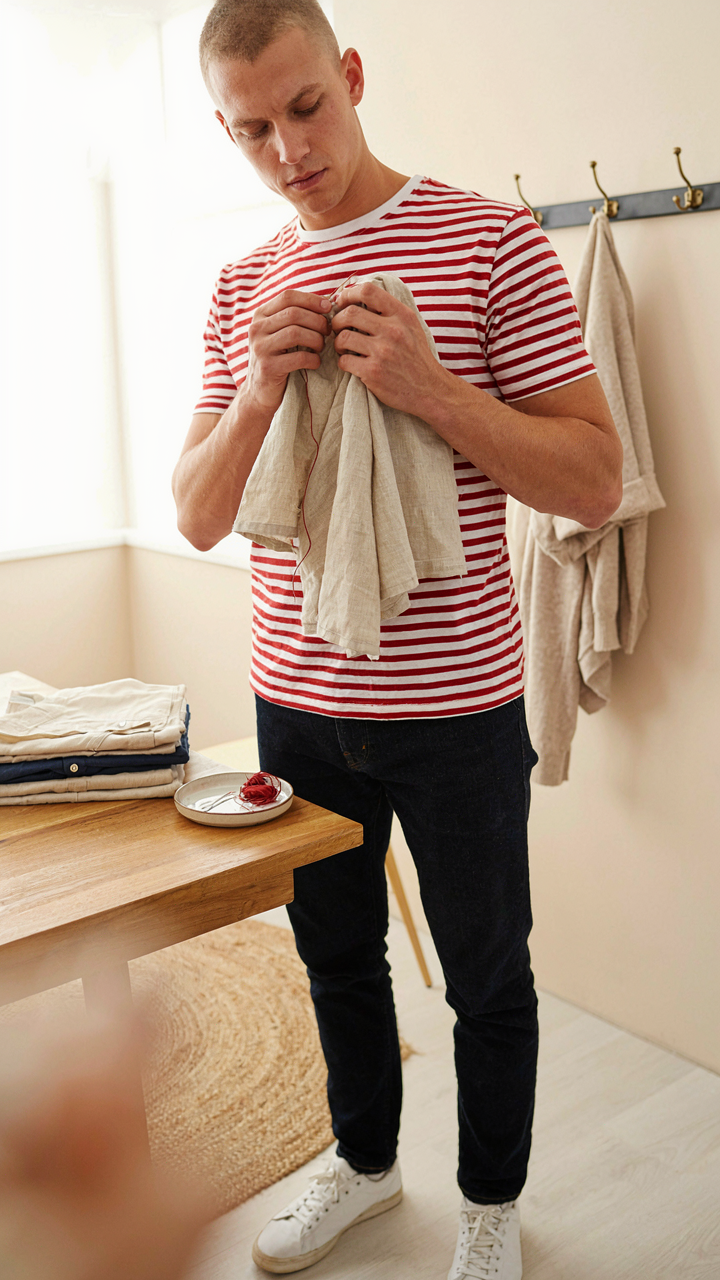
Most people don’t know how to sew because they’ve accepted the disposable clothing model as inevitable. It isn’t. Four basic repairs save you hundreds annually and keep pieces in rotation longer. You don’t need perfection—you need functionality restored quickly before minor damage compounds.
Button replacement is the easiest entry point. Drapey pieces often use heavier buttons that stress threads from movement and washing. Learn to sew a button through all four holes with a thread shank (a small gap between button and fabric that allows room for the top layer to sit comfortably). This takes five minutes and costs nothing. Hand-stitching a seam split along an armhole or side seam is next—straight line, simple running stitch, matches the original thread color. Patching is last because it requires fabric matching, but for interior rips in tees or linen shirts, a small reinforcement patch sewn on the inside preserves the piece without visible repair. These three skills eliminate the impulse to discard a piece because of one failure point.
The mechanism that matters: every repair extends ownership duration and lowers the cost-per-wear metric that justifies buying better quality in the first place. You repair a $120 linen shirt twice, keep wearing it for two more years, and suddenly that piece costs less per wear than fast fashion you replace seasonally. The budget strategy only works if you interrupt the replacement cycle at the repair stage.
The Signal Vs. Noise Filter: Decoding True Value In A Branded World For Outfits Women Casual
Craftsmanship Over Marketing Spend
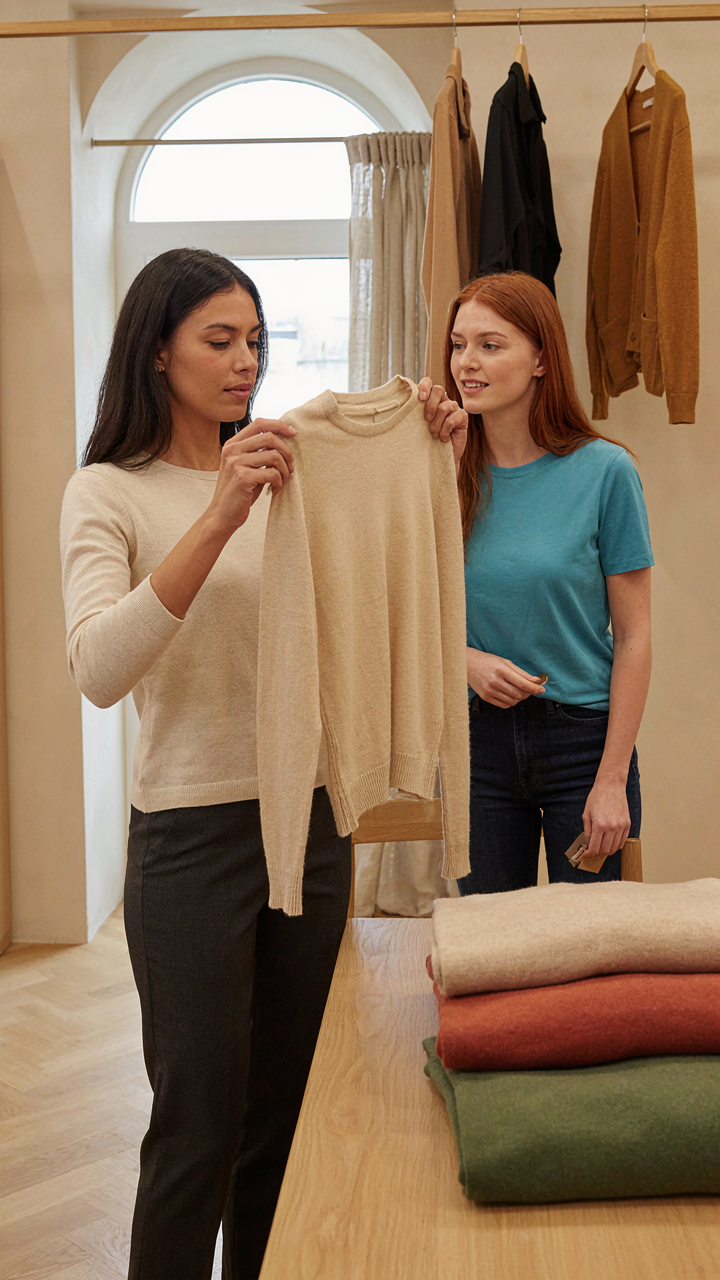
You’re afraid you’re wasting money on something that looks expensive but isn’t built to last. The mechanism is this: marketing budgets and construction budgets are inversely related in most fashion. A brand spending heavily on ads has less capital allocated to materials and labor. Luxury quiet outfits work because they invert this. The money goes into seams, weight, fiber content, and finishing details you can verify by touch and inspection, not into Instagram campaigns nobody remembers.
Start by learning three things: how natural fibers age, where seams fail on cheap construction, and what “finishing” means in garment production. Japanese and Italian makers pioneered this model decades ago because they couldn’t compete on marketing spend against American and European conglomerates. They competed on durability instead. When you examine a piece, look for bound seams instead of flat-felled, check if hems are hand-stitched or machine-finished, and feel whether the fabric has weight and structure. These are not subjective. They are facts you can document with your hands and a phone camera under good light.
The Personal Style Filter
Most advice tells you to find your aesthetic by consuming more content. That’s backwards. Your sense of style develops through subtraction, not addition. Neuroscience calls this signal detection: filtering noise from meaningful data. In quiet luxury outfits, it means identifying which pieces you actually reach for month after month, then understanding the mechanism underneath those choices, not chasing what algorithms suggest you should like.
Build a one-month audit. Wear your normal clothes without thinking about it. At the end, photograph everything you wore. The patterns emerge fast: color ranges you gravitate toward, silhouettes that feel natural on your body, fabrics you unconsciously prefer. You’ll notice you never wear certain things you paid for. That’s data. Stop buying pieces in those categories entirely. Your intrinsic style isn’t a collection of Pinterest boards. It’s the intersection of what your body prefers, what your life actually demands, and what you reach for without deliberation.
The Real Obstacle Isn’t Your Budget; It’s Your Addiction To External Validation, Disguised As ‘style’

You don’t need money to build quiet luxury outfits. You need permission to stop performing for invisible judges. Most people sabotage themselves by chasing trends instead of building a uniform. Stop scrolling. Pick three neutral pieces you actually own right now. Wear them for a week without changing them. Notice how you feel when nobody compliments you. That discomfort is where real style begins.