

The Illusion Of Frumpy: Why Most See Potential, You See Canvas

What You’re Really Afraid Of Losing
You’re scanning thrift racks because you sense that mass-market fashion wastes money on things that don’t fit your body or your actual life. The word “frumpy” doesn’t describe the dress. It describes your fear that you’ll buy wrong again. But here’s the mechanism: frumpiness isn’t a property of the garment itself. It’s a mismatch between the garment’s structure and the wearer’s proportions. Borrow from tailoring logic: fit is a variable, not a verdict. A dress labeled unflattering simply hasn’t met the right body yet.
Most people see a dated silhouette and stop looking. They miss that construction quality and fabric weight are independent from style period. A 1990s oversized linen shift dress is “frumpy” only if it swallows your frame. The same dress tapered at the sides, cropped at the hem, or layered under a fitted top becomes directional. The dress hasn’t changed. The relationship between fabric, seam placement, and your skeleton has. That’s the entire game.
The Bones Beneath The Aesthetic

Thrift finds hide advantage in plain sight because people confuse dated appearance with structural weakness. A polyester blend from the 1980s might have superior seam reinforcement and collar stays that fast fashion abandoned. Examine seam density, lining integrity, and how the armhole sits. These details signal whether a dress can withstand alteration. A dress with weak seams splits when you take in the sides. One with tight, straight stitching accepts modification without failing. The fabric weight matters more than trend.
Oversized proportions in vintage pieces aren’t flaws to accept. They’re material you control. A loose bodice gives you room to add darts or take in seams. A long hem lets you adjust length without compromising the original design intent. High necklines can be dropped. Wide sleeves can be tapered. The canvas quality determines what edits work. Cheap synthetic blends resist alterations. Natural fibers and quality blends accept them. Before you decide a dress is unsalvageable, pull the seam ripper and inspect what’s underneath.

The Deconstruction Protocol: Unmaking For Creative Remaking
Where Seams Become Your Material Inventory
You want to feel like you’re doing something skilled instead of just cutting up a thrift store dress. Here’s what actually matters: seams are load-bearing structures that hold fabric together under tension. Think of them like a building’s load-bearing walls. You can’t remove them randomly without understanding which ones keep the garment intact and which ones are ornamental or redundant. Strategic seam ripping means targeting the seams that free up usable fabric while keeping the construction logic intact.
Most people rip every seam they see. Wrong move. You preserve structural seams on pieces you’re keeping whole, and you attack only the seams that separate sections you want to repurpose or remove. Start with the side seams and shoulder seams on dresses you’re radically reshaping. Back seams on skirts come next if you need flat material. Use a seam ripper, not scissors, because the tool is designed to slide under thread without cutting fabric. Work slowly along the stitch line. The goal isn’t speed. The goal is material preservation.
Salvaging What Actually Has Value
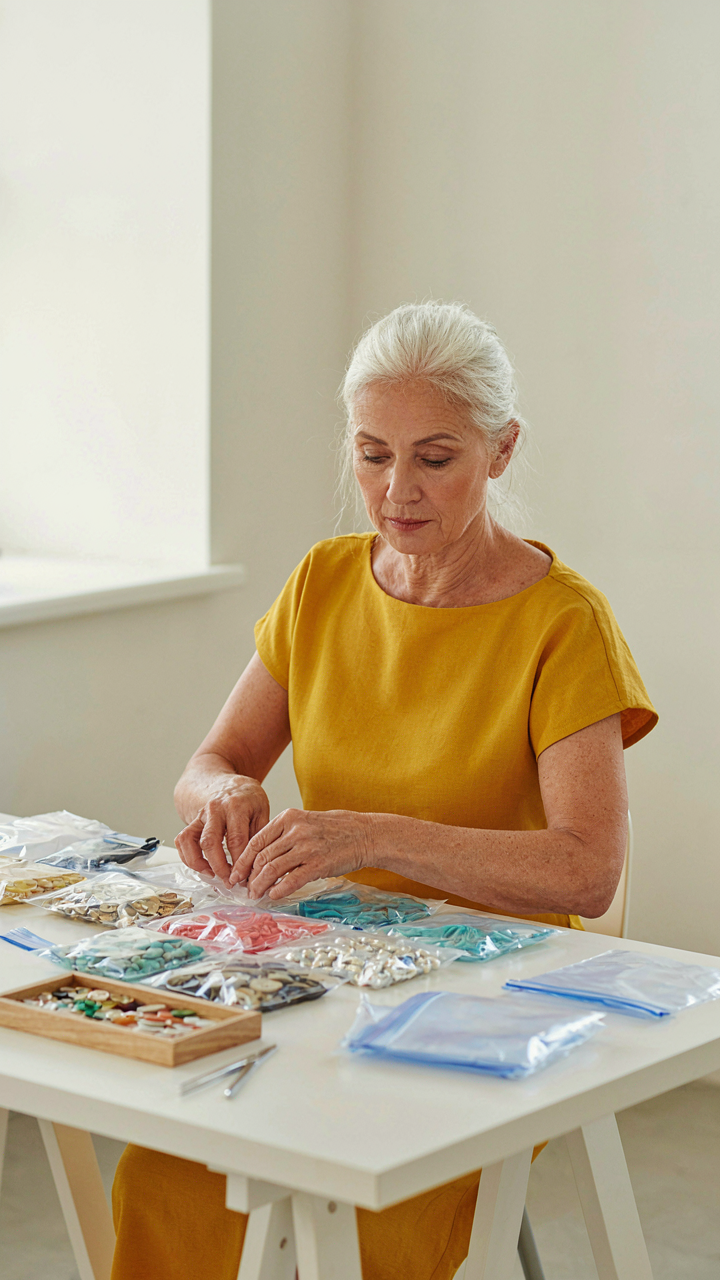
Zippers, buttons, and trims aren’t afterthoughts you grab if you feel like it. They’re the components that justify keeping certain garments in the deconstruction pile instead of donating them. A working zipper from a 1980s dress costs five to eight dollars new. A quality button costs two to three dollars. Lace trim, bias tape, and elastic from vintage pieces often exceed current market pricing because the weave density and dye consistency differ from modern production.
Document what you harvest before you forget. Take a photo. Label the storage bag. Note the measurement of elastic, the color family of buttons, the type of zipper closure. You’re not being precious about scraps. You’re building a component library that eliminates the friction between seeing a design problem and having the part to solve it. When you’re mid-flip and you need a three-inch zipper or a set of matching buttons, you stop working if the part doesn’t exist nearby. Having it already harvested and sorted collapses that delay into zero.
Architectural Principles For Flattering Silhouettes: A Blueprint For Upcycle Clothes DIY
How Your Body Divides Into Zones
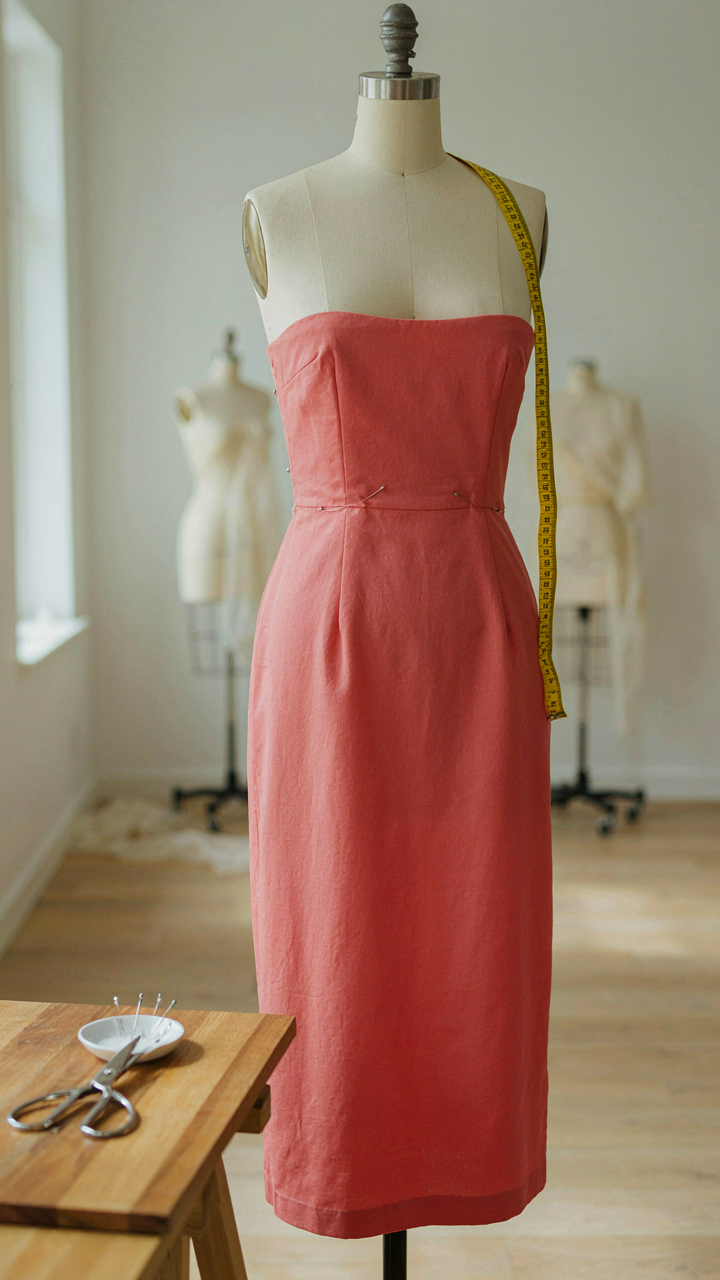
You care about this because you’ve worn clothes that made you feel smaller or bigger than you actually are, and you want control over that feeling. The mechanism is simple: fashion borrows from architecture. A building’s proportions determine whether it feels stable or off-balance. Your body works the same way. The ratio between your shoulder width, waist, hip width, and torso length creates visual weight distribution. Most thrift pieces fail because they ignore these ratios entirely, draping dead fabric over zones that need definition or crushing zones that need breathing room.
Your job in a thrift flip is surgical redistribution of visual weight. Identify your three zones: shoulder to waist, waist to hip, hip to knee. Measure the actual garment, not your body. A dress that sits too long in zone two (waist to hip) will pool weight where you don’t want it. Shortening the dress, tapering the waist, or adding a cinch moves that weight upward or downward deliberately. You’re not making it “cute.” You’re rebalancing the load according to proportion rules that work on every body type.
Structure Shapes What Fabric Does
The common advice says “add darts and you’re done.” Wrong. Darts, pleats, and gathers are not decoration. They’re engineering tools that control fabric tension and redirect volume. A dart removes flat excess and creates a three-dimensional fold that sculpts the garment to your body’s actual contours. Pleats direct fabric downward or create stacked volume where you want it. Gathers bunch fabric and redistribute it, preventing slack while avoiding rigidity.
Your thrift piece likely has zero structure because it was designed for someone else’s shape. Adding structure means you’re not altering the dress. You’re rewriting its geometry. Sew a dart at the bust apex if the dress gaps there. Add a pleat at the center back if you need hip coverage without bulk. Gather excess fabric at the side seam if the waist swallows you. Each intervention targets a specific structural failure. The mechanism is this: structured fabric holds form. Unstructured fabric collapses. Your flip succeeds when the garment’s skeleton matches your body’s skeleton.
Beyond The Hem: Advanced Thrift Flip Ideas For Unique Aesthetics

Dyeing And Textile Transformation
You want permission to skip the basics and jump straight to looking like you know what you’re doing. Here’s the mechanism: dyeing works because it changes substrate value without changing form. Think of it in chemistry terms. A thrift flip dress becomes a new object not through cutting or sewing, but through molecular color alteration that costs next to nothing and reads as intentional.
Fiber content determines dye outcome. Natural fibers like cotton and linen accept fiber-reactive dyes evenly. Synthetics reject dye or require acid dyes and heat. Blends create uneven color. Before buying any dress to flip, check the tag. A 100% cotton shift dress takes indigo or all-purpose dye predictably. A polyester blend becomes a gamble. Shibori folding, discharge bleach techniques, and tie-dye create texture through controlled chemical reaction, not through adding material.
Patches Embroidery And Layered Details
Common advice says add embroidery to hide stains. Wrong angle. The real leverage is using patches and embroidery as intentional design language, not rescue operation. Strategic placement transforms proportion and draws the eye where you want it. A poorly placed pocket says accident. A placed embroidery panel says aesthetic choice.
Denim patches live on work wear because they’re structural. Appliqués work on thrift flips when they break up dead space or create asymmetry. Hand embroidery signals craft and time investment, which buyers interpret as value. Machine embroidery threads cost pennies but look labor intensive when clustered around necklines or sleeve cuffs. Layer patches strategically at seams or panel transitions, then stop. One coordinated placement beats random coverage everywhere.
The Minimum Viable Product Approach To Sewing Projects Clothes

Strip Away The Non Essential
You want permission to skip the hard parts without feeling like you’re cutting corners. Here’s the mechanism: military strategists call this “decisive point identification”—finding the one or two factors that determine victory while ignoring everything else. In thrift flip dress work, this means spotting which single modification shifts the entire garment from unwearable to functional. Most people waste time on cosmetic fixes when the structure itself fails.
The dress that doesn’t fit in the shoulders won’t look better with perfect hemming. The shapeless A-line won’t transform because you added pockets. You identify the one problem that actually matters, then you solve it. Everything else gets ignored until that single change lands. This is not laziness. This is resource allocation.
Maximize Perceived Value Per Stitch
What everyone gets wrong about thrift flips: they think effort equals results. It doesn’t. A single well-placed dart at the side seam creates more visual impact than taking in four inches of fabric across the back. You’re looking for the leverage point—the modification that creates disproportionate change in how the garment reads on a body.
Take-in work at the seams always registers as intentional tailoring. Shortening sleeves by two inches appears more dramatic than it measures. Neckline adjustments change the entire proportion story instantly. You choose modifications where the viewer’s eye catches the improvement first, before noticing the work behind it. This determines whether the flip registers as intentional or accidental.
Mastering The Stitch: Essential DIY Sewing Clothes Techniques
Machine Stitches That Hold
You want your thrift flip to look store-bought so people assume you paid money for taste instead of labor. Here’s the mechanism: a thrift flip dress fails not because of design choices but because seams fail. Treat machine stitching like structural engineering, not decoration. The stitch type determines whether your garment survives washing or splits at stress points.
- Straight Stitch: The foundation. Use 2.0 to 2.5mm length on most fabrics. Prevents puckering on lightweight material and holds seams on thicker thrifted pieces without bunching or thread breakage.
- Backstitch Start and End: Lock every seam by reversing for five stitches at both ends. This prevents unraveling under tension, especially critical on armholes and necklines where movement creates constant pull.
- French Seams: Enclose raw edges entirely. Sew seams wrong sides together at quarter inch, trim, press, then sew again right sides together. Results look professional and prevent fraying on worn thrifted fabric with weak fibers.
- Stretch Stitch or Narrow Zigzag: Use on knit materials found in thrifted jerseys and stretchy pieces. Allows slight give without thread snapping when fabric moves and contracts during wear and washing.
- Topstitching: Sew parallel lines on finished seams using slightly heavier thread and longer stitch length. Adds visual polish while reinforcing stress areas like shoulders and underarms prone to separation.
Tension matters more than speed. Loose bobbin tension creates loops on the fabric face. Tight upper tension puckers seams. Test on scrap material first. One poorly tensioned seam on a thrift flip ruins the entire flip because the eye catches structural failure before it catches design.
Hand Stitching For Invisible Details
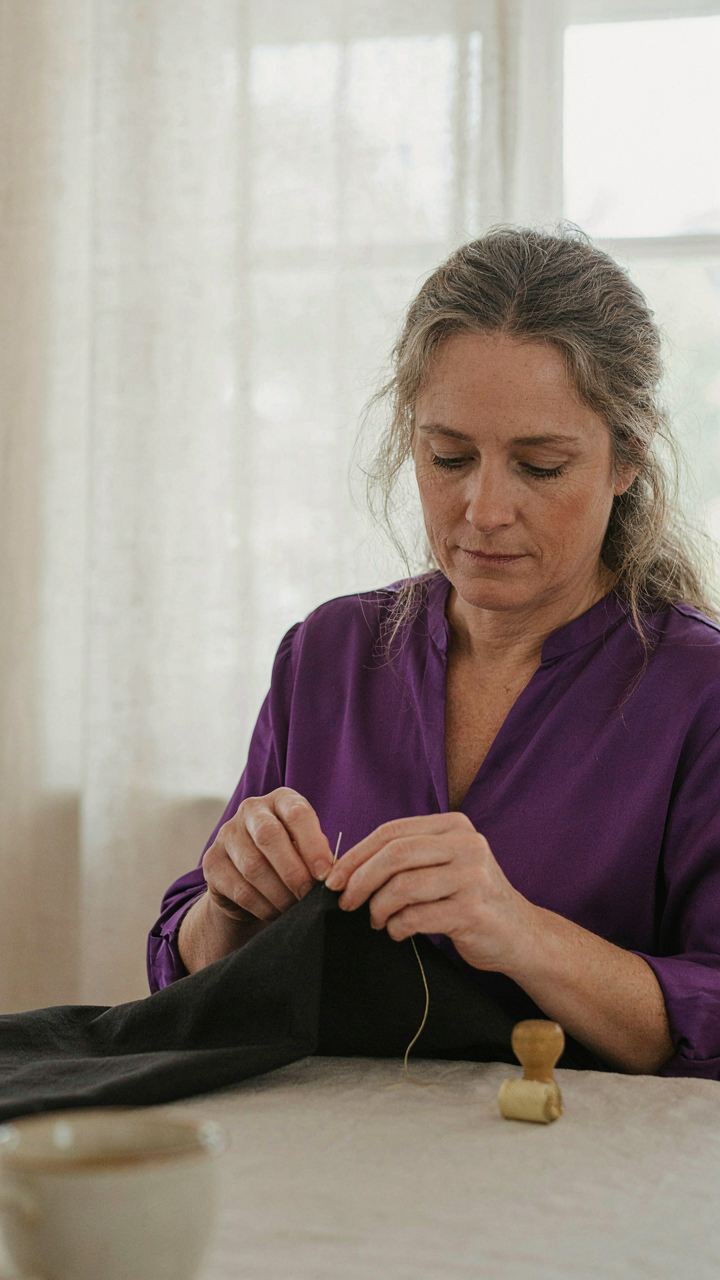
Hand stitching separates flips that look homemade from ones that look intentional. The work happens in areas where machine seams read as clunky or where you need to attach delicate elements without puckering the fabric face. Most people skip this step entirely, which is why most thrift flips look unfinished.
Use a slip stitch for hemming and attaching linings. Anchor thread inside the fold of fabric, come up through one layer only, slide the needle horizontally through the fold for a quarter inch, exit and pierce the base layer directly opposite, then repeat. The stitch becomes invisible because thread never crosses the fabric surface. This technique takes longer than machine hemming but eliminates the visual weight of a machine line on a finished garment, transforming the piece from DIY project to deliberate design choice. Hand stitch zipper installations on wrapped or positioned zippers where you want the seam to sit exactly where you place it without the feed dog pushing fabric unevenly.
The Monetization Of Misfits: Turning Thrift Flip Dress Into An Asset

The Story You Tell Beats The Dress You Made
You want to know if this actually pays. That’s the real question underneath all the aesthetics talk. The mechanism is simple: people don’t buy garments, they buy narratives about who they become when wearing them. Your thrift flip dress is only valuable if you’ve positioned it inside a story that matters to someone.
The narrative works like supply chain economics in reverse. Traditional retail manufactures a product first, then hunts for a customer. You flip this. You document your process, show restraint and intention, then the customer finds you already convinced they want what you’re selling. The person buying doesn’t just get a dress. They get evidence that transformation is possible, that wastefulness can be redirected, that their taste has leverage in a saturated market.
Document The Before State Obsessively
Most thrift flip documentation fails because creators skip the unglamorous part. Show the exact condition you started with: the stain, the loose seams, the generic fit that nobody wanted. Use natural light and shoot from multiple angles. The before state is your credibility anchor. Without it, you’re just another person claiming they made something nice.
Post the progression in sequence, not as a highlight reel. Show each intervention: the dye bath, the seam ripped open, the pattern traced on kraft paper. This transforms the work from invisible labor into visible skill. Your audience needs to see where their money actually goes. They’re not paying for a finished product. They’re paying for the decision-making that happened in the middle, the choices only you would make.
The Unspoken Value: Why This Goes Beyond Easy DIY Clothes

Turning Constraints Into Unfair Advantage
You want permission to feel smart for doing this. Here’s the real mechanism: scarcity forces constraint-based thinking, which is how actual problem solvers operate. Economics calls it resource allocation under constraint. A thrift flip dress forces you to work with what exists, not what you want, which trains the skill that separates people who execute from people who plan forever.
The common advice says “have fun and be creative.” That’s incomplete. When you’re limited to a five-dollar dress and need it flattering, you stop decorating and start engineering. You learn pattern recognition. You identify which seams matter, which cuts sabotage a silhouette, which simple interventions compound. This isn’t hobby skill. It’s the same constraint-based thinking that separates effective operators from dilettantes in any field.
The Personal Brand Nobody Talks About
Real personal brand isn’t a mood board or aesthetic. It’s consistency in decision-making that outsiders can recognize and trust. A thrift flip dress reveals your actual taste because you can’t hide behind trends or price tags. You’re forced to make deliberate choices about fit, proportion, and function over status signaling.
When you build a wardrobe this way, you stop chasing what worked for someone else’s body or life. You develop editorial standards. You recognize which silhouettes, fabrics, and proportions actually work for your frame and how you move. That consistency becomes your signature. Others notice it because it’s rare. Most people wear what retail dictates. You wear what you deliberately chose and modified. That difference compounds over years into a recognizable personal style that photographs well, survives trends, and costs a fraction of what others spend for less coherence.
The Real Obstacle Isn’t The Fabric; It’s Your Permission To Defy What Should Be And Create What Is

You don’t need better thrift stores or sewing skills. You need to stop asking permission from invisible fashion rules that don’t exist. Every thrift flip dress that actually turns heads came from someone who ignored what a piece “was supposed to be” and rebuilt it into what they wanted. Go find one ugly dress today. Cut it. Reconstruct it. Post the before and after. The world doesn’t need another person following instructions. It needs someone willing to look ridiculous while creating something real.