

Beyond Basic Hemming: True Fit, Not Just Length
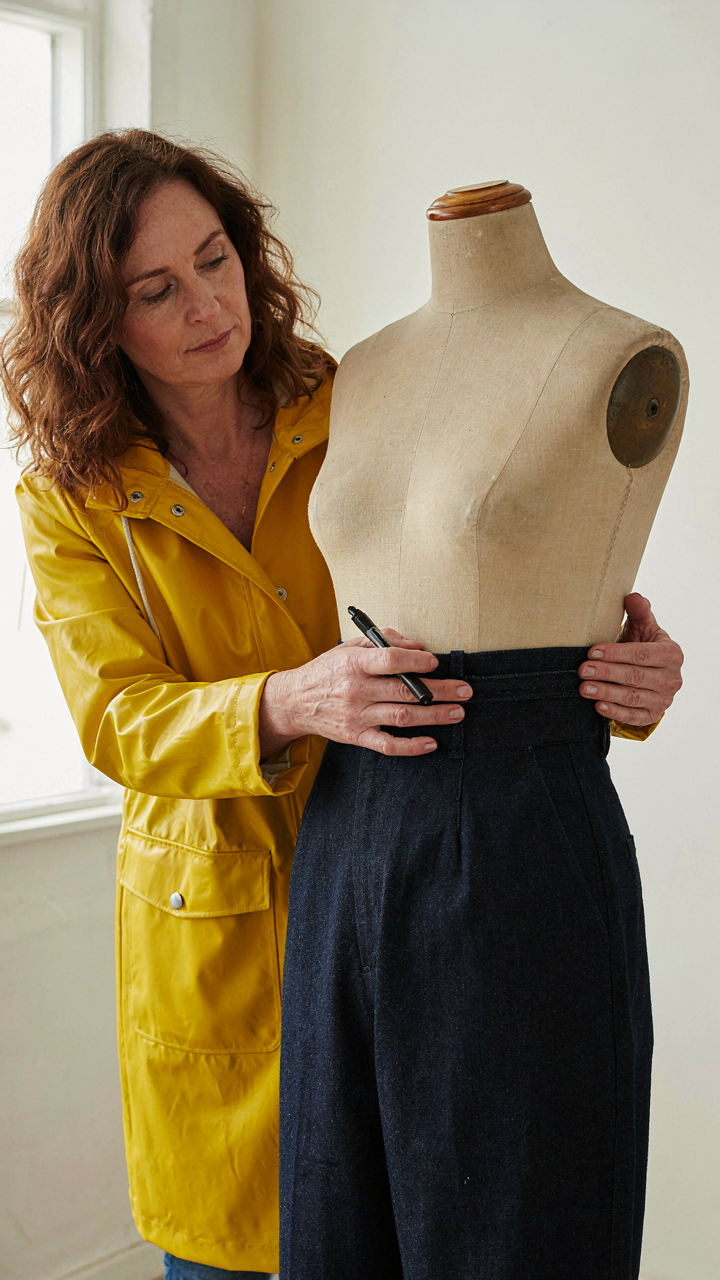
Strategic Inseam Adjustments For Optimal Drape
You think hemming fixes fit because you want to believe a simple cut solves the problem. It doesn’t. The real mechanism here is borrowed from physics: tension. Fabric under tension creates drape. Where that tension sits on your body determines whether pants look tailored or bunched. Most tailors hem by length alone, ignoring the angle at which fabric meets your shoe. This is lazy work.
The inseam controls how fabric cascades down your leg. A proper inseam adjustment accounts for three variables: your actual inseam length, the break you want at the hem (none, slight, full), and where the crotch seam sits relative to your hip bone. Moving the inseam changes the angle of descent. Pants that angle forward bunch at the ankle. Pants that angle backward gap at the heel. You need the fabric to fall perpendicular to the floor. Measure from your crotch seam to the top of your shoe, not from your waist.
Waistband Reconstruction For A Tailored Silhouette

Waistband work is where most refashioned pants fail because people try to shrink existing waistbands instead of rebuilding them. You cannot simply sew a waistband tighter without distorting the rise and creating drag across the hip. The real move is a partial reconstruction: you open the waistband seam on both sides, taper the actual waistband fabric itself (the ribbon sewn inside), then re-close it. This preserves the rise geometry while reducing circumference.
The process requires taking in from the side seams first, then assessing remaining waist slack. If you need more than an inch of reduction, reconstruct. If you need less, you can take it from the side seams alone. The key: never alter just the elastic or just the exterior fabric. Both must move together or the waistband rolls, twists, or creates pressure points. Have the tailor measure your actual waist, then subtract half an inch for sit. That number determines your new waistband width at the opening.

The Resurrection Protocol For Dead Denim Diy Clothes

Taking In Legs Without Losing The Seams
You want to keep wearing expensive jeans instead of admitting the fit changed on you. The real mechanism is simple: most people taper by cutting and resewing the inseam, which wastes fabric and creates bulk. Instead, taper from the outseam, which runs down the outside of your leg. This preserves the original inseam construction and lets you adjust width without structural failure.
Measure the excess width at the calf and ankle separately. Mark new outseam lines with tailor’s chalk, then sew parallel to the original seam using a straight stitch. Start at the hem and work upward, stopping before you hit the crotch. Press the new seam flat, try the jeans on, then trim the excess fabric to half an inch and finish the raw edge with a zigzag stitch to prevent fraying.
Patches That Build Status Instead Of Admitting Damage
The common advice says patches are about covering holes. They’re actually about visual hierarchy. Visible patching moved from pure utility into streetwear and high fashion because it signals intentional design choice, not accident repair. Japanese boro tradition proves this: layered patches on visible surfaces became valued textile art because placement mattered more than concealment.
Strategic patching works because it forces the viewer’s eye to the patch location. Use denim from a contrasting weight or a vintage jean jacket on the thigh or back pocket area. Cut patches with clean edges rather than raw edges, topstitch them down with a thread color that either matches or deliberately contrasts, then distress the surrounding fabric to make the patch feel earned rather than applied.
Deconstructing Mass Production: Ropa Upcycling
How Seams Reveal What Mass Production Hides
You want to believe your old pants failed you, not the other way around. The truth is simpler: mass production optimizes for speed and margin, not durability or fit. Understanding how a garment was assembled tells you exactly where it will fail and what you can actually change. Factory construction uses predictable methods across price tiers, and that uniformity is your advantage.
Most pants follow the same structural logic. The side seam runs from waistband to inseam. The inseam connects the two legs. The crotch gusset (if present) distributes stress where two pieces meet. When you trace these paths, you stop guessing about alterations and start seeing constraints. A seam holds because of thread tension and stitch density, not wishful thinking. Know the seam, know what survives cutting.
Repurposing Fabric Into Intentional Design
Everyone talks about “turning jeans into shorts” like it’s creative. It’s not. It’s the bare minimum. Real refashioning means identifying usable fabric zones and building new garment logic from them. One pair of trousers contains enough material for completely different pieces if you stop thinking like a patcher.
Thigh panels stay structurally sound longer than inseams do. That fabric works for side panels on new pants or the body of a simple vest. Waistbands have already been reinforced and finished. They function as ready-made edges for small projects. Leg cuffs can become pocket flaps or reinforcement strips. You’re not salvaging scraps, you’re recognizing that a pair of pants is made of discrete components with different histories of use and different remaining utility. The inseam fails first. The thigh lasts. Plan your next piece around what actually survived.
The “Upgrade Jeans” Equation: More Than Just Sewing
When Fabric Fights Back
You want your old pants to fit like new ones because new ones cost money and admitting your body changed feels worse than surgery. Here’s the mechanism: fabric has memory. Cotton blends hold their shape differently than pure denim. When you add stretch material to a thigh or waistband, you’re not just inserting thread—you’re changing how the garment distributes tension across your body.
The real work happens at the molecular level. Spandex fibers create elasticity that cotton alone cannot. A two-way stretch panel inserted along inseams or waistbands recovers its shape after wear, while natural fibers creep and bag out. The trade is precision: improper insertion creates puckering and uneven recovery. Most people skip this step and wonder why their refashioned pants feel off.
Hardware Changes Everything
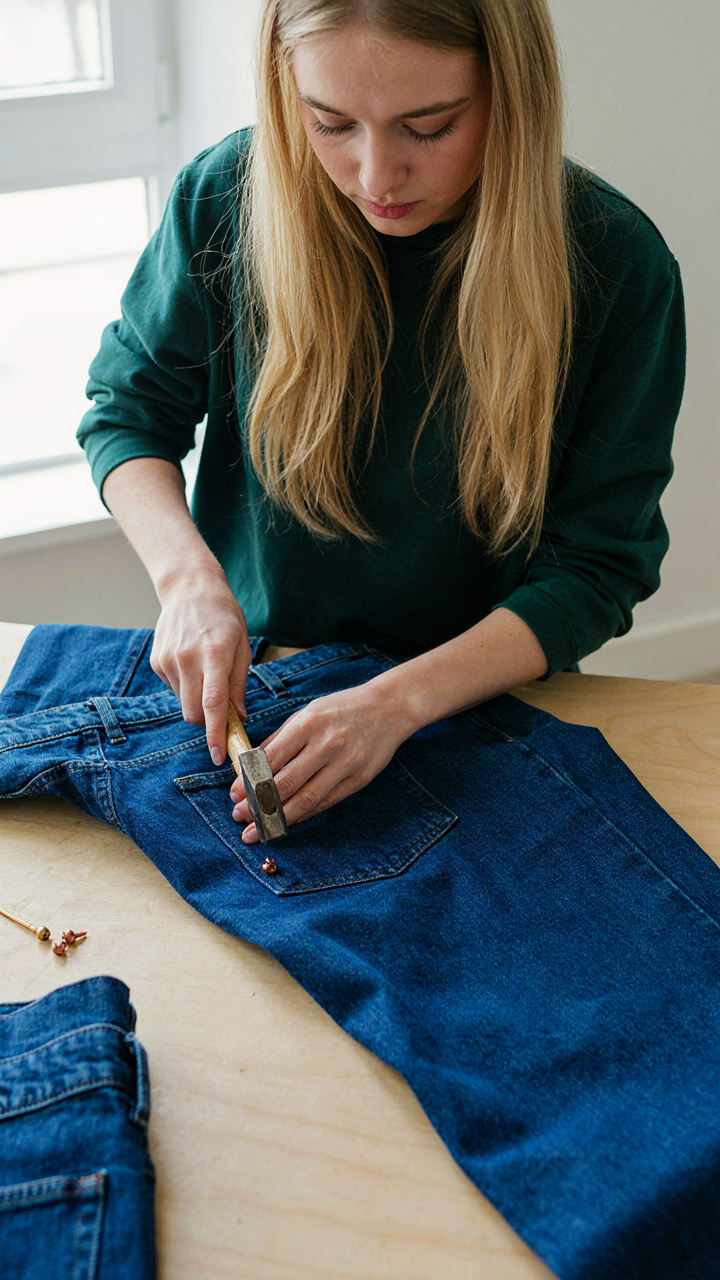
Zippers, buttons, and rivets carry visual weight that fabric alone cannot achieve. A rivet placed at stress points—pocket corners, fly base—signals durability and intentional construction. Upgrade hardware stops looking like a repair and starts looking like design. The distinction matters because perception determines whether someone sees refashion as resourcefulness or desperation.
Embellishments like topstitching in contrast thread or replaced hardware transform how light hits the garment. A copper rivet catches light differently than the original zinc. This isn’t decoration for its own sake. Visible structural elements create the illusion that someone thought through the garment’s future. Install hardware at identical depths and spacing to your original seams, or the effort reads as amateurish.
Mastering The “Recycled Pants” Mindset: Economic Principles

What You’re Actually Choosing Against
You care about this because spending money on new pants feels productive when refashioning old ones feels like settling. Economics calls this opportunity cost: the value of the next best alternative you give up when you choose one thing over another. In pants refashion, the real trade isn’t just money spent versus money saved. It’s the time you invest in learning to alter a pair against the time you waste replacing poorly fitting pants every season.
A pair of trousers you already own represents sunk cost. You can’t recover that money. But you can recover utility from it. Buying new pants means you’ve abandoned the garment’s remaining lifespan and committed to the replacement cycle again. Most people skip this calculation entirely and just buy. The math changes when you see refashioning as the only rational move.
The Cycle That Guarantees Failure
Fast fashion destroyed your ability to judge quality because you’ve never worn a pair of pants long enough to know what good construction feels like. Diminishing returns in clothing purchases means each new pair solves fewer problems than the last. You buy pants for fit. They don’t fit. You buy again. The new ones don’t fit either. You repeat until you’ve spent enough to buy a quality pair you could have refashioned.
The trap is that replacement feels cheaper than learning alteration. It isn’t. After five poor-fitting purchases, you’ve spent the equivalent of professional alterations on a single good pair, plus the time wasted trying on clothes. Refashioning breaks this loop because it forces you to understand what fit actually means for your body. Once you own that knowledge, you stop the cycle. You keep one pair that works.
The Anatomy Of Upcycling Pants: Precision And Purpose

Surgical Seam Work For Fit
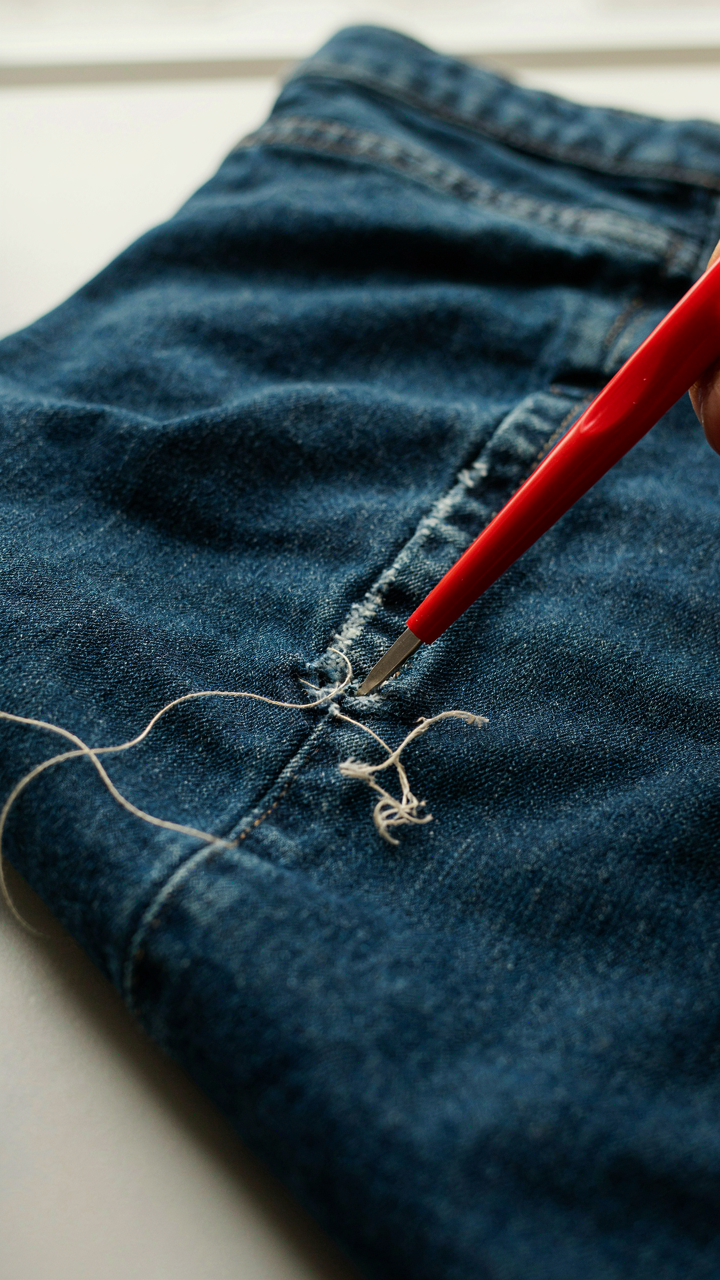
You’re doing this because buying new pants feels wasteful, but the real fear is that you’ll botch the work and look stupid. Here’s what actually matters: seam ripping and re-stitching is pure geometry. You move fabric, not magic. Find the seam you want to adjust, use a seam ripper to cut the thread every half-inch, pull the old thread out cleanly, and fold the fabric to its new position. Mark it with tailor’s chalk. Stitch with tension matched to the original stitch length, or the repair becomes visible.
The mistake most people make is rushing the rip. You leave thread fragments, and when you press the new seam, it sits uneven. Take thirty seconds per seam. Rip slow. The mechanism here is simple: a garment only fits right when every seam sits where the pattern intended it to sit. Moving a side seam inward by half-inch changes shoulder width and torso volume simultaneously. You’re not just tightening something arbitrary, you’re resetting the geometric ratio the original manufacturer built in.
Reshaping Through Pattern Intervention
Pattern manipulation means cutting and reconstructing, not just letting out or taking in. Tailor’s do this by adding insets, removing panels, or pivoting grain lines. Start by identifying which panel carries the fit problem. A pair of flat-front pants that bag at the knee likely needs the inseam or outseam adjusted, or the thigh panel recut to taper sooner. Mark the new line, cut deliberately, and reattach with a straight stitch. You’re redefining the silhouette by changing where fabric begins and ends.
The common approach is lazy: just hem the length and call it done. That ignores the real work, which is the volume and shape in the leg itself. If your pants pool at the ankle, you don’t just cut fabric away. You trace a new leg taper from hip to hem, accounting for how fabric drapes under tension. Cut one leg, fit it, then use it as a template for the other side. This precision prevents the asymmetry that kills a refashioned garment. The finished product depends entirely on how accurately you translate your measurements into a revised pattern.
Beyond Trends: DIY Clothes Design As A Skill

Spotting Hidden Potential In Worn Fabric
You want to feel like you’re being resourceful instead of admitting most of your closet doesn’t fit or suit you anymore. The real mechanism is pattern recognition: your brain learns to separate the structural problem from the material it’s wrapped in. A pair of pants with blown-out thighs still has salvageable fabric in the legs, waistband, and side seams. You’re not saving money. You’re training yourself to see components instead of finished products.
- Fiber content and weight: Heavy cotton or wool holds its shape through alterations better than thin synthetics. Check labels and feel the fabric thickness before committing to a refashion project.
- Seam quality and placement: Flat-felled seams and quality stitching mean the garment can survive unpicking and resewing. Cheap construction falls apart when you attempt major changes.
- Damage location: Damage on inseams, pocket areas, or hems means you have working fabric elsewhere. Damage across large panels limits what you can actually salvage.
- Original proportions: High-rise pants with excess length work for cropping. Wide-leg pants work for tapering. Assess whether the base silhouette matches current fit standards before you start.
- Dye stability and color: Faded or stained sections can become design features through patchwork or colorblocking, but only if the remaining fabric is stable enough to dye evenly if needed.
This is why most people fail at pants refashioning: they see one pair of jeans and imagine infinite possibilities. You need specificity. Spend two minutes examining a garment’s condition, fiber content, and structural integrity before you decide it’s worth your time or needle.
Essential Skills You Actually Need To Learn
Forget the fantasy of “upcycling” as some mystical art form. You’re learning applied geometry and basic engineering under time pressure. A seam ripper, sharp scissors, measuring tape, and a working sewing machine handle 90 percent of refashioning work. Everything beyond that is optional complexity masquerading as necessity.
- Seam ripping and inspection: You must know how to safely remove stitching without tearing fabric. This reveals original construction methods and shows you what seam allowance you have to work with for new seams.
- Precise measurement and marking: Fabric doesn’t forgive guessing. Learn to use a measuring tape, tailor’s chalk, and pattern paper to mark cut lines. One careless mark ruins a section.
- Basic machine stitching: Straight seams, backstitching to lock threads, and consistent seam allowances. You need repeatability, not speed. Most cheap refashions fail because seams split or pucker.
- Hand stitching for finishing: Ladder stitch for closing leg seams after tapering. Whip stitch for hems. These aren’t decorative. They’re load-bearing and invisible when done right.
- Pattern reading from existing garments: Unpick one leg of your target pants, lay it flat, and trace it. This becomes your template. It’s faster and more accurate than guessing proportions.
Start with one type of alteration and repeat it five times before moving to another. Muscle memory replaces decision-making. After you taper three pairs successfully, you stop overthinking and start executing.
From Waste To Wearable: Upcycle Jeans, Not Just Discard Them

The Math Behind Textile Waste
You want to feel like you’re making a difference without actually changing your consumption habits. Here’s the mechanism: the average person discards roughly 81 pounds of textiles per year in developed countries. Most end up in landfills where synthetics take decades to decompose. Cotton breaks down faster but still persists for months. When you refashion existing pants instead of buying new ones, you interrupt that pipeline at the source. Economics calls this the substitution effect: wearing refashioned pieces reduces demand for new production, which requires water, chemicals, and energy. One pair of jeans demands over 2,000 gallons of water to manufacture. Refashioning eliminates that cost entirely.
The environmental case is mathematical, not emotional. Every refashioned pair is one less item in the supply chain. You don’t need to feel good about it. The outcome speaks for itself. Stop thinking of refashioning as recycling and start seeing it as resource interception. The pants already exist. The damage is done. Wearing them longer is the only rational move.
Build Equity In Your Own Style
Consensus says a diverse wardrobe means buying more pieces. That’s inventory thinking, not investment thinking. A custom, unique wardrobe works differently: each refashioned item builds on your personal visual language, not dilutes it. When you alter existing pants to fit your body precisely, you eliminate the friction between intention and execution. You know exactly how those pants behave. You know which cuts work. You stop chasing trends because your refashioned pieces become the reference point for what works on you.
The real value emerges over years. A tailored, refashioned pair of pants from five years ago still fits better than most new purchases because it was built for your actual body, not a sample size. You develop visual authority through repetition with quality pieces. That’s how personal style compounds. Refashioning forces intentionality. You can’t thoughtlessly add to your closet when every piece requires deliberate alteration. The wardrobe becomes smaller, more cohesive, more functional. Document each refashion project with photos. Track which alterations you return to. That data becomes your personal style system.
The Real Obstacle Isn’t Your Pants’ Fit, It’s Your Scarcity Mindset

You don’t refashion pants because you’re broke. You do it because you refuse to accept that wearing clothes that don’t fit is normal. Most people throw away money on new wardrobes instead of extracting maximum value from what they own. Pants refashion isn’t a hack. It’s a skill that compounds. Pull out one pair of trousers today and take a single measurement. That action rewires how you see your closet. You already own the solution to your fit problem.