

The Flannel Upcycle Fallacy: Why Your Pinterest Board Is Useless

Trends Are Consumption In Disguise
You’re scrolling Pinterest hoping someone else already solved what you should make with that flannel shirt in your closet—but what you’re really after is permission to feel like you’re being creative without the friction of actual creation. The mechanism is simple: trend-following is consumption dressed as production. You see ten identical flannel-to-tote conversions, bookmark them all, and mistake curation for capability. The pins don’t teach you anything. They just transfer your decision-making to someone else’s aesthetic.
Flannel upcycle trends die fast because they’re designed to. Fast fashion killed the thrift store advantage by mass-producing “vintage” aesthetics. What looked novel in someone’s Instagram story last month now feels stale because millions saw it. You’re competing with algorithmic visibility, not actual scarcity. By the time a flannel project hits viral status, the cultural value has already evaporated. The real work starts when you ignore what’s trending and build from what you actually own.
Limited Resources Force Real Decisions

Constraint is the operating principle of design thinking, and your flannel shirt is a hard boundary you can’t ignore. Most upcycle advice says “be creative” which means nothing. Real creativity happens inside limits: one shirt, whatever thread you have access to, the actual condition of the fabric. These boundaries eliminate noise. You can’t make fifteen different things simultaneously. You must choose one output, which forces you to understand the material’s actual properties instead of what Pinterest told you it could become.
Start by testing the fabric itself, not the idea. Wash it. Check how it shrinks. Feel the weave density. Try seams ripen or tear under tension. Try dyeing a scrap if you want color change. Document what works. This is the protocol: constraints first, then exploration within those constraints, then execution. Skip the inspiration phase entirely. Your flannel shirt upcycle will be stronger because it’s built on material reality, not visual trends.

Deconstruction Protocol: Hacking Your Old Flannel Shirt

Planned Disassembly Beats Random Cutting
You want to feel resourceful without actually losing money on a failed experiment. The real mechanism here is borrowed from manufacturing: yield optimization. In garment production, cutting plans determine how much usable material survives the process. Most people hack flannel shirts without strategy, destroying seam allowances and fabric grain in the process. You need a cutting sequence that prioritizes high-value sections first, then salvages secondary pieces from what remains.
Start by documenting the shirt’s condition. Photograph both sides. Mark stains, wear patterns, and structural damage with tape. Identify which sections are intact: front panels, back yoke, sleeves, and pocket areas. These become your tier-one targets. Only after you’ve secured these do you approach seams for thread extraction or smaller scrap recovery. The sequence matters because you can’t unsever fabric once it’s cut.
Maximum Yield From Strategic Extraction
The common advice says “save the pockets” and calls it a day. That’s lazy. You extract value from every component: fabric, thread, buttons, and structural elements like the yoke reinforcement that manufacturers stitch for durability. Flannel’s weight and weave make it valuable beyond the obvious visible panels.
Start with seam ripping before any cuts. Use a small blade or seam ripper to separate panels along existing stitching. This preserves both the fabric itself and the thread, which remains intact for future projects. After panels separate, remove buttons by cutting the thread holding them, not prying them off. Examine the yoke and collar construction from the inside. Many flannels use reinforcement tape or facing that contractors can reuse for stabilizing edges on new garments. The cuff hems contain usable linear fabric. Cut them open to recover 12 to 18 inches of finished edge per sleeve.
The Upcycled Flannel Grid: Modular Design Principles
Breaking Flannel Into Systems
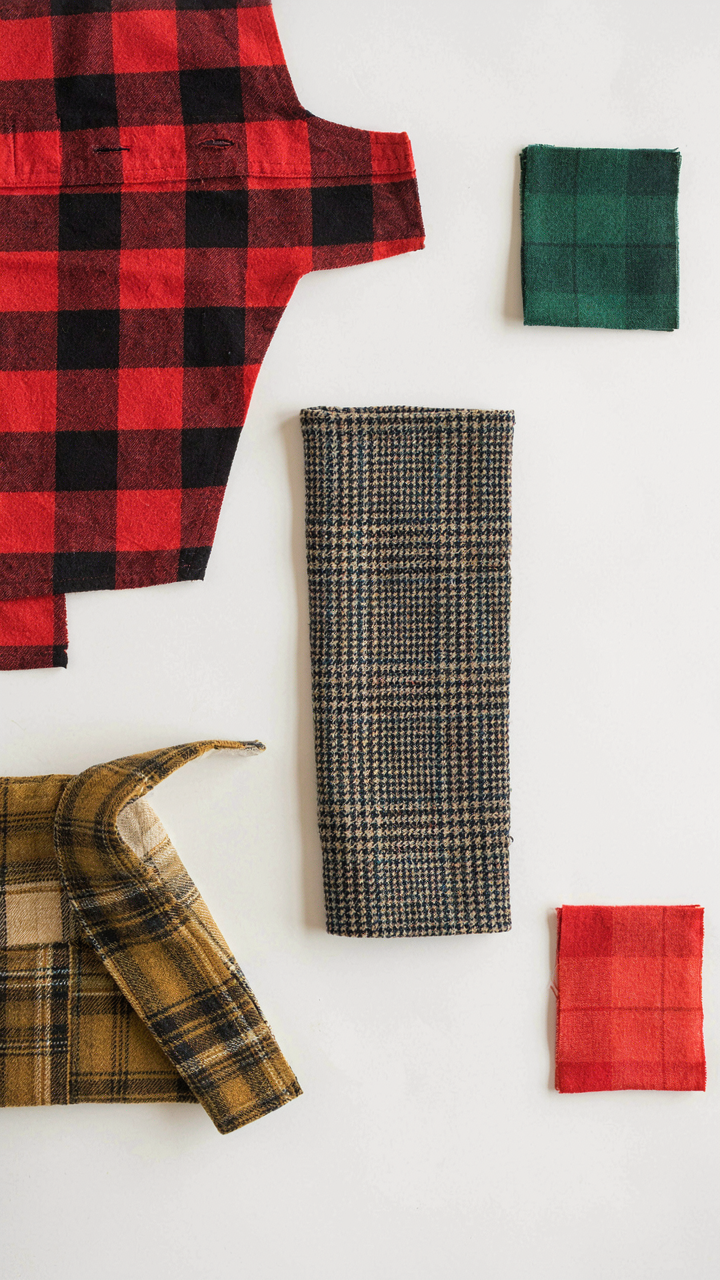
You want this to feel effortless because you’re afraid of wasting fabric or time on projects that don’t compound. Here’s the mechanism: architecture uses modularity to scale complexity without redesigning every piece. Apply that same logic to flannel. Cut your shirt into standardized components—front panels, back panels, sleeve segments, collar strips—before deciding what to build. This removes the paralysis of staring at a whole garment.
Flannel’s weight and weave make it ideal for modular work. Unlike delicate cottons, flannel tolerates repeated seaming and holds structure across multiple pieces. Organize these components by size and condition, not by nostalgic attachment to the original shirt. You’re treating fabric inventory like a builder treats lumber. The grid isn’t decorative. It’s a thinking tool that forces you to see what you actually have versus what you’re imagining.
Mixing And Matching Across Projects
Common advice says to plan one project at a time. That’s lazy thinking. Build a component library where a sleeve segment from one upcycle becomes a patch pocket for the next project, where back panels transform into tote bag panels, where collar strips become binding. This requires storing components by dimension and condition, not by shirt origin.
The compounding happens when you stop seeing individual shirts and start seeing a growing inventory of standardized pieces. A nine-inch by twelve-inch front panel works as a clutch base, a pillow front, or a jacket patch. Keep a simple document: piece dimensions, color, weight rating. When you start a new project, you check inventory first. You’ll cut project time by half because fabrication decisions are already made. This workflow separates people who upcycle occasionally from those who build actual product lines from discarded flannel.
Flannel Shirt Refashion: The Art Of Intentional Imperfection

Visible Mending As Design Choice
You want permission to stop hiding your repairs. Most people view a patched flannel as broken and cheap. The actual mechanism is inverted: a deliberate patch signals you value durability over disposal. This flips the status signal from “I can afford new” to “I make intentional choices.” Visible mending comes from Japanese sashiko and Korean pojagi traditions, where repair became textile art. The stitching itself becomes the ornament, not camouflage.
The work happens in thread selection and stitch placement, not concealment. Use contrasting thread colors—cream on red plaid, indigo on cream flannel. Sashiko uses running stitches in geometric patterns; you can apply the same logic to a flannel elbow patch or shoulder reinforcement. The stitching needs to be even and deliberate, which takes practice but requires no special equipment. When the mending looks intentional, observers read it as design. When it looks accidental, they read it as failure.
Techniques For Purposeful, Imperfect Alterations
Most upcycling advice tells you to aim for perfection. That defeats the entire purpose of refashioning. The mechanism here is constraint-driven creativity: imperfect alteration forces you to problem-solve within the material’s actual properties rather than against them. Flannel frays, wrinkles, and shrinks. Work with those facts, not against them.
- Raw Edge Seams: Cut panels and leave edges unhemmed so flannel naturally frays over time. This creates texture and movement that standard hems prevent. The fraying is the design.
- Uneven Hemming: Use hand stitching with visible thread rather than machine work. Slight irregularity in stitch length reads as handmade, not sloppy. This signals craft over mass production.
- Layered Patching: Stack multiple flannel scraps over damage instead of single-patch repair. Each layer offset slightly creates depth and visual interest while distributing reinforcement.
- Asymmetrical Cuts: Remove sleeves at different lengths or cut necklines off-center. Flannel’s weight naturally hangs differently, so asymmetry works mechanically, not just visually.
- Thread Knots Visible: Leave knot ends on the surface rather than burying them inside seams. Knots become tactile markers of the alteration’s presence and intentionality.
The imperfection isn’t decoration—it’s evidence of actual use. When you leave a stitch visible or let an edge fray, you’re showing the flannel’s real behavior. This honesty is what separates refashioned pieces from failed attempts at perfection. Start with one visible element: a raw edge or a contrasting patch. Let that become the anchor for the rest of your alteration choices.
The Flannel DIY Algorithm: Iteration Over Ideation
Start With Scraps, Not Pinterest
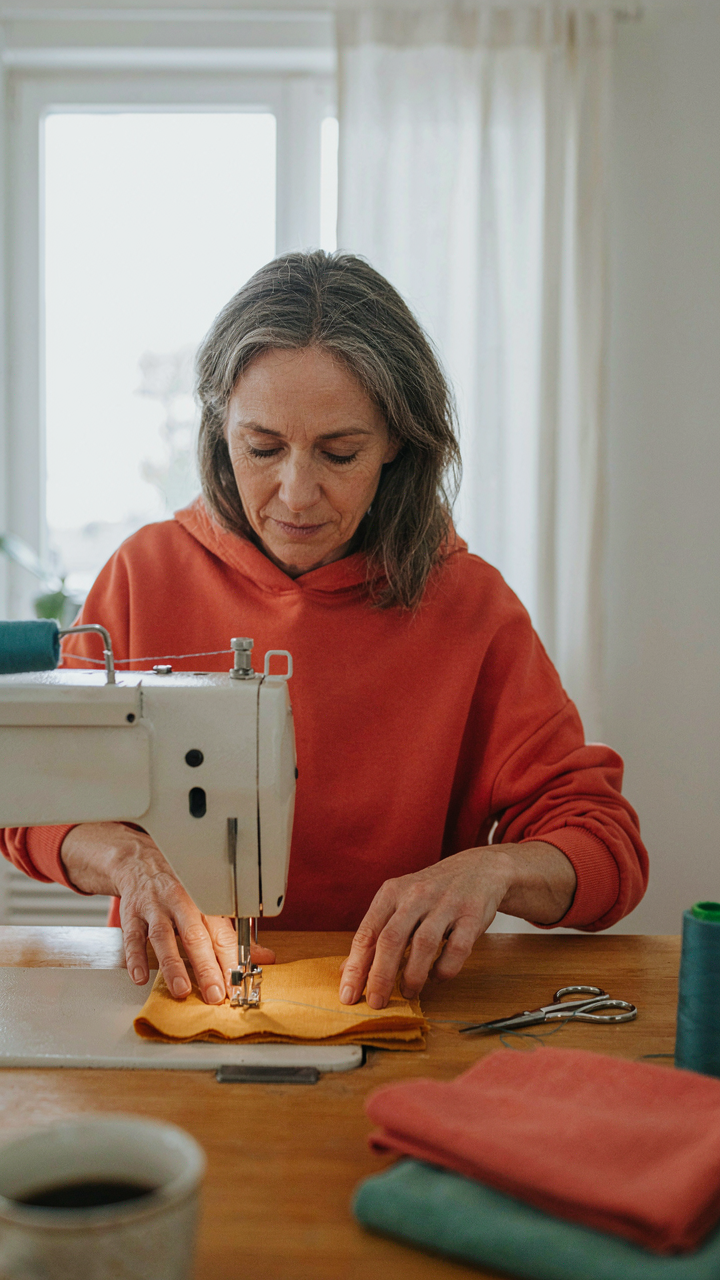
You want permission to skip the planning phase and jump straight to the finished piece. That’s not how flannel upcycles work. The mechanism here is borrowed from industrial prototyping: rapid iteration beats perfect design. Cut small test pieces from your flannel scraps first. Sew a seam, check the tension, adjust the stitch length. Fail on a six-inch square, not your final garment. Most people waste time sketching instead of testing fabric behavior.
The actual work happens in the material. Flannel has a nap, which means direction matters. Light hits the fabric differently depending on which way the nap runs. Cut one test strip with the nap going down, another going up. Sew them together and see which direction the color reads better against your body. This single decision changes whether your upcycle looks intentional or accidental. Spend thirty minutes on fabric scraps and you eliminate weeks of regret.
Design Through Controlled Failure
Successive failures aren’t setbacks, they’re data. Each failed seam teaches you something concrete about tension, presser foot pressure, or fabric weight. The common advice says to “learn as you go,” which is vague nonsense. What actually matters is documenting what broke and why. Did the flannel pucker? Your tension was too tight or the needle was dull. Did the thread snap? Your stitch length was too small for the weight of the fabric.
Build a simple system: attempt one modification per garment. If you’re turning a flannel into a vest, first attempt teaches you armhole sizing. Second attempt teaches you seam allowance depth. Third attempt teaches you button placement. Each singular focus prevents decision overload and creates measurable progress. Stop after the third attempt if the garment works. More iteration after that is refinement, not learning. Refinement happens on the next upcycle, not the current one.
Upcycle Shirt To Statement: Applying The Military Principle Of Economy Of Force

Do More With Less Fabric
You want to look intentional without looking like you tried hard. That’s the real game. Military strategy calls this economy of force: maximum impact using minimum resources. A flannel shirt upcycle works the same way. You don’t need to dismantle the entire garment. One surgical cut, one focal point, transforms the piece from worn to considered. The mechanism is specificity. Generic modifications blend into background noise. Precise edits command attention.
A chest pocket becomes a statement when you crop the shirt into a vest. Sleeve cuffs become design elements when you convert them into arm bands or headwear. The original seams provide structure you don’t need to rebuild. You’re not creating from scratch. You’re revealing what was already there by removing what wasn’t working.
Strategic Placement Hits Harder Than Volume
Most upcycle advice says add more. Add patches, add embroidery, add layers. That’s wrong. Overcrowding kills impact. One well-placed element outperforms scattered decoration across the shirt. Cut flannel into a half-vest and leave the back open. Add a single contrast panel down the center front instead of patchwork chaos. The eye moves where the seams lead. Control the seams, and you control what people notice.
Placement follows function first, aesthetics second. If you’re converting a flannel into a cropped overshirt, the button placement determines visual weight. Move buttons to the side instead of center. Expose the plaid pattern asymmetrically. These aren’t random moves. Each choice removes visual competition and forces focus onto the detail that matters. The result reads as designed, not salvaged.
The Upcycled Dress Axiom: Beyond The Expected Form

When The Shirt Becomes The Skeleton
You want permission to throw away less stuff without admitting you just don’t want to waste money. Here’s the mechanism: a flannel shirt has structural elements already built in—front placket, collar stand, sleeve cap. These aren’t decorative. They’re load-bearing. In garment construction, we call this pattern recognition. The shirt’s existing seams become the armature for a completely different silhouette. Instead of deconstructing randomly, you’re identifying which structural lines stay and which vanish. The front panels become a dress bodice. The sleeves disappear entirely or transform into straps. The back yoke anchors a gathered skirt. You’re not making something new from scraps. You’re performing controlled demolition on one garment to birth another.
The collar and front buttons rarely survive this transition intact, and that’s fine. Most people think upcycling means keeping recognizable pieces. That’s lazy. Strip the flannel down to its fabric value and its seam geometry. A men’s large flannel typically yields enough linear yardage for a simple A-line dress or wrap silhouette when you ignore the original form entirely. Measure your fabric state—not the garment state. Cut pattern pieces straight from the flannel body and sleeves. Sew a dress that fits your actual proportions, not the original shirt’s box cut.
Asymmetry As A Design Statement
Conventional advice says match patterns and keep things balanced. That advice exists because most people fear looking wrong. Asymmetrical flannel dresses work because the pattern already breaks visual rhythm. Plaid and buffalo check have inherent busy-ness. Symmetry actually makes them harder to wear. One shoulder seam sits higher than the other. The hem drops unevenly. The button closure runs off-center. This isn’t a flaw. It’s visual compensation.
Asymmetrical cuts came from Japanese fashion in the 1980s and 90s, where designers abandoned Western symmetry rules. The mechanism is simple: your eye stops searching for balance and starts tracking the line instead. Use the flannel’s existing pattern breaks to guide uneven seam placement. Cut one armhole deeper than the other. Let the plaid dictate the hemline height by following a color stripe that runs diagonal. The dress reads as intentional, not mangled. Fit a bias tape facing on the raw asymmetrical neckline and call it done.
Upcycling Clothes Pattern: The “No Pattern” Manifesto
Cut Directly From The Garment You Own
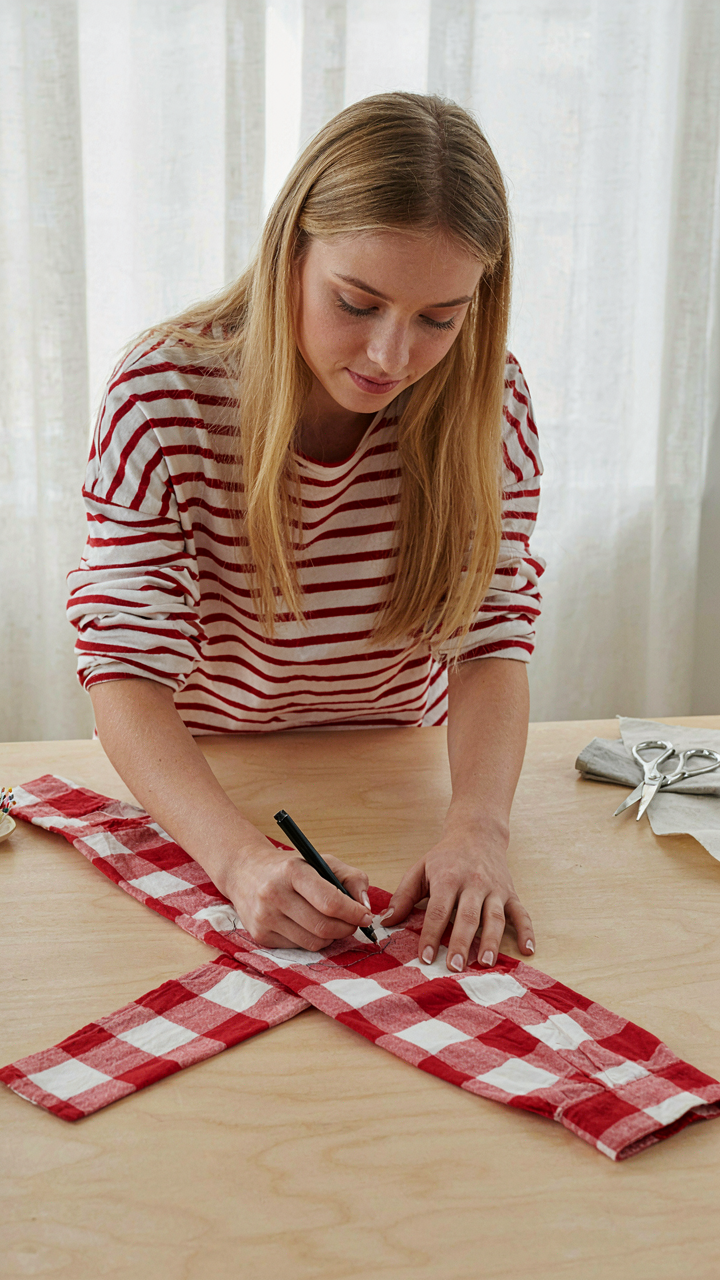
You want permission to skip the intimidating pattern step because you’re afraid you’ll mess it up. Here’s the mechanism: patterns exist to standardize production at scale. They’re unnecessary constraints when you’re working with a single piece of fabric you already own. Draping works because you’re using gravity and the actual garment’s geometry as your template. Lay the flannel flat, place your target piece on top, and trace around what already exists. You’re not designing from nothing. You’re copying what works.
The flannel shirt’s structure becomes your baseline. If you’re converting sleeves into a pillow cover, you drape the sleeve in its finished position and cut around it. The seams stay intact where they provide structure. You lose nothing by abandoning the pattern because the garment has already done the engineering for you. Cut conservatively on the first pass. You can always remove more fabric. You cannot add it back.
Intuition Beats Instructions When You Know The Rules
Everyone says “just trust your instincts” which is useless advice masquerading as permission. Real intuition only works after you understand how fabric behaves and how seams function. Intuitive design means you’ve internalized enough mechanics to skip the middle step of written directions. A flannel shirt has predictable stress points: armholes, collar seams, side seams. You cut away from those or reinforce them because you understand why they exist, not because someone told you to.
The no-pattern approach works best when you’re not trying to create fitted silhouettes. Blankets, tote bags, throw pillows, and quilts forgive dimensional variance. Measuring twice and cutting once still applies. The difference is you’re measuring against the flannel itself, not transferring markings from paper. Start by identifying which parts of the shirt have value. Keep the pockets. Keep the buttonband. Use the existing construction as your guide system, then cut your new shape around those anchors.
Flannel Ideas For Winter: Maximizing Material Utility

Layering For Insulation And Depth
You want winter layering to look intentional instead of like you grabbed everything at once. The real mechanism is thermal resistance combined with visual hierarchy. Flannel works because its cotton-blend weave traps air without bulk. Wear it as a mid-layer under a heavier jacket, not over one. The shirt becomes functional infrastructure, not decoration. Button it halfway or leave it open over a fitted base layer to create definition instead of shapelessness.
Most advice tells you to “just layer more.” That misses the point. Flannel’s weight means you can skip thicker synthetics altogether. The fabric breathes while holding heat, which prevents the clammy feeling of trapped moisture. Tuck the flannel into high-waisted pants or leave the bottom unbuttoned and tie it at the waist to control volume. This keeps the silhouette readable under an outer layer instead of collapsing into formless bulk.
What To Make From Scraps And Remnants
You keep leftover fabric because throwing it away feels wasteful, but waste happens when scraps sit unused in a drawer. The economics of material usage demand you convert remnants into tools you’ll actually wear. Flannel scraps are dense enough to hold structure, so they become functional items instead of decorative craft projects. Calculate usage first, then commit to making one piece per shirt you cut.
- Neck warmers or gaiter tubes: Sew two rectangular flannel pieces into a seamless loop. Flannel’s weight prevents bunching, and you get 6-8 wears per scrap before washing.
- Wrist cuffs for layering: Cut 3-inch bands, fold them in half, and stitch closed. These regulate heat loss without the cost of dedicated base layer tops.
- Headband or ear warmers: A 4-by-18-inch strip folded and stitched becomes functional winter gear. Flannel stays put without slipping like thinner fabrics.
- Bag linings or small pouches: Flannel’s texture grips contents in place. A shirt provides enough scrap material for a pouch lining and a small coin bag.
- Elbow patches for repair: Use flannel pieces to reinforce worn sweater elbows. The fabric bonds easily with fabric glue or simple stitching and adds visual interest.
The remnant conversion only works if you measure twice and cut once. Most people make scrap projects that never leave the house because the execution was sloppy. Choose one specific item, source a matching thread, and spend 30 minutes on construction instead of spreading effort across five half-finished pieces. A finished wrist cuff gets worn; an experiment does not.
The Scarcity Advantage: Why Limited Resources Drive Innovation

When You Can’t Buy, You Build
You’re here because you sense that upcycling a flannel shirt feels smarter than buying another one, and you want permission to feel good about it. Here’s the real mechanism: constraints force specificity. Economics calls this the scarcity principle. When you have limited material, you stop making generic choices and start solving for actual fit, actual function, actual taste. A flannel shirt isn’t a blank canvas waiting for inspiration. It’s a fixed problem with edges you must work within. That friction creates better output than infinite options ever could.
When material runs low, waste becomes visible. You can’t throw away a sleeve. You can’t discard the collar. You stop thinking like a consumer browsing options and start thinking like a designer allocating resources. A whole shirt forces decisions. Do you keep the front? Do you deconstruct it completely? Do you preserve the buttons or harvest them for another project? The constraint isn’t limiting you. It’s clarifying what you actually want to make. You either make something that uses every part or you don’t make it at all.
Creator Logic Replaces Consumer Logic
The shift from consumer to creator isn’t a mindset hack. It’s a structural change in how you evaluate a flannel shirt before you touch it. Consumers ask: “Will I wear this?” Creators ask: “What can this become?” Those are different questions with different answers. A consumer sees a worn flannel and calculates its remaining lifespan as a shirt. A creator sees material, weight, weave pattern, and color palette. They’re looking at different objects entirely. This isn’t about feeling more creative. It’s about literally perceiving different properties because you’re solving for a different output.
The protocol is simple: inventory the actual assets before deciding on the project. Measure the dimensions. Note the fabric weight and weave. Check the button quality. Examine seams for strength. Identify areas of wear or damage. Only then decide whether this flannel becomes a cropped top, a patchwork component, a lined vest, or something else. You’re not discovering your creativity. You’re gathering data and matching it to feasible solutions. Creation follows constraint, not inspiration.
The True Cost Isn’t What You Spent, But The Creative Capital You Failed To Develop

Every flannel shirt you throw away is a decision you made to stay comfortable instead of curious. Upcycling isn’t about sustainability theater or saving money. It’s about training your brain to see potential where others see garbage. That skill transfers to every part of your life. Today, grab one old flannel from your closet and cut it into three pieces. Don’t overthink it. Just move. The person who creates is never the person who consumes passively.