
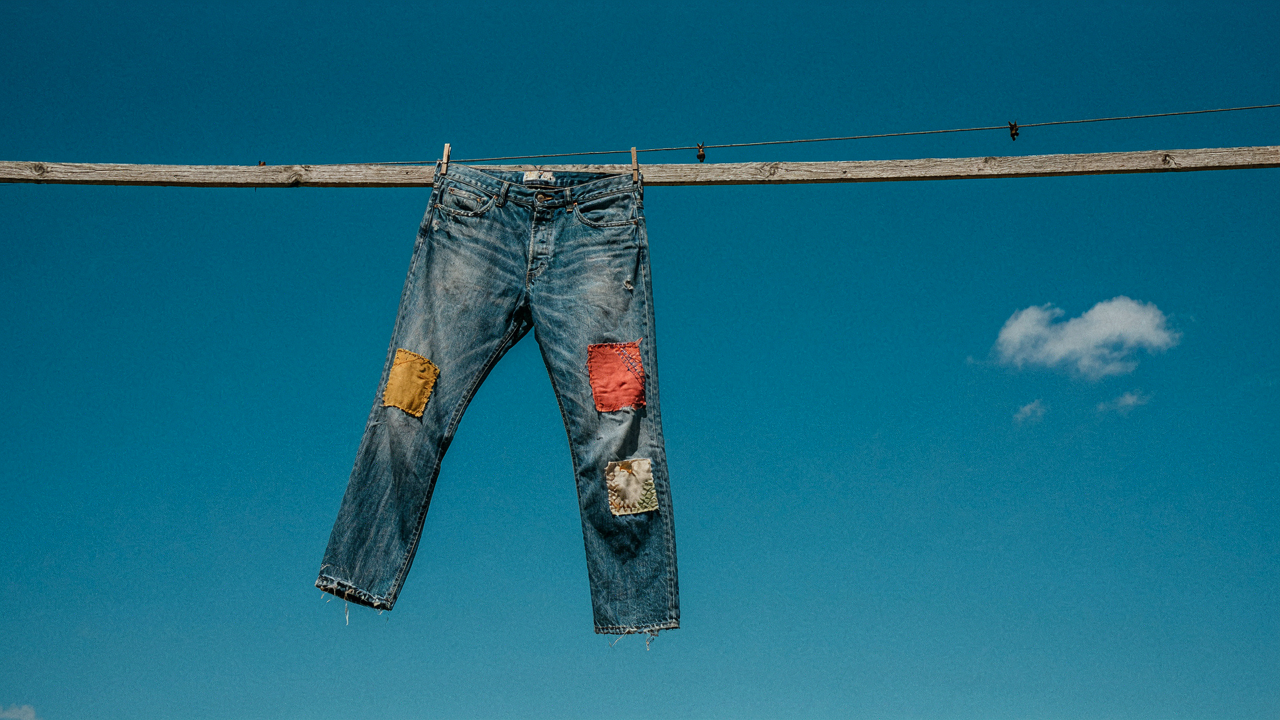
The Illusion Of Flawless Fabrication

What Mass Production Sold You
You want to believe perfection is the baseline because admitting otherwise means your clothes were designed to fail. The mechanism is simple: industrial manufacturing scaled up the fantasy of the unblemished product. Once something was made en masse, uniformity became the status signal. Damage meant failure. Wear meant disposal.
This logic is backwards. Every textile, seam, and fiber degrades under use. The only difference between your jeans and a museum piece is time. Mass production didn’t eliminate wear. It made you ashamed of it. Visible mending rejects this false standard by treating repair as the honest endpoint of ownership, not a mark of poverty.
The Truth About Worn Cloth

Wear is data. Fabric tells you exactly where you live in your clothes. The breakdown patterns in your elbows, knees, and cuffs map your actual behavior onto material. This isn’t decay. It’s evidence.
When you repair a garment visibly, you’re not hiding that evidence. You’re reading it. You’re saying this thing lasted long enough to break, and I valued it enough to fix it, not trash it. That’s the opposite of the throwaway premise. The repair becomes the honest next chapter, not a cosmetic cover-up or an admission of defeat.

Sashiko Pattern: A Stoic’s Stitch
Durability Built Into The Grid
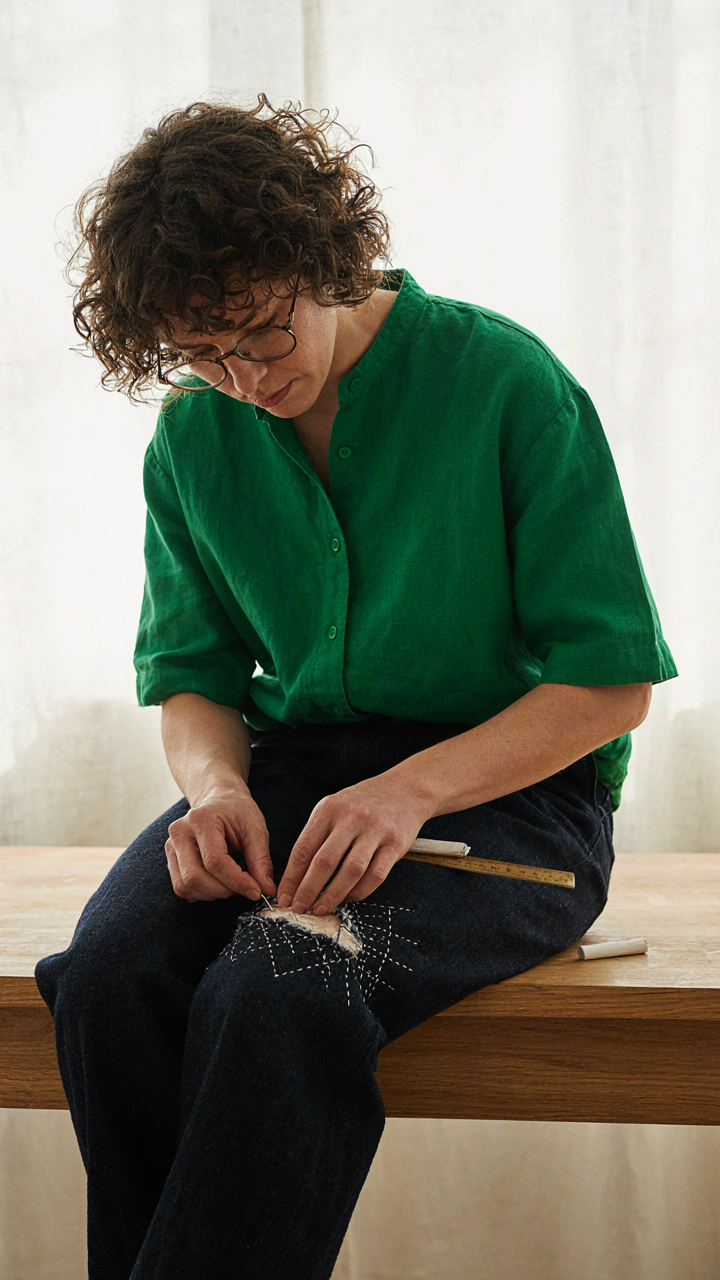
You want the repair to look intentional because you don’t want to admit the garment failed you. Sashiko works because it borrows from structural engineering: load distribution. Instead of concentrating stress at a single repair point, sashiko spreads force across a geometric field of parallel stitches. Each line reinforces the others. Japanese garment makers understood this five centuries before industrial testing confirmed it. The pattern isn’t decoration masking a weak fix. The pattern is the fix.
Sashiko threads run perpendicular and parallel in grids or diagonal arrangements. The density of stitches, not thread color, determines durability. Most people think visible mending is about making something beautiful. It’s about making something last. You stitch through all layers consistently, creating a fabric within the fabric. The repetition compounds the hold. One thread breaks, the grid absorbs the load. This is why sashiko patches on work pants outperform invisible repairs on dress shirts.
The Mechanic Of Repetition
Repetitive action builds precision faster than conscious effort. Neuroscience calls this procedural memory. Your hands learn the stitch spacing before your brain finishes thinking about it. This matters because loose, irregular sashiko stitches fail the same way invisible repairs fail. Tight, consistent stitches create the structural advantage sashiko promises. The meditation aspect people romanticize is just the side effect of training your hands to execute the same motion fifty times without variation.
Set a stitch length and commit to it. Most sashiko uses quarter-inch spacing, though fabric weight and thread thickness demand adjustment. Use a ruler for the first row. Your eye learns the rhythm by row three or four. The pattern becomes automatic. This automation is the goal. When your hands move without hesitation, you maintain tension consistency. Tension consistency prevents gaps where stress concentrates. Mark your grid lightly with chalk, stitch in straight lines, and stop checking your work. The consistency of execution determines whether this repair outlasts the original seam.
The Boro Bricolage Method
When Constraints Become Your Design System
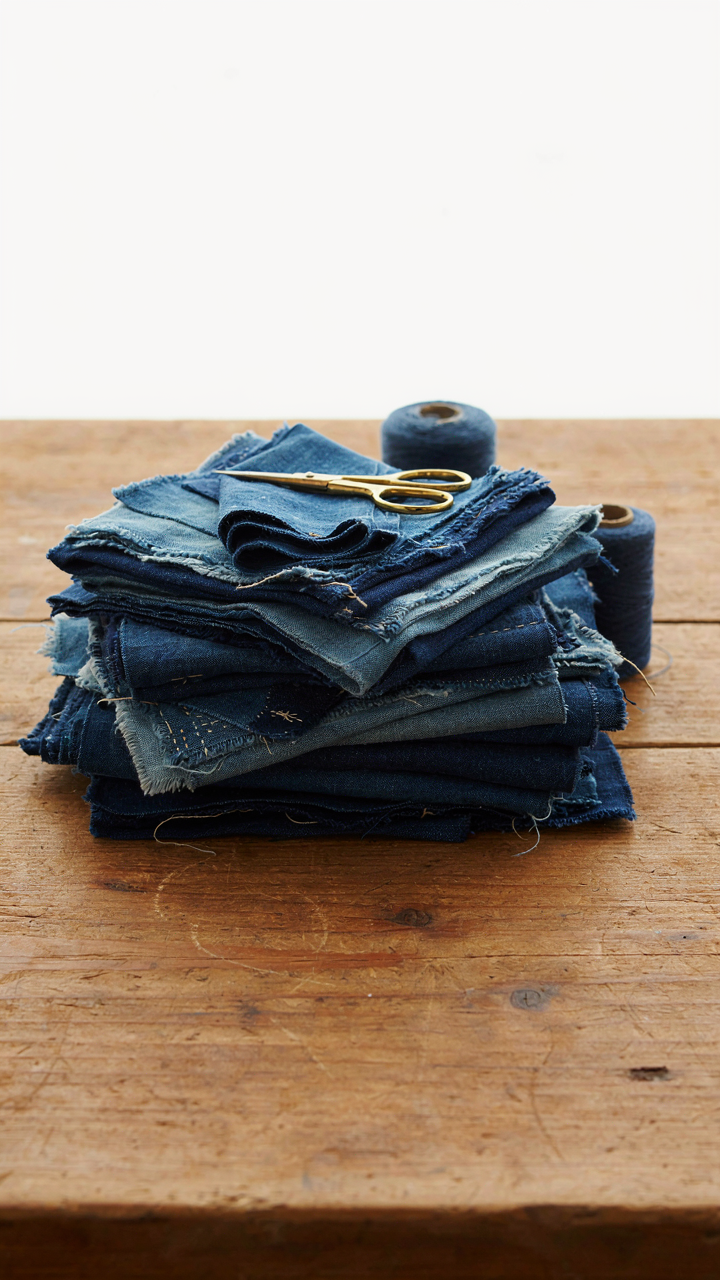
You want this to feel intentional because admitting you’re broke or wasteful feels worse than showing off resourcefulness. Here’s the mechanism: boro—Japanese textile repair born from Edo period poverty—operates on scarcity economics. When material is scarce, you can’t throw fabric away. You stack patches on patches, layer indigo-dyed cotton scraps until the repair becomes denser than the original garment. This isn’t decoration masquerading as function. The patches serve load-bearing duty. Multiple layers at stress points actually extend garment life beyond what a single repair could achieve. You’re solving a real problem with visible evidence.
Start by identifying high-wear zones on your garment: inner thighs, cuff edges, underarms, pocket corners. Cut patches from contrasting fabric—old jeans, linen scraps, worn cotton sheets. Layer them deliberately. Use running stitch or sashiko (geometric hand-stitching) to secure each patch through all layers. Don’t aim for invisibility. Stack until you feel structural integrity return to that zone. The patch itself becomes the garment’s honest documentation of how you actually use it.
The Repair As Biographical Record
Your clothes tell the story of where you’ve been and what you’ve done, but only if you stop hiding the evidence. Creating garment narrative through visible repair requires a single principle: consistency of intention across repairs. Boro masters didn’t vary technique randomly. They developed a visual vocabulary—specific stitch patterns, predictable fabric choices, recognizable color palettes—then applied it across multiple pieces over decades. Your repairs become readable once the viewer understands your system.
Choose one primary mending approach and repeat it. If you use sashiko stitching with white thread on denim, do that for every major repair on that jacket. If you patch with linen scraps in earth tones, maintain that across the garment and future repairs. Over two or three years, someone wearing that piece accumulates visible repair history that reads as deliberate rather than desperate. The repairs communicate: this person values function over fashion, extends rather than discards, and commits to their tools and materials.
Visible Mending Embroidery: Beyond Decoration

Thread Reinforcement Where Fibers Fail
You want visible mending to look intentional because admitting you just fixed something cheap feels worse than owning the repair outright. Here’s the mechanism: embroidery isn’t decoration layered on top of a weak fix. It’s structural reinforcement disguised as design. Borrow from textile engineering and think of thread density as load distribution. The more threads you pack into a damaged zone, the more you spread stress across a wider surface area instead of concentrating it at a single failure point. This is why Japanese boro mending used overlapping running stitches, not single ornamental lines.
The common advice treats embroidery as visual cover-up. Wrong. Every stitch you add redistributes tension. When fabric frays at an edge, a single thread repair fails because all stress concentrates along one line. But cross-hatched embroidery stitches interlock fibers in multiple directions, forcing damage to propagate slower. The stitch pattern matters more than the thread color. Use running stitch, backstitch, or satin stitch depending on the tear direction. For horizontal tears, run stitches vertically across the damage zone to catch fibers pulling apart laterally.
Pattern Density As Durability Protocol
Embroidery density determines how long your repair lasts. The denser the stitch pattern, the more mechanical grip you have on damaged fibers. This isn’t aesthetic choice, it’s material science. A loose decorative pattern lets fabric continue degrading underneath. A tight pattern compresses and binds fibers together, slowing further unraveling.
Map your stitch density to the fabric weight and damage type. Heavy wools need looser patterns because the base fiber is already strong, and tight embroidery can pucker. Lightweight cotton or linen needs dense patterns because individual fibers are thinner and weaker. For active-wear pieces, plan for three to five stitches per inch minimum within the damaged zone. This creates enough friction to prevent the tear from expanding during regular wear or washing. Execute your pattern by marking grid lines lightly on fabric first, then filling systematically to maintain consistency and ensure no weak zones slip through.
Patchwork Jeans With Sashiko Stitching: The Antifragile Wardrobe

When Damage Becomes Stronger
You want this because it lets you own the narrative around wear. Most people hide damage or replace the item. You’re doing neither, which signals you understand something they don’t. Taleb’s antifragility in systems theory means an object improves under stress rather than merely surviving it. Sashiko stitching and strategic patching do exactly that: each repair cycle strengthens the garment’s structural integrity while making the wear visible and intentional. The fabric doesn’t degrade into shabby. It compounds into armor.
Traditional sashiko uses diagonal and geometric patterns that distribute tension across a larger surface area than standard repairs. When you patch jeans at stress points like the inner thigh or back pocket, you’re not hiding failure. You’re reinforcing the failure zone so it becomes harder to fail again. The stitch pattern itself becomes evidence of use, not weakness. This is the opposite of planned obsolescence. You’re building planned resilience.
How Stress Hardens Fabric
Most visible mending advice treats repairs as decoration. That’s incomplete. The real mechanism is mechanical: repeated stress on stitched areas creates tighter fiber compression and distributes load across more threads than the original weave could handle. You’re not just patching. You’re restructuring how the fabric bears weight.
- Strategic placement over high-stress zones: Inner thighs, back pockets, and hem lines fail first because they absorb the most movement. Patch these areas before failure spreads, creating reinforced zones that outlast surrounding fabric.
- Thread density in sashiko patterns: Using thicker thread and closer stitching intervals creates a denser matrix than factory seams. This increases tensile strength at the repair site, making that area more durable than it was originally.
- Layered patching technique: Applying multiple fabric layers beneath the visible patch, with each layer offset slightly, distributes stress across more material. Each new patch makes the garment handle future stress better.
- Contrasting thread as wear indicator: Using thread color that contrasts with the base fabric lets you track stress patterns. New visible wear on the patch tells you exactly where the next failure point will occur, so you can reinforce proactively.
- Geometric stitch patterns for force distribution: Diagonal and cross-hatched stitching patterns spread tensile load across multiple directions simultaneously, unlike linear stitching. This mimics how engineered textiles are designed in performance gear.
Jeans that have been visibly mended three times are functionally superior to new jeans because the repair zones have absorbed impact and stress that would have torn a virgin seam. You’re not preserving an old object. You’re building a stronger one through intentional damage recovery.
Creative Mending: The Systems Thinking Approach

Weak Points As Design Opportunities
You want visible mending to feel like a choice, not damage control. Here’s the mechanism: every garment fails predictably. Cuffs fray. Seams split at stress points. Hems tear. Instead of hiding failure, you acknowledge where tension lives and make that failure the focal point. This inverts the problem. The weak point becomes intentional.
Borrow systems thinking from engineering: identify the stress concentration. In textiles, this means recognizing where fibers experience repeated load. Elbow patches exist because elbows bend thousands of times. Knee reinforcements exist because knees absorb impact. When you mend these zones visibly, you’re not pretending the damage is fake. You’re naming the actual function of the garment and making that function visible through the repair material and stitch choice.
Repairs That Anchor The Garment Structure
Most advice says to match your mend to your garment. That’s incomplete. The real move is to treat repairs as structural anchors that clarify the garment’s actual purpose. A heavy linen stitch on a cotton work shirt doesn’t blend. It announces function. The repair becomes evidence of how the garment is actually used, not an apology for wear.
When you integrate a mend into overall structure, you’re deciding whether it reinforces the original design intent or shifts it. A contrasting thread repair on a seam that carries load communicates durability as a feature. Placement matters more than material matching. Repairs at stress points, done with intention, read as structural upgrade rather than fix. This shift in perception happens because the viewer sees the mend as part of the garment’s job description, not its failure.
Upcycled Boro Patchwork Embroidery: The Personal Legend
Textile Archaeology Built Into Cloth
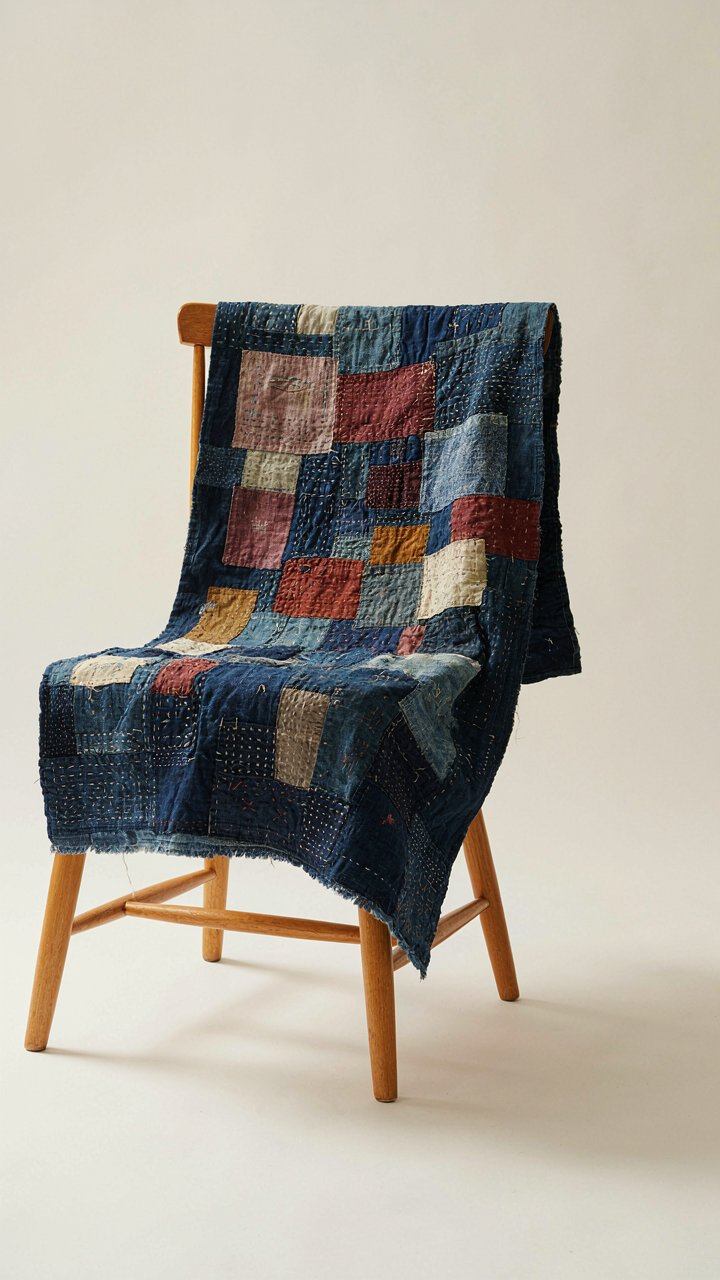
You want proof that you’re the kind of person who transforms instead of discards. Here’s the mechanism: each visible mend acts like a layer in archaeological stratigraphy. You’re building a physical timeline. Boro, the Japanese indigo-dyed cotton technique, used this principle for centuries. Patches weren’t hidden. They accumulated visibly, creating a map of use, repair, and survival. The garment became a document. Today, applying this same logic means treating each patch as intentional evidence of your relationship with an object, not damage control.
The difference between hiding a tear and making it visible is ownership. Hidden repairs feel like covering a mistake. Visible repairs narrate survival. When you use contrasting thread, layered fabric patches, and deliberate stitching patterns over worn areas, you force yourself to commit. The object stops being something you tolerate and becomes something you’ve invested in maintaining. This shift in mindset changes how you treat it afterward. The garment now has earned status through accumulated care.
When Repair Becomes Artifact
The common advice is that visible mending should look “artful” or “beautiful.” That’s wrong. It should look purposeful. The real mechanism is functional continuity. You’re not creating an heirloom through decoration. You’re creating one through evidence of utility. Each patch records a moment when something nearly failed and you chose to keep it. Boro jackets worn for generations show multiple repair layers in different indigo shades and thread weights. They’re readable. A future owner can see how you solved specific problems.
To build an actual heirloom, document your repairs. Date patches with a small hand-stitched year or initials on the underside. Use thread colors consistent across multiple repairs so the mends build visual momentum. When you pass the garment forward, it carries the story of your hands’ decisions. The object gains value not from appearance, but from the fact that someone cared enough to mend it twice, then three times, instead of replacing it. That’s the only mechanism that creates heirlooms.
Mending Clothes: An Economic Imperative
The Math Of Keeping Versus Discarding
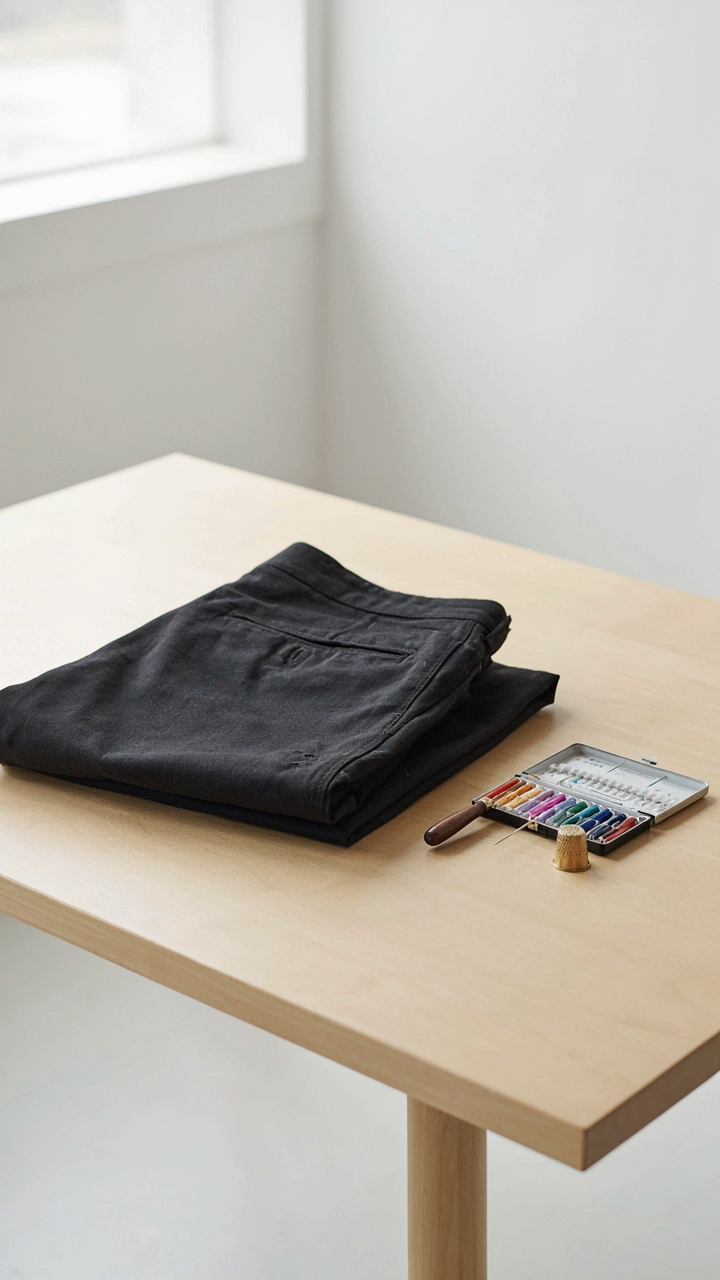
You want permission to feel good about not throwing things away. Here’s the real mechanism: repair only wins when the cost of materials and labor stays below the replacement price, and you actually wear the item long enough to recoup that investment. Economics calls this the break-even point. With visible mending, you shift the calculation because you’re not hiding the repair—you’re making it a design choice that extends the item’s cultural lifespan, not just its functional one.
A quality sweater costs thirty to eighty dollars new. A patch kit costs three to five dollars, thread costs nothing if you already have it. You recoup materials in one repair. The hidden cost is your time. If you spend two hours patching and wear that sweater another six months, you’ve effectively paid two to four dollars per month to keep it—far cheaper than replacement cycles. The equation changes if you mend in a way that signals intentionality rather than poverty. That’s when the garment gains perceived value instead of losing it.
Building Capital In Skills, Not Landfills
The advice to “invest in quality basics” misses the real leverage. You don’t build wealth by buying better things. You build it by developing skills that make cheap things last and look deliberate. Visible mending teaches you material literacy—how fibers behave, where garments fail first, why certain fabrics hold stitches and others don’t. These skills compound across everything you own.
Every repair you complete reduces your dependence on replacement consumption. You stop viewing a torn seam as the item’s death sentence. You develop a practiced hand with needle and thread. Within six to twelve months of regular mending, you see clothing differently. You spot damage before it spreads. You understand patch placement and thread color selection as design problems, not damage control. This shifts you from consumer to curator. That’s where the economic break happens.
Visible Mending Ideas: The True Mark Of Distinction

The Uniform Problem
You want permission to be different without the risk of looking poor. That’s the real tension. Visible mending offers exactly that because it operates on a scarcity principle borrowed from economics: intentionality signals value. Mass production erased the mark of human choice. A repair you display reverses that equation entirely. It proves you selected this object, this care, this outcome.
The mechanism is simple. Fast fashion depends on replacement cycles, not longevity. When you repair visibly, you’re not participating in that cycle. You’re signaling that the object itself matters more than the newness of it. This reads as distinction because it is distinction. You’ve made a choice the default culture didn’t offer you.
The Intentionality Test
Purposeful choice means the repair must look deliberate, not accidental or cheap. This requires precision. A crude stitch that looks like a mistake undermines the entire signal. The repair needs visible structure: even spacing, consistent tension, honest materials. Japanese sashiko and Korean pojagi both demonstrate this. They didn’t hide repairs because hiding them would’ve suggested shame. They made repairs beautiful through commitment to technique.
The practical mechanism: choose stitching styles with defined patterns, use contrasting thread colors intentionally, and maintain symmetry even on asymmetrical garments. Adopt a single mending technique and master it so well the repair looks controlled rather than circumstantial. The viewer should see choice, discipline, and standards in every stitch.
The Real Flaw Isn’t In The Fabric; It’s In Your Fear Of Standing Out
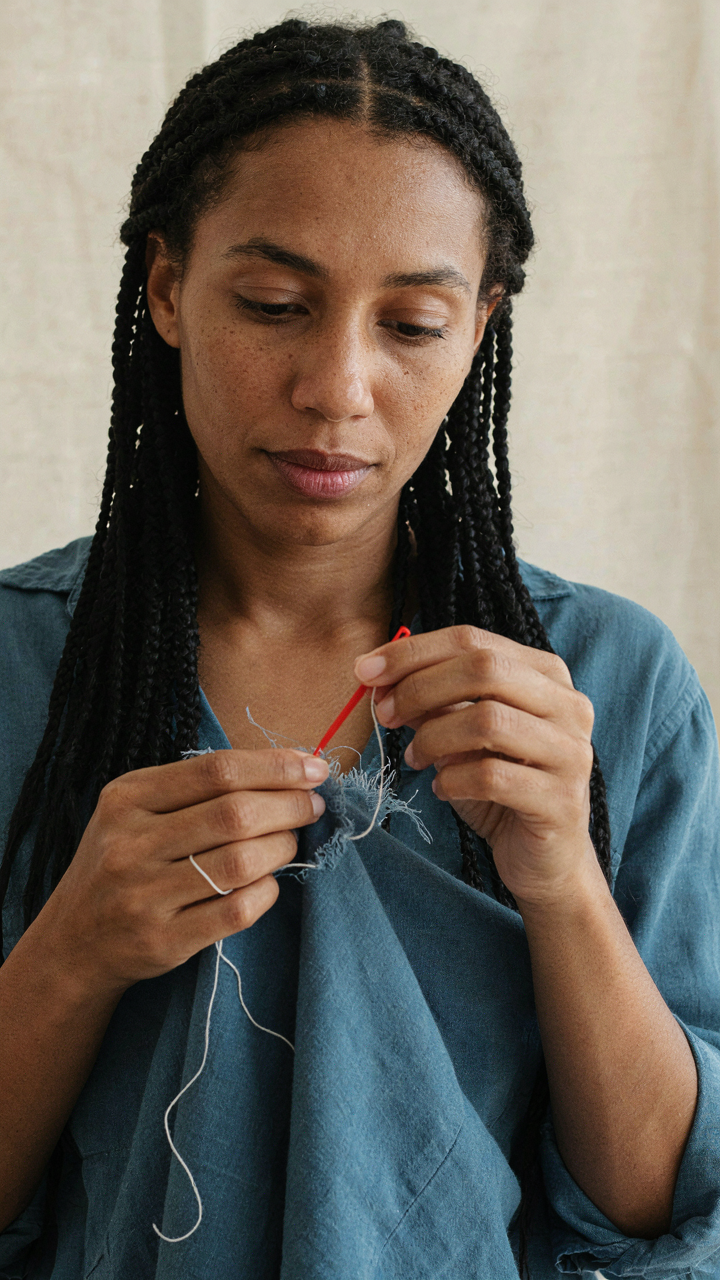
Most people see a torn shirt and think broken. You’re trained to hide damage, to pretend imperfection doesn’t exist. Visible mending flips this. It turns a flaw into a statement. The shift isn’t technical, it’s psychological. You stop apologizing for wear and start owning it. Pick one damaged item today. Grab a needle and contrasting thread. Make the repair visible. What you’ll discover is that people don’t judge the mend, they judge your confidence in keeping it.