

The Edited Eye: Why Less Clothing Is More

The Myth Of Variety
You want options because you’re afraid one choice will look wrong. That’s the real problem. But here’s the mechanism: in studio photography, every element competes for attention. Cognitive load theory—borrowed from psychology—maps directly onto visual composition. Each piece of clothing is a competing stimulus. The viewer’s eye fractures. A busy outfit destroys the editorial impact you’re trying to build. Simplicity isn’t boring. It’s the opposite of noise.
Most advice says “try different styles and see what works.” That’s lazy. What actually works is subtractive design. Start with a complete outfit, then remove one piece at a time. Stop when the image loses coherence. That final state—where nothing else can go—is your studio outfit. Not because it’s minimal for its own sake, but because every element now carries weight.
Remove First, Add Never

Photographers used to build studio looks backward: they’d strip a model to basics, then add only what served the shot’s concept. Modern advice flips this backward, treating studio outfits like everyday style. Wrong. Adding fabric, layers, or accessories to “complete” a look dilutes the editorial statement. Each addition splits focus. Your job is to subtract until the outfit becomes unavoidable.
When you feel the urge to add something—a belt, a second layer, jewelry—ask what it solves visually. If it doesn’t create contrast, define silhouette, or emphasize the shoot’s concept, it goes. Build your outfit by removing, not assembling. The final piece stays because removing it breaks the image.

Monochrome Mastery: The Editorial Power Of Single Hues

How Color Controls Visual Hierarchy
You want monochrome to feel intentional, not like you ran out of options. The mechanism is this: color psychology in photography operates like signal processing in engineering. Your outfit becomes the signal, and every hue competes for the viewer’s attention bandwidth. A single color eliminates that noise entirely. The camera reads saturation and tonal value before it reads anything else. This is why editorial shoots strip color down. You’re not being minimalist for aesthetic reasons. You’re removing every competing message so the silhouette, fabric, and body shape register first. Monochrome forces the lens to work harder on what actually matters: form and composition.
One color doesn’t mean one shade. Layering tonal depth within a single hue family keeps the eye moving across the frame without distraction. Cream, ivory, bone, and off-white in the same outfit create dimensional interest that a flat white never achieves. The camera separates these tones naturally. Your job is stacking them intentionally. This is standard practice in high-end editorial because it solves the real problem: how to hold attention on the wearer without relying on visual drama. The outfit becomes an anchor for everything else the photographer wants to emphasize.
Texture Builds Depth Without Competing
Common advice says texture replaces color. That’s incomplete. Texture does something sharper: it controls light falloff and shadow placement on the garment itself. When you remove color variation, the fabric surface becomes the secondary focal point. Linen reads different than cotton. Wool crepe differs from silk charmeuse. The camera catches these distinctions in how light breaks across the weave. A monochromatic outfit with mixed textures creates visual separation between pieces without introducing new colors. This is the actual mechanics of why layering matters in editorial shoots.
Texture as depth strategy means choosing fabrics that photograph distinctly under studio lights. Matte surfaces kill light reflection and read as solid. Structured fabrics hold their shape and create clean lines. Fluid materials like jersey or voile move and catch light differently, adding dimensionality to static poses. Stack a structured wool piece against a draped linen layer in matching neutral tones, and the eye reads two separate elements even though the palette remains singular. Build your monochromatic outfit by selecting three textures with obvious visual contrast, then test each combination under your shooting lights before the session.
The Uniform Principle: Deconstructing Clean Look Photoshoot

Repetition As Visual Currency
You want people to remember you, not your outfit. That’s the real mechanic here. Military strategy teaches us about supply lines and resource allocation. A photoshoot outfit functions the same way: you’re allocating your visual budget toward one output, not spreading it across competing elements. The uniform principle means building outfits around a single dominant anchor, then repeating that anchor across multiple shoots. This creates recognition without monotony.
When you repeat a core piece, you train the viewer’s eye. A tailored blazer in every frame. The same cut of trousers. A specific fabric weight. Editors recognize this in magazine spreads. Fashion photographers know the pattern. The repetition signals intentionality and control. It’s not laziness. It’s strategy. You’re building a visual signature that compounds across images instead of diluting it with outfit variety that serves nothing but your insecurity about seeming boring.
Constraint Elevates The Frame
The common advice here is garbage: “express yourself through variety.” That’s how you end up with competing focal points and scattered attention. Constraint works opposite. When you remove choices, the viewer absorbs what remains. A black turtleneck, white shirt, or neutral base doesn’t distract from composition, lighting, or pose. It amplifies them. The camera captures the subject, not the outfit trying to steal the frame.
Editorial photography succeeds because it respects hierarchy. Clothing sits below face, eyes, and gesture in the visual priority. Constraint enforces that hierarchy. You pick a color story early: neutral tones, a single accent color, or monochrome. You pick a silhouette: fitted, relaxed, structured. You pick a fabric texture: smooth, ribbed, matte. These three decisions eliminate the remaining hundred. The shoot becomes about what you do with your body and face, not what you drape over it. Lock these variables before the shoot starts.
Fabric First: The Unseen Foundation Of Studio Model Photoshoot

How Light Reads Fabric
You care about this because expensive-looking fabric masks mediocre styling. Studios use lighting the way physics uses refraction—the material you choose determines where light bends, where shadow pools, and whether the camera sees dimension or flatness. Cotton absorbs light evenly. Silk and satin reflect it directionally. Linen scatters it across its weave texture. Each behaves differently under key light, fill light, and backlight.
Natural fibers outperform synthetics in editorial work because they hold nuance. A silk charmeuse worn under studio strobes catches light like a controlled surface, reading sharp and intentional. Polyester blends diffuse light chaotically—they look cheaper because the fabric refuses to cooperate with the photographer’s lighting setup. The mechanism is simple: choose materials with consistent weave density if you want predictable, controllable results on camera.
Wrinkles Never Recover Mid Shoot
Technical fabrics marketed as “wrinkle-free” are often coated with resin finishes that photograph as plasticky and dead. Real editorial standards demand natural fibers that wrinkle but recover between shots, or blends specifically engineered for drape stability without coating treatments. Wool holds structure through an eight-hour shoot. Silk crepes wrinkle but fall back into place the moment you move. Cotton blends designed for workwear drape cleanly and maintain integrity.
Your outfit’s performance matters more than its wrinkle-free label. A garment that photographs well for three shots then deteriorates wastes everyone’s time and money. Choose fabrics that either refuse to crease under normal studio conditions—linen blends, fine wools, structured cottons—or that recover quickly when repositioned. Test your garment’s recovery time before the shoot. Hang it for ten minutes after wrinkling it deliberately, then check if it restores. If it does, it works.
The 3 Piece Wardrobe: Essential Studio Photoshoot Outfits

Core Pieces For Versatile Editorial Looks
You want to look intentional without spending a fortune on pieces you’ll wear once. The real mechanism is constraint—limiting your base items forces you to solve problems through fit, fabric choice, and proportion instead of accumulation. Three core pieces eliminate decision paralysis and create a system.
Start with a neutral base that reads clean on camera. White, black, cream, and navy compress light without creating visual noise. These pieces anchor every outfit combination you’ll shoot.
- White button-up shirt: Crisp cotton or linen constructs authority and formality. Shoot fitted or oversized for two distinct moods from one piece.
- Black tailored trousers: High-waisted cut elongates the torso and works in editorial and corporate contexts. Flat front reads cleaner than pleated on film.
- Neutral knit sweater: Merino or cotton blend in cream or camel adds texture without pattern. Layer over or under shirts to shift the visual weight.
- Structured blazer: Single-breasted in black or navy creates instant editorial polish. Oversized or fitted both work—choice depends on the narrative you’re building.
- Well-fitted jeans: Dark indigo or black denim in a straight or slim cut performs double duty across casual and semi-formal setups.
Build combinations by changing one element at a time. Blazer over white shirt reads corporate. Same blazer over a sweater reads creative. This method generates six to eight distinct looks from five pieces without redundancy. Each combination has a different tonal weight and narrative purpose.
Layering For Adaptable Visual Narratives
Layering doesn’t mean piling on texture—it means using depth to control how much of your silhouette the camera sees. Think of it like exposure bracketing in photography: each layer is a bracketed version of the same editorial moment, and you choose which version fits the story.
The order matters more than the pieces themselves. Base layer sets the tonal foundation. Middle layer creates visual interest and breaks the plane. Top layer frames the face and shoulders. If your base is a fitted white shirt and your middle is an oversized sweater, the sweater dominates the frame. If you reverse it, the shirt becomes an accent at the neckline and cuffs. Same two pieces. Different narratives.
Fabric weight controls how layers sit on the body. Heavy wool crushes against the frame and reads serious. Lightweight linen drapes and feels approachable. A cotton-silk blend splits the difference. When stacking pieces, alternate between weights—heavy base, light middle, structured top prevents the silhouette from collapsing into a formless mass. Test each combination on camera before committing to a full shoot. One test frame reveals whether the layers read intentional or cluttered.
Beyond Trends: Timeless Silhouettes For Model Images Fashion

What Actually Lasts In Photography
You want to know which outfits won’t look dated in six months because you’re afraid your investment in a shoot disappears the moment trends shift. The real mechanism is this: trends are surface noise. Silhouettes are structure. A silhouette is the outline your body creates inside the garment, independent of color, pattern, or fabric treatment. This outline either has architectural integrity or it doesn’t. The straight line, the clean box, the fitted waist followed by a controlled A-line—these shapes survive because they work with the human form, not against it. Fashion cycles the details. It never cycles the fundamentals.
The difference between a garment that reads “of the moment” and one that reads “timeless” is usually cut, not content. A oversized blazer with dropped shoulders survives a decade because the proportion relationship between sleeve and torso is durable. A micro-mini skirt with a specific hem treatment ages fast because the trend IS the hem treatment. For editorial studio work, you’re documenting a body inside geometry. Choose geometry that doesn’t require a footnote explaining why it mattered then.
Strong Structure Over Everything
Architecture uses load-bearing walls to create spaces that stand. Tailoring uses seams, darts, and grain lines to create forms that hold shape and flatter proportion. A crisp white button-up shirt with a precisely placed dart at the bust, a structured wool trouser with a high rise and straight leg, a simple column dress with a defined waist—these are load-bearing forms. They photograph clean because the fabric isn’t fighting the body. It’s supporting it.
This is why most editorial photographers default to structured basics. A well-cut white tank top, black trousers with a flat front, a camel wool coat with shoulder seams that land exactly at the shoulder point—these aren’t boring. They’re efficient. The camera sees shape, not visual clutter. When you build an outfit from pieces with strong internal architecture, each component reads individually and as part of a whole. Every seam does work. Every line has purpose.
Minimalist Accessories: Amplifying Female Model Shoot Poses
Less Weight, More Presence
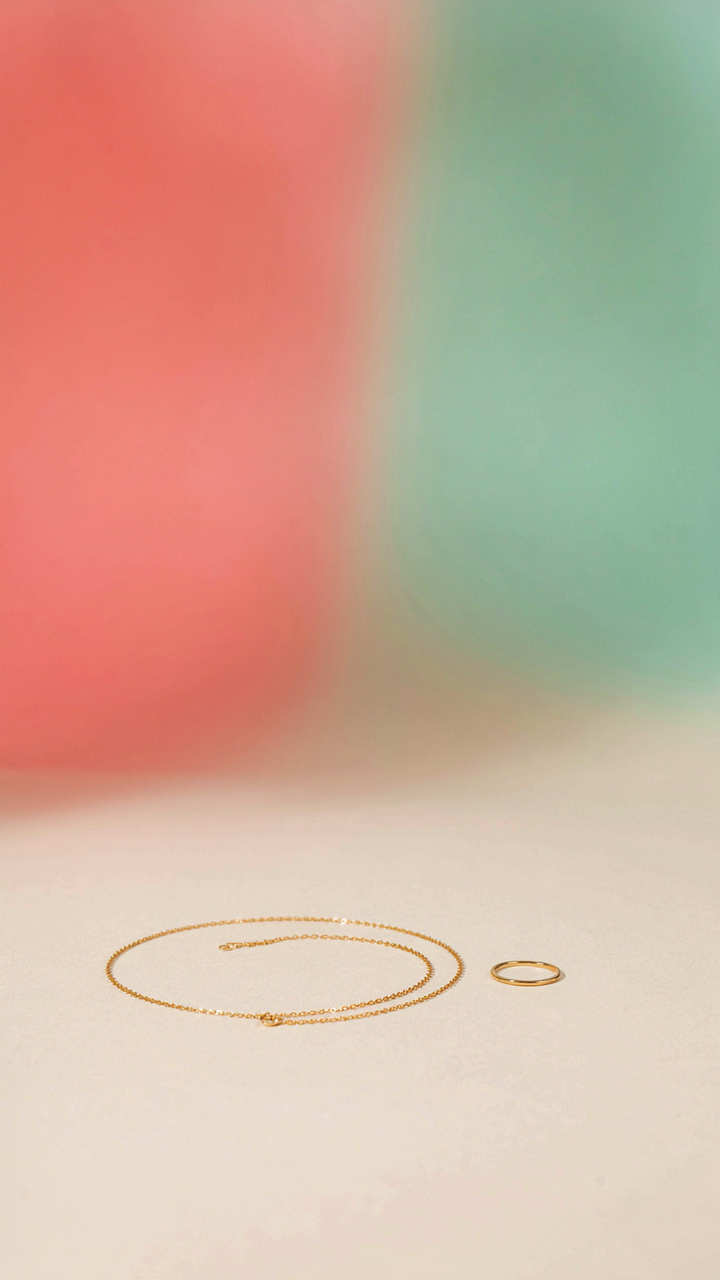
You want accessories to make the model look expensive without actually spending money on wardrobe. Here’s the mechanism: in visual hierarchy, every object competes for attention. Accessories borrowed from information design work the same way a legend works on a map—they either clarify or clutter. One intentional piece directs the viewer’s eye exactly where it needs to go. Two pieces create confusion. The model becomes secondary to inventory.
A single gold bracelet, delicate chain, or structured ring transforms a minimal outfit from plain to intentional. The piece must connect visually to either the face, hands, or silhouette. If it sits in dead space, it fails. Choose metal finishes that reflect light and photograph cleanly. Warm metals photograph warmer; cool metals photograph cooler. Match the metal tone to your lighting setup, not your personal taste.
Strategic Restraint Builds Authority
The amateur error is thinking more accessories equal more polish. Fashion photography from the 1990s minimalist movement proved the opposite: Jil Sander campaigns, Calvin Klein imagery, and Helmut Newton’s work all used single, perfectly placed accessories. They communicated control. The model became the focus because nothing competed for frame real estate.
Accessories work best when they serve a functional purpose or create a visual line. A belt cinches proportion. A watch anchors the wrist. A simple necklace creates a vertical line that elongates. Each piece must earn its position through either geometry or focal enhancement. Remove anything that only sits there. On set, if you catch yourself saying the accessory “looks nice,” cut it. Nice disappears in photographs. Intention shows.
The Posture Protocol: Clothes As A Prop For Models Pose
How Fabric Moves The Body
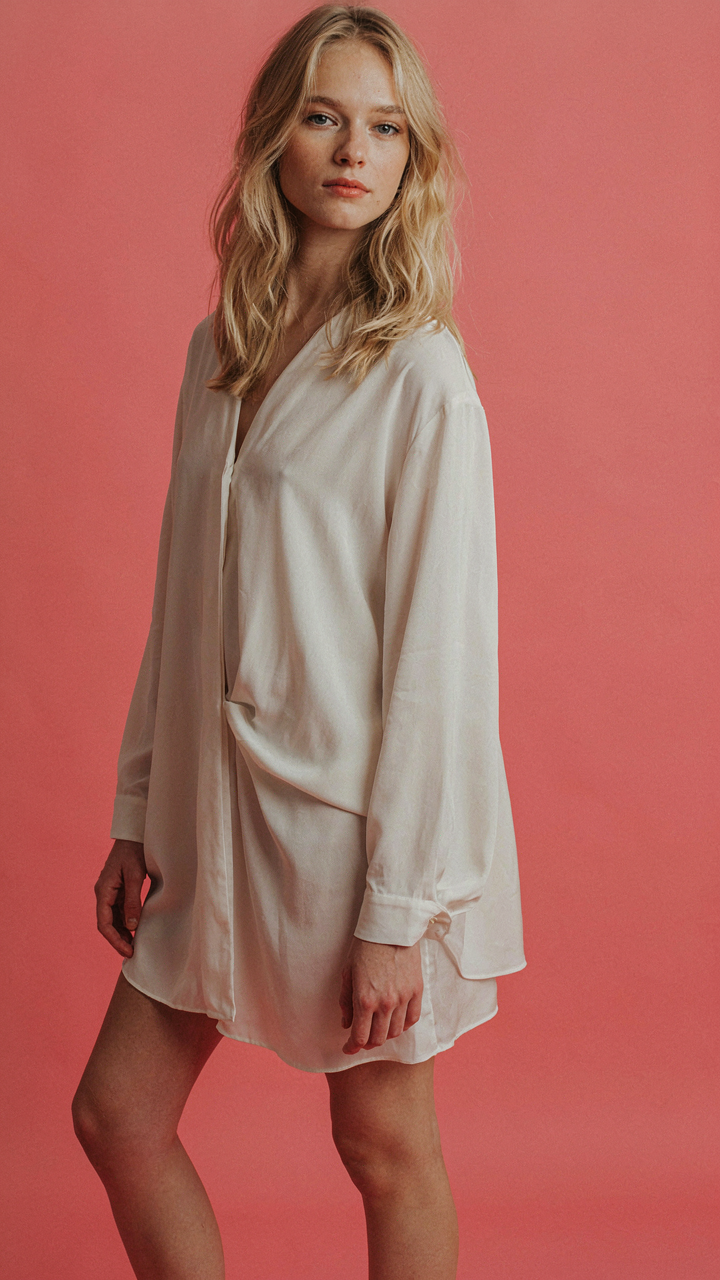
You want the model to look relaxed in frame. But relaxation doesn’t happen by accident—it happens when the fabric does the work for you. Think of clothing through a biomechanics lens: fabric weight, drape, and structure are constraints that either enable or restrict human movement, just as load-bearing capacity limits what a structure can support. Heavy cotton restricts shoulder rotation. Silk crepe encourages flowing limbs. Stiff linen forces vertical posture. The model’s pose emerges from what the clothing allows, not from direction alone.
Most photographers ignore this entirely. They pick an outfit for look, not function. Then they wonder why the model seems stiff or why poses that worked in their head look awkward on set. The real mechanism: fabric weight determines natural arm position, sleeve construction dictates hand placement options, and hem length controls leg extension range. A tight sleeve forces the arm closer to the body. A loose oversized cut opens angles and creates negative space. The pose isn’t independent of the outfit—the outfit is the invisible director of the pose.
Directing Through What The Garment Can Do
Stop asking models to “find a pose” in an outfit that fights them. Instead, map the garment’s capabilities before the shoot and direct around them. A cropped tank top with thin straps lets shoulders drop and collarbones breathe. A structured blazer with shoulder seams anchors the frame and demands upright posture. A long linen shirt untucked creates movement options a fitted dress never will. The model responds to physical constraints, not motivation speeches.
Know the outfit’s geometry before the model puts it on. Tight sleeves mean elbows stay bent and tucked. Wide necklines expose the torso, so any shoulder roll reads clearly. Asymmetrical hems force one leg to show more than the other. When you understand these mechanics, you don’t choreograph poses—you acknowledge which poses the garment naturally produces and shoot those. The model’s job becomes easier because they’re moving with the fabric, not against it. Your direction becomes one sentence: “Let your arms hang where they want to go.”
The Real Obstacle Isn’t Finding The Right Outfit, But Overcoming Your Fear Of Aesthetic Commitment

You don’t need more outfit ideas. You need permission to stop hedging your bets. Most people sabotage their shoots by playing it safe, mixing signals, refusing to commit to a visual direction. Pick a lane. Own it completely. Shoot today in one outfit you’re actually scared to wear, not the boring backup. Your fear is the only thing standing between forgettable photos and ones people remember.