

Beyond Boho: The Strategic Deconstruction Of Outdoor Photoshoot Outfits

What Actually Fails In Front Of A Camera
You want to look “natural” because you’re afraid staged outfits read as try-hard, but the mechanism is simpler: most outdoor photoshoot outfits fail because they prioritize comfort over contrast. Your eye stops moving when everything blends. Neutral-on-neutral does not photograph. The camera flattens depth, kills dimension, and erases texture unless you deliberately engineer separation between your body and the background, and between the elements on your body itself.
Photographers call this “pop.” It’s the split-second read. A jacket against bare skin. A darker hem against lighter legs. A saturated accessory against muted tones. You build this by choosing fabrics and colors that create visual boundaries, not by hoping your “vibe” translates through a lens. The outfit either has stopping power or it doesn’t.
Effortless Is A Constructed State

The phrase “effortless” in outdoor photoshoot outfits is marketing language for “intentional layering that hides its own construction.” Nobody wakes up looking polished in natural light by accident. What reads as easy is actually a series of deliberate exclusions and pairings that required decisions you made before the shoot started.
Real effortlessness comes from constraint, not freedom. You pick a color story first, then limit yourself to three textures maximum. You choose one statement piece, then build neutrality around it. You decide whether the fit is oversized or fitted before selecting anything else. These hard choices eliminate hesitation on set and make you move differently because your clothes aren’t competing with each other.

The Light Manipulation Protocol: Summer Photoshoot Edition

Fabrics That Absorb Versus Reflect Light
You want to look good in photos, which means you’re really asking: how do I control what the camera sees? Physics doesn’t care about your intentions. Light behaves the same way on fabric as it does in optics: darker materials absorb wavelengths, lighter ones bounce them back. Cotton, linen, and wool all have different absorption rates based on weave density and dye. A loose linen weave reflects more light and reads as washed out. A tight cotton weave absorbs more and holds detail. Summer shoots demand this distinction because direct sunlight punishes mistakes.
Black cotton in summer sun creates pure contrast that reads sharp on camera. White linen diffuses light so broadly it flattens your silhouette and loses definition. The mechanism is straightforward: tight weaves with matte finishes control light reflection. This is why professional photographers recommend cotton blends over pure linen for outdoor work. Matte fabrics give you agency. Glossy fabrics give the sun control. Choose accordingly based on whether you want the image to emphasize your form or the surrounding environment.
Architectural Forms Create Intentional Shadows
Most outfit advice skips this: shadows aren’t problems to eliminate, they’re tools to deploy. Structured pieces like oversized blazers, cargo vests, and fitted turtlenecks cast defined shadows that add dimension. Unstructured pieces like t-shirts and loose tanks create soft, shapeless shadow zones that flatten your body in frame. Summer heat pushes people toward loose clothing, which is exactly why it sabotages photogenic results. The architectural principle applies directly here: form follows function, and function in a photoshoot is creating visual hierarchy through shadow placement.
Layering with intention matters more than volume. A fitted base layer under an open overshirt creates shadow lines across your torso without trapping heat. Strategic folds and creases in fabric catch light and hold shape. The protocol: choose at least one structured piece to anchor your silhouette. Let that piece determine where shadows fall. Everything else supports that geometry. Summer outdoor shoots require you to fight the sun’s wash-out effect by introducing controlled shadow. Without it, you disappear into the brightness.
Autumn’s Camouflage: Blending Vs. Contrasting In Nature Photoshoot Settings

Earth Tones Enhance Natural Textures
You want to disappear into the frame because vanishing makes you feel safe. The mechanism is simple: earth tones work because they share the same light wavelengths as autumn foliage. Burgundy, rust, olive, and tan don’t fight the environment. They compress the visual distance between your body and the background. Cotton twill, linen, and wool knit fabrics pick up side light the way dried leaves do, creating texture harmony instead of the flat look synthetic materials produce.
Fabric weight matters more than color alone. Heavy cotton canvas or structured wool blends hold their shape in wind and photograph with dimension. Lightweight synthetics flatten against your body and read as disconnected from the scene. Choose natural fibers in muted tones because they absorb and reflect light predictably. The photographer can meter once and trust the exposure across your outfit and the trees behind you.
Break The Blend When Composition Demands It
Blending completely is actually the mistake most shooters make. A deep burgundy sweater surrounded by tan and brown foliage creates visual competition instead of hierarchy. Pop doesn’t mean neon. It means one element that contrasts enough to hold the viewer’s eye without screaming. A cream-colored linen shirt, a deep navy jacket, or a rust-red jacket against golden leaves gives the composition a focal point.
The rule: one contrast element maximum, and it should occupy less than 30 percent of your outfit’s visible mass. Pair a jewel-tone cardigan with neutral base layers. Wear a charcoal henley under a camel coat. Let the pop sit at chest height where the camera naturally lands. Everything else retreats into supporting tones that echo the landscape. This creates depth instead of chaos.
Winter’s Intentional Layering: The Photoshoot Outfits Architect

Volume And Silhouette Creating Visual Weight
You want winter photos to hide the fact that you’re less visible against blank snow. The camera sees mass, not warmth. Borrow from structural engineering: load-bearing capacity. A winter outfit’s silhouette carries visual weight through strategic bulk, not random puffiness. Wide shoulders, extended hemlines, and textured fabrics create dimension that reads on camera. Merino wool base layers topped with insulated jackets and oversized cardigans compress light differently than thin fabrics do. This isn’t about looking bigger. It’s about controlling how the lens interprets your form.
The mistake most people make is assuming bulk equals presence. Wrong. You need organized volume. A fitted turtleneck under a structured puffer jacket with straight-cut pants creates clean lines that read as intentional, not accidental. Shapeless layers destroy the outfit. Pair technical insulation with tailored silhouettes. Add a long wool coat over the top to anchor the frame. The camera rewards edges and definition. Amorphous puffiness reads as formless filler.
Thermal Aesthetics Functional Fashion
Winter outdoor photoshoots demand clothes that work twice: they insulate and they compose the image. Merino wool, down fill, and technical synthetics aren’t just warm. They have surface properties that matter to the camera. Merino reflects light subtly. Down creates deliberate texture. Nylon and polyester offer different sheen levels depending on weave. You’re not choosing fabrics for comfort alone. You’re choosing them for visual performance.
The real mechanism: wear base layers that don’t show, mid-layers with intentional texture or pattern, and an outer layer that anchors the composition. A cream-colored wool sweater over dark thermal base creates contrast without bulk. A textured knit puffer reads differently than a slick synthetic jacket. Leather gloves, wool scarves, and knit beanies add tactile visual interest that saves a flat composition. The outfit works because every layer serves two functions simultaneously: thermal regulation and photographic intent.
Spring Awakening: Color Theory For Dynamic Spring Photoshoot

Complementary Colors Against Natural Backdrops
You want to stand out in the frame without looking like you’re trying. Color theory borrowed from painting gives us the mechanism: complementary hues sit opposite each other on the color wheel and amplify contrast when placed side by side. A magenta top against spring’s green foliage doesn’t compete with the background. It commands the eye because the eye processes opposing wavelengths as distinct information.
Spring backdrops are predictably green and neutral. Skip the advice to “wear what matches nature.” Wear what opposes it. Warm oranges, deep purples, and true reds punch against budding trees and grass. The camera sensor reads this contrast first. Your outfit becomes the visual hierarchy, not an afterthought blending into scenery.
Monochromatic Impact: Subtle Power
Conventional wisdom says monochromatic outfits look boring in photos. Wrong. A single color from light to dark creates visual cohesion that reads as intentional, not accidental. The mechanism is tonal gradation: the eye follows value shifts within one color family, which keeps attention on body shape and posture instead of fracturing it across competing hues.
Spring offers clean monochromatic runs: cream through taupe through chocolate brown, or pale yellow through gold through bronze. Layer textures within the color to add dimension without adding colors. The outfit becomes a single statement rather than multiple competing ones. Build your outfit within a single color family, varying only saturation and texture.
The Environmental Equation: Outdoor Photoshoot Outfits And Location Dynamics

Urban Grit: Harmonizing With Concrete
You want to look intentional in a city shoot because blending in feels like failure. Here’s what actually happens: concrete and steel reflect light differently than natural surfaces, creating harsh shadows and blown-out highlights that flatten color saturation. Use this, don’t fight it. Wear neutrals with high contrast—charcoal against cream, black denim against a white shirt. The city’s visual noise demands clarity from your outfit, not competition with the environment.
Texture matters more than color in urban settings. Raw denim, linen, wool, and matte leather all read distinctly against smooth concrete and glass. Shiny fabrics disappear into reflective surfaces. The photographer will position you to use architectural lines as framing, which means your outfit needs visual weight to anchor the composition. A structured jacket or fitted silhouette works harder than loose, flowing pieces because the environment already pulls attention in multiple directions.
Wilderness Context: Respecting The Landscape
Ecology teaches us about niche positioning—the specific role an organism occupies in its environment. Apply this to outdoor photoshoot outfits: your clothing occupies a visual niche within the landscape. Most people get this backward and wear bright colors thinking they’ll “pop.” They don’t. A landscape has already solved the color problem over millennia. A deep forest uses greens and browns. A desert uses ochre and rust. Your outfit either complements this or fights it.
Muted tones that echo the environment create visual harmony, which reads as intentionality in photos. Olive, sage, terracotta, charcoal, and cream work across most natural settings because they exist in nature already. Avoid primary colors and pastels unless you’re deliberately creating contrast as a creative choice, not by accident. Fabric weight and drape matter here too—wind and uneven terrain demand fabrics that move naturally and won’t wrinkle into distraction. The landscape sets the terms; your outfit responds to them.
Tactical Texture: From Summer Fashion Photography To Rustic Scenes

Rough Versus Smooth: Visual Friction
You want people to notice you were deliberate. That’s the real reason texture matters in outdoor photoshoots. Texture creates visual friction—borrowed from material science, where friction is resistance between surfaces. In outfit composition, friction means contrast: rough against smooth stops the eye instead of letting it slide past.
Cotton canvas, raw linen, and unfinished leather read as intentional in photos because they break the visual plane. Smooth fabrics like silk or polished synthetics disappear into themselves. Pair a textured knit with smooth trousers, or weathered denim with a sleek jacket. The camera latches onto the boundary. This isn’t aesthetic theory. It’s optical mechanics.
Pattern Disruption: Controlled Chaos
Everyone says “don’t mix patterns.” Wrong. The advice is incomplete because it ignores scale and contrast ratio. Pattern disruption works when you break expectation with purpose, not randomness. Small-scale patterns read as texture from distance; large-scale patterns read as statement pieces.
Layer a fine herringbone against a larger geometric print only if one occupies the lower half and one the upper half. Separate them with a solid neutral or tonal belt. The disruption needs a boundary, not collision. Your camera will either read this as sophisticated restraint or visual noise depending on that single structural choice. Test the ratio before shooting.
The Visual Gravity Method: Borrowing From Physics
Mass And Density In Garment Choice
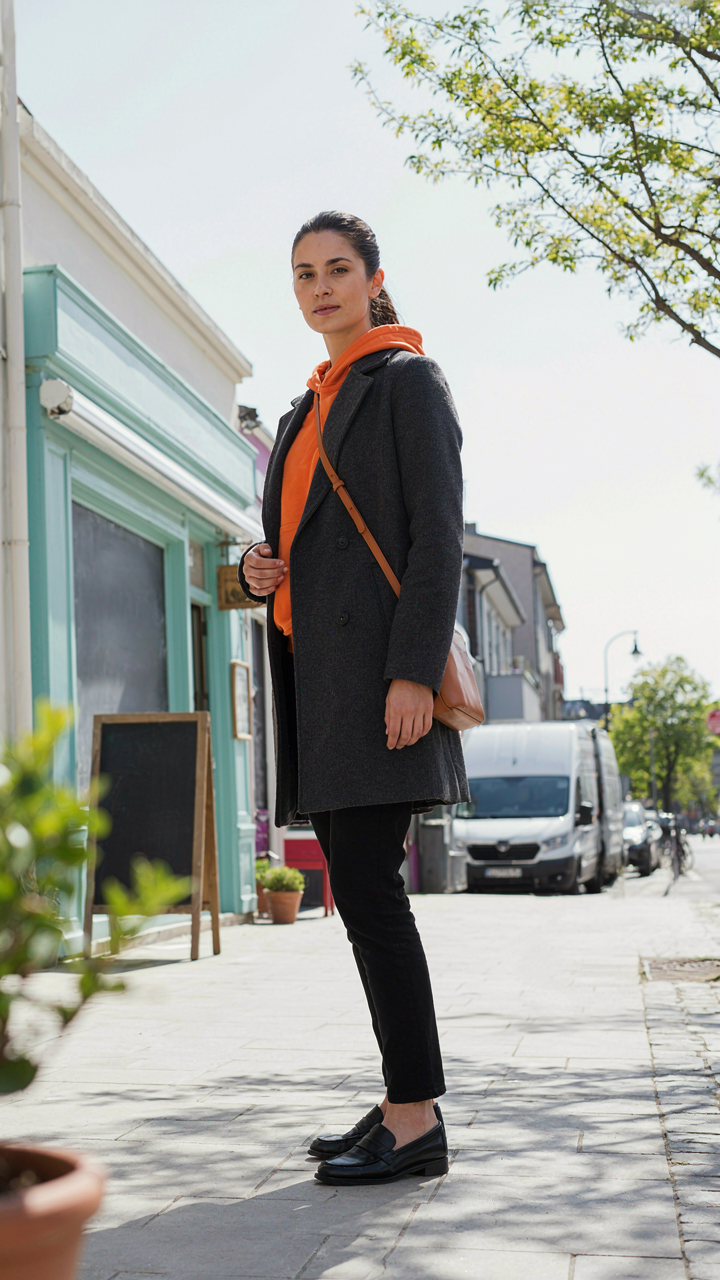
You want the camera to land on you first, not scan past. Physics calls this mass distribution. In a photoshoot outfit, density works the same way: heavier fabrics and darker colors accumulate visual weight faster than light ones, and the camera registers this before it registers anything else.
Forget the advice that says “wear what feels comfortable.” Comfort is irrelevant to how a lens reads your body. A structured wool coat commands attention differently than a linen shirt. The fabric weight determines where the viewer’s eye stops.
- Denim and canvas: High density materials that ground the lower body and prevent upward eye drift in wide shots or full-length frames.
- Silk and linen: Lower density fabrics that read as lighter, useful for balance when paired with structured pieces in heavier zones.
- Wool blends: Medium-to-high density with natural texture that photographs with depth, absorbs light differently than synthetics.
- Leather jackets: Extreme density that acts as a visual anchor, typically placed upper body to lock attention there before the shot even registers.
- Knit sweaters: Variable density depending on gauge, but generally medium weight that fills space without looking stiff or manufactured.
The density rule applies across all seasons. Winter gear has natural density advantages. Spring and summer demand you engineer it through layering, texture choice, and strategic fabric weight placement. A lightweight cardigan over a tank doesn’t create density. A fitted knit over a structured underlay does.
Center Of Attention Visual Weight Distribution
Your outfit is a composition problem, not a fashion problem. The camera doesn’t care about trends. It cares about where weight sits in the frame and whether the eye has a clear path to follow or gets confused by competing zones of equal visual pull.
Most people place all their visual weight in one spot and wonder why the photo feels off-balance. A black turtleneck with black jeans and black boots creates three separate dark zones with no hierarchy. The eye bounces between them instead of settling. Add a cream-colored coat or jacket that frames the upper body, and suddenly the image has a command structure. The heaviest visual element anchors at the top, everything else supports it.
Seasonal outdoor shoots demand different weight distribution. Cold months let you layer, naturally creating a visual pyramid with density at the shoulders and chest. Summer forces you to redistribute weight lower because you can’t add bulk. A bold patterned or textured bottom piece does what a coat does in winter: it gives the composition a weighted center. Place lighter tones near the face when you need attention there. Reserve darker, denser materials for areas you want the viewer to process second, not first.
Summer Outfits Photoshoot: Beyond The Beach Cliché

Heat Demands Fabric Selection, Not Aesthetics
You want to look effortless in summer heat. The real reason you care is that sweat and wrinkles destroy every aesthetic you’re chasing. In biology, organisms that survive extreme environments don’t fight the conditions, they adapt to them. Your outfit works the same way. Cotton and linen breathe because air moves through their weave structure. Synthetic blends trap moisture against skin, then photograph as dark patches and cling. Choose fabric first, fit second. Desert photoshoots demand natural fibers that move air, not trap it.
The mechanism is simple: darker colors absorb heat and photograph flat under direct sun. Cream, white, khaki, and soft earth tones reflect light while maintaining texture in the frame. Wear loose cuts that allow air circulation without looking oversized. Avoid heavy layers, denim, or tight knits. A lightweight linen shirt over simple trousers works because it protects skin from UV damage while keeping temperature manageable. The outfit survives the shoot, not just the first thirty minutes.
Layering Creates Depth In Shaded Environments
Trees and dense foliage block direct sunlight, which changes everything about how fabric reads on camera. Camouflage logic teaches us that proximity to environment creates visual cohesion, but outdoor photoshoots don’t need you to disappear into the forest. They need you to stand apart through intentional color contrast while respecting the palette around you. This means wearing colors that pop against green without screaming artifice. Deep jewel tones like emerald, sapphire, or burgundy hold their own against forest backgrounds. Muted earth tones flatten and merge with trees.
Layering in shaded spaces solves two problems at once: it creates visual interest through texture and depth, and it lets you adjust comfort as light changes throughout the shoot. A fitted base layer under an open shirt, or a sweater over a long-sleeve tee, gives the camera dimension to work with. The key is contrast in weight or color between layers, not just stacking similar tones. Bring a structured jacket or cardigan that holds its shape. Remove or adjust it based on light quality, not temperature. This keeps the outfit intentional across the entire shoot.
The 3 Part Narrative Arc: Crafting A Story With Your Outfit

Set The Emotional Entry Point
You want people to feel something when they see the photo, and you’re hoping the outfit does that work for you. It won’t. The outfit establishes mood through constraint, not through feeling. Think of narrative structure from screenwriting: the first act doesn’t make audiences cry. It orients them. Your opening outfit choice tells the camera and the viewer what world they’re entering. A weathered denim jacket and boots says survival. A linen shirt and bare feet says surrender to environment. The mechanism is contrast. Viewers process your outfit against the setting’s visual weight. When your clothing matches or deliberately opposes the landscape, you’ve set the frame.
The first outfit in a photoshoot series needs one clear visual rule that everything else breaks later. If you start in warm, muted tones, the climax outfit should shift that palette. If you begin covered and structured, the peak moment should expose skin or introduce movement. This isn’t artistic intuition. It’s signal clarity. Your first look establishes the visual language so the second look registers as change.
Command The Moment Through Contrast
The climax of your photoshoot demands one outfit that breaks the visual pattern you established. Novelists call this the turning point. Photographers call it the money shot. Your outfit here needs to do the opposite of what came before.
- Color reversal: If early looks favored earth tones, introduce jewel tones or stark white. The eye stops on disruption, not harmony.
- Texture shift: Move from soft, forgiving fabrics like cotton to structured materials. Leather, denim, or technical textiles read sharper on camera.
- Silhouette change: Progress from loose or fitted to the opposite extreme. Oversized after fitted, or vice versa, creates visual surprise.
- Skin exposure variation: If covered throughout, the climax outfit reveals strategically. If mostly exposed, this look layers and conceals.
- Proportion disruption: Pair oversized tops with slim bottoms or vice versa. Proportion imbalance photographs stronger than balance.
The outfit at peak impact must photograph differently under the same light as your opening look. This is why professionals shoot the same location at different times of day with different outfit changes. The light hasn’t moved. The outfit has. When you’re editing, this climax look will have higher contrast, sharper lines, and more visual weight because you designed it to oppose everything that came before.
The Real Obstacle Isn’t Your Wardrobe; It’s Your Inability To See The Photoshoot As A Calculated Environmental Takeover

Most people choose outfits. Winners choose environments first, then dress to dominate them. Your clothes mean nothing if the setting fights against you. Scout locations obsessively. Understand light direction, color contrast, seasonal textures. Then dress to win that specific battle. Stop treating photoshoots like fashion shows. Treat them like hostile territory you’re reclaiming through deliberate visual strategy. Pick a location this week and outfit it backwards. Your next photoshoot lives or dies before you ever get dressed.