

The Illusion Of The “Pickleball Aesthetic”: More Than Meets The Eye

What You Actually Care About Here
You want to look like you belong on a pickleball court without looking like you’re trying too hard, and that tension reveals the real mechanism at work: fashion operates on signal, not function. Most advice tells you to match colors, wear moisture-wicking fabric, and stay comfortable. That’s incomplete. The actual mechanism comes from economics: you’re buying status through alignment. When your outfit matches what high-level players wear, your brain registers belonging before you hit a single ball. This matters because it changes how you play.
The gap between what looks good and what works is where people waste money. You see a neon pink outfit on Instagram and assume it performs better than a basic shirt. It doesn’t. Performance comes from fabric technology, fit, and court positioning, not visual impact. Most brands exploit this gap by marking up aesthetics while cutting corners on material quality. You end up paying for the look, not the game.
The Real Competition Beneath The Clothes

In game theory, what you wear signals information to your opponent before the match begins. Pickleball operates the same way tennis does: outfit choices communicate skill level, commitment, and experience. If you show up in heavy cotton and poor shoes, your opponent reads that as inexperience regardless of your actual ability. The mechanism isn’t psychological manipulation. It’s efficient data compression. Your opponent uses visible signals to adjust their strategy in the first thirty seconds.
What separates beginners from intermediate players isn’t the outfit itself, but the systems behind it. Advanced players choose pieces based on court conditions, weather patterns, and their own biomechanics, not because they look cohesive as an ensemble. They treat their outfit as equipment, not identity. Start by identifying what your body needs first: moisture management in the shoulders, stability in the feet, mobility in the hips. Build backward from those requirements instead of forward from what’s trending.

Pickleball Outfits For Women: Deconstructing “Comfort”
The Real Comfort Problem
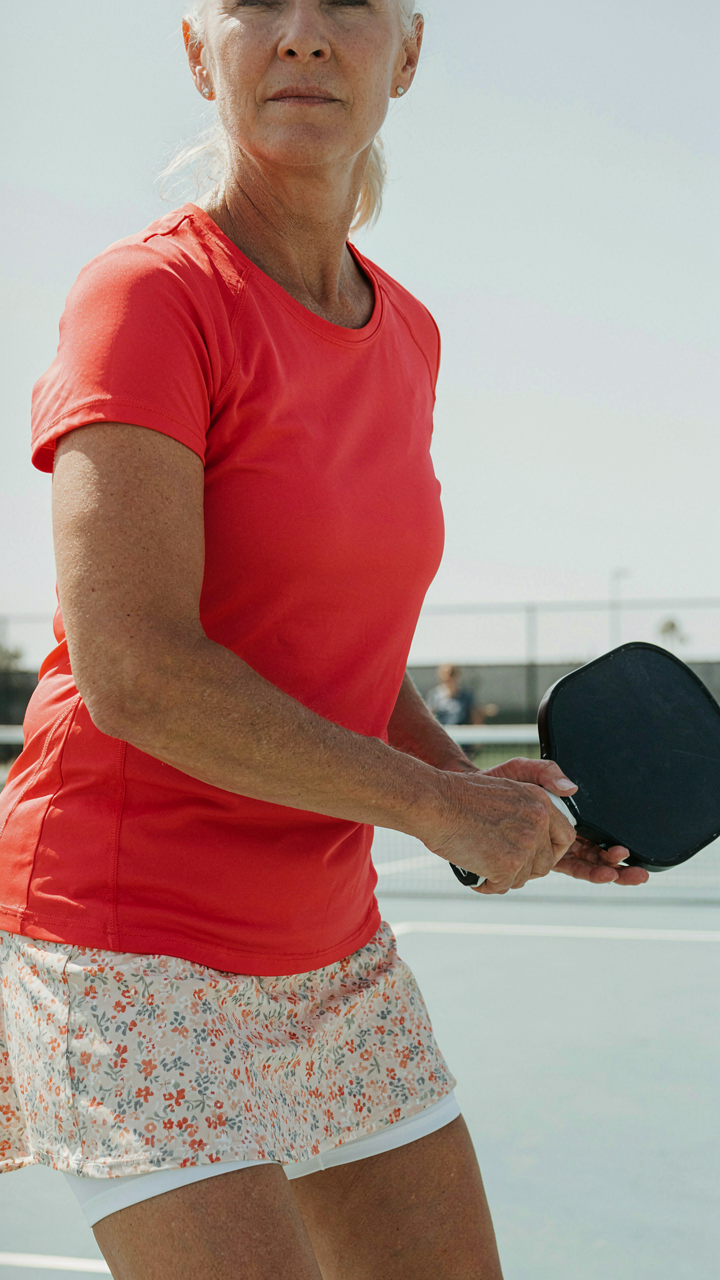
You want comfort because you’re afraid poor clothing will expose you as unprepared or slow on the court. Here’s the mechanism: comfort is not a feeling. Comfort is the absence of distraction. Your nervous system stops flagging problems when fabric moves with your body instead of against it, when moisture leaves your skin instead of sitting there, when seams don’t create pressure points during lateral cuts. Most women buy “comfortable” outfits based on how they feel while standing still in a store. That’s worthless. Pickleball demands compression, freedom, and sweat management simultaneously. Standing comfort and movement comfort are opposite problems.
The outfit that feels soft in your hand often binds during a backhand swing. Cotton feels luxurious at rest but becomes a cold, heavy anchor once you perspire. You need to test pieces during actual movement, not in a fitting room. Wear candidate outfits during a practice session before committing. Your body will tell you immediately whether the fabric breathes, whether the cut allows your shoulder to move freely, whether the shorts ride up or chafe. Comfort reveals itself through what doesn’t happen, not through what does.
Materials Dictate Physics, Not Fashion
Fabric performance borrows directly from materials science: elasticity determines whether your outfit returns to its shape or stays stretched after movement. Polyester blends with high elastane content (15-20 percent) maintain their structure through lateral stress better than pure cotton or low-stretch synthetics. Cotton absorbs roughly its own weight in water before feeling saturated. Polyester microfiber dries in half that time. Most popular pickleball brands use 88 percent polyester and 12 percent spandex for this reason, not because it sounds technical.
Moisture management dictates performance more than any other factor. Your body generates heat during rallies. Sweat moves away from your skin through synthetic fabrics via capillary action, a passive process that requires specific fiber construction. Tight weaves trap moisture. Open weaves cool faster but offer less support. Tank tops and sleeveless cuts expose your shoulders to UV exposure and remove the moisture-wicking advantage of full sleeve length. Test your clothing in actual humidity and heat, not in ideal conditions. The outfit that works on a cool morning fails at noon.
The Pickle Ball Outfit Women Strategy: Adaptive Camouflage

Court Blend With Skill Signal
You want to look like you belong without telegraphing desperation through your gear. Military strategy calls this “visual discipline”—soldiers use camouflage to disappear into terrain while their equipment signals competence. In pickleball, you apply the same logic: your outfit merges with court colors while your fit and fabric choice broadcast that you know what you’re doing.
The mechanism is straightforward. Wear neutrals that match court surroundings—whites, grays, soft greens, and pale blues dominate indoor and outdoor courts. This removes visual friction. Then layer in one technical detail: moisture-wicking fabric, clean seams, or a shirt cut for movement. Opponents register you as competent before the first serve. You’ve gained psychological real estate without wearing neon.
Color Psychology For Competitive Edge
Everyone says wear what makes you feel confident. That’s incomplete. Color physiology shapes how opponents perceive your movement and energy on court. Warm colors like coral and amber amplify perceived speed and aggression. Cool colors like navy and teal read as controlled and calculated. Your opponent’s brain processes this before conscious thought registers.
Select outfit colors based on the psychological state you want your opponent to experience, not yourself. Coral or orange if you want them feeling pressured and rushed. Navy or forest green if you want them respecting your technical approach and playing cautiously. Match the color to your actual playing style so the signal is honest. Wear the outfit that makes your opponent play your game, not theirs.
Beyond “Best Pickleball Outfits”: The Minimalist Arsenal

Movement First, Aesthetics Second
You’re scrolling through pickleball outfit posts because you think the right clothes will make you play better. They won’t. But the wrong ones will make you play worse. Physics governs this: drag coefficient measures resistance to motion through air and fabric. Your outfit’s drag coefficient matters because every millisecond counts on a court the size of a doubles tennis service box. Loose fabric catches air on quick lateral movements. Excess layers trap heat and slow your reaction time. The outfit that performs isn’t the one that looks sharp in the photo—it’s the one that disappears during play.
Most women’s pickleball advice treats outfit as decoration. That’s backward. Your clothes are equipment. They either reduce cognitive load (fewer distractions, better focus) or add it (constantly adjusting straps, tugging shorts, managing sweat). A minimalist arsenal removes decision fatigue before you step on court. You’re not building a wardrobe. You’re building a system where each piece does one job, does it reliably, and gets out of the way.
Core Pieces For On Court Dominance
Start with three tops, two bottoms, one pair of shoes. Rotation matters more than variety. When you wear the same proven combination repeatedly, your nervous system stops processing “what am I wearing” and dedicates bandwidth to court positioning and shot selection instead.
- Performance Tank or T Shirt: Moisture wicking polyester blend, fitted through the torso, minimal sleeve restriction. Brands like Nike, Lululemon, and On make versions built for lateral movement. Cotton holds sweat and adds weight.
- Shorts or Skirt: Inseam between 2 to 4 inches, flat waistband without drawstrings that bounce, pocket depth sufficient for a ball. Women’s-cut pickleball shorts differ from tennis shorts in taper and rise. Test the squat position before buying.
- Court Shoes: Gum rubber sole, lateral support built into the midsole, designed for side to side movement not forward running. New Balance, Asics, and K Swiss dominate the category. Lifespan is 40 to 60 hours of court time before lateral support degrades.
- Moisture Wicking Socks: Synthetic blend, crew height, cushioned sole. Cotton socks accelerate blister formation during rallies. One pair minimum, rotated daily.
- Sports Bra: High impact support rated for your activity level. Fit is individual. Band ride and strap slip matter more than price. Replace annually as elasticity degrades with washing.
Everything else is secondary. A visor or hat blocks sun without the heat retention of a full cap. A light layer for off court warmth prevents muscle tightness before matches. But the five items above are non negotiable. Stack them consistently, and your outfit stops being a variable in your performance equation.
What To Wear To Play Pickleball: The Ergonomics Of Success

Fabric Behavior Under Court Demand
You care about this section because wearing the wrong thing makes you look like you don’t belong. The real issue is biomechanics. Think of fabric the way engineers think of load-bearing materials: it must flex without fighting back. Cotton absorbs sweat and holds it against your skin, killing mobility and adding weight. Synthetic blends like polyester or nylon move moisture away from your body and return to their original shape after each lunge, absorb, and pivot. The fabric has to work with your body’s demand, not against it.
Tournament players wear moisture-wicking synthetics because the court doesn’t care about comfort. It cares about output. Your shoulders need 180 degrees of rotation for overhead serves. Your hips need lateral stability without binding. Fabric that clings or sags defeats the mechanics you’re trying to execute. Pick materials engineered for movement, not aesthetics.
Range Of Motion Without Compromise
Loose clothing looks like caution. Tight clothing signals you’ve thought about what your body actually does on court. The standard advice says wear whatever feels comfortable, which is how most people end up restricted. Comfort is irrelevant. What matters is whether your shorts let your hip abductors fire fully during lateral slides without the hem riding up or tangling. Whether your top allows your shoulder to externally rotate without the fabric bunching at your armpit.
Seams matter more than cut. Side seams that run vertically kill lateral range. Seams angled toward the back allow your ribs to expand and your arms to move without pulling fabric taut across your chest. Armholes positioned high enough that they sit in your shoulder joint, not your bicep, let your arms drive through the full court. Test your range by doing a full overhead motion before you buy. If the fabric pulls, it won’t work.
Women Pickleball Attire: The Bio Mechanics Of Fabric

Skin Barrier Dynamics And Fabric Selection
You want to feel confident without thinking about your clothes. The mechanism nobody states plainly: fabric functions as a semi-permeable membrane between your skin and environment, identical to how biology teaches us about cellular osmosis. Cotton absorbs moisture and holds it against skin, creating a wet barrier that drops core temperature and invites bacterial growth. Synthetic blends like polyester and nylon repel moisture instead of absorbing it, keeping the skin microclimate stable and hostile to odor-causing bacteria.
The difference matters because pickleball demands lateral movement for 45 to 90 minutes straight. Your sweat production during court time reaches levels that cotton simply cannot manage without becoming a liability. Polyester-dominant blends move moisture away from skin and onto the fabric surface where evaporation actually occurs. This isn’t preference. This is physics applied to your body’s thermal regulation system.
Heat Dispersal And Performance Fabric Architecture
Most advice stops at “wear breathable fabric,” which is incomplete. Real fabric architecture uses fiber structure to create air channels that accelerate evaporation rates. Mesh panels in strategic locations, typically at the back and underarm, function like heat vents. They reduce fabric density in high-perspiration zones, allowing air to circulate directly across skin rather than through dense weave.
Look for garments engineered with four way stretch technology, which uses spandex or elastane in the fiber blend to allow expansion without binding. Pickleball movement requires hip rotation, overhead reaches, and constant directional shifts. Fabric that moves with your body instead of against it reduces micro-friction that generates excess heat. Test this: wear a garment through your warm-up. If it feels tighter after five minutes of court movement, the fabric architecture is wrong for your needs.
The “Tennis Players” Fallacy: Why Pickleball Demands Different

Lateral Movement Changes Everything
You want to wear what works because you already own tennis gear and hate waste. Here’s the mechanism: pickleball demands lateral deceleration over linear sprint capacity. In biomechanics, deceleration force—the load your joints absorb when stopping—determines outfit fit more than acceleration does. Tennis requires explosive forward momentum and recovery strides along the baseline. Pickleball requires quick side-to-side repositioning in a compressed court. The muscle engagement is fundamentally different, which means fabric tension and seam placement matter in distinct ways.
Tennis outfits anchor on quad and glute activation during groundstrokes. Pickleball outfits need to accommodate explosive hip abduction and adduction without restricting the rotation required for lateral court coverage. A tennis dress with a high cut works for forward motion but creates binding across the hip during sideways movement. The shorts in most tennis lines assume you’re running in one direction and recovering along a predictable line. Pickleball players don’t have that luxury. Your outfit must allow the hips to open and close rapidly without tension.
Tennis Brands Optimize For The Wrong Court
Generic advice says “just wear what feels comfortable.” That’s incomplete and costly. Tennis apparel engineers for 78 feet of baseline-to-baseline movement on a 36-foot-wide court. Pickleball courts measure 20 feet wide and 44 feet long—a fundamentally different geometry that kills traditional tennis mobility solutions. Most tennis outfits feature tapered legs and fitted waistbands calibrated for larger stride patterns. That calibration becomes a liability on a smaller court where quick direction changes demand unrestricted hip flexion and rotation.
Tennis shorts sit higher on the hip and taper through the thigh to reduce drag during forward running. Pickleball requires shorts that sit neutral on the hip with straight cuts through the thigh or mild taper—not to reduce aerodynamic drag, but to allow lateral knee tracking without internal rotation stress. A tennis tank top is designed to manage shoulder mobility during overhead serving and hitting. Pickleball demands torso freedom during quick paddle transitions from ready position to shot execution. Buy tennis gear and you inherit constraints engineered for a different sport’s demands.
Pickle Ball Outfit: The Unseen Costs Of Impracticality

When Comfort Gets Sacrificed For Appearance
You’re worried people will judge your outfit on the court, so you buy something that looks sharp but doesn’t move with your body. The mechanism is simple: tight fabrics and restricted shoulders drain energy faster than loose-fitting gear because your muscles work harder to compensate for limited range of motion. A shirt that pulls across the chest forces compensatory tension in your back and neck. Shoes with inadequate arch support tire your feet earlier, which cascades into sloppy footwork by set three. You’re not just uncomfortable. You’re burning calories on problems that shouldn’t exist.
Trendy gear compounds this. Fashion cycles in activewear often prioritize aesthetics over function. Thin fabrics that look sleek don’t wick sweat efficiently. Low-rise waistbands gap when you bend. Oversized silhouettes that photograph well catch the ball and slow your reaction time. The real cost isn’t monetary. It’s the energy tax you pay every single point.
Damage Accumulates Faster Than You Notice
Biomechanics matters here, and tennis research applies directly to pickleball. Think of your body as a force chain: shoes anchor it, and every joint above distributes load. Worn-out or poorly designed court shoes force your ankles and knees into compensation patterns that build repetitive stress over weeks, not months. You don’t feel it at first. The micro-tears in connective tissue compound silently until one movement—maybe a lateral step you’ve taken ten thousand times—triggers sharp pain.
Poor outfit choices accelerate this timeline. Clothes that ride up or shift mid-movement force you to micro-adjust your posture constantly. This disrupts your center of gravity and loads your lower back unevenly. Tennis elbow, shoulder impingement, and ankle rolls spike among players wearing gear that doesn’t stay positioned through movement. To protect your joints long-term, audit every garment for how it moves during a lateral lunge or explosive step forward. If something shifts, rides, or restricts, it’s costing you function now and durability later.
The Performance Over Pretense Protocol For Women
What Your Clothes Actually Need To Do
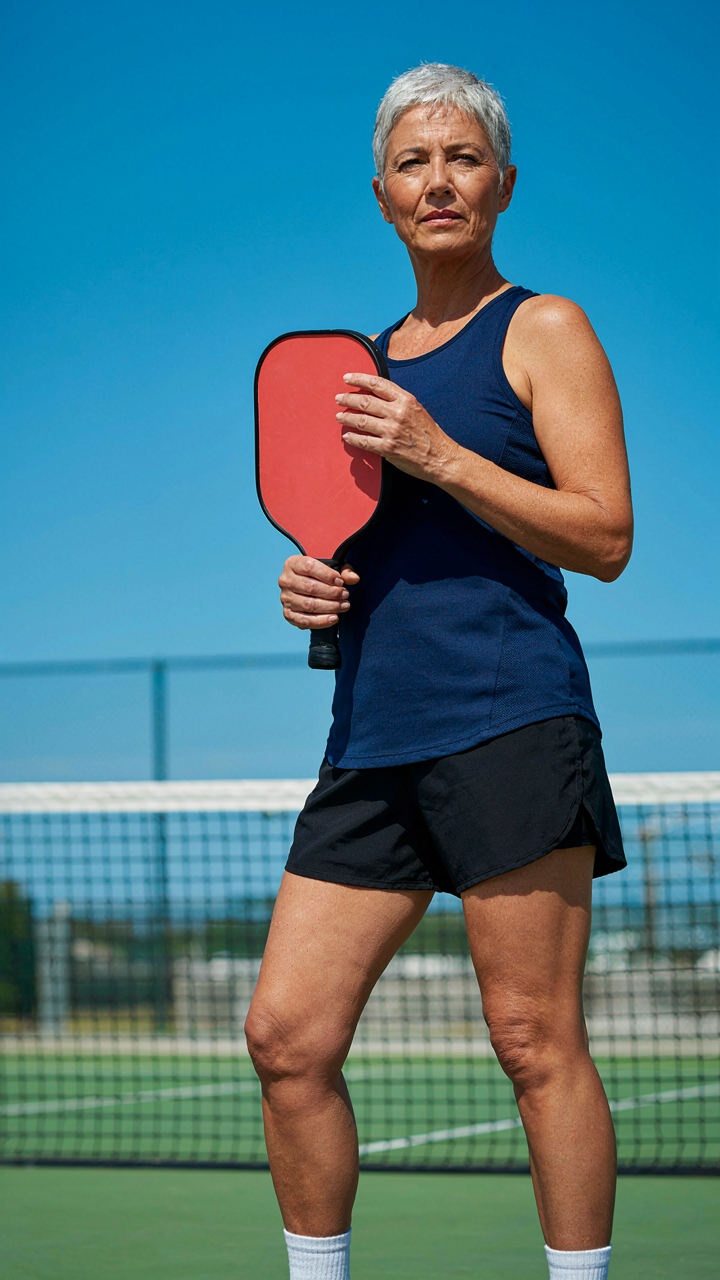
You want to look good because you think it matters more than it does. Here’s what matters: your outfit either enables movement or it doesn’t. Pickleball demands lateral cuts, explosive starts, and sustained court presence for two hours. Your clothes are load-bearing equipment, not decoration. The real mechanism is simple: moisture management and structural support determine whether you play your game or manage your discomfort.
Ventilation isn’t a feature. It’s non-negotiable. Polyester blends with mesh panels move sweat off skin faster than cotton ever will. Your shorts need a gusset—the triangular fabric insert at the crotch—to eliminate binding during lunges. Bra support matters because repetitive overhead serves generate vertical impact. Durability means fabric resists pilling after fifty court hours, seams stay intact through aggressive movement, and colors don’t fade in direct sun exposure.
- Moisture-Wicking Tops: Polyester or nylon blends pull sweat away from skin, drying in minutes. Cotton absorbs sweat and stays wet, which kills performance and comfort during long matches.
- Gusseted Shorts: The extra fabric triangulation at the crotch prevents fabric bunching during lateral movement. Non-gusseted shorts force you to adjust mid-rally or sacrifice range of motion.
- Supportive Sports Bras: Look for encapsulation design (individual cup support) rather than compression-only styles. Impact absorption matters on hard courts where vertical movement is constant.
- Flatlock Seams: Thread construction that lies flat against skin prevents chafing during two-hour sessions. Standard seams create ridges that irritate quickly in high-friction zones.
- Court-Grade Shoes: Pickleball shoes have lateral support reinforcement and rubber compounds designed for court surfaces. Running shoes lack the side-to-side stability needed for the game’s cutting patterns.
This setup eliminates the variables that derail focus: sweat dripping into eyes, shorts riding up, bras shifting, seams creating pressure points. Your outfit disappears. Your game doesn’t.
Building The Wardrobe That Scales
Most women treat a pickleball outfit as a single purchase. Wrong approach. You need rotation because court time accumulates fast, and one outfit wears out or gets stuck in the wash. This isn’t about abundance. It’s about reliability and repair cycles.
Buy two complete outfits minimum: top, bottom, socks, shoes. This covers one in rotation while the other dries or gets washed. Add a third top because tops wear faster than shorts and give you mixing flexibility. Shoes need replacement every 40-60 hours of court time. The rubber compounds break down, lateral support collapses, and grip degrades. Ignoring this invites ankle instability and blisters. Your wardrobe works when pieces overlap functionally, so a navy mesh top pairs with black shorts, and those same shorts pair with a white performance tank. One base color (navy or black) and one accent color (white or gray) do the work. Socks matter: synthetic blends in mid-calf height prevent blisters and keep moisture away from heels and toes where friction runs highest. Store rotation on a cycle: wear one set, wash immediately in cold water with synthetic detergent, dry flat or hang dry, ready for the next session within 24 hours.
The “Pickleball Attire” Investment: A Return On Movement

Clothing As Equipment, Not Decoration
You want to believe outfit choice doesn’t matter because admitting it does means you’ve been leaving points on the court. Here’s the mechanism: your clothes either enhance or degrade your movement efficiency. Moisture-wicking fabrics pull sweat away from skin, reducing friction and weight gain mid-match. Compression shorts stabilize your legs during lateral cuts. Breathable uppers prevent heat buildup that kills reaction time. This isn’t fashion psychology. It’s applied physics. Your outfit is load-bearing equipment.
The difference between cotton and technical fabrics isn’t marginal. Cotton absorbs sweat and holds it against your skin, adding weight and slowing you down as you play. Performance materials designed for court sports move moisture outward, keeping you dry and responsive. Shoe selection determines ankle stability and court grip. The outfit you choose directly influences your ability to execute the same movement pattern at minute forty-five as you did at minute five. Equipment degrades performance or enhances it. There is no neutral choice.
Compound Returns Through Consistent Replacement
Buying one expensive outfit and wearing it until it fails is economically backwards. Think in terms of asset depreciation. High-quality pickleball gear lasts thirty to fifty matches before material fatigue sets in. Seams weaken, elastic loses elasticity, moisture-wicking capacity degrades. You don’t notice the decline because it happens gradually, but your movement suffers proportionally. A rotating inventory of three to four complete outfits means each piece rests between uses, extending lifespan and maintaining consistent performance standards across all your matches.
The real return compounds when you replace gear on schedule rather than waiting for failure. A fresh outfit performs identically every session. Your body adapts to consistent equipment, building movement patterns on a stable foundation. Sponsors and tour players rotate gear for this exact reason: consistency builds skill faster than chaos does. Invest in replacement on a cycle, not reactively. Track when each outfit hits thirty matches and retire it. This system costs more upfront but costs less per match and delivers measurable improvements in your baseline performance.
Your Real Obstacle Isn’t Your Wardrobe; It’s Believing Appearance Trumps Authentic Performance

Most women buy the outfit and wait to feel confident. That’s backwards. Wear whatever works today. Play hard. Win points. Your confidence comes from dominance on the court, not from matching your shoes to your shirt. The outfit follows the player, never the reverse. Stop waiting for permission to show up. Buy one decent pair of shorts and start playing tomorrow. Performance builds presence faster than any algorithm ever could.