

The Invisibility Cloak Fallacy: Why Simplicity Isn’t Mediocrity

What Simple Dressing Actually Costs You
You’re afraid that a jeans and t shirt outfit signals you stopped trying. That’s the real fear underneath this section. Here’s the mechanism: most people confuse simplicity with invisibility, then confuse invisibility with failure. They’re wrong on both counts. A basic outfit doesn’t disappear you into the crowd. It does the opposite when executed with intention. The constraint forces every element to work harder.
The common advice says simple dressing is timeless and low maintenance. That’s incomplete. Simple dressing is actually a high resolution filter. It strips away noise so the three things that matter—fit, fabric, color harmony—become unavoidable. When you remove options, you remove excuses. You can’t hide behind layers or trends. Your jeans fit or they don’t. Your t shirt drapes or it bunches. Your choices become visible precisely because there are fewer of them.
Tension As Your Design Principle

In design systems, constraint creates contrast. Apply this directly to your jeans and t shirt outfit: the fewer elements you control, the more impact each one generates. You’re not removing power by simplifying. You’re concentrating it. A wrinkled, oversized t shirt reads as sloppy. The exact same shirt, fitted properly and pressed, reads as intentional. Same garment. Different signal. The difference isn’t complexity. It’s precision.
This is why boring jeans and t shirt outfits exist. They result from passive choices, not active ones. You grabbed what was clean. You wore what fit loosely enough to not think about. That’s not simplicity. That’s indifference. Real simple dressing requires you to make decisions about sleeve length, inseam break, fabric weight, and color relationships. You can’t hide behind aesthetic theory. You own every visible choice.

The “Fit First” Protocol: Engineering Your Silhouette
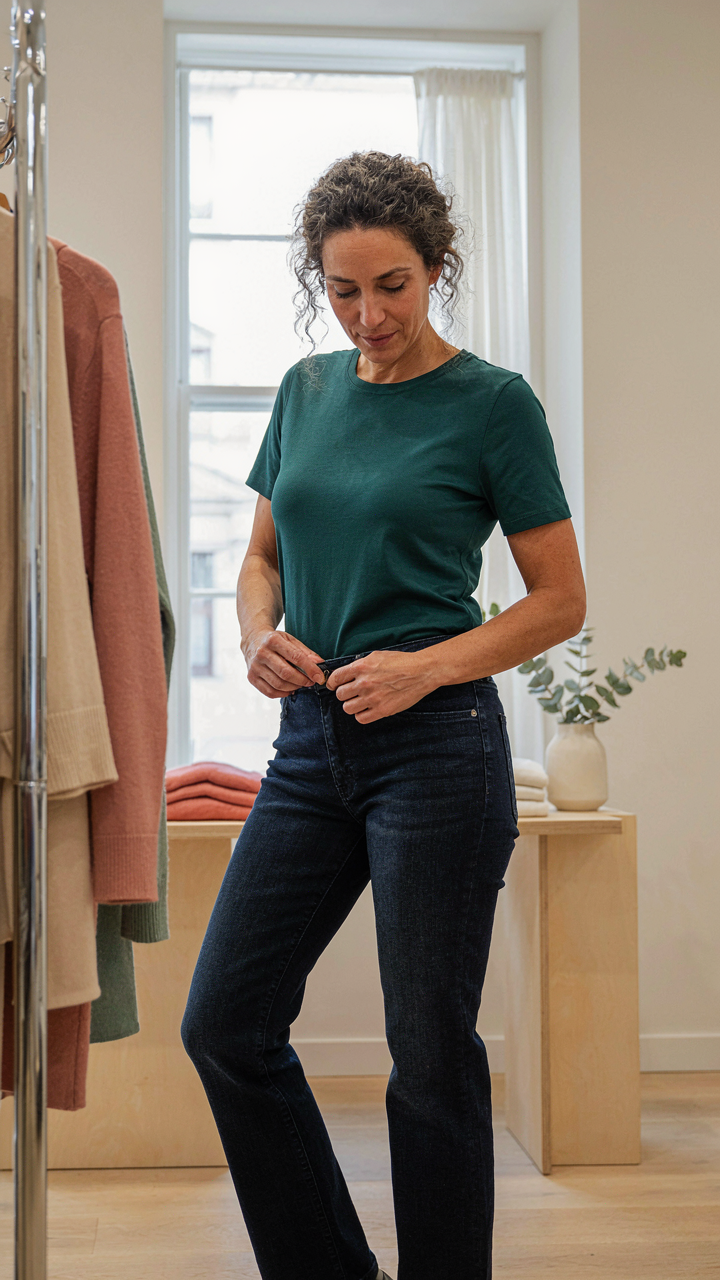
Denim Cuts Match Body Geometry, Not Preference
You care about this because wearing the wrong cut makes you look worse than wearing no effort at all. That’s not opinion, that’s geometry. Think of denim fit like structural engineering: the load path determines how weight distributes through the system. Your body type is the load, and the jean cut is the beam. A straight-leg jean on someone with a high hip-to-waist ratio creates visual width where you don’t want it. A slim fit on someone with thick thighs concentrates fabric stress at the wrong pressure point.
Stop accepting the generic advice that “slim jeans work on everyone” or that “your body type doesn’t matter.” It does. Slim fits work on people with a narrower thigh circumference relative to their waist. Straight legs work on people with proportional or muscular legs. Bootcut and flare jeans taper inward from knee to ankle, which grounds taller frames and balances wider hips. Tapered cuts at the ankle shorten your visual line. The mechanism is simple: fabric tension and drape create proportion illusions. Measure your thigh, inseam, and natural waist. Match those numbers to the jean’s actual measurements, not the size label.
Fabric Weight Determines How Your Shirt Reads
T-shirt drape isn’t about softness or prestige. It’s about fabric weight affecting how light reflects off the garment surface. A six-ounce jersey hangs loose and creates shadow lines that hide definition. A ten-ounce pique or structured cotton holds its shape and shows silhouette clearly. The heavier the fabric, the more it resists gravity and maintains structure around your chest and torso. This changes how your entire outfit reads from three feet away.
Most people buy t-shirts based on brand name or feel. The real variable is GSM, or grams per square meter. Anything under eight ounces reads baggy in photographs and person. Nine to eleven ounces sits between structure and breathability. Twelve ounces and above sculpts your shape but sacrifices movement. Pick your fabric weight based on your goal: conceal or reveal. Then choose your denim cut to match that decision. The fit compounds itself. A structured t-shirt paired with slim jeans creates a different silhouette than the same shirt in oversized weight paired with straight-leg denim.
Beyond White T Shirt Jeans Outfit Women: The Color Theory Deception

Contrast Is The Real Lever, Not Balance
You’re hunting for permission to look confident without trying. That’s the real reason you care about color rules. Here’s what actually works: contrast follows the principle of value separation, borrowed from visual design. In a jeans and t shirt outfit, value means how light or dark your colors are relative to each other. Dark jeans demand a tee that registers as visually distinct. Same-value combinations blur together. Your eye reads separation as intentionality.
Most color advice starts with “match your undertones” or “find your palette.” That’s incomplete. Undertones matter less than the gap between your jean wash and tee shade. A medium-wash jean paired with a medium gray tee creates visual mud because they occupy the same value zone. Swap the gray for white or black, and suddenly the outfit reads as composed. The mechanism is simple: your brain processes contrast before it processes color harmony. Build contrast first, then layer color choice on top.
Colors That Shouldn’t Work But Do
The conventional wisdom says pastels go with light washes and jewel tones go with dark denim. Wrong framework. Saturation and warmth matter more than the color wheel categories most people use. A highly saturated burgundy tee with black jeans works because saturation cuts through value matching. A muted mauve with the same black jeans falls flat because low saturation requires higher contrast to register.
Unexpected combinations work when you violate color harmony rules but honor contrast rules. Navy jeans with a burnt orange tee breaks aesthetic convention but delivers high value difference and saturation punch. Charcoal jeans with a pale yellow tee sounds risky until you see the value gap. The outfit doesn’t ask permission to exist. Test any color pairing by photographing it in natural light. If the tee and jeans read as separate objects in the image, the combination works. If they blur together, the colors are fighting for the same visual space. That photograph is your only reliable guide.
The Texture Tactic: Elevating A Basic Tshirt And Jeans Outfit

When Fabric Fights Back
You want permission to care about how cloth feels against skin without looking precious about it. Here’s the mechanism: texture is contrast detection. Your brain registers difference, not sameness. Wear a smooth t-shirt on smooth jeans and you vanish into a flat plane. Introduce surface variation and you create visual weight, even when the colors stay neutral. This isn’t decoration. It’s signal. Heavy cotton chambray t-shirt over raw denim generates more presence than lightweight jersey on washed twill, regardless of fit or color. The friction between different fabric densities is what your eye actually responds to.
Material pairing works because it forces intentionality. Cotton jersey on top reads as lazy. Cotton jersey layered over a linen overshirt or paired with textured denim reads as deliberate. The second setup makes the same base pieces work harder. Corduroy, raw selvedge, heavy twill, and worn canvas all push back visually against smooth knitwear. The t-shirt becomes an anchor instead of noise. Start by identifying the texture of your jeans first, then choose a t-shirt fabric that contradicts it rather than echoes it.
The Layering Where Tension Lives
Subdued texture contrast means avoiding the trap of matching weight to perceived casualness. Common advice says light fabrics for summer, heavy for winter. That’s incomplete. You can wear a substantial linen shirt over a t-shirt in July and look sharper than someone in two lightweight pieces because the friction between the two creates dimension. In winter, a textured wool sweater over a dense cotton tee beats two fleece layers that sit flat and dead against each other. The mechanism is architectural: you’re building visual depth through material opposition, not stacking similar densities.
The move is deliberate understatement. A raw denim jacket over a t-shirt works because both are cotton but the weave density differs radically. An oxford cloth overshirt in white or cream over a darker t-shirt reads as considered, not accidental. Pick two pieces where the fabric hand feels noticeably different when you touch them. If both feel the same, one of them is working against you. Your outfit’s legibility depends on surfaces that argue with each other.
The Accessory Amplifier: Small Details, Big Statement
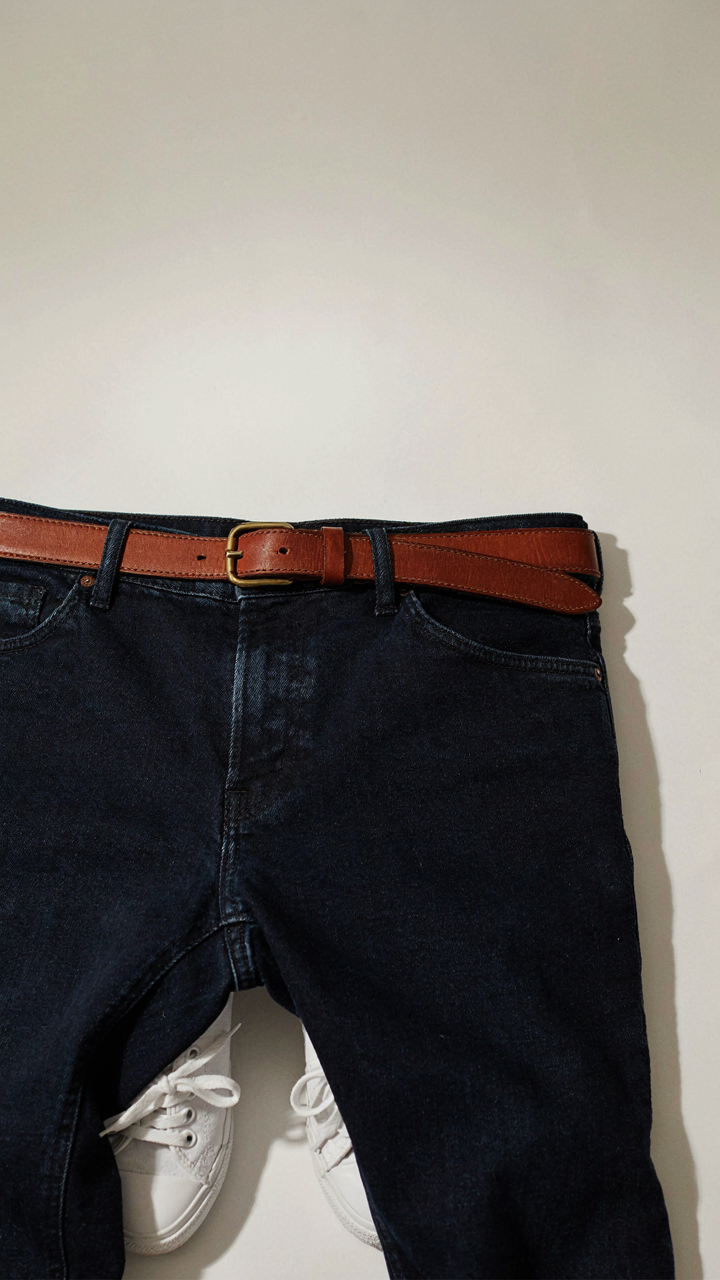
Belts, Watches, And Hats Do The Work You Won’t
You want people to notice you didn’t try too hard. That’s the real reason you’re reading this section. The mechanism is borrowed from architecture: load-bearing vs decorative elements. A belt is load-bearing in a jeans and t shirt outfit. It anchors your proportions and forces intentionality. Without it, you’re just wearing clothes. With it, you’re making a choice about your silhouette.
A quality leather belt in brown or black does invisible labor. It breaks up the vertical line of denim, creating visual separation between top and bottom half. Watches work differently—they’re pure signal. A simple steel watch or vintage field watch tells someone you understand restraint. Hats demand confidence because they change your face’s relationship to the outfit entirely. Skip the hat unless you actually know your head shape and proportions.
Footwear As Outfit Reset
Your shoe choice determines whether the outfit reads intentional or accidental. This is mechanical, not emotional. Sneakers—specifically minimal leather sneakers like Adidas Stan Smiths or vintage Converse—keep the outfit casual but clean. They signal you understand proportion: soft shoe with structured denim. Leather boots or chelsea boots flip the energy entirely, making the same jeans and t shirt combo read sharp and considered. The mechanism is contrast and context switching. Boots with a basic outfit say “I made an effort.” Sneakers say “I understand myself enough to not need effort.” Both work. Neither works if you choose the wrong one for your actual lifestyle.
The final step is non-negotiable: your shoes must be clean. Not pristine, but intentional. Scuffed leather tells a story. Dirty canvas tells nobody anything except you didn’t notice. Before you leave, inspect the soles and sides. If they look neglected, the entire outfit collapses backward into looking like an accident.
The Personalization Paradox: Your Story In A White Tee Shirt Outfit

Building Your Wardrobe On Signal, Not Noise
You want people to think you’re interesting without trying, which means you need pieces that telegraph something real about you instead of broadcasting what you bought. The mechanism is signal: in economics, a signal is proof of something costly to fake. Your outfit either signals authenticity or it signals confusion. A generic white tee paired with mass-market jeans broadcasts nothing. A white tee paired with a piece you actually sourced, worn in a way only you wear it, costs effort to fake.
Start by identifying what you genuinely interact with, not what you think you should like. A musician gravitates toward band tees or vintage concert gear. A builder gravitates toward work boots and heritage denim that shows wear patterns matching their actual labor. A reader gravitates toward thrift-store finds with history embedded in the fabric. The outfit reflects the life, not an aesthetic you downloaded from a mood board. This is the only way a jeans and tee outfit moves from forgettable to recognizable.
Rejecting The Trend Treadmill
Common advice tells you to “mix high and low” or “add one trendy piece.” This is lazy and it makes you look like you’re chasing. Trends in basic wear move in predictable cycles: oversized becomes slim, cropped becomes long, vintage becomes new again. If you follow the cycle, you’re always one season behind the people setting it and ahead of the people copying you. You’re stuck in the middle, which is the most invisible place to be.
Real authenticity in jeans and tee outfit building works differently: commit to the variables that don’t trend. Fit relative to your actual body. Fabric weight that matches your climate. Color that complements your complexion. A worn-in pair of jeans from five years ago outperforms any trending wash because the wear tells a story of use, not purchase. These elements stay stable while the surface-level trends cycle past. Build here and your outfit reads as intentional, not reactive.
The Layering Protocol: Dynamic Range For Relaxed Outfits Women
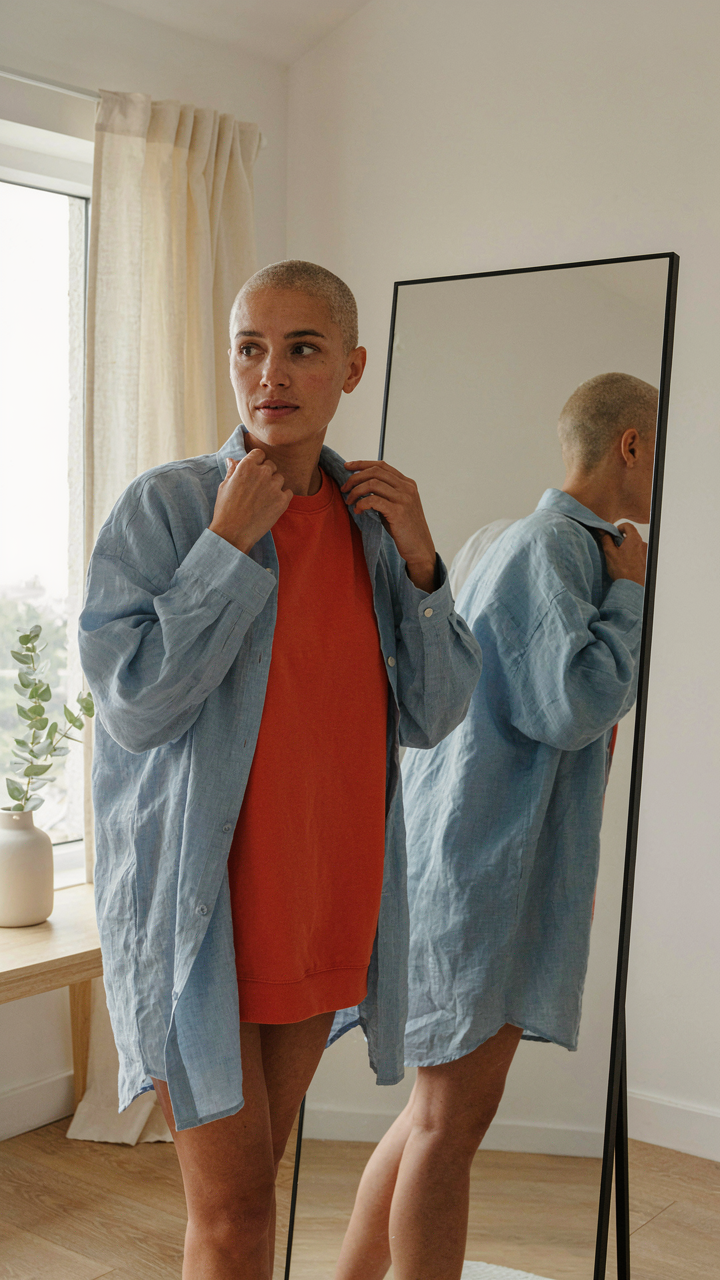
Jackets And Shirts Create Visual Contrast
You want permission to look effortless without actually being invisible. That’s the real game here. Layering isn’t decoration. It’s contrast management. In graphic design, contrast is the deliberate use of opposing elements to create visual hierarchy and prevent monotony. Apply this to denim: a plain white tee alone reads flat. Add an oversized linen shirt or structured jacket and you’ve created two distinct visual weights competing for attention. The eye moves between them instead of scanning past the outfit entirely.
The mechanics are simple. A denim base stays neutral and stable. The jacket or shirt layer introduces either texture, color, or silhouette disruption. A worn denim jacket over a fitted tee repeats the denim but shifts proportion. A linen overshirt introduces crease detail and drape. An unstructured blazer adds architectural lines. Each choice changes what the eye registers first. The outcome: the outfit feels considered rather than lazy, even though you’ve only added one piece.
Seasonal Shifts Without Buying New Outfits
Most advice here stops at “wear different fabrics.” That’s incomplete. The real constraint isn’t fabric. It’s how the third piece functions across temperature ranges. A lightweight linen shirt works spring through early fall because it adds layer without trapping heat. A knit cardigan works fall through winter because it consolidates warmth while staying proportional to denim. A structured blazer works year-round because it’s agnostic to season if you swap the base layer underneath.
The protocol: identify one jacket or shirt per quarter that works with the same jeans, then rotate the undershirt only. Summer demands breathable overshirts in cotton or linen. Fall needs knits or corduroy. Winter needs wool or thicker knits. Spring repeats fall logic but in lighter weights. You keep the denim consistent. The outer layer anchors the season. The undershirt modulates temperature without adding bulk to your closet. This approach lets one outfit become four through systematic substitution rather than buying new pieces.
The Cognitive Load Of “Effortless”: Simplify Your Choices

When Your Brain Gets In The Way
You want to look like you didn’t try. That’s the real fear underneath this section: you’re worried that appearing to care about your outfit signals weakness. But here’s the mechanism: decision fatigue tanks execution. Every choice you haven’t pre-made burns mental energy you need elsewhere. Decision theory from economics shows this plainly. In jeans and t shirt outfits, constraint is your asset, not your limitation. You win by eliminating options before you get dressed.
Most people think more choices equal better outcomes. That’s backwards. The research on decision paralysis is settled. You need a defined palette and a system. When you own five t shirts instead of twenty, and they all work with your jeans, you stop second-guessing yourself at 7 AM. You get better results because you’re not negotiating with yourself every morning. The friction disappears and the outfit lands harder because you chose it with intention, not desperation.
The Math Of Strategic Reduction
Constraint creates clarity. You identify your best-performing pieces, then anchor everything to them. With jeans, start with one pair that fits your body and your life. Black skinny jeans work differently than relaxed indigo or raw denim. Pick one. Then build your t shirt collection around that single variable. Three to five t shirts in complementary colors or textures beats fifteen in competing directions. You’re not limiting yourself. You’re compounding the effectiveness of each piece by forcing coherence.
The protocol is simple. Audit what you actually wear in rotation. Track it for two weeks if you need proof. You’ll find three or four combinations that work. Those become your template. Every new piece you add must work with existing pieces, not just exist alone. This isn’t minimalism for its own sake. It’s operational efficiency applied to your morning routine. You reduce decision points and increase hit rate. That’s the entire mechanism.
The Anti Trend Manifesto: Mastering Timeless Jeans White T Shirt

Separating Signal From Noise
You want permission to stop chasing trends because you’re tired of looking stupid six months later. The mechanism is simple: trends move fast because they’re designed to create urgency and obsolescence. Fads spike sharply, plateau, then die. Timeless pieces move horizontally across decades. A white t shirt and dark jeans existed in 1995, 2005, 2015, and exist today. The fabric changes, the fit evolves slightly, but the core survives because it solves a problem: looking intentional without performing.
What separates enduring from ephemeral isn’t complexity. It’s restraint. A trend demands you notice it. A classic demands nothing except that you wear it. The white t shirt trend of 2020 included oversized cuts, cropped versions, and graphic overlays. Most vanished. The plain white t shirt remained. The difference isn’t quality. It’s that one added novelty, and novelty has an expiration date built in.
Buying What Actually Lasts
Everyone says “invest in quality.” Then they buy a thirty-dollar t shirt online and wonder why the collar warps after five washes. Quality isn’t the price tag. Quality is how a garment responds to use over time.
A well-made white t shirt holds its shape through repeated washing because the fabric has density and the stitching absorbs stress without tearing. Dark jeans resist fading because the dye penetrates the fiber instead of sitting on the surface. You verify this by feeling the weight. A fifty-dollar t shirt that feels thin won’t outlast a thirty-dollar one that feels substantial. Pick it up. It should have heft without stiffness. The seams should be tight, not loose. Dark jeans should be rigid when new, not soft. Softness comes from wear, not manufacturing shortcut. This is your inspection protocol before purchase.
The Psychological Edge: How Confidence Outshines Fabric

Posture Signals Your Neural State
You’re reading this because you suspect clothes alone won’t save you, and you’re right. Neuroscience calls this “embodied cognition”—your body’s physical state directly shapes your brain’s chemical output. Your posture in jeans and a t-shirt either locks you into a submissive neural loop or activates your sympathetic nervous system toward presence. Slouching triggers cortisol and self-doubt. Standing tall signals your amygdala that you’re safe enough to be noticed.
The mechanism is straightforward: when you wear a jeans and t-shirt outfit, your shoulders either cave inward or sit back over your spine. That positioning determines blood flow to your prefrontal cortex—the part that handles decision-making and social calibration. People don’t read your clothes first; they read your spine. If your spine says “I’m taking up space,” your face follows. Your voice follows. Everything follows.
Certainty Reads Louder Than Labels
The common advice here is garbage: “wear what makes you feel confident.” That’s circular reasoning. Confidence doesn’t come from the fabric; it comes from knowing why you chose it and what signal it sends. Real certainty is about elimination, not collection. You wear the same jeans and t-shirt because you’ve decided the outfit isn’t the variable anymore. You removed the noise.
- Decision fatigue elimination: Wearing the same combination weekly removes the daily choice tax, freeing cognitive energy for actual presence in conversations and situations.
- Consistency as trust signal: People unconsciously associate uniformity with intentionality. You’re not trying; you’ve already decided. That reads as competence.
- Fit precision over newness: A well-fitted jeans and t-shirt combination that you’ve worn fifty times beats a new piece that hasn’t settled into your body yet.
- Color anchoring to context: Choosing one primary combination for your environment (dark jeans, neutral tee for urban; lighter wash for casual settings) removes the micro-anxiety of “am I dressed right.”
- Material knowledge as subtext: Knowing the weight, stretch, and durability of your specific jeans tells your nervous system you’ve done the work. Others feel that competence.
When you’ve solved the outfit equation, your brain stops optimizing appearance and starts optimizing presence. You maintain eye contact longer. You breathe deeper. Your nervous system isn’t divided between “do I look right” and “am I performing well.” That integration is what people actually respond to. Stop rotating options; pick one jeans and t-shirt combination for your context and wear it until it becomes invisible to you.
Your Fear Isn’t Boring Outfits, It’s The Fear Of Being Perceived As Boring. Master Self-expression, Not Trends

The jeans and t shirt outfit terrifies you because it strips away excuses. No statement piece to hide behind. No trend to blame. You either know who you are or you don’t. Stop asking what looks good and start asking what feels true. Pick one piece today that actually represents you, not the version of you that you think works. The outfit doesn’t make you interesting. You do.