

The Wardrobe Decimation Protocol: Why Less Is Your First Eco Friendly Act

Dead Weight Identifies Itself Fast
You want permission to feel good about owning less. That’s the real motive here. But the mechanism is simpler: dead weight clothing is inventory that generates zero utility, which means you’re storing environmental cost for nothing in return. A shirt you haven’t worn in two years isn’t sustainable just because it exists in your closet. It’s a sunk cost masquerading as potential.
Dead weight shows itself through pattern recognition, not sentiment. Pull every item you haven’t worn in eighteen months. Items that don’t fit your current life, climate, or body. Pieces you keep “just in case” or “when I lose weight” or “for that event that might happen.” These aren’t memories. They’re psychological anchors disguised as options. Remove them without negotiation.
The Sunk Cost Trap Costs More Than Money

Everyone knows you should purge your closet. The advice is generic and people ignore it anyway because the real barrier isn’t laziness. It’s the emotional tax of admitting you wasted money on something you didn’t need. Purging forces you to confront poor past decisions, which most people avoid by keeping the evidence.
The solution is mechanical, not motivational. Set a purge date. Put items in a box. Don’t ask permission from your past self. Donate, sell, or recycle the box within three days. The faster you move items out, the less your brain has time to manufacture reasons to keep them. Your future sustainable wardrobe can’t exist while your past mistakes occupy the real estate.

The “Cost Per Wear” Fallacy: How To Actually Look Expensive (Frugal Fashion)

The Real Math Behind Timeless Pieces
You want permission to spend more money upfront and still feel like you’re being frugal. That’s the real reason this section matters. Here’s the mechanism: economics calls it “sunk cost amortization.” Buy one white oxford shirt for $80 that you wear 200 times over five years. That’s $0.40 per wear. Buy five $20 shirts that pill after 30 wears each. That’s $1.33 per wear. The cheaper option costs triple.
Timeless pieces aren’t timeless because designers declared them so. They’re timeless because they solve a basic human problem: looking intentional without effort. A well-fitted navy blazer works in 2010 and 2025 because silhouette changes happen slowly in professional settings. A structured cotton tee works across decades because the proportions stay functional. The trap most people fall into: buying “timeless” fast-fashion basics that disintegrate in 20 wears, then blaming the concept instead of their vendor.
Habits That Actually Preserve Garments
The difference between clothes that last and clothes that don’t is maintenance protocol, not luck. Every fiber type has specific rules—cotton needs cold water to prevent shrinking, wool needs air drying to preserve structure, linen needs low heat to avoid brittleness. Most people ignore these because care tags feel like optional suggestions. They’re not. They’re engineering specifications.
- Wash inside out in cold water: Reduces color fading and fiber abrasion. Most damage happens during the wash cycle, not wear. Turn garments inside out before loading, use cold water always, and wash similar colors together to prevent dye transfer.
- Air dry everything wearable: Machine drying is the primary cause of shrinking, pilling, and elastic breakdown. Hang items on a rack or line. Delicates and knits especially need air drying to preserve fiber integrity and prevent heat damage.
- Brush pilled sweaters with a fabric comb: Pilling doesn’t mean the garment is failing. It means short fibers are surfacing. A soft-bristled brush or dedicated fabric comb removes pills without damaging the base weave. Do this every few wears on new sweaters.
- Spot clean before full washes: Most stains don’t require washing the entire garment. Use cool water and mild soap on the stain directly. This cuts down on wash cycles, which is where 80 percent of garment wear occurs over time.
- Store heavy items flat, hung items on hangers: Folding sweaters stretches them permanently because weight pulls the fibers. Hang blazers and shirts. Fold and stack heavier knits. Use cedar blocks for long-term storage to deter moths without chemical odor.
The math is straightforward: a $60 cotton shirt maintained properly lasts 4 years. A $15 shirt worn poorly lasts 6 months. Store the maintenance routine in your phone as a checklist. Run it after every third wear. Do this and cost per wear collapses in your favor.
Beyond Retail: The Circular Economy Of Style

Finding Gold In Thrift Store Inventory
You’re hoping thrift stores will solve your budget problem while making you feel morally clean. That’s not the mechanism here. The real advantage is inventory churn. Thrift stores receive thousands of items weekly from donations, estate sales, and returns. Most people scan the surface and leave. The ones who move methodically through sections by garment type, fiber content, and condition find pieces retail never discounts because they’re already sold out or never made it past the first markdown.
The skill is pattern recognition, not luck. Visit the same store on restock days if you can determine them, usually midweek. Learn which brands hold their structure after washing, which fabrics resist pilling, which seams stay intact. Skip anything with visible stains or loose seams unless you’re skilled at repair. Thrift prices vary wildly by location and store type, but buying a usable blazer for five dollars instead of forty-five compresses your cost per wear dramatically when worn over three years.
Swaps And Borrow Networks Build Real Scale
Community-based clothing exchange operates on the economic principle of arbitrage. Borrowing networks eliminate the ownership cost entirely for items worn infrequently. You own a formal dress that fits two days a year. Someone else owns boots gathering dust. Direct exchange bypasses retail markup and reduces both parties’ total wardrobe spend.
Start with people you already know. Propose a swap with specific items in mind. Scale to group swaps in your community through social platforms or local organizing. Document who owns what and establish a simple checkout system to prevent disputes. For borrowed items, set return windows clearly and return garments clean. This model works only when participants respect the agreement or the network fractures immediately.
The Anti Fast Fashion Manifesto: Starving The Beast

Why You Actually Care About This
You want permission to feel superior without changing your behavior. Here’s the reality: fast fashion thrives because it exploits a gap between what you want to pay and what things actually cost to make. The mechanism is simple. Fast fashion brands use economics as a weapon. They compress the supply chain, cut corners on labor and materials, and pass the savings to you. You feel smart buying a shirt for fifteen dollars. The brand feels smart offloading the real costs onto garment workers, water systems, and landfills. You’re not getting a deal. You’re getting a transfer.
The trap isn’t the low price. The trap is believing you have no other option. Fast fashion normalizes the idea that affordable clothing means disposable clothing. It doesn’t. The real alternative requires you to shift from price-per-item thinking to cost-per-wear thinking. That means fewer pieces, worn longer, cared for better. Most people know this intellectually and buy another ten dollar shirt anyway. Understanding the mechanism doesn’t change behavior until you see what happens when you stop participating.
The Hidden Price Tag
Everyone repeats the generic line: cheap clothes harm the environment. True but incomplete. The actual cost sits in externalities. Economics calls this a negative externality. When a fast fashion brand prices a garment, it excludes costs that show up somewhere else. Water pollution from textile dyes costs nothing to the manufacturer but destroys groundwater in Bangladesh. Garment worker injuries cost nothing to the brand but destroy bodies. Polyester microfiber shedding costs nothing at purchase but accumulates in ocean sediment for decades. The true price of that fifteen dollar shirt is probably forty dollars once you add in environmental damage and human cost. You’re not paying it directly. Someone else is.
The second cost layer is psychological waste. Fast fashion conditions you to treat clothes as consumable. You buy more, wear less, replace faster. This creates constant demand for your attention and money. A shirt worn fifty times costs less per wear than one worn five times, even if the first shirt costs twice as much upfront. But fast fashion depends on you never doing that math. The system needs you cycling through wardrobes seasonally. When you stop, you starve it.
The Alchemist’s Wardrobe: Transforming The Old Into The New (Cheap Sustainable Clothing)

Repair Skills Nobody Teaches You
You want to feel like you’re doing something meaningful without actually spending money. Here’s the mechanism: mending stops the bleed of your existing wardrobe and resets the clock on replacement cycles. A torn seam or missing button doesn’t kill a garment. Manufacturer obsolescence does. Learn the three core repairs—seam repair, button replacement, and hem adjustment—and you’ve eliminated the most common excuses to discard clothes.
Hand stitching a seam takes fifteen minutes. A whip stitch closes a small tear invisibly. Machine sewing cuts that time in half if you have access to a needle. The real skill isn’t the technique. It’s recognizing that a $30 shirt with a popped seam isn’t garbage. It’s an asset that needs two dollars worth of thread and your attention. Most people throw clothes away because they never learned to see the repair, not because repair is hard.
Creative Reconstruction And Strategic Repurposing
Borrowed from textile design, deconstruction and reconstruction work like material economics: you’re capturing latent value locked inside existing pieces. A pair of jeans that no longer fits your legs still contains usable denim. That worn t-shirt holds a pocket, a collar, intact sleeves. The constraint isn’t material scarcity. It’s permission to see differently.
Upcycling isn’t a craft project or a moral statement. It’s ruthless reallocation. Cut the back panel from a faded button-up and patch a worn work shirt. Unravel a sweater and reknit sections or rebraid them into a bag strap. Extract pockets, collars, and cuffs from damaged pieces and sew them onto something salvageable. Start with one worn item and one piece that needs reinforcement. Fit them together. Stitch once. Keep the piece in rotation until the next repair cycle.
The Material Intelligence Doctrine: What Actually Matters (Choosing Sustainable Clothing Materials)
The Fiber Hierarchy That Actually Works
You want permission to feel good about your choices. The mechanism is simpler: material durability determines cost-per-wear, which kills waste faster than any marketing claim. Think in terms of signal detection from physics. You’re sorting noise from signal in fiber performance, not virtue.
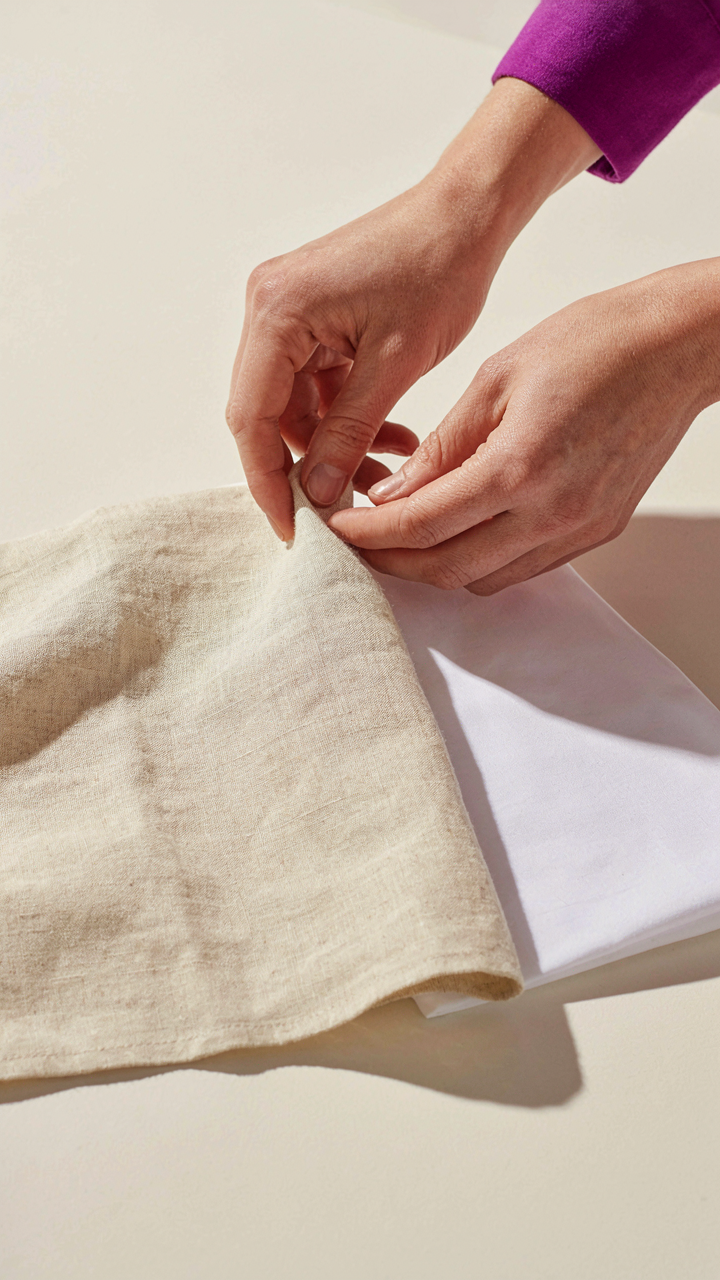
Natural fibers vary wildly in longevity and environmental cost. Cotton demands pesticides and water but biodegrades completely. Linen lasts longer per wash and uses less input. Wool resists odor, extends wear cycles, and insulates without frequent washing. Synthetics like polyester persist in landfills but outlast cheap cotton by years. The math flips based on how long you actually wear something. A synthetic jacket worn 200 times beats organic cotton worn 10 times.
- Cotton: Absorbent and breathable but requires heavy pesticide use and significant water. Degrades in landfills within months. Best for basics you’ll wear frequently and wash often.
- Linen: Durable, improves with age, uses 80% less water than cotton. More expensive upfront but cost-per-wear drops faster. Wrinkles intentionally, which most fast fashion rejects.
- Wool: Natural odor resistance extends time between washes. Biodegradable and insulating. Higher price point justified by lifespan. Itching matters: merino wool solves this.
- Polyester: Synthetic but durable. Resists wear for hundreds of cycles. Problem is landfill persistence, not immediate environmental impact. Choose it when durability genuinely serves you.
- Blends: Cotton-poly, wool-nylon combinations extend lifespan while keeping costs moderate. Trade-offs matter more than purity. Function beats ideology.
The real hierarchy isn’t “natural good, synthetic bad.” It’s wear density. A garment worn 300 times in three years beats one worn 30 times then discarded. Calculate expected wear before choosing material.
Reading Labels Without Getting Scammed
The certification game exists because consumers need proof, and companies need permission to charge more. Most labels signal nothing except marketing budget. GOTS certifies organic cotton growing but says nothing about dyes or factory conditions. Fair Trade verifies some supply chain practices but not all. B Corp status means the company pays for an audit, not that the product performs better.
The noise drowns the signal because every certification adds cost, and most brands slap claims without verification. Some labels require independent audits; others are self-declared. OEKO-TEX checks for harmful chemicals in finished fabric, which actually matters for skin contact. Bluesign certifies chemical management in production. FAIR TRADE USA tracks wages and conditions. Beyond that, specificity matters more than logos: a company stating exact factory locations and material sourcing beats vague “ethically made” claims. Your move is simple: ignore the logo count and instead ask what one specific thing the brand guarantees about this garment.
The Pareto Principle Of Personal Style: Maximizing Impact, Minimizing Input

Find Your Center Of Gravity
You want permission to stop overthinking your closet. The military concept of center of gravity translates directly: identify the single point of failure in your wardrobe strategy. Most people own forty pieces they cycle through while ignoring sixty. That’s waste disguised as choice. Your center of gravity is the three to five base colors and silhouettes that work across seasons, body states, and contexts. Everything else is noise.
Define this by asking what you actually wore last month, not what you think you should wear. Track it for two weeks. The pattern reveals itself immediately. Cotton basics in neutral tones, one denim weight, one layering piece. This becomes your anchor. Everything you buy on a budget must slot into this system or it dies in your drawer. That’s not limitation. That’s leverage.
The Real Cost Of One Bad Purchase
Everyone says “compare price per wear” and stops there. That’s incomplete advice. Economics teaches opportunity cost: the value of what you surrender by choosing option A over option B. Every dollar spent on an impulse buy is a dollar not spent on a piece that fits your center of gravity. The math shifts when you frame it this way.
A twenty-dollar trend piece worn twice costs you the capacity to buy a thirty-dollar staple worn one hundred times. One dollar per wear versus thirty cents per wear. But worse, the trend piece occupies mental real estate and closet space. It creates friction in your morning routine. The actual cost compounds across months. Before buying anything, name the specific piece in your center of gravity it replaces or delays. If you can’t name it, don’t buy.
The “Buy Nothing” Challenge: Reclaiming Your Fashion Freedom

Setting Boundaries On Consumption
You want permission to stop buying because you’re afraid you’ll miss out if you don’t have a rule forcing your hand. Here’s the mechanism: consumption habits are built on decision fatigue. Every time you encounter a piece of clothing, your brain runs a micro-calculation. Remove the stimulus, remove the cost. A thirty-day buy nothing window isn’t deprivation—it’s removing the variables that drain your budget and cloud your actual preferences.
The practice works because constraint forces intentionality. During this window, wear what you own. Document what you reach for repeatedly. These become your uniform anchors—the pieces that actually work for your life instead of the pieces marketing convinced you needed. After thirty days, you’ll notice gaps, but now you see them clearly. That clarity saves money because you buy replacements, not impulses.
Style Emerges From Scarcity
The fashion industry built itself on the opposite principle: abundance creates desire. When you have infinite options, choice becomes paralysis, and paralysis becomes shopping for distraction. Flip this. Constraints force you to combine existing pieces in new ways. This is how personal style actually develops—not from owning more, but from exhausting the combinations of what you have.
The real move is wearing the same fifty pieces across multiple seasons and watching which combinations feel right. You stop dressing for external validation and start dressing for function and preference. After the buy nothing challenge, most people discover they need thirty percent fewer clothes than they thought. Now when you do buy, each piece has a specific role. You’re operating from decision clarity, not noise.
Your True Obstacle Isn’t The Price Tag Of Ethical Clothing; It’s Your Unexamined Impulse To Constantly Acquire

The sustainable fashion on a budget game ends when you stop playing the acquisition game altogether. You don’t need cheaper ethical clothes. You need fewer clothes, period. Before you buy anything today, ask yourself why you want it. Not the story you tell yourself. The real reason. Then wait 72 hours. If you still want it, buy it. Most won’t survive that test. You’re not broke because ethical fashion costs too much. You’re broke because you mistake shopping for living.