
Beyond Trends: Why Denim Skirt Outfits Endure

The Stability Principle
You’re reading this because you want permission to stop chasing trend cycles and still look intentional. Here’s the mechanism: denim skirt outfits work because denim itself resists obsolescence through material properties, not marketing cycles. The fabric gains authenticity with age and wear, making older pieces more valuable than new ones. This breaks the typical fashion depreciation curve where items lose relevance within seasons.
Economics borrowed a term from physics: elasticity. A denim skirt outfit has demand elasticity because it adapts to shifting seasons, body changes, and social contexts without requiring replacement. You layer it in fall, bare it in spring, pair it with boots or sneakers, dress it up or down. The same garment solves multiple problems across time, which is the opposite of trend-driven consumption that demands constant acquisition to feel current.
The Function Before Form Argument

Most style advice says denim skirts endure because they’re “timeless” or “classic.” That’s lazy. They endure because they solved a genuine problem in the 1870s and still solve it now: the need for durable, affordable legwear that withstands work and movement. The denim skirt survived not through beauty consensus but through utility that nobody could argue against.
The design hasn’t fundamentally changed because the core function hasn’t needed reinvention. A five-pocket structure distributes weight efficiently. Durable twill weave resists tearing. Indigo dye fades predictably, making wear patterns visible and personal. When you build an outfit around a denim skirt, you’re building around a garment that proves its value through years of use, not through seasonal marketing pushes. That reliability becomes the foundation of every combination you create.

The Unspoken Rules Of Spring Denim Skirt Outfits

Layering Without Visual Weight
You want to look effortless in spring, which means you’re actually afraid of looking heavy or overdressed as the temperature swings. The mechanism is density, borrowed from physics: you’re not stacking garments, you’re managing how much visual mass occupies space. A denim skirt outfit in spring survives through negative space, not pile-on tactics.
Wear a fitted long-sleeve tee under an open linen shirt. The denim skirt stays your anchor. Add a lightweight cardigan in cream or pale gray, not chunky knits. Breathable fabrics like linen and cotton lawn move air through the outfit. The eye reads motion, not mass. Tuck nothing unless the shirt demands it. Let the layers separate from each other by an inch or two.
Texture contrast matters more than color matching in spring. A smooth denim skirt pairs against a ribbed tee or a subtle herringbone weave. The brain registers variation as intentional design, not accident. Matte finishes dominate spring denim skirt outfits because they scatter light instead of reflecting it back hard. This is why shiny, heavily processed denim looks wrong seasonally, even if the outfit technically works.
Building Warmth For Transitional Days
Common advice says “layer more” when fall creeps in. That’s incomplete. You need to understand where cold actually hits your body and cover those zones first. A denim skirt outfit loses effectiveness in fall because exposed legs become the liability, not an accessory choice.
Swap the open shirt for a structured blazer in wool or a wool blend. Keep the fitted tee underneath. Add opaque tights in cream, tan, or charcoal. Tights under a denim skirt compress the visual line and create a unified leg, which reads as intentional in fall. Footwear shifts from sneakers or sandals to closed-toe shoes with structure: loafers, mules, or boots.
Transition your denim skirt by choosing mid-weight washes instead of pale spring tones. Medium indigo works better than light blue once the season shifts. Layer a long cardigan over everything for the final warmth layer. The denim skirt outfit now functions as a base template you dress up or down by swapping the outer layer. This is your actual protocol: core pieces stay constant, outer shell changes with temperature.
Fall Denim Skirt Outfit Women: The Strategic Layering

Mastering Warmth Without Sacrificing The Silhouette
You’re worried that layering will make you look bulky. The real mechanism is mass distribution, borrowed from physics. You’re not adding warmth evenly—you’re placing it strategically so the denim skirt remains the visual anchor. A fitted turtleneck or slim long-sleeve base layer sits close to the body. An oversized cardigan or structured blazer goes over it. The skirt stays untouched as the focal point. Bulk happens when you layer loose items on top of loose items.
The order matters more than the items themselves. Tight base, medium mid-layer, looser outer layer creates visual tapering toward the legs. Avoid stacking volume. A chunky sweater plus a puffy jacket plus the skirt creates a shapeless column. Swap the puffy jacket for a tailored wool coat. The silhouette survives fall temperatures because you controlled where mass accumulates.
Footwear Choices That Elevate Fall Denim Skirt Outfits
Boot height and material dictate whether the outfit reads intentional or accidental. Most people default to ankle boots with midi or knee-length denim skirts because they fear the shin gap. That’s the wrong problem to solve. A knee-high leather or suede boot creates visual continuity from the skirt hem down. The denim and boot blend as one column. Shorter boots work only if you commit to opaque tights or socks that match the boot tone.
Material composition changes the weight of the overall outfit. Leather boots signal structure and formality. Suede reads softer but requires maintenance. Canvas or hybrid materials work for casual fall fits but pair poorly with more polished skirt washes. Match the boot’s visual weight to your top. A sleek turtleneck plus blazer demands a substantial boot. A loose sweater allows lighter footwear like loafers or mules. The footwear locks in whether the outfit reads as put-together or thrown together.
The Jean Skirt Outfits Contextualization Protocol

Layering As Strategic Depth
You want permission to buy more without looking like you’re trying too hard. Here’s the actual mechanism: military strategy calls this “defense in depth”—positioning forces in layers so each one serves a specific tactical function. A denim skirt outfit works the same way. Your base layer handles temperature. Your mid-layer creates visual interest. Your outer layer signals intention. Each piece justifies the others.
Most advice says “just add a cardigan.” That’s lazy. Real depth means your layers do different jobs. A fitted turtleneck under a denim skirt changes the silhouette from casual to deliberate. A linen shirt over it shifts mood without adding bulk. An unstructured blazer on top completes the stack. Each layer reduces the mental load on any single piece, which means your denim skirt stops carrying the entire outfit’s weight.
Marginal Gains In Accessory Choices
Economics teaches diminishing returns: each additional dollar spent yields less value. Apply this to accessories and you stop wasting money on things that don’t move the needle. A denim skirt outfit doesn’t need six accessories. It needs the ones that change perception most efficiently.
A leather belt shifts how the skirt sits and reads. A structured bag anchors the entire look. One quality shoe choice matters more than three mediocre ones. These items have outsized impact relative to their cost because they control proportion, scale, and finish. Skip the trinkets. Choose pieces that alter how your body reads in the outfit. This is how you extract maximum visual value from minimum spend.
The Myth Of “Casual NYC Fall Outfits” Effortlessness

The Aesthetic Requires Brutal Editing
You want to believe that thrown-together look costs nothing and takes no thought. That’s the real draw here—permission to stop trying. But the mechanism is borrowed from graphic design: negative space. The perceived casualness of a denim skirt outfit isn’t the result of adding more. It’s the result of removing everything that signals effort. A structured blazer, visible logos, matchy accessories, trendy pieces from last season—all of it gets cut. What remains looks simple because irrelevant information is gone.
The curated unstyle you see on Instagram or streets in Brooklyn operates on subtraction as strategy, not accident. The model didn’t grab random pieces. She eliminated anything competing for attention. A midi denim skirt works here because it solves a problem: it’s versatile enough to anchor an outfit while staying neutral enough to disappear. That’s the opposite of effortless. It’s precision disguised as indifference.
Strategic Constraints Shape The Fit
The real work happens before you get dressed. You decide: which textures compete? Which colors create visual noise? Which silhouettes actually work with your body type versus which ones you want to work because they trend? These constraints force intentional choices. A denim skirt in medium wash, paired with a fitted cream sweater and leather loafers, broadcasts restraint. Add a busy pattern, oversized fit, or color that demands attention, and the outfit signals something else entirely—usually that you’re trying too hard to fit a trend.
This is where most people fail. They know casual looks better than formal ones, so they assume casual requires less decision-making. Wrong. Professional wardrobers spend more time on “casual” because the margin for error shrinks. You can’t hide behind formality. A denim skirt outfit lives or dies on proportion, color theory, and whether each piece justifies its presence. That’s not effortlessness. That’s editing.
Denim Skirt Outfit Ideas: Beyond The Obvious Pairings

Texture Layering For Visual Weight
You want permission to look intentional without trying. The real mechanism is tension—the eye stops moving when two opposing textures meet, which signals deliberation instead of default choices. Pairing denim with satin, silk charmeuse, or wool knit creates this friction. The denim’s rigid weave against a fluid fabric makes both read stronger. This isn’t decoration. It’s visual contrast that does work.
Leather, suede, and corduroy all register as heavier than denim’s cotton base, so layering them underneath shifts the outfit’s perceived structure. A chunky knit sweater over a denim skirt reads different than a fitted tee—the volume difference forces the eye to parse the composition. Metallics like lamé or lurex in accessories amplify this effect without adding bulk. The mechanism is simple: opposing textures force attention. Build your outfit around this principle, not around what feels safe to combine.
Color Palettes That Break The Default
The standard advice says pair denim with neutrals. That’s incomplete. Color theory borrows from how light wavelengths interact—saturation, value, and temperature are the actual levers. A denim skirt in saturated indigo next to equally saturated jewel tones creates equilibrium. Pair that same skirt with desaturated or muted tones and the denim dominates. Most people default to muting everything around denim because they don’t want competition. That’s the wrong constraint.
- Monochromatic blue shifts: Layer different indigo densities—dark denim skirt with a lighter chambray shirt or medium-wash overshirt. The tonal variation reads cohesive without flatness.
- Warm contrast pairings: Burnt orange, terracotta, or rust tones against cool blue denim create temperature opposition that feels intentional, not accidental.
- Jewel tone saturation: Emerald, sapphire, or burgundy in tops or outerwear match denim’s saturation level, creating visual equality between pieces instead of hierarchy.
- Desaturated earth tones: Olive, taupe, or muted rust pull focus away from denim by lowering overall contrast, useful when the skirt needs to recede visually.
- Black and white anchoring: Crisp white tops or true black outerwear frame denim as the middle value, forcing it into a supporting role rather than the default lead.
The constraint isn’t the denim’s color. The constraint is understanding what you’re trying your outfit to do—dominate, balance, or support a different focal point. Choose colors based on that role, not based on what’s considered safe.
The 2022 Outfit Playbook: Avoiding The Disposable Trend Cycle
What Actually Holds Value In Your Closet
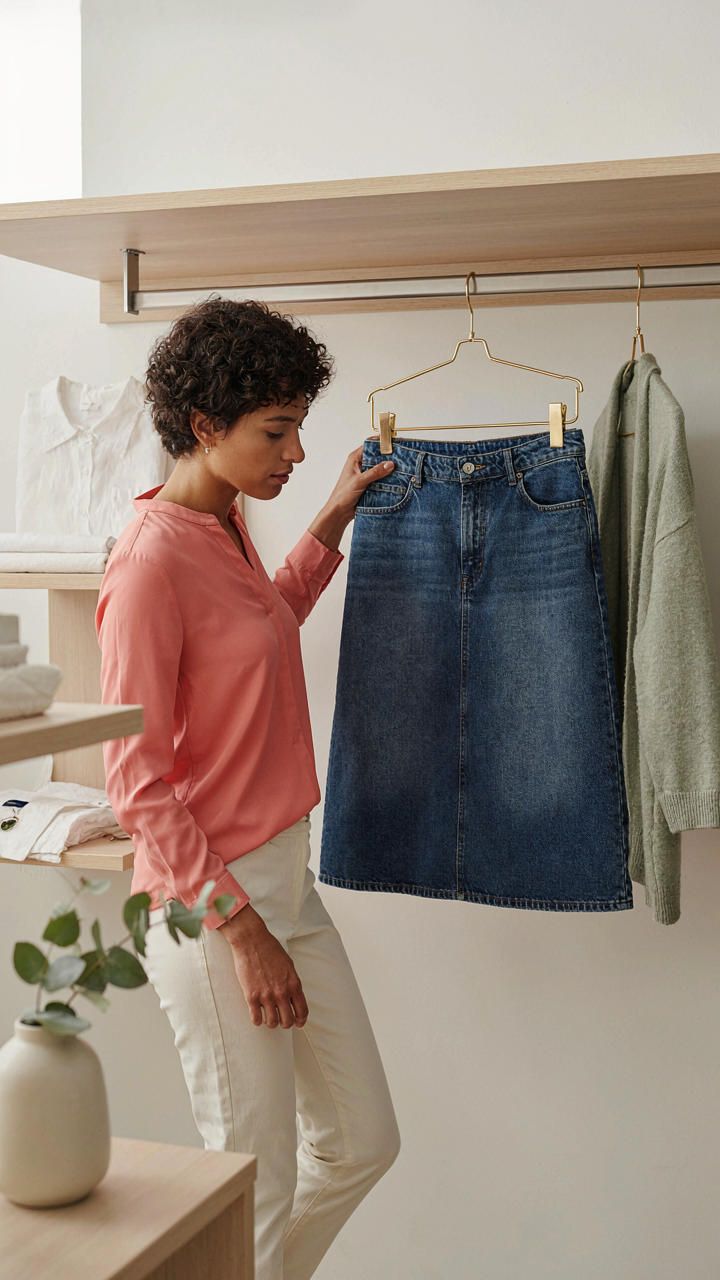
You’re afraid you’ll look behind the times. That’s the real reason this matters. The mechanism is simple: most people confuse novelty with quality, then wonder why their closet feels empty after a season. A denim skirt avoids this trap because the garment itself hasn’t fundamentally changed in forty years. The fit evolves, the wash varies, the rise shifts slightly, but the core product remains the same. This stability is what separates an investment from a disposal purchase. When you buy a denim skirt from a reputable maker, you’re buying a piece that will still function in three years because the design isn’t chasing trend cycles.
Real investment pieces have one trait in common: they solve a functional problem without relying on visual novelty to justify their existence. A high-rise, raw denim skirt with minimal hardware works in 2022 the same way it worked in 2015. Fleeting fads always require explanation or defense. They need narrative scaffolding around them to make sense. If you find yourself mentally justifying why you bought something, it’s a trend. Denim skirts that survive multiple seasons don’t require justification because they simply fit, move, and coordinate without effort.
The Denim Skirt As System Architecture
Build around one core piece instead of chasing combinations. Your denim skirt functions like a hub in a network, where every other item in your closet becomes more valuable because it connects to it. Economics calls this “network effect,” but in wardrobe terms it means one solid mid-weight denim skirt in a neutral wash instantly doubles the utility of plain tees, sweaters, jackets, and shoes you already own. Most people work backward, buying random pieces and hoping they combine. That’s chaos. This approach is intentional layering from a single anchor point.
Start with one denim skirt in a versatile wash and fit that sits comfortably on your natural waist. Then add pieces that genuinely serve multiple purposes: a long linen shirt that works as both layer and standalone, a cardigan in a neutral that matches your existing palette, boots or flats that pair with other bottoms. Each addition must justify itself by increasing how many outfit combinations exist, not by looking distinctive. After you’ve validated this system works across spring and fall transitions, then you can add a second denim skirt in a different weight or wash, but only if the first one stays in rotation at least twice a week.
Accessorizing A Jean Skirt Outfit: The Leverage Points

Where Your Outfit Gets Its Weight
You want accessories to do the work so you don’t have to think about it. The real mechanism here is focal point theory from product design: one chosen element absorbs attention, and everything else becomes support. A denim skirt is neutral fabric. It has no opinion. Pick one accessory to carry the visual load, and the outfit becomes intentional instead of incomplete.
A belt does more than hold fabric in place. It creates a line break that divides your torso from your legs, which changes how your body reads in the frame. A structured bag or statement jewelry pulls the eye toward one zone and locks the outfit’s energy there. The mistake people make is treating belts, bags, and jewelry as decoration. They’re hierarchy builders. Choose one that does the work. The others recede.
Layering The Visual Story
Outerwear and scarves aren’t finishing touches—they’re the frame around the whole composition. Think in terms of layering from architecture: each element sits in front of or behind another to create depth. A denim skirt with a thin long-sleeve shirt looks thin. The same skirt under a cardigan or jacket creates volume and intentionality. A scarf adds another layer of color or texture without competing with the skirt for attention.
The common advice to “add a scarf for interest” is lazy and wrong. The scarf either echoes a color already in your outfit or introduces a controlled new element. Outerwear works differently in spring versus fall—a linen shirt in spring reads as intentional thinness, while a knit cardigan in fall reads as seasonal alignment. Test this: pull a sweater on top of your denim skirt outfit and notice whether it changes the outfit’s coherence. That change is your signal the layer is working.
The Minimalist Denim Skirt Fall Wardrobe

Build Around One Core Piece
You want permission to stop shopping, but you’re afraid that fewer items means fewer options. The mechanism is this: constraint forces intention. A single denim skirt in raw indigo or medium wash becomes your anchor. Everything else you own must justify its existence by working with it. Fall demands a piece that bridges seasons, and a denim skirt does that better than trend pieces because it doesn’t expire. Choose one cut, one wash. Stop there.
The denim skirt you select should handle multiple styling contexts without modification. A knee-length A-line in sturdy cotton works for casual Fridays, weekend walks, and layered fall looks. Avoid novelty washes, extreme silhouettes, or anything requiring alteration. Raw denim fades and molds to your body over time, which means it gets better. That’s the opposite of fast fashion and the entire point of minimalism: ownership that compounds value instead of eroding it.
What You Actually Need Around It
Minimalism isn’t about deprivation—it’s inventory economics. You’re optimizing for outfit combinations, not closet size. Pair your denim skirt with three core pieces: a fitted turtleneck for layering, a neutral button-up for structure, and an oversized sweater for volume. Add one lightweight jacket that works in 50-degree and 65-degree weather. These pieces create mathematical outfit variety. A turtleneck plus skirt differs from button-up plus skirt differs from sweater plus skirt, but you own only five total items that matter.
The real work happens in the accessories tier. A leather belt, one pair of boots that handles dry and damp conditions, and a bag that fits a phone and keys. Socks matter more than most people admit—neutral merino wool stays functional across temperatures and doesn’t show wear like cotton. You’re not building a capsule wardrobe because that language is marketing nonsense. You’re building a system where every piece serves three or more outfits and nothing sits unused.
Your Fear Of Being Unremarkable Is The Real Fashion Trap. Escape It

You’ve been taught that a denim skirt outfit needs to look a certain way. It doesn’t. The trap isn’t bad outfit choices. It’s caring more about fitting in than standing out. Stop scrolling inspiration boards and start wearing what you actually like, even if nobody else is. Today, pick one piece in your closet that scares you slightly. Wear it. Mediocrity isn’t a look, it’s a choice.