

The Myth Of The “Effortless Outfit”: Why Most Get It Wrong

What “Effortless” Actually Means
You want to believe a good outfit just happens, that some people are born knowing how to dress. They’re not. What reads as effortless is actually the result of someone understanding one specific constraint: visual weight distribution. The pants dictate everything downstream. Wide leg jeans are heavy at the hem. Most people ignore this fact and wonder why their outfit feels sloppy instead of intentional.
Effortless outfits fail because they’re built on accident, not principle. You see a photo, copy the silhouette, and the context is missing. The model’s shirt tucked differently. The shoes cost more than yours. The proportions were adjusted in post. You replicate the surface and get nothing. Real consistency comes from treating your outfit like a physics problem, not a mood board.
Visual Weight Requires Deliberate Counter Balance

Fashion borrowed this from actual physics: mass and equilibrium. Wide leg jeans create downward visual mass at the ankle. This pulls the eye down and makes the entire outfit feel heavier than it is. Without compensation, you end up top-heavy or shapeless. The shirt must either taper or tuck to create visual tension that matches the jeans’ weight.
Most outfit advice ignores this entirely and just says “pair it with a crop top” or “tuck it in.” That’s incomplete instruction for lazy people. You need to measure the visual weight of your top against the jeans’ leg opening, then choose shoes that either ground or elevate the look. A chunky white sneaker grounds it. A pointed flat floats it. A stiletto shortens the leg line and fights the visual mass. The shoe choice isn’t aesthetic preference, it’s a tactical counter weight.

The Kinematics Of Wide Leg Jeans: Movement And Form

How Fabric Weight Changes Your Proportions
You want to know this because you’re afraid the jeans will make you look wider than you actually are. Here’s the mechanism: physics governs how fabric behaves around your body. Heavier denim has mass. Mass creates distance from the leg. Distance changes the optical baseline your eye uses to judge leg width relative to torso width.
A 12-ounce jean hangs differently than a 14-ounce jean. The heavier fabric doesn’t cling to the thigh. It breaks earlier and falls straighter from hip to hem. This vertical line compresses perceived hip width because the eye tracks the drape, not the body underneath. Lighter fabric clings longer and creates a wider visual silhouette at the hip before narrowing. The jeans themselves become the proportional reference point, not your body.
Shoe Type As Visual Anchor
Footwear solves the balance problem nobody articulates directly. Wide leg jeans create volume. Volume needs grounding. A shoe either stabilizes that volume or amplifies it. Pointed-toe shoes narrow the foot and create visual instability under a wide hem. The bottom of the outfit looks trapped inside the top. Chunky shoes—loafers, platform boots, thick-soled sneakers—create a base that matches the visual weight of the denim. Chunky shoes anchor wide leg jeans because they meet the fabric with equal graphic presence.
The shoe diameter must correlate with leg volume. This isn’t style. This is proportion. A flat ballet flat under wide leg jeans creates a visual taper that fights the silhouette. The ankle disappears. A square-toe loafer extends the line horizontally and keeps the hem from looking like it’s collapsing onto a thin base. Test this by standing in front of a mirror. Watch how the shoe changes where your eye stops.
Beyond The Baggy Jeans Outfit: Intentional Proportions

How Tops Balance Leg Volume
You’re worried that wide-leg jeans will make you look sloppy, so you’re searching for permission to wear them. Here’s the mechanism: volume displacement. When fabric expands below the waist, it absorbs visual weight. A fitted or cropped top counterbalances that expansion and signals intentionality instead of carelessness. The inverse is true too—oversized tops with wide legs flatten your frame and blur your silhouette into shapelessness. A standard rule exists: keep your top length to your natural waist or above, and keep its width fitted through the torso. This isn’t style opinion. It’s visual proportion.
The gap between hip and hem determines how much top volume works. If your wide legs start at your natural waist and hit your ankle, a standard fitted tee or tucked button-up restores visual balance. If your jeans sit lower and break at the shoe, you need a cropped top or a tuck to avoid drowning in fabric. The width of your shoulders matters too. Narrow shoulders need fitted tops to avoid the hanging-clothes effect. Broader shoulders can absorb slightly more drape without losing definition.
Cropped Versus Tucked Strategy
The common advice treats cropping and tucking as interchangeable options. They’re not. Cropped tops expose skin and create a visual break between your torso and legs, which shortens your perceived leg length. Tucking keeps your full torso visible while defining your waist and preserving leg length. The choice depends on your actual height and proportions, not trend cycles.
If you’re under 5’5″, cropping loses leg real estate you can’t afford to lose. A tuck with a front knot or a full tuck into high-waisted wide legs keeps your legs visible and elongates your frame. If you’re 5’7″ or taller, cropping works because you have length to spare. Test this in a mirror: tuck your current top into your wide-leg jeans, then crop it mentally or with a hair tie, and measure the difference in how your legs read. The option that makes your legs visually longer is the one you wear.
Footwear As Function: The Shoe To Jean Imperative

What Shoe Styles Amplify Wide Leg Impact
You’re worried the outfit won’t work because you don’t know which shoes won’t sabotage it. The mechanism is proportion stacking. Wide legs create volume at the bottom, so shoes either anchor that volume or fight it. Think of it like load distribution in engineering: the shoe’s visual weight must match the jean’s mass, or the whole structure collapses into visual chaos.
Pointed flats and sleek loafers ground wide legs because they compress visual space vertically while the jean expands it horizontally. This contrast works. Block heels and chunky sneakers reinforce the silhouette’s lower half without competing for attention. Minimal ankle exposure matters more than heel height. The shoe should feel inevitable, not decorative. When a shoe disappears into the outfit’s logic rather than demanding focus, wide legs read as intentional rather than accidental.
Shoes That Kill The Wide Leg Vibe
- Thin heels or stilettos: Create a visual pinch that fights the jean’s volume and break the grounded proportion the outfit needs to land.
- Ballerina flats or dainty strappy sandals: Too delicate for the jean’s weight, making the fit feel unresolved or accidentally mismatched in scale.
- Oversized platform sneakers with heavy branding: Compete for visual dominance and turn the outfit into competing statements rather than a cohesive silhouette.
- Pointed-toe dress shoes or heeled mules: Read as formal or transitional, breaking the casual-to-intentional tone wide legs typically deliver in modern dressing.
- Strappy gladiator sandals or elaborate lace up boots: Add too much visual complexity at the foot, overwhelming the simple geometry that makes wide legs work.
The common advice about wide legs is that “anything goes with them.” Wrong. Shoes either resolve the silhouette or fracture it. Match shoe volume to jean volume, keep ankle exposure consistent, and avoid mixing visual weight categories. Your shoe choice determines whether wide legs read as controlled or chaotic. Test this by photographing the same outfit with three different shoes and comparing how each changes the entire silhouette’s coherence.
The Blue Jean Outfits Blueprint: Color Theory And Contrast
Monochromatic Mastery In Denim
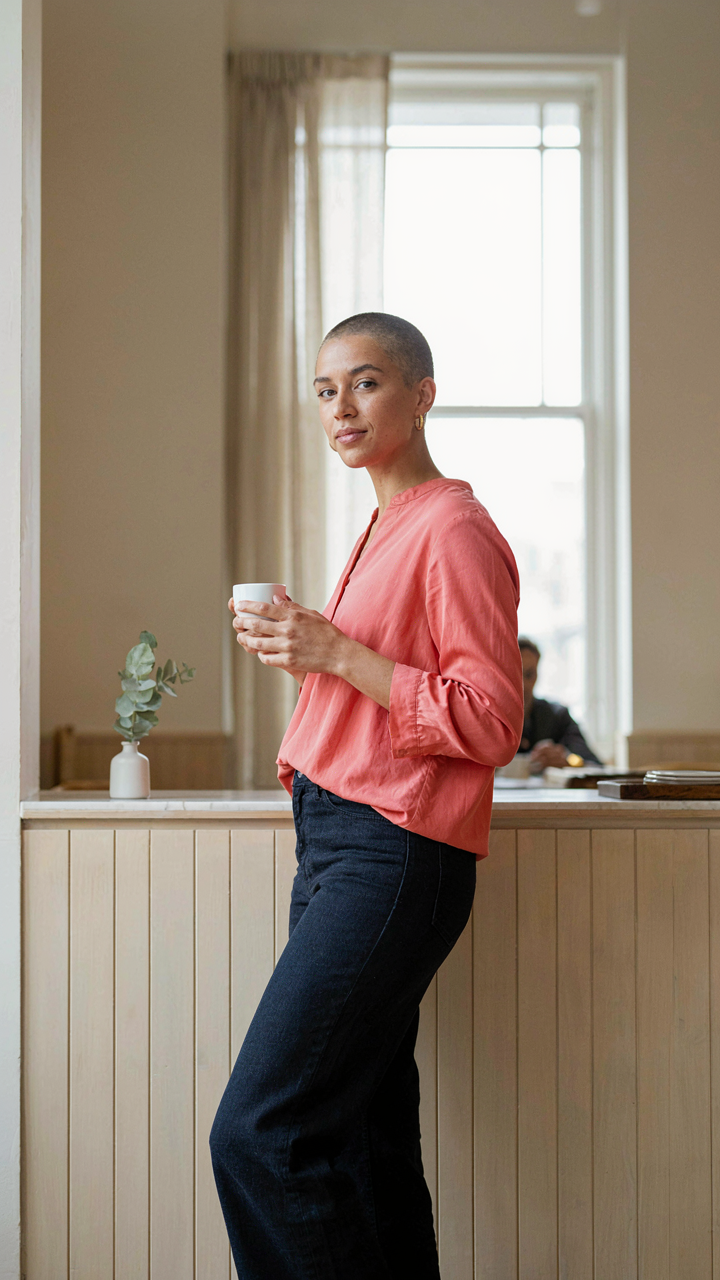
You’re worried that wearing one color makes you invisible. It doesn’t. Monochromatic dressing works because it uses value contrast, borrowed from painting: the relationship between light and dark, not hue variety. In a wide leg jeans outfit, this means pairing medium-wash denim with a lighter or darker top and shoes, creating visual separation without clashing colors. The eye reads layers and shapes instead of fighting competing hues.
Light-wash wide legs pair with a charcoal sweater or black blazer. Dark indigo pairs with cream, white, or tan uppers. The fabric textures themselves add dimension. Suede reads differently than cotton, matte differs from sheen. You’re not being boring. You’re using constraint to build coherence. The outfit holds together because the color logic is airtight, not because you threw together five “statement pieces.”
Strategic Contrast That Actually Works
Most people get contrast backwards. They pile on bright colors and call it bold. That’s noise, not contrast. Real contrast is surgical: one element breaks the color family, everything else supports it. If your wide leg jeans outfit anchors in neutral tones, a single saturated color works. A burgundy cardigan over cream and navy. A rust-colored belt with gray and denim. That item becomes intentional, not accidental.
The mechanism is about visual hierarchy. Your eye lands on the contrasting piece first because it breaks pattern. Everything else reinforces it. This is why mixing metallics fails so often in wide leg outfits. Gold and silver both compete for attention and neither wins. Choose one. If you use warm gold jewelry, keep the palette warm. If you use cool silver, push toward cooler tones in your top and shoes. The contrast lands when one decision dominates.
The “On Repeat” Protocol: Building A Wide Leg Jean Outfits System

Core Pieces That Actually Compound
You want a system so you stop thinking about this. The mechanism is constraint, borrowed from product design: fewer inputs create more outputs. You build a wide leg jeans outfit by identifying three to four anchor pieces that work with the jean’s volume and proportion, then rotating secondary layers around them. A white crew neck tee, a neutral oversized blazer, and a fitted turtleneck become your base. Each one neutralizes the visual weight of the leg, so the jean reads as intentional instead of costume. The jean’s cut demands restraint everywhere else.
Most people own too many pieces that compete for attention. That kills a system. You need pieces that disappear into the outfit’s logic. A cream linen shirt, a camel coat, a black tee, a striped long-sleeve basic. These aren’t exciting individually. They’re invisible until stacked with the jean, which is exactly the point. Start with one core blazer and one core simple tee that both fit your frame without excess fabric. Add shoes that don’t fight the silhouette: a pointed flat, a white leather sneaker, a minimal loafer. Test each combination twice before adding anything else.
Seasonal Translation Without Waste
Cold weather demands layering, but wide leg jeans already claim visual real estate. The protocol shifts but the core pieces stay. Winter means a fitted turtleneck under a structured wool blazer, then a long coat that skims past the jean’s hem. Spring strips back to the linen shirt. Summer calls for sleeveless shells or tank tops to keep the top half tight. The jean itself doesn’t change. Your anchor pieces do one job: they adapt while the jean stays constant.
This isn’t about owning more. It’s about owning smarter versions of what works. A summer linen blazer, a winter wool blazer, both in neutral tones, both slim through the shoulders. A lightweight crew neck and a heavyweight turtleneck in the same neutral. The shoe rotation is the real lever: white sneaker for spring and summer, loafer or flat for fall, ankle boot or pointed flat for winter. The jean outfit system survives the year because you planned for it, not because you improvised new pieces every season.
The Trendy Denim Jacket Fallacy: When “Stylish Denim” Fails

Denim On Denim Done Right
You’re worried people will think you don’t know how to dress. That fear drives the whole “avoid denim on denim” rule. But the real mechanism is proportion. Denim on denim fails when both pieces fight for visual weight instead of one receding. A structured jacket paired with wide leg jeans works because the jacket holds its shape while the legs flow. The contrast in silhouette creates hierarchy. Without hierarchy, you look undecided.
The rule everyone quotes is backwards. It’s not about the material. It’s about letting one piece dominate and the other support. A fitted or cropped denim jacket over wide legs works. An oversized jacket over wide legs works. What fails is matching weight on top and bottom, which collapses the outfit into one flat block. Test this by checking if your eye knows where to land first. If it doesn’t, you have a proportion problem, not a material problem.
Jackets That Elevate, Not Overwhelm
Think of this like signal-to-noise ratio from engineering. Your outfit transmits a signal through proportion and structure. An oversized denim jacket acts as amplification. Oversize the wrong way and your signal becomes noise. The wide legs already establish a relaxed silhouette, so your jacket can’t be soft and accommodating too. It needs definition.
A structured denim jacket with sharp seaming, a defined waist, or cropped length creates contrast that makes the wide legs look intentional instead of oversized. Layer a fitted jacket over a simple base and the outfit gains dimension. The jacket becomes the focal point. Everything else supports it. Your shoes anchor the look downward. Pick one anchor per outfit. If the jacket commands attention, the shoes recede. This prevents visual chaos and makes the wide legs feel like a choice, not a default.
Accessorizing As Amplification: The Final Touch To Jean Outfits
Where Your Belt Lands Matters More Than The Belt Itself
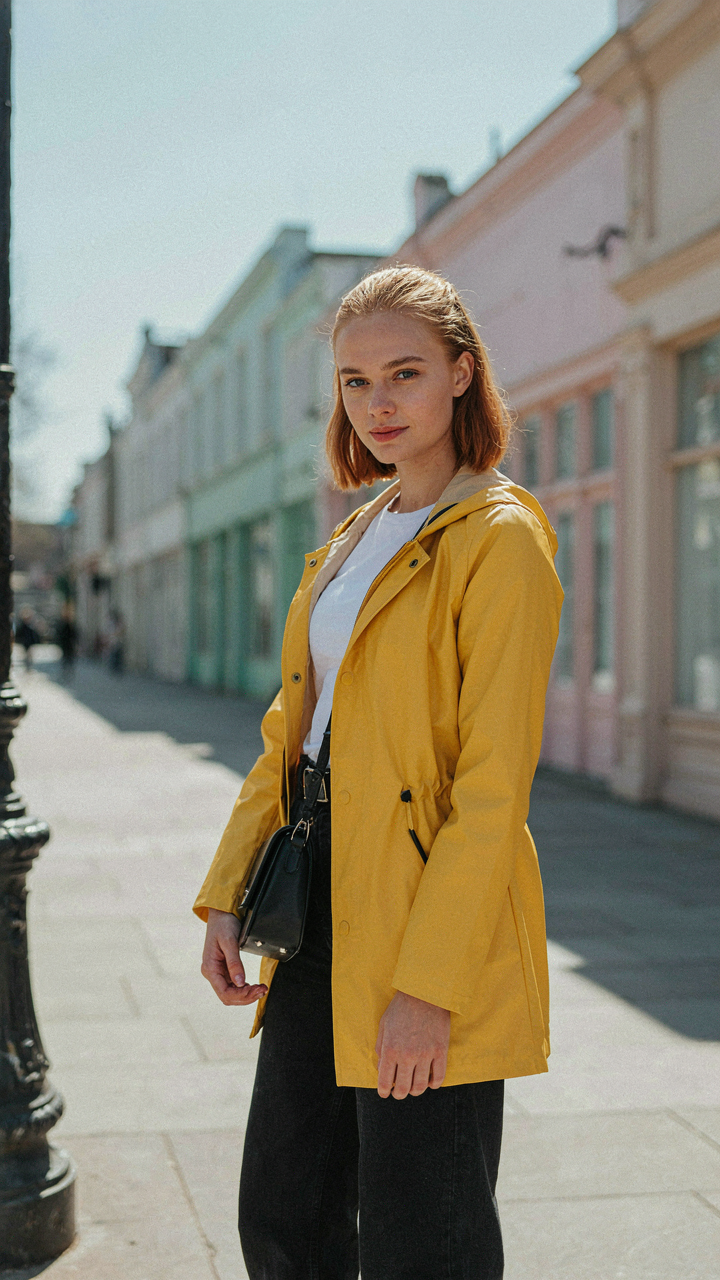
You want accessories to make the outfit feel intentional instead of thrown together. That’s the real motive here. Belts on wide leg jeans work like visual anchors in graphic design—they interrupt the vertical line and force the eye to reset. A belt placed at your natural waist shortens your proportions and grounds the silhouette. Place it lower on your hips and you extend the leg line, which is why oversized blazers paired with wide legs often skip the belt entirely or use a thin one positioned high.
Bags follow the same logic. A structured bag at hip height creates horizontal competition with the jeans’ volume. A crossbody bag or shoulder bag positioned higher cuts through the width of the leg opening and establishes clarity. The mechanism is simple: narrow accessories narrow the silhouette; wide or loose accessories amplify the relaxed feel. Choose based on what you want to emphasize, not based on what’s trendy.
Minimal Jewelry Reads Louder Than Layered Pieces
Most advice says to keep accessories “simple” when wearing statement jeans. That’s incomplete. The real rule is constraint creates focus. Gold chains, statement rings, and bold earrings don’t conflict with wide leg jeans—they compete for attention when stacked together. Pick one focal point. A chunky ring or a pair of angular earrings works because it gives the eye a single destination. Eyewear functions the same way. Oversized frames or colored lenses don’t clash with wide legs; they just need to be the accessory story, not one chapter in a longer one.
The best accessory strategy is subtraction. One bold piece beats three moderate ones every time. Thin gold chains, delicate bracelets, and minimal studs create the illusion of restraint without actually restraining anything. Start with one accessory you want to feature. Then stop. Add nothing else until you’ve worn the outfit and felt what’s missing.
The Real Obstacle Isn’t The Jeans; It’s Your Addiction To External Validation

You don’t need more outfit ideas. You need to wear something and stop asking if it looks right. The wide leg jeans outfit that works is the one you actually put on, not the one you’ll assemble in your head next Tuesday. Pick a top today. Pair it with the jeans sitting in your closet. Walk out the door. Stop treating your appearance like a permission slip waiting for approval from strangers who stopped thinking about you three seconds ago. Confidence isn’t knowing the rules; it’s breaking them without apologizing.