

The Intentional Layer: Beyond “Cozy” Cardigan Outfits

Where Comfort Becomes Invisible
You want permission to stop trying. That’s the real draw of the “cozy cardigan” pitch. The mechanism is simple: when you call something cozy, you’ve already lowered the bar for execution. Cozy excuses slouch. It excuses fit that doesn’t align to your frame. It excuses colors chosen by accident instead of intention. The cardigan becomes a permission slip to dress without thinking, and you confuse lack of effort with authenticity. The garment does the work while you disappear into it.
This is where cardigan outfits fail most women. They layer a cardigan over whatever’s underneath without considering silhouette, weight distribution, or how the eye actually moves through the composition. The cardigan isn’t cozy because you feel nice in it. It’s cozy because nobody can see what you’re actually doing underneath. You’ve traded visibility for invisibility, and visibility is what builds confidence and trust.
Strategic Presentation Over Comfort Theater

Think in terms of signal, borrowed from information theory: every element in your outfit transmits data about intention. A cardigan isn’t a softener or an apology for your body. It’s a deliberate architectural choice that either organizes your proportions or obscures them. The shift isn’t from uncomfortable to comfortable. It’s from passive to active. You stop asking “Does this feel like me?” and start asking “What does this communicate, and is that what I want to say today?”
Most cardigan advice tells you to pair it with basics and call it a day. That’s incomplete. The real work happens when you choose the cardigan’s weight, length, and closure to counterbalance what you’re wearing beneath it. If your frame reads narrow, an oversized cardigan adds volume at the right points. If you carry weight in your midsection, a cardigan worn open and layered strategically creates vertical lines that shift proportion. You’re not dressing for comfort. You’re dressing for effect. Begin by identifying one outfit element that feels off proportion-wise, then use the cardigan’s drape and length to rebalance it.

The Cardigan Outfit Archetypes: Deconstructing The Deliberate Look

Minimal Execution Wins Every Time
You want permission to own fewer things and still look intentional. Here’s the mechanism: constraint forces decision-making. When you have three cardigans instead of fifteen, you stop defaulting to comfort and start matching intent to context. A cardigan works best when it’s the only layer doing the visual work. That means the base underneath stays simple, the fit stays uncluttered, and the color palette stays tight. Overstyling kills the whole point of wearing one.
The common advice says add more pieces. Wrong. Strip down to one cardigan, one base layer, one bottom, one shoe. The cardigan’s job is to define the silhouette and temperature. Nothing else gets a vote. When you remove competing elements, the cardigan becomes the statement. You see this in how Scandinavian brands build wardrobes: one piece carries the load, everything else recedes. The protocol is simple: pick your cardigan first, then dress around what it already communicates.
Building Mass Without Bulk
Layering borrows from architecture’s load-bearing principle: distribute visual weight across the structure, not stack it in one place. A cardigan worn open over a fitted tee and tucked into high-waisted pants creates depth. The eye travels through planes instead of landing on one solid mass. This isn’t about adding clothes. It’s about positioning what you already have.
The trick most people miss is that open cardigans create negative space, which paradoxically makes an outfit feel larger and more composed. Throw a cardigan over a dress, leave it unbutoned at the sides, and you’ve added dimension without adding bulk. Wear it closed over a thin base layer and tapered bottoms, and you establish a vertical line that reads as intentional proportion. The action: always decide whether your cardigan works open or closed before you leave. Never leave it hanging as an afterthought.
The Cream Cardigan Outfit: Not Just A Neutral

Why Cream Works As Your Base Layer
You want permission to stop overthinking your closet. Cream functions as a foundational anchor the same way a neutral density filter works in photography: it reduces visual noise without removing information. Most advice treats cream as a safe default. That’s backwards. Cream is a strategic tool that lets every other piece in your outfit do its job without competing for attention.
The mechanism is simple. Cream sits between white and beige on the warmth spectrum, which means it doesn’t flatten skin tone the way pure white does, and it doesn’t date itself like stark beige can. When you build a cardigan outfit around cream, you’re choosing a base that absorbs visual focus. Your boots, belt, or jewelry become the actual statement. The cardigan recedes into support, not because it’s boring, but because it was designed to.
The Contrast Rule That Actually Works
Everyone says “add a pop of color” with a cream cardigan. That’s vague nonsense. Contrast works through value difference, not novelty. If your cream cardigan sits at a medium lightness level, you need either something significantly darker or noticeably warmer to register as intentional rather than accidental.
Wear cream over a forest green or charcoal base layer, and the outfit reads as deliberate. Wear it over a pale pink or beige, and it collapses into a tonal blur. The strategic move is to choose ONE contrasting piece that’s dark enough or warm enough to cut through. Dark denim, a burgundy sweater underneath, or a camel skirt all work because they register visually against the cream. You don’t need multiple colors. You need one element that creates actual separation.
Winter Layering Outfits: The Thermal Intelligence Protocol

How Heat Actually Moves Through Fabric
You want to feel warm without looking bulky. That’s the real tension here. The mechanism isn’t magic—it’s thermodynamics. Heat moves from your body outward. A cardigan works because it traps a dead air layer against your skin while allowing moisture to escape. Most people layer wrong: they stack fabrics that compress under pressure, killing the insulation. Your cardigan needs breathing room and a base layer that pulls sweat away from skin, not toward it.
Cotton holds moisture and cools you down faster. Merino wool and synthetic blends wick sweat outward while maintaining air pockets. Your cardigan sits as the outer barrier that prevents wind from collapsing those pockets. The order matters more than the individual pieces. Base layer tight to skin, mid-layer loose enough to trap air, cardigan open or semi-fitted over top. This creates thermal regulation, not just warmth. Wear your cardigan slightly oversized over fitted basics—the gap is your insulation.
Material Selection For Strategic Warmth
Insulation works through one principle: still air retains heat better than moving air. Wool accomplishes this naturally through its fiber structure. Acrylic and polyester blends replicate this effect at lower cost but degrade faster. A wool or wool-blend cardigan maintains its insulating properties longer and handles moisture better than pure synthetics. Cotton cardigans offer breathability but fail in true cold—they absorb sweat and lose insulating value when damp.
Cashmere and merino wool cardigans deliver premium insulation but demand maintenance. Acrylic blends stay affordable and machine-washable. Viscose and linen cardigans work for transitional seasons, not winter layering. Choose your cardigan weight by checking the fiber content first, then gsm or thickness. A dense wool cardigan at 500-700 gsm will outperform a thin polyester blend every time, regardless of price. Pair it with a moisture-wicking base and you’ve solved most winter comfort problems through material choice alone.
Fall Cardigan: Mastering The Transitional Wardrobe

Weight And Seasonal Utility
You want to feel prepared without overthinking it. That’s the real driver here, and it’s solved by understanding fabric weight as a layering mechanic borrowed from engineering: the right density equals the right insulation-to-mobility ratio. A cardigan’s usefulness in fall depends entirely on its fiber weight and construction. Merino wool, cotton blends, and acrylic knits perform differently across temperature swings. Pick the wrong weight and you’re either sweating indoors or freezing at dusk.
Medium-weight cardigans work the transitional window because they layer efficiently without bulk. Merino wool at 300-400 grams per square meter handles 50-65 degree days solo. Acrylic blends at similar weights offer the same utility at lower cost. Cotton cardigans thinner than 250 grams function as layering pieces, not standalone shells. Test the fabric between thumb and forefinger: you should feel density without rigidity. A cardigan that folds flat into a bag wins the transition game because you’ll actually carry it when the forecast shifts.
Autumn Color Palette Authenticity
Common advice says wear earth tones in fall and call it a day. That’s lazy and misses how color actually anchors a seasonal outfit. Autumn palettes work because they match the light temperature shifting from high summer blue to low-angle golden hour: your clothes sync with the sun’s actual position in the sky. This is why burnt orange, rust, deep olive, and charcoal read as authentically autumnal. They mirror what’s already happening in the landscape.
Wear what the season is already showing you. Most women layer caramel cardigans over cream or ivory because the contrast reads clean and doesn’t fight the muted light. Charcoal over navy works. Deep forest green over cream works. The mistake is adding bright synthetic colors that demand attention against flat fall skies. Your cardigan should feel like an extension of October, not a protest against it. Pair your cardigan with one neutral base layer and one neutral bottom, then let the cardigan’s color do the heavy lifting.
Long Sleeve Knitted Cardigan: Texture As A Statement
Knits That Elevate, Not Just Cover
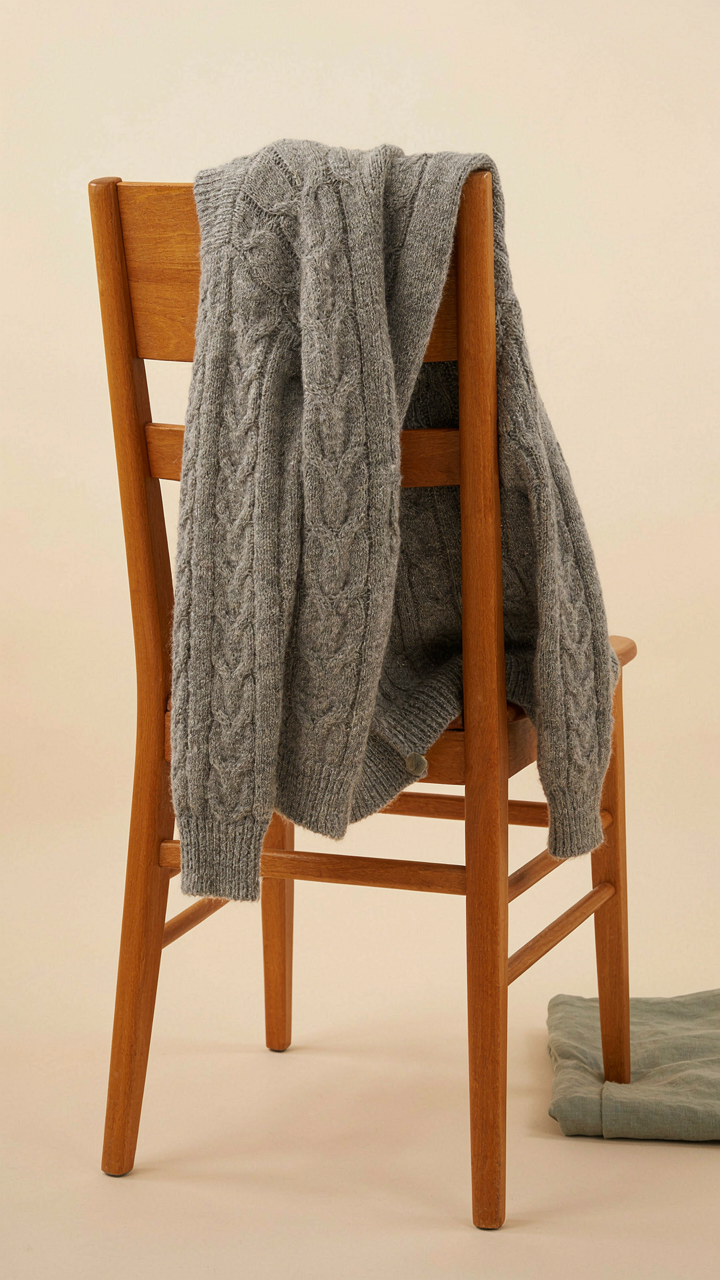
You want texture to do the work for you because wearing something flat and forgettable feels like wasted real estate on your body. The mechanism is simple: knit structure controls light absorption and reflection differently than smooth fabric, which means your outfit reads as intentional instead of generic. A cable knit, waffle knit, or chunky rib doesn’t just add warmth—it creates visual dimension that reads as effort even when you’re standing still.
Most cardigan advice treats texture as decoration. Wrong. Texture is information. It tells people you made a choice about how light hits your body. A long sleeve cardigan in merino wool or cotton blend with raised knit patterns works because the structure itself becomes the focal point. You’re not relying on color or fit alone. The cardigan becomes the outfit’s anchor, not an afterthought layered over something else.
Surface Variation Creates Depth Without Clutter
Texture in design functions like contrast in photography—it forces the eye to land somewhere specific and hold attention longer. A ribbed or cable knit cardigan wins because it adds visual complexity without adding visual noise. The patterns stay organized within the knit structure, so the outfit never feels chaotic.
Wear a textured long sleeve cardigan over a plain tee or fitted basics. The knit pattern creates all the visual interest you need. Smooth cardigans require more styling work because they demand color blocking, layering tricks, or statement pieces to feel complete. Textured cardigans work harder for you. When choosing, prioritize knits where the pattern is raised and catchable by light, not printed or flat. That’s where the mechanism actually lives.
The School Fashion Imperative: Projecting Competence, Not Comfort

Dressing For Focus In Academic Settings
You want permission to look put-together without trying so hard that people think you’re performing. That’s the real tension here. In signal theory from economics, you’re managing what researchers call “costly signaling”—you spend effort on appearance to communicate something true about your attention level. A cardigan functions as this signal because it occupies the middle ground between pajamas and formal wear. It says: I showed up intentional, not accidental.
Classrooms reward visual consistency because it reduces cognitive load for professors and peers. When you wear a fitted cardigan over a plain tee and structured pants, you register as organized before you speak. The cardigan specifically works because it layers without bulk, fits multiple body types, and reads as deliberate rather than default. This matters. People make competence judgments in under five seconds, and a loose, oversized cardigan defeats that mechanism instantly.
Balancing Function With Refined Detail
The standard advice here is wrong: practicality and polish are not opposites that need balancing. They’re the same thing viewed from different angles. Refined detail means your clothes don’t malfunction or distract during the actual work of learning or teaching. A cardigan with functional pockets, a structure that holds its shape through eight hours of sitting, and a fiber blend that doesn’t pill after one wear is practical. It’s also the only way to look refined.
- Structured cotton blends: Maintain shape through the day without wrinkles that signal neglect. Blend prevents pure cotton from relaxing and sagging by midday.
- Button placement and weight: Buttons positioned to land at natural break points on the torso prevent gaping or tugging. Heavier buttons reduce the frequency of re-fastening.
- Arm length precision: Sleeves should end at the wrist bone, not mid-hand or mid-forearm. Wrong length reads as either sloppy or theatrical rather than intentional.
- Pocket depth and positioning: Deep pockets at hip level allow hands to rest naturally without visible bulging. Shallow pockets force fidgeting or awkward hand placement.
- Neutral colorways with subtle texture: Cream, camel, gray, and navy hold credibility across seasons and age groups. Subtle knit patterns add visual interest without distraction.
To execute this, measure yourself against these standards before purchase: Does the cardigan maintain its silhouette after washing? Do the seams stay flat? Do the buttons not pull or gap? Build your school wardrobe around cardigans that answer yes to all three.
The Understated Power Of Fashion Deals: Strategic Acquisition, Not Impulse

Long Term Thinking Beats Price Tags
You’re looking for permission to buy more without feeling guilty about it. Here’s the real mechanism: you’re comparing price to immediate use, not price to lifespan. Economics calls this the cost-per-wear framework. A cardigan you wear 200 times over five years at $80 costs 40 cents per wear. A $30 cardigan you wear 10 times costs $3 per wear. The expensive piece is the bargain. Most people reverse this math.
Quality cardigans hold structure because they use tighter knits, better yarns, and reinforced seams. Cheap ones pill, lose shape, and feel wrong after two seasons. You notice this the third time you wash them. A merino blend or cotton-cashmere cardigan from a brand with real construction outlasts fast-fashion versions by years. Track what you actually reach for, not what you think you should want.
Building A Permanent Rotation
Stop treating cardigans like seasonal inventory. Build a small, functional set instead. You need a neutral base layer cardigan for work and everyday pairing, a textured option for depth, and one statement piece that justifies its cost through versatility. Three well-chosen pieces beat twelve mediocre ones you cycle through out of obligation.
Start by identifying the gaps in what you actually wear now. If you reach for the same cardigan four times a week, that’s your signal. Find a backup in the same weight and color family. If you own five cardigans and hate them all, you’re buying wrong sizes or materials. Spend the next purchase on one piece you test-wear mentally for a month before buying.
The Real Obstacle Isn’t Comfort; It’s Your Fear Of Looking Like You Actually Put Thought Into Your Presence

Women sabotage themselves with cardigans before they even buy one. You think comfort is the goal when it’s really camouflage. A cardigan isn’t neutral. It signals you made a choice. That terrifies people raised to disappear. Stop dressing like an apology. Go buy one cardigan today in a color that makes you feel seen, not safe. The world doesn’t reward invisible.