

The Thermal Architecture Protocol: Beyond “Layering”

Start With Skin Contact Heat Retention
You want to look warm without looking like you’re compensating for something. The real mechanism is trapping radiant heat at the source, not piling on fabric. Thermal physics teaches us about conduction: the direct transfer of heat between objects in contact. With winter outfits, your base layer is the conductive barrier that stops your body from bleeding warmth into the air. Cotton fails here because it absorbs moisture and transfers heat away. Merino wool and synthetic blends conduct heat back toward your core instead.
Most people get base layers wrong by choosing loose fits or low-quality materials. Tight merino or polyester blend base layers sit flush against skin and trap a thin layer of warm air while wicking moisture away from sweat. The fit matters more than the material name. You need contact to work, which means base layers that move with your body, not against it. Wear fitted turtlenecks or crew necks in merino wool under your main outfit. This single choice determines whether you stay warm or start the day cold.
The Shell That Stops Wind Penetration

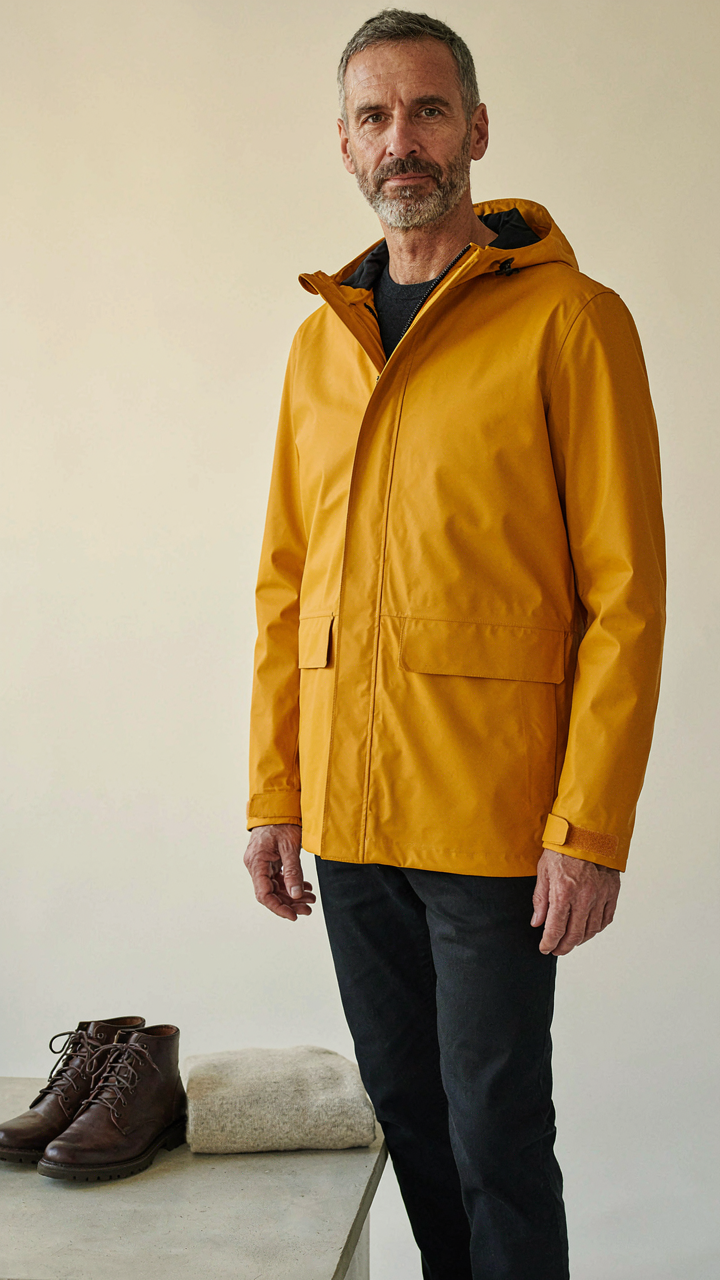
Your outer layer does one job: block wind and moisture from reaching the insulation underneath. A coat is a windbreak. That’s not poetry, that’s physics. Most cozy winter outfit advice treats the outer layer like decoration, when it’s actually the make-or-break component. A wool coat or synthetic puffer stops convective heat loss by preventing air movement across your insulation system. Without it, all the layering underneath fails within thirty minutes outdoors.
Pick outerwear with a tight weave or windproof membrane. Wool coats naturally shed light wind and moisture. Puffer jackets need DWR treatment to repel water and synthetic insulation like down alternative to maintain loft when compressed. Length matters too: jackets that hit mid-thigh protect your core and upper legs where blood vessels stay near the surface. Your shell decides if the entire thermal system works. Select one piece that fits your frame without excess bulk, then build everything else inside it.

Why “Cute Winter Fits” Are About Fabric, Not Fluff

Natural Fibers: Weight Without The Bulk
You want to look put-together without looking like you’re wearing a sleeping bag. That fear drives most winter outfit decisions straight into disaster. The real mechanism is thermodynamic efficiency: natural fibers like wool and cashmere trap air in their fiber structure, creating insulation with minimal density. Merino wool, for instance, regulates temperature better than synthetic alternatives while staying thinner. Cashmere has lower thermal conductivity than wool, meaning less material does more work.
This is why high-end winter outfits don’t look puffy. A fitted cashmere sweater over tailored trousers creates shape because the fabric itself carries the weight of warmth. You’re not adding layers of dead material. You’re using fabric physics. Buy one quality cashmere layer instead of three mediocre synthetics and your silhouette stays intact while your body stays warm.
Modern Materials: Performance Over Appearance Compromise
The common advice says technical fabrics sacrifice style for function. That’s backwards and outdated. Modern performance textiles like merino blends and wool-synthetic combinations now match the drape of traditional fabrics while adding moisture management and durability that natural fibers alone can’t guarantee. The engineering happened quietly over the last decade.
Pick technical fabrics specifically designed for layering, not athletic wear. A merino wool blend base layer disappears under a sweater. A wool-nylon blend blazer holds structure without the stiffness of pure wool. Check the fiber content on labels. Anything under 70 percent natural fiber usually sacrifices too much. Anything above 85 percent might feel itchy or require constant washing. The 70 to 85 percent range is where form and function actually converge without compromise.
The “Winter Style Outfits” Deception: When More Means Less

Strip Down Before You Layer Up
You want to look intentional, not like you grabbed everything warm and hoped it worked. That fear drives most people to overcomplicate cozy outfits. The real mechanism is subtraction. In systems design, this is called constraint optimization: remove variables until only the essential ones remain. Winter outfits work the same way. Too many scarves, hats, and gloves create visual noise that reads as costume, not style. Start by choosing one statement piece, then build around restraint instead of abundance.
Accessories should support your silhouette, not compete with it. A fitted base layer under an oversized sweater creates definition. A scarf knots once at the neck instead of wrapping endlessly. Removing unnecessary pieces forces each item to earn its place. This approach works because the eye follows clarity, not clutter. When someone looks at you, they should register your outfit instantly, not inventory it piece by piece.
Fit Over Bulk Wins Every Time
Most winter style advice tells you to layer aggressively and accept shapelessness. That’s incomplete guidance. The real move is choosing cuts that stack intelligently without adding volume where it destroys proportion. Oversized sweaters work when worn with fitted bottoms. Structured coats hold their shape better than shapeless parkas. A slim-fit turtleneck under a cardiggan creates silhouette; an oversized base layer under the same cardiggan erases it. Fit is the load-bearing wall. Bulk is decoration that collapses the structure.
Start with one fitted anchor piece, then let texture do the work instead of volume. A quality wool knit holds warmth without doubling your width. Merino and cashmere regulate temperature while staying close to the body. Synthetic blends pile fabric without purpose. Your goal is thermal efficiency, not cubic inches of material. When you choose fit first and fill it with dense fabric, you control how the outfit reads from six feet away.
Color Theory For “Cozy Winter Fashion”: Visual Warmth

Earthy Tones And Deep Jewel Hues
You want people to perceive you as warm and trustworthy without looking like you tried. That’s the real game here. The mechanism is simple: earth tones and jewel colors trigger the same neural response as actual heat because they mimic what fire, soil, and deep water look like. Your brain doesn’t separate the color from the context. Burgundy, rust, olive, mustard, forest green, and deep plum activate the same comfort pathways that physical warmth does. Wear these and you signal stability and intentionality in a single layer.
Winter palettes borrowed from textile history work because they’re tied to natural pigments that survived storage and wear. These colors also compress visual space slightly, making bulkier winter clothing appear structured instead of shapeless. Pair a rust turtleneck with olive wool trousers and the outfit reads as deliberate, not accidental. The saturation of jewel tones especially carries weight in monochrome or near-monochrome stacks. Avoid pastels and bright primaries in winter outfits because they compete with the season instead of inhabiting it.
Monochromatic Schemes For Sleekness
Monochromatic dressing in winter isn’t about boring simplicity. It’s the opposite of what most people think. Using one color family from light to dark creates unbroken vertical lines that make you appear taller and leaner beneath layers. A cream sweater, tan coat, and camel boots in the same color family eliminate the segmented look that kills proportion. This is why luxury minimalism works so well in cold months: fewer color breaks mean fewer visual interruptions.
The depth variation matters more than you think. A charcoal mock neck under a charcoal wool coat with charcoal socks and black boots reads as intentional control, not laziness. Texture becomes your variable instead of hue. Pair matte with knit, smooth with quilted, napped with structured. When you remove the color decision, you force yourself to think about fabric weight and finish, which is where actual style lives. Start with one dominant color, then layer in two textures that contrast visually but sit within the same tonal range.
The Stoic Wardrobe: Winter Outfit Ideas For Women From First Principles

Start With Function, Not Aesthetics
You want permission to buy more stuff without feeling guilty. Here’s what actually matters: a winter outfit solves a problem before it looks like anything. The problem is heat loss. Your body radiates warmth. Fabric traps air. That trapped air becomes your insulation layer. Everything else—color, fit, brand—is decoration on top of this one mechanical truth. Most advice skips this and jumps straight to “mixing textures” or “neutral palettes.” That’s backwards.
Build your winter wardrobe by identifying the specific conditions you face, then selecting pieces that handle those conditions. If you commute outdoors for fifteen minutes, you need different gear than someone who walks from a parking garage into an office. Temperature, wind, humidity, activity level—these dictate what you actually need. Everything you own should earn its place by solving one of these problems. Pieces that don’t get eliminated later, wasting money and closet space.
The Core Pieces That Carry Weight
Most winter wardrobes bloat because people confuse variety with necessity. You don’t need seven sweaters. You need sweaters in different weights that layer predictably. A fitted merino base layer, a mid-weight crew neck, an oversized cardigan, and one structured coat. That’s four pieces handling 80 percent of your winter days. Add a pair of dark jeans, neutral trousers, and one accent piece. Stop there.
- Merino wool base layer: Temperature-regulating fiber that wicks moisture and resists odor. Fits under everything without bulk. One piece replaces multiple tank tops and long sleeves.
- Mid-weight crew neck sweater: Wool or wool blend in a neutral tone. Works solo or layered. Bridges gap between base layer and outerwear without overheating indoors.
- Oversized cardigan: Functions as a sweater or light layer depending on what goes underneath. Creates intentional silhouette rather than accidental bulk from layering mistakes.
- Structured winter coat: Wool or down blend that seals out wind and moisture. One neutral color you’ll actually wear repeatedly. Quality matters here because this piece works harder than anything else.
- Dark denim or neutral trousers: Anchors every outfit. Minimal visible wear in winter. Pairs with everything from base layers to cardigans without looking coordinated in a obvious way.
Redundant pieces drain your budget and your decision-making energy. Before buying another sweater, ask if it layers differently or performs better than what you own. If the answer is no, the piece doesn’t belong. Your wardrobe should contract, not expand.
The “Coat Outfit” As Your Statement, Not An Afterthought

Investment Coats: Timeless Silhouettes
You want the coat to do the work so you don’t have to think about the rest. The mechanism is simple: a structured coat with clean lines eliminates decision fatigue on everything underneath. Most people treat coats as functional shells. They’re wrong. A coat is your outfit’s load-bearing wall.
Camel, charcoal, and black coats in wool or wool-blend fabrics maintain visual weight across decades. The cut matters more than the trend. A straight-cut topcoat, tailored peacoat, or unstructured duster doesn’t need updating when fashion pivots. These pieces work because they fit the human body without fighting it. You wear the coat, not the other way around.
The Psychology Of The Power Coat
Military theory uses the term “force multiplier” to describe tools that give small units disproportionate impact. Your coat is a force multiplier in social perception. Wearing a structured, intentional coat signals that you’ve made a deliberate choice. People read that as competence before you speak.
The real mechanism works through contrast and completion. A mediocre outfit under a strong coat reads as “person in a nice coat.” A solid base outfit under that same coat reads as “person who knows what they’re doing.” The coat doesn’t elevate bad choices. It amplifies good ones. Pick a coat you’d wear for ten winters. Build everything else to work with it, not around it.
Kinetic Elegance: Casual Winter Outfits & Movement

How Fabric Weight Shapes Your Silhouette
You want to look effortless, which means you’re afraid movement will expose you as trying too hard. Here’s the mechanism: fabric weight determines how a garment moves through space independent of your body. Heavier fabrics like wool blends and structured knits hold their shape and fall in predictable lines. Lighter synthetics and thin cottons cling and shift with every step, broadcasting uncertainty. Winter outfits fail not because they lack style but because the fabric choice forces your body to work harder than it should. The physics of drape is simple: denser material maintains structure longer, giving you stillness even during motion.
Garment construction amplifies this. A well-cut oversized sweater in merino wool doesn’t bunch at the waist or ride up when you move. Seam placement and panel width determine whether fabric hangs from your shoulders or from your midsection. Most people ignore seam location entirely, then blame themselves for looking “bulky.” The real culprit is a garment cut for static display, not kinetic reality. Choose pieces with side seams positioned closer to your natural side line, not wrapped around toward the back. This single detail shifts how fabric drapes when you bend, reach, or walk.
Unrestricted Movement Requires Strategic Layering
Movement needs room, but cozy winter outfits trap people into thinking bulk equals comfort. This is backward. Unrestricted movement comes from layering that doesn’t accumulate weight at joints. Tight sleeves at the wrist and ankles create bottlenecks that force your upper arm and leg to compensate with tension. Looser base layers and mid-layers with tapered cuffs let your limbs move through space without resistance. Real comfort isn’t the absence of fabric; it’s the absence of friction between layers and between fabric and skin.
Layering strategy beats single heavy pieces. A fitted base layer, a medium-weight fleece or sweater, and a structured outer layer move independently, preventing the compression that makes you walk stiffly. When layers move as one unit, your body adapts by tensing smaller muscles to maintain balance. Strategic spacing between layers lets each piece shift slightly without binding the next. Test this: move your arm in a full circle wearing a single puffy jacket, then repeat in a layered system. The layered version requires less effort and reads as more composed because your body isn’t fighting against the fabric.
The Fall Winter Outfits Matrix: Decoding True Value
Cost Per Wear Rewires Your Buying Decision
You care about this because you’re terrified you’ll waste money on something you’ll wear three times. The mechanism is simple: divide the price by actual wears, not projected ones. A $200 wool coat worn 80 times costs $2.50 per wear. A $60 trend piece worn twice costs $30 per wear. Most people reverse this math. They buy cheap thinking it’s economical, then wonder why their closet feels empty and disposable.
Winter pieces have the math advantage because the season creates forced repetition. You wear the same coat, sweater, and boots weekly from November through March. That’s 20 weeks of consistent rotation. Calculate backward from your actual life, not from marketing promises about versatility. A structured puffer jacket worn 60 times across three winters beats a statement piece you’ll tire of in January. Track wear patterns honestly for one season. You’ll stop guessing.
Durability Becomes Your Real Style Filter
Durability isn’t about longevity for longevity’s sake. It’s about consistency. Economics calls this “utility maintenance.” A garment that holds its structure, color, and fit after 40 wears still looks intentional. One that pills, fades, or stretches after 10 wears looks cheap, no matter its price tag. Cheap winter outfits fail because cold weather demands material integrity. Heavy knits pill. Synthetic blends crack in freezing temps. Thin zippers jam. These aren’t minor flaws; they’re style killers.
Invest in natural fibers or quality synthetics designed for extreme conditions. Merino wool resists pilling and regulates temperature. Real leather develops character instead of cracking. Technical fabrics engineered for outdoor use maintain structure through wash cycles. When you choose durable pieces, you stop buying replacements every season. The outfit doesn’t degrade. Your style doesn’t degrade with it. Buy one excellent sweater instead of three mediocre ones, then wear it until the math proves itself.
Your True Obstacle Isn’t Cold Weather; It’s The Impulse To Add Instead Of Subtract

Most people build cozy winter outfits by throwing on everything warm they own. You don’t. You start with one quality piece and stop. A cashmere sweater. A wool coat. Layers you actually need, not layers you think look better. This constraint forces intentionality. When you remove bad choices instead of adding good ones, you get style that reads as effortless instead of desperate. Go through your closet today and remove three pieces you’ve been hiding behind. What remains is your real winter uniform. The cold doesn’t make you stylish. Restraint does.