

The “Ethical” Mirage: Why Your Good Intentions Fall Short

Guilt As The Engine
You want to believe your purchases matter because the alternative—that your choices don’t—is unbearable. That’s the real mechanism at work, and brands know it. Consumer guilt has become a revenue stream. When you feel complicit in exploitation, you’ll pay a premium to escape that feeling. The ethical fashion industry prices itself on your need for absolution, not on actual labor conditions. Brands exploit your desire to be good as aggressively as fast fashion exploits garment workers.
Most ethical brands charge 40-60% more than conventional alternatives for materially identical products. The markup rarely correlates with wage increases for workers. A shirt labeled “fair trade” at $85 doesn’t mean the seamstress earned proportionally more than one at $25. The difference funds marketing that tells you the story you want to hear. Your guilt becomes their positioning advantage.
The Language Of Deception

Greenwashing in fashion operates like regulatory arbitrage in finance—you exploit the gap between what people assume and what’s actually stated. A brand claims “sustainable sourcing” without defining it. They use terms like “eco-conscious,” “artisanal,” and “ethically made” because these words have no legal definition. A competitor can say the exact same thing while maintaining zero supply chain transparency. The language itself is the product, not the practices.
Demand specificity before spending. Real transparency includes verifiable wage data, factory locations with independent audits, and material sourcing documentation. If a brand uses soft language instead of hard metrics, the softness is intentional. Check for third-party certifications like Fair Trade USA or GOTS (Global Organic Textile Standard) that carry actual compliance requirements. Vague storytelling on a website means you’re buying the narrative, not ethics.

The True Cost Protocol: Beyond Fair Wages

Where The Supply Chain Actually Breaks
You want to buy ethical fashion because it makes you feel like you’re not part of the problem. That’s the real motive. The mechanism works like information asymmetry in economics: one party (the brand) controls all the data, and the other party (you) operates blind. Most brands exploit this gap entirely. They’ll tell you about fair wages at final assembly, then go silent on everything upstream. Fabric mills, dye houses, and raw material suppliers operate in jurisdictions with minimal oversight. The brand doesn’t own these facilities. They don’t control them. They contract with them. That creates plausible deniability built into the model itself.
The common advice says to “look for certifications” and “ask brands about their supply chain.” This is incomplete. Certifications audit snapshots. They don’t track day-to-day operations. Asking brands gets you marketing copy, not reality. The actual mechanism you need to understand is cost pressure. When a brand sources fabric at $2 per meter instead of $4, someone absorbs that difference. It’s never the shareholder. It’s the worker, the water system, or the chemical disposal process. Brands control sourcing price. Price controls labor conditions indirectly. Most ethical brands never restructure their cost model, so they claim ethics while maintaining the same supplier relationships.
The Hidden Calculus Nobody Names
Environmental and social externalities are costs pushed onto third parties and ecosystems instead of appearing on a balance sheet. Think of it as accounting debt. A cotton farm that depletes aquifers doesn’t pay for groundwater restoration. A dye house that pollutes a river doesn’t fund cleanup. These costs are real. They’re just invisible in the final price you pay. Ethical brands often claim sustainability while ignoring this hidden ledger entirely. They’ll use organic cotton (good) but source from operations that still dump untreated wastewater (bad). The mathematics don’t work unless the brand actually measures and pays for remediation.
The protocol that actually matters requires three steps: First, demand audits of facilities more than two tiers up the chain, not just final assembly. Second, ask for water usage and chemical discharge data specific to each production stage, not aggregated claims. Third, verify that the brand’s margin is structured to absorb these costs without cutting production wages. Most brands fail step one. They don’t have the data. If a brand can’t tell you exactly which mill spun their yarn or which factory dyed it, they’re operating in the default mode: opacity as standard practice.
The “Sustainable Clothing” Paradox: Quantity Vs. Quality
Buy Less, But Buy Right
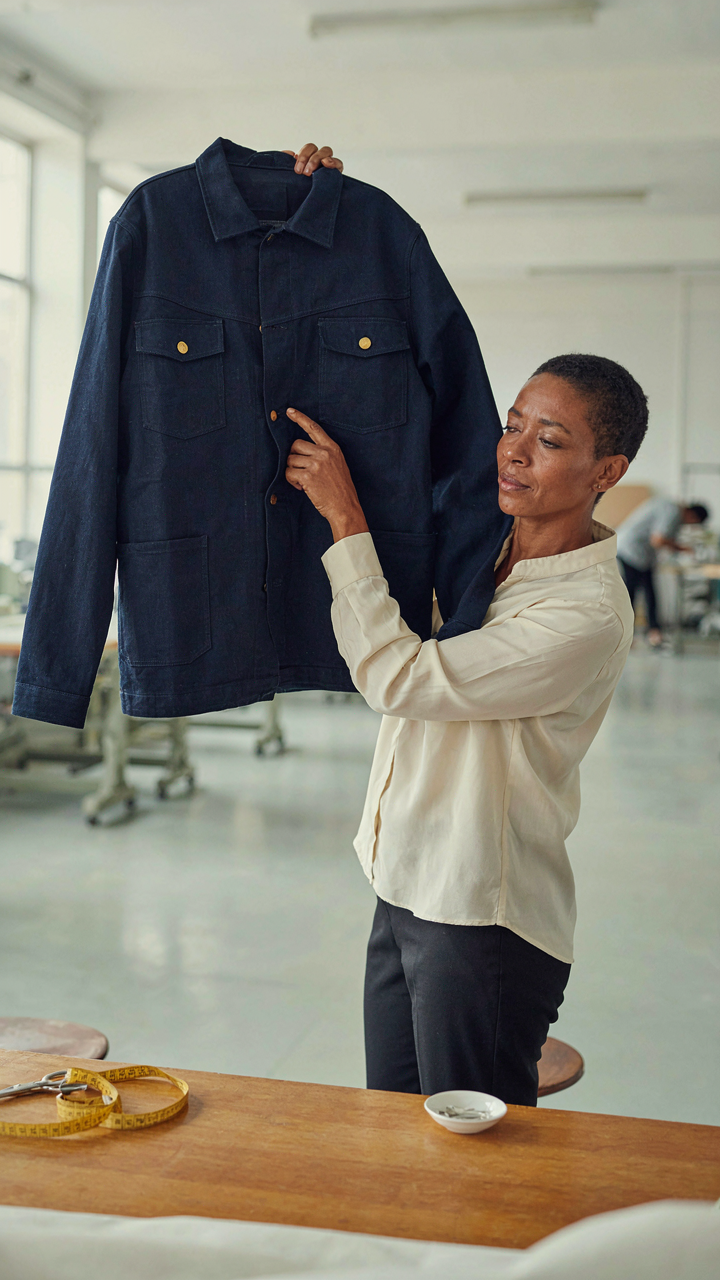
You want ethical fashion to feel like a moral win without actually changing your behavior. Here’s the mechanism: most “sustainable” brands still operate on fast fashion’s core logic—produce volume, move inventory, replace annually. The difference is the price tag and the story. Ethical brands with real fair wages can’t compete on volume because labor costs scale linearly. A factory paying workers living wages can’t churn out 500 SKUs per season. They make 50. That’s not a bug. It’s the signal.
When a brand moves slowly, you notice quality. Seams hold. Fabric doesn’t pill after three washes. This forces you into the actual trade-off: fewer pieces that last years instead of seasons. Brands like Patagonia and Everlane succeed because they accepted this constraint. They don’t fight it. Their margins come from durability and repeat customer trust, not volume velocity. The math is different. The model is different. Your closet gets smaller and better simultaneously.
Worn In, Not Worn Out
Circular economy thinking treats clothing like a system: take, make, use, return, remake. That term comes from industrial ecology, where “loops” replace linear extraction. In ethical fashion, this means designing for the end state before production starts. Most brands design for disposal. Ethical ones design for repair.
Patagonia’s Worn Wear program takes back used jackets, repairs them, and resells them—capturing value instead of waste. Reformation documents fabric suppliers and manufacturing details so buyers understand what they own. These aren’t marketing gestures. They’re operational commitments that change unit economics. When repair becomes profitable, durability becomes mandatory. Check a brand’s repair policy and material sourcing page before buying. If they don’t publish it clearly, they’re hiding something. The absence of transparency is itself a signal.
Deconstructing “Ethical And Eco Friendly Fashion Brands”: The Ownership Problem

Who Actually Controls The Mission
You want to believe the brand cares because it makes you feel intelligent about your consumption. The real mechanism is structural: ownership determines whether ethics survive the first market downturn. A brand claiming ethical practices while answering to venture capital or public shareholders has already chosen its priority. Mission drift isn’t accidental. It’s built into the incentive structure the moment growth becomes mandatory and ethics becomes optional.
Most ethical fashion brands operate as traditional corporations with a sustainability department bolted on. The founder’s values matter less than quarterly earnings calls. When pressure hits, the ethics division gets cut first. Patagonia’s 1994 restructuring revealed this: they transferred voting control to a trust and gave profits to environmental causes specifically to lock ethics into governance. They didn’t do this because it felt good. They did it because they understood that without structural walls, mission erodes.
Worker Ownership Models That Actually Hold
The cooperative model transfers voting power to workers themselves, using governance mechanics from agriculture and credit unions to replace the landlord relationship with shared authority. This isn’t idealism. It’s applied incentive alignment. When workers own equity and vote on operations, wage cuts and labor corner-cutting become self-sabotage instead of cost optimization.
Cooperative brands like Armedangels in Germany and Skalp in India operate on this principle, though scale remains limited compared to conventional brands. Worker cooperatives face real friction: capital raises are harder, decision making is slower, and growth compounds complexity. But they solve the ownership problem directly. When workers vote on factory conditions and pay rates, the compliance theater disappears. Check whether a brand’s workers hold voting shares and participate in major decisions. If governance remains top-down with a cosmetic advisory board, the structure hasn’t changed.
The “Eco Friendly Clothing Brand Guide”: A Cynic’s Approach

Demand Verifiable Data, Not Slogans
You care about this because buying ethical feels like absolution. Here’s the mechanism: certification bodies are incentivized to certify brands, not reject them. Most ethical fashion relies on third party audits that happen once yearly or less. A factory can pass inspection on Tuesday and violate labor standards by Wednesday. Demand specific data points: production location by factory name and address, wage figures compared to local living costs, and turnover rates. Brands that hide this information aren’t protecting proprietary secrets. They’re hiding mediocrity.
Evidentiary standards in law require burden of proof on the claimant. Apply this principle directly: the brand making the claim owns the responsibility to prove it. Not through marketing copy or a sustainability report designed by their PR firm. Patagonia publishes factory names publicly. Reformation discloses water usage per garment. Brands doing less are choosing opacity. Request the data before purchase. If they can’t provide it within 48 hours, the silence is your answer.
Red Flags In “Sustainable” Claims
The common advice says watch for greenwashing. That’s incomplete. Greenwashing is just the symptom. The real problem is measurability without accountability. A brand can cut water usage by 30 percent in one factory while opening a water intensive operation elsewhere and still claim progress. “Natural materials” doesn’t mean ethical extraction. Cotton grown organically can still be harvested through exploitative labor. “Made locally” doesn’t guarantee fair wages in low income countries where local minimum wage sits below survival cost.
Look for these specific indicators of unsubstantiated claims: vague timelines on sustainability goals, certifications from bodies with weak standards, claims about “responsible sourcing” without naming suppliers, and transparency reports that conveniently exclude the lowest wage positions. Ethical fashion requires traceability from fiber to finished product. When a brand can’t trace a specific garment’s origin or can’t explain why factory workers earn what they do, that gap is where exploitation lives. Stop engaging with the claim and start interrogating the absence of proof.
“Ethical Fashion” As A Status Signal: The Social Contagion

When Others Choose, You Follow
You want to believe your ethical fashion choices come from conviction. They don’t. They come from watching what people you respect buy, then copying it to signal membership in that group. This is mimetic desire—the borrowed-framework term from economics and social psychology that explains why demand for a product rises when demand rises, not because the product changed. Ethical fashion brands exploit this directly. They price high, position visibly, and let status-seeking do the selling.
The mechanism is simple: visibility plus cost signals trustworthiness to your peer group. When someone buys from Patagonia or Reformation, their friends notice the brand, internalize it as “the ethical choice,” and follow. The brand’s actual labor practices matter less than the fact that it’s recognizable and defended by your social circle. You adopt the belief second, after you adopt the behavior. This cycle perpetuates regardless of whether the brand’s supply chain is genuinely ethical or just marketed that way.
Breaking The Repetition Trap
Most advice tells you to “research brands” or “check certifications.” That’s incomplete. Your brain evolved to conserve decision-making energy by copying what worked for others in your tribe. Ethical fashion marketing leverages this. You see a influencer in a sustainable linen shirt, your brain files it as “safe choice,” and you buy the same thing next season. The cycle repeats until you own multiple versions of the same ethical brand because your neurology rewards pattern-completion over actual evaluation.
The break happens when you audit your last twelve purchases and name the person or image that drove each one. Not why you wanted it—who. Once you see the mimic, not the conviction, you can make a purchasing protocol: buy only items you’d wear if nobody knew the brand name. Test this by covering logos for a week. If the garment loses appeal without the signal, you’ve bought status, not clothing. The cost stays the same; only your awareness of the transaction changes.
The Organic Clothing Brands Illusion: Certifications And Loopholes

What Organic Labels Actually Mean
You want the label so you can feel like you’re making the right choice without doing the work. Here’s the mechanism: organic certification in textiles only covers fiber production, not the 80% of harm that happens after harvesting. GOTS (Global Organic Textile Standard) certifies that cotton grew without synthetic pesticides and heavy metals. It says nothing about dyes, finishing chemicals, water use in processing, or worker conditions at the factory level. The certification is real. The guarantee most people think they’re buying is not.
Most brands slap organic on a shirt and let the third-party stamp do the talking. They’ll reduce synthetic inputs at the farm, pass the audit, then use the same chemical-heavy dyeing process as every competitor. The farmer gets certified. The garment worker gets no additional protection. Organic certification creates a false equivalence between farm safety and finished product safety, which is why it remains so profitable to market.
Supply Chain Opacity Starts At The Fiber Stage
Economics uses the term “information asymmetry” to describe when one party knows more than the other, which dominates ethical fashion: brands know their true costs and hide them; consumers assume they don’t. Organic cotton mills exist. But most organic cotton gets mixed into general inventory within weeks of harvest. The fiber becomes untraceable the moment it enters the supply chain.
Brands buy certified organic fiber through intermediaries who combine it with conventional stock for processing efficiency. They’re not lying about the organic claim, but they’re obscuring the fact that no single garment contains the portion of organic fiber they imply. The supply chain complexity serves as a buffer between customer accountability and brand responsibility. To verify a garment’s true composition, demand a mill certificate and batch number tied to a specific production run. Without that, the organic claim is performance theater.
Beyond “Sustainable Fashion Brands”: The Individual’s Power

Own Less, Demand More
You care about this section because you want permission to feel like a better person without changing your actual behavior. Here’s the mechanism: minimalism forces alignment between your values and your closet. When you own fewer pieces, each purchase carries weight. You can’t hide behind volume or rationalize contradictions. Brands exploit abundance. They know that owning thirty shirts dilutes your ability to track where any single one came from or whether the wages were real.
The math is brutal. One intentional piece from a transparent brand beats ten from a fast-fashion chain because you’ll actually wear it, know its origin, and notice if the next purchase breaks that standard. Minimalism isn’t virtue signaling. It’s the structural requirement for ethical consumption to mean anything at all. You cannot claim to care about fair wages while buying thoughtlessly.
The Core Pieces That Actually Matter
Pareto’s principle applies directly to your closet impact. Eighty percent of your visible environmental and labor footprint comes from twenty percent of your wardrobe. Identify which pieces you wear repeatedly, then source those ethically. The rest receives proportionally less scrutiny because the math justifies it.
- Basics (t-shirts, underwear, socks): Worn constantly and replaced frequently. Highest cumulative labor impact. Prioritize fair wage certifications and transparent supplier relationships here first.
- Denim: Intense water and chemical use during production. Concentrated impact. Seek brands using low-impact dyes, recycled water systems, and audited facilities.
- Outerwear (jackets, coats): High cost per wear if chosen carefully. Lower replacement frequency. Quality sourcing here shows discipline without requiring perfection everywhere.
- Shoes: Labor intensive manufacturing with documented wage issues in conventional production. Direct connection between brand choice and worker compensation. Research supply chain explicitly.
- Everyday bottoms (jeans, trousers): Worn frequently across seasons. Replacements add up annually. Target ethical sourcing here to maximize impact relative to effort spent researching.
Start by auditing which five pieces you wore most last month. Those are your leverage points. Stop chasing ethical credentials on items you wear once yearly. Direct your scrutiny toward the pieces that actually accumulate hours on your body.
Fashion Quotes And The Rhetoric Of Change: Empty Promises

When Activists And Corporations Speak The Same Language
You want to believe the brands you buy from are actually different because it makes you feel like you’re solving the problem without changing your consumption habits. That’s the mechanism every major fashion corporation exploits: they adopt activist vocabulary, strip it of teeth, and sell it back to you as product differentiation.
The difference between activist messaging and corporate messaging isn’t tone or passion. It’s specificity and consequence. Activists name supply chain abuses, demand systemic restructuring, and accept that change means less profit. Corporations adopt the language of change while protecting the profit margin. Patagonia publishes detailed audit reports and repair data. H&M publishes sustainability reports filled with goals set for 2030 while maintaining the same production volumes today. Both use the word “responsible.” Only one made structural changes that cost them revenue.
The Mechanism That Makes Empty Promises Stick
The psychology doesn’t work the way most advice claims. The problem isn’t that consumers are naive. The problem is that your brain treats a stated commitment as partially completed work, even when no action backs it. This is commitment consistency bias in behavioral economics: once a company publicly commits to fair wages by 2025, your neural system files it under “resolved” and stops generating discomfort. The company gets the marketing benefit of the promise while production continues unchanged. You get cognitive relief you didn’t earn.
Brands weaponize this because it works. A transparency report with vague language about “monitoring partners” and “continuous improvement” signals good intent without revealing specific factory locations, wage data, or third-party verification. You see the signal. Your brain stops demanding the proof. The real mechanism behind empty promises is that they’re designed to satisfy the question before you ask it. To break this: demand specific data points, not statements of values. Ask for factory names, wage ranges, and independent audit dates. If the brand hesitates, the promise was never real.
The Systemic Reset: True Sustainable Clothing Brands Demand This

When Regulation Becomes The Real Competitive Advantage
You want ethical brands to succeed because it signals you’ve made the right consumption choice. Here’s the mechanism nobody states: regulation doesn’t punish ethical companies. It eliminates their competitors. The EU’s Corporate Sustainability Due Diligence Directive (CSDD) and similar frameworks function like tariffs on exploitation. Companies that already track supply chains, verify wages, and document sourcing face minimal friction. Companies built on opacity face enforcement costs they can’t absorb. Regulation is leverage, and ethical brands should want it aggressive.
The California Transparency in Supply Chains Act forced disclosure without mandating specific practices, yet it accelerated audit adoption across the industry. The UK Modern Slavery Act created compliance burden that only companies with genuine transparency mechanisms could manage efficiently. These aren’t feel-good policies. They’re structural moats that make clean sourcing the cheaper operational choice than hiding it. Governments haven’t moved fast enough, but when they do move, they move with teeth.
Abandoning The Margin Model That Breaks Everything
The common advice says ethical brands should charge premium prices to fund fair wages. This is incomplete. Premium pricing works only when demand exceeds supply or when consumers choose status over function. Most ethical brands rely on this wrong assumption and collapse when the market shifts. The real mechanism is structural: fast fashion’s unit economics depend on velocity and disposability. Ethical brands must disrupt velocity itself, not just add cost to the same model.
Patagonia doesn’t charge premium prices because fairness is expensive. It charges what it does because it sells fewer units, keeps inventory longer, repairs garments, and resists seasonal pressure. That changes everything operationally. The margin model fast fashion uses demands constant newness to justify low unit margins. Ethical brands need to invert this: higher margins per unit, lower volume, extended product lifecycle. This isn’t sustainability theater. This is the only financial structure where fair wages and real sourcing transparency don’t require losing money.
The Real Obstacle Isn’t Finding Ethical Clothes, It’s Confronting Your Own Consumption Addiction

You already know where ethical brands source their materials. You’ve read the certifications. You’ve seen the factory photos. What you haven’t done is stop buying things you don’t need. Ethical fashion brands exist, but they thrive when you buy less, not when you replace your fast fashion habit with a slow fashion habit that still feeds your dopamine loop. Today, go to your closet and identify three items you actually wear. That’s your number. That’s your friction point. Stop pretending ethics matter when your real problem is you’re addicted to the feeling of something new.