
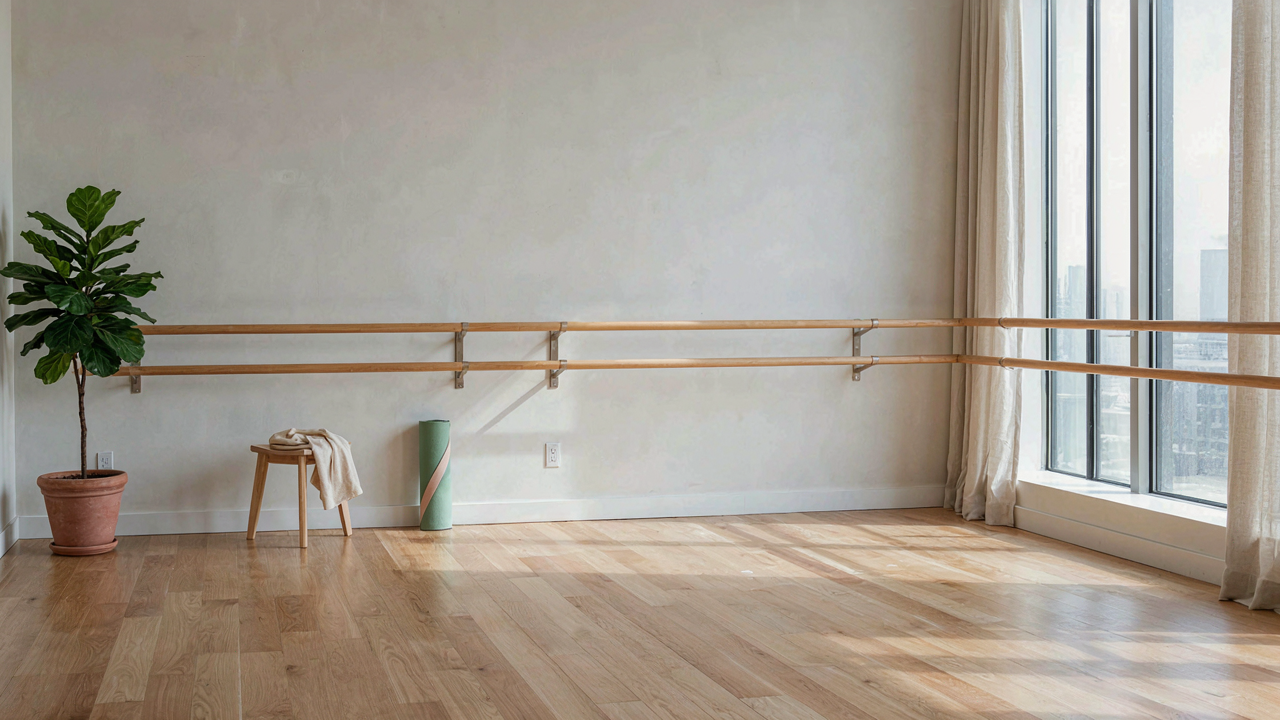
The Illusion Of Barre Outfit Comfort: Why Less Isn’t More

What Comfort Actually Costs You
You want to feel unrestricted because you think loose fabric means better movement. That’s backwards. The real mechanism here borrows from biomechanics: muscle activation requires proprioceptive feedback, which is your body’s ability to sense where it exists in space. Tight, fitted fabrics amplify this signal. Baggy clothes muffle it. When your quadriceps can’t feel the fabric hugging against the muscle, your nervous system gets less data about what’s actually firing during an isometric hold.
Most barre instructors won’t tell you this because the industry sells comfort as the default. It’s not. A fitted tank or crop top doesn’t restrict your breathing or range of motion in barre, which uses controlled, limited movement patterns. What it does is give your muscles clearer sensory input about tension, alignment, and depth. You activate harder when you can feel what’s happening.
Friction As A Performance Tool

Barre studios use mirrors and repetitive positions to build mind-muscle connection. Deliberate friction between your skin and fabric extends that mechanism. When fabric stays stable against your body, you’re not burning energy on micro-adjustments. Your nervous system can focus entirely on the contraction. Loose shorts or oversized shirts force constant re-positioning, which breaks concentration and wastes effort that belongs in the muscle.
This isn’t comfort versus performance. It’s distraction versus clarity. Wear fitted leggings with a crop top or fitted tank, not because they’re trendy, but because they eliminate a variable your body has to manage. The barre bar provides external stability. Your outfit should provide internal stability.

Barre Outfit Psychology: Signaling Intent, Not Just Fashion

The Subtle Power Of Structured Fit
You care about this because clothes either tell your brain you’re serious or they don’t—and your effort scales with that signal. This is pure neuroscience: your nervous system reads environmental cues before conscious thought catches up. Structured barre wear acts as a behavioral anchor. Form-fitting fabrics and intentional silhouettes tell your body it’s time to engage, not coast. The outfit becomes the first rep.
Most people treat barre attire like casual gym wear—a mistake. Barre demands precision, control, and sustained tension. Your clothes need to reinforce those demands, not fight them. High-waisted leggings, fitted tanks, and strategic layering create sensory feedback that sloppy clothing cannot provide. You feel your posture, your alignment, your engagement because the garment holds you accountable.
How Attire Influences Self Perception And Effort
Wearing deliberate barre gear shifts your mental frame before the music starts. This operates on enclothed cognition—psychology’s term for how fabric and fit literally change cognitive performance. You’re not just wearing clothes; you’re triggering a behavioral protocol. Dancers and athletes have known this for decades. The outfit primes execution.
When you show up in intentional barre wear, you recover faster between combinations, maintain better form under fatigue, and stay present instead of distracted. The specificity of the garment communicates: this session matters. Remove the structured fit and watch your attention fragment. Your effort follows your clothes. Upgrade the outfit, then watch your standards follow.
The Proprioception Protocol: Engineered Barre Class Outfits
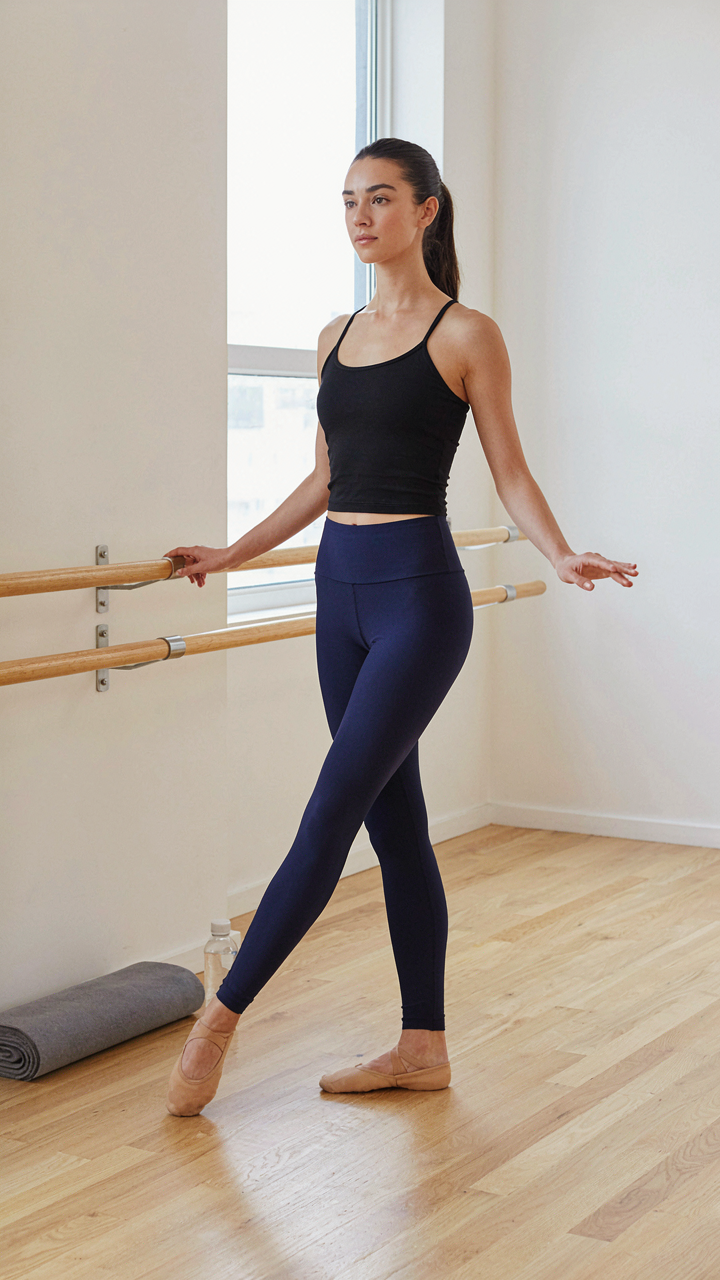
How Fabric Tension Shapes Muscle Awareness
You want to look put-together without thinking about what you’re wearing, but that’s not the real issue. The real issue is that your clothes are either feeding your nervous system information or creating noise. Borrow a term from neuroscience: proprioception is your body’s ability to sense where it exists in space. Fabric tension directly informs this signal. Tight, compressive material that moves with your body sends clean feedback to your motor cortex about muscle position and engagement. Loose fabric creates ambiguity, and your nervous system wastes energy interpreting false signals.
Barre demands constant micro-corrections at the ankle, knee, and hip. Your brain relies on accurate proprioceptive data to execute these corrections without conscious thought. Performance barre fabrics, typically nylon-spandex blends in 80/20 or 90/10 ratios, maintain consistent tension throughout your range of motion. Cotton or oversized cuts introduce slack. Slack means your central nervous system must compensate by overengaging stabilizer muscles, which burns unnecessary energy and masks weak links in your chain. The outfit isn’t cosmetic. It’s the interface between intention and execution.
Compression Zones For Directed Attention
Compression doesn’t mean restriction. It means controlled feedback. Strategic compression in the waistband, hip, and thigh creates sensory markers your brain uses to track alignment and loading during standing leg work. Most barre advice ignores this and talks about “comfort,” which is why people show up in shapeless leggings and wonder why their form never tightens. Comfort and proprioceptive clarity are different things.
High-waisted designs with moderate compression around the lower abdomen and glutes serve a mechanical function. They cue your transverse abdominis to engage without you thinking about engagement cues. Mid-rise designs with targeted compression at the glute shelf help you feel the difference between hip flexion and hip extension during small pulses and holds. This isn’t about aesthetics or control. It’s about your proprioceptive system having enough information to differentiate which muscles are working. Choose fitted styles in technical fabrics. Wear them consistently. Your body recalibrates its feedback map within two weeks.
Beyond Ballet Clothes: The “Anti Stretch” Advantage

Too Much Stretch Kills Your Feedback Loop
You want the outfit to make you look serious about this, which means you’re probably choosing fabric with maximum give. That’s the trap. Barre demands proprioceptive feedback—your nervous system needs to feel the floor and resistance through your clothes, not swim inside elastic forgiveness. Excessive stretch creates sensory deadening. Your muscles can’t calibrate against the material because there’s nothing to calibrate against.
The mechanism here is mechanical. Fabric that stretches beyond thirty percent recovery creates lag between your movement intention and what your body actually registers. Ballet tights operate at about fifteen to twenty percent stretch because that boundary keeps tension constant. Barre classes exploit that tension for precision work. Choose fabrics closer to compression specs than yoga wear. Your form improves when you can feel the resistance.
Structured Fabrics Build Controlled Resistance
Barre borrowed from athletic training’s principle of progressive overload. The outfit itself becomes a light resistance tool through material density, not mystique. Nylon blends with high denier counts—or cotton-rich compositions—create measurable push-back against movement. This isn’t about looking sleek. It’s about giving your muscles something concrete to work against beyond gravity.
Brands like Alo Yoga and Bandier engineered their barre-specific lines with this exact mechanic: mid-weight nylon that holds form without collapsing into your skin. Capris in this category stay in place during leg lifts and pulses because the fabric has structural integrity. You notice the difference in week two when your glutes stop compensating for fabric that was sliding. Pick pieces rated for high-intensity interval training, not gentle stretching. The material specification determines your movement quality.
Barre Outfit Ideas: The Unseen Benefits Of Strategic Layering

Your Body Temperature Controls Your Range Of Motion
You want to look put-together without thinking about it. Here’s the actual mechanism: muscle tissue contracts efficiently only within a narrow temperature band. Barre demands precise micro-movements, which means your muscles need to stay warm enough to fire correctly but cool enough that you don’t fatigue from heat stress. Most people show up in either a tank top or overdressed in sweats, both mistakes that limit performance before the class starts.
Layering lets you shed or retain heat in real time as your core temperature rises. A fitted long-sleeve top worn under a sleeveless shell gives you control. Start with the outer layer on, remove it ten minutes in when your body generates its own heat, and your performance stops fighting your thermostat. The goal isn’t fashion. The goal is keeping your muscles in the exact state where they’ll hold a turnout or pulse at the barre without cramping or overheating.
Clothing Becomes A Biofeedback Tool
This is borrowed from athletic training. In biomechanics, we call this “proprioceptive feedback”—your nervous system’s awareness of where your body exists in space. Tight clothing gives false feedback. Loose clothing gives no feedback at all. Strategic layering does something different: it creates gentle pressure at key joints without restricting movement, which sharpens your body awareness during class.
A fitted base layer under a looser top creates contrast. Your skin feels the compression of the base layer at your torso and shoulders, signaling alignment. Your arms move freely under the looser outer layer, so you don’t confuse “feeling restricted” with “feeling engaged.” Wear this combination and you’ll catch yourself slouching or rolling your shoulders forward because the pressure change makes the mistake obvious. That’s not comfort. That’s real-time data your nervous system uses to stay honest about form.
The Feedback Loop: Dance Workout Outfits As Data Points
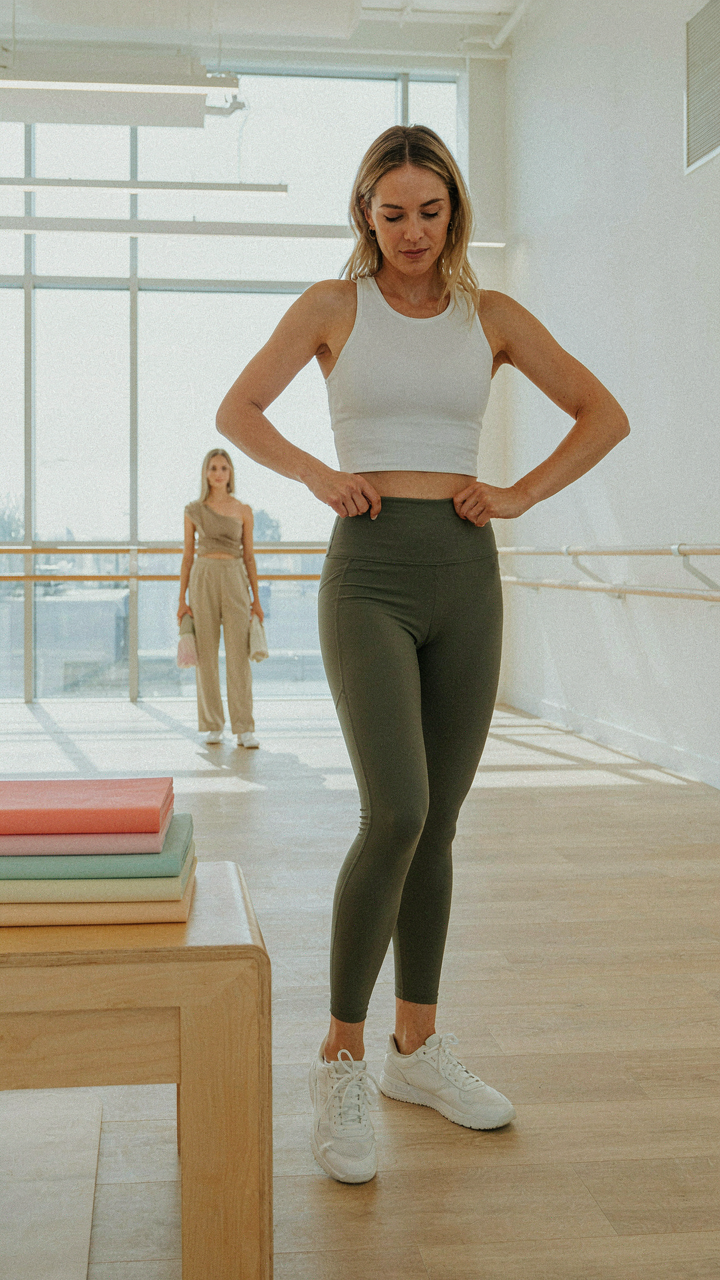
Your Outfit Is Reading You
You want to believe what you wear doesn’t matter, but you’re hoping it actually does because that means you can control the outcome. Here’s the mechanism: your outfit functions as a sensor in a cybernetic feedback system. In cybernetics, a sensor detects deviation from a desired state and triggers correction. Your barre outfit does the same thing with movement. Tight fabric signals when you’re compensating with your shoulders instead of engaging your core. Loose fabric masks sloppy positioning until you can’t feel the difference between proper alignment and cheating. The fabric becomes the feedback device.
Most people ignore this and wear whatever feels comfortable, which guarantees they’ll reinforce bad habits. Barre demands specific feedback because the movements are small and internal. You can’t see your hip rotation or scapular engagement in a mirror from fifteen feet away. Your outfit has to tell you what’s happening. High-waisted leggings with a fitted tank don’t just look intentional—they create a contact surface that registers when your ribcage flares or your pelvis tilts forward. This isn’t aesthetic. It’s diagnostic.
Adjusting The Signal Based On What You Learn
Every class teaches your outfit something new about your movement patterns. If you notice bunching at your inner thigh, your legs are rotating inward during plié. If your waistband digs in during attitude work, you’re not stabilizing your lower back. The outfit reports these things in real time. You then adjust either your movement or your outfit to clear the signal. This is active iteration, not passive wearing.
Most advice says to just pick comfortable clothes and focus on form. That’s backwards. Comfort is the enemy of feedback. A formless, oversized shirt hides every inefficiency. You’ll feel loose rather than right, and loose translates to sloppy execution. The goal is to feel every micro-adjustment your body makes, which means your outfit must have enough structure to amplify, not dampen, the signal. Start with fitted leggings and a tank that sits flush against your torso, then notice what your clothes tell you over three to five classes. Adjust fabric thickness, waistband height, or sleeve length based on which information you’re missing.
Barre Class Outfits: Avoiding The Generic “Gym Look”
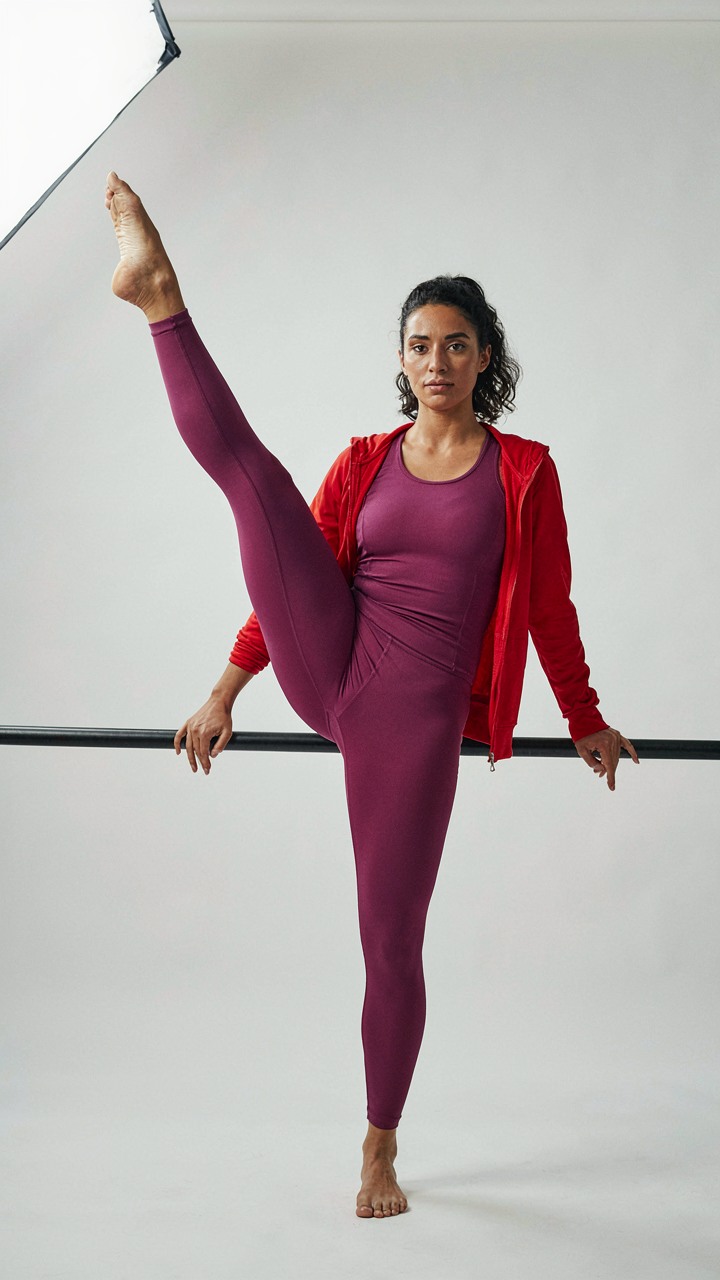
Why Standard Gym Wear Fails In Barre
You want to look intentional, not like you grabbed whatever was clean. Here’s the mechanism: gym wear is engineered for heavy sweating and large range of motion. Barre demands something different because the work is isometric and precise. Your muscles contract hard but your limbs move through smaller, controlled ranges. Loose fabric becomes a liability, not an asset.
Standard gym shorts and oversized tees don’t register the micro-adjustments your body makes at the barre. The resistance comes from holding positions, not explosive movement. Fabric that bunches or slides distracts you from feeling the actual work. This is why barre-specific brands cut tighter through the torso and thigh. The clothes become an extension of feedback, not an obstruction to it.
Fabric And Cut Requirements That Actually Work
Barre clothing operates under the same principle as compression wear in sports medicine: applied pressure enhances proprioceptive feedback. Your nervous system reads where your body is in space more accurately when fabric maintains contact with your skin.
- High-waisted leggings with compression panels: Creates stability through the core during isometric holds. Prevents fabric from rolling or shifting during leg lifts at the barre.
- Fitted tank tops or long-sleeve tops: Stays in place during forward folds and side bends. Loose fabric catches on the barre or obscures your posture line.
- Nylon and spandex blends (minimum 80 percent nylon): Offers enough stretch without sagging. Breathes better than pure cotton during 55 to 60 minute classes without pooling at your joints.
- Crop or tunic length tops: Shows your torso alignment so instructors can cue corrections. Prevents fabric from riding up during standing leg work and balance combinations.
- Flat-lock seams throughout: Eliminates chafing during repetitive leg lifts and seat work. Standard seams create friction points that compound over multiple classes per week.
The cut matters more than the brand. You need fabric that skims your body without compression that restricts breathing. Most gym leggings sit too low in the rise and bag at the ankle. Barre requires high-rise positioning that anchors at your natural waist and tapers at the calf. This keeps your line visible and prevents the constant readjustment that breaks concentration.
Ballerina Training: The Discipline Of Deliberate Dressing

Where Ballet Attire Came From
You care about this section because you want to look intentional, not like you grabbed whatever was clean. Here’s the mechanism: ballet attire evolved from function, not fashion. Dancers in the 19th century wore what the body needed to move efficiently and what audiences needed to see. The fitted leotard emerged because loose fabric hid alignment. Tights extended the leg line visually. These weren’t aesthetic choices first—they were biomechanical requirements that happened to look controlled.
The standard uniform persists because it solves a real problem for instructors and dancers alike. When everyone wears similar fitted clothing, form breaks become obvious. A sloppy shoulder position can’t hide under baggy fabric. Barre instructors use this visibility to correct technique in real time. Wearing actual barre attire signals you understand this trade-off: you sacrifice comfort coverage for precision feedback.
How Fabric Supports Your Posture
Think of barre clothing like load-bearing architecture: materials must support structure without adding weight. Fitted fabrics keep muscles visible so your nervous system gets accurate feedback about what’s actually firing. Loose clothing dampens this signal. Your body adjusts posture based on what it feels, and baggy clothes create false positional data. Wear something that moves with you, not against you.
The fabric choice matters more than people admit. Cotton retains sweat and loses elasticity when damp. Technical blends breathe and maintain tension throughout class. That tension against your skin isn’t discomfort—it’s data. Your proprioception depends on sensing exactly where your body sits in space. When fabric clings appropriately, you feel hip placement, shoulder alignment, and rib cage position more clearly. This direct feedback accelerates form improvement and prevents compensation patterns that waste effort.
Dance Training Clothes: The Myth Of “Freedom Of Movement”

When Loose Clothing Breaks Your Form
You want to feel unrestricted because you think freedom equals better performance. It doesn’t. Borrow from biomechanics: your body needs resistance feedback to calibrate muscle activation. Baggy shirts and oversized pants create a sensory gap between your limbs and your brain. You can’t feel where your shoulder is pulling in a tendu when fabric swallows the line. Instructors can’t see compensation patterns hiding under loose layers. Poor form compounds across every repetition.
The real cost arrives months later as chronic tension in stabilizer muscles that should never fire this hard. Barre demands precision in millimeter-scale movements. Loose clothing makes that impossible to verify in real time. You’re training blind, which means you’re training wrong.
Compression Where It Counts
Fitted clothing acts as a mirror for your nervous system. When fabric hugs your body, you receive constant sensory input about alignment and muscular tension. This isn’t comfort. It’s data. Capri leggings and fitted tanks provide compression without restriction. Your arms move freely, but you feel the scapula engagement. Your legs work through full range, but the fabric keeps you aware of hip alignment.
Compression also prevents fabric from riding up or bunching during thigh work and pulses. A fitted barre class outfit eliminates micro-distractions that break focus and form. The mechanism is simple: restricted sensory input equals poor proprioception, which equals ineffective training. Wear compression where the work happens.
The Minimalist Barre Outfit: Maximizing Output, Minimizing Distraction
What Actually Matters On The Floor
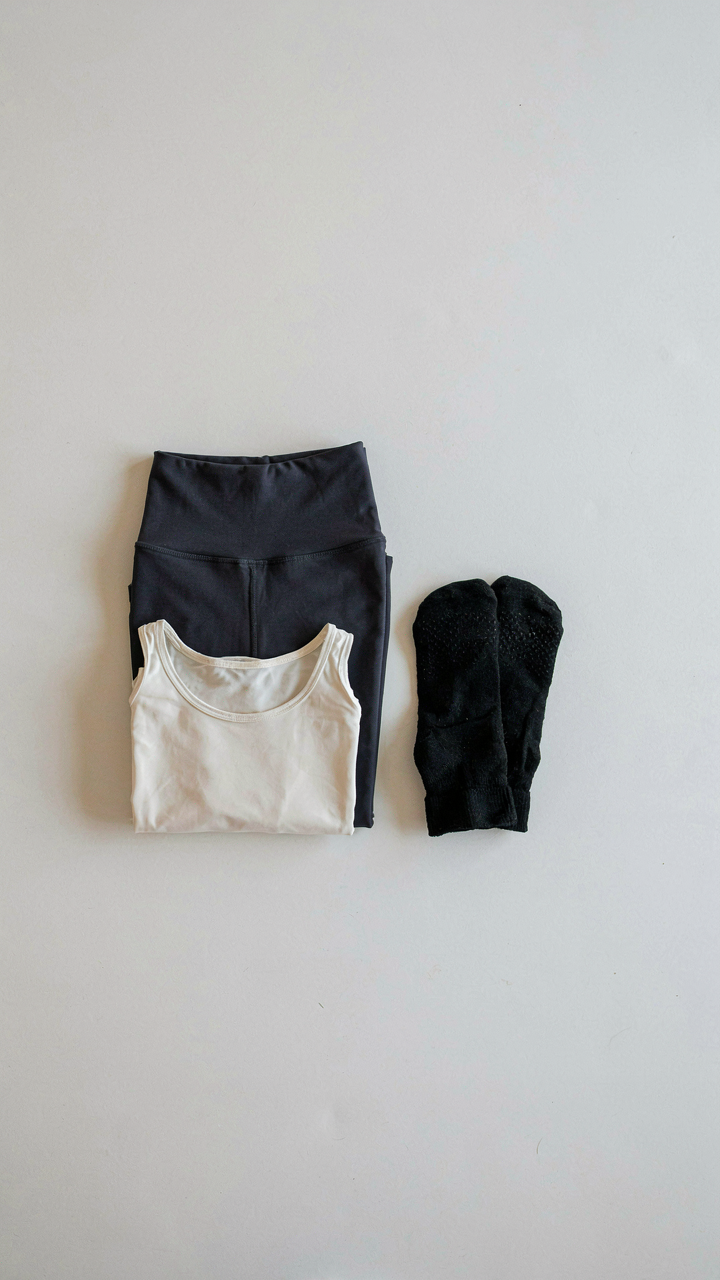
You want permission to spend less money and look intentional while doing it. Here’s the mechanism: barre demands precise body awareness because the movements are small and the bar serves as your feedback system. Loose fabric blocks that signal. Your nervous system needs to feel where your legs, core, and alignment actually are. This isn’t about aesthetics. It’s about proprioception. Fitted leggings, a fitted top, and grip socks constitute the complete operating system. Everything else is noise that costs attention you don’t have during a class.
The standard advice says wear whatever makes you comfortable. That’s incomplete. Comfort and performance diverge in barre. A baggy shirt won’t hurt you, but it will prevent your instructor from spotting form breaks, and it will prevent you from feeling your own postural errors in real time. You’re paying for feedback, not for fabric. Fitted clothing under 200 dollars total covers your actual needs: high-waisted leggings in nylon or nylon blend, a tank or short-sleeved top that sits at your natural waist, and sticky grip socks with rubber on the sole and heel.
Stripping Down To Signal
Most people own too many options and waste decision energy before class even starts. This is opportunity cost disguised as choice. Pick one outfit configuration and repeat it. Barre studios exploit the illusion that outfit variety matters when it doesn’t. The mechanism here comes from cognitive load theory in neuroscience: every decision burns mental resources. You show up with depleted focus. Your workout suffers. Your results stall.
The protocol is simple. Select one pair of leggings that fits your torso and leg length. Select one top that doesn’t shift during movement. Add one sock style that prevents sliding. Wash and repeat. No rotation required. This removes the friction between intention and execution. You arrive at class with full cognitive capacity directed at your body, not your outfit. That’s the actual competitive advantage of minimalism in athletic wear.
Your Outfit Isn’t A Costume; It’s A Calibration Tool For Amplified Barre Performance

Most people treat barre outfits as decoration. They’re not. The right clothes eliminate distractions your body uses to underperform. Fitted leggings let you see muscle engagement. Grip socks prevent your nervous system from gripping tension. Your shirt stays in place so you actually focus on form instead of adjusting fabric. Stop dressing for the mirror. Dress to remove friction between intention and execution. Pick one item today that actually fits your body. Your next class will prove why it matters.