

The Myth Of “Looking Professional”

Corporate Dress Codes Were Never About Competence
You’re afraid that showing up in athleisure signals you don’t take the job seriously. That’s the fear. But the mechanism underneath is simpler: corporate dress codes were invented to solve a visibility problem, not a performance problem. Before the 1950s, office workers wore what they wore. The suit standardized appearance so managers could spot hierarchy at a glance. The dress code was infrastructure for surveillance, not proof of work quality.
Modern offices kept the rule long after the reason died. Your boss doesn’t actually believe a blazer makes you smarter. He follows the norm because breaking it feels risky. Athleisure work outfits exploit this: they break the norm incrementally. You wear something that looks intentional and composed, not sloppy. The rule-following energy stays intact. Your competence remains the only thing that matters.
The Signals Athleisure Actually Sends

Borrowing from social psychology’s concept of “costly signaling,” athleisure work outfits send a specific message: you have enough status to bend the rules without breaking them. Someone early in their career wears full athleisure and gets labeled as unprofessional. Someone running the department wears the same outfit and gets called innovative. The fabric and fit don’t change. What changes is the permission structure around them.
The real mechanism is pattern interruption paired with intentionality. A worn-in hoodie reads as neglect. A structured performance hoodie in a neutral tone reads as choice. Matching your athleisure pieces to the actual work you do—not the fantasy version of work—is what sells the narrative. Pair technical fabrics with clean tailoring. Choose materials that age well and hold their shape. This tells the room you thought about what you wore, which is all professionalism ever meant.

The Un Uniform Protocol: Beyond Basic Black Trousers
Few Versatile Pieces That Actually Work
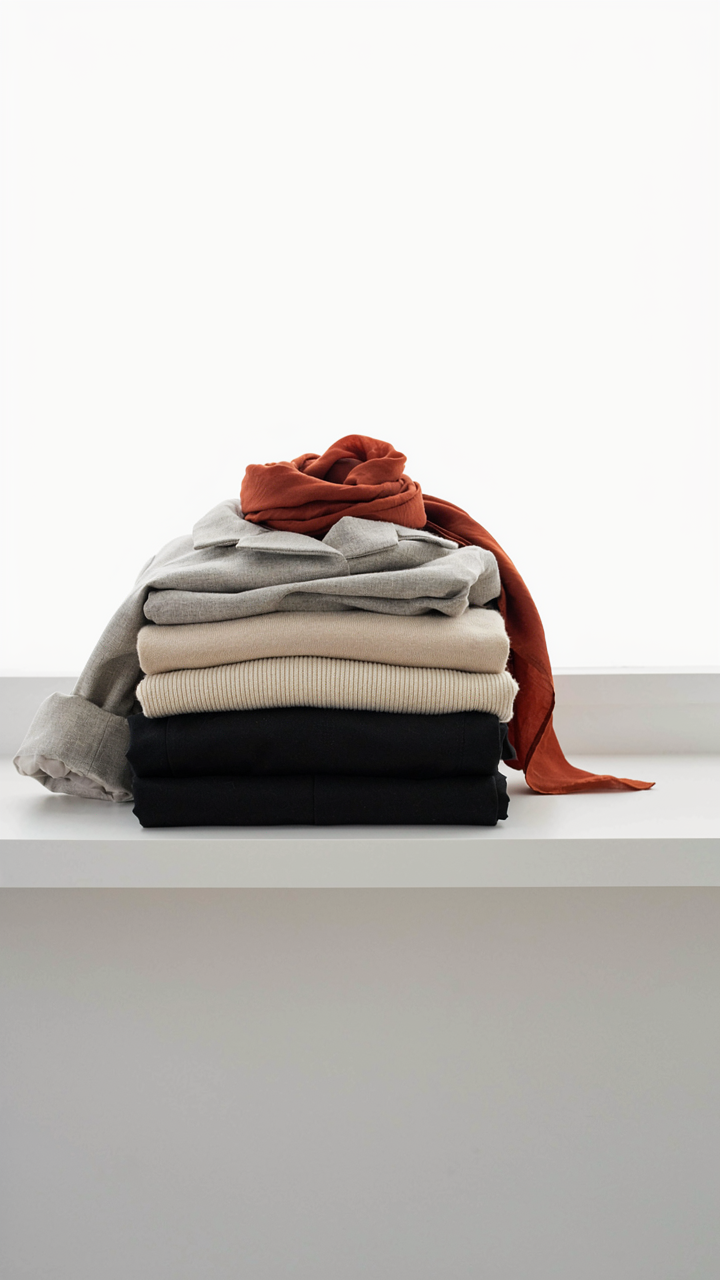
You want permission to dress down without getting flagged as the person who stopped trying. Here’s what actually happens: your brain treats a small, intentional capsule as a constraint system, not a limitation. Constraint forces better decisions. You pick five core pieces instead of twenty mediocre ones, and every combination works because you built it to. That’s the mechanism. Most people skip this and end up with athleisure that reads as confused.
Start with one neutral base pant in a technical fabric that moves like cotton but holds shape like wool. Add two tops that layer cleanly over it without bulk. Then one structured layer that signals effort, like a unstructured blazer or vest. Finally, one statement piece that breaks the neutral pattern without breaking the office code. That’s your grid. Everything stacks. Nothing competes. You’re not building a wardrobe, you’re building a system.
Strategic Layering Without Bulk
The real problem with layering isn’t aesthetic, it’s physics. Most people stack fabrics and create volume where offices demand visual clarity. Athleisure solves this through weight distribution, not volume addition. A fitted long sleeve under a sleeveless technical tank reads as intentional. A lightweight gilet over a crew neck reads as prepared. The gap between those two approaches is whether people see strategy or mistake.
Pick layers based on density, not warmth. A merino base layer compresses more than cotton when layered. A structured overshirt hangs differently than a cardigan, signaling different effort. The sequence matters: body contacting layer, then midweight statement, then outerlayer. This creates visual hierarchy without the puffed silhouette of traditional layering. Your final move is to ensure each layer has a defined neckline. Vague necklines stack into visual chaos. Clear necklines stack into intention.
Quality Over Quantity: The Investment Principle

Fabrics That Actually Perform
You want permission to spend more money without feeling wasteful. Here’s the mechanism: fabric performance determines how many times you wear a piece before it fails. Economics calls this cost per wear. A $200 pair of pants worn 150 times costs $1.33 per wear. A $80 pair worn 40 times costs $2. The cheaper garment bankrupts you through repetition.
Performance fabrics in athleisure work outfits resist pilling, hold their shape after washing, and breathe without looking cheap. Nylon blends and high-quality cotton do this. Polyester alone doesn’t. Check the fabric tag. If it’s 100 percent polyester or contains low-grade synthetics, the piece deteriorates faster under office conditions: repeated sitting, sweating under blazers, dry cleaning cycles. The fabric breaks down. You don’t wear it. You buy again.
The Real Math Of Cost Per Wear
Most people buy cheap and repeat the cycle because they don’t track actual wear. You need to reverse this. A $300 pair of jogger-cut trousers with elastane that keeps its form for two years of weekly office wear costs $2.88 per wear across 104 wearings. A $100 pair that pills after six months of bi-weekly wear costs $3.33. The expensive version wins on pure utility, not luxury.
Buy pieces you’ll actually repeat. This means the fit must pass the office test immediately, not “after I break it in.” The fabric must be compatible with your actual washing habits and your office environment. If your office runs cold, a thick merino blend makes sense. If it’s warm, a moisture-wicking polyester nylon blend makes sense. Choose based on environment, not brand name. Then wear it until it genuinely fails.
The Kinetic Energy System: Dressing For Flow

Clothing As A Force Multiplier
You want to believe that athleisure at work signals you’re relaxed and in control. The real mechanism is simpler: physics doesn’t care about your intentions. In physics, a force multiplier is an asset that amplifies the effect of an input. Your clothes function as a force multiplier for your presence and output. Fitted athleisure fabrics distribute your body weight evenly, reduce friction points that trigger fatigue signals to your nervous system, and eliminate the cognitive load of managing bunched fabric or restrictive seams. Loose or poorly fitted athletic pieces create micro-movements your body compensates for unconsciously, burning energy that should go toward work.
The fit hierarchy for work athleisure is non-negotiable. Start with pieces that sit flush against your torso without pulling or billowing. Your shoulders should move freely without the fabric riding up your neck. Waistbands sit at your natural waist, not cutting into your abdomen. Fabric tension creates decision fatigue; elimination of tension preserves mental resources. This isn’t comfort culture. This is basic physics applied to your workday efficiency.
Presence Through Deliberate Stillness
Most athleisure advice tells you to “move freely” or “stay comfortable.” That’s incomplete. Real presence comes from controlled stillness, not unchecked movement. Compression fitted layers underneath loose athleisure pieces create a biomechanical anchor. Your body recognizes the boundary between the compression layer and the outer piece, which signals stability to your posture and nervous system. You sit straighter. You talk slower. You pause before speaking. None of this is accidental.
Presence requires your body to occupy space without broadcasting that you’re managing your clothing. Technical fabrics with stretch recovery maintain their shape through the day. Four-way stretch materials return to form after each movement, so you’re not constantly adjusting. Cotton blends and pure cotton wrinkle, bunch, and require repositioning. Every repositioning is a micro-signal that you’re uncomfortable or distracted. Select athleisure in materials that hold their geometry.
Office Athleisure: The Deconstructed Suit
The Performance Blazer Formula
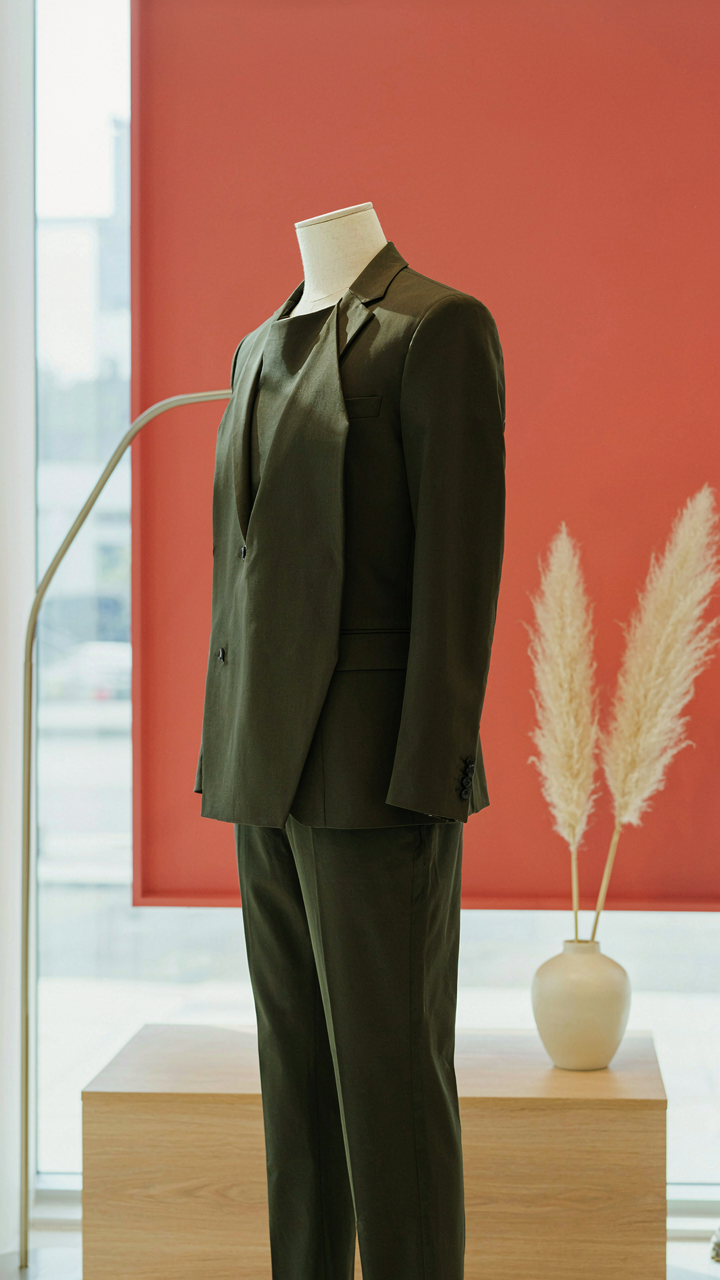
You want the authority signal without the suffocation. The mechanism is simple: a performance blazer (cut like tailoring, built from stretch fabric) over technical bottoms triggers two competing signals in the observer’s brain. Your brain registers the jacket silhouette as formal. Then it sees the fabric move like activewear. This cognitive gap is where athleisure work outfits actually live. The blazer does the status work. The technical layer does the honesty work.
Performance blazers exist because technical fabric got good enough to hold structure. Look for blazers with four-way stretch, moisture-wicking capability, and a chest pocket that doesn’t wrinkle after sitting for eight hours. Pair these with tapered technical pants in wool blend or synthetic. The bottoms should have enough taper to read as intentional without the rigidity of traditional suiting. The fit works because it promises both mobility and visual discipline, the two things your office actually cares about.
When Structure Becomes The Enemy
Everyone says “dress for the meeting.” Wrong framing. The real question is whether the meeting requires you to signal constraint or capability. Structured pieces telegraph compliance. Relaxed pieces telegraph control. Use structure when you need to prove you’re taking something seriously to skeptics. Use relaxed cuts when the work itself proves your seriousness. This isn’t psychology. It’s resource allocation, borrowed from military logistics: you move heavy gear only when the terrain demands it.
Structured athleisure means crisp edges, minimal stretch, and defined shoulder seaming. Wear this to first client meetings or when sitting across from traditional decision-makers. Relaxed athleisure means dropped shoulders, tapered cuts with actual give, and fabrics that compress without losing shape. Wear this when your output matters more than your posture. The transition between them isn’t gradual. You pick one or the other based on what the room needs from you, then commit to it completely.
Jogger Outfits For Women: Redefining Casual Friday

The Tailored Jogger: Fit And Fabric Importance
You want to wear joggers to the office because they feel like winning without effort. Here’s what actually happens: most women buy joggers cut for the gym, then wonder why they read as unprofessional the moment they sit in a meeting. The difference isn’t philosophical—it’s structural. A work-ready jogger has a higher rise, tapered legs that hit the ankle cleanly, and fabric weight that holds its shape without clinging. Cheap joggers bag at the knees and pool at your feet.
Fabric matters more than fit alone. Technical blends like cotton-polyester or wool-blend joggers hold creases and maintain structure through a full day of sitting and standing. Pure cotton joggers wrinkle instantly and look sloppy by 10 AM. The fabric should have enough recovery to resist pilling and enough density that you can’t see the outline of your legs through it. This is the real test: if you can see detail, the office sees pajamas.
Accessorizing For Authority, Not Sloppiness
The mistake everyone makes is treating joggers like a foundation that excuses the rest of the outfit. They don’t. Joggers demand harder accessorizing work, not less.
- Structured blazer: A tailored blazer instantly signals intention. Choose one in wool or a cotton blend that covers your hips and creates a formal frame around the jogger silhouette.
- Leather belt with real hardware: A quality belt grounds the outfit. Metal buckles and genuine leather create visual weight that prevents the jogger from reading as casualwear masquerading as professional.
- Pointed-toe flats or loafers: Rounded or athletic shoes extend the gym aesthetic. Sharp-toed footwear cuts the line of your leg and signals deliberation rather than accident.
- Structured handbag: Soft, slouchy bags read informal. A tote or structured shoulder bag in leather or high-quality synthetic material holds the professional frame.
- Minimal, metal jewelry: Gold or silver chains, hoops, or cuffs work. Avoid dangling or fabric-based jewelry that echoes athleisure branding.
The jogger outfit succeeds or fails on cohesion. Every piece must communicate that you chose this look deliberately, not grabbed it from the gym locker. Pair your joggers with pieces that have weight, structure, and finish. The accessories do the translation work from casual to credible.
Tech Girl Outfit & Athletic Trainer Outfits: Functional Aesthetics

Utility First, Aesthetics Second
You want permission to wear workout clothes to the office without looking like you skipped the gym on your way in. Here’s the mechanism: function precedes fashion. Borrow from systems engineering—the constraint that drives innovation. Athleisure works in professional settings because each piece solves a real problem before it solves a style problem. A performance fabric breathes and moves. A structured silhouette photographs well on video calls. Pockets hold what you actually need. When function is genuine, aesthetics follow naturally instead of fighting against practicality.
The mistake everyone makes is adding “professional” pieces to athletic wear and hoping the mix works. It doesn’t. Start with performance fabrics that look intentional in an office environment. Nylon blends, technical cottons, and modern ponte materials move with you and maintain structure through the workday. Skip anything with visible moisture-wicking patterns or reflective elements unless you’re actually training. The outfit works because you chose each piece for what it does, then discovered it looked assembled on purpose. That’s the difference between athleisure and activewear masquerading as office clothes.
The Uniform Mentality Reduces Friction
Consistency compounds. In military logistics, standardization reduces decision fatigue and execution errors. Athleisure works the same way. Build a three-to-four piece rotation you wear on repeat. Black or navy performance leggings or joggers. Two matching technical tops or hoodies. One layering piece that works over everything. One structured shoe that bridges athletic and office aesthetics. You stop deciding what to wear and start owning what you wear. That mental space you freed up goes somewhere else, and your colleagues stop noticing your outfit changes because you look deliberately put together every single day.
The uniform approach also creates a brand you control. People recognize consistency before they recognize individual pieces. After three weeks of the same rotation, your coworkers stop cataloging your clothes and start seeing a person who takes work seriously enough to have a system. Wear the same outfit twice a week if you need to. Rotate three tops. Buy duplicates of pieces that work. Your goal is reaching for the same combination without thinking, then showing up exactly as intended, every time.
Fall 2026 Athleisure: The Seasonal Adaptation
Layering That Actually Controls Temperature
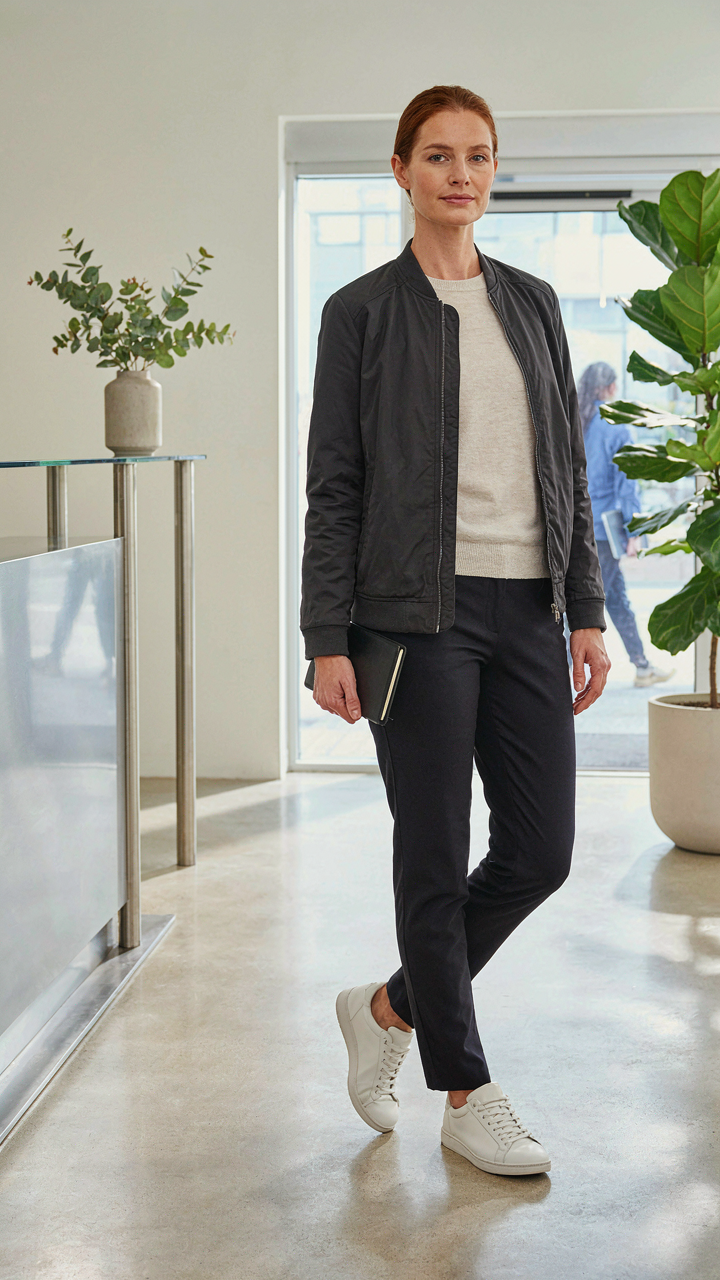
You want to look effortless in fall without sweating through your shirt or freezing at your desk. The real mechanism is thermal resistance, borrowed directly from physics: layering works because you’re creating insulating air pockets between fabrics, not because you’re stacking random pieces. Base layer, mid layer, outer shell. Each serves a function or it’s wasted fabric.
Start with a merino wool or synthetic base that wicks moisture away from skin. Add a mid layer with moderate insulation, like a lightweight fleece or knit sweater. Your outer layer stays structured: a bomber, overshirt, or technical jacket that doesn’t compress the layers beneath. The goal is adjustability without looking reactive. You remove one layer indoors, not your entire outfit.
Seasonal Color Strategy Without Looking Seasonal
Forget the tired advice about “fall colors.” That thinking treats seasons like fashion magazines instead of office perception. What actually shifts in fall is contrast and saturation. Offices run cooler, lighting changes to artificial, and darker grounds read as intentional rather than depressed when paired with lighter textures.
Build your fall palette around charcoal, navy, and warm grays as bases. Introduce earth tones through technical fabrics, not corduroy or suede. A rust-tinted jogger works because the synthetic material reads clean. Pair it with a cream-colored performance polo or a structured sweater in oatmeal. The mechanism is simple: darker foundations ground the outfit, technical textures prevent it from reading as costume, and neutral accents keep you credible at the conference table. Rotate these pieces before they become costume.
Mom Athleisure & Fall Soccer Game Outfit: Beyond The Sidelines
Seamless Transitions From Casual To Executive
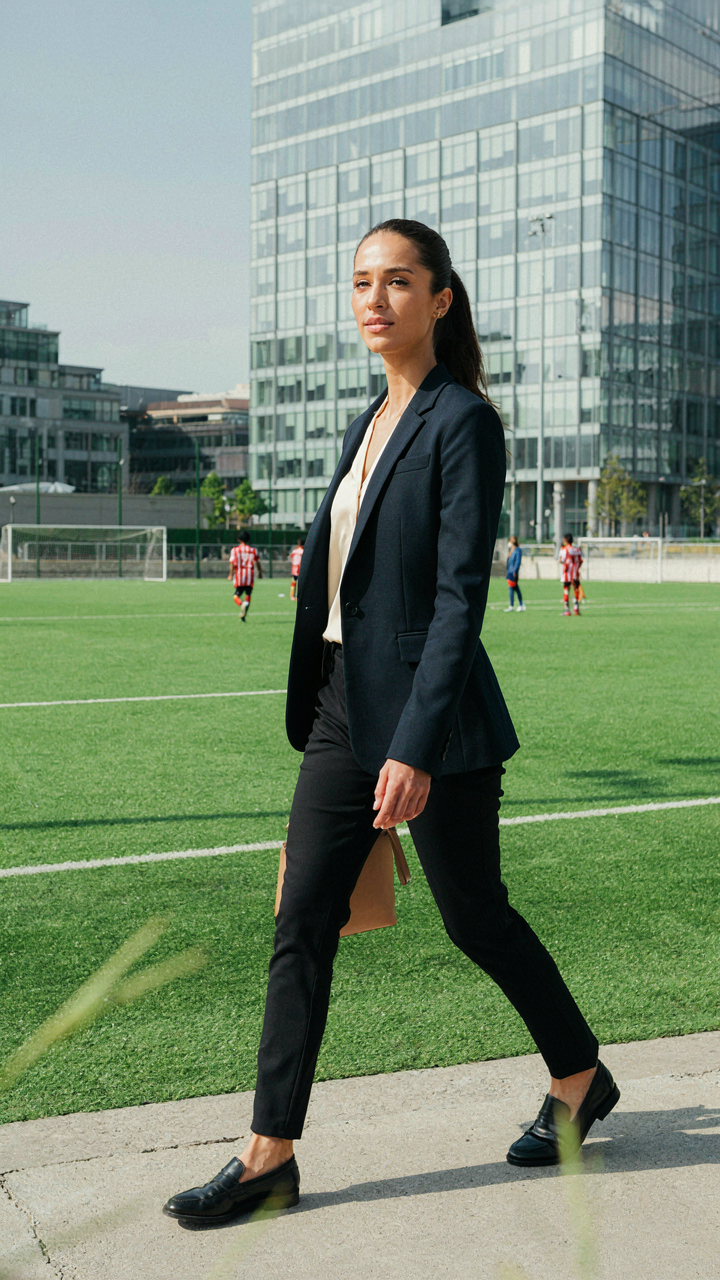
You’re reading this because you’re tired of maintaining two separate wardrobes and the mental load that comes with it. The real mechanism is this: office contexts operate on signal detection, not outfit policing. Your coworkers and leadership read what you wear through a filter of status markers, not garment categories. A high-quality knit blazer over performance leggings signals competence because the blazer reads as intentional investment, not because leggings suddenly became formal.
The outfit transition works when you stack pieces that code differently depending on context layering. A fitted ponte pant or structured jogger in black or navy doesn’t read as athletic in an office because the fabric weight and cut override the category. Pair it with a silk shell or a structured sweater, add a tailored overshirt, and you’ve built an executive silhouette that functions identically at a 9 AM meeting or a 3 PM soccer sideline. The toggle happens through removing or swapping the outer layer, not changing pants.
The Power Of Minimalist Low Maintenance Pieces
Most advice on this topic misses the actual constraint: you don’t want fewer clothes, you want fewer decisions. Minimalism in athleisure work outfits means selecting pieces that perform multiple functions without looking like they’re doing it. A merino wool crewneck sweater works over performance wear at the office, under a blazer in a client meeting, and alone at pickup without requiring a mental recalibration.
The protocol is straightforward. Build your base around three neutral structured bottoms: one ponte pant, one performance pant that reads tailored, one hybrid short. Select four tops in coordinating neutrals that layer efficiently and wash without fading. Add two outer layers that hold structure without wrinkling badly. This 9-piece anchor eliminates decision fatigue while maintaining visual coherence across settings. The constraint forces specificity, which creates the appearance of intentionality that office environments reward.
Wide Leg Joggers Outfit Women: The Unconventional Silhouette

Length And Proportion Control
You’re drawn to wide leg joggers because you think they hide your body. They don’t. They reveal your proportional awareness instead. The mechanism is visual balance: proportions work through contrast, not concealment. A wide leg jogger requires deliberate length calibration to avoid looking sloppy or proportionally broken.
Inseam length determines whether wide legs read as intentional tailoring or careless fit. For most women, the jogger hem should land at the ankle bone or one inch above, not pooling on the shoe. Pairing them with a fitted top (tucked or cropped) creates visual tension that makes the silhouette read as a choice, not a default. This ratio matters more than fabric weight or brand name.
Owning The Silhouette Without Apology
The common advice is to balance wide legs with fitted tops, then stop thinking. That’s incomplete. The real work happens when you stop comparing yourself to standard office templates and own what the silhouette actually does: it signals comfort without signaling indifference to appearance. Wide leg joggers demand cleaner construction elsewhere because they already occupy visual space.
Pair them with structured blazers, defined waistbands, or sharp accessories. Your shoe choice matters more than usual because the leg silhouette draws the eye downward. Leather sneakers, pointed flats, or loafers work. Canvas or oversized athletic shoes undercut the intentionality. The silhouette wins when every other element reinforces that you chose this cut for a reason, not because it was available.
Your Biggest Obstacle Isn’t The Dress Code; It’s Your Fear Of Looking Like You Don’t Care

Most people dress down at work because they think casual means lazy. It doesn’t. Casual means intentional. Pick one quality piece, pair it with structured basics, and commit to the look. Stop rotating between five mediocre outfits and build three bulletproof ones instead. Your coworkers don’t judge athleisure. They judge indifference. When you dress like you planned your morning, everyone notices, including the people who decide your next promotion.