
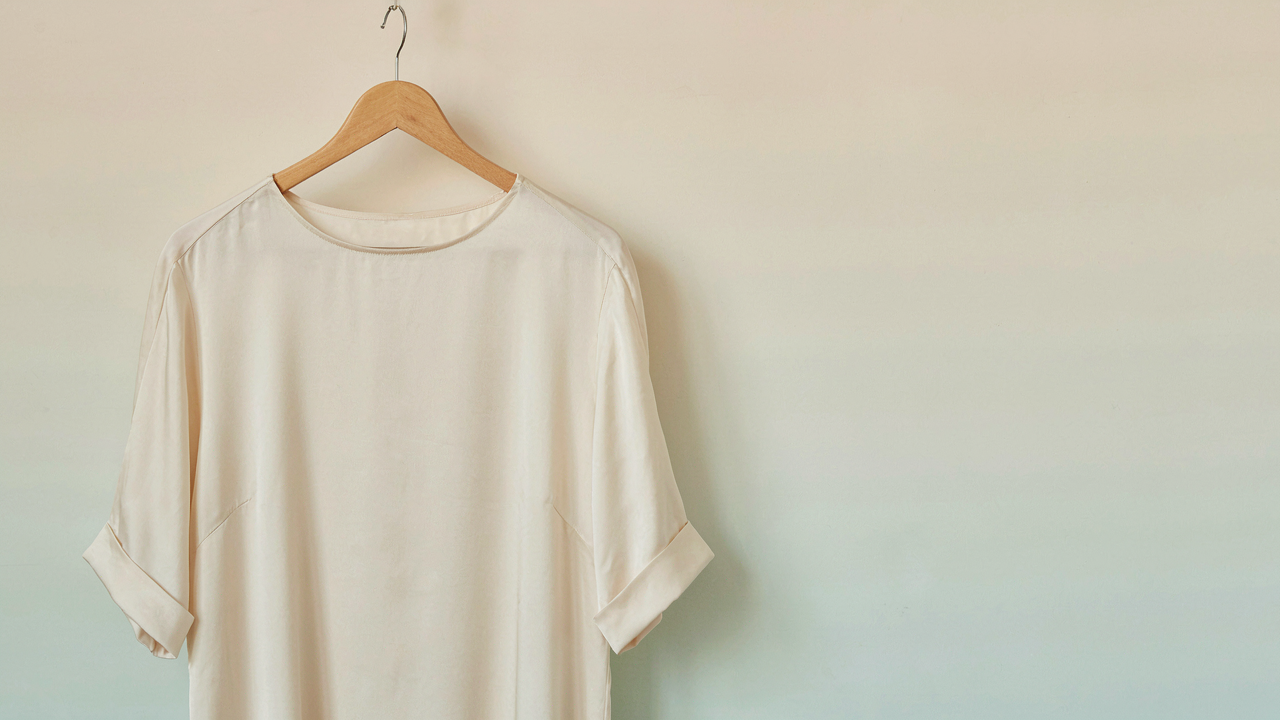
The Myth Of Occasion: Why Your Silk Blouse Outfit Isn’t “Too Fancy”

You’re Afraid Of Standing Out
You’re worried that wearing a silk blouse outfit in casual contexts signals you’re trying too hard or above the moment. The real mechanism: you’ve internalized a false social rule that formality exists on a linear scale, when it actually exists in contexts. Silk is material, not a statement. How you wear it determines everything.
Silk blouses entered mainstream wardrobes in the 1970s and 1980s partly because women entered the workforce demanding fabric that performed. Silk breathes, moves, and holds shape without screaming formality. The garment itself is neutral. A silk blouse over jeans reads differently than a silk blouse under a structured blazer, but both are legitimate because context, not fabric, determines appropriateness. Stop treating silk like it belongs in a locked category.
The Swap, Not The Overhaul

Layering strategy solves this. Economics calls it substitution: you replace one component while holding others constant. With a silk blouse outfit, you substitute the bottom half or shoes to shift the entire read from evening to day. A silk blouse works at a client meeting, a casual dinner, and a weekend brunch when you shift what sits beneath or beside it.
Keep the silk blouse consistent. Change the trousers to denim. Swap the heels for flats. Ditch the jewelry or multiply it. Swap the structured bag for canvas. Each substitution recalibrates the formality signal without requiring you to own separate wardrobes. The silk blouse outfit becomes a reliable base layer, not a specialized piece waiting for permission to leave the closet.

The 3 Layer Sophistication Protocol For Your Silk Blouse Outfit

What Lies Underneath Matters First
You want people to assume you have your life together without having to say anything about it. That’s the real reason you’re reading this. Here’s what actually determines whether a silk blouse outfit reads as intentional or accidental: the base layer creates the silhouette foundation. Silk drapes differently depending on what sits beneath it. A fitted undershirt changes the drape. No undershirt changes it again. The fabric clings and reveals without intention if you skip this step entirely.
Choose your base around the silk’s weight and transparency. Heavier silks at 19 momme or above need minimal layering. Lighter silks at 12-16 momme need structure underneath to prevent the blouse from reading as loose or unfinished. Your base layer is not decoration. It’s the invisible architecture that makes the entire outfit work or fail. Wear a fitted tee, a camisole, or a structured bodysuit under your silk blouse depending on the blouse’s opacity and your day’s demands.
The Dimension Comes From Proportion, Not Volume
Common advice says “layer a blazer over it.” That’s incomplete. Most people layer wrong by adding bulk instead of contrast. Think in terms of engineering: a load-bearing wall only works if it’s positioned correctly. Your outerwear becomes a load-bearing element in the outfit’s visual balance, not just extra fabric piled on top.
A structured blazer in a contrasting color or neutral tone compresses the softness of silk and creates visual hierarchy. A cardigan adds warmth but dilutes the blouse’s impact unless you size it correctly to the fitted base layer. An oversized linen shirt worn open over a fitted silk blouse creates dimension through proportion, not fabric weight. The mechanism is simple: opposing proportions (fitted under oversized, or oversized under fitted) make the outfit read as deliberate rather than default. Wear your outerwear open, not buttoned, to preserve the silk blouse as the focal point.
Beyond Black And White: The Power Palette Of A Satin Shirt Outfit

Stop Defaulting To Safe Color Combinations
You want permission to wear color without looking like you’re trying too hard. That’s the real fear underneath most outfit advice. The mechanism is simple: most people pair silk blouses with neutrals because it feels controllable. But a silk blouse’s sheen demands optical contrast to justify its presence. Muted colors actually flatten the fabric. Bold pairings activate the material itself.
Unconventional combinations work because they force the eye to process the garment as intentional rather than default. Pairing a cream silk blouse with deep olive, rust, or charcoal creates tension that reads as deliberate. The fabric’s reflective quality catches light differently against each tone, revealing dimension. This isn’t about clashing. It’s about choosing colors that make the silk’s finish the focal point instead of an afterthought.
Sheen Changes The Color Equation
In optics, reflectivity alters perceived color intensity and depth, and a silk blouse operates the same way. The fabric doesn’t just sit there. It bounces light and shifts how your eye reads every color touching it. A burgundy silk paired with cream doesn’t read the same as a matte burgundy cotton would. The sheen accelerates the visual weight of the color.
This means you need fewer adjustments when dressing a silk blouse outfit. Where a matte fabric requires careful color balancing and multiple layers for definition, silk does the work for you through light reflection. Pair a jewel-toned silk blouse with a single neutral base and watch how the outfit resolves itself. The sheen becomes the accelerator that prevents oversaturation while keeping the look anchored and complete.
The “Scarcity Principle” Of Accessorizing Your Silk Blouse Outfit

Fewer Pieces, Higher Signal
You want people to notice the blouse, not the clutter around it. That’s the real motive here. Economics calls this the scarcity principle: value rises when supply drops. Apply it to your silk blouse outfit by treating accessories as capital, not filler. One statement piece beats five mediocre ones. The blouse itself is already doing work. Accessories exist to amplify that work, not compete with it.
Most people accessorize by addition. They throw on a belt, a necklace, a bracelet, earrings, a scarf. Wrong move. Each piece fractures attention. Your eye lands everywhere except the blouse. The mechanism is simple: human attention is finite. Divide it across ten elements and the blouse gets ten percent of the cognitive load. One intentional accessory gets ninety percent. Choose one anchor piece per outfit and build around restraint.
Frame The Blouse, Not The Accessories
Photography teaches visual hierarchy through negative space and focal point placement. The blouse is your subject. Accessories are the frame. A frame disappears when it works correctly. You notice the painting, not the wood around it. Apply this to your silk blouse outfit. Let the material, drape, and color of the blouse dominate the composition. Your accessories should recede into supporting roles.
Common advice says to “match your accessories to your outfit.” That’s incomplete. You’re not matching to the outfit. You’re positioning yourself as a viewer looking at the blouse. What does the blouse need to stand out? If it’s patterned, use neutral metals and minimal jewelry. If it’s solid, one piece of jewelry can anchor without stealing focus. The blouse does the speaking. Everything else gets quiet.
Unlocking Versatility: Your Silk Office Shirt Beyond The Boardroom
The Uniform Downgrade
You want permission to wear expensive things casually without looking like you’re trying too hard or wasting money. The mechanism is simple: formal pieces hold their structure and drape because of silk’s weight and weave density. Remove one variable (the blazer, the tailored pants, the rigid setting) and the shirt adapts instead of collapsing. A silk blouse designed for boardroom formality actually performs better in casual contexts than cheaper fabrics because it doesn’t wrinkle into submission after four hours.
The common advice here is wrong. Most guides say “just add denim” or “throw it over a tee.” That misses the actual play. Pair a silk office blouse with neutral linen trousers or relaxed-fit cotton twill, then anchor the outfit with a single structured piece: a leather belt, a canvas tote, or minimal jewelry. This removes the formal signals (tailoring, polish, hierarchy) while preserving the fabric’s actual advantage, which is controlled movement and a subtle surface finish that reads as intentional, not desperate.
Weekend Wear Reinvention
The real work happens when you stop treating the silk blouse as a shirt and start treating it as a layering base. Weekend reinvention isn’t about style mixing—it’s about changing the blouse’s functional role in the outfit. Wear it unbuttoned over a fitted tank or simple tee, let it act as a lightweight overshirt, and suddenly the formality dissolves. Pair it with straight-leg jeans, white sneakers, and a small crossbody bag. The blouse becomes texture and shape, not a dress code signal.
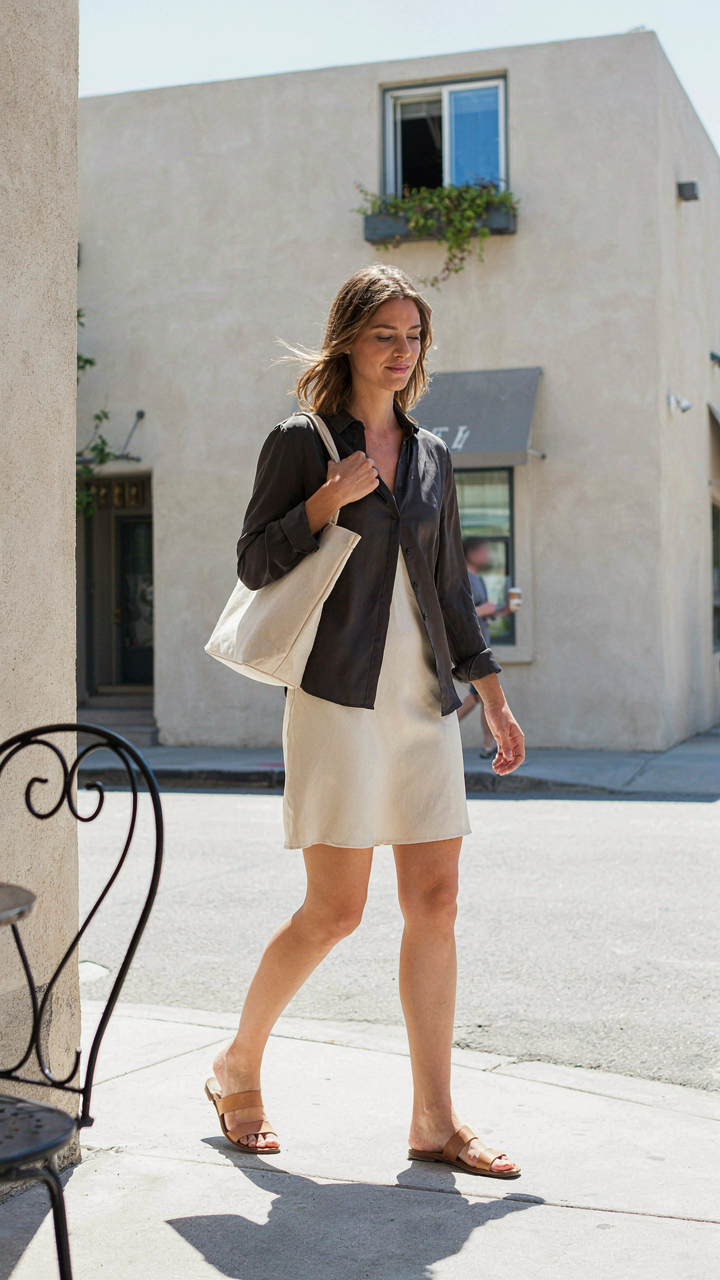
The second move is material contrast. Silk’s smooth surface reads formal only when surrounded by formal materials. Place it next to raw denim, canvas, or linen and the context flips. A charcoal silk blouse over a cream linen slip dress with flat sandals creates visual interest through material dialogue, not style category confusion. The outfit works because each piece performs a clear function: the silk provides sheen and drape, the linen provides structure and weight, the shoes keep it grounded. That’s your protocol: identify the role each fabric plays, then assign it deliberately.
The “Second Skin” Effect: Fabric Choices Beyond Pure Silk Blouse

Satin Blouse Vs. Silk: Performance Differences
You want satin because you think it looks expensive. The truth is simpler: satin performs differently because of how light hits its weave structure, not because of mystique. Satin uses a weave that floats yarns across the surface, creating that lustrous sheen. Pure silk uses a different weave entirely. Both are materials, but the construction determines the visual output and how fabric moves on your body.
Satin blouses hold wrinkles longer than silk because the tight weave traps moisture and prevents it from releasing smoothly. Silk sheds water faster due to its protein fiber structure, which naturally resists moisture absorption. For daily wear, silk ages better visually. Satin looks polished for single-occasion events but degrades faster under repeated wear and washing. The gap narrows if you choose high-quality polyester satin blended with silk, which splits the difference between cost and longevity.
Blended Fabrics For Practicality And Drape
Blended fabrics solve a problem pure silk creates: maintenance friction. A silk blouse outfit demands careful laundering, storage, and handling. Blend in polyester or cotton at 20 to 30 percent and you get fabric that drapes like silk while tolerating normal washing. The drape changes minimally because fiber weight dominates that outcome more than fiber type alone.
The real mechanism behind blended performance is fiber behavior under tension and humidity. Add 25 percent polyester to 75 percent silk and the synthetic fiber prevents the natural fiber from relaxing too much in humid conditions. Your blouse keeps its shape through a workday. Cost drops significantly. Most luxury brands use blended silk for their commercial lines for this exact reason: the customer can’t tell the difference by eye, but they can tell by how the garment survives their actual life.
The “Effortless” Illusion: Styling Your Silk Shirt Outfits Women

How The Tuck Actually Works
You want people to think you didn’t try. That’s the real driver here—and it shapes everything about how you tuck a silk blouse. The mechanism is simple: a tuck controls volume. Silk drapes, which means it pools and moves. Without intention, it reads as shapeless. A tuck anchors fabric to your body, creating definition. The depth of the tuck determines whether you read as polished or sloppy.
A full tuck works for structured silhouettes and tucked-in styling. A half tuck—fabric gathered at the front, loose at the back—works for hourglass frames because it skims rather than clings. A side tuck works for pear shapes because it creates asymmetry that breaks up hip width. The rule nobody states: the tuck placement matters more than whether you tuck at all. Choose based on where your body needs visual anchoring, not on what looks casual.
Sleeves Set The Entire Mood
Sleeve presentation is borrowed from tailoring’s operational doctrine: one variable controls perception of formality. A rolled sleeve signals intentionality and energy. You’re saying “I’m working.” Cuffed sleeves—turned up and buttoned or held—read more deliberate, almost structured. Open sleeves that fall to the wrist are formal or romantic depending on the silk weight and how the hem hits. This isn’t decoration. Sleeve length and position determine whether your silk blouse outfit reads as day-ready or evening-ready in seconds.
Most people roll sleeves wrong. They tighten the roll too much, strangling the silk. The fabric should fold loosely, once or twice, stopping mid-forearm. This preserves the drape and lets light hit the silk. For cuffing, button the cuff if the blouse has buttons, or let the fold sit naturally if it doesn’t. Open sleeves stay open when the silk has weight and body. This one choice—how you finish the sleeve—carries more visual weight than any accessory you add.
The Investment Fallacy: Why Price Doesn’t Equal Power In A Silk Shirt

What Actually Stops A Silk Blouse From Falling Apart
You’re hoping the price tag guarantees you won’t look cheap. Here’s the mechanism: durability in silk isn’t about cost—it’s about thread count and weave density. A 400-thread-count silk charmeuse from an unknown brand outlasts a 200-thread-count “luxury” piece every time. Brands markup perception, not construction. The fabric itself determines longevity. Most consumers never inspect the actual specs because the label feels safer than measurement.
Examine the weave structure before purchase. Hold the fabric to light and count threads per inch if possible, or request specifications from the seller. Charmeuse needs minimum 400 threads for reliability. Crepe and twill handle lower counts better due to their construction. A $40 silk blouse with tight, consistent weave beats a $300 blouse with loose thread tension. The price reflects marketing spend and distribution costs, not engineering.
How Silk Actually Survives Regular Wear
Silk requires specific protocols to resist degradation, not mystical handling. The material breaks down from heat, alkaline detergent, friction, and UV exposure—these are chemical facts, not opinions. Casual care kills it faster than aggressive washing done correctly. You need systematic maintenance, not fear-based babying.
- Wash in cool water only: Hot water denatures silk protein structure. Use 65 to 75 degrees Fahrenheit. Cold water preserves fiber integrity and prevents premature fading and shrinkage.
- Use neutral pH detergent: Standard laundry detergent is alkaline and degrades silk. Specialized silk wash or baby shampoo maintains fiber balance without chemical damage.
- Air dry completely, never machine dry: Heat accelerates protein breakdown in silk fibers. Lay flat on towels or hang on padded hangers away from direct sunlight to prevent color loss.
- Store flat or rolled, not on wire hangers: Wire hangers create permanent stress marks and shoulder deformation. Fold in acid-free tissue or roll loosely to prevent creasing and maintain shape over time.
- Spot treat stains within 24 hours: Stains set faster in silk than cotton. Use cool water and neutral detergent on the affected area before washing the entire garment.
A silk blouse maintained this way lasts a decade. Neglected—left in direct sun, washed in hot water, dried hot—it degrades in two years. The blouse doesn’t fail because it’s fragile. It fails because the system wasn’t followed. Build maintenance into your weekly rotation, or the investment evaporates.
Beyond “Work Wear Outfits”: Redefining Professionalism With Silk

Structure Over Costume
You want permission to dress differently at work without getting read as unprofessional. The mechanism is this: professionalism isn’t about uniform compliance. It’s about signal clarity. Silk reads as intentional because its drape, weight, and sheen require deliberate choice. A silk blouse paired with tailored trousers or a midi skirt communicates competence through fabric quality, not through conformity. Employers recognize this. The distinction matters because cheap synthetic fabrics signal either carelessness or budget constraints. Silk signals neither.
The reason standard work wear advice fails is it treats professionalism as a costume you put on, not a language you speak. A silk blouse outfit becomes professional the moment the pieces work as a system, not as isolated “office appropriate” items. Fit drives this. A silk blouse that pulls across the shoulders or gaps at the buttons reads sloppy regardless of fabric. One that moves with your body reads controlled. Pair it with pieces that fit the same way, and you’ve built a functional system. The outfit does its job without demanding your attention.
Authority Through Consistency
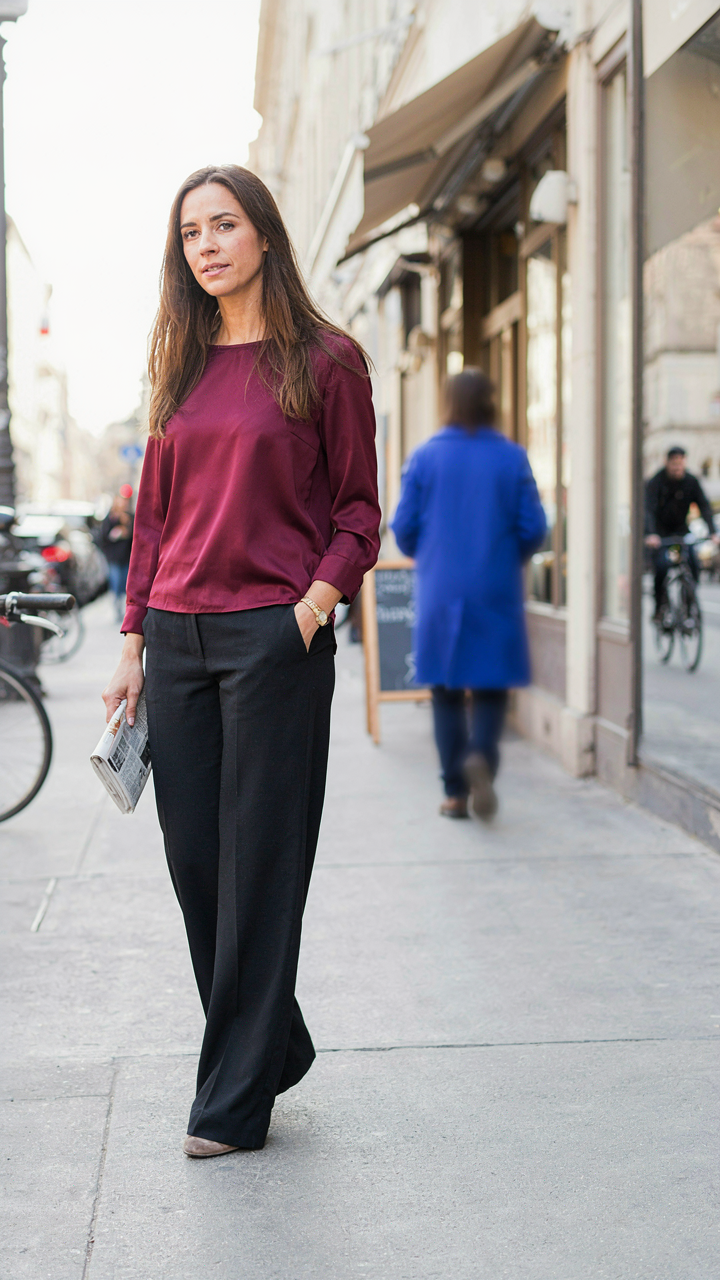
Personal branding in fashion works like positioning in business. You occupy a specific slot in how people perceive you, and you defend that slot through repetition. A silk blouse outfit becomes your brand when you wear versions of it consistently enough that people expect it from you. Not uniform. Consistent. This means choosing a color palette, a fit template, and repeat combinations you actually wear. If you rotate between three silk blouses in navy, cream, and burgundy, with two pairs of trousers that fit identically, you’ve built a system. People will notice you’re put together before they notice what you’re wearing.
The tactical move is establishing a uniform of quality basics rather than shopping for novelty. Wear the same well-fitted silk blouse with different bottoms throughout a week. Observe how people respond. They respond to the baseline. The baseline is what builds authority. Your accessories should change less than you think. A single watch, one pair of earrings you wear most days, the same belt. This removes decision fatigue and reinforces the brand. When you stop rotating variables randomly, the consistency itself becomes a signal of someone who knows what they’re doing.
The “Blouse Outfit” As A Statement: Rejecting The Status Quo
Style As A Signal Of Actual Taste
You want permission to dress differently without social friction. The mechanism is simple: a silk blouse outfit works because it signals intentionality in a world drowning in default choices. Most people wear what algorithms and mall layouts push at them. You wear silk because the material choice, drape, and fit require conscious selection. That distinction registers. Silk doesn’t apologize or blend. It catches light differently than cotton or polyester, and observers process that difference even if they can’t name it.
The real power isn’t rebellion for its own sake. It’s that silk forces specificity. You can’t grab a silk blouse mindlessly. The price point, the care requirements, the way it moves on your body all demand that you know why you own it. That knowledge becomes visible. A silk blouse outfit stops being “what I wore today” and starts being “what I chose to say about myself today.” That’s the difference between fashion and communication.
Escaping The Trend Treadmill
The conventional directive says wear what’s popular this season. That’s backwards. Trends move fast precisely because most people chase them, which destroys their value the moment they saturate. A silk blouse outfit operates on a different timeline. Silk quality improves with age, not depreciation. The garment you buy in a neutral tone or classic cut remains relevant across five years, not five months. This isn’t sustainable fashion marketing. It’s applied economics: owning fewer, better items costs less total money than constant replacement.
The mechanism is consistency over novelty. Pick a silk blouse in cream, white, or deep jewel tones. Wear it with different bottoms, layers, and accessories. The blouse remains constant while the outfit transforms. This breaks the treadmill because you’re not hunting for the next thing. You’re deepening utility from what you already have. After thirty days of wearing the same silk blouse in different combinations, you understand its full range better than most people understand their entire closet.
The Real Obstacle Isn’t Your Wardrobe; It’s Your Inability To Define Your Own Aesthetic

Most people own ten silk blouses and wear three. The problem isn’t the blouses. You haven’t decided who you actually are yet. Stop scrolling outfit ideas and spend thirty minutes writing down three non-negotiable colors, fabrics, and silhouettes that make you feel like yourself. That clarity kills the friction. You’ll know exactly what to buy, how to wear it, and why it works. Everything else is noise. People with real style don’t own more clothes. They own fewer clothes they actually understand.