

The Inverted Pyramid Of Investment: Prioritizing Lasting Value

Buy Less, Own More
You want the signal without the work. That’s the real appeal of old money dressing. The mechanism is simple: instead of rotating through trends, you compress your wardrobe into pieces that compound in value and relevance over years. Economics calls this the concept of capital allocation. In old money outfits, your capital is deployed into items that appreciate in utility and aesthetics rather than depreciate the moment you leave the store.
The math works backward from how most people think. A woman with three hundred dollar items rotating through her closet every season owns nothing of substance. A woman with thirty pieces she’s worn for five years owns an actual asset. Old money families didn’t accumulate wealth by replacing things. They accumulated it by making choices that worked harder over time. Your wardrobe operates on the same principle.
Natural Fibers Hold Their Shape

Synthetic blends are engineered to fail at a predictable rate. Cotton, linen, wool, and silk don’t degrade by design. They degrade by use, which means you control the timeline. Natural fibers breathe, which prevents the chemical breakdown that happens when synthetics trap moisture against your skin for eight hours a day.
Cashmere pills initially but stabilizes. Merino wool resists odor and doesn’t require constant washing, which extends fiber life by years. Linen softens with every wash instead of pilling and thinning. Silk loses its sheen but maintains its drape. When you buy the piece, you’re not buying what it looks like today. You’re buying what it looks like in year three, when the fabric has settled into its actual character.

Silence Is Golden: The Power Of Understated Branding

When The Logo Disappears
You want the logo visible because you’re still buying the brand for other people’s recognition, not for yourself. Here’s what actually happens: visible logos announce insecurity. The mechanism is pure signal theory. In economics, a costly signal proves something real—your wealth doesn’t depend on advertising what you own. Old money families understood this centuries before marketing existed. They wore unmarked silk. Unlabeled wool. Blank leather goods. The absence of branding was the brand itself.
A logo screams for validation. It transfers trust from the wearer to the manufacturer. Real elegance moves in the opposite direction—the wearer’s taste becomes the statement, not the label’s reputation. This is why counterfeit detection matters less in old money circles than in status-conscious ones. An unmarked camel coat from the 1970s holds more authority than a branded alternative made last season. The piece proves itself through construction, not certification.
Taste Before Loyalty
Most advice says pick brands and stick with them. That’s backward. What matters is developing a filter so strong that brand becomes irrelevant. This requires you to actually know fabric weight, seam construction, and proportion. Not as trivia. As a working standard you apply before even noticing the label.
Start by wearing pieces without logos for 30 days. Force yourself to evaluate fit, fiber content, and finish without the mental shortcut of brand reassurance. Buy one unlabeled cashmere sweater from a lesser-known maker. Wear it alongside a designer equivalent. Notice the difference in how you feel wearing each one—not the prestige, the actual physical experience. The one that wins your hand-reach test becomes your reference point. Build outward from there.
The Unwritten Code: Decoding Dress For Subtle Influence

Context Determines Legitimacy
You’re reading this because you want to signal belonging without saying a word. That’s the real motive, and it’s rational. Old money dressing borrows from signal theory in biology: the peacock’s tail doesn’t prove fitness, but it proves the bird can afford the liability. Clothing works the same way. A worn linen shirt doesn’t prove wealth. It proves you’re comfortable enough to not perform.
The mechanism is venue matching. Old money women dress for the environment, not for attention. A navy blazer at a country club lunch reads differently than the same blazer at a networking event in a city office. The fabric, fit, and finish stay consistent. The context interpretation shifts. This is why copying an outfit without understanding where it lives fails. You end up cosplaying instead of belonging.
The Mistakes Everyone Makes
Everyone says less is more, then they get paralyzed and wear nothing interesting. That’s incomplete advice. The real error is mixing eras and price signals in the same outfit. Wearing a Hermès scarf with fast-fashion basics sends a confused message. Your brain registers the contradiction before your conscious mind does. Old money women avoid this by committing to one quality tier within the outfit and letting accessories bridge gaps when necessary.
The second mistake is overdressing for casual settings. A woman in a tailored wool coat at a weekend farmers market looks like she’s performing wealth rather than living it. Old money reads relaxation as confidence. Worn denim, a simple cotton tee, and loafers communicate ease more effectively than a curated ensemble. The protocol is simple: match the formality to the occasion, then subtract one layer of effort from what you think is appropriate.
The Natural Elegance Protocol: Mastering Effortless Presence

Fit As The Actual Foundation
You want people to assume you inherited money without asking questions. Here’s what kills that instantly: clothes that don’t fit your body. Fit is structural engineering, not decoration. In tailoring, we call this “pitch and balance”—the garment’s relationship to your frame determines whether it reads as intentional or accidental. Old money women don’t wear clothes that strain, gap, or bunch. Every seam sits where it should because the piece was built for that specific body.
The mechanism is simple: tailoring removes the visual noise of adjustment. When a blazer hugs your shoulders without pulling, when trousers break one inch above your shoe, when a dress skims without clinging, your brain registers calm competence instead of effort. This isn’t luxury—it’s basic physics. A well-fitted garment moves with you. A poorly fitted one fights you. That fight is visible from across a room and screams insecurity or carelessness. Both disqualify you from the aesthetic.
Carriage Speaks Louder Than Fabric
Posture isn’t about standing rigid. It’s about occupying space without announcing it. Old money women move as though the room already knows who they are, so there’s nothing to prove. This means shoulders back but relaxed, spine neutral, weight distributed evenly across both feet. When sitting, they don’t collapse into chairs or perch on edges. They sit fully, taking the seat as their due.
The real tell is in stillness. When someone stands while listening, do they shift weight constantly, fidget, or adjust their clothes? That reads as nervous. Wealthy women who grew up with money stay planted. Their hands rest. Their jaw stays loose. They don’t need to fill silence or prove engagement through movement. Walk slowly. Breathe. Let your clothes move instead of you. This discipline makes everything you wear land harder because your body isn’t fighting against the garment’s design.
Country Club Business Casual: The Art Of Versatile Dressing

The Uniform That Travels Between Rooms
You want permission to dress well without appearing like you tried. That’s the real motive. Old money dressing borrows from military logistics: uniform reduction. The mechanism is constraint. By repeating the same neutral base across contexts, you eliminate decision friction while signaling that your clothes serve function, not ego. The woman in a cream cashmere sweater and tailored trousers at lunch looks identical to the same woman at the board meeting two hours later. That’s not accident. That’s design.
Most advice tells you to “mix formal and casual pieces.” Wrong. Old money outfits don’t mix. They stack. A silk blouse works under a blazer in the boardroom and alone at brunch because the piece itself is quality-neutral. The trick isn’t finding pieces that bridge two worlds. It’s choosing pieces so fundamentally solid they don’t need bridging. Fabric weight, seam construction, and cut matter more than category labels.
The Core Pieces You Actually Need
Build around items that repeat without looking repetitive. Start here and stop adding.
- Tailored trousers in neutral tones: Wool blend or cotton twill in ivory, navy, or camel. Two pairs minimum. The fit should skim rather than cling; aim for a one-inch break at the shoe.
- Silk or silk-blend blouses: White, cream, and pale blue. Long sleeves, button front. Silk breathes and drapes without clinging, signaling quality immediately to anyone who understands fabric.
- Structured blazer: Wool or wool blend in navy or camel. Single-breasted, notch lapel. This piece anchors both formal and casual. Wear it or carry it; the effect is identical.
- Fine-knit cardigans: Merino wool or cashmere in neutral shades. Button or open front. Layering is how old money manages temperature and formality without changing outfits.
- Leather belt: Narrow width, quality buckle in gold or silver. Leather should be supple but structured. Belt worn over or under the cardigan changes the silhouette without requiring outfit changes.
Repeat these pieces weekly. Variation comes from accessories and layering order, not from different base items. This approach reduces cognitive load while maintaining visual presence. When you reach for your third cream blouse this week, you’re not being boring. You’re being efficient. Efficiency is the aesthetic.
Timeless Elegant Outfits: Curating Your Personal Uniform

Find Your Style Archetype First
You want this section to work because you’re tired of deciding what to wear and hoping it lands. The real mechanism is constraint. Old money dressing works because it operates within a narrow box of acceptable choices. You pick an archetype, then eliminate everything outside it. This removes decision fatigue and builds a coherent visual identity that reads as intentional rather than assembled.
The five archetypes that actually exist in old money culture are preppy, equestrian, literary intellectual, country club casual, and understated minimalist. Each has its own color palette, fabric preferences, and silhouette logic. Preppy favors structured pieces in navy, cream, and plaid. Equestrian centers on quality outerwear and tailored trousers. Literary intellectual opts for vintage blazers and neutral tones. Country club casual mixes cashmere with pressed linens. Minimalist strips everything to baseline investment pieces in black, white, and beige. Pick one. Not a blend. One.
Your Signature Outfit Formula
Signature looks operate like a brand identity. You recognize Steve Jobs by the black turtleneck. You recognize old money women by the repetition of the same core pieces worn in rotation. The mechanism here is borrowed from visual psychology: people recognize patterns faster than they recognize variation. Consistency builds authority and recognition. It also removes the friction of daily choice.
Your signature outfit needs three components: a base layer, a key piece, and one accessory. The base layer is always neutral and fitted—a white button-up or fitted crewneck. The key piece signals your archetype—a cashmere sweater, a structured blazer, or a tailored coat. The accessory anchors everything—a silk scarf, a leather belt, or a structured handbag. Wear this combination twice weekly in different color combinations. This is not boring. This is leverage.
Paris Day Outfit Summer: The Illusion Of Simplicity

The French Paradox Of Style
You want people to think you weren’t trying. That’s the real reason you’re reading this. The mechanism is borrowed from economics: scarcity signals value. When something looks effortless, observers assume it came from confidence or resources, not labor. French women weaponize this. They build outfits on neutral anchors—cream linen, navy cotton, natural fibers—then rely on proportion and fit rather than visual noise to communicate taste.
The common advice says “less is more.” That’s incomplete. The actual rule is: remove everything except what controls how the outfit reads. A crisp white shirt tucked into high-waisted linen trousers doesn’t whisper elegance through emptiness. It whispers it through precision. The tuck matters. The rise matters. The break of the trouser matters. These aren’t accessories to a minimalist philosophy. They’re the actual content.
Accessories As Architecture
Most people treat accessories as decoration. They’re not. They’re load-bearing structure. A leather belt doesn’t accent an outfit—it defines where the eye stops and the body begins. A canvas tote doesn’t complete a look—it signals how the wearer actually moves through the world. Old money women understand this distinction because they grew up watching mothers and grandmothers select pieces that functioned, not performed.
The protocol is specific: choose one statement piece per category and let it anchor the entire outfit. A vintage Hermès scarf becomes the color story. A structured leather bag becomes the formality level. A watch becomes the reference point for everything else. Everything else fades to support. This isn’t minimalism dressed as restraint. It’s maximalism with a single focal point. You select it first, then build around it.
The Red Queen Effect: Adapting Your Style For Evolution
Style As An Arms Race
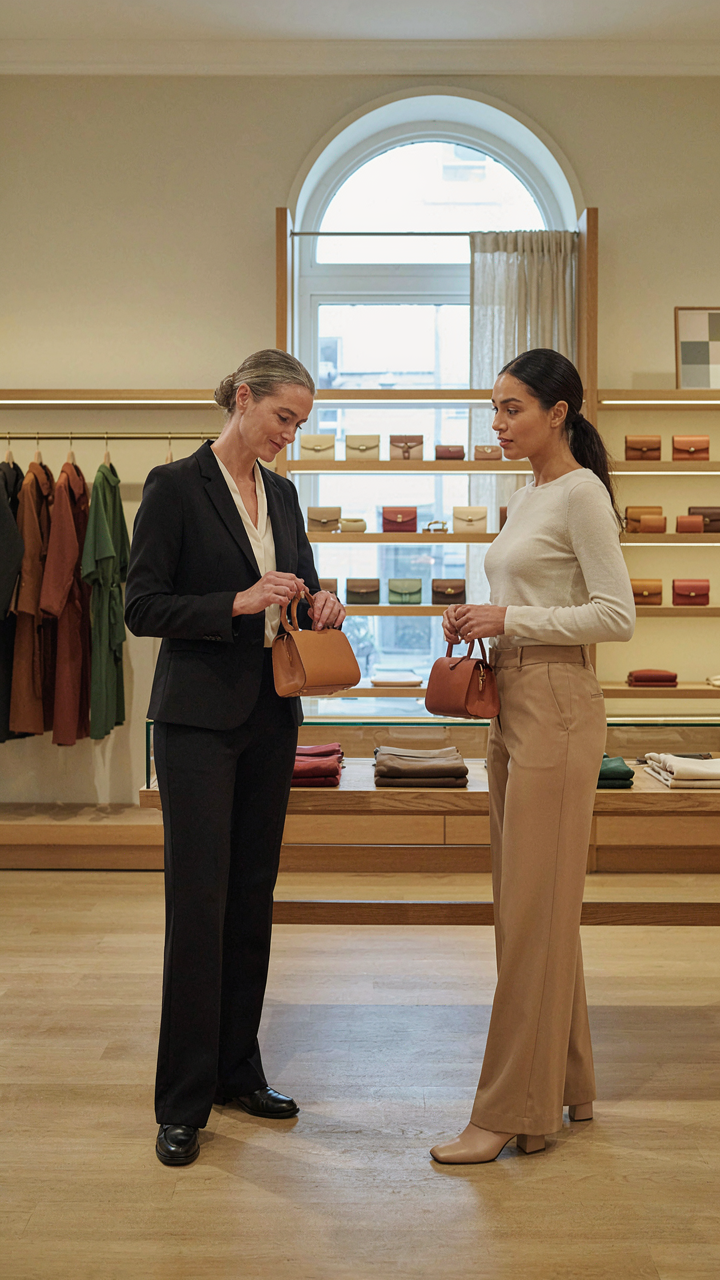
You want to believe old money style is static so you can buy it once and stop thinking. That’s the trap. In evolutionary biology, the Red Queen Hypothesis states organisms must constantly evolve just to maintain their position relative to competitors. Your wardrobe works the same way. Old money women don’t wear the same outfit from 1985 and call it timeless. They refine, discard, and recalibrate every season based on what surrounding wealth displays. Stagnation reads as decline.
The mechanism is simple: fashion moves faster than old money admits publicly, but old money women move with it anyway. They update silhouettes when cuts shift. They replace worn pieces before decay shows. They absorb new designers quietly while keeping the foundational uniform intact. The uniform itself evolves. What looked “classic” in 2010 looks dated now because the baseline moved. You either move with it or you announce you’ve stopped paying attention.
Observation, Adjustment, And The Feedback Loop
Most advice tells you to ignore trends and wear what makes you feel confident. That’s incomplete. Confidence without information is just blindness dressed up. The real mechanism is a three-step feedback loop: observe what old money women around you are actually wearing right now, adjust one element per season, then measure the response you get from your environment. Not compliments. Response. Doors that open easier. Conversations that last longer. People who take you seriously.
Start with observation. Attend events where old money congregates. Watch what women wore five years ago versus what they wear now. Note which pieces survived the transition and which disappeared entirely. Then adjust deliberately, not frantically. Replace one bag. Change your shoe proportions. Shift your hemlines. Wait two weeks and notice what changes in how people interact with you. This isn’t vanity. It’s data collection. The women who seem effortlessly styled are running this loop constantly, usually without naming it.
Classy Fashion Style: The Psychological Edge Of Polished Appearance

How Others Read You Before You Speak
You want people to assume you have money and taste before you open your mouth. That’s the real reason you care about this. The halo effect operates like a visual contract: people assign competence, trustworthiness, and status to refined appearance before gathering any evidence. Old money outfits work because they trigger this mechanism instantly. You’re not dressing for yourself. You’re architecting the narrative others construct about you in the first four seconds.
The mechanism is simple. Polished presentation creates cognitive shortcuts. When someone sees tailored proportions, quality fabrics, and restrained styling, their brain codes it as “established.” This isn’t shallow. It’s how humans process information under uncertainty. You can’t know someone’s actual net worth or education from a glance, so you read signals. A well-fitted cashmere crew and tailored trousers broadcast that the wearer knows something about longevity and standards. The signal is efficient and it works across contexts: boardrooms, country clubs, casual dinners where money matters.
Confidence Built From Fit, Not Feeling
Ignore the advice that confidence comes from within. That’s incomplete. Confidence comes from knowing your clothes fit correctly and won’t betray you. When a blazer sits at your shoulders with zero fabric bunching, when trousers break exactly at your shoe, your nervous system registers control. You’re not performing confidence. You’re eliminating the variables that undermine it. Old money women don’t wear tight clothes that demand constant adjustment or loose pieces that shift through the day. They wear pieces that stay where they’re placed.
The tactical step is fit verification. Get a tailor involved before you commit to wearing something. Measure key points: shoulder seam placement, sleeve length to your wrist bone, trouser break at the shoe. These aren’t optional refinements. They’re the protocol that separates polished from merely expensive. When your clothes require zero thinking, your attention goes to what you’re actually doing instead of what you’re wearing. That mental bandwidth shift is where real confidence lives.
The Subtle Art Of The Old Money Women Aesthetic: It’s Not Just Clothes

Posture And Movement Matter More Than Price Tags
You’re reading this because you think the right blazer will signal wealth. It won’t. Clothing is just the visible output of a system built on comportment. In physics, momentum describes how mass moves through space. Comportment works the same way in social hierarchies: it’s how your physical presence moves through rooms, functions, and interactions. Women from old money families train this early. Their mothers and grandmothers model it constantly. The spine stays neutral, not rigid. Movements stay economical, never performative.
This isn’t about being stiff or cold. It’s the opposite. Tight posture broadcasts anxiety. Loose, sloppy posture broadcasts indifference to how you’re perceived, which reads as either confidence or carelessness depending on context. Old money women hit the middle ground: spine engaged but relaxed, shoulders back without strain, hands visible and purposeful. They sit fully in chairs instead of perching. They walk without checking reflections. The mechanism is simple: controlled movement signals you’ve never needed to prove yourself through motion.
Presence Without Performance
Quiet confidence isn’t a feeling you cultivate. It’s a trained absence of the behaviors that signal you need validation. Most advice tells women to “be themselves” or “radiate energy.” That’s incomplete. The real mechanism comes from behavioral economics: visible effort signals scarcity or desperation. Old money women minimize visible effort in social settings. They don’t perform engagement by leaning in aggressively or maintaining constant eye contact. They don’t laugh too loudly or touch people’s arms to build connection. They listen more than they speak, which forces others to lean toward them instead.
The aura people detect isn’t magic. It’s the absence of neediness. When you stop working the room, the room works harder to engage you. This applies to how you wear clothes too. Women who fidget with their outfits, adjust their necklines, or explain their choices broadcast insecurity about the selection. Old money women dress and stop thinking about it. They sit with wrinkles forming naturally. They let fabrics move without interference. The protocol is mechanically simple: wear something appropriate, then behave as though the decision was already made and no longer requires attention.
Your Biggest Obstacle Isn’t Your Budget; It’s Your Addiction To External Validation

Old money women don’t dress for the room. They dress for themselves. You keep sabotaging your wardrobe because you’re still performing for an audience that doesn’t matter. Stop scrolling other people’s fits and wear what you own without apologizing for it. Today, pick one piece you love but never wear because you think it’s “too much” and wear it anyway. The person judging you isn’t worth dressing for.