
The London Microclimate Protocol
Layering As A System You Control
You want to avoid looking like you don’t know what you’re doing. The real mechanism here is thermal regulation borrowed from engineering: a system with an input (outdoor temperature), a processing layer (your clothing), and an output (your body comfort and appearance). London’s weather isn’t unpredictable—it’s just volatile within a narrow band. Winter rarely drops below freezing for extended periods. Summer rarely exceeds 25°C. The swing happens fast between morning and afternoon, and between sun and shade on the same street.
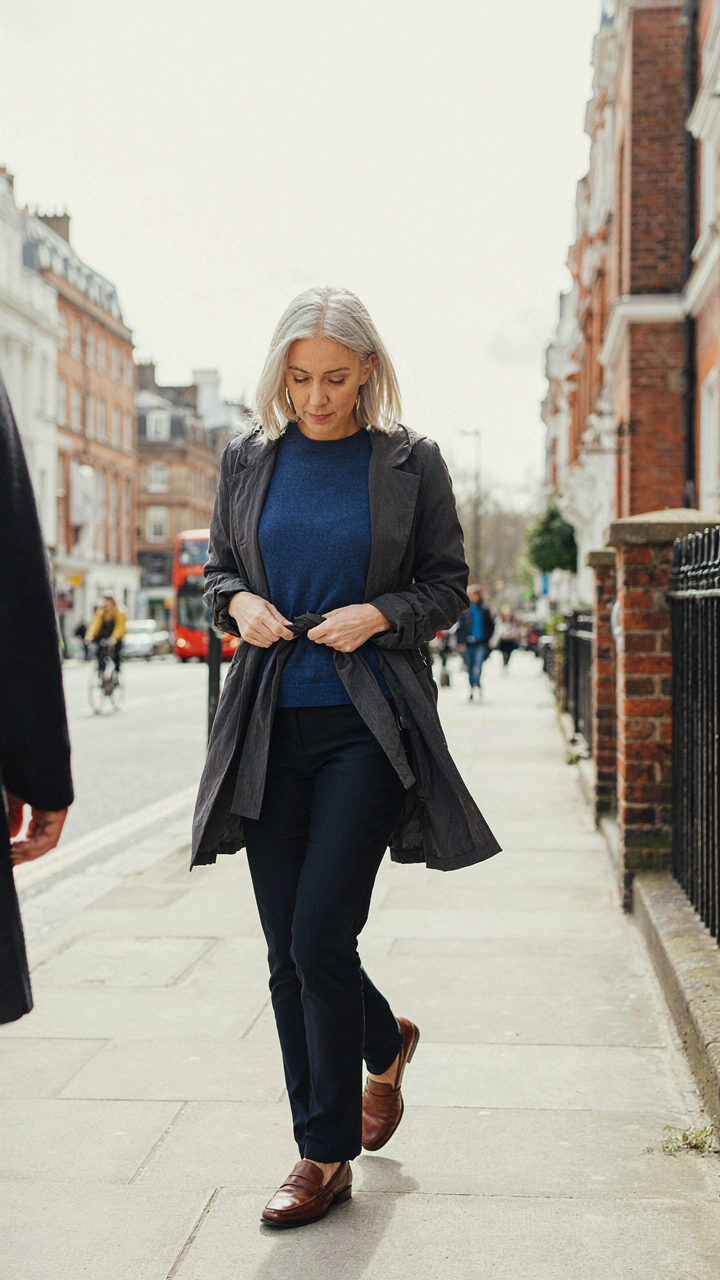
The mistake everyone makes is treating layers as insulation insurance instead of a dynamic adjustment system. You don’t wear three heavy pieces hoping one works. You wear three lightweight pieces you can remove or add based on real-time conditions. Start with a moisture-wicking base, add a mid-weight knit or shirt, then a structured outer layer you can tie around your waist or carry. This isn’t about having options—it’s about maintaining comfort without looking bundled or sweat-soaked within two hours.
Moving Between Climates Without Resetting

Indoor heating in London shops and offices runs aggressively, often 3 to 5 degrees warmer than outdoors. Transitioning between them means your clothing must decompress and recompress multiple times daily. Most people either overdress for outside and roast indoors, or underdress for outside and freeze between destinations. The protocol is simple: your outermost layer must come off easily without affecting your silhouette underneath. A structured blazer, overshirt, or technical jacket accomplishes this. Avoid bulky down coats that compress your frame—they work only if you never go indoors.
The second part is fabric choice. Natural fibers like wool and cotton regulate temperature better than synthetics because they absorb and release moisture gradually. A merino wool sweater stays functional whether you’re walking through a 4°C morning or standing in a 20°C office for an hour. Synthetic materials trap heat unevenly, making you either cold or clammy depending on your activity level. Keep your jacket accessible, keep your base layer breathable, and you’ll stop wasting mental energy on temperature discomfort the moment you arrive anywhere.

London Capsule Wardrobe: The Essential Toolkit

Core Pieces For Year Round Wear
You want to know what to wear so you don’t look out of place. That’s the real question underneath this. The mechanism is simple: London’s weather doesn’t move in seasons the way most cities do. It moves in dampness levels. You need pieces that function across a 40-degree temperature range without looking like you’re adapting on the fly. That’s the actual problem to solve.
Start with neutral, structured basics that layer without bulk. You’re building a system, not a collection. These pieces compress, stack, and work across months.
- Dark jeans or chinos: Five-pocket construction in navy or black. Works September through May without rotation. Pair with almost everything without thought required.
- White and grey crew neck t-shirts: Merino wool or cotton-blend. Acts as a base layer under sweaters or a standalone piece in mild weather. Buy multiples, they’re your foundation.
- Crew neck sweater in charcoal or navy: Wool or wool-blend. Sits between t-shirt and coat weight. Worn constantly in London from September to April without looking seasonal.
- Oxford cloth button down: White or blue. Functions as a shirt or a mid-layer under knitwear. Works in professional and casual contexts across the entire year.
- Casual blazer in navy or charcoal: Unstructured or semi-structured. Elevates basics instantly. Worn layered or standalone depending on temperature and context.
The second piece you need is a lightweight wool overshirt or overshirt jacket. This bridges the gap between sweater and coat that most London weather occupies. It handles 45-55 degree days without the commitment of a full coat. Layer it over a t-shirt or under your main outerwear. This single item stops seasonal redundancy dead.
Strategic Accessory Deployment
Most people treat accessories as decoration. They’re actually your temperature control system. Borrowing from thermodynamics, your accessories work as insulation variables. You don’t add more layers, you add controlled thermal resistance through textile choice and positioning. A scarf or neck warmer deployed in October changes the entire equation of what your base layers need to do.
The scarf serves three functions in London: warmth, wind blocking, and the ability to signal seasonal awareness without changing clothes. Choose a merino wool or cotton-wool blend in neutral tones. Drape or knot it strategically depending on temperature. A neck warmer worn under collar layers is invisible but critical on damp days. Hats work only if you commit to them; half measures look worse than no hat. Gloves matter only when it drops below 45 degrees consistently, which London rarely sustains. When you do wear them, leather or wool-blend construction works. Boots need a tread pattern aggressive enough for wet pavement, but aesthetics matter less than grip.
Beyond Forecasts: Real Time Adaptation
Read The Sky, Not Your Phone
You want the forecast app to work because it removes decision fatigue. It won’t. London’s weather system moves fast enough that a prediction made three hours ago is obsolete. The mechanism is simple: maritime air masses collide over the UK constantly, and the city sits in a position where conditions shift in minutes, not days. Weather apps trade speed for accuracy. You need the reverse.
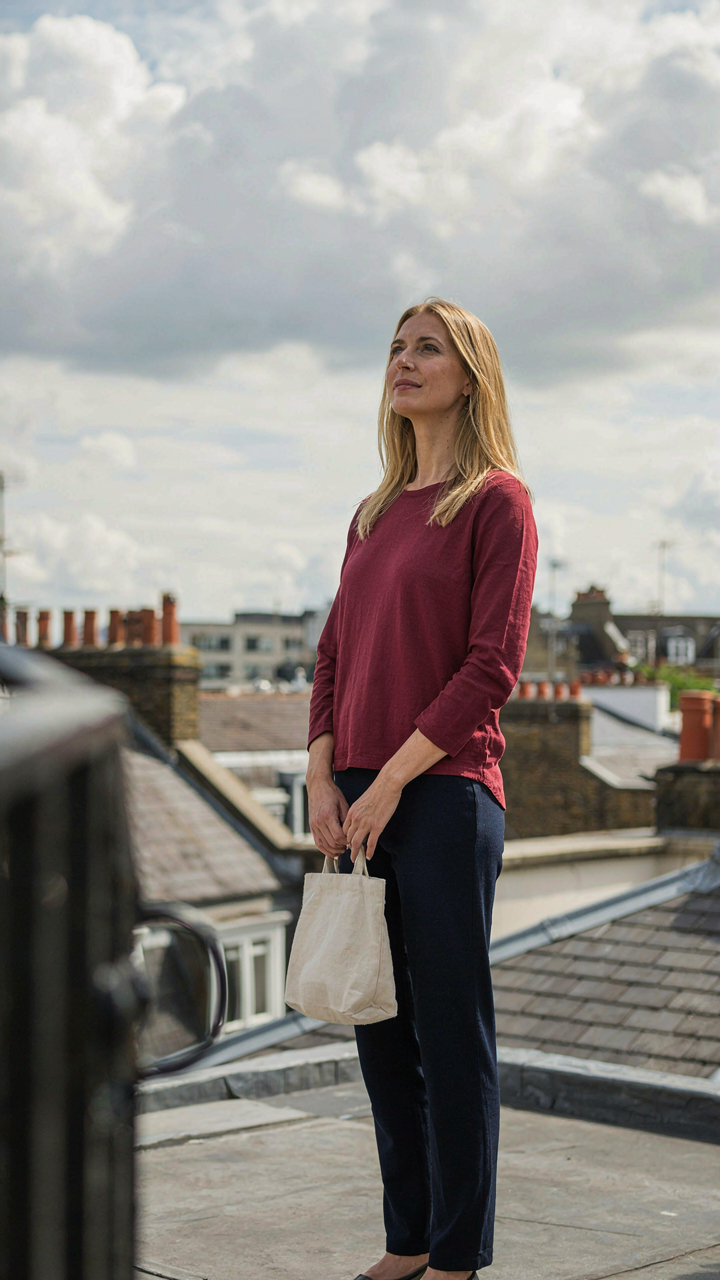
Learn to read three physical cues before you leave your flat. First, cloud ceiling height. Low, dense cloud that sits below roofline means wet air moving in. Second, wind direction from the southwest or west signals incoming rain within hours. Third, whether the pavement is already damp at ground level, which tells you what’s already moving through the system. These aren’t predictions. They’re current conditions that telegraph what’s next.
Thermal Mass In Fabric Selection
Physics applies here: thermal mass is a material’s ability to absorb and release heat slowly. Apply this to layering. A single thick wool sweater does this better than two thin cotton pieces because dense fibers hold warmth longer and release it gradually as conditions change. London’s humidity kills insulation by conduction, so material choice matters more than thickness alone.
Merino wool and dense cotton blends outperform synthetics because they manage moisture and maintain thermal stability even when damp. Linen underperforms in winter because it has low thermal mass and conducts cold too efficiently. The practical protocol: wear a dense mid layer you can keep on all day without overheating indoors, rather than stacking thin pieces you’ll remove and carry. This reduces variables and keeps you stable through temperature swings.
What To Wear In London In May: Spring Deception

The Trap Of Warm Afternoons
You want to believe London’s mild 15-17°C May days mean you can dress light. That’s the real problem here: denial about British weather patterns costs you comfort and makes you look unprepared. May’s mechanism is simple. Midday sun creates a false signal. You dress for noon. Then 4 PM hits and the temperature doesn’t follow the sun’s angle—it collapses because London sits at 51°N latitude where spring solar gain doesn’t translate to sustained warmth the way you expect.
The morning commute and evening return home happen in genuinely cold air. You’ll experience a 6 to 8-degree swing between peak afternoon and either end of the day. Dressing for the warmest two hours of May leaves you shivering for four. The fix is layering that you can strip and restack without carrying a bag. A wool or cotton base, a mid-weight knit, and a windproof outer layer you can tie at the waist. This isn’t aesthetic choice—it’s the only logical response to London’s May behavior.
When The Rain Arrives Without Warning
London weather forecasts lie systematically in May because seasonal pressure systems haven’t stabilized. You check the app, see no rain icon, and leave the coat at home. Then you’re wet at King’s Cross with no recourse. The real mechanism operates on Britain’s Atlantic exposure. Warm air masses from the south collide with cold fronts from the ocean, and the collision zone sits directly over Southeast England for weeks in May. Light rain can materialize within 20 minutes of clear skies.
Carry a compact rain layer every single day. Not a poncho or a garbage bag—a structured, packable shell that fits in a daypack or even a large jacket pocket. Merino wool underneath keeps you warm even when damp, unlike cotton which fails immediately. The protocol is non-negotiable: check the forecast the night before, assume it’s wrong, and layer accordingly. A water-resistant outer that breathes beats a full waterproof because you’ll overheat in genuine warmth and sweat into the lining if you dress too heavy.
London In Fall Outfits: The September Outfits London Blueprint

The Temperature Trap You Keep Missing
You’re worried about looking unprepared, which means you’re buying too many pieces for a season that refuses to pick a lane. Here’s the mechanism: London fall doesn’t transition smoothly. September runs 15-18°C, October drops to 8-12°C, and November hits 5-8°C. You need pieces that layer without bulk, not a wardrobe that changes week to week. The real strategy is buying for overlap, not for individual months.
A fitted long-sleeve base layer works September through November with different outer shells. Merino wool or quality cotton blend holds temperature regulation better than synthetic materials. One good base layer replaces three situational pieces. This is efficiency, not minimalism. You wear the same foundational item differently as the season shifts, which cuts both cost and decision paralysis.
Layering As Your Actual Defense System
Strategic outerwear isn’t about choosing between coats. It’s about understanding thermal resistance like you’d understand load-bearing in architecture: each layer adds insulation value, but the gaps between layers matter more than the layers themselves. The common advice is “just layer,” which is useless. Real strategy means knowing which pieces compress without creating dead air space.
A wool overshirt worn unbuttoned over a base layer gives you September flexibility. Button it closed for October. Add a structured blazer underneath for November events without overheating indoors. The overshirt compresses small enough to carry if temperatures spike. By November, swap the overshirt for a proper wool coat that handles wind, which matters more in London’s damp cold than pure temperature. You buy pieces that solve three seasons, not pieces you wear once then store.
Outfits For London In November: The Winter Gauntlet
Damp Cold Requires Different Physics Than Dry Cold
You want to know this because you’re terrified of looking like you don’t understand your environment. Here’s the mechanism: London in November isn’t about freezing temperatures. It’s about moisture saturation. Think thermodynamics—damp air conducts heat away from your body faster than dry air at the same temperature. A 5-degree London November day with 85% humidity extracts more warmth than a 5-degree dry day elsewhere. Your standard winter coat works against you if it’s designed for alpine cold. You need layering that blocks wind and moisture while managing sweat from walking and transit.
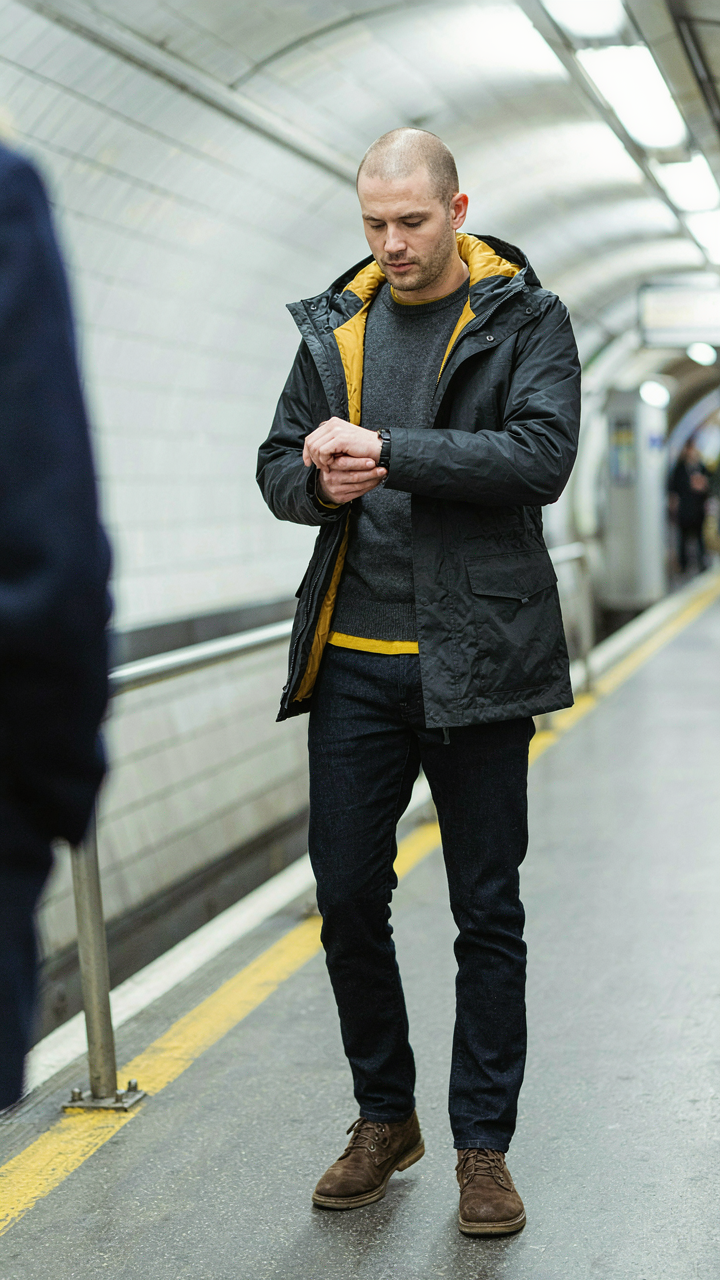
The mistake most people make is treating November like December. They over-insulate and overheat in the 8 to 12 degree range. Then they sweat, and that moisture traps cold against your skin. Wear a merino or synthetic base layer instead of cotton. Add a mid-layer knit. Use a windproof outer shell—not a heavy puffer. This stack lets moisture migrate outward while keeping damp air from penetrating inward. Your outer layer should be water-resistant, not waterproof. Waterproof stops vapor escape completely.
Thermal Base Layer Necessity Without Debate
Base layers aren’t optional in November. They’re the foundation of any system that actually works. Merino wool or high-quality synthetics like polypropylene wick moisture and regulate temperature better than cotton. Cotton absorbs sweat and holds it against your skin. Merino has natural antimicrobial properties, so you wear it longer between washes. Synthetics dry faster and cost less. Both beat cotton completely. Wear long sleeves and full-length bottoms. The base layer covers skin that would otherwise lose heat when exposed to London’s combination of wind and damp.
Your second layer is a fitted knit—wool or synthetic. It traps a thin layer of air for insulation while staying compact under your outer shell. Avoid bulky sweaters that bunch under coats. The outer shell is a water-resistant jacket, typically in a technical fabric like Gore-Tex or similar. This setup keeps you warm without the bulk or sweat buildup that turns you cold when you stop moving. Wear the layers together, not interchangeably, and you stay regulated from the tube platform to street level.
London Style Outfits: The “Effortless” Illusion

Utility As The Ultimate Aesthetic
You want people to think you didn’t try, because trying signals desperation. The mechanism is borrowed from industrial design: form follows function. In London, the clothes that work best are the ones solving actual problems first, appearance second. This inversion is what separates the dressed from the costumed.
London’s style authority isn’t fashion magazines. It’s the practical constraints of the city itself. Rain happens unpredictably. You walk everywhere. Layering isn’t decoration—it’s infrastructure. A proper wool jumper isn’t chosen for its color; it’s chosen because merino regulates temperature and doesn’t pill after two weeks of commuting. Trousers aren’t tailored for Instagram; they’re tailored so you can actually move through crowded Underground cars. Utility-first dressing compounds over time. After six months, your wardrobe stops looking curated and starts looking lived-in, which is precisely when it becomes convincing.
Dress Codes For Pubs, Theaters, Museums
Most advice on London dress codes is vague nonsense that confuses formality with appropriateness. Here’s what actually happens in each space. Pubs don’t care what you wear unless you’re visibly drunk or aggressive. Jeans and a clean shirt work everywhere from Soho to Shoreditch. Theater requires no special dress code for evening performances, despite what tourists assume. Wear what you’d wear to dinner. Museums have no restrictions; comfort matters more than appearance since you’ll stand for hours.
The real distinction is between West End theaters and everything else. West End establishments see formal wear, but the expectation dropped decades ago. Dark jeans pass. What disqualifies you isn’t being underdressed; it’s being visibly grimy or deliberately provocative. Museums actively discourage heels on certain floors due to floor damage—practical, not snobbery. Pubs in Mayfair look the same as pubs in Whitechapel in terms of enforcement. Wear clean clothes that fit. Stop inventing invisible rules and just show up.
London Outfit: The Unsung Hero Pieces
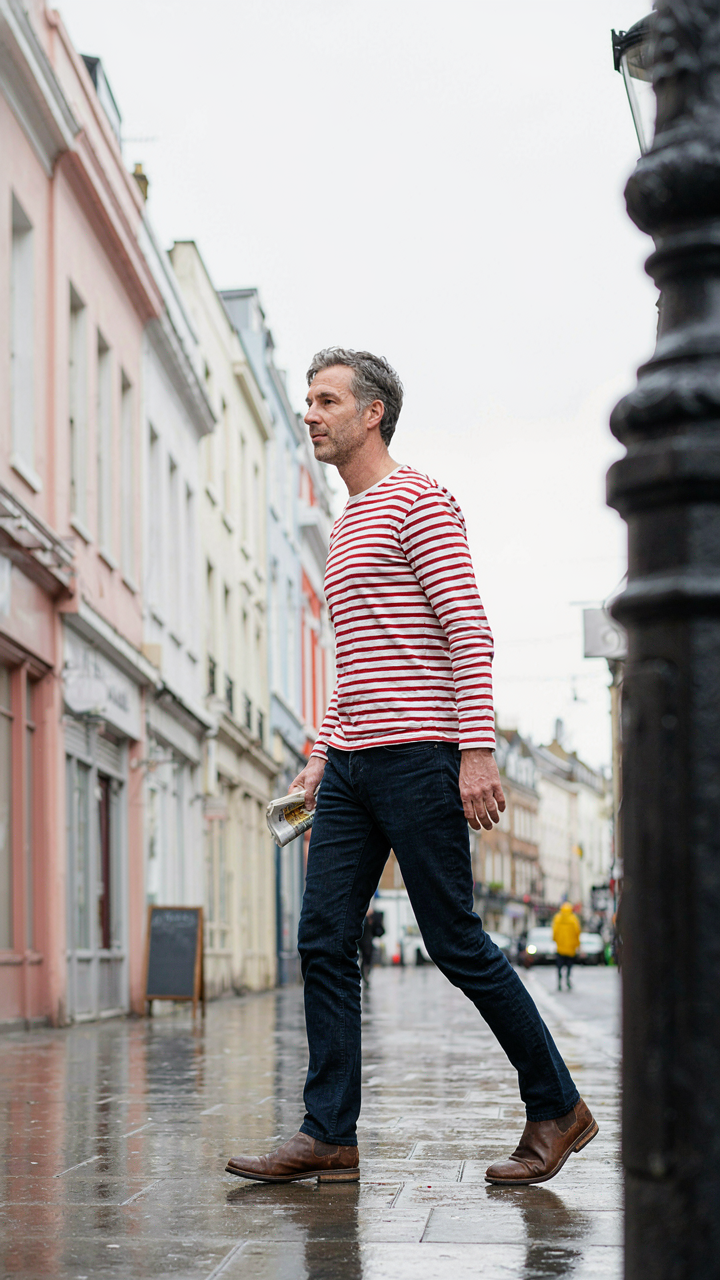
Shoes That Work Across Seasons
You want pieces that solve problems without announcing they’re solving them. That’s the real reason you’re reading this section. The mechanism is simple: London’s unpredictability demands footwear with structural range. Think of shoe selection like portfolio diversification in finance—you need assets that perform across different market conditions without requiring constant rebalancing.
- Chelsea Boots: Elastic sides accommodate swelling from walking and temperature shifts. The heel height clears wet pavements without feeling formal. Works September through May across jeans, trousers, and dresses.
- White Leather Trainers: Absorbs seasonal transitions because they read casual year-round. Pair with everything from shorts to wool trousers. The minimalism keeps them from dating quickly.
- Loafers: Slip-on construction eliminates lacing friction in crowded Underground trains. Leather develops patina over London’s damp months, aging visibly. Functions as both smart-casual and genuinely polished.
- Waterproof Desert Boots: Suede upper with rubber sole handles rain without screaming “rain boot.” Height sits between ankle and calf, working with cropped and full-length trousers equally well.
- Brogues: Perforated leather breathes in summer, layers under thicker socks in winter. The structured sole won’t collapse after months of wet concrete. Durable enough to justify cost across multiple seasons.
Rotation matters more than quantity here. Wear the same three pairs in rotation and they’ll last years. One pair worn daily collapses within months on London’s uneven pavements and constant moisture. Swap between Chelsea boots, trainers, and loafers depending on temperature and the type of walking you’re doing that day.
How To Carry An Umbrella Without Looking Like You’re Pretending
Everyone gets the umbrella wrong because they treat it like an accessory. It’s not. It’s a tool you deploy, and the deployment method signals whether you understand London or you’re playing dress-up. Compact umbrellas live in bags and stay there until weather forces them out. Nothing marks you as a tourist faster than an umbrella deployed during a drizzle that locals ignore completely.
The real pattern: carry a full-size umbrella only when forecast confidence is high. This means heavy rain, not “scattered showers.” When you do carry one, fold it closed and tuck it under your arm or bag strap, not clutched in your hand. During lighter rain, Londoners simply don’t open umbrellas. They adjust their pace and walk through it. The umbrella stays folded in your bag as backup. This isn’t about toughness. It’s about reading weather conditions accurately and matching your response proportionally. Pulling out a full umbrella for mist looks performative because it is.
Your Real Obstacle Isn’t The Weather; It’s Clinging To Predictable Fashion In An Unpredictable City

London doesn’t care about your seasonal rotation. The city rewards people who dress like they’re making a choice, not following a formula. Most visitors play it safe. They blend in. They waste the opportunity. Pull three items from your closet today that scare you slightly. Wear them together. London respects conviction more than it respects correctness.