

The Core 5: Your Immutable Winter Paris Arsenal
The Non Negotiable Base Layer
You want to look effortless in Paris without thinking about cold. That’s the real fear underneath. The mechanism is simple: Paris winters hover between 2 and 8 degrees Celsius. Your body loses heat fastest through your core and extremities. You need pieces that trap warmth without bulk. Most people overpack because they confuse “options” with “security.” You don’t need options. You need coverage that works across every context, from a museum to a bistro to walking Seine-side at dusk.
A merino wool sweater or a fitted turtleneck becomes your workhorse. Wear it three days straight if needed. Parisians do. Cotton absorbs moisture and fails in cold. Wool regulates temperature and doesn’t require daily washing. Add a long-sleeve thermal or fitted base layer underneath on the coldest days. This single stack—base plus mid layer—replaces five “just in case” pieces sitting in your suitcase unused.
Outer Armor That Earns Its Weight

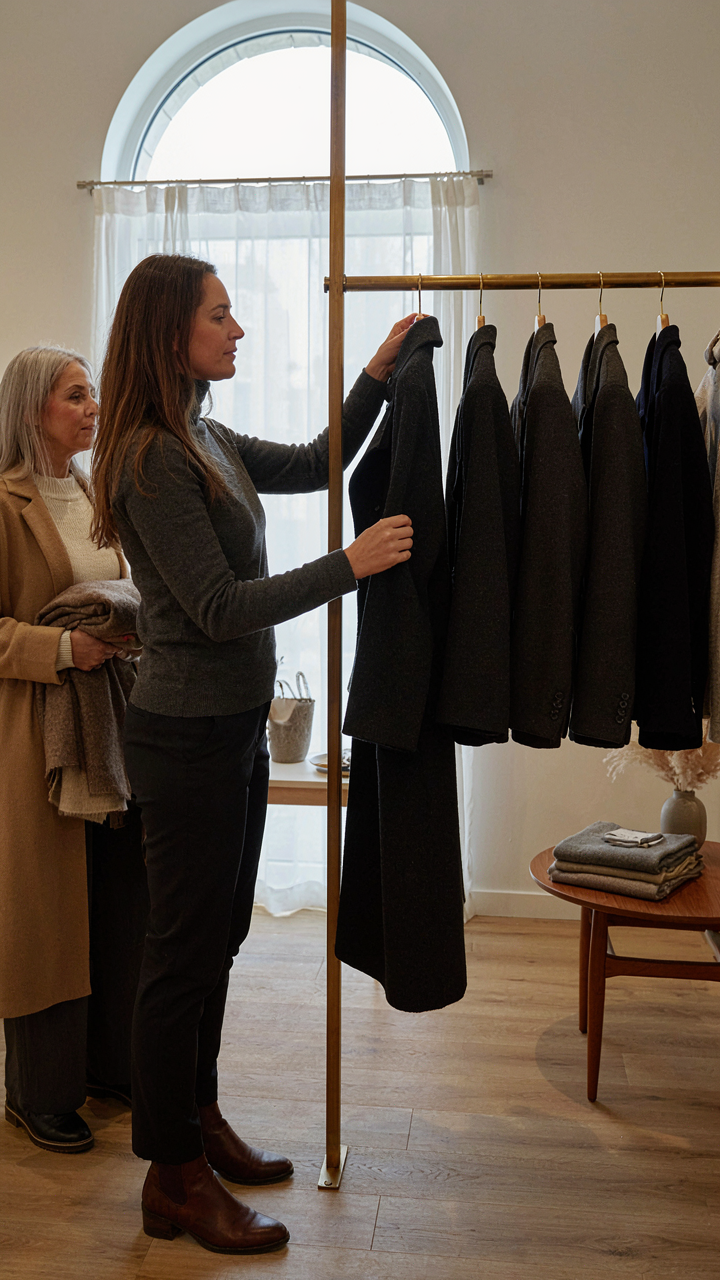
Think in terms of wind resistance, not fashion. A coat is load-bearing architecture: it has to seal out cold without trapping sweat. The classic wool coat works because the fabric blocks wind while allowing minimal breathability. Parisians wear structured coats, not puffy jackets. A knee-length wool overcoat or tailored wool blend coat works in museums, restaurants, and streets. It reads as intentional, not desperate.
Dark colors hide the wear and grime that comes with urban winter walking. Black or charcoal wool coat becomes invisible in crowds and photographs well. Avoid anything with excessive branding or logos. The coat should look like it could have been worn a decade ago. Buy one quality piece that fits your shoulders precisely rather than two cheap ones that bunch. Fit determines whether a coat looks Parisian or transient.

Beyond Aesthetics: The Thermal Layering Protocol
Start With Skin Contact
You’re reading this section because you’re afraid of being cold and looking stupid simultaneously. Here’s the mechanism: thermal regulation is physics, not fashion. Base layers work on the principle of moisture wicking—they move sweat away from your skin to the next layer, preventing the rapid heat loss that kills you in Paris winters. Cotton fails here. It absorbs sweat and holds it against your body like a wet rag.
Merino wool and synthetic blends (polyester, nylon) are the only base layers that work. Merino regulates temperature naturally and resists odor, so you wear it multiple days without washing. Synthetics dry faster and cost less. Both trap minimal air themselves—that’s not their job. Their job is moving moisture outward so the layer above can trap dead air and actually insulate. Wear one fitted base layer in December and January Paris temperatures.
The Layer That Adapts
Mid-layers are your system’s variable. Think of them as programmable insulation. You add or remove them based on whether you’re walking outdoors for two hours or sitting in a café for one. The mistake most people make is picking a mid-layer that’s too heavy or too bulky. A thin sweater or fleece creates dead air space without the bulk that forces you to overpack.
Wool sweaters (merino or wool blends) compress well and maintain warmth when damp. Synthetic fleece layers offer similar insulation at lower cost and pack smaller. Neither should be your only option—bring one of each if you have suitcase room. The protocol: base layer stays on always. Add the fleece or sweater when you step outside. Peel it off when you enter heated spaces. This cycle prevents the sweat-then-chill pattern that makes you sick.
The Outerwear Conundrum: One Coat To Rule Them All

Pick One Coat That Doesn’t Betray You
You want permission to look intentional without thinking about it constantly. The mechanism is simple: a single coat works because Paris winter doesn’t demand extreme performance. Temperatures hover between 35 and 50 degrees Fahrenheit. Rain is the actual threat, not blizzards. This means you’re not choosing between survival gear—you’re choosing between materials and cuts that handle repeated moisture exposure while layering underneath does the thermal work.
Most travel advice tells you to pack a “versatile” coat, which means nothing. Pick a wool coat or wool blend with a tight weave, structured shoulders, and a length that hits mid-thigh. Wool sheds water naturally and doesn’t require constant maintenance like technical fabrics do. The cut matters more than the brand. Your coat should let you move your arms freely for walking and gesturing, and it should cover enough length to protect your legs in wind.
Features That Actually Matter In Rain And Wind
Apply thermodynamics here: you’re managing heat retention and moisture movement, not blocking all weather. A coat stops working when water penetrates the shell or when trapped moisture creates a cold layer against your body. Parisian winter demands specific features that prevent both problems. Your coat needs a collar that closes fully, seams that are finished or taped to stop seeping, and a backing that won’t hold moisture against the fabric after rain.
Look for a coat with an internal storm flap behind the front buttons and a hem that’s weighted or hemmed to prevent wind from lifting the fabric away from your legs. The sleeves matter too—they should be long enough to cover your wrists when your arms are down and at your sides. Skip “waterproof” coats designed for hiking. They trap sweat and feel cold when you stop moving. A water-resistant wool or wool-blend coat breathes, sheds rain faster than you’d expect, and actually feels warmer when wet than synthetic alternatives.
Footwear: Your Unseen Foundation (Paris Winter Outfit Ideas)

Wet Streets Demand Traction, Not Fashion Rescue
You’re worried about looking like a tourist in inadequate shoes. Here’s the mechanism: Paris winters create a specific hazard pattern. December through February brings rain, occasional ice, and that particular slick film that forms on ancient cobblestone when temperatures drop. Your shoe choice determines whether you move with authority or shuffle like you’re testing thin ice. This isn’t aesthetic. It’s physics applied to urban mobility.
Forget the advice that says wear whatever looks good and hope. Cotton-sole shoes and worn leather fail on wet stone. You need rubber compounds with real grip, and the soles matter more than the upper. Boots or low-profile sneakers with genuine tread work. The Parisians themselves switch to practical footwear this season, and that visibility matters more than conforming to some imagined “elegant winter shoe” standard that doesn’t exist.
Comfort Over The Entire Day Wins
Parisian winters mean walking on hard surfaces for hours without the buffer of dried-out summer stones. Your feet hit cold pavement that conducts cold straight through thin soles. Insulation in the shoe matters, but so does cushioning that doesn’t compress after three hours. A day of walking Paris requires footwear that protects your joints, not just your image.
The real choice: leather boots with insulated linings and memory foam support, or quality winter sneakers with proper arch support and waterproof uppers. Both work. Both feel fine at hour six when you’re still moving. Style enters the equation only after these requirements are met. Choose whichever option you’ll actually wear without pain, then verify the tread pattern on the sole before purchasing.
Accessories: The Multiplier Effect (French Fashion Winter 2025)
Headwear, Scarves, And Gloves
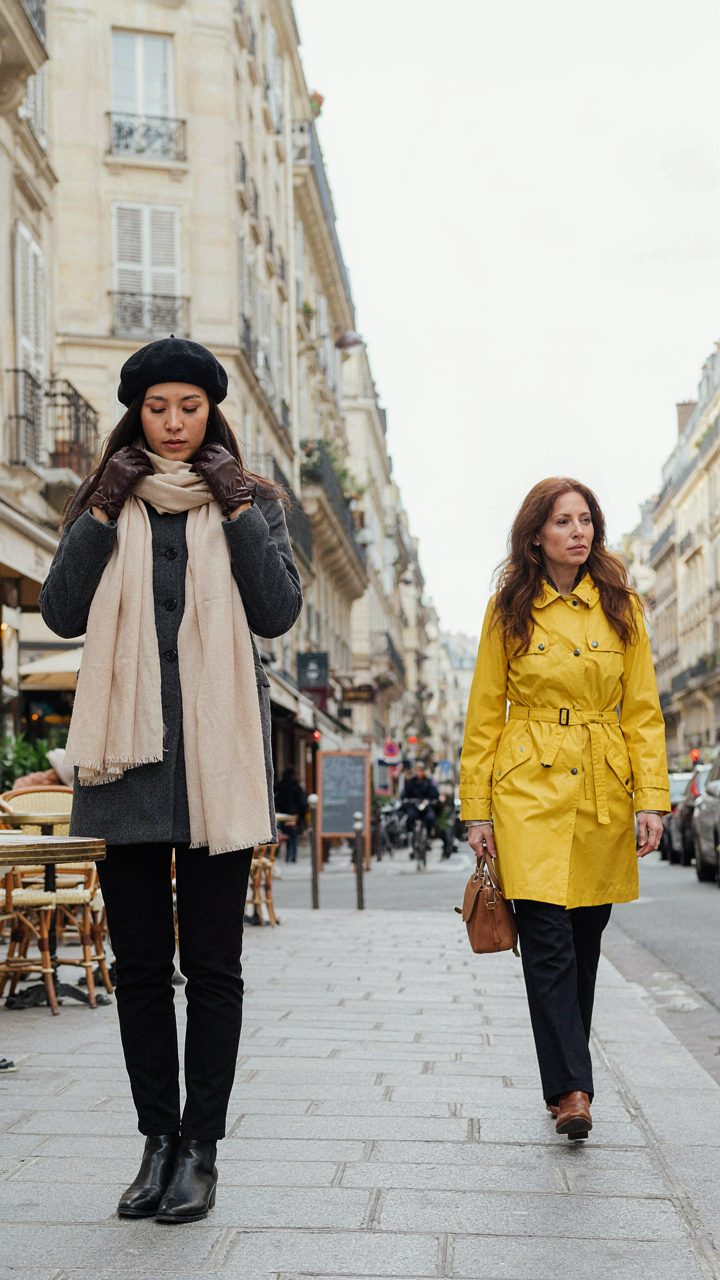
You want accessories to do the work so you look intentional without trying. Here’s the physics: layers trap dead air space, and accessories create that space closest to your skin where it matters most. A beret or wool beanie isn’t decoration. It’s thermal regulation that happens to look deliberate. Same with scarves. The French don’t wrap them for show. They wrap them to seal the gap between your coat and neck where heat escapes fastest.
- Wool beret: Non-negotiable in Paris winters. Merino or pure wool blocks wind better than cotton blends. Dark colors hide salt stains and weather damage longer than pastels.
- Cashmere or wool scarves: Buy one quality scarf that works with everything. Avoid synthetic blends that pill after two weeks. A 70×20 inch rectangle gives you wrapping options without bulk.
- Leather gloves with wool lining: Leather stops wind. Wool linings keep fingers warm without added volume. Black or tan works with every coat and base layer combination.
- Merino wool neck tube: A tube wraps faster than scarves and doesn’t unravel in crowded metro cars. Fold it twice for layering flexibility or pull it up as a balaclava in brutal cold.
- Lined ear band: Thermal headgear under your beret if temperatures drop below freezing. Parisians wear them under hats because they know exposed ears signal amateur travel.
Parisians replace accessories seasonally, not outfits. One scarf gets rotated daily through five days of laundry rotation. One pair of gloves lasts the entire season if you condition the leather once in December. This system works because accessories absorb the seasonal load that bulky coats cannot.
Small Details That Signal Intent
The real tell isn’t what you wear. It’s how you finish it. A tucked scarf end, a beret tilted correctly, gloves that fit without bunching at the wrist—these create the gap between tourist and resident. Parisians notice these details because winter weather forces you to choose precision or look sloppy. There’s no middle ground when it’s seven degrees Celsius.
Buy one quality brooch or pin to anchor your scarf to your coat. This prevents the constant adjustment that screams “I’m not used to this.” Choose materials that match your coat metal. If your buttons are silver-toned, your pin should be silver. If they’re gold or bronze, match that. The mechanism here is simple: consistency of metal tone across your visible layers signals that you’ve thought ahead, which is all style actually is—a series of small decisions made in advance so you don’t have to make them in the cold.
The “France Winter Outfits Women” Matrix: Economic Leverage

Build A Capsule, Not A Wardrobe
You’re afraid of looking like a tourist, which means you’re actually afraid of wasting money on clothes you’ll wear once. The mechanism here is the Pareto Principle from economics: 20 percent of your pieces generate 80 percent of your outfit combinations. Paris winter demands neutral base layers that stack without friction. A charcoal wool sweater, cream turtleneck, black trousers, and navy coat form the skeleton. Every other item you add works with these four anchors. This isn’t minimalism for aesthetics—it’s inventory management for travel.
The math is simple. Ten total pieces, worn in different combinations, create roughly thirty distinct outfits. Dark colors dominate Paris winter anyway. Parisians wear black, gray, navy, and cream because these colors don’t compete visually and they hide the salt stains from street maintenance chemicals. When you stop thinking about variety and start thinking about combinations, you pack a carry-on instead of a checked bag. You also stop buying things in the airport because you already have what you need.
Pieces That Earn Their Weight
Investment pieces absorb cost across multiple wears, which is how luxury brands justify their pricing to people who understand economics rather than status. A wool coat from a heritage maker like Sandro or Maje runs 250 to 400 euros but lasts fifteen years and works across five different winter trips. Compare that to a fast-fashion coat at 60 euros that pills after one season. The cost-per-wear on the heritage piece drops below five euros after thirty wears. Most people visiting Paris wear their coat daily for two weeks minimum.
Dark merino wool pieces operate the same way. A merino sweater resists odor, regulates temperature in unpredictable Paris weather, and compresses better than cotton. Pair it with wool trousers in charcoal or black. These pieces become your rotation core. Boots matter too—leather, flat sole, minimal embellishment. A quality pair handles cobblestones without sliding and pairs with both dresses and trousers. Pick one coat, one sweater, one pant, one boot. Let them do the work instead of hoping six mediocre pieces somehow combine into something that works.
Packing Efficiency: The Winter In Paris Outfit Cold Weather Strategy

How Compression Beats Organization
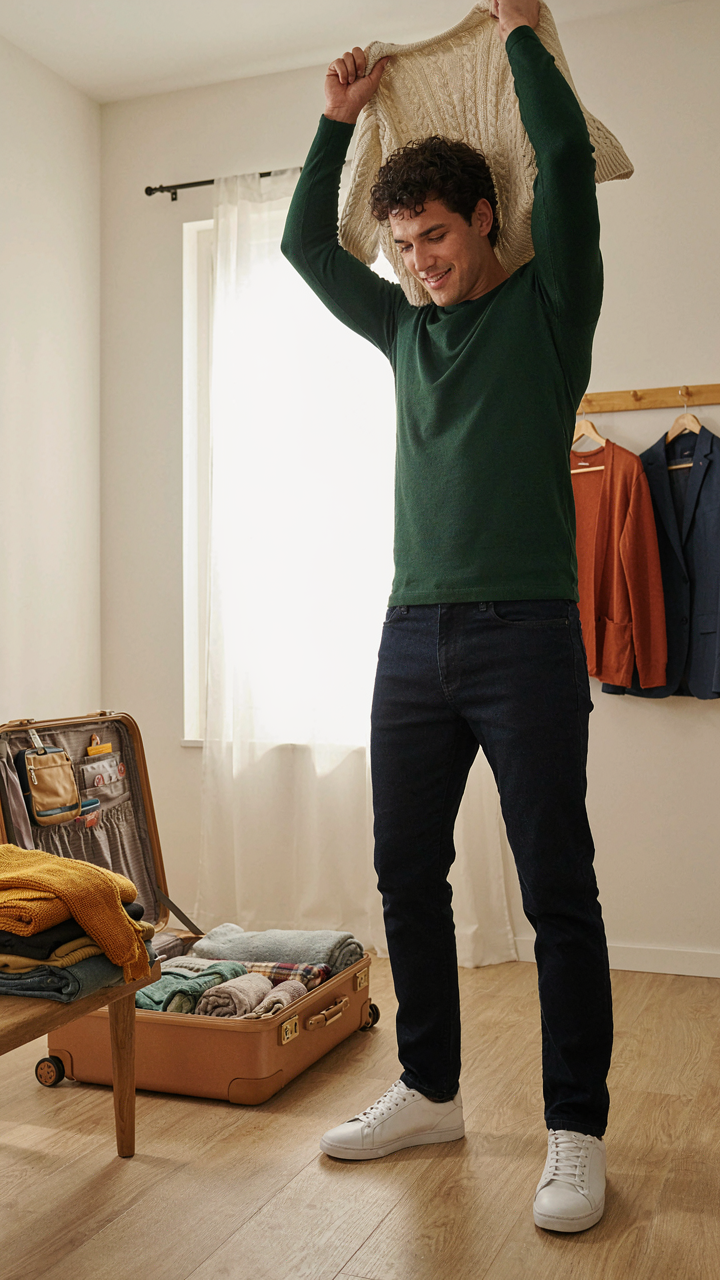
You want to feel smart about packing. That’s the real motive here. But compression isn’t about looking clever—it’s about physics. Density matters. Rolling garments reduces air pockets that folding leaves behind. A rolled sweater takes up roughly 40 percent less luggage volume than a folded one because you eliminate the vertical dead space traditional folding creates. Paris in winter demands layers: merino wool base layers, mid-weight sweaters, a wool coat. Each one folds poorly but rolls tight.
Start with your densest items first. Roll your wool trousers, then sweaters, then lighter pieces on top. This method works because pressure distributes evenly across the roll, not unevenly across fold creases. Stack rolls vertically in your bag like files in a drawer rather than stacking them flat. You’ll access items without unpacking everything, and you’ll fit a ten-day wardrobe into a carry-on. The mechanism is simple: minimize air, maximize capacity.
The Working Wardrobe Checklist
This is where most advice fails because it treats “capsule wardrobe” like a creative exercise instead of a math problem. A functional Paris winter capsule requires exactly these pieces—no more, no fewer—because each one solves a specific layering problem for temperatures between 2 and 8 degrees Celsius.
- Merino wool base layers (two): Moisture-wicking, temperature-regulating, and odor-resistant. Wear one while the other dries. Merino handles Paris’s damp cold better than cotton.
- Crew neck wool sweater (one): Mid-weight, neutral color. Layers under your coat and works alone in heated cafés. Choose 100 percent wool or wool blend for durability.
- Wool trousers (two pairs): One dark, one neutral. Wool resists wrinkles and cold penetration. Black and grey cover every situation Paris throws at you.
- Wool coat (one): This is your armor. A structured wool coat in charcoal or camel works over everything. Investment piece that justifies the weight because it replaces five lighter jackets.
- Long-sleeve shirts (two): Linen or cotton, neutral tones. These go under sweaters and work as standalone pieces in warmed spaces. Versatile layering anchors.
- Boots and flats (two pairs): Leather boots for winter streets, leather flats for indoors. Both in black handle every venue. Wool socks complete the system.
Stick to this list exactly. Every piece must layer with two others minimum, and every color must work with every other color. That constraint forces you to eliminate anything decorative. Before you pack, lay out every combination on your bed. If an outfit doesn’t exist, the piece doesn’t come. This is how you fit Paris into one bag.
The December Europe Outfits Fallacy: Adapt, Don’t Accumulate

You Don’t Need Paris Specific Clothes
You’re worried that generic winter clothes won’t cut it in Paris, that you’ll look out of place, that locals will know you’re a tourist. Here’s the mechanism: Paris winter dressing isn’t a secret code. It’s just cold-weather layering applied with restraint. The Parisians you admire aren’t wearing special fabrics or cuts designed only for the Seine valley. They’re wearing the same wool, linen, and synthetic blends everyone else wears in cold climates, minus the bulk and minus the logo branding.
The myth persists because travel media sells destination-specific packing lists to justify the article. It’s marketing. Winter in Paris hits between 2 and 8 degrees Celsius with occasional dips below freezing. That’s not a climate anomaly requiring specialized gear. It’s standard European winter. A merino wool base layer, a structured mid-weight sweater, and a proper coat handle the job anywhere this cold. You already own these things or can buy them anywhere. The adaptation isn’t about acquiring new pieces. It’s about wearing what works with intention.
The Principle That Beats Every Destination
Cold-weather utility follows thermodynamic principles, not geography. Think of it like load-bearing in construction: the structure works because of how weight distributes, not because of where the building stands. Your body needs heat retention, moisture management, and wind protection. Paris offers no loophole from physics. A fitted wool coat functions the same in Paris as it does in Berlin or Copenhagen because insulation capacity doesn’t change by location.
Stop shopping for the city. Start shipping with the conditions. December Paris requires a mid-weight wool or wool-blend coat (not heavy, not thin), one base layer that pulls sweat away from skin, one neutral sweater for layering, dark fitted jeans or trousers, closed-toe leather shoes with grip, and one scarf. That’s the protocol. These pieces work because they solve the actual problem: you’re walking outside in cold, humid air and need to move freely. Every shopping decision after this list is scope creep that tanks your packing efficiency.
The Real Problem Isn’t Your Wardrobe; It’s Your Inability To Simplify

Most people pack for Paris like they’re preparing for every possible version of themselves. You don’t need options. You need a system. Pick five pieces that work together, commit to them, and stop negotiating with your anxiety. Today, pull out your winter coat and three shirts that actually fit you. Wear them together. The person who travels light isn’t brave. They’re just tired of lying to themselves about who they are.