

The Mediterranean Minimalism Mandate: Outfit Ideas Italy

Build A Capsule Before You Pack
You want to look effortless so people assume you have taste instead of just money. Here’s the mechanism: a capsule wardrobe operates like inventory in economics. You buy once, combine endlessly, and eliminate decision fatigue. Italian summer dressing works the same way. Start with five core pieces that share a color story: neutral linens, white cotton, natural fibers. Every item must work with at least three others. This isn’t minimalism for Instagram. This is the math that keeps you from looking like you tried too hard while actually trying harder than anyone else.
The items you choose matter more than the quantity. Linen trousers in cream, a white linen shirt, a lightweight sweater in natural cotton, neutral sandals, and one patterned piece in earth tones give you fifteen outfit combinations. Most people pack double and still run out of mental energy deciding what to wear. Italians understand that repetition with quality beats variety with mediocrity. You don’t need more clothes. You need the right ones to repeat.
Design For Multiple Contexts Without Compromise

Think of your wardrobe like a security system in mechanical engineering. One component failure shouldn’t break the whole structure. Each piece must function standalone and in combination. A linen shirt works at a beachside restaurant, under a lightweight blazer at dinner, or unbuttoned over a tank top at midday. This isn’t versatility as a buzzword. This is the actual constraint that Italian summers impose: temperature swings, multiple venues, unpredictable occasions, limited luggage space.
The real problem with generic travel advice is that it treats versatility as “neutral colors,” which misses the point entirely. Versatility means functional range. A cream linen shirt at 95 degrees works differently than at 75 degrees, and your clothing should adapt without swapping. Choose pieces that layer efficiently, transition between contexts, and don’t scream “tourist.” Italian summer outfits succeed when each item earns its weight by serving at least two distinct purposes. Test this before you pack: name three different scenarios where each piece functions. If you can’t, it stays home.

Deconstructing “Effortless”: Italian Summer Outfits Aesthetic

Fabric Choice Determines Everything
You want to look like you weren’t trying. That’s the real motive here, and it costs money. The mechanism is simple: cheap fabric betrays effort instantly. Linen, cotton, silk—these materials move differently than synthetics. They breathe, they drape, they age visibly. Italians understand that fabric quality is the only variable that actually matters. A five-euro polyester shirt looks anxious no matter how expensive the brand tag.
Invest in natural fibers that survive Mediterranean heat without looking tired by noon. Linen wrinkles intentionally—that’s not a flaw, it’s evidence of authenticity. Cotton breathes without clinging. Silk catches light without screaming. The cost difference between synthetic blends and pure naturals is smaller than most people think when you buy directly or wait for sales. This single choice rewires how your entire wardrobe functions.
The Neutral Palette Works Like Economics
Think of Italian color strategy through supply chain theory: constraint creates value. Limited color options force better combinations. A ten-piece wardrobe in beige, white, cream, and gray compounds exponentially. You stop shopping for coordination and start buying interchangeability. Neutrals aren’t boring—they’re efficient. They reduce decision friction and eliminate clashing.
Whites and creams form the visual foundation. Grays and beiges add depth without complexity. One or two earth tones bridge seasons. This constraint isn’t deprivation; it’s the opposite. Every piece works with every other piece. You pack less. You think less. You look intentional because you eliminated visual noise. When everything coordinates, coordination becomes invisible.
The Climate Adaptation Protocol: Outfits For Summer In Italy

Fabric Selection That Actually Works
You’re worried about looking like a tourist who sweat through their shirt by noon. Here’s the mechanism: Italian summer heat isn’t just temperature—it’s humidity plus direct sun exposure, and your fabric choice determines moisture management at the skin level. Cotton, linen, and silk move sweat away from your body instead of trapping it. Synthetics hold heat and create visible sweat marks within hours.
Linen dominates Italian summer wear because it’s been tested for centuries in Mediterranean climates. The fabric’s hollow fiber structure allows air circulation and dries quickly after perspiration. This isn’t preference—it’s physics. Choose 100% linen or linen blends for shirts, trousers, and dresses. Silk works for lighter pieces like scarves or thin layers. Cotton functions adequately but absorbs more moisture than linen, requiring more frequent washing during intense heat.
Temperature Shifts Require Strategic Redundancy
Layering for temperature shifts isn’t about adding bulk—it’s about thermal redundancy. Military and outdoor operations use this principle: each layer serves a specific function, and you remove or add based on conditions, not comfort alone. Italian summers have cool mornings, brutal midday heat, and surprisingly cold evenings in coastal areas where sea breezes drop temperatures fast.
Carry a lightweight linen or cotton overshirt or thin sweater you can tie around your waist during the day. Restaurants, churches, and shops blast air conditioning to arctic levels—you’ll need coverage once you step inside. A silk scarf works double duty: neck protection during peak sun, warmth buffer indoors. Pack these pieces separately so you control when they enter your outfit system, keeping your core outfit minimal and functional during peak heat hours.
Footwear: The Overlooked Foundation For Italian Summer Outfits For Women

Why Your Feet Control Your Itinerary
You think you’re choosing an outfit. You’re actually choosing how far you’ll walk that day. Wrong shoes end exploration before it starts, which is why you picked this article instead of just grabbing sandals. The mechanism is simple: ground contact dictates movement capacity, which dictates what you actually experience. Italian cities weren’t built for comfort. They were built for centuries. Your feet either adapt or you spend the afternoon sitting.
Italy’s summer heat compounds the problem most people ignore. You need footwear that handles cobblestone, doesn’t trap sweat, and won’t leave you limping by 4 PM. Cotton socks and closed-toe shoes create a pressure cooker. Your foot swells. Blisters form. The Duomo stays unseen. The right shoe isn’t a style choice—it’s a logistics decision that determines your entire trip’s value.
Walkable Shoes That Don’t Look Like Hiking Gear
Flat leather sandals with ankle straps work because they solve two problems at once: they keep your foot stable on uneven surfaces while allowing airflow. The common advice tells you to wear whatever feels comfortable at home. That’s incomplete. Comfort in a climate-controlled room and comfort on 95-degree Roman streets are different categories. You need shoes tested against heat, friction, and hours of pavement.
- Leather Flat Sandals: Breathable, durable, and stable on irregular stone. Choose natural leather that molds to your foot over time rather than rigid synthetics that never adjust.
- Linen Canvas Slip-Ons: Lightweight and quick-drying if caught in rare Mediterranean rain. Canvas stretches slightly with wear and doesn’t retain moisture like rubber-soled alternatives.
- Suede Loafers: Less common but highly effective for mixed walking and casual dining. Suede breathes better than leather and handles dust without showing every footprint.
- Minimalist Leather Mules: Backless design reduces foot confinement while maintaining stability. Opt for thick leather that doesn’t compress after hours of wear.
- White Sneakers With Ventilation: Specific brands designed for heat use mesh uppers and thin soles. Avoid cushioned athletic sneakers that retain moisture and look out of place in European contexts.
Breaking in shoes at home before travel is non-negotiable. Wear each option for full 8-hour days on hard floors two weeks prior. This reveals friction points and swelling patterns your stationary fitting room won’t show. Pack one backup pair. When your primary shoes need drying or your feet need a different pressure point, rotation prevents blisters from compounding across your trip.
Accessories As Force Multipliers: Women’s Italy Outfits

Sunglasses And Hats Work Harder Than Clothing
You want accessories to do the work so you don’t have to think about your outfit. That’s the real reason you’re reading this. Sunglasses and hats operate on a principle borrowed from physics: leverage. A small element positioned at the right point multiplies force. Here, a quality pair of sunglasses anchors an entire look, turning a basic linen shirt and shorts into something intentional. The mechanism is visual weight distribution. Your face becomes the focal point, not gaps in your outfit.
Italian summers demand protection and style simultaneously, which is why this pairing exists. Sunglasses shield your eyes from Mediterranean glare while establishing a baseline of polish. A hat—straw, linen, or cotton—solves the hair problem in heat and adds dimension to your silhouette. This isn’t about matching. It’s about using two protective items to close the loop on an otherwise incomplete outfit. Buy sunglasses with actual UV protection and a hat with a wide brim. Everything else becomes secondary.
Gold And Silver Shift The Temperature Of An Outfit
Forget the idea that jewelry “completes” a look. That’s marketing language. Jewelry changes the temperature of what you’re already wearing. Gold reads warmer, more grounded, and aligns with Mediterranean sun. Silver reads cooler and works when your base outfit skews neutral or pale. The choice is mechanical, not aesthetic.
A simple gold bracelet or a thin gold chain fundamentally shifts how a white linen dress registers. Italian women don’t layer jewelry in summer. They choose one metal temperature and commit to it. A single ring, a delicate necklace, or a pair of earrings. The constraint is the strategy. Overloading creates visual noise in heat. Pick your metal based on your outfit’s undertone, then stop.
The “Capsule Wardrobe” Reframe: Italy Women Outfits

Build Interchangeable Pieces, Not Separate Outfits
You’re worried you’ll look repetitive or that people will notice you’re wearing the same base layer twice. That fear is the real problem here, not your luggage space. The mechanism is simple: Italian women don’t buy outfits. They buy pieces that layer and recombine. A linen shirt works with three different bottoms. Neutral linen trousers pair with five tops. One quality belt changes the entire silhouette. This system removes the burden of creating “looks”—it just removes friction.
The math works because of constraint. Fewer total items forced to do more work means every piece earns its place. You pack a white linen shirt, cream linen trousers, a lightweight sweater, one quality neutral dress, and two pairs of shoes. That’s not a limited wardrobe. That’s a system where each element becomes the foundation for multiple combinations. Italian summer style isn’t about novelty. It’s about proportion, fit, and the ability to adjust a single base for different contexts—lunch, dinner, walking through a market.
The Decision Fatigue Protocol
Eliminating options isn’t deprivation. It’s the opposite. Economics calls this the “paradox of choice”—too many decisions drain mental energy faster than making hard choices upfront. Apply this to your Italian summer outfits by deciding your color story before you pack. Neutrals anchor everything: cream, white, navy, tan, black. Add one accent color if you need personality—terracotta, sage, or rust work because they’re rooted in the landscape. Those five to seven pieces in that palette become interchangeable by default.
The protocol is mechanical. On day one, you pick one bottom and rotate tops. Day two, you swap the bottom, reuse a top you wore before. By day four, you’ve created twelve different visual combinations from the same foundation. You’re not thinking about whether something “matches.” You’re executing a system. This eliminates the morning decision entirely and frees mental space for what actually matters on a Mediterranean trip—navigation, food, conversation—not wardrobe anxiety.
The Uniformity Advantage: Italy Fashion 2026

Wear The Same Thing Twice
You want permission to repeat outfits without looking like you lack options. Here’s the mechanism: Italian summers operate on a uniform system because the heat, light, and social context stay constant. The same linen shirt works Monday through Friday. Repetition isn’t laziness. It’s signal compression. You’re telling people you understand the environment well enough to stop performing variety and start performing competence. Everyone notices when someone wears the same outfit three days running. Nobody cares. They notice when the fit is correct, the fabric breathes, and the person moves without adjusting.
The real advantage sits in decision fatigue elimination. Italian summer style doesn’t reward closet size. It rewards wearing five pieces thirty times instead of thirty pieces five times. Neutral linen, cotton, and lightweight wool dominate for a reason. They layer without bulk, age visibly (which reads as expensive), and handle sweat without showing it. A white linen shirt, natural linen pants, and canvas shoes form a complete outfit system. Add a lightweight overshirt on cooler evenings. Wear this combination every other day in July and August. Nobody will question it because the Italians invented it.
Feedback Loops In Capsule Systems
Think of outfit combinations as feedback loops from systems dynamics. Each piece you add either strengthens or weakens the entire system’s output. One weak item forces compensatory choices elsewhere. A baggy shirt forces you into fitted pants to balance. Fitted pants demand specific shoes. This cascades. Instead, build bidirectional feedback. Each item should work with most others. Linen interacts with cotton. Natural fabrics interact with each other. Canvas shoes pair with linen, cotton, and wool. The system stabilizes when pieces talk to each other, not against each other.
The protocol: audit your current summer pieces for compatibility gaps. If a shirt only works with one bottom, remove it. If pants don’t accept three shoe types, they’re dead weight. Test combinations by wearing them. Identify which pairings feel natural. Then add exactly one piece that solves your remaining scenario. Don’t buy five new items. Buy one that completes three broken combinations. This isn’t minimalism as ideology. It’s minimalism as engineering. The system works when every addition multiplies output instead of fragmenting it.
Packing Science: Italian Summer Outfits

The Constraint That Forces Better Choices
You want permission to overpack because you fear looking wrong. The physics principle here is load capacity: every item competes for finite space, forcing you to eliminate what doesn’t work in multiple contexts. Italian summer outfits demand this ruthlessness because Mediterranean heat exposes redundancy instantly. A shirt that works only once becomes dead weight. You pack six shirts when three do the job if each one layers into different combinations. The mechanism is scarcity breeds clarity. Limited luggage space forces you to design outfits, not collect pieces.
Italian summers run hot and dry, so fabric weight and color saturation matter more than variety. Neutrals like cream, stone, and navy stack. A linen shirt over a simple tank creates two distinct looks from one garment layer. Most travelers pack emotionally, grabbing items “just in case.” That’s bloat. Real packing means every piece earns its place by appearing in at least two separate outfit combinations. Write down outfit combinations before you pack anything. If an item doesn’t fit into two, it stays home.
Rolling Preserves Space And Function
Folding wastes cubic volume and creases linen, which Italians know destroys the entire aesthetic. Rolling compacts garments into dense cylinders that stack vertically and fit into gaps a flat fold never could. Start by laying the garment flat, fold in the sleeves, then roll tightly from the collar down. T-shirts and shorts roll smaller than button-ups, so pack those at the bottom where they absorb compression. Roll, don’t fold, into your luggage systematically.
This method keeps items visible and accessible without destroying the relaxed texture Mediterranean style demands. Linen particularly benefits from rolling because the technique minimizes sharp creases while maintaining wrinkles that actually look intentional on Italian summer outfits. Dense packing also stabilizes your bag so clothes don’t shift and wrinkle during travel. Pack heavier rolled items first, lighter garments on top. Place rolled outfits together by day or occasion so you grab an entire ensemble without unpacking the whole suitcase.
The Longevity Imperative: Italy 2026 Outfits

Build Around Neutrals That Actually Work
You want to feel smart about your wardrobe choices without admitting you’re afraid of looking wrong in photos. The mechanism is simple: Italian summer style isn’t about color variety. It’s about saturation depth. A cream linen shirt, caramel trousers, and white leather sneakers work together because they occupy different tonal zones within the warm spectrum. They don’t compete. You repeat this formula across outfits.
Buy structured basics in cream, caramel, olive, and white. These aren’t boring—they’re the scaffolding. A well-cut cream linen button-up from a brand like Uniqlo or mid-tier European makers holds its shape through multiple seasons. Olive chinos work in summer heat because they absorb less visual attention than navy, letting accessories and fit do the work. When you return to Italy in 2026, these pieces still function.
Fabric Choice Determines Actual Longevity
Economics teaches us about capital depreciation—how quickly assets lose value. Italian summer outfits depreciate at different rates based on fiber composition. Synthetic blends fail in humidity. Pure linen softens and gains character. Pure cotton holds color longer than blends. A 100 percent linen shirt costs more upfront but functions for five summers. A polyester blend fails after two.
Linen and cotton require proper care to earn their longevity. Hand wash or use a gentle cycle. Air dry to preserve fiber integrity. These aren’t luxuries—they’re maintenance protocols that separate cheap pieces from investments. Invest in garments from makers who list fiber content transparently. When brands hide percentages, the blend usually tips toward synthetics. Buy accordingly.
The Real Flex: Confidence Over Clothing
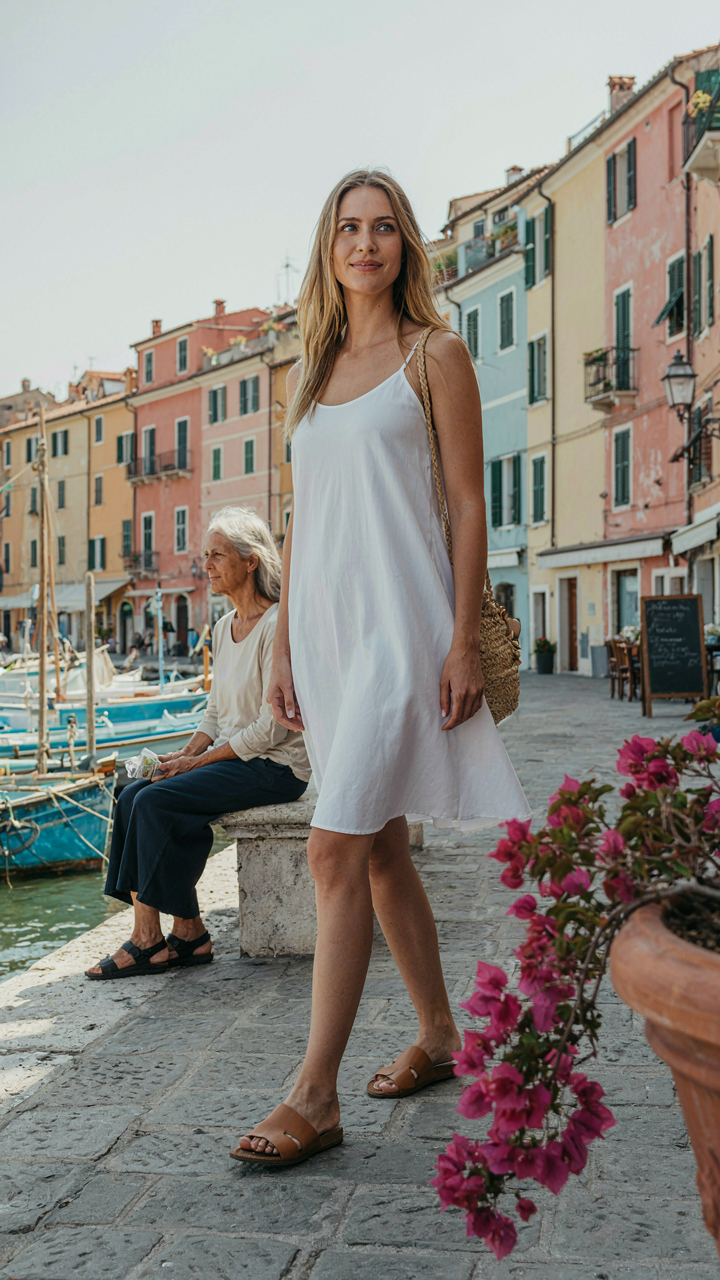
How You Carry Yourself Matters More Than What You Wear
You’re reading this because you think the outfit does the work. It doesn’t. The mechanism is posture. In biomechanics, posture determines how your nervous system signals threat or authority to others before you speak. Italians don’t dress for approval—they dress for themselves, then carry it like it was never a choice.
Stand with your shoulders back and down, chest open. Walk like you own the street you’re on. This isn’t arrogance. It’s the difference between wearing linen and linen wearing you. When you move with intention, every piece—the cream cotton shirt, the tailored shorts, the leather sandals—lands harder. The clothes become invisible because the person inside them is visible.
Wear What Actually Fits Your Life
Everyone says “be authentic.” That’s incomplete advice. Authenticity without strategy is just exposure. The real play is this: wear what you’d wear if nobody was watching, but make sure it matches the climate and context you’re actually in. A Neapolitan woman in a white cotton dress at noon isn’t being trendy. She’s solving a problem: heat, movement, durability.
Don’t borrow an Italian aesthetic because it photographs well. Borrow the logic: choose fabrics that breathe in heat, cuts that move with your body, colors that don’t show sweat or dust. Wear what solves your day, not what solves your feed. This alignment between intention and appearance is what reads as confidence. Everything else is performance that exhausts you before lunch.
The Real Obstacle Isn’t Your Wardrobe; It’s Your Inability To Define Simple, Repeatable Systems
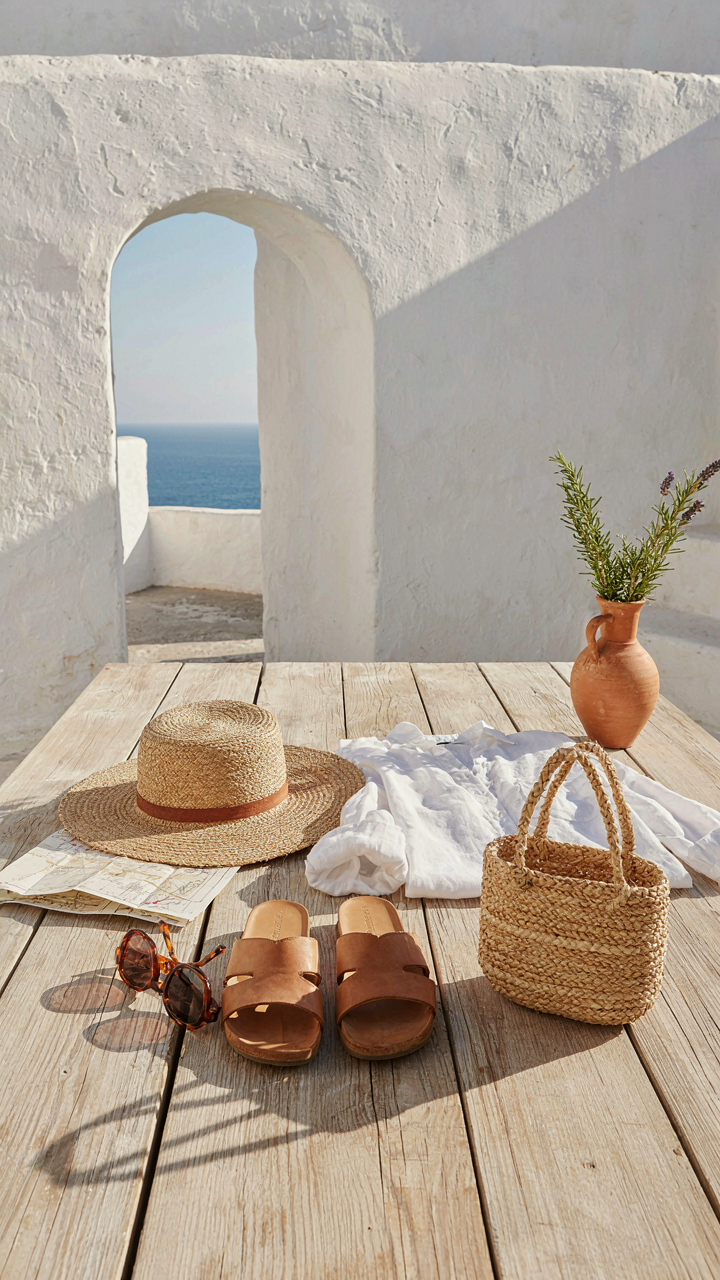
Most people treat Italian summer outfits like a puzzle to solve instead of a formula to repeat. You pick linen, add sandals, throw on a shirt. But that’s not a system. A system means you choose five pieces that work together, wear them in different combinations, and stop thinking. Pick your neutral base today, then build around it. That’s the difference between tourists and people who actually know how to dress: they quit playing inventory games and started playing automation.