

The Anti Trend Protocol: Timeless Parisian Style

Why Trends Die But Classics Don’t
You want permission to ignore fashion noise without looking invisible. Here’s the mechanism: trends are velocity, classics are direction. Velocity changes monthly. Direction doesn’t. When you chase seasonal trends, you’re committing to obsolescence on a predetermined schedule. The moment a trend peaks in visibility, it begins its death cycle. Six months later, you own clothes that signal you dressed with the crowd, not for yourself. Parisian women reject this entirely.
The real cost of trend-chasing isn’t money. It’s decision fatigue and the constant pressure to buy again. You’re locked in a treadmill of relevance. Parisians break free by understanding that a well-cut navy blazer from 1995 works identically to one from 2025 because the fit solves a structural problem in how fabric drapes on a human body. The problem doesn’t change. Neither does the solution. Trends obscure this simple truth.
Building Your Permanent Wardrobe

The framework here is economics, specifically the concept of depreciation. Most clothes depreciate toward unwearable in one to three years. Investment pieces depreciate toward timelessness. A structured wool coat, a white button-down shirt, tailored trousers, leather flats—these pieces don’t fade from rotation. They intensify. You wear them more, not less, because they match everything and solve multiple outfit problems simultaneously.
Parisian women buy one excellent coat instead of three mediocre ones. One pairs of quality leather shoes instead of five trendy pairs that hurt. The initial spend feels higher. The cost per wear, spread across five to ten years, becomes the cheapest decision you make in fashion. Build your core with pieces that have survived forty years of styling without looking forced. If a piece hasn’t earned its place in fashion for decades, it won’t earn its place in your closet.

The Scarcity Principle Of The French Capsule Wardrobe

Fewer Clothes, Sharper Identity
You want permission to buy less and still look put-together. Here’s the mechanism: constraint forces decision-making. When you own thirty black shirts, you’re not expressing taste, you’re defaulting. Parisians build wardrobes through elimination, not accumulation. Each piece earns its place by serving multiple combinations. This isn’t minimalism as aesthetic philosophy. It’s scarcity economics applied to your closet. Limited options create distinction because you’ve actually chosen what works for your body and life, not followed a template.
The common advice says “buy quality basics.” Wrong framing. Basics are the absence of choice masquerading as wisdom. A real capsule wardrobe reverses this. You start by identifying your actual uniform—the silhouettes, colors, and fabrics you genuinely reach for across seasons. Then you remove everything else. What remains isn’t a collection. It’s a decision tree. Every morning narrows to real options instead of decision paralysis. The French capsule works because it’s built on subtraction, not addition.
The Core Pieces That Multiply
Every functional capsule rests on pieces that pair with almost everything else in it. This means you choose them first, before anything else enters your wardrobe. The anchor pieces absorb maximum combinations while taking minimal closet space. A cream wool sweater that works with five bottoms and three outerwear options is doing more work than a novelty blouse you wear twice a season. Build your capsule around pieces that create new outfits when combined, not pieces that stand alone.
- White Button-Down Shirt: Works untucked over a slip dress, layered under sweaters, worn oversized as a beach cover. Must be cotton or linen blend for authentic structure. Pairs with every bottom you own.
- Navy or Black Blazer: Elevates casual pieces instantly. Choose a slim cut that works over both fitted and relaxed layers. The fabric matters more than the fit because tailoring adjusts fit.
- Well-Fitted Dark Jeans: One pair in a classic cut replaces five trendy pairs. Darker denim photographs better and hides wear. Tailoring the inseam costs thirty dollars and extends the lifespan by years.
- Neutral Knit Sweater: Cream, beige, or camel. Long enough to cover the hip. Works over collared shirts and under outerwear. Wool blends hold shape better than pure cotton.
- Tailored Trousers: One pair in a neutral. Straight or slightly tapered leg. The fit around the waist and through the thigh determines versatility across your body type, not the trend cycle.
- Timeless Coat: A camel wool coat or black wool coat functions across seasons and years. Quality construction visible in seams and hems justifies the investment. Outerwear defines your silhouette more than any other single piece.
The constraint forces specificity in your choices. Instead of owning ten sweaters that each work with three outfits, you own three sweaters that each work with ten. The math is backward from how most people shop, but the outcome is more outfits, less storage, and zero decision friction.
The Effortless Paradox: Parisian Outfits Dissected
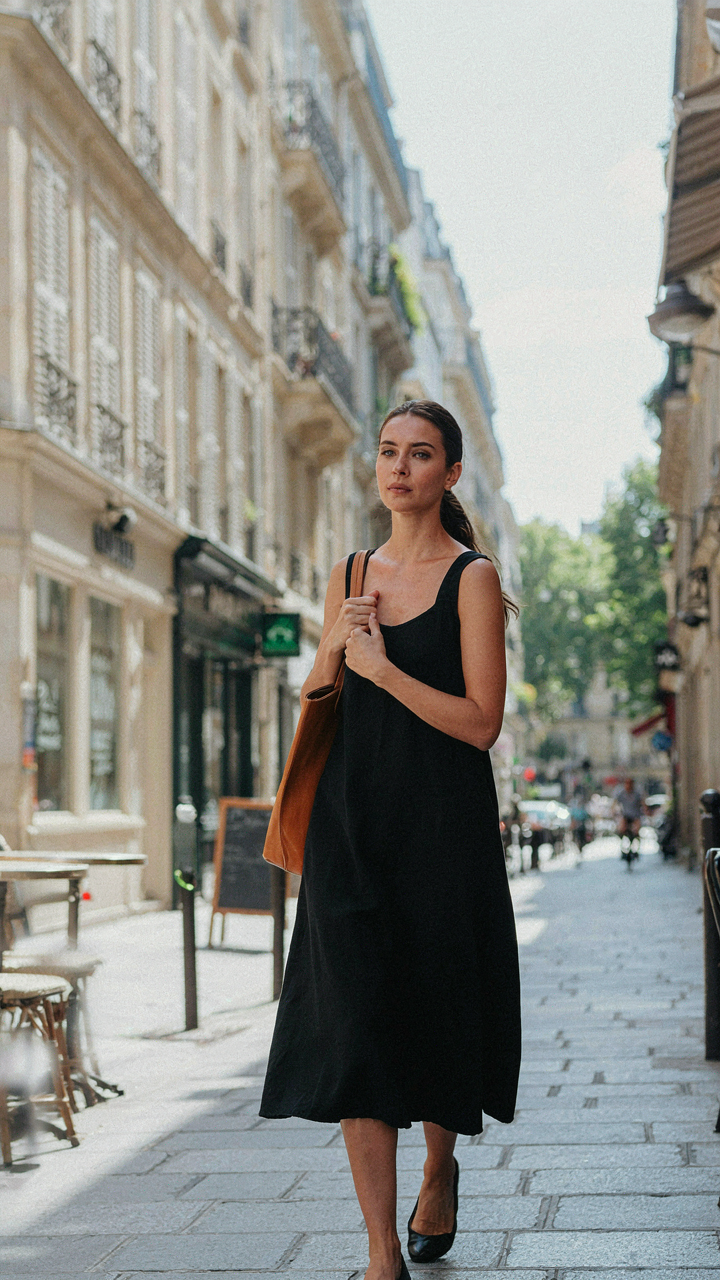
The Illusion Of Carelessness
You want to believe effort doesn’t show because that means you can stop trying so hard and still win the status game. The mechanism is simple: Parisians use constraint as design. They wear fewer items, repeat them deliberately, and edit ruthlessly. This looks effortless because the noise is gone. Every piece earns its place through repetition and fit, not novelty. The appearance of ease comes from eliminating what doesn’t work, not from actually being indifferent.
Think of it like signal processing in telecommunications: Parisians reduce the noise floor by removing unnecessary transmission. A Parisian woman owns six good basics and wears them in rotation. She doesn’t own twenty mediocre pieces she’s unsure about. When you see her outfit, you’re seeing the signal clearly because interference has been removed. That clarity reads as effortless. It isn’t. It’s the result of deliberate subtraction.
The Real Cost Of Strategic Neglect
Everyone tells you Parisians don’t try. That’s lazy analysis. They try differently. Strategic neglect means you ignore trends entirely, not that you ignore maintenance. A Parisian woman’s jeans fit precisely because she has them tailored. Her white shirt is pressed. Her leather shoes are conditioned. She neglects fashion noise while attending obsessively to quality and fit. Actual carelessness produces wrinkles, loose seams, and scuffed heels. Strategic neglect produces the opposite.
The discipline lives in the edit, not the purchase. You pick three neutral tones and stop shopping for color variety. You choose one bag style and replace it only when it wears out. You buy one pair of white sneakers and wear them with everything from dresses to suits. This approach requires saying no constantly. Most people won’t do it because rejection feels like deprivation. But deprivation in this context produces clarity. The mechanism is constraint breeding coherence.
The Quality Over Quantity Mandate: Classic French Outfits For Women

The Economics Of Wearing Things Repeatedly
You’re afraid cheap clothes make you look cheap. That’s the real barrier. But economics names the actual mechanism: cost per wear, not the price tag itself. A 200 euro blazer worn 150 times costs 1.33 per wearing. A 60 euro trend piece worn twice costs 30 per wearing. Parisians don’t buy less because they’re rich. They buy less because the math is different when you intend to actually repeat outfits.
The frequency multiplier is what kills most wardrobes. You see the initial price and decide it’s too much. You never see the denominator, which is how many times you’ll actually wear it. A well-cut wool coat in neutral black or camel gets worn for a decade across seasons. Fast fashion gets worn, photographed once for social proof, then abandoned. Track how many times you’ve actually worn each piece in your current closet. The ones worn under ten times are your real waste.
When Fabric Decides Your Reputation
Garment longevity does not mean something lasts forever. It means the piece still performs its function and maintains its shape after repeated wear and washing. Natural fibers degrade predictably. Synthetic blends pill, stretch, and lose structure in ways that make you look sloppy. Parisians grasp this intuitively because European laundry destroys cheap construction immediately. A single wool piece from a proper maker shows less wear after five years than polyester shows after five months.
The Italian principle applies here: better materials signal restraint, not excess. When fabric holds its shape through multiple wearings, you can repeat the outfit without it looking tired or desperate. Linen wrinkles deliberately. Merino wool resists wrinkles. A silk blend blouse maintains drape through a full week of office wear. Cotton that’s too thin becomes translucent at the shoulders after one season. The garment longevity mechanism is straightforward: start by buying pieces where the fiber content matches how often you’ll actually wear it.
The Parisian Palette: How To Look Parisian Beyond Color

Build Your Foundation With Neutrals
You want permission to look effortless. What you actually need is constraint. The mechanism is this: limiting your base palette frees mental energy for proportion, fit, and texture—the three variables that separate intentional dressing from accidental matching. Parisian women don’t build outfits around color theory. They build them around neutral anchors that won’t fight each other across seasons or years.
Black, white, navy, beige, and gray form the structural skeleton. These aren’t boring. They’re a military strategy applied to closets: establish your territory (neutrals), then deploy tactical advantage (everything else) from a position of strength. Layering works because the eye reads proportion first, color second. When your base doesn’t demand attention, cut and fabric become visible.
Introduce Color Through Restraint
The common advice is wrong here. Don’t “pop color” or “add a statement piece.” That language assumes color is decoration bolted onto an outfit. Parisian dressing treats color as accent deployed through scarcity, not abundance. One colored item per outfit. One. This creates visual hierarchy. The eye lands where you direct it because nothing competes.
Introduce color through items that require intention to wear: a silk scarf, a structured knit, a tailored blazer in camel or olive. Avoid colored basics. A red shirt reads as trying. A red bag reads as editing. The difference is placement and frequency. Color works when it interrupts neutral stacks, not when it fills them. Wear your colored piece in the upper body or as a bottom layer visible at the neckline. This controls where the viewer’s attention settles first.
The Accessory Amplifier: French Girl Fall Outfits & Beyond

Constraint Creates Clarity
You want permission to buy more accessories without looking like you’re trying. That’s the real tension here. The mechanism is scarcity: constraint forces intentionality. Parisian women don’t accessorize by addition. They accessorize by subtraction. One scarf, one bag, one piece of jewelry per outfit becomes the rule, not an aesthetic choice. This isn’t restraint for restraint’s sake. It’s signal clarity. Every piece that exists on your body has to justify its presence because there’s nowhere to hide clutter.
Fall outfits amplify this principle because layering already adds visual weight. A neutral sweater, a structured coat, and a simple pant create the base. Adding a fourth element requires ruthlessness. The Parisian approach: one accessory does the work that three accessories fail to do. A silk scarf tied at the neck transforms a basic outfit. A leather belt defines proportion. A single gold chain adjusts the formality of everything below it. The decision architecture is binary: include or exclude. No middle ground.
One Piece Redefines The Outfit
Most advice says “layer your accessories” or “mix metals.” This is what people say when they don’t understand hierarchy. A Parisian woman knows that one elevated piece creates depth and intention. The selection criteria isn’t what you like. It’s what the outfit lacks. A monochrome fall look needs a bag with visual weight or texture. A structured silhouette needs a soft scarf. A minimal outfit needs something that catches light. This is triage, not decoration.
Choose pieces that function as anchors, not embellishment. A vintage leather belt worn high on the waist restructures proportion and adds sophistication without feeling added on. A cashmere scarf in a tonal shade introduces texture and wraps the body intentionally. A structured leather bag carries objects and serves as the outfit’s punctuation mark. Each selection removes visual chaos rather than creating it. Execute this: evaluate your outfit fully dressed, identify one gap in either texture, proportion, or weight, then introduce a single piece that addresses it. Nothing else touches the outfit.
The “Je Ne Sais Quoi” Algorithm: Parisian Chic Dress

Confidence As The Invisible Multiplier
You want this section because you’re betting confidence will solve what clothes alone won’t. It won’t. But here’s the mechanism: in social psychology, what researchers call “embodied cognition” means your posture and deliberate movement literally change how your brain processes threat. Parisians don’t dress well and then act uncertain. They act certain first, and the certainty rewires how others perceive the outfit. The clothes are the stage. The confidence is the performance that makes people watch.
Confidence in dress isn’t about arrogance or performance for an audience. It’s about removing the negotiation between your body and your clothing. When you hesitate in what you wear, that hesitation shows as physical tension. Others read it as doubt about the choice itself. A Parisian woman wearing a simple navy sweater and wool trousers moves through space like the outfit is exactly what should be worn. She doesn’t question it mid-day. That certainty is a signal that overrides any technical flaw in the styling.
Owning Your Aesthetic Choices
The common advice here is garbage: “wear what makes you feel confident.” That’s circular and useless. Real confidence comes from decision, not feeling. You build it by committing to a specific aesthetic choice and wearing it repeatedly until the choice becomes invisible to you. A Parisian doesn’t wake up wondering if neutrals are still her thing. She’s already decided. She’s worn them for years. The decision is done.
The mechanism is simple: remove options. Parisians operate within a narrow bandwidth of acceptable choices deliberately. This isn’t limitation. It’s freedom through constraint. When you own a specific aesthetic, you stop seeking external validation because you’re not testing hypotheses anymore. You’re living a conclusion. Wear the same silhouettes, the same color palette, the same quality standards for thirty days straight. By day thirty, the choices feel like facts about you, not experiments.
Decoding Authenticity: French Looks For Women
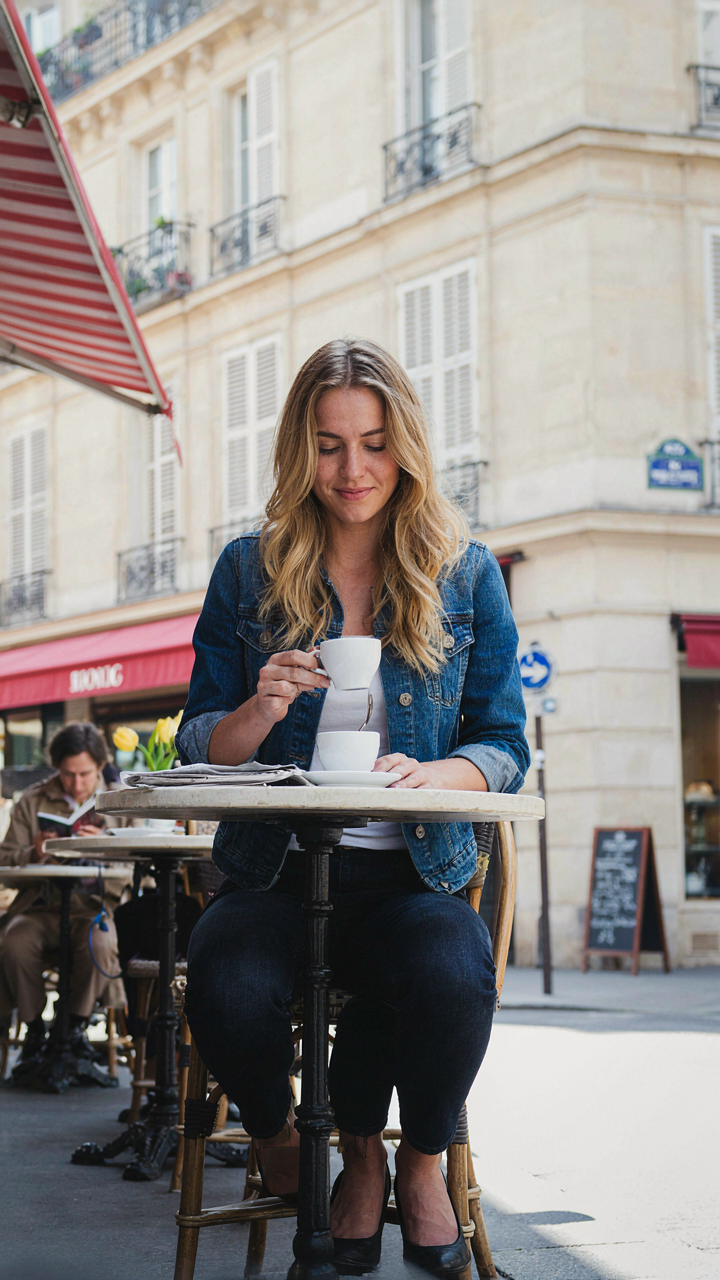
Style Comes From Conviction, Not Curation
You want this section because you’re afraid that dressing like a Parisian is a costume you can’t afford to wear authentically. The mechanism that separates real Parisian style from imitation is conviction about what you actually value, not knowledge of what Paris values. A Parisian woman doesn’t dress to signal she knows the rules. She knows the rules so thoroughly she can ignore half of them. Her clothes reflect her life, not her research.
This is why the classic advice to “invest in basics and repeat” fails most people. It treats wardrobe as a solved problem when it’s actually a belief problem. You can own a perfect navy blazer and still wear it like you borrowed it from someone cooler. Conviction changes how fabric sits on your body. It changes your posture. It changes the entire equation of what counts as “dressed like a Parisian.”
Wear What You Actually Believe In
The common narrative says Paris invented understated elegance and you should copy it. Wrong. Paris has never told women what to wear. What Paris did was create a culture where women wore what made sense for their specific life, then stood by that choice with enough confidence that observers invented a mythology around it. You’re trying to reverse engineer mythology instead of building conviction.
Start here: identify one non-negotiable element of how you want to move through the world. Not how a Parisian moves. How you move. Then dress that element first, before you think about beige trousers or striped shirts. A woman who wears heels because she genuinely feels powerful in them reads as Parisian. A woman who wears heels because she read they’re essential reads as trying. Build your wardrobe around what you actually need, then stop defending the choice.
The Real Obstacle Isn’t Your Closet, It’s Your Impulse To Conform

You don’t need another white shirt. You need permission to stop performing for algorithms and strangers. Parisian style works because these women decided their taste mattered more than trends. Today, wear one piece you actually love instead of one you think you should. The gap between knowing this and doing it is where your entire style lives.