

The Parisian Paradox: Why More Clothes Mean Less Style

The Economics Of Constraint
You think you need options. You don’t. You want permission to stop deciding, and a full closet makes you feel like you’re doing something about style when you’re actually drowning in it. Scarcity economics applies here: constraint creates value. Parisians don’t own more clothes than anyone else. They own fewer and repeat them. The mechanism is simple. When you have ten white shirts, you wear the one that fits best twice a week. When you have one, you learn how to style it five different ways. Repetition forces mastery. Abundance forces paralysis.
The math works against trend adoption. Each new piece you buy requires mental bandwidth to integrate into existing combinations. The cognitive load multiplies, not linearly but exponentially. Most people mistake this friction for proof they need more. They buy a new item to “complete” an outfit, not realizing they’ve just created thirty new outfit combinations they’ll never explore. French wardrobes work because they’re intentionally small enough to memorize. You know what you own. You know what works. You shop your closet instead of shopping stores.
The Real Cost Of Chasing Trends

The conventional advice here is wrong. Trends don’t fail because they change. They fail because following them requires constant replacement, which destroys the coherence of an actual style. Trends are consumption theater dressed up as self-expression. Each season a new silhouette, hemline, or color palette demands you alter what you already own or discard it. Parisians sidestep this entirely by anchoring to items that survive decade shifts: the Breton striped shirt, tailored trousers, a structured blazer, good leather shoes. These pieces predate social media trend cycles by decades.
The hidden mechanism is wardrobe fragmentation. Trend pieces don’t layer with basics. A maximalist hem length from last season actively conflicts with the new silhouette this season. You end up with disconnected items instead of a system. French girl outfits work because they’re built on pieces that compound value over time rather than depreciate. A navy blazer from ten years ago still functions exactly the way it did. It pairs with current basics without contradiction. The action step: identify three anchor pieces in your closet that you’ve worn for at least two years and build your next purchases around compatibility with those three, not trend alignment.

The Capsule Wardrobe Deception: Quality Over Quantity Fallacy
Build Before You Buy
You want permission to spend money and call it strategy. Here’s what actually happens: the “invest in quality basics” narrative gets it backwards. Economics teaches us about sunk cost fallacy, and French girl outfits prove it daily. You don’t start by buying expensive pieces. You start by wearing what you already own until you identify the actual gaps, not the imagined ones your aspirational brain invented.
Most people reverse-engineer their wardrobe from Pinterest instead of forward-engineering it from daily life. They buy a perfect linen shirt, then another, then a blazer, and three months later they’re wearing the same two combinations. The mechanism is simple: you can’t know what works until you’ve lived in it. French women don’t build closets from editorial spreads. They accumulate through repetition, not intention. Start cheap. Observe what you actually reach for. Then upgrade only those pieces.
Find Your Three Piece Rotation
Stop searching for a “personal style.” That phrase is marketing designed to make you feel broken until you buy the right thing. Instead, identify the three outfit combinations you’d wear on repeat if no one judged you. These aren’t aspirational. They’re the outfits you actually move comfortably in, that solve a real daily problem like “I have eight meetings and two coffee runs.”
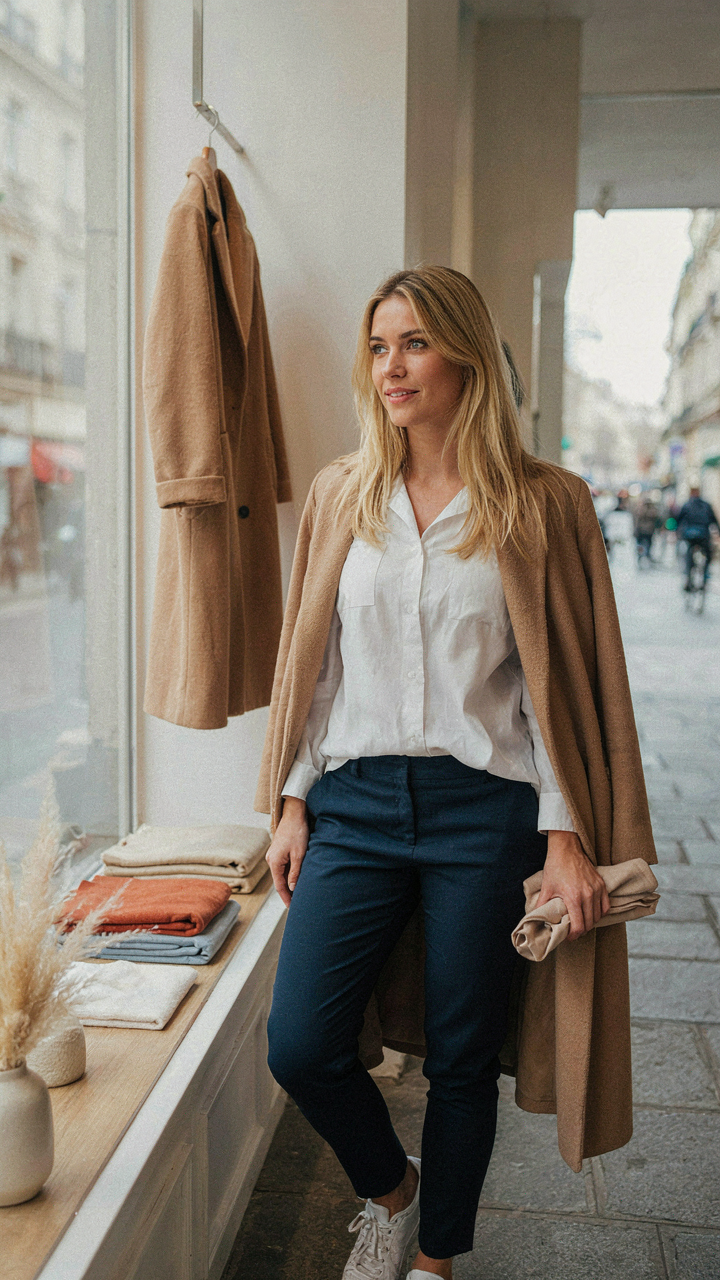
This is your uniform. A French girl’s uniform might be navy trousers, a white shirt, and a camel coat because these pieces don’t demand styling energy. They work together mechanically, not aesthetically. Once you name these three combinations, every future purchase filters through one question: does this replace something in the rotation or does it solve a gap I actually face? If it does neither, you don’t buy it. The uniform becomes your decision architecture.
The Effortless Elegance Protocol: Strategic Dishevelment

The Deliberate Imperfection
You want permission to look like you didn’t try. That’s the real fear underneath this entire section. The mechanism is simple: French style operates on constraint, not perfection. Controlled dishevelment works because it signals you have better things to do than obsess over alignment. A wrinkled linen shirt, an untucked edge, a collar left unbuttoned—these aren’t accidents. They’re the visual equivalent of negative space in design. The imperfection proves the outfit is functional first, aesthetic second.
The technical move is strategic asymmetry. One element stays slightly off: a blazer worn loose over a fitted base, a scarf knotted but not arranged, a hem that sits just fractionally uneven. This breaks the uncanny valley of “trying too hard” while maintaining structure underneath. French women don’t deploy chaos. They deploy controlled variables. The baseline outfit stays clean and proportioned. The imperfection sits on top of that foundation like punctuation, not the whole sentence.
Accessories That Compress, Not Expand
Most advice tells you accessories add personality. That’s incomplete. Accessories actually reduce decision load if deployed correctly. A silk scarf, a structured leather belt, a single gold chain—each one collapses multiple outfit problems simultaneously. The scarf handles neckline interest and layering depth at once. The belt anchors proportions and creates a visual break. One good watch replaces six mediocre ones. The constraint matters more than the collection size.
The real tactic is algorithmic reduction. Before adding an accessory, ask: what outfit problem does this solve, and does it solve only one, or does it solve two? A leather belt worn at the natural waist solves hip definition and creates a visual anchor point for proportions. A structured handbag in a neutral tone provides contrast against muted clothing and anchors the entire outfit through repetition of shape. Each piece should earn its place through mechanical function, not decorative appeal alone.
French Aesthetic Outfits: Beyond The Breton Stripe

The Pieces That Actually Work
You want permission to buy less and look intentional. The mechanism is constraint. French dressing works because the palette is narrow and the pieces overlap across multiple outfits, not because of some mystical taste gene. Start with neutral base layers in natural fibers: white cotton t-shirt, cream wool sweater, navy or black trousers in a straight cut. These aren’t trendy. They’re load-bearing walls in your wardrobe. Every other piece hangs on them.
The mistake most people make is treating basics as invisible filler. They’re not. A white t-shirt in cotton jersey versus synthetic polyester creates a different texture, drape, and longevity. The quality of the base determines whether an outfit reads as intentional or accidental. Buy one good white t-shirt in cotton. Buy one good cream sweater in merino wool or cotton blend. These two pieces alone form the foundation for dozens of combinations. Fit matters more than quantity. A well-fitted navy trouser in a natural fiber will outperform five mediocre pairs.
Building Around What You Already Have
Outfit architecture uses the same principle as load-bearing structures in design: each element supports the system rather than standing alone. Take your white t-shirt and navy trousers. Add a structured blazer in camel, navy, or black. The blazer transforms the base pair from casual to composed. Now layer a scarf—silk or cotton, solid or striped—and you have three distinct outfits from the same foundation. The scarf isn’t decoration. It’s a multiplier that changes proportion, adds texture, and shifts formality without adding footprint to your closet.
The real lever is repetition with variation. Wear the same trousers and t-shirt combination four times a week in different contexts by rotating outer layers and accessories. A linen shirt worn open over the white tee. A cardigan in neutral gray. A structured coat. A denim jacket. Each changes the outfit’s purpose without requiring new basics. The French approach isn’t about owning everything. It’s about extracting maximum outfits from minimum pieces through deliberate layering and proportion shifts. Pick three outer layers and rotate them through your existing base pieces.
The “Cool Girl” Algorithm: Mastering Understated Confidence
Posture Reads As Permission
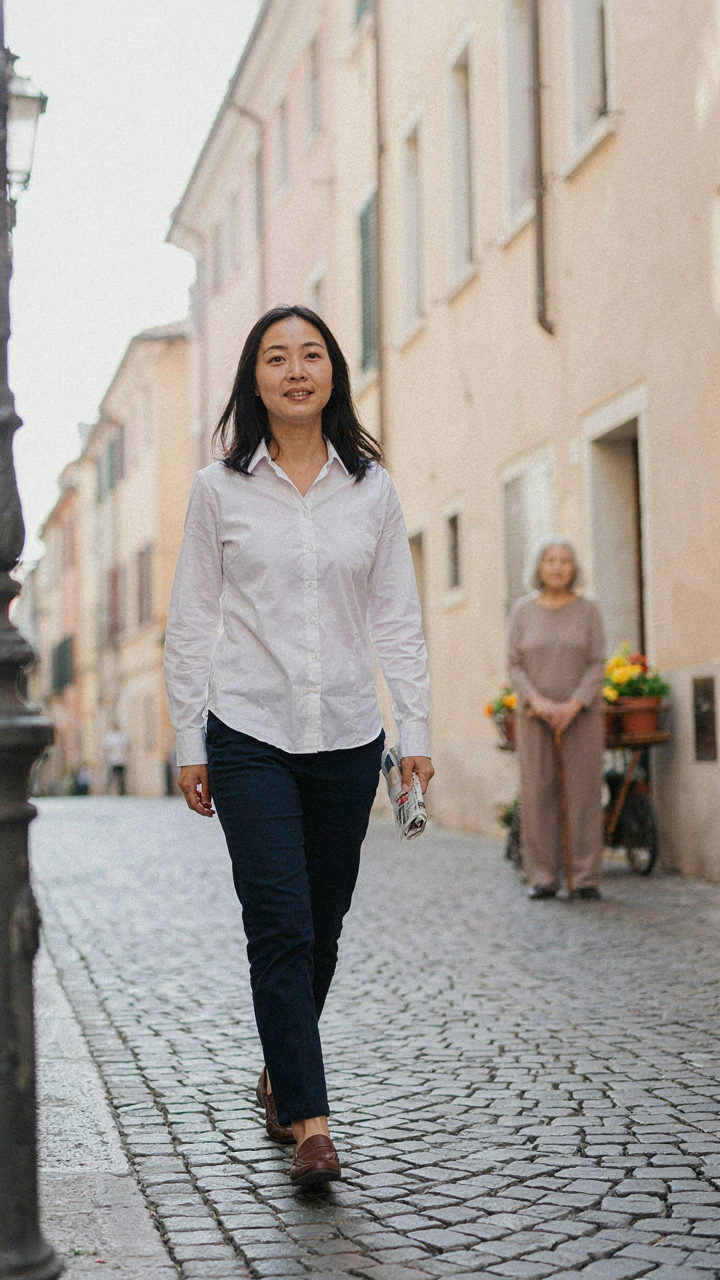
You want people to assume you have options. That’s the real reason this matters. The mechanism is simple: posture signals scarcity or abundance of attention in your life. In fashion psychology, what researchers call “postural congruence” is how your body communicates whether you’re seeking validation or already secure. French girl outfits fail instantly if your spine collapses. Shoulders back, chin level, weight distributed evenly. Not rigid. Relaxed authority looks like you forgot anyone was watching.
Walk matters more than the outfit. Your gait determines whether clothes read as costume or uniform. Move from your hips, not your head. Take up the space you occupy without announcing it. This separates the girl wearing a striped shirt from the girl who happens to be wearing one. Footwear choice reinforces this: flat shoes command differently than heels. French girls favor flats because they enable the walk that sells the outfit.
Authenticity Breaks The Performance Trap
The common advice here is garbage: “just be yourself” means nothing. What actually happens is this. Authenticity in fashion isn’t about expressing your inner self. It’s about removing the gap between your stated values and your visible choices. When that gap closes, people feel it before they see it. They perceive confidence because there’s nothing to decode. You’re not managing an image; you’re wearing your criteria.
French girl outfits work because they demand this alignment. You can’t half-commit to minimalism or pretend neutrals matter if you’re dressed for approval. The moment you’re doing that, your microexpressions leak it. Your eyes won’t land the same way. The outfit becomes a lie you’re telling in real time. The protocol is one step: before dressing, ask what you actually value in how you move through the world. Then let only those values touch your closet. Everything else is noise you’re carrying.
French Style Aesthetic: The Inverted Pyramid Of Outfit Construction

Start With The Outfit’s Real Job
You want to know how to look effortlessly put together because you’re afraid looking like you tried too hard signals desperation. Here’s what nobody says plainly: French dressing works because every piece serves a function before it serves aesthetics. The mechanism is assignment. Before you touch your closet, name what the outfit does. Is it a working day where you move between meetings and coffee? A weekend where you move between errands and social proximity? A dinner where you sit still and light matters more than motion? The mission determines the formula, not your mood or what’s trendy.
French style treats outfit construction like architecture treats load-bearing walls. Some elements carry structural weight. A well-fitted blazer carries authority. Flat shoes carry practicality. A neutral base carries flexibility for layering. Decorative elements add nothing to function. This is why French outfits survive the day without falling apart aesthetically or practically. You build the skeleton first, then you know exactly where ornament goes without wasting space on items that look nice but do nothing.
Strip The Visual Static
The common advice says “add more pieces” or “experiment with texture.” That’s wrong. French dressing subtracts. Every item you add is visual noise until it solves a specific problem the outfit already has. A scarf doesn’t go in because scarves are French. It goes in because the neckline needs definition or the outfit needs a tonal break or the shoulder line needs softening. The function comes first.
This is why French outfits feel complete with fewer pieces. A neutral shirt, fitted trousers, a single bag, one shoe. That’s not minimalism for the sake of looking minimal. That’s elimination of everything that doesn’t earn its place. Your eye moves to what matters because nothing competes for attention. When you’re tempted to add a third neutral layer or a second accessory, ask: does this solve a problem or create more work for the outfit to do? If it doesn’t solve something, it steals from what does.
The Unseen Architecture Of Parisian Girl Style

Where Effort Disappears Into Effect
You want permission to stop buying stuff and still look intentional. That’s the real question underneath this section. Economics calls this optimization through constraint, and French girl style is just constraint applied to fabric. The Pareto Principle means 20 percent of your pieces generate 80 percent of your outfit combinations. Parisians don’t ignore this ratio. They build wardrobes around it intentionally.
Most American advice tells you to buy more basics and layer them randomly. Wrong. A Parisian girl treats her closet like a math problem. She identifies the five to seven pieces that work together across seasons, then stops expanding horizontally. She builds vertically instead—investing in quality within those pieces rather than accumulating new silhouettes. The mechanism is brutal: fewer total items, higher barrier to entry per item, infinite recombination.
The Core Versus Accent Split
Here’s what actually creates a usable wardrobe. Core pieces are the containers: white button-ups, black trousers, neutral sweaters, ankle boots, simple jeans. Accent pieces are the modifiers: silk scarves, vintage jewelry, a structured leather bag, one statement shoe. The split works because core pieces do the invisible labor while accents control perception. You’re not building a wardrobe. You’re building a system where the same five outfits feel like fifteen through strategic swaps.
- White Oxford Shirts: The foundation. Works untucked with jeans, tucked into trousers, layered under sweaters, knotted at the waist. Spend here. Bad cotton shows immediately.
- Black or Navy Trousers: High-waisted, straight leg or tapered. Pairs with everything from striped tops to blazers. One good pair beats five mediocre ones.
- Neutral Sweaters: Cream, gray, black in merino wool or cotton. These replace basics because they add texture without adding visual noise.
- Ankle Boots in Leather: Black or tan. Worn year-round with tights, dresses, or straight to jeans. The single most leveraged shoe investment.
- Structured Leather Bag: Neutral color, minimal branding. Functions as both utility and visual anchor. Quality leather ages visibly, which works in your favor.
- Silk or Linen Scarf: One to three pieces. The only accent that costs almost nothing but shifts the entire impression of an outfit.
Build core pieces first. Accents come after the containers are solid. Start with three core pieces instead of ten mediocre ones. Rotate accents weekly. The outfit changes. The closet doesn’t.
French Girl Fall Outfits: Adapting With Intent, Not Impulse

Layering As Temperature Control
You want to feel like you have options without admitting you’re scared of looking wrong when the weather shifts. The real mechanism is thermal regulation—use clothing layers like a building uses insulation. You’re not adding pieces for visual interest. You’re creating a system where the same base outfit works at 65 degrees and 45 degrees without requiring new purchases.
A fitted long-sleeve tee under a sleeveless dress isn’t decoration. It’s the difference between wearing one outfit in September and a completely different outfit in November. The French approach treats the base layer as non-negotiable infrastructure. A cream or navy merino wool long-sleeve becomes the foundation that makes your existing dresses, vests, and blazers work across temperature ranges. You choose fabrics that layer flat—no bulk, no shape disruption.
Seasonal Transitions Without Inventory Growth
Everyone says “swap out your wardrobe seasonally.” That’s nonsense and expensive. The real mechanism is material weight and opacity. You keep the same silhouettes. You change the fabric density and sleeve length instead. A linen blazer in summer becomes a wool blazer in fall. Both work with identical bottoms and shoes because the structure stays the same.
Transition pieces are just your existing items worn differently. A cotton striped shirt works solo in August and under a sweater in October. A lightweight scarf becomes a necessity piece the moment temperature drops, not an aesthetic choice. Buy basics in natural fibers that shift seasonally: cotton, linen, wool, merino. Avoid synthetics that don’t age or transition well. The protocol is simple—when you shop, buy one weight per item per season, then rotate based on temperature, not calendar date.
The Anti Trend Manifesto Why French Outfits For Women Endure

Clothes Built To Outlast Seasons
You want permission to stop chasing trends because you’re tired of wasting money and looking stupid in six months. The real mechanism is planned obsolescence. Fashion industry designed fast cycles to force replacement. French dressing rejects this. A striped shirt, well cut trousers, a blazer these pieces don’t expire. They survive because they solve basic problems instead of solving last season’s problem differently.
The French approach mirrors industrial durability thinking. You buy pieces that work across multiple contexts and years. A cream colored sweater in quality wool functions in 2020 and 2035 because it wasn’t designed around a trend cycle. It was designed around utility and proportion. This isn’t accident. It’s the output of a culture that views clothing as infrastructure, not entertainment.
Building Taste That Rejects Fads
Most style advice tells you to find your aesthetic, then stay loyal. That’s incomplete. Real immunity to fads comes from understanding why something works, not memorizing what works right now. The French girl outfit tradition teaches this through repetition and restraint, not through taste rules. When you wear similar silhouettes and color palettes consistently, fads become visible as noise instead of instruction.
Your job is to identify the underlying principle, then recognize when a trend violates it. A wide leg trouser works because of proportion and balance. A trend version might exaggerate the width until balance breaks. You can see this because you’ve trained your eye on the stable version first. Wear the basics long enough to develop judgment, then you stop following trends because you can measure them against something real.
France Aesthetic Outfit: The Strategic Mindset Shift

Redefine What Basics Actually Mean
You want permission to stop shopping. That’s the real reason you’re reading this. The mechanism is simple: French girl style treats basics as building blocks with inherent constraints, not placeholder items you upgrade later. A white shirt isn’t a default—it’s a decision with material, fit, and wear-path already embedded. You’re not collecting basics. You’re selecting components that compound over time.
Most advice calls basics “timeless neutrals” and leaves it there. Wrong. Basics work because they’re friction-free repeatable units. The French approach strips choice at the foundation level so decisions become visual, not logistical. A navy sweater, cream trouser, and black loafer aren’t interchangeable with their alternatives—they’re specific enough to have personality but neutral enough to layer without noise. The system works when you stop thinking “basic” and start thinking “anchor point that scales.”
Your Wardrobe As A Decision Filter
Treat your wardrobe like an operating system, not a closet. Each piece is a rule that either reduces friction or creates it. When you add something, you’re not adding variety—you’re adding decision load at every future moment you get dressed. French girl outfits function because the wearer has already made most decisions upstream. The sweater works with the trousers because those variables were settled before purchase, not after.
The strategic move is ruthless constraint. Limit your color palette to three neutrals plus one accent. Limit your silhouettes to two fits per category. Limit your materials to three textures maximum. This isn’t minimalism for aesthetics. It’s minimalism as a decision-making protocol. Every morning, you execute instead of deliberate. Execution compounds into style faster than deliberation ever will.
The Real Obstacle Isn’t Your Closet, It’s Your Impulse To Conform; True French Style Is A Declaration Of Self-ownership
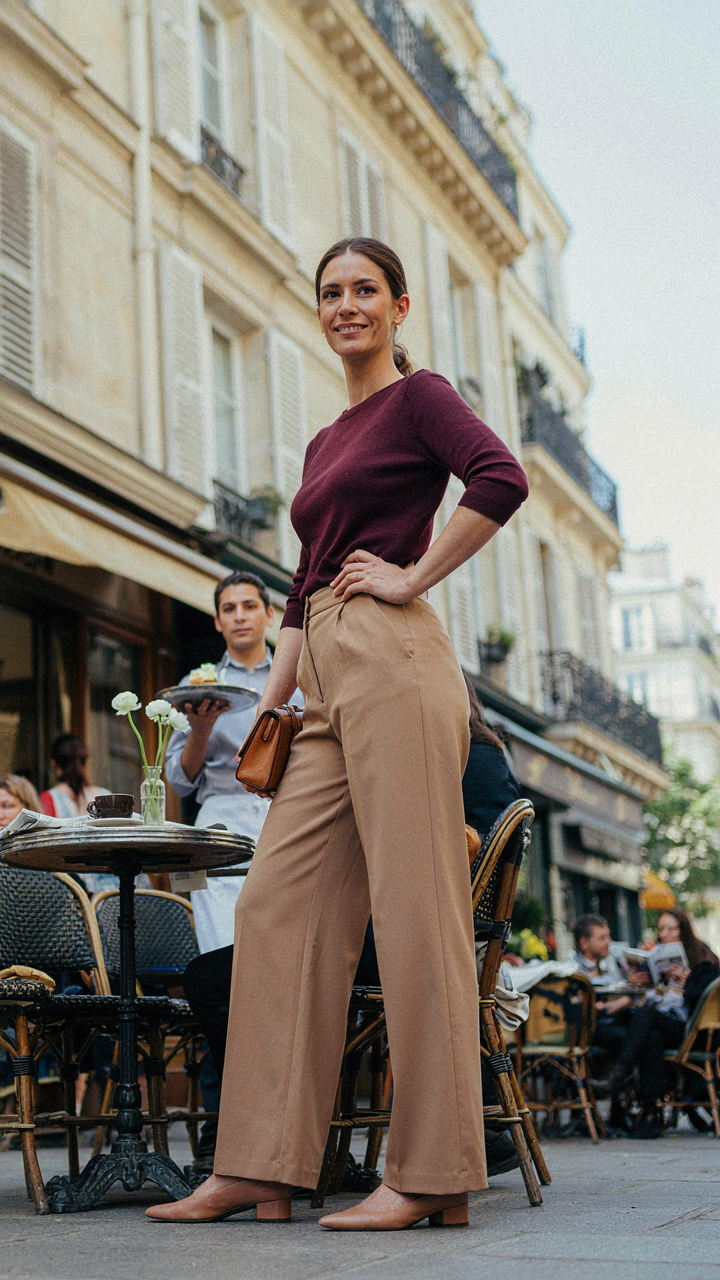
You already own everything you need. The real work isn’t shopping. It’s deciding you matter enough to stop dressing like everyone else. French girls don’t follow trends because they’re French. They follow their own rules because they stopped asking permission. Pick one piece you actually love today, wear it wrong, and notice how nobody cares. That’s when real style starts. You don’t need a new wardrobe. You need the spine to wear the one you have.