

Beyond Candid: The Art Of Staged Authenticity In Gym Photography

The Candid Myth
You want to believe the best gym photos happen by accident because that feels like proof of authenticity, and authenticity feels like permission to look good without trying. It doesn’t work that way. Every “candid” gym photo that performs well is constructed. The difference between a shot that reads as natural versus posed comes down to one thing: whether the person in frame knows exactly which muscles will be visible at which angles, and whether they’ve rehearsed the micro-movements that make effort visible without looking performative.
Candid photography in the gym exists on a spectrum of intention, not as a binary state. A photographer capturing you mid-set isn’t random. You’re aware of the camera, you’ve chosen that moment, and your body position reflects dozens of small decisions made before the shutter clicked. The mechanism is simple: control the variables you can see, then let the camera catch what those variables produce. The photo feels unstaged because your positioning creates genuine muscle engagement, not because luck happened to be present.
The Effort Narrative

Controlling narrative is borrowed from rhetoric, but in gym photography it’s visual rhetoric. The claim you’re making isn’t with words but with muscle tension, positioning, and what the camera captures about the work itself. Most advice says to “show effort” or “look strong.” That’s incomplete. You need to show the specific type of effort that reads as intentional work, not strain, and positions your physique in ways that make definition visible without distortion.
The protocol: identify the lift or position that most flatters your development, then photograph the moment just before fatigue compromises your form. This isn’t about looking fresh. It’s about capturing the frame where maximum muscle engagement meets maximum visibility. A pull-up photo taken at lockout shows arm and shoulder definition clearly. The same pull-up at the bottom position shows effort but obscures the physique. Choose the position that makes your work readable to the viewer. Everything else follows from that choice.

The “Effortless Power” Protocol For Women Fitness Photography

Post Set Micro Movements
You want people to believe the strength happened without effort. That’s the real fear underneath this section, and it matters because the opposite reads as try-hard. Kinesiology calls this “residual tension”—the involuntary muscle state that lingers after exertion. In gym photography, you’re borrowing that state intentionally: the slight shoulder elevation, the catch in the breath, the fingers still half-curled from gripping weight. These aren’t poses. They’re authentic recovery pauses.
The common advice is to “look relaxed.” That’s lazy and wrong. Relaxed looks dead in a frame. What works is capturing the exact moment between effort and rest—when your nervous system is still elevated but you’re not actively straining. Film this 3-5 seconds after stepping back from a set. Your shoulders sit higher. Your chest expands slightly. Your core stays engaged. None of this requires you to fake anything. You’re just freezing a real physiological state the camera can read.
The Gaze Directs The Frame
Your eyes are the entry point. Period. Where you look determines what the viewer feels is happening. Attention functions like a magnetic field in photography—whatever you focus on, the viewer follows involuntarily. Look down and inward, the image reads as introspective or defeated. Look at the weight or your working limb, it reads as concentrated competence. Look slightly away and up, it reads as confident and unguarded.
The mistake most women make is holding the photographer’s gaze directly. That flattens the image into a portrait instead of a moment. Instead, train your gaze toward the equipment you just used or slightly past the camera’s line. This creates depth and suggests the work matters more than the documentation. Your eyes should move first during the shoot, then your body follows. One second before the shutter clicks, shift your gaze to where your attention naturally goes post-set. That timing differential is what separates posed from candid.
Environmental Framing: Using The Gym Photo Shoot Space

Equipment As Line And Anchor
You want to look purposeful in the frame because standing empty-handed signals you don’t belong there. Here’s the mechanism: equipment functions as a vector in composition. A barbell, dumbbell, or cable machine creates directional lines that guide the viewer’s eye and anchor your body in space. You’re not posing near equipment—you’re using it as a structural element that defines your position and creates visual weight distribution.
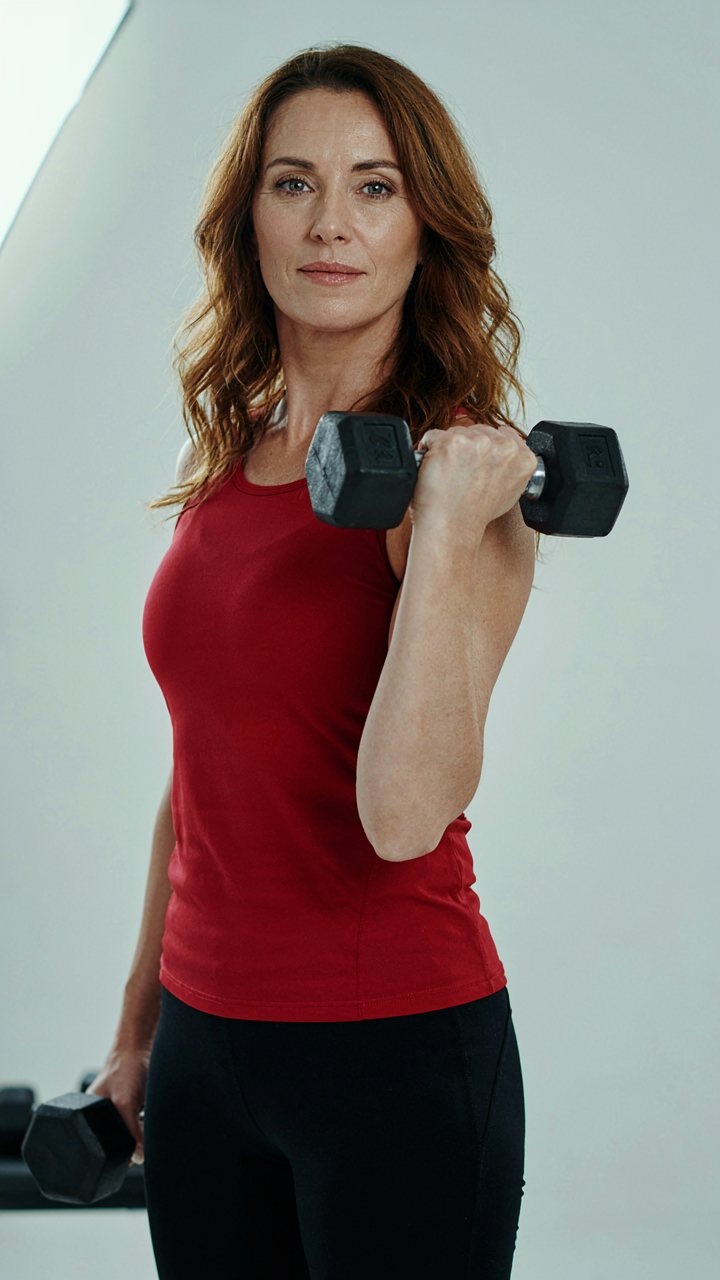
The difference between a flat photo and a dynamic one comes down to this: equipment establishes a relationship between your body and the environment. Grip a dumbbell at chest height with a slight forward lean. The weight pulls your shoulders forward naturally. Reach toward a cable machine while turning your torso. The equipment frame becomes the reason your pose exists. Stop thinking of gear as decoration. It’s your prop architecture.
Background Layering For Visual Depth
The gym wall behind you isn’t neutral space—it’s either working for you or against you. Most gym photos fail because the background reads as a flat, cluttered mess of mirror reflections and equipment clutter. Good environmental framing uses depth: position yourself where the background creates separation between you and what’s behind you. A mirror showing equipment repetition works. A clear wall section works better.
The real tactic is layering depth through foreground, subject, and background planes. Stand where mirrors show a secondary layer of the gym, or position yourself in front of open space that recedes. Avoid standing directly against a wall. Create distance between your body and whatever’s behind you by moving into the room. This transforms a two-dimensional background into a three-dimensional environment that makes you pop forward.
The Biofeedback Method: Posing For Perceived Exertion
Tension And Release Cycles
You want the photo to prove you actually work hard, not just that you own gym clothes. Physics calls this tension and release, the oscillation between force and recovery. In gym poses, this becomes the difference between locked joints and active softness. A locked elbow reads as effort. A slightly bent elbow with shoulder engagement reads as control during effort. The camera catches the micro-positioning where tension exists without rigidity.
Most advice says “relax and look natural,” which is useless because relaxed looks weak in a still frame. The real move is active tension in the working muscles while maintaining joint mobility. Your shoulders should carry load in a front-facing pose, not hang. Your core should brace slightly, visible in subtle postural alignment, not flexed into hardness. This distinction separates “posed” from “captured mid-exertion.”
Micro Expressions Of Fatigue State
Biology doesn’t care about your intention. Your face reveals autonomic response to physical demand, and the camera records it plainly. Genuine fatigue markers include slightly elevated jaw tension, mild pupil dilation from sympathetic activation, and micro-moisture on the forehead or upper lip. Faking this look produces a straining grimace, which reads as performative. The real fatigue expression is almost neutral with one layer of intensity underneath.
Capture this by posing near the end of a set, not during maximum exertion. During maximal effort, your face contorts in ways that look unhinged in photos. Two to three reps after your last hard rep, your nervous system is still elevated but your facial musculature hasn’t locked into a grimace. This timing window is where genuine fatigue expression and photogenic composure overlap. Time the shot for parasympathetic recovery beginning, not sympathetic peak.
Mastering The “Unaware” Shot For Your Workout Photoshoot

The Pre Visualized Spontaneous Moment
You want people to believe you weren’t posing. That’s the real fear underneath this—looking like you tried too hard strips away the credibility you’re building. The mechanism is simple: genuine-looking shots require more planning than obvious ones, not less. Spontaneity at scale demands a script. You pre-visualize the exact angle, lighting, and body position before the camera rolls, then execute it so cleanly it reads as accidental. This is borrowed from cinematography’s blocking technique: every “natural” moment in film is choreographed frame-by-frame in advance. You’re doing the same thing.
The setup kills the authenticity if you reverse-engineer it on set. Decide your shot composition before you step into the gym that day. Know the equipment you’ll use, the angle the photographer shoots from, and the three micro-adjustments your body makes during the movement. Then practice the movement enough that your positioning feels automatic. When the camera captures it, your focus stays on the exercise, not the lens. That consistency in attention is what reads as unaware.
Directing Focus Away From The Lens
The common advice here is garbage: don’t tell women to “ignore the camera” or “look off to the side.” That creates the opposite effect. Instead, use attention hierarchy from graphic design. Your eyes anchor where the viewer’s attention lands first. If your gaze hits the camera, the whole shot collapses into a posed portrait. If your gaze goes to your working muscle or the weight, the viewer’s attention follows that same path and lands on your physique naturally. You’re not avoiding the lens—you’re redirecting focus through a chain of attention.
The technical execution: during the compound movement, your eyes track one fixed point on your body or the equipment. If you’re doing a dumbbell row, your eyes follow your elbow or the weight path. If you’re doing a leg press, your eyes stay on your knees or thighs. This locks your head position and kills the “camera awareness” micro-expression that ruins otherwise solid shots. The photographer captures the movement mid-rep, not at the transition. You practice this eye-to-muscle pathway in two or three test shots before the final take.
Dynamic Composure: Movement As A Posing Tool For Gym Photoshoot

Caught Between Frames
You want movement poses because static feels dead, but you’re terrified of looking unstable or mid-struggle instead of mid-strength. The mechanism is simple: a transitional state—the moment between two positions—reads as intentional control, not accident. A woman mid-rep with tension in her arms and purpose in her stance doesn’t look caught. She looks chosen.
The difference between a bad candid and a strong transitional pose is timing within the rep range. Shoot at the top of a lift where tension peaks but movement hasn’t started yet. The body locks into position for a fraction of a second. That’s your window. Capture her at the moment maximum force meets stillness, not during the descent where joints soften and lines blur.
The Illusion Of Momentum
Physics calls it inertia: an object in motion stays in motion. Apply that to poses, and you get this: a body positioned mid-stride or mid-lift creates perceived momentum even in a still frame.
- Chin Over Bar Hold: Capture at the top of a pull-up where arms are bent and shoulders are elevated. The body appears suspended mid-effort, not resting at a static point.
- Step-Back Lunge Setup: Position one leg extended behind while the front knee bends. Shoot before weight fully settles to suggest forward momentum into the movement.
- Sled Push Mid-Drive: Catch the moment shoulders press forward and arms extend. The angle of the body tilts into the equipment, implying force transfer.
- Dumbbell Row Peak Contraction: Shoot when the elbow drives back and scapula retracts fully. The torso leans slightly into the motion, creating kinetic tension.
- Sprinter Stance On Treadmill: Position hands gripping the rail, torso forward, one leg extended. Frame from the side to emphasize the forward-leaning trajectory.
Motion in a still photo works because the viewer’s eye completes the action your body has already started. You don’t need to be mid-rep. You need to be positioned as if the next frame would continue the same direction. The camera catches intent, not completion. That distinction separates amateur gym content from shots that read like documented strength.
The Psychological Edge: Projecting Confidence In Gym Photography

The Conviction That Shows
You want this section because you’re afraid your insecurity will broadcast itself in the frame. It will. The mechanism is simple: conviction shapes muscle tension, and muscle tension shapes how light falls on your body. Fake confidence reads as rigid. Real confidence reads as relaxed dominance. The difference is whether you’ve actually decided you belong in the shot, or you’re performing the idea of belonging.
Conviction starts before the camera exists. You need a reason to be posing that has nothing to do with the camera. Elite athletes use this: they rehearse their event so thoroughly that the actual performance becomes secondary. Apply this to gym poses. Shoot the same three positions fifty times in your own mirror first, alone, until they become automatic. Your nervous system stops treating the pose as a test and starts treating it as a default setting. This is when authenticity emerges.
Angles That Command Space
Borrowed from physics, every pose is a vector problem. Your body radiates outward from a center point, and where that vector directs determines whether you recede or advance in the frame. Most women are taught to angle away, to minimize, to show their “good side” by hiding. This shrinks you. The pose that commands attention doesn’t hide anything. It plants you in space and lets the geometry do the work.
Shoulders back and slightly dropped. Chest open. Head neutral or very slightly forward, never tilted down or away. Feet grounded, not pigeon-toed or crossed. This posture creates physical expansion. You occupy more visual territory. The camera reads this as someone who knows their value and isn’t negotiating for it. Hold this position for three full breaths before the shot. Your body settles into it. The tension releases but the structure stays. That’s when you actually look confident instead of posed.
Pre Visualization: The Secret To Effortless Gym Photoshoot Poses

Run The Pose In Your Head First
You want to look confident without thinking about it—that’s the real reason you care about this. The mechanism is borrowed from sports psychology: athletes call it “motor imagery,” and it’s exactly what separates a pose that lands from one that reads as forced. Your nervous system doesn’t distinguish between mentally rehearsing a movement and physically executing it. When you visualize a pose before the camera rolls, you’re literally priming your muscles and spatial awareness. This cuts through the freeze that kills natural-looking shots.
Mental rehearsal works because your brain encodes the movement pattern without the pressure of performance. Spend two minutes before the shoot running through each pose in sequence—feel the weight shift, the arm placement, the angle of your chin. Don’t imagine how you’ll look. Imagine how the pose feels to hold. Your body will execute what your mind has already practiced, and the photographer captures a person moving with intent, not someone figuring it out in real time.
Your Shot List Is Your Shooting Script
Most photographers and subjects wing it, which explains why 90 percent of gym photos look staged or awkward. A shot list isn’t creative restriction—it’s the opposite. It removes decision-making friction so you can focus on presence. Write down five to seven specific poses tied to actual movements: dumbbell curl at peak contraction, leg press mid-push, cable row hold, barbell squat descent. Each pose should have one detail you’re controlling: elbow angle, knee depth, shoulder position relative to the camera.
Build the shot list two days before the shoot, not the morning of. This gives your nervous system time to encode the sequence. During the shoot, you move through the list like checkboxes, not like you’re searching for inspiration. The photographer knows what’s coming, the lighting is positioned for it, and your body knows the exact position because you’ve already rehearsed it. Execution becomes automatic, which is precisely when you look most natural.
The Only Thing Holding You Back Is Your Unwillingness To Command The Frame. Own Your Presence

Most women nail gym photoshoot poses the moment they stop performing for the camera and start performing for themselves. You’re not trying to look natural. You’re trying to look like someone who owns the space they occupy. Pick one pose today, practice it for five minutes in the mirror, then shoot it. Confidence isn’t something you find in a guide. It’s something you build by taking action before you feel ready. The frame bends to whoever commands it first.