
The Law Of Perceived Form: Why Fabric Matters More Than Fashion
Stretch Locks In Muscle Definition
You want to look bigger on camera. That’s the real reason you’re reading this. The mechanism is simple: fabric elasticity determines how much of your actual musculature the camera sees. Think of it like signal compression in engineering—tight, inelastic fabric acts as a low-pass filter, smoothing out the detail work you’ve built. Stretch fabric conforms to every contour, translating three-dimensional muscle shape into two-dimensional frame.
Four-way stretch fabrics dominate fitness shoots because they move with your body instead of against it. Nylon and spandex blends (typically 85/15 or 88/12 ratios) create the envelope effect: the material hugs without bunching, compressing skin and muscle into a unified silhouette. Cotton or rigid polyester does the opposite—it drapes, gaps, and hides definition. Your pectoral muscle carves vanish under dead fabric. Shoot in material that moves with you, not over you.
Texture Shapes How Light Reads Your Body

Flat, matte surfaces kill dimension on camera because they absorb light uniformly and produce no shadow play to communicate depth. Textured surfaces scatter light in controlled directions, creating micro-shadows that reinforce muscle striations and separation. This is optics, and your outfit is the reflective object.
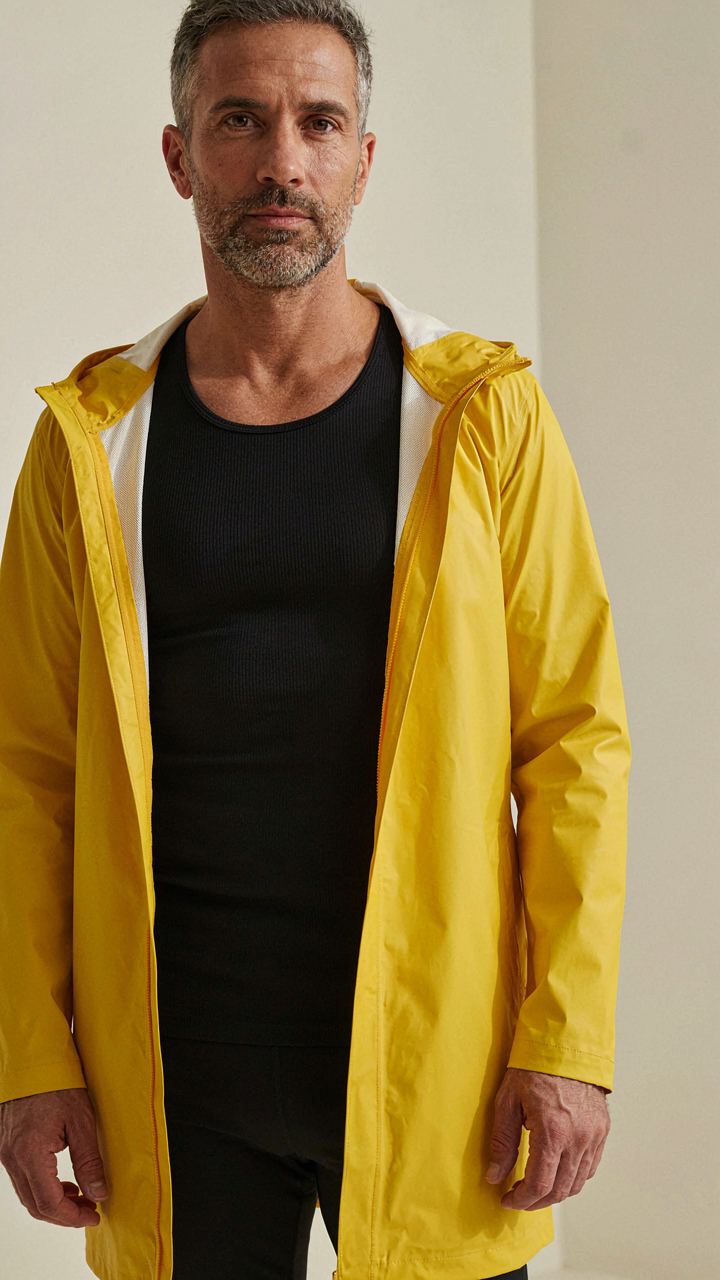
Ribbed or mesh-panel fabrics outperform smooth alternatives because the raised fibers cast shadows that trace your musculature. A single ribbed tank projects more definition than a smooth compression shirt, even at identical body weight. Glossy or semi-gloss finishes bounce light in ways that flatten certain body parts, so reserve them for areas you want to de-emphasize. Match texture to the plane of the body—vertical ribs on the chest emphasize width, while strategic mesh panels on the sides create the illusion of a narrower waist. Choose texture deliberately, not by feel.

The Compression Illusion Protocol For Fitness Photoshoot

Strategic Paneling And Body Sculpting
You want to look bigger, leaner, and more defined than you actually are. That’s the real reason you’re reading this. Compression garments work through the same principle as structural engineering: controlled pressure redistributes mass to create visual density. Horizontal paneling compresses the midsection while vertical seaming elongates the torso. Diagonal cuts across the chest create the illusion of width without adding bulk. This isn’t magic. It’s applied physics.
Paneling placement determines what the camera sees. A single vertical stripe down the center narrows the frame. Side panels create artificial definition by shadowing the waist and flank areas. Strategic mesh inserts break up solid color blocks, which makes musculature read sharper on film. The garment doesn’t change your body. It redirects how light bounces off your frame during the shoot. This is why cheap, featureless compression fails on camera while engineered pieces succeed.
Sizing For Maximum Visual Impact
The common advice here is garbage: buy your normal size. Wrong. Compression photoshoot garments operate on inverse logic from everyday wear. In cinematography, a tight frame compresses depth. In clothing, undersizing compresses volume. You size down one full size from your regular fit to maximize compression without restricting your posing. A medium instead of large creates genuine tension across the torso, which reads as definition and musculature separation on the lens.
Go too small and you lose mobility during the shoot. Go too large and compression vanishes entirely. The threshold sits at one size down, where the garment hugs without cutting circulation. Test your range of motion before the shoot. You need to move through poses without the fabric bunching or rolling. The compression holds only if the garment stays in contact with your skin through dynamic positioning. Test this before paying for a photographer.
Color Theory For Activewear Photoshoot Impact

Contrast And Silhouette Enhancement
You want to look bigger and more defined on camera because that’s how people judge fitness in a still image. Borrowed from graphic design, “figure-ground separation” means your body must contrast sharply against the background. Dark colors recede; light colors advance. A black athlete against a white wall disappears into flatness. A white or neon outfit against the same wall pops forward, making shoulders and legs read with actual dimension instead of as a blur.
Camera sensors flatten three-dimensional bodies into two dimensions. Contrast restores that lost depth. Bright colors on your body force the lens to register your shape as separate from the space behind you. This is physics, not opinion. Wear muted colors that match your background and you’ve paid for a photoshoot to look thinner and smaller. The mechanism: choose outfit colors that differ from your shooting location by at least two to three stops on the exposure scale.
Washout Hues Under Artificial Light
Most advice tells you to just “avoid pale colors” which misses the real problem. The issue isn’t the color itself; it’s that certain hues lose saturation under specific light temperatures. Fluorescent gym lighting (5000K) bleaches pastels, grays, and desaturated teals into nothing. Studio strobes (5600K) behave differently than tungsten (3200K), and phone cameras process each differently again. A dusty rose works fine in sunlight but vanishes under overhead gym lights.
Test your outfit under the actual shooting light before committing. Saturated colors hold their form across light types: true reds, cobalt blues, blacks, and jewel tones. Muted or tertiary colors need perfect conditions to read on camera. If you’re shooting in a gym or indoor space, pick colors with clear, unmistakable pigment. What reads well in natural light might not exist in the final image.
The Symmetry Principle: Asymmetry As A Strategic Advantage In Gym Clothes Photoshoot
Unbalancing Elements For Dynamic Poses
You want to look composed and in control on camera, which is exactly why symmetry kills your shots. Borrow from design theory: in visual composition, symmetry signals stasis. Asymmetry signals motion. A centered, balanced stance reads as static. The moment you break that balance—one shoulder forward, hips tilted, weight shifted to one leg—the frame contains tension. That tension reads as strength and presence, not comfort.
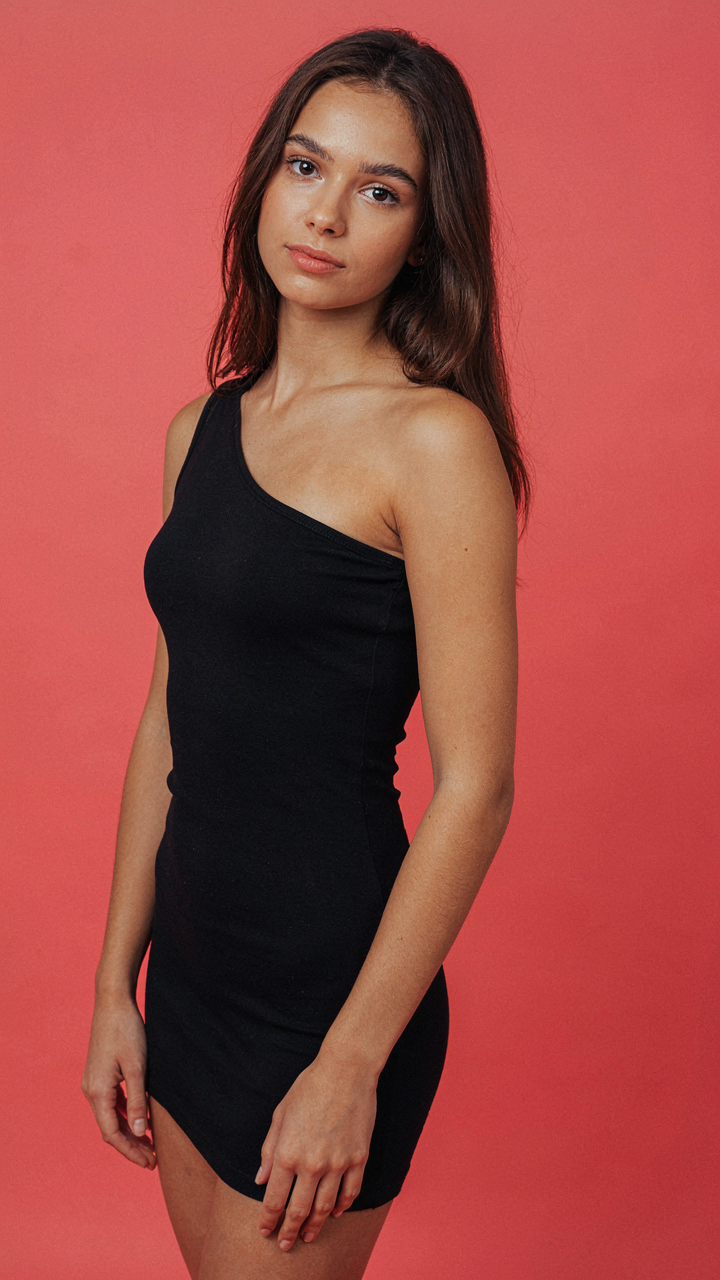
The mechanism is directional pull. When your outfit has matching elements on both sides, the eye settles. When cuts, straps, or color blocks interrupt that pattern, they create vectors. Your body follows those vectors. A single-shoulder tank top doesn’t just expose one side; it pulls the viewer’s eye down a diagonal line, which forces your pose into asymmetry naturally. The outfit does the work your posture was supposed to do.
Visual Flow Through Lines And Cuts
Forget the advice about “balancing your proportions.” That’s costume fitting language, not photography language. On camera, proportion matters far less than direction. Seaming and cut placement aren’t decoration; they’re arrows. A vertical stripe down one side of a sports bra creates a sight line. A diagonal cut across the torso creates momentum. The camera flattens everything into two dimensions, so you need geometry doing the work that depth usually does.
Place high-contrast seams or color blocks asymmetrically, and they become the frame’s primary focal points. Your body adjusts to match them. If your shirt has a bright panel on the left chest only, you’ll naturally rotate slightly into that direction. The pose becomes asymmetrical without you forcing it. Asymmetry in gym wear outfits creates poses that register as alive instead of arranged.
Accessorizing As An Extension Of Physique: The Biomimicry Model For Fitness Shoot Ideas

Straps, Seams, And Shoulder Architecture
You want accessories to make your physique look bigger. That’s the real reason you’re reading this section. The mechanism is biomimicry from architecture and product design: accessories work by echoing the load-bearing structures already present in your body. Straps, seams, and harnesses mimic the path of muscle fiber and skeletal leverage. A well-placed strap across the chest doesn’t add mass, but it creates a visual line that reinforces the pectoral and shoulder architecture you’ve already built.
Seams function as contour lines. They guide the eye along the dimensional plane of muscle. A vertical seam down the center of the chest emphasizes depth and separation. Horizontal seams across the shoulders create visual width by breaking up the space and making the trapezius-to-deltoid transition read as broader. The most common mistake is treating accessories as decoration. They’re not. They’re structural emphasis markers that either amplify or diminish what’s underneath. Choose pieces where the construction lines align with your actual muscular geography, not against it.
The Feedback Loop Between Fabric And Form
Cybernetics teaches us that small inputs create outsized outputs in systems with feedback loops. Your outfit is a feedback system: fabric tension creates visual tension that amplifies perceived muscularity. When a tank top strap sits precisely at the shoulder joint and pulls slightly inward, it creates compression that reads as fuller shoulders on camera. The tension isn’t just physical. It’s visual feedback that signals density and control.
This is why loose, unstructured pieces fail. They break the feedback loop. There’s no tension signal sent back to the camera. Fitted tank tops with strategic seam placement create a closed loop: your shoulder width inputs into the fabric, the fabric’s geometry feeds back a signal of even greater width. Accessories like armbands and wrist cuffs work the same way. They create a reference point. A thin cuff at the wrist makes the forearm appear longer and more defined by comparison. Use accessories to create tension points, not to cover space.
The Posing Outfit Symbiosis: Maximizing Athleisure Photoshoot Ideas

Fabric That Moves With Your Frame
You want to look bigger and more defined without actually being bigger or more defined. Here’s the mechanism: fabric tension creates the illusion of muscularity through strain lines. When you move into a pose, the material either clings to your shape or creates negative space. Tight compression fabric pulls across muscle groups. Looser knit stretches at stress points. The pose itself determines which fabric wins the frame.
Most people choose fabric based on how it feels, not how it reads on camera. That’s backwards. A relaxed pose in compression wear creates unflattering bunching at joints. A dynamic pose in the same fabric creates edge definition. The outfit only matters after you’ve committed to a specific body position. Choose your pose first, then outfit. Film the pose with multiple fabric weights. This reveals which material actually enhances the lines you’re creating with your body.
Dynamic Poses Reveal What Fabric Actually Does
This borrows from materials science: a fabric’s performance changes under tension and stress. Spandex blend fabrics maintain their structure under arm movement, while pure cotton collapses. A lateral twist reveal shows whether your top creates vertical lines or horizontal wrinkles. Side angles expose whether the fabric clings or gaps at the torso. Front facing angles show how the material hugs or releases around shoulders and chest. The pose is the stress test. The outfit is what you’re testing.
Stop choosing outfits that “photograph well in theory.” Wear the outfit in the actual pose you’ll shoot. Raise your arms overhead for thirty seconds. Rotate your torso. Hold a quarter squat. Watch how the fabric responds in real time. Wrinkles that appear during movement will appear in photos. Gaps that form during poses create dead space the camera reads as weakness. Your final outfit pick depends entirely on which fabric behaves the way you move, not the way you sit still.
Lighting Archetypes And Outfit Response In Gym Shoot Ideas

Hard Light And Defined Edges
You care about this because you want to look shredded without actually being shredded. Hard light—direct, unfiltered illumination from a single source—works like contrast in photography: it amplifies what’s already there. High contrast lighting exposes texture, separation, and definition. Your outfit must work with this mechanism, not against it.
Wear fitted cuts with minimal excess fabric when shooting under hard light. Tank tops, racerback sports bras, and compression fits show muscle structure because the light creates shadows between the fabric and your body. Loose or billowing materials diffuse these shadows and flatten your silhouette under hard light. The fabric itself becomes the problem, not the solution.
Soft Light And Contouring
Soft light scatters across surfaces, eliminating harsh shadows and making imperfections disappear. This is where loose or layered pieces work best. Oversized tees, open hoodies, and draped fabrics catch soft light and create dimension through shape rather than muscularity. You’re building form through volume and strategic drape, not relying on the camera to reveal what isn’t there.
Soft light is forgiving but demands intentional silhouette work. Your outfit must have architectural purpose—defined shoulders, clear waistline, visible proportions. Shapeless baggy fits merge with the background under soft light. Soft light rewards strategic layering and controlled volume over tight-fitting pieces. Choose your layers to guide the eye toward intention, not toward hiding.
Beyond Trends: Timeless Silhouettes For Activewear Photoshoot Ideas

The Cuts That Survive Camera Angles
You want to feel safe that your outfit won’t look dated in three months. Here’s the mechanism: the camera exaggerates proportion. What reads balanced in the mirror becomes distorted through a lens. High-armhole tanks, fitted leggings with no side seams, and racerback tops survive this distortion because their lines follow the body’s actual structure rather than fighting it. The fitness industry borrowed from tailoring’s core principle: silhouette beats decoration.
Minimal seaming matters more than fabric choice. A simple crew neck sports bra photographs the same way in 2024 as it did in 2015 because the form works. The reason trends die is they add visual noise—cutouts, color blocking, asymmetrical hems. These read as period markers on film. Stick with pieces where the garment disappears and the physique does the talking. This isn’t minimalism as aesthetic choice. It’s minimalism as technical requirement.
Strategic Pieces Worth The Cost
Building a photoshoot wardrobe means buying less, not more. The economics of activewear resemble equipment investment in any sport: one quality tool outlasts five cheap ones. You’re not paying for branding. You’re paying for seams that hold, fabric that doesn’t bag after five washes, and cuts engineered through actual testing rather than trend forecasting.
- Classic High-Waisted Leggings: Opaque, seamless or minimal seaming, 25+ inch inseam for stacking. Works across body types and holds color through repeated shooting and washing cycles.
- Fitted Racerback Tank: Crew neck or scoop, no straps that slip on camera. The racerback anchors your shoulders and doesn’t create weird shadows under arms during flexed poses.
- Bralette Sports Bra: Medium support, clean neckline, no excessive padding. Photographs flatter than underwire and works as layering under tanks for variety shots.
- Neutral Bike Shorts: Mid-thigh length, high-waisted, minimal branding. Functions as both standalone option and layering piece for longer shoots across multiple outfit concepts.
- Fitted Crop Top: Crew or scoop neck, hits at natural waistline. Shoots cleaner than oversized when showing midsection definition and pairs with both leggings and shorts.
These pieces anchor your library because they pair with each other and recombine endlessly. You shoot ten outfit variations from five core items. Cost per wear drops immediately when a tank works with four different bottoms across three shoot days. This is inventory efficiency, not shopping discipline.
The Psychology Of Presentation: Projecting Authority In Cute Gym Outfits

What You Wear Signals Your Intent
You want people to take you seriously in the frame. That’s the real reason you’re reading this. The mechanism is simple: outfit formality maps directly to perceived competence in fitness contexts. A structured sports bra with defined seams reads differently than a soft, unstructured one. Minimal branding reads differently than loud logos. The camera amplifies these signals. What works in person gets magnified on screen, so casual choices become careless, and intentional choices become authoritative.
The fitness industry borrowed this from corporate dress codes before stripping it down to essentials. A blazer signals authority in business. A fitted tank with high neckline and visible seams signals the same thing in fitness photography. You’re not dressing cuter. You’re dressing with specification. The details that separate “I grabbed something” from “I chose this” are: seam placement, strap architecture, waistband height, and fabric weight. Each one communicates whether you know what you’re doing.
The Details That Do The Work
Everyone says confidence matters. That’s incomplete advice. Confidence reads as relaxation on camera, which actually undermines authority in fitness shoots. What works instead is precision in small details that signal you’ve made deliberate choices. Seams aligned vertically on the torso create a stronger silhouette than curved seams. High armholes sit closer to the shoulder and read as more controlled. Thick waistbands anchor the frame. These aren’t aesthetic luxuries. They’re load-bearing design choices borrowed from functional apparel, and the camera catches them immediately.
The gap between good and forgettable fitness photoshoot outfits is texture and edge definition. Matte fabrics read sharper than glossy ones under studio and natural light. Flat seams catch light differently than rounded ones. Your outfit becomes a tool for visual communication the moment you stop thinking about how it feels and start thinking about how light behaves on its surfaces. Choose one outfit detail to make structurally intentional before every shoot. That single choice compounds across every frame.
Mastering The Frame: Outfit Integration Into The Wider Shot For Active Wear Photoshoot Ideas

The Outfit Doesn’t Exist In Isolation
You care about this because a great outfit still fails if the background kills it. The real mechanism is contrast. In visual design, contrast is what creates separation between subject and environment. Your outfit has to compete with or complement the backdrop, not merge into it. Most photographers and models ignore this until the shoot, then blame the lighting. The outfit choice should be locked in based on location first. A black sports bra works against an urban concrete wall. The same bra disappears against dark gym equipment. You pick the outfit after you know where you’re shooting.
The environment dictates your color palette and fit strategy before anything else. Busy backgrounds demand solid colors and clean lines so your physique reads clearly. Minimal backgrounds allow texture and pattern to work harder. Neon or saturated colors pop against neutral environments. Muted tones hold the frame when the setting is already visually dense. Scout the location, take sample shots in plain clothes, then reverse-engineer your outfit. This isn’t overthinking. This is making sure the image communicates what you built.
Visual Noise Kills The Message
The common advice says “just avoid clutter.” That’s incomplete. Visual hierarchy is what matters. In graphic design, hierarchy determines where the eye lands first. Your outfit creates the primary hierarchy point. Everything else on frame is secondary. Patterned backgrounds pull attention downward and sideways. Horizontal lines in the environment split the frame and weaken your silhouette. Vertical lines actually strengthen posture and definition. Choose a location where the lines either frame you or disappear into neutral space.
The outfit itself must remain the dominant object. Busy prints on both you and the background cancel each other out. Stripes on the wall plus stripes on the shirt flatten depth. The viewer doesn’t know where to focus. Solid colors on your outfit with patterned backgrounds work. Patterned outfits need clean, simple environments. Your physique competes with every visual element in frame, so eliminate the competitors first before you dress.
The Real Obstacle Isn’t The Outfit; It’s Your Ignorance Of How Optics Manipulate Perception

You can own every trending fitness photoshoot outfit and still look flat on camera. The real game is understanding that fabric, angles, and lighting do the heavy lifting, not your abs. Most people waste energy picking clothes when they should be studying how cameras lie. Pick one outfit, shoot it five different ways, and watch how ruthlessly the environment changes everything. The outfit matters less than your willingness to stop guessing and start testing what actually works in front of a lens.