

The Adaptive Wardrobe Protocol: Beyond Static Walking Outfits
Build Your Base Layer Strategy
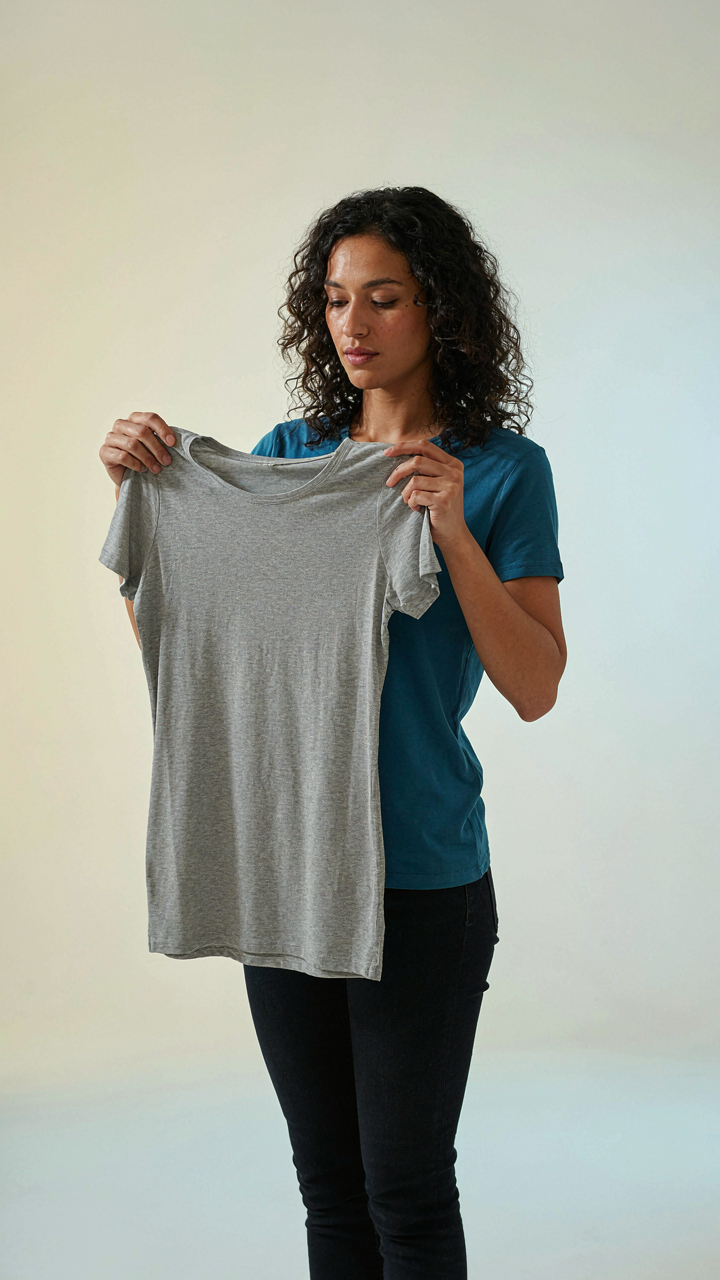
You want a walking outfit women actually wear because you’re tired of overthinking it every morning. The real mechanism here is thermal regulation—your body loses heat through convection and evaporation, and a static outfit fails both. Layering works because you control heat output by adding or removing pieces, not by guessing one garment will handle 40 degrees at dawn and 58 degrees by noon. Start with a fitted base layer closest to skin.
The second layer traps air. A fleece or lightweight sweater creates dead space where warm air sits. The outer layer blocks wind. This three-zone system means you keep one base and rotate outer pieces based on temperature and humidity, not mood. You solve the real problem: most women own ten walking outfits when they need one base with five different toppers. Your walk stays consistent. Your closet stays sane.
Prioritize Performance Fabrics Over Aesthetics

Common advice says choose what makes you feel good. That’s incomplete. Moisture-wicking beats cotton because cotton absorbs sweat and holds it against skin, dropping your core temperature and making you feel clammy for hours after you stop moving. Polyester, nylon, and merino wool pull moisture to the fabric surface where it evaporates. Breathability matters separately: tight weaves trap heat; loose weaves release it. Pick fabrics based on their physics, not their name brand.
Merino wool works in cold and heat because its fiber structure naturally regulates temperature and resists odor, meaning fewer wash cycles and longer garment life. Synthetic blends offer durability and quick dry times for humid climates. The mistake women make is buying “breathable” labels without checking fiber content or density. Your walking outfit performs only as well as its worst-performing fabric layer. Test new pieces on a short walk before committing them to your rotation.

Deconstructing “Comfortable Travel Outfit”: The False Promise Of Softness
Support Versus Restriction
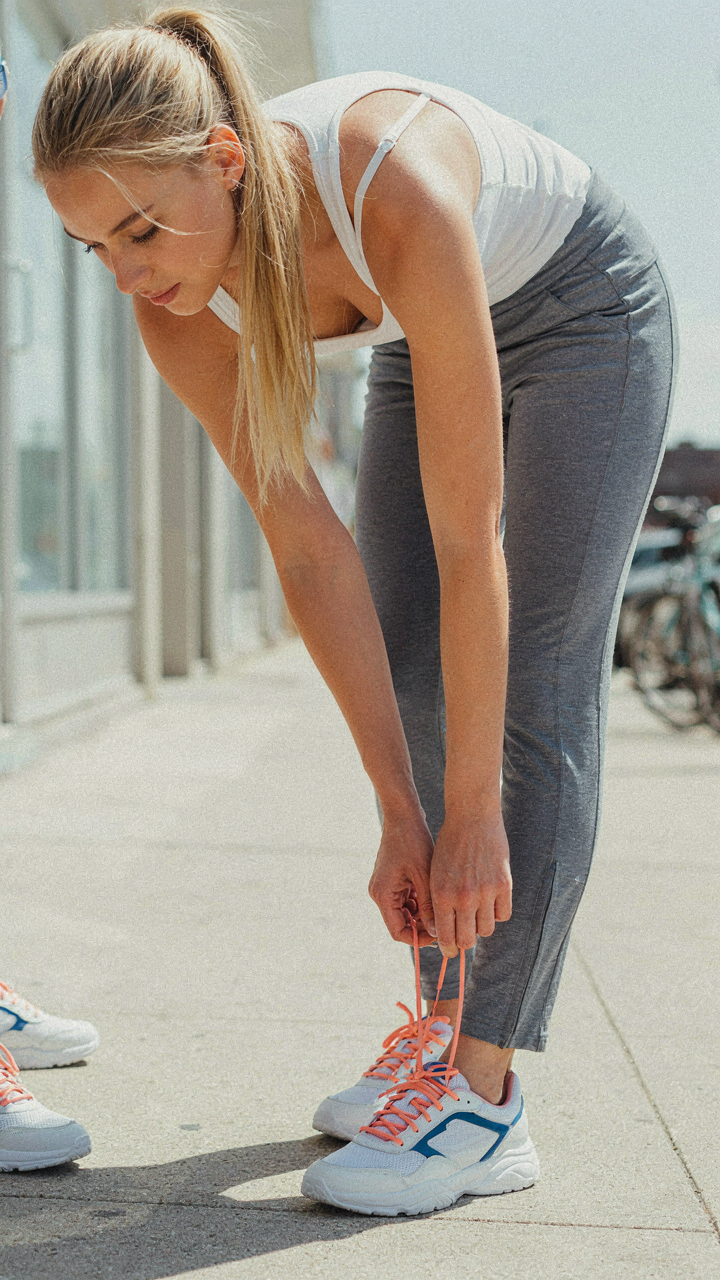
You want to believe softness equals comfort because it feels luxurious, and that’s free marketing working on you. But comfort for walking is biomechanical, not tactile. Think of it like load-bearing in architecture: a material can feel pillowy while distributing force poorly, or firm while handling stress exactly where it needs to. Soft fabrics often lack structure in high-movement zones, forcing your body to stabilize itself instead of the garment doing the work.
Walking generates repetitive micro-stress on your feet, hips, and lower back. A proper walking outfit channels this force through supportive seams, reinforced panels, and strategic compression zones. Loose or overly soft materials bunch, shift, and require constant micro-adjustments from your muscles. Your stabilizer muscles fatigue faster when the garment doesn’t stabilize first. The outfit becomes a liability you’re unconsciously fighting rather than equipment that cooperates with your stride.
The Hidden Tax Of Lounge Wear
Generic advice says wear whatever feels soft and move your body. That’s incomplete. Lounge wear trades immediate tactile pleasure for cumulative structural failure during repetitive motion. After 45 minutes of daily walking, seams start rolling, elastic loses tension, and fabric migrates away from where it needs to be. These aren’t problems you notice in the first week. They compound silently until your walk feels harder than it should.
The real cost surfaces through posture collapse and joint compensation. Lounge wear’s lack of support forces your body into inefficient patterns to stay upright. Your knees track differently. Your hips rotate further. Your shoulders hunch forward to balance. Over months, these patterns create pain that you blame on age or fitness level when the mechanism is actually garment failure. Switch to fitted walking clothes with proper panel construction and these patterns reverse.
The “Gym Outfit” Fallacy: Why Specialization Limits Your Range

When Performance Gear Becomes A Liability
You want permission to buy the right outfit so you stop second-guessing yourself. The mechanism at work here is overspecialization: the belief that clothing designed for one narrow task performs best everywhere. It doesn’t. Gym wear prioritizes moisture-wicking and compression for controlled environments with predictable variables. A daily walk doesn’t need that. You get polyester blends engineered for sweat output, tight fits that restrict movement on uneven terrain, and fabrics that fail in temperature fluctuation. The outfit becomes a constraint instead of a tool.
Athletic brands built this expectation deliberately. They segment products by activity, making you buy separate items for running, walking, training, and recovery. It’s marketing dressed as science. A daily walk requires different problem-solving than cardio. You need flexibility across temperature, terrain changes, weather shifts, and social contexts you can’t predict. Gym logic doesn’t apply. Stop treating your walk like a performance event and you’ll stop buying clothes built for one thing.
Outfit Architecture Built For Variables
Multi-use outfits apply principles from systems engineering: design for the most constraints, not the most ideal conditions. You build flexibility by choosing base layers that perform across temperature ranges, middle layers that add or subtract easily, and outer pieces that handle weather without commitment. Neutral colors and simple silhouettes let you move between contexts without changing. A quality pair of walking shoes works on pavement, slight trails, and social settings. A plain long-sleeve shirt layers under a jacket or wears alone depending on conditions.
This approach costs less than buying specialized gear for each scenario. You choose pieces that overlap function across multiple conditions rather than pieces optimized for one. Cotton-blend fabrics breathe in mild weather but don’t fail completely in cold. Structured pants move from park to coffee shop without drawing attention. Build your walking outfit around layering strategy and terrain-neutral footwear, then add one weather-specific piece that fits your climate. The outfit becomes durable because it solves real problems instead of theoretical performance metrics.
Trekking Outfits For Women: Applying Expedition Principles To Daily Walks

Materials That Survive What Your Route Throws At It
You want to feel prepared for uncertainty without admitting you’re anxious about looking unprepared. The real mechanism is material selection: fabrics either degrade under repeated stress or they don’t. Cotton breaks down faster in moisture and sun exposure than synthetics. Nylon and polyester retain structure through sweat, weather shifts, and friction from movement. This isn’t about luxury—it’s about fabric physics.
Walking outfits that last demand materials engineered for environmental assault. Merino wool manages temperature swings and resists odor through natural antimicrobial properties, not through marketing. Synthetic blends with at least 30 percent nylon in leggings or pants prevent pilling and maintain fit after dozens of washes. Choose bottoms with reinforced seams at stress points: inner thigh, waistband, crotch. These details determine if your outfit survives 200 walks or falls apart after 50.
Your Route Demands A Specific Loadout
Military planning uses mission-specific readiness—equipping for the exact terrain and conditions you’ll face, not for theoretical scenarios. Map this onto walking outfit women by treating your daily route as a defined mission with known variables: distance, elevation, surface type, weather patterns, and time of day.
A flat urban walk on concrete requires different gear than hilly park trails. City walks need supportive shoes with grip for varied surfaces and clothing that works socially in public space. Trail walks need moisture-wicking layers because exertion matters more and you’re isolated from crowds. Start by writing down your actual route: distance in miles, terrain type, average weather for the season, and whether you pass through crowded areas or remote sections. Then select shoes, pants, and layers that match those conditions, not a generic “walking outfit.” Swapping shoes between routes takes five minutes and extends the life of each pair by half.
Chic Travel Outfit: The Semiotics Of Preparedness, Not Just Style

What Your Walking Outfit Actually Signals
You want people to know you have your life together without saying a word. That’s the real game here. Your walking outfit communicates competence through visual cues that operate like semiotics in fashion—clothing functions as a sign language where every choice broadcasts a specific message about your capability and intentionality. Worn-out sneakers signal neglect. Fitted layers signal control. A functional bag worn correctly signals someone who moves with purpose, not panic.
The mechanism is biological and social at once. People read fabric, fit, and carry patterns in milliseconds and form conclusions about your reliability before you speak. A walking outfit that looks deliberately chosen and proportioned reads as “someone who plans ahead.” Someone wearing mismatched pieces and ill-fitting layers reads as reactive. Your outfit doesn’t need to be expensive—it needs to appear as if you made an intentional decision about it.
Substance Over Seasonal Noise
The common advice treats walking outfits like trends to chase. Wrong. A functional walking outfit transcends seasons because it solves a problem that doesn’t change: your body needs support, mobility, and protection from the elements while you move. Natural fibers like cotton, linen, and merino wool have worked for decades because they regulate temperature and breathe—not because they’re trendy. Synthetic blends engineered for performance serve the same function now. The aesthetic stays consistent; only the weight of the fabric adjusts.
Start with these three non-negotiables: neutral-colored base layers that don’t show wear, pants or leggings with actual pocket depth (not fake pockets), and a single versatile outer layer in a color you already own. Add supportive shoes that fit your foot shape, not the silhouette magazines push. Build outward from there only when you’ve covered function. This removes decision fatigue and ensures every walk looks intentional because every piece serves a clear purpose.
The A Line Cocktail Dress Principle: Why Context Trumps All

When Formal Wear Becomes A Walking Liability
You want permission to wear what you own without looking out of place. That’s the real question here. The mistake most women make is treating a walking outfit as a scaled-down version of dressy clothing. An A-line cocktail dress works at an event because the context absorbs formality. On a daily walk, that same dress signals you’re either lost or performing. Walking outfit utility has one job: move with your body while fitting the actual environment you’re in, not the imaginary one where you’re always on display.
Formal silhouettes like A-line cuts restrict leg movement and rely on stillness for their visual impact. When you walk, the dress works against your stride. The fabric bunches differently, your gait shortens, and you become aware of the garment instead of your surroundings. Walking demands clothes that disappear into function. This is why athletic-adjacent pieces dominate walking outfits: they’re engineered for movement first. Your daily walk outfit should be more similar to what you wore in high school PE than to what hangs in your evening section.
The Niche Principle: Outfit Matching Environment
Ecology teaches us that organisms thrive in specific niches. Your walking outfit is an organism. A business casual neighborhood requires different visual signals than a hiking trail or urban downtown. The common advice says “just wear comfortable clothes,” which is incomplete. You need to match the unwritten dress code of your specific walking context. This isn’t about conforming. It’s about not creating friction between your appearance and where you are. When the fit is right, nobody notices you. When it’s wrong, you’re the variable that doesn’t belong.
Map your regular walking routes by their actual social density and formality level. A suburban neighborhood walk demands different clothing than a downtown corridor where people are working. A park path needs different gear than a shopping district. The mechanism works like this: observe what other people wear in that space without overthinking it. Then choose pieces that sit at roughly the same formality level. Not because you need permission, but because mismatched contexts create cognitive load you don’t need. You walk to clear your head, not to manage social friction. Wear what the environment wears.
Accessory Amplification: Leveraging Tools, Not Just Adornments

The Foundation Below Your Feet
You want shoes that signal you take this seriously. Here’s what actually matters: shoes are a load-bearing system, not a fashion choice. Biomechanics demands shock absorption at heel strike, arch support during midstance, and forefoot flexibility at toe-off. Walking puts repetitive force through your feet for miles. The wrong sole compounds this into joint pain by mile three.
- Cushioning in heel and forefoot: Absorbs impact from repetitive ground contact. Look for EVA foam or gel inserts that compress without collapsing after 50 miles of use.
- Arch support structure: Prevents overpronation or underpronation that shifts load sideways through ankles and knees. Insoles with medial posts address this directly.
- Grip and traction: Rubber outsoles with defined treads maintain stability on wet or uneven surfaces. Slipping mid-stride destabilizes your entire kinetic chain.
- Breathable uppers: Mesh or knit materials allow moisture escape. Trapped sweat creates friction points that become blisters by mile two.
- Flexible sole: The shoe should bend at the ball of your foot, not resist natural foot articulation. Stiff soles force your calf to work harder than necessary.
Replace walking shoes every 300 to 500 miles of use. The cushioning compresses and loses its shock-absorbing properties over time, even if the shoe looks fine. At that point you’re walking on compressed foam, not protection. Track mileage or replace annually if you walk three to four times weekly.
What You Actually Carry Matters
Most women overpack or underpack with zero logic. Carrying capacity isn’t about how much stuff fits in a bag. It’s about weight distribution and access speed. A heavy unbalanced load shifts your center of gravity and forces compensation through your lower back. You need items accessible without stopping, and weight centered close to your body.
- Water bottle or hydration pack: Dehydration impairs cognition and physical performance within 15 minutes of deficit. Carry one liter minimum for walks over 45 minutes.
- Phone with identification: Enables emergency contact and verification if something happens. Keep it accessible, not buried at the bottom of a bag.
- Weather protection layer: A light jacket or rain shell weighs ounces but prevents hypothermia. Store it compactly in a crossbody bag, not a full backpack.
- Reflective or visible gear: Bright colors or reflective strips make you visible to vehicles in low-light conditions. This is a safety mechanism, not optional.
- Keys and minimal cash: Separate from your phone. Clip keys to a belt loop or inner pocket to prevent loss if you fall.
Use a crossbody bag or fanny pack to keep weight symmetrical and close to your torso. Shoulder bags create uneven load distribution and cause neck strain. A properly positioned crossbody pack sits at your hip, centered on your midline. You can access essentials in under five seconds without removing it.
Beyond Trends: Cultivating A Minimalist Walking Outfit System
Quality Over Quantity Wins Every Time
You want permission to buy less and feel like you’re still winning. That’s the real ask. Here’s the mechanism: a walking outfit system works because constraint forces intentionality. You stop buying pieces that almost work. Cotton blends that pill after three months. Shoes that promise support but deliver blisters. When you commit to fewer items, each one must earn its place through repeated wear and zero compromise on fit or durability.
Natural fabrics like merino wool and dense cotton withstand regular washing and movement without degrading. A single quality pair of walking shoes costs more upfront but outlasts five cheap pairs by years. The math is simple: one fifty dollar item worn two hundred times beats five ten dollar items worn twenty times each. Build your system around items that perform identically in week one and week fifty.
The Friction Of Too Many Choices
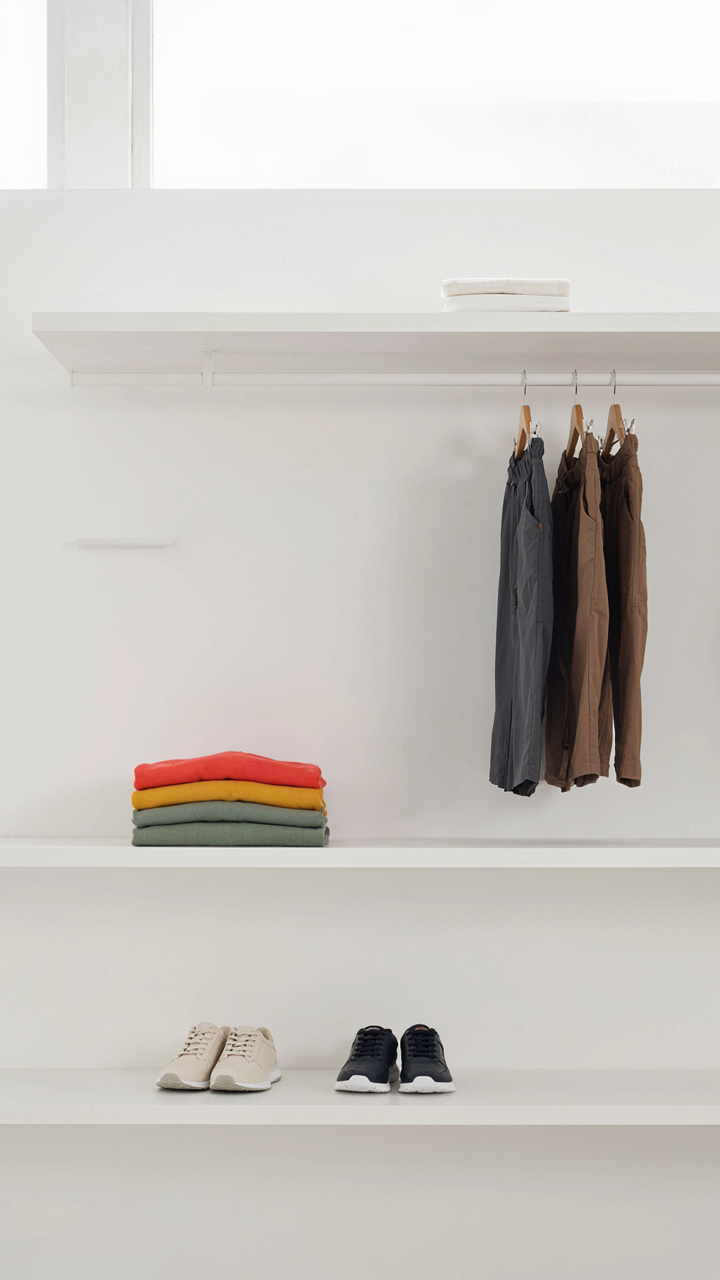
Decision fatigue is an economics term describing how each choice depletes your mental resources for the next one. Apply it to your morning routine: more walking outfit options mean more friction before you leave the door. Most women resolve this by rotating five to seven core pieces instead of twenty scattered across drawers and closets. The walking outfit women actually stick with is the one that requires zero deliberation.
Limit your palette to three colors that work together. Keep shoes to two pairs: one for everyday walks and one for weather. Tops rotate between two or three styles in complementary fabrics. This removes the paralysis. Your body knows what works. Your schedule doesn’t change. Your walking outfit picks itself. The moment your closet stops requiring decisions is the moment you actually walk consistently.
The Real Obstacle Isn’t Your Wardrobe; It’s Your Resistance To Seeing Every Walk As A Micro-expedition

Most women treat walks like afterthoughts. You throw on whatever and move. But the moment you decide your walking outfit women wear matters, you shift your entire relationship with the act itself. You stop moving to burn calories. You start moving because you showed up intentionally. Pick one piece today—real shoes, a color that hits different, anything that signals you’re not just going through motions. Your outfit doesn’t make the walk. Your commitment to dressing like it counts does.