

The Invisible Rider Protocol: Blending Function With Form
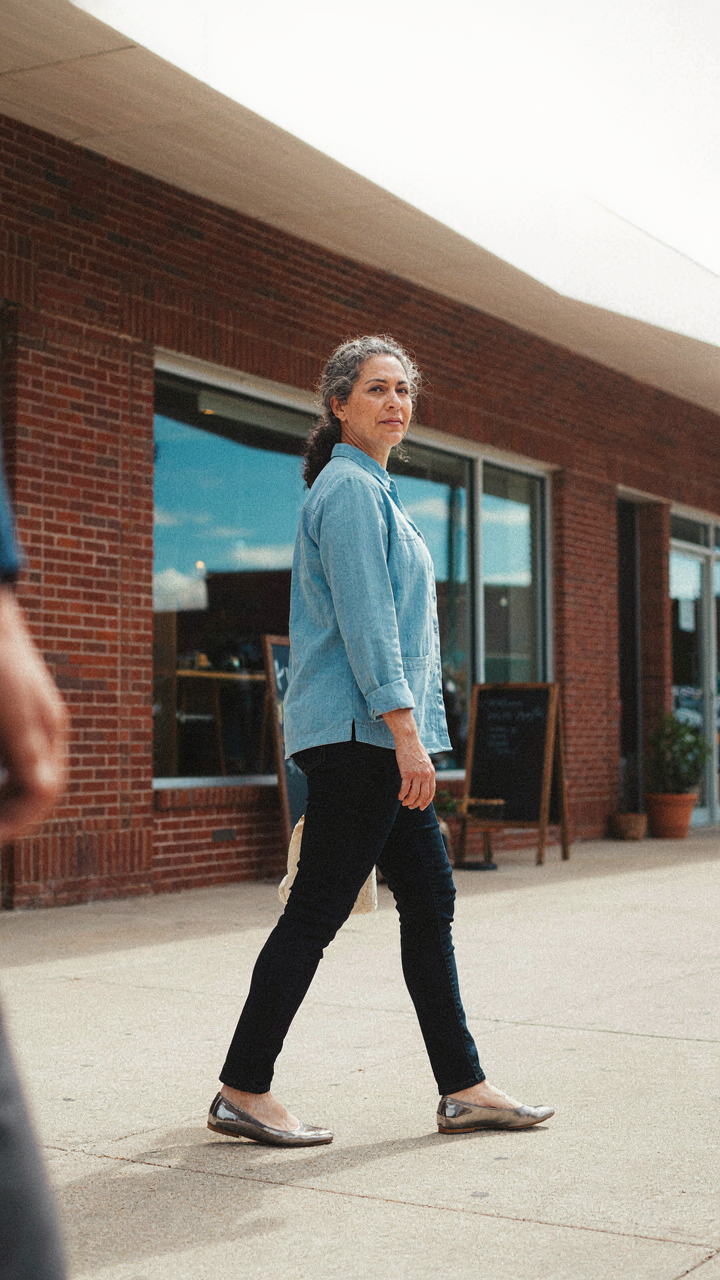
Don’t Broadcast Your Identity
You’re worried people will judge you for looking like you don’t belong on a bike. The mechanism at play here is signal design: in information theory, a signal is either noise or data depending on context. Most cycling outfits scream “I’m a cyclist” so loudly that they become noise to the urban environment. You stand out as a category, not a person.
The tactical error is treating your outfit as a declaration. Wear kit that reads as regular clothes first, cycling function second. Dark jeans with a structured fit work. A simple long-sleeve shirt in a solid color works. Flat shoes with grip work. This approach lets you move through the city as a commuter, not a cyclist. The paradox: you’re safer when you’re invisible to pattern recognition.
Integrate Safety Without The Costume

The standard advice here is backwards. Most guidance says add visibility first, comfort second. Reality is different: visibility works through contrast and placement, not volume. A small reflective element on your wrist or ankle works better than a neon vest because it moves. Motion catches attention faster than bright color alone. Your arm moving through space reads as intentional motion to car drivers. A static vest just reads as a static object.
Integrate safety through placement and material choice rather than visual dominance. Wear fabrics with subtle reflective threading or trim on cuffs and hems. Choose pants with a structured waistband that won’t slip during rides. Pair them with shoes that have a small reflective heel tab or toe cap. The outfit functions as kit without announcing it. You move through the city as yourself, not as a role.

Beyond The Chamois: Real World Comfort For Bike Outfits Women

Fabric Choices For Urban Riding
You think the problem is the saddle. It’s not. You want permission to spend money on expensive gear when the real bottleneck is fabric that breathes wrong and traps sweat against your skin for hours. The mechanism is simple: synthetic blends engineered for moisture-wicking actually move sweat away from your body instead of holding it. Merino wool does this naturally through its scale structure. Cotton does the opposite, which is why traditional casual clothes fail on the bike within twenty minutes.
Nylon and polyester blends dominate cycling apparel because they dry fast and resist friction damage. Look for four-way stretch fabrics in your base layers and shorts. They expand in all directions, which means they conform to your actual movement instead of fighting it. Avoid anything marketed as “breathable” that’s actually just thin. Thin is not breathable. Thickness with the right fiber content is what creates air channels that pull moisture away from skin.
Layering That Actually Works
Temperature control in urban cycling uses the principle of insulation layers from mountaineering, where the goal is trapping dead air without trapping moisture. Your first layer should pull sweat away. Your second layer should trap warmth. Your third layer should block wind and shed water. Most women’s cycling guides skip this structure entirely and suggest wearing one thick jacket, which overheats you the moment you exert effort.
Start with a fitted base layer in merino or synthetic blend. Add a mid-layer gilet or long-sleeve jersey with stretch panels at the sides and underarms. Top with a windproof shell that fits snug enough to not flutter but loose enough to layer underneath. Test your setup on a ten-minute ride at moderate pace. If you’re sweating under your arms after five minutes, your layers are too insulating. Adjust by removing the mid-layer or switching to a thinner base.
The “Adapt & Overcome” Cycling Women Outfit Matrix

Outfit Combinations For Every Urban Scenario
You’re worried that showing up sweaty kills your credibility. The real mechanism is this: urban cycling outfits need to solve two opposing problems at once—managing heat and friction during the ride, then looking intentional when you arrive. This isn’t about fashion. It’s about resource allocation. Your clothing does double duty or it fails. The math is simple: one outfit that works for both states beats two outfits that work for one.
Cotton-blend cycling jerseys pair with structured shorts or mini skirts because they manage moisture while the bottom half signals control. A linen button-up over a fitted base layer works for longer commutes where arrival appearance matters more than peak performance. Breathable athletic leggings under casual dresses give you the mobility for pedaling without the visual commitment to “cyclist” as an identity. Denim works if it’s stretch-blend and fitted at the waist and thigh—traditional denim catches the chain and restricts knee bend. Swap out your top at arrival if the bottom half already looks composed.
Quick Change Sequences For Destination Transitions
Most commute-wear advice assumes you have a shower and locker room. You don’t. The real constraint is managing visible sweat and smell without infrastructure. This is a logistics problem borrowed from military deployment: minimize what you carry, maximize what you can refresh on-site. A microfiber towel, deodorant stick, and a second top solve this better than any outfit choice alone.
Your bottom half should require zero changes if possible. Wear the outfit you’d wear to your destination. Cycle in your work pants or your meeting skirt if they’re stretch-blend or have side vents. Change your top only. A slim athletic tank under a blazer or button-up means you peel off one layer, wipe down with the microfiber, apply deodorant, and slip on your top piece in under three minutes. This works because you’re not trying to transform into a different person—you’re just removing the evidence of effort.
Deconstructing The Female Cyclist Outfit: Practicality Over Pretense

Shoes That Actually Work
You want people to know you’re serious about cycling without looking like you’re auditioning for a lycra catalog. Here’s the mechanism: shoes are power transfer hardware. Borrow from biomechanics—your foot is a lever, and a rigid sole amplifies force from your leg into the pedal. Soft-soled sneakers compress under load, wasting energy. Cycling shoes have stiff soles that concentrate pressure on the pedal spindle, not spread it across your foot. This matters on city rides where you’re accelerating and stopping repeatedly.
Flat pedal shoes work for casual city cycling because they prioritize ground contact when you dismount. Look for shoes with recessed tread and a mildly stiff midsole—not as rigid as road shoes, but stiffer than running shoes. Brands like Giro, Specialized, and Shimano make women-specific flat pedal shoes with narrower heels and toe boxes. The key: wear shoes you wouldn’t feel stupid walking into a coffee shop in, but that don’t crumble under pedal pressure. Check the midsole firmness by pressing your thumb into the arch while the shoe sits empty on a table.
Hair Management Meets Helmet Fit
The real problem isn’t vanity, it’s that a loose helmet isn’t a helmet. Tie-related safety is pure physics: the retention system must contact your head consistently. Long or thick hair creates compression gaps between your scalp and the helmet’s interior, reducing impact absorption. The foam inside a helmet works by collapsing on impact, and it only works if it contacts your skull directly.
Most women wear helmets too loosely because they’re trying to avoid flattening their hair. This defeats the helmet entirely. Braid or bun your hair before riding, then size the helmet to your actual head, not your hair. Women-specific helmets have slightly smaller shell volumes and lower-profile retention systems—not because women’s heads are smaller, but because the average ponytail or bun adds real volume. Fit the helmet so the front rim sits one to two finger-widths above your eyebrows and the back sits low on your neck. The straps should form a V-shape below your ears when fastened.
The “Everyday Carry” For Biking Outfit Women

What Actually Fits On Your Frame
You want to believe one small bag solves everything because it feels clean and capable. The real constraint is physics: weight distribution on a bike changes how the frame handles, and women’s frames have different geometry than men’s. Cargo placement matters more than cargo volume. A front basket shifts weight forward and kills responsiveness. A seat bag or frame bag keeps mass centered and low, maintaining handling integrity through turns and stops.
Most cycling advice skips this because it sounds technical. It’s not. Where you carry things determines whether your bike feels planted or squirrelly. Test this yourself: ride with a loaded backpack, then switch to a frame bag. The difference is immediate. Start with a small frame bag that mounts under the top tube or a compact seat bag. This keeps your outfit silhouette clean and your bike behavior predictable during city navigation.
Pockets, Zippers, And Access Speed
The common move is wearing cargo pants or a baggy jacket to hold stuff. Wrong approach. Loose fabric catches on the frame, creates wind drag on descents, and forces you to dismount to retrieve anything. You need fixed storage designed for motion, not clothing designed for standing still. A small crossbody bag worn tight against your torso stays stable during acceleration and braking. A jersey with rear pockets works only for lightweight items like a phone or keys, not daily commute load.
Accessibility is about seconds, not inches. If you need to dig through layers to reach your lock, you’ve already lost momentum and attention to traffic. Use a seat bag with a rigid frame so the opening stays accessible without tilting or shifting. Mount a small handlebar bag for items you grab while moving, like sunglasses or a snack. The mechanism is simple: faster access means less standing around vulnerable on the street.
The “Strategic Silhouette”: Mastering Your Cute Cycling Outfit

Contrast And Placement Win Over Color
You want to be seen without looking like you’re trying. That’s the real tension here. Military strategists use the principle of contrast ratios to break visual camouflage, and urban cycling demands the same mechanic. A bright jersey against gray buildings registers faster than any single color alone. Your brain processes outline and edge before it processes hue.
Placement matters more than shade choice. Reflective strips on moving limbs catch attention faster than reflective panels on static torsos because motion and contrast compound. Wear bright on your upper body where it stays visible against varied urban backdrops. Dark pants reduce glare and mental fatigue while keeping your lower half grounded visually. This isn’t about matching. It’s about signal strength.
Movement And Texture Break The Pattern
Static outfits blur into the environment. Dynamic fabrics that shift under light behave differently than matte surfaces as you move through intersections. Drivers don’t scan for stationary objects well, but they lock onto things that change. Matte finishes hide you. Subtle sheen or texture catches inconsistent light as you pedal, creating micro-flashes of visibility.
Fit directly controls this effect. Tight fabric sits still. Loose fabric moves independently of your body and creates additional visual noise that registers as “something’s moving there.” This doesn’t mean baggy or sloppy. It means deliberate slack in the right zones—sleeves that catch wind, enough room in the jersey for fabric to flex. The mechanism is biological: your visual cortex prioritizes movement over stillness. Build your outfit around that fact, not around what photos look good.
Gravel Cycling Outfit Principles Applied To Urban Terrain

Build For Abrasion, Not Just Aesthetics
You want to look intentional on city streets without looking like you’re trying too hard. That’s the real friction here. Gravel cycling gear teaches a mechanical principle: fabric durability comes from fiber density and weave structure, not from marketing claims. Cotton dissolves under repeated friction. Synthetic blends with tight weaves survive.
- Nylon or polyester base layers: Tighter molecular structure resists pilling and tearing from messenger bag straps, backpacks, and urban friction points that road-specific gear ignores.
- Reinforced seams at stress zones: Double or triple stitching at shoulders, underarms, and hip areas handles repetitive motion without unraveling after two months.
- Gusseted inseams: Extra fabric under the thigh prevents blowouts where chamois takes repeated pressure from saddle and city stops.
- Four-way stretch fabric: Allows full range of motion in traffic maneuvers while maintaining shape through dozens of wash cycles without bagging out.
- DWR treated exterior: Durable Water Repellent coating survives urban grime and light rain without needing constant reapplication like untreated synthetic.
City riding breaks gear differently than gravel does. You’re stopping, starting, leaning sideways, reaching for bags. Fabric must tolerate compression without degrading. Choose pieces engineered for repeated mechanical stress, not pieces that sound premium in product descriptions.
Armor Against Weather Without Overdressing
The common advice pretends weather is binary: rain or no rain. It’s not. Urban riding puts you in constant micro-climates. You move from shade to direct sun, stop for lights, accelerate hard, then decelerate. Your body temperature swings. Gravel riders learned this first: you can’t overdress for urban commutes because you’ll overheat during effort and freeze during stops.
Layering in city conditions works like thermodynamic regulation, not insulation alone. Your base layer wicks sweat outward. Your mid layer traps moving air without trapping static humidity. Your outer shell deflects wind and precipitation without sealing moisture inside. Start with synthetic base layers that dry in hours, not days. Add a lightweight gilet or jersey with wind-blocking panels only on the front torso. Top with a packable rain shell you can stash in a frame bag or backpack when the sun breaks through. The mechanism here is reversibility: you need to strip layers mid-ride without creating bulk or dead weight.
The “Unflappable Rider” System: Staying Composed And Dry

Water Resistant Fabrics And Construction
You want to look put-together on the bike without showing up soaked through like you swam there. The mechanism is simple: water resistance in fabrics works through fiber selection and weave density, not magic coatings that wash out. Most cycling apparel brands use nylon or polyester blends because these hydrophobic fibers reject water at the molecular level, unlike cotton which absorbs it. The weave matters more than the fiber alone—a tight, compact weave slows water penetration. Brands like Rapha and Pas Normal Studios use this principle across their city collections.
Construction details determine real-world performance. Seams are where water enters, so brands use taped seams or bonded stitching to block this path. Jacket hems and cuff design matter too—water rolls off a properly cut hem but pools in a poorly drafted one. You don’t need DWR (Durable Water Repellent) coating to stay dry; smart construction does most of the work. Check for reinforced seams on the shoulders and back where rain actually lands when you’re in the drops.
Ventilation And Fabric Moisture Movement
Sweat management relies on the physics of vapor transmission, not just “breathable” marketing speak. A fabric’s ability to move moisture vapor away from your skin depends on the humidity gradient between your body and the air—higher inside temperature and humidity drive vapor out. This is why tight, high-denier fabrics fail during city riding even if they’re technically breathable. Mesh panels and strategic cutouts work because they increase surface area and air circulation, allowing that gradient to work faster. Polyester mesh with a tight knit moves sweat vapor efficiently while still providing some weather resistance.
The real play is layering based on effort level, not just fabric choice. A long-sleeve base with mesh back panels handles moderate city pace. Sprint intervals need the panels exposed or you’ll overheat. Shorts matter too—high-quality cycling shorts use gusseted chamois with breathable side panels to prevent sweat pooling. Your outfit fails when you treat every ride the same. Adjust coverage based on pace and distance, and sweat stops being a management problem.
Accessorizing For Advantage, Not Distraction
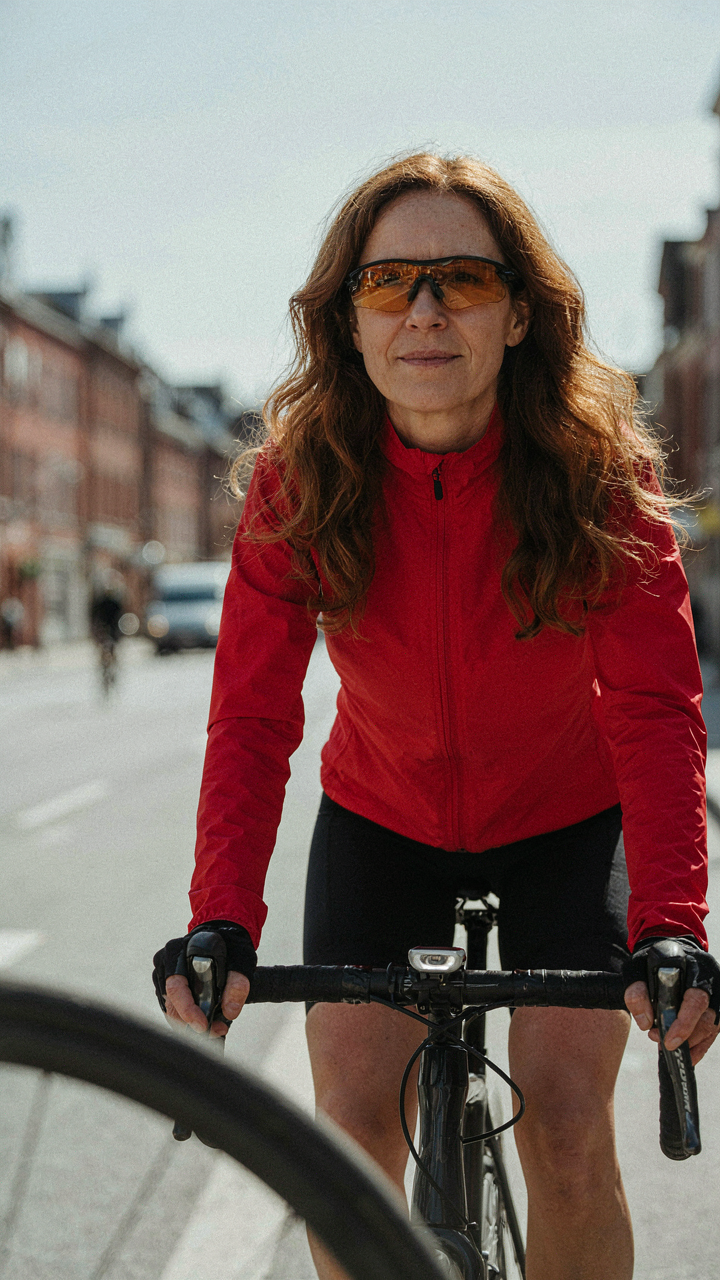
The Gear That Actually Protects You
You want accessories that signal competence without screaming you spent three hours curating your look. The mechanism is simple: gloves, eyewear, and lights solve problems your body cannot. Gloves prevent nerve damage from road vibration and protect your palms in a fall. Cycling glasses shield your eyes from wind, UV exposure, and debris kicked up by traffic. These aren’t optional styling choices. They’re damage control disguised as accessories.
Glove choice depends on season and ride length. Summer mesh gloves reduce heat while keeping grip. Winter gloves insulate without restricting brake lever access. Eyewear serves dual duty: prescription or non-prescription lenses both work, but lens tint matters. Amber or rose lenses enhance contrast on overcast days. Darker lenses reduce glare in bright conditions. A headlight and rear light are non-negotiable for city riding, regardless of time of day. They make you visible and give you sight lines into shadows where cars hide.
What Actually Slows You Down
The common advice pretends every accessory deserves real estate on your body. Wrong. Load testing in physics reveals that added mass increases the energy required to maintain speed and acceleration. This applies directly: every unnecessary item creates drag or weight penalty that compounds over distance. Avoid wrist bands, ankle cuffs, excessive pockets, and decorative elements that serve zero function. A backpack with poor weight distribution will destroy your lower back and throw off your balance on turns.
Skip the trend of over-accessorized cycling outfits. Most accessories create problems they claim to solve.
- Handlebar Bags: Add weight to the front wheel, affecting steering precision and tire wear. Use only if you genuinely need immediate access to items during your ride.
- Leg Warmers In Mild Weather: Trap heat and sweat, forcing your body to work harder to regulate temperature. Layer instead, removing what you don’t need.
- Reflective Vests Over Fitted Clothing: Bunch and shift with movement, creating friction points and chafing. Reflective tape on your existing outfit works better.
- Phone Armbands: Bounce with cadence, distract your attention, and create imbalance if you check them mid-ride. Use a jersey pocket or secure bag instead.
- Dangling Accessories: Keys, ID holders, and pouches create wind noise and throw off weight distribution. Consolidate everything into one pocket or secure bag.
Strip your accessory list down to what prevents injury or increases visibility. Every item should earn its place through function, not aesthetics. Test your setup on a short ride before committing to it on longer routes. If you notice it shifting, bouncing, or catching your attention, remove it.
The Real Obstacle Isn’t Your Wardrobe; It’s Your Reliance On Conventional Thinking

You’ve been waiting for permission to look good on a bike. Stop. The outfit industry trained you to buy more stuff instead of remix what you own. Go to your closet right now and pull three pieces you already have. Combine them in a way that feels wrong. Wear it tomorrow. You’ll discover that confidence beats budget every time, and the only trend worth following is the one you create yourself.