

Beyond The Hype: What “Minimalist Dress” Really Means

Function Over Identity Signal
You want minimalist dress to solve a status problem you won’t name. Here’s what actually happens: minimalist dress is a constraint system, not a look. Economics uses the term “scarcity” to describe how limited options create value. In clothing, scarcity means you own fewer pieces, so each piece works harder. You’re not buying a minimalist wardrobe to look thoughtful. You’re building one because repetition across outfits forces you to solve for versatility first, aesthetics second.
Most people confuse minimalist dress with “neutral colors and clean lines.” Wrong. A minimalist approach means every piece functions across multiple contexts without visual friction. A black turtleneck works because it layers, it pairs with anything, it reads as intentional. The minimalism isn’t the color or the cut. It’s the decision rule: does this garment solve more problems than it creates?
The Real Machinery Behind Trend Chasing

The fashion industry profits from replacement cycles. You buy a trend, trend dies, you feel behind, you buy again. This loop only works if you believe next season’s offering solves last season’s inadequacy. Minimalist dress breaks the cycle mechanically, which is why fashion media rarely frames it honestly. When you own fewer pieces and they actually work together, you stop shopping for emotional resolution.
The hidden cost of trend-driven consumption isn’t the money spent. It’s the cognitive load. Every purchase decision carries an implicit question: is this current enough? Minimalist dress removes that question by design. You evaluate pieces on durability, fit, and utility instead. Once you adopt this framework, trend-driven consumption becomes visible for what it is: a system designed to keep you dissatisfied.

The Core Four: Essential Minimalist Dress Silhouettes

Straight Cut Dress
You want this section to tell you that one shape solves everything so you don’t have to think anymore. The mechanism is different: straight cuts work because they treat the body as a variable, not the dress as a solution. This is geometry applied to clothing. The straight silhouette maintains consistent width from shoulder to hem, which means fabric hangs the same way on different body types. No gathering, no taper, no built-in assumptions about proportions. The dress disappears into function instead of demanding the body fit it.
Straight cut dresses anchor a minimalist wardrobe because they pair with everything and require zero styling decisions. Wear one with tailored trousers and a blazer Monday. Swap the blazer for a linen shirt and sandals Wednesday. Layer it under a sweater or wear it alone. The silhouette doesn’t fight layering, doesn’t create bulk, and doesn’t telegraph body type to strangers. That neutrality is the entire point. Buy one in a neutral base color, one in a mid-tone, and you’ve covered seasonal transitions without owning a second dress.
A Line And Shift Dresses
Shift dresses trade precision for strategic comfort, and most advice on this gets it wrong. People call them “flattering” when the real mechanism is simpler: they distribute volume evenly, which removes visual noise from the torso. A shift silhouette widens slightly from the shoulder, creating a gentle A shape or staying boxy depending on the cut. Shift dresses specifically hang straight from the underarm, skipping the waist entirely. This works year-round because it adapts to layering without bunching. Under a coat, the fabric doesn’t compress. Over a slip, it moves with the body instead of against it.
Choose shift or A-line based on layering intent. If you layer constantly, shift works better because it maintains its shape under structure. If you want one dress to work solo or with minimal layers, A-line offers enough definition to read as intentional without requiring precise fit. Both silhouettes handle fabric weight shifts between seasons. A linen shift breathes in summer. The same cut in mid-weight cotton works spring and fall. In winter, layer it over a fitted base and add a structured outer layer. The dress never fights what you put underneath it.
Fabric Intelligence: Your Year Round Armor

Natural Fibers Beat Synthetics Over Time
You want to feel premium without paying premium prices every season. That’s the real pull here, and fabric choice is where that math actually works. Natural fibers win on longevity because they’re designed by evolution, not petroleum engineers, to regulate temperature and shed degradation slowly. Cotton, linen, and wool don’t pill aggressively, don’t trap body heat in humid conditions, and don’t break down from repeated washing the way most synthetics do.
The cost-per-wear calculation flips fast once you factor in replacement cycles. A wool sweater worn two years outlasts three synthetic alternatives rotated through the same period. Natural fibers breathe, meaning they work across seasons without requiring a wardrobe swap. Your minimalist closet shrinks further when each piece extends its useful life by 18 to 36 months. Buy natural fibers in neutral tones and the math compounds in your favor.
Layering Unlocks Year Round Density
Thermodynamics governs layering, and the mechanism is dead simple: trapped air between fabric layers insulates; strategic removal sheds heat. You don’t need different clothes for summer and winter. You need the right stacking strategy. A merino wool base layer, linen overshirt, and lightweight canvas jacket move you from fall through spring with zero redundancy. Summer strips down to the base layer and overshirt. Winter adds the jacket. One wardrobe, three seasons.
Most people layer wrong because they chase thickness instead of air gaps. That bloats your closet and defeats minimalism. Quality matters here more than quantity because you’re wearing these pieces constantly. A tight weave in your base layer traps warmth. Loose weaves breathe in heat. Your protocol: start with a fitted merino base, add a looser linen or cotton mid-layer, then deploy a structured outer shell only when temperature demands it. Rotate these three pieces and you’ve eliminated seasonal closet anxiety.
The Capsule Conundrum: A Systems Thinking Approach

When Your Closet Stops Listening
You want a wardrobe that works so you stop thinking about clothes. That’s the real fear underneath this: wasted mental energy, wasted money, wasted time standing in front of a mirror. Cybernetics, the study of feedback loops in complex systems, reveals why most capsules fail. They treat clothes as static inventory instead of a living feedback mechanism. You buy pieces in isolation, never testing whether they actually communicate with each other in real conditions.
The mechanism is simple: a capsule only works when each piece generates feedback that shapes the next purchase. You wear the neutral trousers, notice the shirt you paired them with pulls the fit wrong, and that observation becomes decision data. Most people skip this step entirely. They shop based on inspiration or trend, then wonder why nothing works together. The capsule demands obsessive testing before committing to anything new.
The Actual Leverage Points
High-leverage items aren’t the ones that look best alone. They’re the ones that make the most outfit combinations possible with the fewest pieces. A cream linen shirt generates more combinations than a patterned blouse because it pairs forward with everything else in rotation. But here’s what nobody says plainly: most people overweight color coordination and underweight fabric weight, texture, and silhouette compatibility.
The real calculation is this: pick core neutrals first by texture and fit, then add one variable layer that works across seasons. Cotton and linen pieces work year round because they layer without bulk. A merino wool sweater does the same thing. Then add one intentional secondary item—a linen overshirt, a structured jacket—that anchors the system and prevents the capsule from collapsing into visual blandness. Everything else you add should directly increase outfit combinations with zero reduction to existing ones.
Color Theory For The Unburdened: Strategic Neutrals

Scarcity Makes Things Matter
You want people to notice you wear expensive taste without saying a word. That’s the real reason you care about color restraint. Here’s the mechanism: limitation forces the eye to register quality instead of distraction. In economics, scarcity increases perceived value. Apply that principle to your wardrobe. A navy blazer in a ten-piece rotation reads as intentional. The same blazer buried in a chaos closet reads as accident. Neutrals work because they stop competing for attention and start competing on fabric, cut, and fit.
When your palette shrinks, every piece must earn its place through material and construction. You can’t hide behind color novelty anymore. A mediocre cream linen shirt stands exposed next to a well-cut charcoal one. This constraint forces you to buy better basics instead of more basics. The real value isn’t the color theory. It’s that forced accountability. Most people confuse a limited palette with some mystical design principle. It’s just brutal honesty made visible.
The Eighty Twenty Edge
The common advice says add “pops of color” to neutrals. That’s incomplete. You need a ratio that actually works without destabilizing the whole system. Take eighty percent of your pieces in true neutrals: black, white, gray, cream, navy, and tan. These are anchors. The remaining twenty percent gets one secondary color family that works across seasons. Camel, burgundy, or olive. Pick one. That’s your accent framework for the year.
This isn’t arbitrary. The eighty twenty split mirrors how your eye processes visual weight. One burgundy sweater worn across twelve outfits compounds its utility. You’re not adding random color. You’re engineering consistency with deliberate variance. Buy that accent piece in a fabric weight that transitions seasons. A merino wool burgundy works September through April. The protocol: choose your eighty percent palette first. Live in it for two weeks. Only then introduce the twenty percent piece. This prevents impulse color buys that rupture the system.
Tailored Clothes: The Unsung Hero Of Minimalist Outfits Women

Fit Solves What Fewer Pieces Cannot
You want people to think you have it figured out. That’s why tailoring matters in minimalist wardrobes. Most people confuse minimalism with wearing loose, oversized basics. That’s wrong. Minimalism is about economy of effort. Tailoring applies the same principle used in engineering: constraint amplifies function. A fitted garment reads as intentional. An oversized one reads as default. When you own fewer pieces, each one carries more weight in how others perceive you. Fit is non-negotiable because volume cannot hide poor proportions.
A well-fitted shirt or dress does the work of three mediocre ones. It skims your body without clinging. It moves with you instead of against you. The fabric has room to breathe but doesn’t pool at your waist or shoulders. Tailoring costs money upfront, but you wear each piece more because it actually works on your frame. This is the trade minimalism demands: spend more per item to own less total. Most people spend less per item and own more total, then wonder why getting dressed feels like a problem.
Strategic Tailoring Elevates The Simple Dress
A modest dress with proper tailoring becomes a foundation piece that works across seasons and contexts. The mechanism here is simple: a well-proportioned garment reads as more expensive and intentional than it is. Take a basic A-line or column dress. Add a tapered waist, fitted shoulders, and a hem that hits at your actual proportions rather than some generic length. Suddenly it pairs with blazers, knitwear, and statement shoes. It becomes a platform instead of a costume piece.
The real tailoring targets are the shoulder seams, the waist suppression, and the hem. Sleeves shortened or lengthened to your arm’s actual measurement change everything. A dress that fits correctly at the shoulders automatically flatters your frame because shoulders are the anchor point for how clothing hangs. This is why expensive minimalist brands obsess over fit. They’re not doing anything magical. They’re measuring correctly and holding themselves accountable to those measurements. Find a tailor who works in alterations regularly, bring your well-fitting reference piece, and have them adjust new pieces before you wear them once.
The Accessorization Algorithm: Minimal Chic Multipliers

The Three Levers That Actually Change How You Look
You want accessories to solve the problem of looking intentional without looking like you tried. That fear drives the whole section. Here’s the mechanism: in fashion economics, accessories function as your leverage ratio. A base wardrobe is fixed capital. Accessories are the variable that compounds your outfit combinations without expanding storage or budget. Three categories control this entirely: jewelry, bags, and shoes. Each operates independently, which means swapping one changes the entire reading of the same base outfit. Most people own too many accessories that do nothing. The efficient move is inverse: fewer pieces, each one chosen for specific friction points in your week.
The real constraint isn’t finding good accessories. It’s that most people own accessories that only work with one or two outfits. You end up wearing the same combinations repeatedly, which defeats the minimalist premise. What you need are pieces that function across different contexts and seasons. A structured leather bag works in summer with linen and in winter with wool. A simple gold ring works under fluorescent office light and in daylight. A neutral leather shoe bridges casual and semi-formal contexts. When you filter by this standard, your options shrink dramatically. That compression is the point. You’re left with pieces that actually earn their place in your life.
Quality Compounds When You Wear It
The standard advice says buy quality over quantity. That’s incomplete. It misses why quality matters for minimalists specifically. In materials science, durability and aesthetic stability correlate directly with material density and construction method. A well-made leather bag doesn’t just last longer. Its surface patinas and improves visually over time, unlike fast-fashion alternatives that degrade. This means the piece becomes more valuable to you as it ages, not less. You stop wanting to replace it. You wear it more, which increases the functional value you extract per dollar spent. A $300 bag worn for seven years costs less per wear than a $60 bag worn for one year.
This compounds differently for minimalists than for people with large wardrobes. When you own three bags instead of fifteen, each one absorbs more wear and more occasions. That intensive use accelerates the aging process, which means you see the quality differential faster. After six months, a quality piece and a cheap piece look dramatically different. The quality piece looks better. That visual feedback loop locks you into actually wearing your investments. The mechanism is simple: buy pieces with materials that improve with age, then wear them consistently enough to trigger that improvement before you get bored.
Deconstructing “Seasonless”: The Environmentalist’s Edge
Why Fast Fashion’s Seasonal Trap Exists
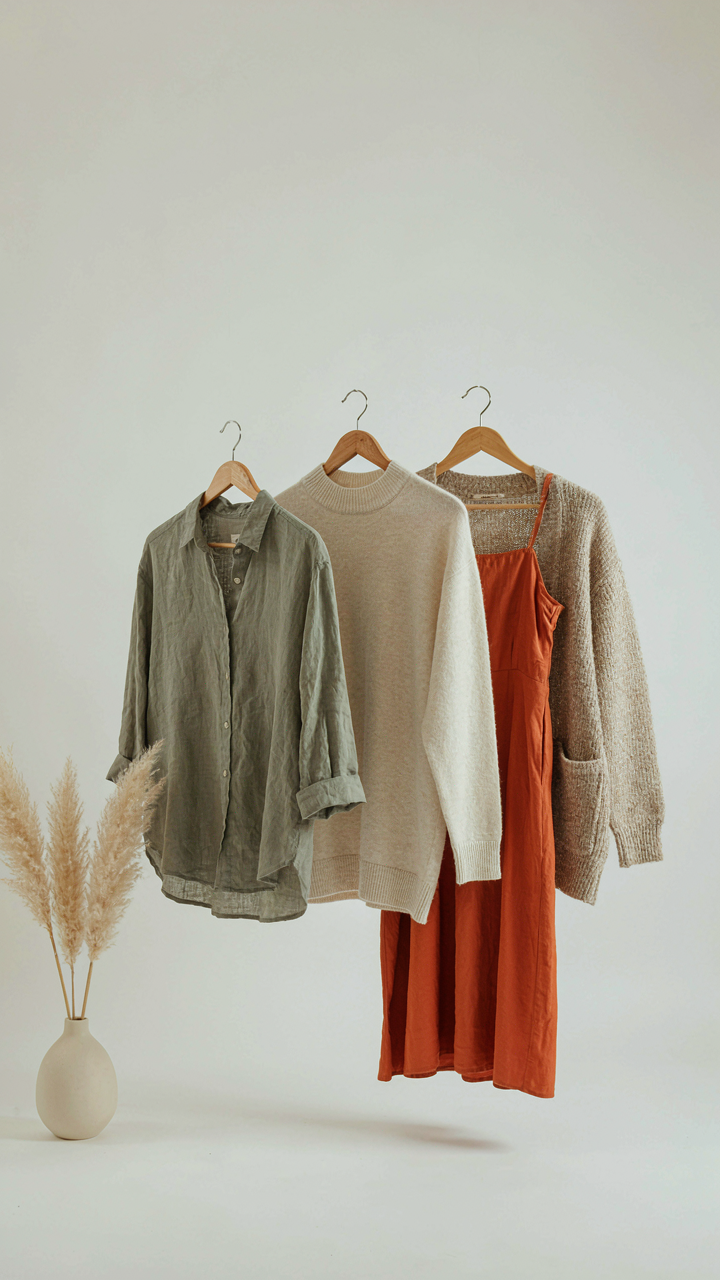
You want to feel like you’re ahead of the waste problem without actually changing your buying patterns. The mechanism is simple: fashion retailers invented the seasonal cycle to force obsolescence. Before the 1960s, people owned fewer clothes and wore them across years. Department stores realized they could multiply sales by convincing consumers that last season’s items were unwearable. Winter collections, spring collections, fall drops—none of this is inevitable. It’s engineered scarcity. Minimalist dress breaks this by design because a capsule wardrobe built on year-round pieces eliminates the artificial urgency that drives the treadmill.
Fast fashion brands release 50 to 104 collections per year now, compared to two or four decades ago. Each cycle pressures you to replace functioning garments. The seasonless approach doesn’t argue for morality—it just acknowledges that clothing worn across all months outlasts trends faster than trends can justify replacement. A wool blazer functions in autumn and spring with a simple layer swap. The economic truth: fewer purchases over time cost less money. Seasonal pressure reverses that math by design.
Building Durability Into The Purchase Decision
Longevity isn’t a marketing word that excuses high prices—it’s the only metric that matters when environmental cost is real. One garment worn 200 times spreads its manufacturing impact across those 200 wearings. One garment worn 20 times concentrates that cost into something that becomes landfill waste. Ethical consumption doesn’t mean buying expensive or feeling guilty. It means treating a purchase as a unit of impact: total environmental cost divided by years of actual use. The person buying one $300 coat worn for a decade beats the person buying ten $50 coats worn once each.
Material selection determines longevity more than price does. Natural fibers like merino wool, linen, and cotton age into reliability. Synthetic blends deteriorate faster because seams fail and fabric pills in ways that threaten wearability. The protocol is direct: before purchasing any minimalist piece, identify the fiber content and check its performance across seasons. Merino wool regulates temperature in both heat and cold. Linen softens with washing and gains durability. Cotton demands care but lasts decades if untreated. The garment you actually wear through four seasons costs less per wearing than the seasonal item that rotates in and out of your closet.
The 3 Step Wardrobe Audit Protocol

Separating Real Needs From Invented Ones
You’re hoping this audit will justify keeping most of what you own. That’s the real reason you’re reading this. The mechanism at work here is cognitive dissonance: your brain resists admitting waste, so it reframes clutter as “potential” or “backup.” Inventory gaps aren’t invented by marketers—they’re the gaps between what you actually wear and what you think you should wear.
A true gap is functional. You need a white button-up for work and don’t own one. An invented deficiency is aspirational. You don’t own a linen overshirt because you imagine a lifestyle you haven’t built. Start by tracking what you reach for across two weeks of typical days. Not holidays. Not imagined scenarios. Actual movement through actual hours.
- Workday uniform pieces: Items you wear on days you’re productive and present. These matter. Track color, fit, and how often you repeat them.
- Seasonal transition layers: Pieces that bridge temperature shifts without requiring full wardrobe swaps. Cardigans, lightweight jackets, long sleeves under tees.
- The repeats you deny: Clothes you wear constantly but convince yourself you don’t—proving they solve a real problem you haven’t named.
- Dead weight items: Pieces you’ve worn zero times in six months despite opportunity. These stay because of sunk cost, not function.
- Fit failures: Garments that fit wrong in one dimension, forcing you to reach past them every time. Size is not loyalty.
The audit becomes useful the moment you stop treating it as a moral judgment. You’re not cataloging sins. You’re identifying what your actual body and actual schedule require, then building around that.
The Economics Of Elimination
Sunk cost fallacy is economics terminology, and minimalist wardrobes live or die by rejecting it. Your brain values an unworn $200 coat more highly because of what you spent, not because of what it does. The item doesn’t become useful retrospectively. Keeping it only delays the moment you buy what you actually need.
Most advice tells you to donate slowly, box things up, take time with the decision. That’s backwards. Friction is the problem. You need speed. Set a timer. Pull anything you haven’t worn in six months and anything that doesn’t fit right now. Don’t negotiate. Don’t photograph it for later. Bag it and remove it from your space the same day. The longer it stays visible, the more your brain manufactures reasons to keep it.
Petite Midi Dress: Maximizing Impact, Minimizing Footprint

The Ratio That Actually Matters
You want the visual authority of a midi without looking swallowed by fabric. That’s the real problem here, and it has nothing to do with being “petite.” Proportion works like physics: the relationship between your body mass and the garment volume determines whether you disappear or command the space. A midi on a 5’2″ frame demands precision in one metric: the break point of the hemline relative to your leg length. Standard midi hits mid-calf. On petite frames, this creates dead space below the knee that visually shortens your legs and anchors weight downward. The fix is non-negotiable: choose midi lengths that hit between knee and mid-shin, or go ankle length. This narrows the gap between body and hem, restoring proportion instead of fighting it.
The secondary move is fabric weight. Heavy draping reads as volume and compounds the drowning effect. Minimalist construction demands lightweight cotton blends, linen, or structured jersey that skims the body without excess. Simple outfits become sophisticated through scale because restraint in pattern, color, and cut forces precision in fit. A single-color midi with a clean neckline and no waist seam will hang like architecture on any frame when the proportions land correctly. Measure from your natural waist to where you want the hem to hit. Order only that length. Tailoring is not optional here.
Layering That Doesn’t Collapse
The common mistake is treating the petite midi like a dress that needs “topping” to look complete. Wrong. Layering serves one function in minimalist dress: it either extends your vertical line or creates intentional visual rhythm. Adding a cropped cardigan, oversized blazer, or sweater on top of a midi compresses your frame because it breaks your silhouette into fragments. Instead, choose layers that extend your line: a long duster, a sleek denim shirt worn unbuttoned over the dress, or a fitted turtleneck under a sleeveless midi. These keep the eye moving vertically and prevent the chop-up effect that makes petite frames look smaller.
The real mechanic is visual continuity. When your layering piece extends beyond the dress hemline or aligns flush with it, you activate a single column. When it cuts across the middle of your legs, you’ve created two separate outfits stacked on top of each other. Minimalist dress eliminates visual noise, which means every layer must justify its presence through either extension or intentional contrast. A petite frame in a midi with a matched-color long layer reads as editorial. The same frame in a cropped topper looks diminished. Choose layers based on where they end, not how they look hanging alone.
The Real Obstacle Isn’t Your Wardrobe; It’s Your Inability To Define True Value

You don’t need another minimalist dress. You need to stop confusing “less” with “better.” Most people keep clothes because they paid for them, not because wearing them makes them feel like themselves. Today, pull three items from your closet and wear only those for a week. Notice which one you actually reach for. That’s your signal. Everything else is noise pretending to be identity.