

The Fabric Commandment: Understanding Scarf Types Beyond Appearance
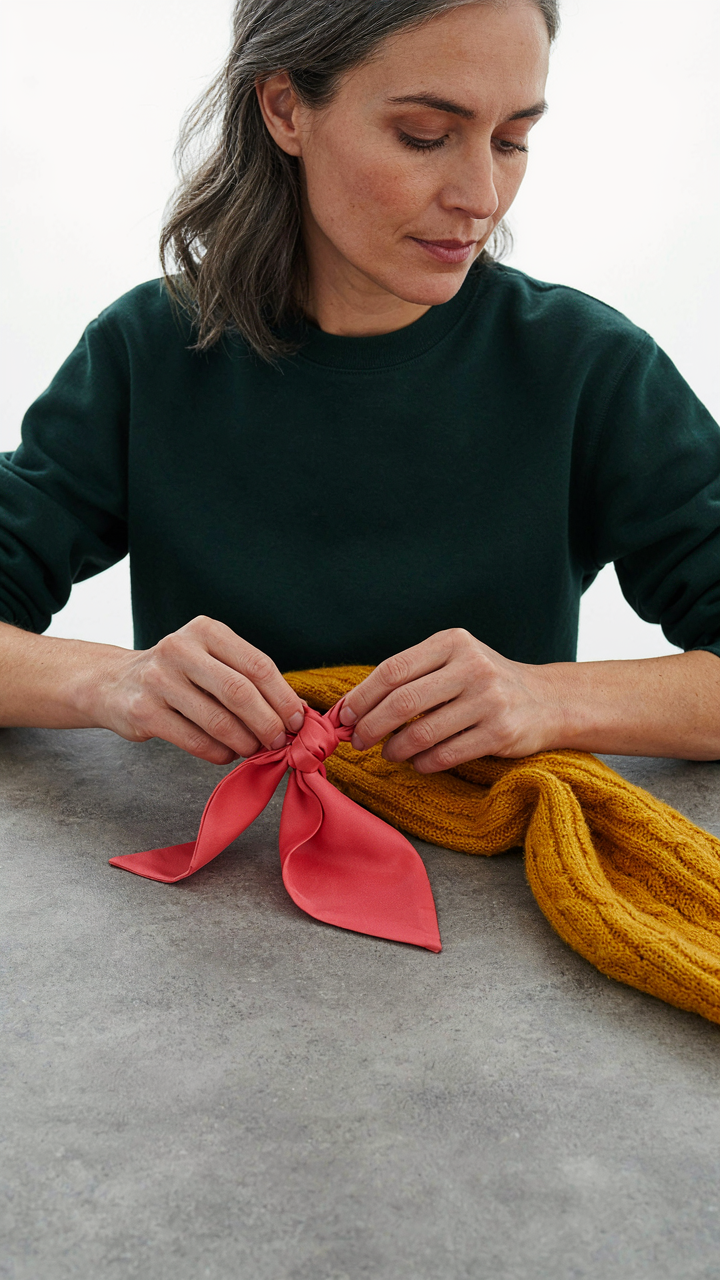
Fiber Content Determines Drape Architecture
You’re hoping the right scarf will fix how you look. Here’s what actually matters: fiber content controls how fabric behaves in space. This is basic physics—mass, weight distribution, and structural integrity determine movement. Cotton drapes differently than silk. Wool behaves differently than linen. Each fiber has a density and stiffness that either cooperates with knots or fights them.
Silk has low friction and moves fast. It slides through loops, settles flat, and holds shape without bulk. Cotton absorbs moisture and clings slightly, which changes how it sits on shoulders. Wool has natural crimp that creates texture and grip. Linen wrinkles deliberately and refuses to look polished. Pick the wrong fiber for your intended knot, and you’re fighting physics instead of using it.
Weight And Texture Build Styling Options

The common advice says lighter scarves work for summer and heavy ones for winter. That’s incomplete. Weight and texture determine which knots actually function and which ones collapse into shapeless lumps. Think of this through material engineering—tensile strength is how much force a material resists before breaking.
A 2-ounce silk charmeuse can’t hold a complex wrap without slipping loose. A 6-ounce wool crepe grips itself and maintains structure through layering. A lightweight gauze scarf demands simple folds and draped styling. A dense knit supports tight wraps and sculptural ties. Before you commit to a styling technique, test whether the scarf’s weight can actually support it. Handle the fabric in your hands first, tie a loose knot, and feel if it holds tension or slides apart immediately.

Deconstructing The Scarf Illusion: When “Easy” Is Actually Limiting
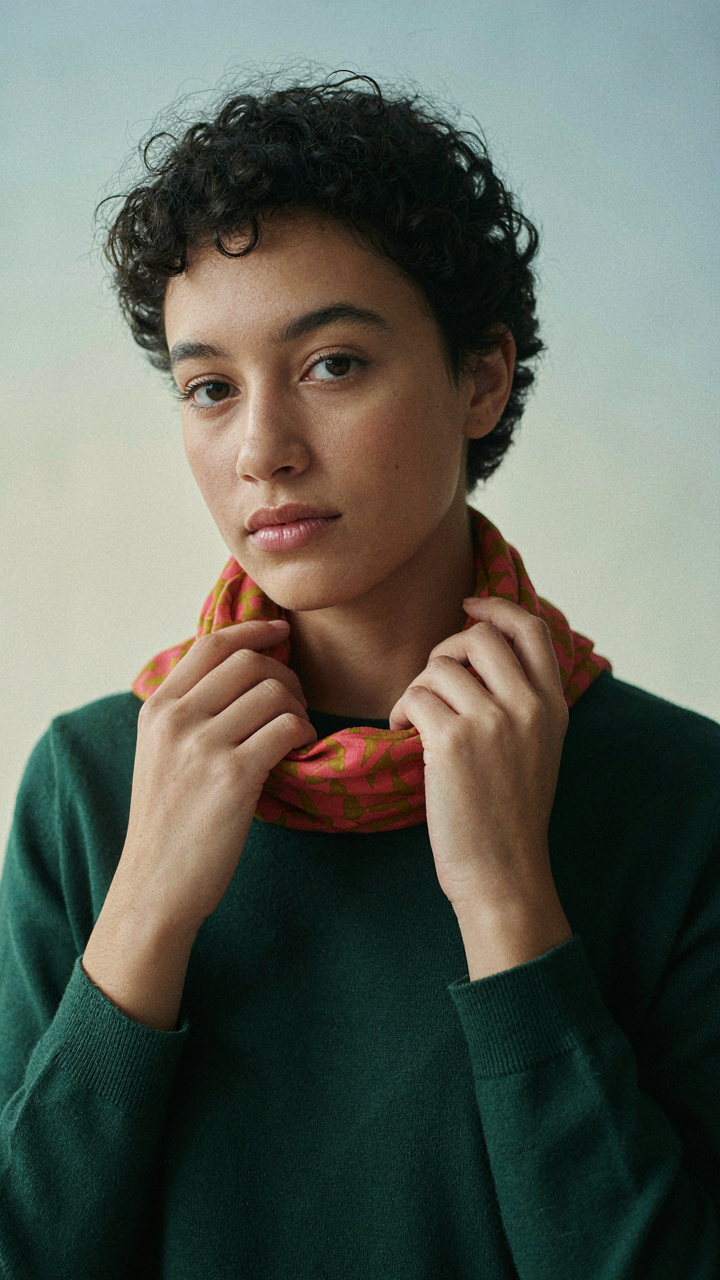
Why Simplification Kills Versatility
You want a formula because formulas feel safe. But “ten easy ways” is a cage that trades your actual options for the comfort of a checklist. The mechanism is constraint masquerading as guidance. When you accept a preset way to drape, loop, or tie a scarf, you’ve surrendered the ability to read context and adapt. You’re choosing predetermined outcomes over developing judgment.
The real work isn’t learning ten methods. It’s understanding the three variables that determine whether a scarf works: fabric weight, garment neckline, and silhouette intent. A heavy wool scarf needs different anchor points than silk. A crew neck absorbs volume differently than a V-neck. A structured coat demands a different visual weight than a loose sweater. Master these variables, and you generate infinite combinations without memorizing anything.
Integration Over Prescription
Think in terms of engineering, not fashion. A load-bearing system works because each element shares stress efficiently. A scarf doesn’t “complete an outfit” through decoration. It redistributes visual weight and creates intentional friction between your garment layers. The common advice says wrap, knot, or drape. Wrong framing. Those are outputs, not principles.
Start by identifying the visual dead zone in your outfit. Usually it’s the neck and shoulders where nothing competes for attention. A scarf fills that zone by anchoring itself to fabric that already exists, not by existing separately. The mechanism: loop the scarf once, let one end fall naturally, then tuck the other end into an existing layer like a coat buttonhole or sweater fold. This creates integration, not ornamentation. The scarf stops being an accessory and becomes part of the garment system.
The Scarf As Amplifier Protocol: Elevating Any Ootd With Scarf
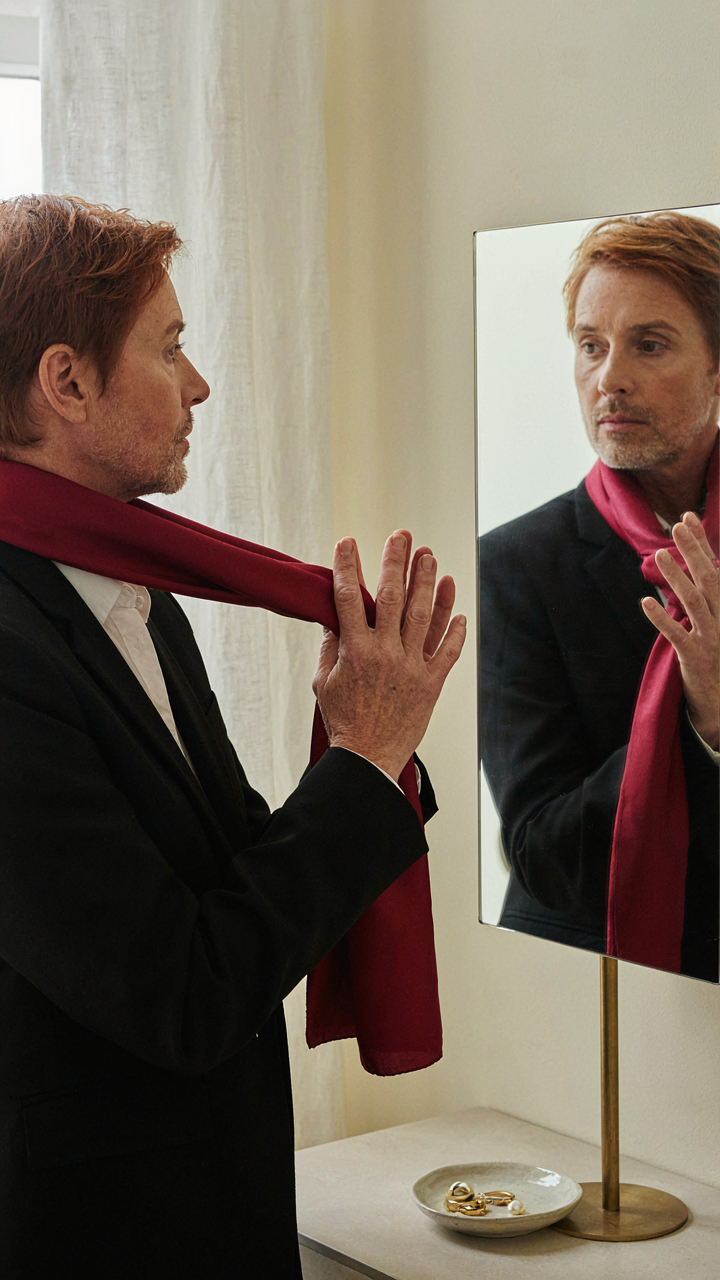
Color And Pattern As Mood Multipliers
You want people to notice you without looking like you’re trying. That’s the real calculation here. Color theory from design gives us the mechanism: a scarf operates as a focal point anchor that either harmonizes or contrasts with your base outfit, controlling where the eye lands first. A neutral outfit gains intention the moment you add a scarf with saturation or pattern. The scarf doesn’t blend in. It declares a choice.
Most people treat scarves as afterthoughts. Wrong approach. Your scarf’s color should either complement your skin tone directly or create deliberate contrast with your clothing’s dominant shade. A burgundy scarf on a black outfit creates visual weight at the neckline. A cream scarf on the same outfit recedes and softens. Pattern works identically. Stripes, florals, and geometric prints transform a plain sweater into a styled look instantly because they introduce a secondary visual element that reads as intentional layering, not accident.
How A Scarf Reframes Your Silhouette
A scarf functions as a visual interruption that breaks up body lines and redirects proportions. Wear one draped long and loose, it elongates your torso and creates vertical emphasis. Wrap it close and compact, it adds width at the shoulders and shortens perceived height. This isn’t decoration. This is structural editing of how your body reads in space.
The common advice here is hollow: “wear what feels good.” Useless. Instead, diagnose your actual silhouette challenge first. If you carry width in the chest, a scarf tied at the side creates asymmetry that disrupts horizontal lines. If you need shoulder broadness, a scarf draped across both shoulders adds visual mass to that zone. The protocol: identify one proportion you want to adjust, then choose your scarf placement to either lengthen, shorten, widen, or narrow that specific area. Execute the placement consistently until it becomes automatic.
Beyond The Neck: Unconventional Wearing Scarf Styles

Hair Accessory To Handbag Statement
You want permission to wear a scarf somewhere other than your neck because you think it signals creativity. The real mechanism is constraint. Limiting where a scarf can go forces you to solve a specific problem, which produces a stronger visual result than draping it loosely around your shoulders.
A scarf threaded through your hair works as a headband does in fashion history, borrowing the structure from 1920s Art Deco accessories. Tie it at the nape of your neck or weave it through a low ponytail. For handbag attachment, fold your scarf into a thin band and knot it through a bag handle. The scarf becomes functional hardware, not decoration. This transforms how the fabric reads in your outfit.
Wrapping Wrist And Waist Into Place
The common advice here is wrong: you don’t wrap a scarf around your wrist casually. Economics teaches us about opportunity cost, and your wrist space has high visual cost. Wrapping a scarf at the wrist only works when the scarf’s pattern and weight create actual visual weight that balances your outfit’s proportions.
- Wrist wrap with a knot: Fold the scarf into a band about two inches wide. Wrap once around your wrist and tie a clean knot. The knot becomes the focal point, so it needs to sit on the top side of your wrist where light hits it.
- Waist belt beneath outerwear: Thread a lightweight scarf through your coat loops or tie it directly over a dress. The scarf disappears mostly, but its color creates a horizontal line that redefines your silhouette’s proportions.
- Ankle wrap with a loafer: Wind a thin scarf around your ankle once, then tuck the tail into a loafer. This works only with monochromatic or neutral scarves. It reads as intentional, not accidental.
- Upper arm drape: Wrap a medium-weight scarf loosely around one arm above the elbow. Tie or knot it on the inner arm. This pulls focus upward and works specifically with structured blazers or sleeveless tops.
- Hip knot over trousers: Tie your scarf at your hip bone, letting one end drape down your leg. The vertical line elongates your frame and breaks up solid-colored pants effectively.
Each placement changes how your body’s proportions read in space. The scarf isn’t decoration anymore. It’s a line that either elongates, widens, or balances. Choose the placement that corrects whatever proportion needs correcting in your frame and outfit.
The Twilly Tactic: Maximizing Small Scarf Impact

Why Tiny Scarves Work Better Than You Think
You want permission to buy something small and call it intentional. Here’s the mechanism: a twilly—a long, narrow scarf typically two to three inches wide—forces constraint, which forces clarity. In information design, constraint increases signal-to-noise ratio. A twilly can’t disappear into bulk. It has to mean something. Wear it as a neck tie, wrist wrap, or bag accent. The format demands precision in placement, which reads as deliberate styling instead of “I grabbed what was available.”
The twilly originated from Hermès in the 1960s as a functional head scarf for protecting hair during open-car drives. That heritage matters because it means the format was engineered for visibility and function first, aesthetics second. Modern twillies inherit that DNA. They perform. A two-inch strip of silk reads differently than a standard square or oversized wrap because it can’t rely on volume to create visual weight. It relies on color choice, placement, and texture. That forces you to understand proportion.
Making Micro Scarves Carry Real Weight
Common advice says small scarves work for “delicate” looks or as “finishing touches.” That’s weak. Small scarves work because they’re compression tools. They take what would be dead space—an empty wrist, a blank neckline, a side panel of a bag—and activate it with a single decisive element. The scarf doesn’t complement an outfit. It completes it by occupying the space where visual attention was incomplete.
Bind a twilly around your wrist over a sweater cuff, letting the ends hang. The eye lands there first. Fold one lengthwise and thread it through a jacket buttonhole so it peeks from the chest. Tie it as a neck accessory that sits high under your collar, creating a thin line of color that frames your face. Each placement is a protocol. Execute it consistently, and the twilly becomes your visual signature, not your backup option.
Strategic Scarf Deployment: An Economic Principle

The Twenty Percent That Matters
You want permission to stop overthinking this. The truth is simpler: most people waste effort on scarf styling variations that produce zero visible return. In economics, the Pareto Principle states that 80 percent of effects come from 20 percent of causes. Apply this directly to scarves. Twenty percent of your styling choices account for 80 percent of how different you actually look. Identify those moves first, execute them clean, then ignore the rest.
Most scarf advice treats every fold and drape as equally valuable. It’s not. A silk twill wrapped as a neck loop creates immediate presence. An identical scarf tied as a loose shoulder wrap signals something entirely different. The fabric, the wrap method, and the knot type are your 20 percent. Everything else is noise that reads as indecision. Stop rotating through ten micro-variations of the same tie. Pick the three that work for your face and outfit structure, then repeat them until they become automatic.
The Real Cost Of Extra Effort
Marginal utility in economics measures what each additional unit of effort delivers in return. The first properly tied scarf gives you massive return. The second styling method multiplies your options. The third barely moves the needle. Most people keep adding techniques expecting compounding returns. They don’t get them. You tie a scarf five different ways and suddenly decision fatigue replaces confidence. Your brain burns resources deciding between methods instead of executing one well.
The protocol is mechanical. Choose one primary wrap style for your body type and face shape. Choose one secondary method for when temperature or occasion shifts. Practice each until your hands tie them without conscious thought. When people ask how you style scarves so well, they’re not seeing complexity. They’re seeing consistency and clean execution. The marginal effort of learning a third or fourth method costs more in daily friction than it returns in actual versatility. Stop there.
The Satin Scarf Styling Equation: Mastering Flow And Form

Embracing The Fluidity Of Satin
You want to know this because satin looks expensive and you’re not sure if you can pull it off without looking like you’re trying too hard. Here’s the mechanism: satin has zero friction against itself and fabric. It moves. Traditional scarves grip and hold position. Satin refuses. This isn’t a flaw. It’s the entire point. Most styling advice treats satin like cotton, which is why people fail. Satin demands a different protocol entirely.
The weight of satin matters more than the fabric itself. Lightweight satin (charmeuse) flows freely and settles into soft curves. Heavy satin (duchess) holds structure longer but still moves differently than linen. You tie it the same way you’d tie cotton, then you stop touching it. The scarf finds its own drape. Resist the urge to adjust constantly. Satin rewards stillness. One wrap around the neck, tie it off, let gravity do the work. The fluidity is the aesthetic.
The Physics Of Drape In Smooth Fabrics
Physics calls this “coefficient of friction”—the resistance between two surfaces. Apply this to satin styling: lower friction equals longer, more dramatic drape. Cotton has high friction and bunches. Satin has low friction and elongates. This means a satin scarf tied at standard tightness will hang lower and move more than the same knot in cotton. Adjust your knot tension downward by fifteen to twenty percent. The scarf won’t slip. It will simply occupy more space.
The smooth surface reflects light differently than textured fabrics, which changes how the eye reads the silhouette. Folds catch light unevenly. Wrinkles disappear visually. This is why satin scarves appear more polished even when casually tied. Start with a simple loop knot rather than elaborate wrapping. Let the fabric’s natural movement create visual interest. Complex knots waste satin’s best feature. The scarf moves, light plays across it, and the styling does the work for you.
Cashmere Scarf Styling: Investing In Texture And Volume

Feel Before You Fold
You want people to know you spent money on this. That’s the real reason you’re reading this section. But here’s the mechanism: cashmere works because it bends light differently than synthetic fibers. The surface scatters light in a way that reads as “expensive” to human eyes before anyone touches it. The fibers are thinner than wool, which means they drape without adding bulk. This matters tactically because bulk kills silhouette.
Cashmere’s weight changes how a scarf sits on your body. A silk scarf needs strategic pinning or tying to stay put. Cashmere stays where you place it because the fiber has natural grip. This grip comes from the scales on each fiber catching against fabric and skin. You’re not fighting gravity the way you do with lightweight materials. The trade-off is that cashmere shows every fold and wrinkle, which means your styling choices become immediately visible.
Dense Layers Win The Temperature Game
Physics calls this “insulation value” and thermal mass. In scarf terms, it means layering a cashmere piece creates pockets of trapped air that work harder than a single thick scarf. Cashmere’s fiber density lets you achieve warmth without the choking sensation that comes from wrapping a heavy wool scarf around your neck.
- The Wrap And Tuck: Loop the scarf once around your neck, then tuck both ends into your coat or sweater. This traps warmth at your core while keeping the visual clean and structured.
- The Drape Over Shoulders: Lay the scarf across your shoulders with equal length on both sides. Let gravity work. The weight creates natural volume without folding or bunching.
- The Asymmetric Knot: Tie one loose knot off-center, letting one tail hang longer. This creates visual interest while maintaining the thermal coverage you need at your neck and chest.
- The Over-The-Coat Layer: Wear your scarf on top of your coat rather than under it. This adds volume to your silhouette and prevents the scarf from sliding off or getting compressed by your jacket.
- The Half-Loop Secure: Wrap the scarf once around your neck, then pull one end through the loop on itself. This holds everything in place without a visible knot and preserves the fabric’s drape.
Cashmere’s thermal performance improves when you use its weight strategically. Don’t fold it into tight knots that compress the fibers. Instead, let the scarf’s own density do the work. One properly positioned cashmere scarf replaces two lightweight alternatives. Secure it with the half-loop method, then adjust the tail to fall naturally across your chest. This positions the densest part of the fabric where your body loses the most heat.
Big Scarf Styling: The Art Of Intentional Overwhelm

When Scale Becomes Your Anchor
You want the scarf to do the work for you. That’s the real reason you’re reading this. Here’s the mechanism: an oversized scarf works like a visual anchor in composition. It stops the eye. When you wear a scarf large enough to command space, you’re not adding an accessory—you’re declaring a focal point. Everything else in your outfit becomes secondary. The scarf absorbs attention first. This means the rest of your clothing can be simpler, quieter, less interesting. One loud element beats ten medium ones.
The practical play is proportion reversal. Pair a massive scarf with fitted clothing below the neck. A large scarf over an oversized top creates visual noise and competition. A large scarf over a slim turtleneck or fitted shirt clarifies the focal point immediately. The contrast between the scarf’s volume and your body’s taper creates the drama without requiring baroque patterns or colors. Material matters here too: lightweight fabrics like silk charmeuse drape into folds that read as intentional, not bulky. Heavy wool reads as costume.
The Weight And Width Equation
Most advice says to balance big scarves with minimal jewelry or keep everything else neutral. That’s incomplete. Real balance isn’t about subtraction—it’s about directional weight. Think of it like architecture load-bearing. The scarf carries vertical or horizontal visual weight depending on how you drape it. If the scarf travels vertically down your chest, your shoes or belt need horizontal anchoring to prevent the outfit from feeling top-heavy. If the scarf wraps horizontally around your shoulders, anchor with a defined waistline through tucking, a belt, or fitted pants.
The technical step: measure your scarf’s longest dimension. If it exceeds your torso by more than twelve inches, you need either cropped proportions below or a defined break in the silhouette. Drape the scarf once, then evaluate what it covers. Does it hide your waist? Restore it with a belt. Does it extend past your hip? Taper your lower half. The scarf isn’t the final decision—it’s the first constraint that demands a response from everything else.
The Real Obstacle Isn’t Your Scarf Collection; It’s Your Inability To See Beyond Surface-level Techniques

You’ve absorbed ten ways to tie a scarf. Now forget them. The shift that actually matters is training your eye to see contrast and proportion before you touch fabric. Most people layer scarves like they’re checking boxes. You’ll win by studying how your frame actually moves, where your clothes already create visual weight, and what your face actually needs. Today, wear your scarf in a way that feels slightly wrong to you. Your instinct to play it safe is what keeps you invisible.