

The Illusion Of “Casual”: Why Your Weekend Wardrobe Fails

Loungewear Isn’t Actually Comfort
You want permission to stop trying. That’s the real reason this matters. Loungewear sells itself as liberation, but it’s actually surrender. The mechanism is simple: elastic waistbands and oversized cuts remove the friction of fitting your body, so you mistake the absence of resistance for actual comfort. You feel relaxed because nothing pushes back, not because you’ve solved anything about how you present yourself on weekends.
The rise of athleisure normalized this confusion. Brands positioned sweatpants and oversized hoodies as valid weekend wear by framing them as “comfortable.” But comfort and casualness are different currencies. Loungewear prioritizes your internal state. Casual midi skirt outfits prioritize the transaction between you and the world. One serves you. The other serves your presence.
Intention Beats Convenience Every Time

Most advice tells you casual means low effort. It doesn’t. Casual is a deliberate aesthetic choice that requires more precision than comfort-based dressing, not less. In economics, this is the difference between maximizing for utility versus maximizing for signal. A midi skirt with a fitted top and intentional shoes signals that you made a decision. Sweatpants signal you didn’t. The person who gets read as put-together on a Saturday isn’t trying harder—they’re trying differently.
The real protocol is this: choose a midi skirt first. Build around it with one fitted piece on top. Pick footwear that matches the formality level of the skirt, not the informality of the day. This creates coherence. Coherence reads as intentional, which reads as confidence, which changes how people interact with you. That shift happens because you stopped optimizing for your comfort and started optimizing for your positioning.

Beyond Basic Tees: Elevating Your Midi Skirt Outfits
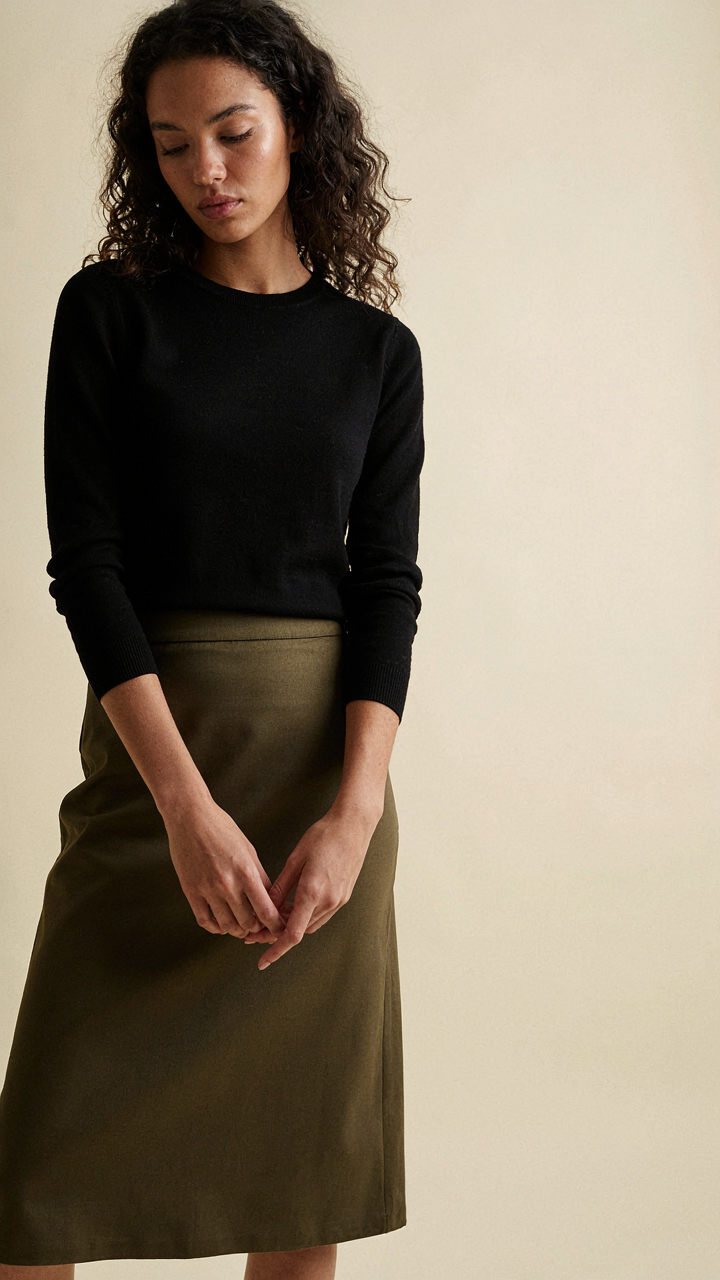
The Ceiling That Basic Tees Create
You want midi skirt outfits to feel intentional instead of like you grabbed whatever was clean. That’s the real motive here. The mechanism is simple: a basic tee neutralizes the skirt’s visual weight instead of partnering with it. Basic tees solve the problem of “what do I wear on top” without creating anything. They flatten proportion and make the outfit forgettable. The skirt becomes background noise rather than the structure holding the look together.
Contrast works in design like leverage works in physics. A basic tee spreads force evenly across a surface, creating no tension. A midi skirt already commands attention through length and volume. Pairing it with a tee that matches that energy wastes the skirt’s actual job: breaking up your silhouette and creating visual interest. You need tops that push back. Cropped shirts, oversized button-ups, fitted sweaters, and layered pieces all create the tension that makes midi skirt outfits read as deliberate. The outfit stops being a default and becomes a choice.
Tops That Actually Work With Midi Skirts
Fitted sweaters and cropped button-ups create proportion through opposition instead of agreement. A fitted top shortens your perceived torso, making the midi skirt’s length feel intentional rather than accidental. Oversized shirts work differently: they create volume at the top half that balances the skirt’s volume below, giving your frame actual architecture. Layered tanks under sheer or open shirts add depth without adding bulk. Each approach solves a specific visual problem that a basic tee ignores.
The real move is treating your top as a proportion tool, not a default covering. Pair a fitted crew neck sweater with a high-waisted midi to emphasize your natural waist. Wear a cropped linen shirt unbuttoned over a fitted tank with a lower-rise midi for a different silhouette entirely. Oversized blazers create formal weight that grounds casual midis. Your top choice determines whether the outfit has hierarchy or just exists. Start by identifying whether you want to shorten your visual torso or balance volume, then select accordingly.
The Footwear Fallacy: Ditching Sneakers For Impactful Style

Why Sneakers Betray The Midi Skirt
You’re reaching for sneakers because you’re afraid midi skirts look try-hard, so you’re hedging your bet with casual footwear. That’s the real mechanism. Sneakers with midi skirts don’t balance the outfit—they compete. The midi creates vertical length and formality even in casual fabric. Sneakers flatten this signal by adding visual weight at ground level that contradicts what the silhouette establishes above. You end up looking like you’re wearing two different outfit categories accidentally.
The default weekend sneaker move stems from confusion about casualness. Casual doesn’t mean formless or undecided. A midi skirt already does the heavy lifting of structure and proportion. Sneakers add confusion, not relaxation. You need footwear that respects the proportions the midi establishes rather than fighting them. This is where most people get it wrong and stop trying. What actually works requires a different decision process entirely.
Footwear That Rewires The Proportion
The real leverage in footwear comes from recognizing this principle: the shoe’s visual weight must either ground or elevate the line created by the hem, not interrupt it. Loafers work because they’re substantial enough to anchor the outfit without adding bulk. Ballet flats work for the same reason—they complete the line without visual chaos. Sandals with structured straps create definition. Boots extend the vertical line and add intention. Each of these choices communicates that you understood what the midi skirt was doing and chose footwear to complete that sentence.
The shift happens when you stop thinking about comfort or casualness as your primary filter. Think about visual hierarchy instead. Your eye should travel down the outfit without friction. Midi skirts paired with the right footwear create a coherent proportion that reads as deliberate rather than default. The outfit stops being “midi skirt plus shoes” and becomes one visual statement. Start by choosing one shoe type that matches the fabric weight and formality level of your skirt, then build the rest of the outfit backward from that anchor.
The Satin Midi Skirt Casual Outfit Deception: Real Comfort Vs. Perceived Ease

Why Satin Feels Easy But Isn’t
You want to believe satin midi skirts work for casual weekends because they look polished without effort. That’s the trap. Satin creates a friction problem: the material slides against itself and your body, which means your outfit moves independently of you. The physics is simple. Satin has low coefficient of friction, so it demands active management through tucking, adjusting, and strategic layering. No tucking means slippage. Slippage means you spend your weekend fixing your outfit instead of living in it.
The perceived ease comes from marketing, not from wearing the piece. Fashion media shows satin midi skirts as “throw-on-and-go,” but that narrative skips the part where models stand still for photos. Real casual weekends involve sitting, bending, walking upstairs, and moving through doorways. Satin responds to all of that by shifting. You either accept constant micro-adjustments or you layer in a way that prevents the slide. The second option is the only one that works.
Layering Without The Bulk
Forget the advice that says “just add a slip.” That’s incomplete. A slip reduces slide but doesn’t solve the core problem: satin midi skirts need anchor points. Use a fitted base layer, not a loose one. A fitted tank or long-sleeve tee under satin creates enough tension that the skirt stays in place. Fitted means the fabric touches your body without loose fabric creating extra layers of movement. This is the mechanism that actually works.
The second anchor is the waistband itself. Wear the satin midi skirt at your true waist, not your hips. Hipper placement makes the skirt ride down because satin doesn’t grip. Your natural waist creates a structural lock. Pair this with a cropped or tucked top so the waistband stays visible and functional. This combination of fitted underlay and proper waist placement turns a satin midi skirt from a slide hazard into a stable piece.
The Feminine Style Inspiration Trap: Authenticity Over Imitation

Copy Paste Kills What You’re Actually Building
You want permission to look like the girl in the photo because copying feels safer than choosing. Here’s the mechanism: inspiration boards work only when you extract the principle, not the outfit. Borrowing aesthetics wholesale from Instagram creates cognitive dissonance between your body, your context, and the image. You wear the outfit but not the confidence because it was never built for your specific constraints. The outfit doesn’t fail—your application of someone else’s variables does.
Midi skirt outfits succeed when they solve your actual problem, not someone else’s. If you grab an aesthetic because it looks “put together,” you’ve identified the feeling but ignored the structure underneath it. The girl in the photo has different proportions, lighting, lifestyle, and social currency. Replicating the surface while ignoring those differences produces a costume, not a style. Start by naming what drew you in, then reverse-engineer the actual variables at play.
The Mechanism Of Personal Constraints
Your midi skirt outfits are constrained by budget, climate, body type, work environment, and how you actually move through your week. These constraints aren’t obstacles to style—they’re the foundation of it. A personal aesthetic emerges from working within specific parameters, not pretending they don’t exist. The fastest way to develop authentic style is to stop seeking permission and start solving for your reality. Your limitations are your competitive advantage because nobody else has your exact set.
Test one variable at a time instead of copying full outfits. Pick a midi skirt you own. Pair it with three different tops already in your closet. Wear each combination and note which one feels like you moved through the day without thinking about your clothes. That combination isn’t exciting to photograph. It’s exactly what you need.
The Unspoken Rules Of Styling Midi Skirt For Weekend Authority

How Your Proportions Become Your Leverage
You care about this because proportion signals control, and control signals competence. The real mechanism: proportion isn’t about matching some abstract beauty standard. It’s about creating visual contrast that makes your frame read as intentional rather than accidental. A midi skirt works on weekends because it compresses the visual space between your waist and ankle, forcing the eye to process you as a unified shape instead of disconnected parts. Tight top, full skirt. Oversized top, tapered skirt. The rule isn’t balance—it’s deliberate imbalance that reads as strategy.
Most styling advice skips this entirely and just says “balance your proportions.” Wrong move. The mechanism is specificity: when you wear a fitted turtleneck with a midi A-line, you’re not balancing anything. You’re anchoring the viewer’s attention at your torso and forcing them to notice the skirt’s volume as an intentional choice. If your top is shapeless, the skirt reads as compensation. If your top has structure, the skirt reads as design. One creates doubt. One creates authority.
Reading The Room Like A Strategic Player
Game theory maps directly onto outfit decisions: you’re always responding to an asymmetry of information. You don’t know exactly how your audience will categorize your choices, so you eliminate ambiguity through specificity. Wear a midi skirt with a white button-up and loafers, and the room knows what you’re doing. Wear that same skirt with a crop top and sneakers, and you’ve signaled something entirely different. The skirt itself is neutral. Your top and shoes reframe it completely.
The winning move isn’t trying to please all observers. It’s choosing one frame and committing to it fully. Casual weekend doesn’t mean formless. It means you’ve selected a specific casual language and stuck to it. Pair your midi with pieces that argue for the same story: if it’s relaxed, every element should reflect that constraint. If it’s polished-casual, every piece should enforce that boundary. The outfit succeeds or fails based on internal consistency, not on how trendy each individual piece is.
The Accessory Algorithm: Small Details, Exponential Impact
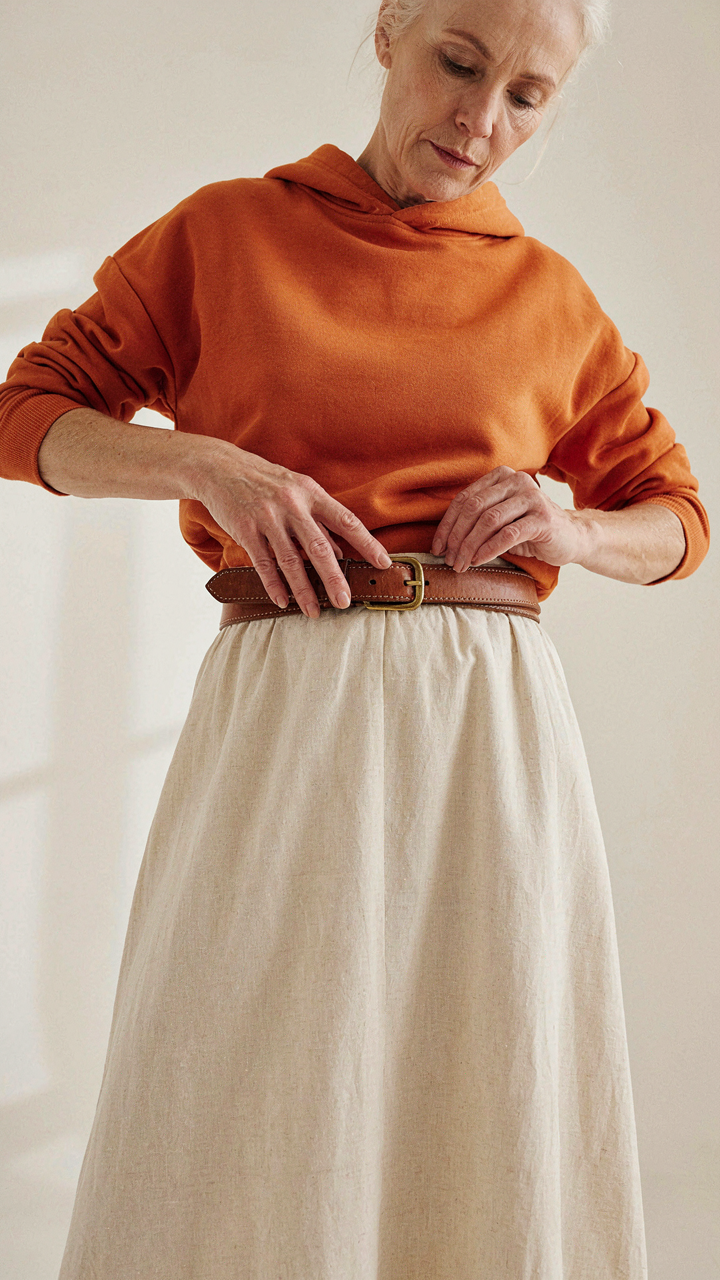
Accessories As Outfit Multipliers
You think accessories matter because they look nice. They matter because they’re the only variables you control after committing to the skirt itself. In physics, leverage is force applied at distance from a fulcrum. Accessories function as leverage in outfit construction: a single piece—belt, bag, shoes—shifts the entire outfit’s perceived category without replacing any core garment. This is why two identical midi skirts read completely differently based on what surrounds them.
Most advice stops at “add layers” or “pick complementary colors.” That’s incomplete. The real mechanism is proportion stacking. A midi skirt already occupies visual real estate from hip to ankle. Every accessory you add either competes for attention or reinforces hierarchy. The difference between chaotic and cohesive isn’t taste—it’s whether your accessories follow the same visual weight as your skirt. A structured leather belt anchors a relaxed linen skirt. A thin chain does nothing.
- Structured Belts: Narrow the visual center, create definition between skirt and top, anchor loose silhouettes. Works on mid-rise and high-rise waistbands across all midi cuts.
- Crossbody Bags: Redirect eye movement vertically rather than horizontally. Canvas or leather bags sized 7-10 inches wide prevent outfit fragmentation and maintain weekend casualness.
- Pointed Flat Shoes or Minimal Sneakers: Control line weight at the base. Pointed shoes lengthen the leg visually without adding height; clean minimal sneakers ground the outfit in actual casualness.
- Layered Jewelry: One bracelet or ring per hand maximum. Stacking happens through metals, not volume. Gold or silver only, no mixing unless intentional tonal matching.
- Neutral Scarves or Bandanas: Worn as neck accent or bag charm, they add color intentionality without committing fabric volume. 20×20 inch squares are functional.
This isn’t decoration. You’re building a decision tree where each accessory either opens or closes visual pathways through your outfit. The outfit with five competing elements reads expensive and confused. The outfit with three elements that reinforce each other reads intentional.
When Less Becomes The Mechanism
Minimalism isn’t aesthetic purity. It’s cognitive load reduction. Your audience processes a casual weekend outfit in approximately 2 seconds. Every accessory you add burns processing power. Remove one, and suddenly the remaining pieces register with clarity instead of noise. This is why styling a midi skirt for weekend wear often means choosing what not to wear rather than what to add.
Start with the base: midi skirt, top, shoes. That’s complete. Now introduce exactly one secondary layer—either a belt, a bag, or outerwear. If you need a third element, it must be jewelry, and it must be minimal. This isn’t a rule because it looks better. It works because the human eye settles on completed outfits faster. The outfit that takes you ten seconds to scan reads more expensive than the outfit that takes thirty.
The Outfit Inspo Paradox: Ditching Trends For Timelessness

Why Trend Cycles Kill Your Style
You’re scrolling for validation that your choices matter, but trend-driven midi skirt outfits work like obsolescence. Fashion cycles operate on planned decay: a silhouette gets pushed hard for 18 months, reaches saturation, then dies the moment the industry needs to sell you the next thing. You chase the current midi trend, build outfits around it, then watch those pieces become visual noise the next season. The mechanism is simple: trends are industry supply chains masquerading as aesthetic truth. You’re not following taste. You’re following inventory rotation.
What actually happens is you accumulate dead pieces that no longer feel right, forcing constant replacement. A midi skirt that felt essential in 2022 sits unworn because the styling rules changed, not because the skirt itself degraded. You spent money and mental energy on something designed to become wrong. The cycle repeats because you’re looking for trends instead of building a system. This is the real tax of trend-chasing: not the money, but the constant friction of rereleasing outfits that feel dated.
Building Pieces That Don’t Expire
Lasting midi skirt outfits start with material and cut, not trend signals. A midi skirt in a neutral tone with a straightforward A-line or wrap silhouette works for years because it doesn’t depend on seasonal styling rules to feel current. Invest in natural fiber construction: cotton, linen, wool blends that age well and communicate quality through longevity, not novelty. These pieces pair with basics in your rotation without demanding reinvention every quarter.
The protocol is brutal in its simplicity: buy one midi skirt that works with 70 percent of what you already own, wear it for a full season without checking what’s trending, then decide if you need another. If it still serves your actual life after six months, the cut and material are doing their job. This eliminates the guesswork. You’re not building outfits from inspiration. You’re building from inventory that proves itself through use.
The Weekend Uniform Revolution: A Midi Skirt Protocol

Build Your Signature, Not Your Closet
You want people to recognize you before you enter the room. That’s the real reason you’re here. Most advice tells you to “mix and match,” which is code for staying invisible. The mechanism is constraint, borrowed from design: limitation forces recognition. A signature look works because it removes decision friction while making you predictable in the right way. You’re not trying on outfits. You’re engineering a visual identity that people associate with you alone.
A midi skirt protocol means choosing one or two cuts, one or two fabric weights, and building every weekend outfit from those anchors. This isn’t minimalism as virtue. It’s math. When your core piece stays constant, every variable you add compounds recognition. People see the midi first, then notice what changes. That’s the opposite of scrolling through someone’s Instagram and forgetting what they looked like yesterday.
How Repetition Becomes Your Brand
Repetition doesn’t bore people. Repetition makes people trust you. This is basic neuroscience applied to fashion: frequency creates familiarity, and familiarity breeds authority. Wear the same midi silhouette sixty times, and people stop questioning whether it works on you. They start asking where you got it.
The power moves happen when you repeat with intentional variation:
- Seasonal fabric swaps: Linen midi in summer, cotton blend in winter. Same cut, different temperature rating. Observers see consistency, not monotony.
- Top pairing rotations: Five core tops cycled with one midi creates fifteen perceived outfits from minimal pieces. Each combination feels fresh because the anchor holds steady.
- Shoe anchoring: Two neutral shoe styles, worn across all weekend outfits. Shoes ground the look and signal intentionality more than any accessory.
- Belt and bag consistency: A single belt width and bag style worn repeatedly signals taste, not limitation. People notice this as discipline, not constraint.
- Layering protocol: One cardigan or denim jacket as your standard layer creates visual cohesion across weather changes. The midi stays centered while layers absorb seasonality.
The protocol works because you’re not reinventing every Saturday. You’re editing. You pick your midi, you pick your top tier, you adjust one variable. That’s the entire system. Execution happens faster, recognition compounds, and you stop wasting weekends on outfit assembly.
Decoding The Satin Midi Skirt Outfit Aesthetic: Beyond The Hype

Why Certain Looks Stick While Others Disappear
You want to know which satin midi combinations won’t feel dated in six months because you’re tired of wasting money on trends that evaporate. Here’s the mechanism: satin midi skirt outfits work when they solve a real friction point in your life instead of borrowing status from somewhere else. The skirts that resonate aren’t the ones that copy runway shows. They’re the ones that let you move through your actual day without fighting the garment. A satin midi in a neutral tone paired with a fitted base layer wins because it compresses your decision-making. You get visual interest without cognitive load.
The common advice says “find your personal style.” That’s incomplete. What actually happens is you reverse-engineer from your constraints. Your commute, your social setting, your climate, your body’s proportions. Satin midi skirts shine in casual weekend contexts specifically because they read as intentional without demanding effort. The fabric catches light without demanding a full outfit concept. Wear it with a simple crew neck and sneakers, and you’ve cleared the visual field. The skirt does one job: it signals you made a choice. That’s the entire mechanism. Everything else is noise.
Authenticity As The Currency That Compounds
The fashion industry markets “authenticity” as self-expression. That’s a deflection. Real authenticity in a midi skirt outfit means your garments match how you actually spend time, not who you want strangers to think you are. Satin textures work best when they align with your genuine movement patterns. If you sit at a desk most weekends, a stiff satin catches light and feels foreign. If you move through social spaces, the same skirt performs. The outfit’s resonance compounds over time only when there’s no friction between the garment and your real life.
Discard the idea that “being yourself” guarantees a good outfit. The real principle is alignment. Your satin midi outfit wins when every piece solves a problem you actually face, not a problem you think you should face. This eliminates second-guessing. You stop asking if the look is “you.” You already know it works because you’ve worn it through actual scenarios. The satin midi paired with what you already own and reach for is the outfit that survives. Everything else gets archived.
The Real Obstacle Isn’t Your Closet, It’s Your Conformity To Expected Weekend Ease

You’ve convinced yourself that weekend dressing means comfort equals invisibility. It doesn’t. The shift happens when you stop treating casual like an excuse and start treating it like a constraint that forces creativity. Midi skirt outfits work because they reject the false choice between effort and relaxation. Pick one outfit today. Wear it intentionally. You’ll realize the real barrier was never finding clothes that fit. It was giving yourself permission to matter on a Saturday.