
The “Fast Fashion” Fallacy: Why Your Closet Is A Graveyard Of Regrets

Trends Collapse Faster Than You Wear Them
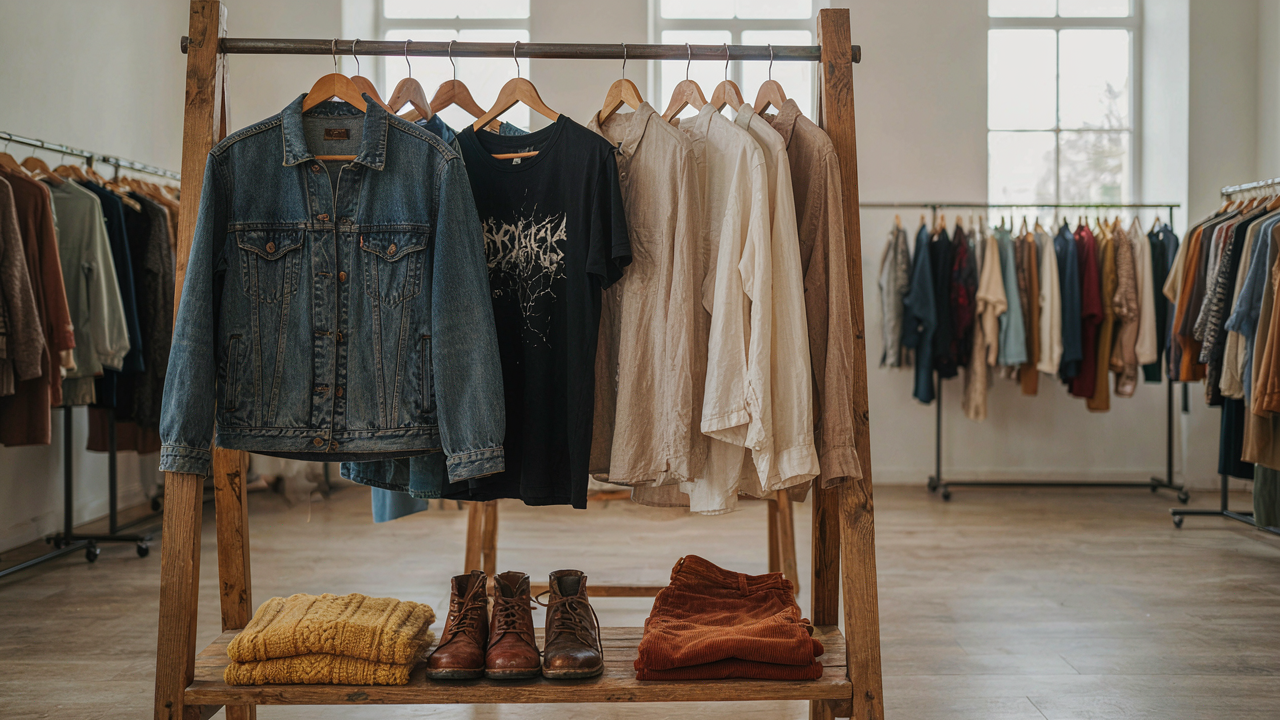
You’re worried you’ll look dated. That’s the real anxiety here, not actually about the clothes. But here’s the mechanism: fast fashion operates on planned obsolescence. A trend cycle now runs 4-6 weeks. Your brain sees something, brands flood inventory, social saturation kills it, you’ve worn it twice. Vintage thrift outfits work backward. A 1990s Carhartt jacket or 1970s Levi’s 501 doesn’t trend. It was made to last through decades of wear, which means it sidesteps the entire obsolescence trap.
The common advice says “invest in classics.” That’s incomplete. True durability isn’t about price or brand name. It’s about original construction standards. Vintage pieces predate the race-to-bottom manufacturing that stripped costs by cutting seams, thinning fabrics, and shortening shelf life. When you buy vintage, you’re buying what survived. The pieces that made it to thrift stores did so because they outlasted their owners, not because they fell apart.
The Math Behind Cheap Clothes

Fast fashion pricing is a velocity problem borrowed from supply chain economics. You move product volume through the system before materials degrade or consumer interest shifts. This requires cutting production time, which means lower fabric quality, fewer stitches per seam, and adhesive instead of proper hem construction. A new $20 shirt falls apart in 12 wears. A vintage $15 shirt lasts 5 years because the original maker had different constraints.
The hidden cost isn’t just replacement frequency. You’re training your brain to treat clothes as disposable. You stop developing taste. You impulse-buy based on trend velocity instead of fit or longevity. Vintage thrift outfits flip this by forcing constraint: limited inventory, no returns, no new drops next week. You learn to evaluate actual fabric, check seams, understand silhouette. You begin selecting based on wear-time value, not trend noise. Before you build any outfit, physically inspect the garment for stitch integrity and fiber content.

Deconstructing The “Vintage Outfit” Myth: It’s Not About Nostalgia
The Trap Of Era Replication
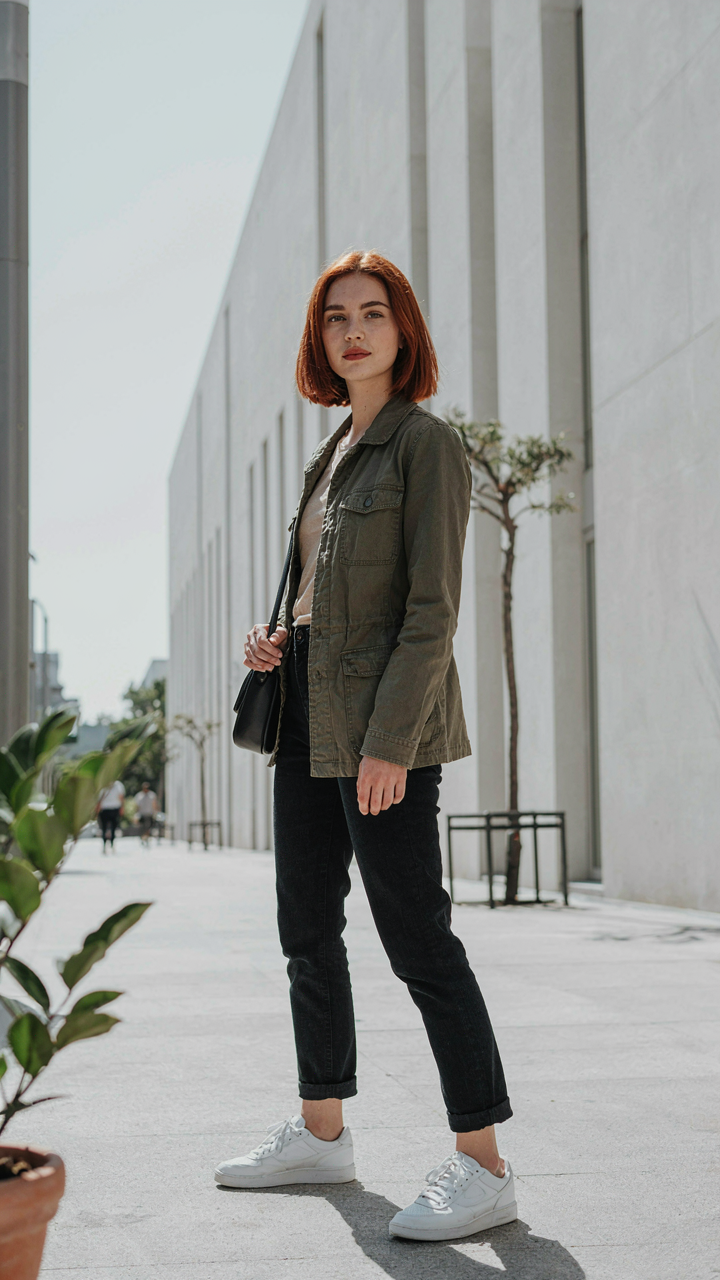
You want permission to buy old clothes without looking like you’re stuck in the past. The mechanism most people miss: vintage thrift outfits fail when you treat them as historical costumes instead of raw materials for current context. Replication is the amateur move. You see a 1970s blazer and think the outfit requires flared jeans, a silk scarf, and platform shoes from the same decade. That’s museum curation, not dressing.
The real play is extraction. Pull the single strongest element from a vintage piece and build around what exists now. A well-cut wool coat from the 1980s doesn’t need 1980s proportions around it. Pair it with contemporary fits, current footwear, and present-day layering. The coat carries its own authority without the costume tax. This is why people notice the outfit working instead of noticing you’re wearing old things.
Signals Over Storytelling
Personal branding through clothes operates on signal theory from economics. You broadcast information about your values, competence, and taste through what you wear. Vintage thrift outfits signal discernment when worn strategically, but they signal confusion when mixed with dated styling cues. The outfit either reads as intentional selection or accidental accumulation.
Build your visual identity on constraints, not nostalgia. Choose one era’s DNA (silhouette, proportion, material quality) and let current pieces do the heavy lifting. A 1990s minimal slip dress works with 2024 sneakers and a structured modern jacket because the proportions align, not because you’re recreating 1995. The vintage element becomes proof of taste, not the entire statement. Your outfit’s job is to communicate who you are now, using whatever materials work.
The Scarcity Advantage: Why Unique Pieces Win Over Mass Production

The Thrill Of Finding What Others Cannot
You want this because you’re tired of wearing the same outfit as five people in the same room. That’s not shallow, that’s signal. Scarcity works like supply and demand in economics: when supply drops, perceived value climbs. A 1970s Levi’s trucker jacket from a specific production run carries weight because it genuinely cannot be replaced. Mass production erased scarcity from modern clothing. Thrift forces it back.
When you pull a genuine piece from the rack, you’re not buying fabric. You’re buying a garment that survived decades, which most clothing won’t. The thrift market has no replicas of that exact item. A vintage Pendleton wool shirt from the 1980s exists in finite quantities. Once those units sell, they’re gone. This isn’t marketing spin. This is the actual constraint that makes vintage pieces hold cultural currency that fast fashion never will.
Building A Wardrobe That Compounds
Forget the advice about “mixing vintage with contemporary.” That’s incomplete. The real play is strategic repetition of rare pieces that anchor your visual identity. If you own one genuinely rare item, it becomes recognizable. People remember it. You become the person who wears that particular style, not just another person wearing clothes.
Start by identifying one vintage category that matches your body and lifestyle: maybe 1990s workwear, or 1970s leather jackets, or early 2000s denim cuts. Buy three to five pieces in that category over the next six months. The scarcity works in layers when you can actually wear what you own. Each piece reinforces the others. Your wardrobe becomes a consistent visual story instead of random vintage noise. This is how you move from collector to person with taste.
The “Model Off Duty Aesthetic” Blueprint: Effortless Edge

Curating Understated Confidence
You want this look because it signals you don’t try. The mechanism is constraint. Model off-duty style works because it strips away visual noise—the outfit does one thing instead of five things competing for attention. This comes from high fashion’s understanding that restraint reads as control. A fitted vintage Levi’s 501 from the 90s, a plain white tee, and a structured blazer from a thrift store aren’t random. Each piece has a single function: fit well, communicate intentionality, disappear into the background so your presence dominates.
The common advice is to “mix basics with statement pieces.” Wrong. That’s still trying. Real understated confidence means every piece works harder than it looks. A vintage band tee isn’t a statement piece. It’s a calibrated detail. The thrift component matters here because vintage pieces already carry wear patterns and fabric weight that new clothes fake poorly. Your job is selecting items that have aged into authenticity rather than items that announce themselves. Start by choosing one piece with actual character, then build everything else to support it without competing.
Mixing High And Low Fashion
Economics calls this arbitrage. You buy undervalued assets and pair them with expensive ones to shift perceived value upward. The same principle works in vintage thrift outfits. A $40 vintage Hermès scarf shifts how people read a $15 thrifted shirt. Luxury items aren’t luxury because they cost more. They’re luxury because they signal scarcity and restraint. Vintage pieces from defunct brands or past seasons already carry that signal. Pairing them with contemporary basics creates friction in a good way—the outfit becomes harder to categorize, which makes it more memorable.
Don’t alternate between expensive and cheap items mindlessly. The mechanic is density. Place your luxury or rare vintage pieces where they create focal points: at the neck, on the wrist, or as an outerwear layer. Everything else recedes. A vintage leather belt from a recognizable European maker paired with thrifted jeans and a plain tee works because the belt anchors attention. The remaining items provide visual stability. This isn’t about balance. It’s about directing where eyes land. Build your thrift outfit by identifying which single piece carries weight, then let everything else support that decision without fighting for attention.
The “90s Cool Outfits” Protocol: More Than Just Denim

What Actually Made 90s Silhouettes Work
You’re drawn to this section because you want permission to wear something that reads as intentional rather than accidental. The real mechanism is proportion inversion. The 90s didn’t just embrace loose clothing—it created optical tension by pairing oversized tops with fitted bottoms, or vice versa. This contrast created visual interest where uniformity would’ve created shapelessness. Most vintage thrift shoppers miss this entirely and just grab whatever’s baggy.
The silhouettes that actually translated were built on geometry, not mood. Oversized blazers worked because their structured shoulders and length created a frame. Slim-fit jeans worked because they tapered without constriction. Slip dresses worked because the bias cut created natural drape. When you source these pieces now, look for the cut itself, not the era. A well-proportioned 90s vintage piece functions identically to a modern one because the engineering doesn’t age.
Stripping Away The Costume Energy
The common advice says to mix vintage with modern to “avoid looking like a tribute act.” That’s not wrong, but it misses why it matters. Nostalgia without friction reads as costume. The mechanism is contrast disruption. Wear a vintage oversized Levi’s jacket, but pair it with straight-leg tailored trousers in a contemporary cut. Add modern footwear—not retro sneakers, but current minimalist shoes. The clash prevents your outfit from creating a coherent “time period” that signals you’re performing the 90s rather than living in the present.
The real protocol is material and finish interruption. Vintage pieces tend toward worn denim, faded cotton, and matte synthetics. Modern pieces often feature technical fabrics, refined finishes, or contemporary dyes. Deliberately mix these textures. A vintage acid-wash piece next to a contemporary matte leather creates enough friction that the eye reads it as intentional styling, not archive raiding. This single constraint eliminates ninety percent of the cliché factor.
The Fashion Alchemy: Transmuting Old Into Gold

What Actually Changes When You Rewear Fabric
You want to believe vintage thrift outfits are special because they’re rare or sustainable. The real reason you care is they work better than new clothes at the same price point. Here’s why: fabric degrades predictably. Cotton and wool fibers soften through repeated wear and washing, but they don’t weaken uniformly. Vintage garments have already completed this molecular breakdown. The tensile strength remains; the hand feel improves. You’re buying material that’s already been stress-tested by time.
New clothing sits in warehouses and shipping containers. Vintage pieces circulated through actual bodies, actual climates, actual friction. This isn’t nostalgia. It’s physics applied to textiles. A thirty-year-old Levi’s jacket performs differently than one made last month because the cotton fibers have already migrated through their degradation curve. You get the durability without the stiffness. Thrift stores don’t advertise this because they don’t understand it. The mechanism is simple: worn fabric has fewer internal stresses, which means it drapes better, moves with your body, and lasts longer under real conditions.
Leverage Points That Most People Miss Entirely
Accessories aren’t decoration. In physics, leverage means using a small force applied at distance to move something heavier. Vintage thrift outfits work the same way. One strategic piece amplifies the value of everything else you’re wearing. People get this backward. They think you need more pieces. You need the right piece positioned correctly. A single Hermès scarf from the 1970s, tied right, transforms a basic thrifted sweater and jeans from “assembled outfit” to “considered.” The scarf moves the visual weight.
This isn’t about status symbols. It’s about visual efficiency. A worn leather belt, vintage brass buckle, acts as a fulcrum between your torso and legs. It creates proportion where none existed. A thrifted watch from the 1960s on your wrist doesn’t just tell time. It anchors the entire sleeve, grounds the arm, makes the whole frame feel deliberate. The accessory isn’t adding to the outfit. It’s reorganizing how every other element reads. Start with one vintage accessory per outfit. Position it at a natural break point: waist, wrist, or neck. Everything else aligns around that anchor.
Mastering “Outfit Inspo Fall”: Layers And Textures That Command Attention
Strategic Layering For Impact
You want layering to work because it signals control, and most people who fail at it look confused instead. The mechanism is borrowed from architecture: load-bearing structure. Your base layer bears the visual weight. Everything else either reduces or amplifies that load. A thin vintage band tee under a structured wool blazer works because the blazer is load-bearing. A vintage oversized sweater over another sweater fails because nothing carries the eye anywhere.
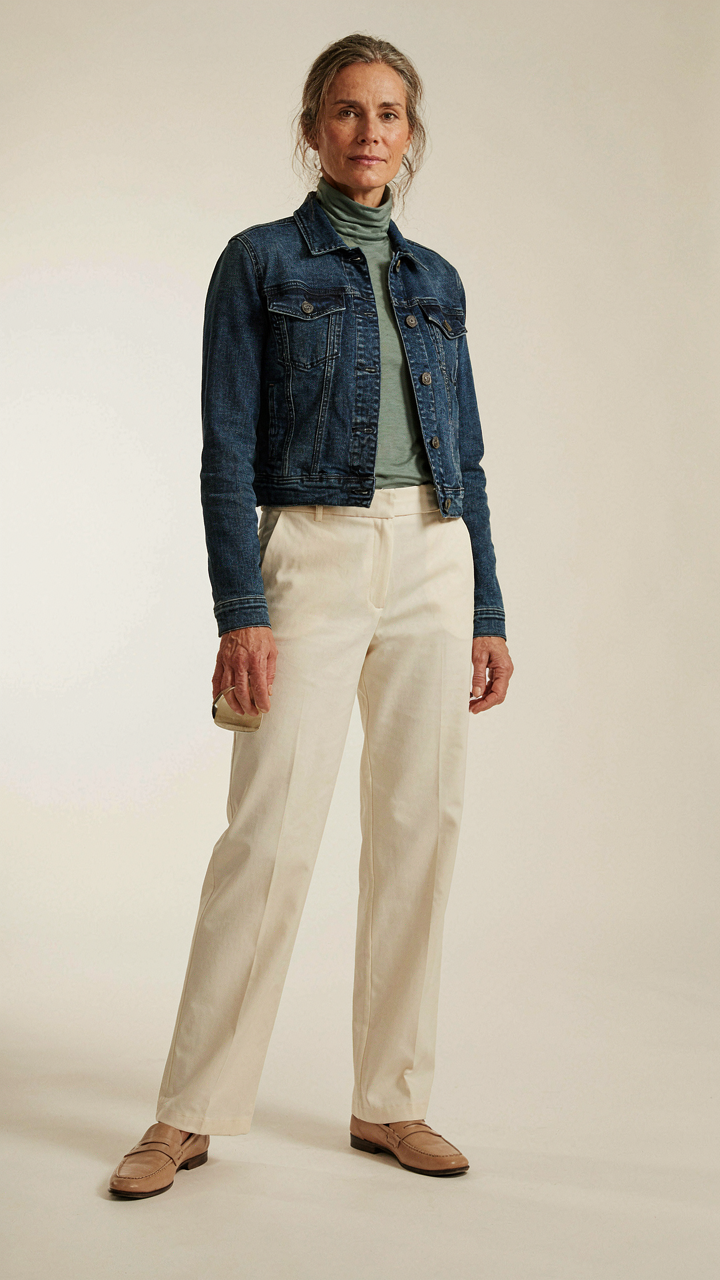
The error most people make is treating layers as decoration. They stack without intention, adding bulk instead of hierarchy. Start with your heaviest, most structured piece as anchor. Then add thinner, lighter pieces that either contrast in scale or texture. A slim vintage turtleneck under a cropped denim jacket creates proportion. The jacket is load-bearing. The turtleneck defines the neckline. Nothing fights for attention. This is the only way layering reads as intentional rather than indecisive.
Textural Interplay For Depth
Raw texture stops the eye because repetition bores it. Vintage thrift pieces naturally hold multiple textures: worn denim, ribbed cotton, brushed wool, washed linen. Pairing disparate textures creates visual interest without adding pieces. One texture should dominate. Others should support. A worn corduroy jacket (dominant) over a smooth silk slip (support) reads cohesive. Both command attention, but the corduroy leads.
- Denim against wool: Denim’s rigid weave contrasts wool’s softness. The visual tension makes both pieces read sharper. Common in fall outfits because the contrast works seasonally.
- Ribbed knit with smooth leather: Ribbed texture catches light differently than leather’s uniformity. This pairing appeared heavily in 90s vintage, creates modern depth.
- Brushed suede with crisp cotton: Suede’s matte surface against cotton’s slight sheen builds dimensionality. Works because neither texture dominates the eye.
- Linen against lace or mesh: Linen’s loose weave pairs with structured mesh creates layering without weight. Vintage slip dresses under linen shirts demonstrate this mechanic.
- Corduroy with satin: Corduroy’s thick ribs against satin’s smooth finish create maximum contrast. Rare pairing but effective when one piece is cropped or tailored small.
Texture hierarchy matters more than color matching. A muted brown corduroy jacket and cream ribbed sweater work together because their surfaces create visual movement. Swap that sweater for flat cream cotton and the outfit collapses into boredom. The rule: one dominant texture, one support texture, nothing neutral. This prevents the thrift outfit from reading like accidental combination instead of deliberate choice.
The Leather Jacket Outfits Doctrine: An Investment In Rebellion

Why Leather Never Dies
You want the leather jacket because it signals you’re not playing it safe. That’s the real mechanism at work. Leather jackets survive trends because the material itself resists decay. Unlike cotton or synthetics that break down, leather hardens and develops character over years. This isn’t metaphor—it’s material science. A vintage leather jacket from the 1980s still functions structurally today because the tanning process created durability that outlasts most modern production.
The market pays attention to this fact. A quality vintage leather jacket holds resale value better than nearly any other thrift piece because the barrier to entry is high. You need actual leather, actual craftsmanship, actual time. Fast fashion can’t replicate aged leather convincingly. That’s why a beat-up motorcycle jacket from 1975 costs more than a pristine polyester bomber from last year.
Anchoring An Outfit Around One Piece
The common advice says “let your statement piece breathe” or “build around one focal point.” That’s incomplete. What actually works is treating the leather jacket as a wardrobe anchor in the economic sense—using it to establish baseline value that justifies everything else worn with it. Wear a vintage leather jacket with cheap basics and the outfit reads as deliberate. Wear cheap basics without it and the outfit reads as broke.
This works because the eye lands on leather first. The brain registers it as high-friction material that requires intention to own. Everything paired underneath benefits from that credibility transfer. The mechanism: anchor pieces create permission to wear simpler secondary items. A faded band tee becomes vintage-appropriate under leather. Generic jeans become styled jeans. The jacket doesn’t need help—everything else does, and the jacket provides it.
Beyond Trends: Cultivating A Signature Style

The Uniform You Actually Wear
You want permission to stop shopping. That’s the real reason you care about this section. The mechanism is simple: a signature style reduces decisions to nearly zero. You’re not building a wardrobe. You’re building a filter that eliminates 95 percent of what exists, so the 5 percent you own works together. Vintage thrift outfits become the raw material for this system, not the destination.
Most people treat their closet like a museum of their moods. They own pieces that contradict each other because they never established the operating rules first. Start by identifying three non-negotiable elements: silhouette, color palette, and era. These become your constraints. Constraints are the only thing that make choices faster, not slower. Work within them for six months before adjusting.
What Noise Actually Sounds Like
Everyone tells you to “stay true to yourself” when they mean “ignore what you hate.” That’s incomplete advice. The real mechanism comes from economics: opportunity cost. Every piece you own that contradicts your aesthetic is stealing hours you’ll spend photographing, coordinating, and eventually discarding it. That’s real time lost.
Your signature style isn’t a personality trait you discover. It’s a system you build through elimination. Take the vintage thrift pieces you’ve actually worn repeatedly. Extract the common thread. Ask: what do these pieces solve? Are they solving a fit problem? A color problem? A formality problem? The answer is your north star. Use it to reject everything else.
The Future Of Women’s Vintage Outfits: Sustainable Style As A Power Move

Wearing Secondhand As Signal
You care about this because buying vintage thrift outfits signals you’re above fast fashion without requiring you to sacrifice aesthetic quality or spend like a hedge fund manager. The mechanism is simple: scarcity creates value. A 1990s Helmut Lang piece you found for 40 dollars has real design pedigree and finite supply. Fast fashion brands manufacture millions of identical items. Vintage thrift outfits reverse that equation. You own something fewer people will own, which is why it registers as higher status than something fresh from a retail floor, even if someone paid more for it new.
The environmental calculation works in your favor here, but that’s secondary to the status play. Wearing vintage thrift outfits means you’ve invested time sourcing instead of money buying. Time signals scarcity and intelligence. Money signals only wealth. When you wear a thrifted 1980s Levi’s jacket paired with contemporary pieces, you’re broadcasting that you understand design history and material quality. You didn’t settle for the replica version. That distinction compounds over years. Fast fashion items deteriorate and date. Genuine vintage pieces become more culturally relevant the longer you wear them.
Ethical Consumption As Class Marker
Economics teaches us that goods signal identity through cost and availability. Vintage thrift outfits invert this: ethical consumption becomes the luxury good. The wealthy can afford to buy new. The intelligent buy what already exists. This reframe transforms thrifting from a budget necessity into a sophisticated choice. High-net-worth individuals now source vintage pieces intentionally, pricing out casual secondhand shoppers in markets like Vestiaire Collective and Grailed. The status hierarchy flipped.
Wearing vintage thrift outfits built from ethical sourcing now functions as a credibility filter. You’re not just avoiding fast fashion. You’re demonstrating knowledge of production chains, material durability, and design longevity. This matters because it proves you think in systems, not transactions. When someone asks about your outfit and you explain the piece, the era, and why the construction outlasted trend cycles, you’ve just communicated intelligence that money alone cannot buy. The mechanism to activate this: curate three signature vintage thrift outfits and know their specific origins and construction details cold.
The Real Obstacle Isn’t Finding Vintage Pieces; It’s Your Inability To See Beyond Pre-packaged Aesthetics

Most people fail at vintage thrift outfits because they shop like consumers, not creators. You scroll Pinterest, find a look you like, then hunt for exact replicas instead of understanding the actual mechanics underneath. Stop copying. Go to a thrift store tomorrow and buy one piece that makes zero sense with anything you own. Force yourself to build around it. That friction is where your style actually forms. Your closet doesn’t need more vintage pieces. It needs you to think.