
The Scarcity Mindset: Why Most Thrifters Fail Before They Start
Retail Programming: Understanding Conditioned Spending Habits
You want permission to spend less without feeling cheap. That’s the real reason you’re reading this section. The mechanism is simple: retail environments train you to associate price with value, and thrifting breaks that equation so thoroughly that your brain rejects it as unreliable. Department stores engineered this response over decades.
Retail stores control three variables to condition spending: lighting, music tempo, and price anchoring. They show you full-price items first, establishing a mental baseline. Thrift stores do the opposite—no anchor, chaotic organization, unclear provenance. Your trained brain interprets this as risk, not opportunity. You’re not actually afraid of cheap prices. You’re afraid of making a decision without the psychological safety net that retail pricing provides. That conditioning doesn’t disappear because you know it exists.

The escape route isn’t willpower. It’s replacing one decision framework with another. Instead of price-equals-quality, adopt material-and-fit-equals-quality. Learn to read fabric tags, identify construction methods, and assess wear patterns. This takes fifteen minutes of education, not motivation. Once you stop using price as a proxy for value, retail programming loses its grip on your wallet.
Opportunity Cost Of Full Price Purchases
Economics calls this opportunity cost: what you give up by choosing one option over another. Every full-price clothing purchase removes cash from your thrifting budget. The math is brutal. One sixty-dollar shirt at retail equals six to twelve thrifted pieces, depending on your local market.

Full-price purchases also anchor your expectations downward. You buy one expensive item, wear it regularly, and assume you need more high-priced pieces to feel “put together.” This creates a feedback loop where you justify premium prices by increased frequency of wear. Thrifting reverses this. You buy ten cheap pieces, rotate them strategically, and each item gets worn less often but your outfit variety multiplies. The psychological shift happens when you stop thinking about cost-per-wear and start thinking about cost-per-outfit. That single reframe determines whether you build a functional wardrobe or chase status through price tags.
The Value Arbitrage Protocol: Identify & Exploit Price Gaps
Brand Knowledge As An Invisible Pricing Mechanism
You want to feel smart about what you buy, which means you need to know what’s actually worth money versus what’s just noise. Economics calls this information asymmetry, and thrifting exploits it ruthlessly. Thrift stores price items based on surface-level signals: label visibility, condition, recognizability. They don’t price based on construction quality, material sourcing, or design legacy. That gap is where your edge lives.
Most thrifters grab visible logos and call it a win. Wrong move. The real score is a brand nobody’s heard of that manufactures better than the hype labels. Learn which companies cut their own fabric, which ones use deadstock from better-known mills, which ones have been around long enough to have refined their production. Lands’ End basics from 1995 outperform mall brands from 2023 because the company invested in durability when fast fashion didn’t exist yet. A thrift store charges $3 for both. Your job is knowing the difference before you hit the rack.
Fiber Content Over Everything Else
Most advice says “check the label.” That’s incomplete. You need to know what the label actually means. Natural fibers age differently than synthetics, shrink at different rates, and signal different price points at different times. Linen was expensive fabric for centuries, then cheap, then expensive again as mills closed. Cotton blends from the 1970s tell you something different than polyester from the same era. The fiber tells you the manufacturer’s original intent and the garment’s remaining lifespan.
Read fiber content as a manufacturing timeline, not a quality checklist. A 100% wool sweater from the 1980s cost money to make and was designed to last decades. A poly-blend from 2018 was priced to sell and replace. Neither is objectively better, but they price differently and perform differently in your rotation. Before checkout, separate items by fiber and estimate how many seasons each one has left. That calculation determines whether the $4 price is arbitrage or waste.
Thrift Shopping Beyond The Hype: Strategic Sourcing

Where Wealth Concentration Shapes Inventory
You want to believe thrifting is a treasure hunt. It’s not. You’re hunting for economic geography. The mechanism is simple: donation patterns follow income distribution. Wealthy neighborhoods donate recent, quality clothing they’ve outgrown or tired of. Poor neighborhoods receive hand-me-downs from that same pipeline, then donate what doesn’t fit their lifestyle. Thrift stores stock accordingly. Most people ignore this and hit their closest location, which explains why they find the same worn basics everywhere.
Zip codes matter more than luck. Research which neighborhoods in your city have higher median incomes, then identify thrift stores in those areas. Call ahead and ask when they receive donations. Many stores process donations on specific days. Shopping the day after a major intake means access to fresher inventory before it gets picked over. The store employees know their own rhythm. You just need to ask instead of guessing.
Timing Your Visits Against Donation Cycles
The common advice is to shop frequently and hope. Wrong. Thrift stores operate on supply schedules, not random chance. Think of it like logistics. Donations arrive in waves. Goodwill, Salvation Army, and local nonprofits all process donations on predictable schedules, usually tied to pickup routes or drop-off centers. Most stores price mark new items on the same day or the following morning. You’re either shopping seconds after fresh inventory hits the floor or you’re browsing picked-over leftovers. There’s no middle ground.
Call the store and ask directly: When do you process donations? When do you mark and floor new items? Most staff will tell you. Seasonal patterns also shift inventory. Spring brings winter coat donations. Fall brings summer clothing. End of month often means higher donation volume as people declutter before rent or billing cycles. Shop strategically against these patterns, not against your personal schedule. The person who shops on Wednesday morning instead of Saturday afternoon finds twice the usable inventory at better prices before markdowns start.
Curating Your Personal Brand, Not Just Clothes

The Filter Before You Buy
You want people to recognize you in a crowd. That’s the real reason this matters. The mechanism is simple: every piece you own either reinforces a coherent identity or dilutes it. Most thrifters buy whatever fits and costs little, then wonder why their wardrobe feels like a pile instead of a system. You’re competing for attention in a world drowning in visual noise. Consistency wins.
Build a filter before you enter a thrift store. Write down three colors that dominate your existing clothes. Write down the cut of pants you actually wear. Write down one fabric you avoid. This isn’t restrictive. It’s the opposite. A filter means you stop evaluating every item on its own merits and start evaluating it against a standard. The standard is what makes you recognizable.
The Real Capsule Wardrobe Strategy
Designers call this “modular design” in fashion and product development. A capsule wardrobe applies the same principle: each piece functions in multiple combinations. The amateur mistake is buying seven different tops and seven different bottoms, thinking 49 outfits exist. That math ignores color harmony, fabric weight, and occasion mismatch. You end up with combinations that technically exist but feel wrong.
Start with five neutral base pieces that work together. Dark jeans, black pants, white shirt, neutral sweater, neutral jacket. Then add five accent pieces in a single color palette or complementary shades. Every new thrift find must work with at least three existing pieces before you buy it. Test this in the store by mentally building outfits. If you can’t see it worn three ways, it’s a liability, not an asset.
The Economic Principle Of Thrifted Home Leverage

Why Secondhand Markets Actually Work
You want proof that thrifting works without feeling like you’re settling for scraps. Economics calls this supply and demand, but here’s the mechanism that actually matters: thrift stores exist because retail destroyed inventory velocity. Retailers overstock. They can’t move everything. Donation happens. You buy what they couldn’t sell at full price. The system rewards you for entering late in the product lifecycle, not for being resourceful.
The price gap between new and thrifted isn’t random generosity. It’s built into how retail operates. A shirt at a department store carries markup layers: manufacturing, shipping, storage, labor, rent, and profit. A thrift store pays nothing for inventory and operates on razor margins. They price to move volume, not maximize per-item profit. You’re not finding deals because you’re clever. You’re finding them because the previous economic structure already extracted the real cost and dumped the remainder into a system optimized for rapid turnover.
New Versus Thrift Store Economics
This is where most advice breaks down completely. People compare thrift prices to new retail prices and call it a win. That’s not how opportunity cost works. Opportunity cost is what you give up when you choose one option over another. Economics recognizes this tradeoff explicitly, and thrifting forces you to acknowledge it differently than new purchases do.
When you buy new, you know the price upfront and the item’s lifespan is predictable. When you thrift, you trade certainty for price. You spend two hours hunting instead of fifteen minutes ordering online. You find something that fits seventy percent of what you need instead of exactly what you want. The real cost isn’t the five dollars you paid. It’s the two hours of your time plus the cognitive load of fitting a compromised item into your existing wardrobe. Sometimes that math works. Most times people never calculate it. Stop pretending thrifting is always cheaper. Calculate what your time is worth per hour, then decide if the price savings actually justify the hunt.
What To Look For When Thrifting: The Sniper’s Eye
Damage You Can Fix Versus Damage That Owns You
You want to believe a stain washes out or a seam holds. That’s the real trap here—hoping salvages your budget. In military terms, this is triage: you sort threats by severity before committing resources. Minor repairs are fixable problems. Deal breakers are not. The difference determines whether you waste money or build actual inventory.
- Seam separation at stress points: Armholes, side seams, and crotch seams on pants signal heavy wear. These require professional repair or complete reconstruction, making them financial dead weight regardless of price.
- Permanent stains on natural fibers: Coffee, wine, and rust on cotton or wool rarely fully disappear. Synthetic blends occasionally bleach clean, but darkness of the stain predicts your actual success rate.
- Fabric pilling beyond surface level: Surface pilling from cheap polyester brushes off. Deep pilling woven into the weave means the fiber itself degraded and won’t restore with washing.
- Zipper failure in non-replaceable positions: Zippers on pants and dresses cost fifteen to forty dollars to replace professionally. Broken zippers on vintage jackets sometimes exceed the garment’s value proposition entirely.
- Hole formation in high-friction zones: Holes at inner thighs, underarm seams, or cuffs indicate structural failure, not careless use. These require patching or darning that shows, killing wearability for most purposes.
The mechanical rule: examine seams under light, stretch fabric at joints, and run your hand against the nap to detect pilling depth. If the damage requires professional service that costs more than fifteen percent of what you’d pay retail for that garment, you walk.
Fit Illusions And The Alteration Economics
Most people reject pieces because they fit wrong today. They miss the actual mechanism: quality fabrics and construction survive tailoring. Cheap pieces don’t. A well-made pair of vintage Levi’s that sits two inches too high on the waist costs thirty dollars to alter. The same alteration on a fast-fashion pair shreds the seams during work because the thread was never meant to be disturbed. You’re not buying a fit. You’re buying alteration potential.
Alterations work backwards from fabric quality, not forwards from your current size. Cotton-wool blends hold seams better than pure synthetics. Heavier denims, twills, and structured wools let tailors move fabric without stress fractures. Thin rayon and cheap polyester don’t. Evaluate the construction first: are the original seams tight and even, or loose and wandering? Check the fabric weight by holding it up. Dense fabric accommodates changes. Flimsy fabric becomes a liability the moment a needle punctures it a second time. If you’re two sizes away and the piece is made from quality material, the math works. If you’re one size away and it’s thin and poorly constructed, you’re gambling on twenty dollars of tailoring that might destroy the garment.
Scaling Your Wardrobe: From Thrift Shopping Ideas To Systematized Style

The Pareto Principle In Action
You want to believe that more pieces equal more options. It doesn’t. The real mechanism here is economic: the Pareto Principle from business tells us that 80 percent of your outfit combinations come from 20 percent of your items. You’re not building a massive closet. You’re building a small, interlocking system where each piece multiplies the others’ utility.
Most thrift shoppers fill gaps without asking what gap matters. They chase variety instead of cohesion. The move is different: identify your 20 percent first, then hunt for pieces that amplify only those items. A neutral base layer works with twelve outfits. A statement piece works with three. Buy accordingly, buy less, build faster.
Refining Your Thrifting Strategy Over Time
Feedback loops separate hobbyists from people who actually own fewer clothes and wear them better. Every thrift trip teaches something if you log it. Track what you actually wear, what sits untouched, what combinations surprise you, what gaps appear after two weeks of real life.
The protocol is simple: after each thrifting session, revisit those purchases one month later. Did you reach for them? Did they create new combinations you didn’t predict? Did they clash with what you already owned? Document the pattern. Adjust your next trip accordingly. This isn’t optimization theater. This is replacing guesswork with data from your actual life.
Beyond The Rack: Monetizing Your Thrifted Knowledge

The Resale Mechanism That Actually Works
You want to know if thrifting can pay you back because you’re tired of hobbies that drain money. Here’s what matters: resale only works if you stop hunting for random deals and start hunting for specific garment categories that hold value. The economics are simple. Buy items below their market rate. Sell them at or near market rate. The spread is your margin. Most people fail because they treat resale like a slot machine, not like inventory management. You need inventory turnover speed more than you need a large markup per item.
Platforms like Depop, Poshmark, and Vestiaire Collective have changed the math. You no longer need a brick-and-mortar store or a vendor license. The friction is gone. But friction removal means competition removal is also gone, so your edge has to be sourcing. Learn which brands retain value. Vintage Levi’s, quality denim from the 1980s and 1990s, designer bags from established houses, and era-specific workwear all move reliably. Document condition accurately with photos. Price based on recent sold listings, not on aspirational pricing. Post consistently. The people who build actual income treat this like a part-time job, not a side quest.
Building Audience Around What You Actually Know
Don’t build an audience around sustainable fashion as a concept because that’s what every other person claims to care about online. Build it around your specific thrifting process, the items you actually find, and the gaps in the market you’ve discovered. This is a platform economics play. The mechanism: your audience becomes your sourcing network and your buyer pool simultaneously. You show what you find. They either want to buy it or they tell you what they want to find next.
Start by documenting your thrifting runs. Show the store, the price tags, the finds, the rejects. Be specific about why something matters. A 1970s Pendleton wool shirt isn’t just sustainable—it’s warmer than modern equivalents and costs less than new. That’s a mechanism, not a feel-good story. Post consistently on one platform first. Build followers. Only expand to a second platform once the first one generates actual engagement or sales. Monetization comes from either directing traffic to your resale listings or partnering with thrift stores and brands for authentic promotion. Track which content drives clicks back to your inventory.
The Only Real Obstacle Is Your Willingness To See Value Where Others See Junk
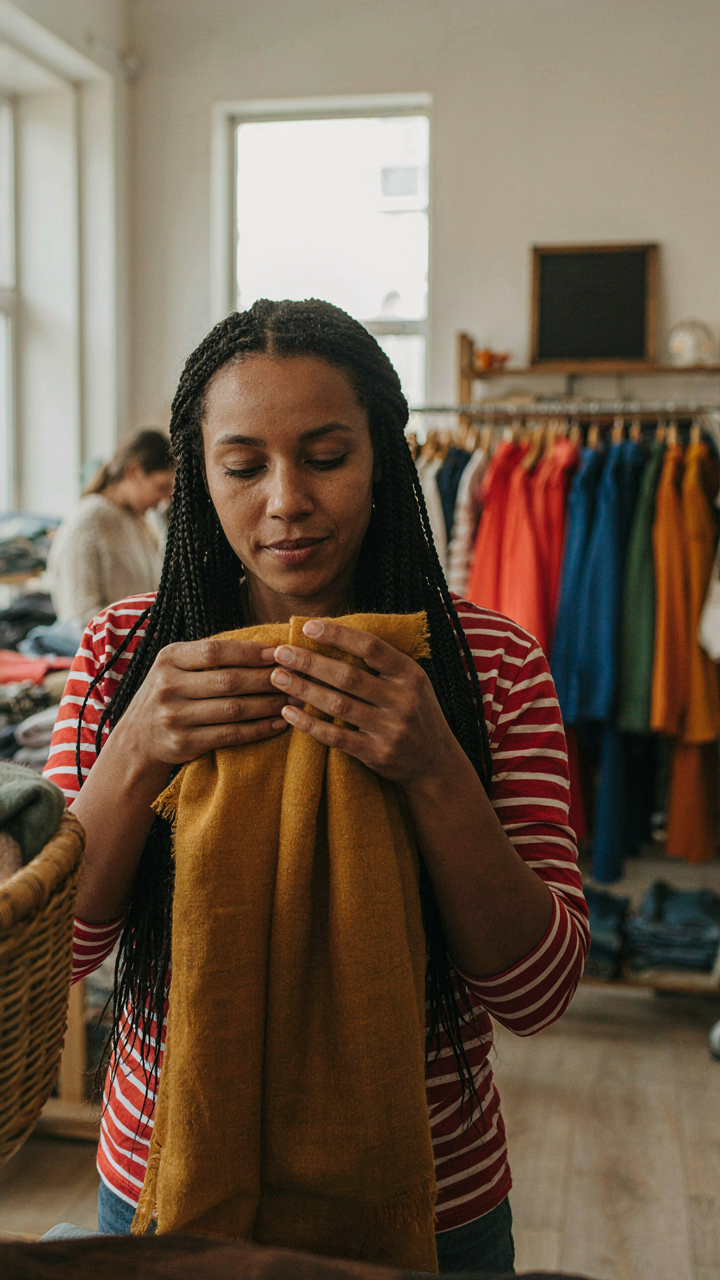
Most people walk through thrift stores blind. They see damaged tags and outdated cuts and quit before they start. But thrifting on a budget forces you to develop a skill that actually matters: pattern recognition. You learn to spot potential in broken things. Walk into a thrift store today and spend thirty minutes pulling items that could work with one fix or alteration. Don’t buy anything yet. Just look. The real wealth isn’t in the clothes you find. It’s in training your eye to see what everyone else walks past.