

The Illusion Of More: Why Your Organic Wardrobe Betrays You
The Real Cost Of Feeling Better
You buy organic cotton because it lets you sleep at night. That’s the mechanism at work: moral licensing. You make one “ethical” purchase and it grants you permission to keep consuming. The environmental math doesn’t care about your intentions. Organic cotton still requires water, pesticides (fewer, but not zero), land, and transportation. A sustainably made garment you wear twice offloads its impact burden onto a planet that tracks absolute tonnage, not your peace of mind.
The trap compounds because eco-friendly production costs more upfront. You pay the premium. Your brain registers the higher price as proof of virtue. That higher price also means you buy fewer items, which feels like restraint. But then you justify buying more because each piece is “better.” You end up with the same closet volume, just with a cleaner conscience and an emptier wallet.
The Ethical Consumer’s Paradox

This is a capture mechanism borrowed from behavioral economics: when the cost of entry rises, perceived value inflates disproportionately. You’ve paid more for the shirt, so you value it more, so you wear it more selectively, so it sits unworn more often. The irony: the most sustainable garment is the one you actually wear. An inexpensive piece worn two hundred times beats an expensive one worn five.
Ethical consumerism reframes the problem. Instead of asking “Do I need this?” you ask “Is this made responsibly?” The second question lets you keep shopping. It’s consumption with a halo. The fashion industry knows this. Brands launched sustainable lines specifically to capture the guilt-ridden buyer who wants to keep participating in the system. They’re not trying to get you to stop buying. They’re trying to get you to feel better while you do.

The “Scarcity Principle” Wardrobe: Less Truly Is More

Build A Uniform, Not A Collection
You want permission to own less without feeling like you’re missing out. That’s the real anxiety here. The mechanism is scarcity psychology: humans assign higher value to rare items, but only when they’re chosen, not forced. When you deliberately architect constraint, you flip the script. You stop browsing endlessly because the decision tree collapses. A uniform is permission to stop shopping disguised as a personal brand.
The uniform approach removes friction from daily dressing. You select five to seven core pieces that share a color palette and fit your body. These pieces combine in multiple ways without deliberation. Navy trousers, cream shirt, grey sweater, black blazer, white tee: the math works. You’re not limited; you’re liberated from the tyranny of infinite options. The closet becomes a tool, not a showroom.
Invest In Density, Not Quantity
Everyone says buy quality. That’s incomplete advice. What matters is material density and construction method, not the brand name or price tag alone. Density means fiber content, yarn weight, and weave tightness all work together to extend garment life. A densely woven cotton will outlast a loosely constructed silk. A tight knit resists pilling. Dense fabrics handle washing, storage, and repeated wear without degrading.
Real durability requires understanding fabric behavior. Linen and cotton gain softness with age if the weave is tight enough to begin with. Wool felts and compacts over time, becoming stronger, not weaker. Synthetic blends trap body oils and degrade faster than natural fibers at equivalent weights. Buy pieces that improve with use, not ones that require babying. When a garment lasts five years instead of one, the per-wear cost drops to nothing.
The 80/20 Rule Of Sustainable Fashion Outfits: Maximize Your Impact

Track What You Actually Wear
You want permission to keep more clothes than you need. That’s the real reason you’re reading this. But the mechanism is simple: data beats intuition every time. You don’t know which items you wear. You think you do. Spend two weeks logging every outfit you pick. Take a photo or write it down. You’ll find that 20 percent of your wardrobe generates 80 percent of your outfits. The rest hangs there as friction and false options.
Most people skip the tracking step because it feels tedious. That’s exactly why it works. The tedium forces you to see the pattern your brain refuses to admit. Once you have the data, culling becomes mechanical. Remove anything outside that 20 percent that doesn’t fit, doesn’t function, or doesn’t pair with your core rotation. You’re not being ruthless. You’re being honest about what you actually use versus what you think you should use.
Mix And Match Without Limits
Versatility isn’t a personality trait. It’s a design principle borrowed from systems engineering where minimal components create maximum outputs. Apply this to fabric color, silhouette, and weight. A neutral base layer combines with ten different tops to create ten outfits. The same neutral combines with five bottoms for fifty outfit combinations. Each addition multiplies your options rather than adding to them.
The common advice here is to “buy neutral colors.” Incomplete. Neutrals matter only if they share the same undertone, weight, and finish. A cool-toned grey wool conflicts with a warm-toned cream linen. Both are neutral. Neither plays with the other. Document the exact palette of your core 20 percent, then add only pieces that match that system. This compounds your outfit diversity while keeping your closet smaller. Build outfits backward from the constraint, not forward from the want.
The “Investment Portfolio” Wardrobe: Strategic Purchases Only

Treat Clothes Like Capital Allocation
You want permission to buy more without guilt. Here’s the mechanism: most people treat clothing purchases as emotional transactions instead of capital decisions. Economics teaches portfolio theory—the idea that you allocate limited resources across assets to maximize return. Your closet works the same way. Every dollar spent on a garment either compounds your usability or sits dormant. The difference between a consumer and an investor is tracking what actually performs. You don’t need more clothes. You need fewer, chosen with the discipline of someone deploying capital.
Most wardrobes fail because people buy horizontally—adding quantity in the same category—instead of vertically, building depth with pieces that layer and recombine. A portfolio mindset means each purchase must solve a specific gap in your existing system. You’re not shopping for items. You’re shopping for utility multipliers. Before you buy anything, you name what it replaces or what rotation it enables. That constraint cuts 80 percent of impulse acquisitions immediately.
Cost Per Wear Beats Price Tag Every Time
Ignore the sticker price. It’s a fake anchor. The real cost is what you pay divided by how many times you’ll actually wear it. A 300 dollar jacket worn 200 times costs 1.50 per wear. A 60 dollar shirt worn three times costs 20 dollars per wear. Most people do the math backward, justifying cheap purchases they never touch. The garment that costs more upfront but delivers consistent rotation always wins economically.
Calculate this honestly. Pull five pieces from your closet right now and divide their original price by actual wears in the past year. You’ll find the expensive basics outperform the discount trend pieces by an order of magnitude. This is why zero waste wardrobe building requires you to buy expensive basics and skip cheap trends entirely. The environmental cost compounds with low wear-count items. Buy things you’ll reach for automatically or don’t buy them at all.
The Anti Hoarding Protocol: A Minimalist Closet For Max Efficiency

The One In One Out Machine
You want permission to keep buying. That’s the real reason this appeals to you. The one-in-one-out rule works like inventory rotation in retail supply chains: you maintain a fixed asset base while cycling input. It’s not deprivation. It’s constraint as a forcing function.
Here’s how it actually works. Before you acquire anything new, you identify and remove one existing piece. No exceptions for “but this is different” or “I’ll wear both.” The moment you add without subtracting, you’ve broken the mechanism. Your closet expands, decision fatigue returns, and you’re back where you started.
The friction of this rule is intentional. It makes shopping hurt because it should. When adding a shirt means losing a shirt, you stop treating acquisition as a low-cost action. You start asking if the new piece solves a gap or just fills space. This is where real selection happens. Most people skip this step entirely because stores don’t charge you removal fees.
Track what leaves your closet just as deliberately as what enters. Document the piece you remove, why it’s going, and what it was supposed to do. Over three to six months you’ll see patterns: certain silhouettes don’t work for your life, colors you thought you wanted never got worn, or you kept pieces out of guilt rather than use. The data becomes a filter for future purchases.
Sentiment Is Expensive Closet Real Estate
The advice to “keep things that make you happy” is incomplete. Happiness is not a material property of a garment. Happiness is the story you’ve attached to it, and that story costs you every single day in decision-making overhead and psychological weight.
Sentimental pieces function as dead weight masquerading as value. That sweater from college, the jeans from your old job, the dress from an ex’s event, the shirt your friend gave you that doesn’t fit your aesthetic, your body, or your actual life now. They don’t belong in your working closet. They belong in a labeled box in storage if you need the memory artifact. Your closet is for clothes you wear, not a museum of who you used to be.
The mechanism is straightforward: sentimental items create decision paralysis. When you open your closet you see potential guilt, obligation, and past identity layers on top of present need. Your brain has to process all that before selecting what to actually wear. Remove the sentiment, you remove the noise. Keep pieces that reflect who you are now and what you actually do, not who you were or what you think you should do.
The edit is brutal but clean. Pull every piece with emotional weight attached. Ask: do I wear this regularly, or do I wear this sometimes because I feel obligated? If the answer is obligation, it goes. This single action shrinks your effective closet by fifteen to thirty percent for most people while simultaneously cutting your getting-dressed time in half.
Beyond “Eco Friendly Clothing Storage”: Design For Access, Not Accumulation

Make Everything Visible First
You want credit for being sustainable without actually changing your behavior. The real mechanism at work is called the “visibility principle” from retail design: items you cannot see do not exist in your decision-making process. A folded shirt buried under five others might as well be in a landfill. Brands know this. That’s why department stores use open shelving and face-out displays instead of filing systems. Your closet should work the same way.
Stop stacking. Start displaying. Hang what you wear. Fold what you genuinely need to fold. Use clear bins if you must store off-season items, not opaque containers. When a piece of clothing requires excavation to find, you will shop for a replacement instead. You train yourself toward accumulation without intending to. Visibility removes this friction entirely. Your eyes land on what exists, so you wear what exists, so you stop pretending you need more.
Create Friction Between The Closet And New Purchases
Most people separate their closet from their buying habits. These are the same system. If you cannot immediately see where a new item fits into your current wardrobe, you should not buy it. This is not aspirational thinking. This is logistics.
The moment you place a new piece in your closet, it should trigger an immediate question: what does this replace? If the answer is nothing, the item creates redundancy. The friction comes from forcing this decision at purchase time, not six months later when regret sets in. Your physical closet layout becomes the gatekeeper. A visible wardrobe makes gaps obvious. You notice when you lack something functional. You never notice gaps in clothes you cannot see. This is why hidden storage accelerates waste.
The Value Chain Wardrobe: Understanding True Cost Of Waste Clothing

From Fiber To Landfill
You want to feel virtuous about your choices without actually changing behavior. That’s the real reason this matters. Apply supply chain thinking to clothing: every garment moves through distinct stages, and waste accumulates at each one. Production demands raw materials and energy. Use depletes fibers through washing and wear. Disposal sends rejected pieces somewhere, usually overseas or into incinerators. Each stage has a cost nobody itemizes on the price tag.
Most clothing waste happens not at disposal but during use. Fast fashion trains consumers to discard items before they wear out because trends shift. The garment’s lifecycle is artificially shortened by design, not by material failure. A cotton t-shirt can last five years or five months depending on how you treat it and whether you actually wear it. Understanding this gap explains why “buying less” sounds simple but fails without confronting your actual wearing patterns first.
The Real Price Of Extraction
Economics calls this “negative externality.” Clothing production exports its costs to people and ecosystems far from the buyer. Cotton farming uses 16 percent of global insecticides despite occupying 2.5 percent of cultivated land. Synthetic fibers demand petroleum extraction and chemical processing that contaminates groundwater in manufacturing regions. Textile dyeing ranks second globally in water pollution. These aren’t marketing talking points. They’re the operational conditions of how your wardrobe gets made.
Labor costs remain hidden because garment workers rarely earn enough to afford their own output. Fast fashion’s margin model depends on suppressing wages in Bangladesh, Vietnam, and India. When disposal happens, microplastics from synthetic garments shed into oceans and soil. The person wearing the shirt never sees the worker who made it or the community that absorbs its chemical waste. Document your actual garment sources and washing methods. That’s how the waste cycle becomes visible enough to interrupt.
The “Circular Economy” Approach To Sustainable Wardrobe: Close The Loop
Extend Life Through Repair And Alteration
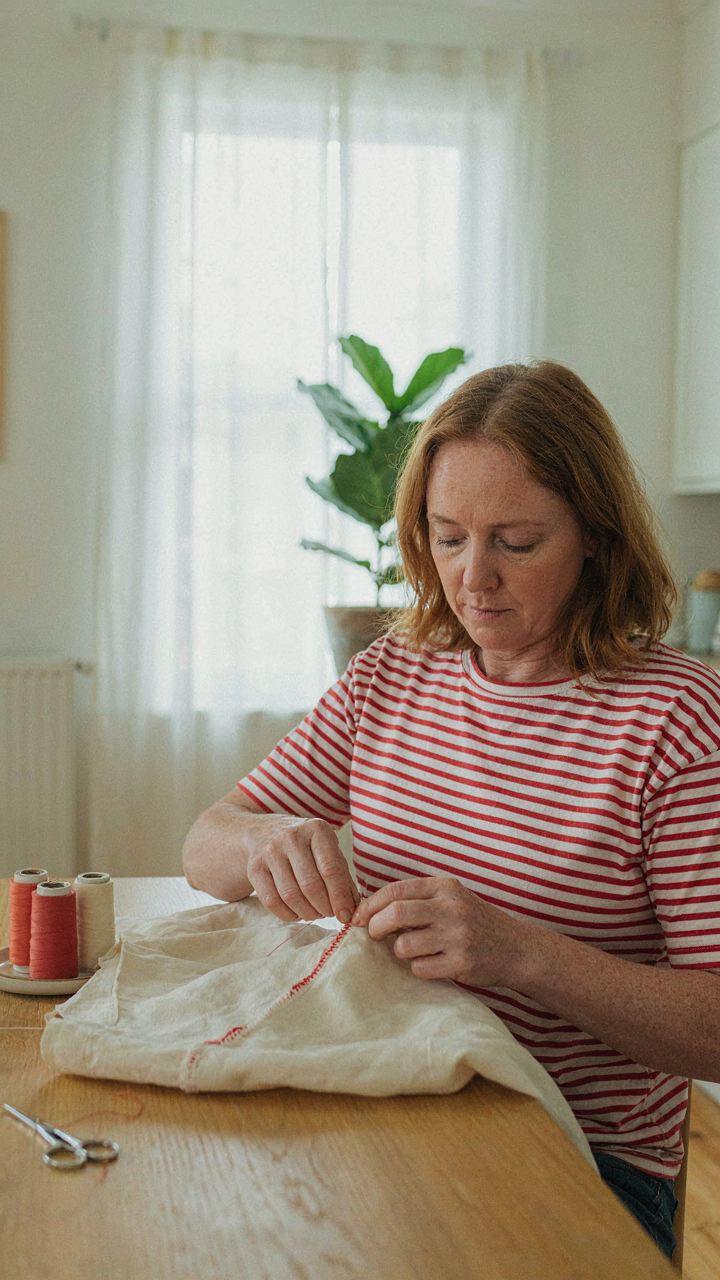
You want to feel resourceful without actually doing the work. That’s the real reason this section appeals to you. The mechanism is simple: every garment has a lifespan curve, and repair extends it before the inevitable decline. A torn seam, loose button, or worn hem isn’t the end. It’s the moment you decide whether the piece continues generating value or becomes waste.
Most people throw clothes away at the first sign of damage because they’ve never learned the actual cost of replacement. A professional tailor charges fifteen to fifty dollars depending on the repair. A new shirt costs more. The math is obvious, but the friction isn’t. You have to find the tailor, drop off the garment, wait. That friction is why repair culture died and why fast fashion won. Remove the friction and repair becomes the default.
Strategically Move Pieces Into New Hands
The resale market exists because retail value and actual use value diverged. You bought something you wore twelve times. Someone else will wear it forty times. That’s not charity, that’s efficiency. The mechanism here is redistribution, not disposal. Your closet’s excess becomes someone else’s core utility.
The common advice says donate to thrift stores and feel good about it. That’s incomplete. Thrift stores are overflow tanks for things that can’t sell elsewhere. If the piece still has market value, sell it. Use Depop, Vinted, or Grailed depending on the item type. This creates a price signal that communicates actual demand. You recover capital. The buyer gets better value than retail. The original brand’s margins compress, which shifts incentives upstream. That’s how systems change.
The “First Principles” Wardrobe: Deconstruct Your Needs
Strip Away The Noise First
You want permission to stop buying things without admitting you bought too much to begin with. Here’s the mechanism: most people never actually inventory what they own because counting failure feels worse than staying ignorant. First principles thinking comes from physics and mathematics, where you break a system into its irreducible components, then rebuild from there. Your wardrobe is no different. You strip it to the items that actually function in your life, not the items you think should function there.
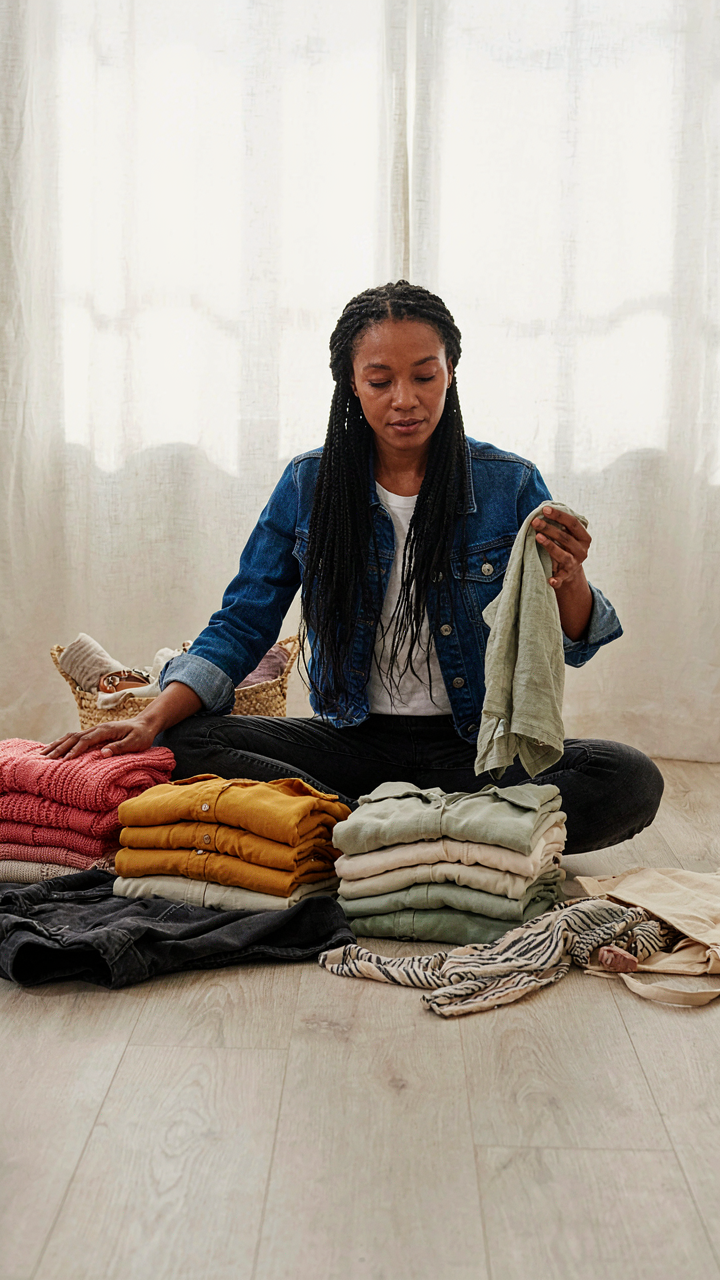
Start by removing everything from your closet. Yes, everything. Lay it out by category. Count the pieces. Note what you actually wore in the last two months. This isn’t sentimental. This is data. Most people discover they wear 20 percent of what they own. The rest occupies space and generates decision fatigue. That gap is where waste lives.
Function Over Narrative
The common advice says “buy basics.” That’s incomplete. Basics without a defined context just become clutter with a different name. You need to identify the specific environments you occupy: work, home, exercise, social. For each environment, list the activities you do there. Then list the performance demands those activities create: durability, washability, temperature regulation, movement range. Only then do you select pieces.
This approach eliminates the trend problem because trends don’t map to function. A piece either performs in your life or it doesn’t. Rebuild your wardrobe by asking what your body needs to do, not what your image needs to project. This method takes time on the front end. It saves years on the back end by preventing accumulation of pieces that looked good in the store but fail in actual use.
The Antifragile Fashion System: Build A Resilient Eco Friendly Closet Decor

Stress Makes Your Wardrobe Stronger
You want this section because it sounds like a hack to own less while feeling like you’re gaining something. Here’s the mechanism: antifragility, borrowed from systems design in engineering and economics, means a system that improves under stress rather than merely surviving it. Your wardrobe operates the same way. When you design for damage—rips, fading, stains—you force yourself to buy pieces that get better with wear, not worse. This inverts the fast fashion logic entirely. Most clothes break under use. Antifragile pieces do the opposite.
The difference matters because durability alone is passive. A coat that lasts ten years without maintenance is just durable. But a wool sweater that pills less each season, linen that softens with every wash, or denim that develops a unique patina—these items gain character under stress. You stop viewing wear as degradation and start viewing it as development. This shift rewires how you shop. You hunt for materials that time improves: raw denim, canvas, natural leather, linen, wool. You abandon synthetics that degrade predictably and fade without narrative.
Repair Is Not Sentiment, It’s Design
The mainstream advice here is hollow: “Repair your clothes to save money.” Wrong framing. Repair is a design choice that determines whether your wardrobe compounds or depreciates. When you design a piece expecting to repair it, you buy differently. You favor classic cuts that hold value after mending. You choose natural fibers over blended synthetics because natural fabrics accept thread and patch more honestly. Japanese sashiko, visible mending, and darning aren’t aesthetics bolted onto sustainability. They’re the original design language for garments meant to outlive their owner.
Adaptation accelerates this. A shirt that fits poorly gets tailored, not replaced. Worn cuffs become cropped sleeves. Too-long hems become capris. The garment evolves rather than exits. This requires you to learn three skills: basic hand sewing, how to recognize quality seams before buying, and which alterations preserve a piece’s integrity. When you develop this competency, you stop shopping by impulse and start shopping by potential. Every purchase becomes an investment in a garment’s future form, not its current one.
The Real Weight In Your Closet Isn’t Fabric; It’s The Mental Burden Of Unmade Decisions
Every piece you keep without a purpose becomes a decision you make daily. A zero waste wardrobe isn’t about perfection or deprivation. It’s about eliminating the friction between who you are and what you wear. Pull out one item today that you haven’t worn in three months. Don’t overthink it. Donate it. You’ll realize the weight you were carrying wasn’t the garment itself. It was permission to stop pretending you’d ever wear it.